
Table of Contents
A 32-player draw requires exactly 31 matches—a single weather delay can derail the entire weekend if your plan lacks buffer times. This step-by-step guide covers organizing a tennis tournament from the first committee meeting down to court setup. You will manage scoring formats, player entries, and the tennis scoreboards that keep match progress visible to everyone.
How to organize tennis tournaments from the ground up
Most events fail in the first two weeks of tournament planning—well before the first serve. Knowing the tennis scoring system is just the baseline for any tennis competition organiser. The structural choices of week one dictate whether your tournament schedule runs smoothly or spirals into chaos.
Building your tournament committee and volunteer team
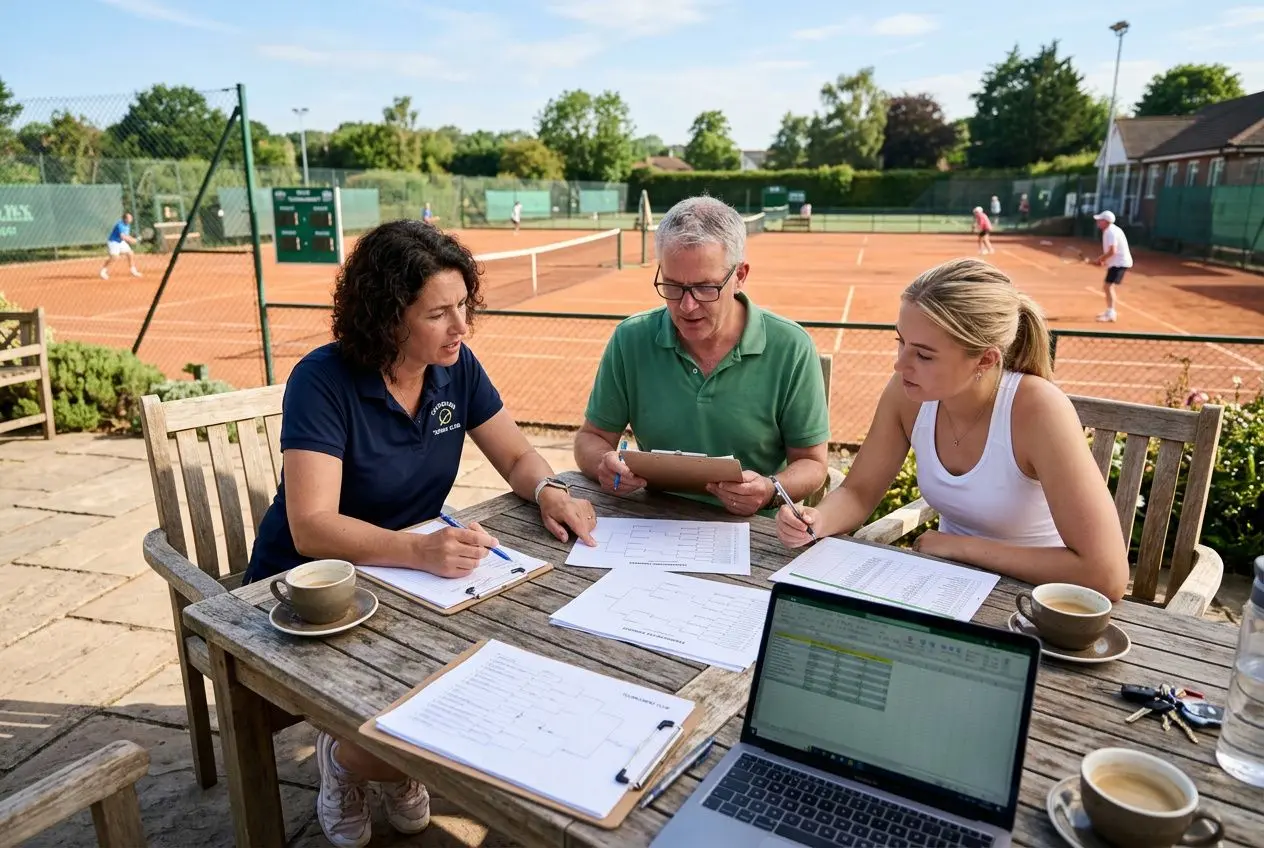
Effective organizing a tennis tournament means locking in your team before announcing a date. Your core committee needs one host club representative and two independent members who are not active participants.
Appoint a single tournament director with final authority over weather delays and tournament rules to prevent gridlock.
- Tournament director—holds ultimate authority, manages the daily schedule, and handles disputes outside standard guidelines.
- Referee and umpires—monitor match conduct and rule enforcement, a necessity for any formal tennis tournament.
- Court monitors—gather live scores and update the physical tournament bracket across the facility.
- Registration desk staff—process player check-in, confirm arrival times, and act as the main communication hub.
You need one staff member per three to four courts during peak hours to keep matches moving. Assign specific roles for medical support and grounds crew, plus someone strictly handling safety compliance at the venue.
Brief your volunteers with written duties and confirm their availability three weeks prior.
Key planning milestones every tennis competition organiser needs
A seasoned tournament organiser works backward from the event weekend. Start 12 weeks out to secure your location, confirm court availability, and lock in necessary permits.
Defining your formats and divisions early dictates every subsequent operational calculation.
Open registration at least six weeks prior to the first match. Closing entries three weeks out gives you time to build draws and absorb withdrawals.
Use the remaining weeks to finalize marketing materials and confirm staffing duties.
Consult a previous tournament organiser early to avoid common logistical traps. Their practical knowledge of local expectations drastically cuts preparation time.
A review meeting at week eight with a draft tournament planner ensures everything stays on track.
Digital tools to streamline tournament management
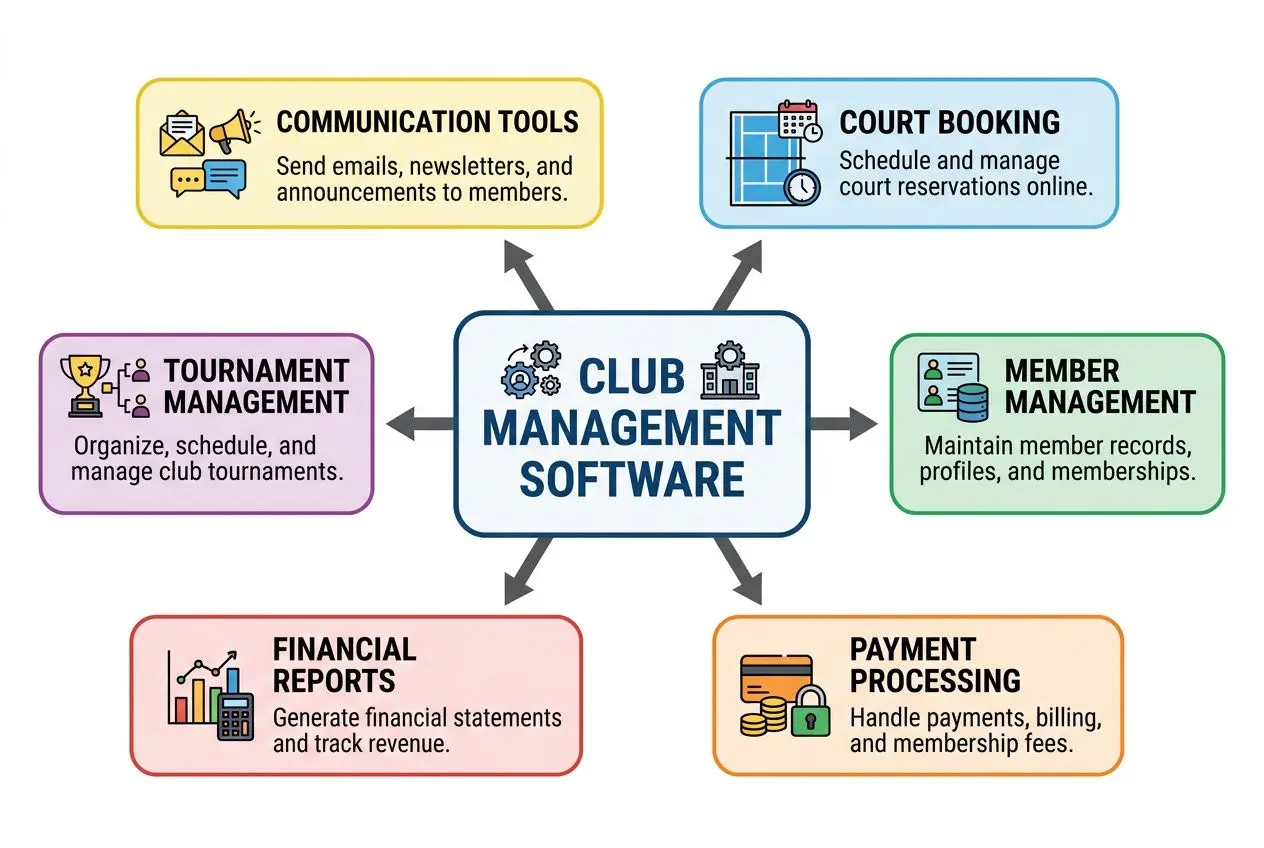
Software handles the heavy lifting of modern tournament management—it keeps draw creation and scheduling inside a single platform.
Drag-and-drop tools let you adjust matches instantly around weather delays or withdrawals. Real-time access for co-organizers eliminates the version-control chaos of paper.
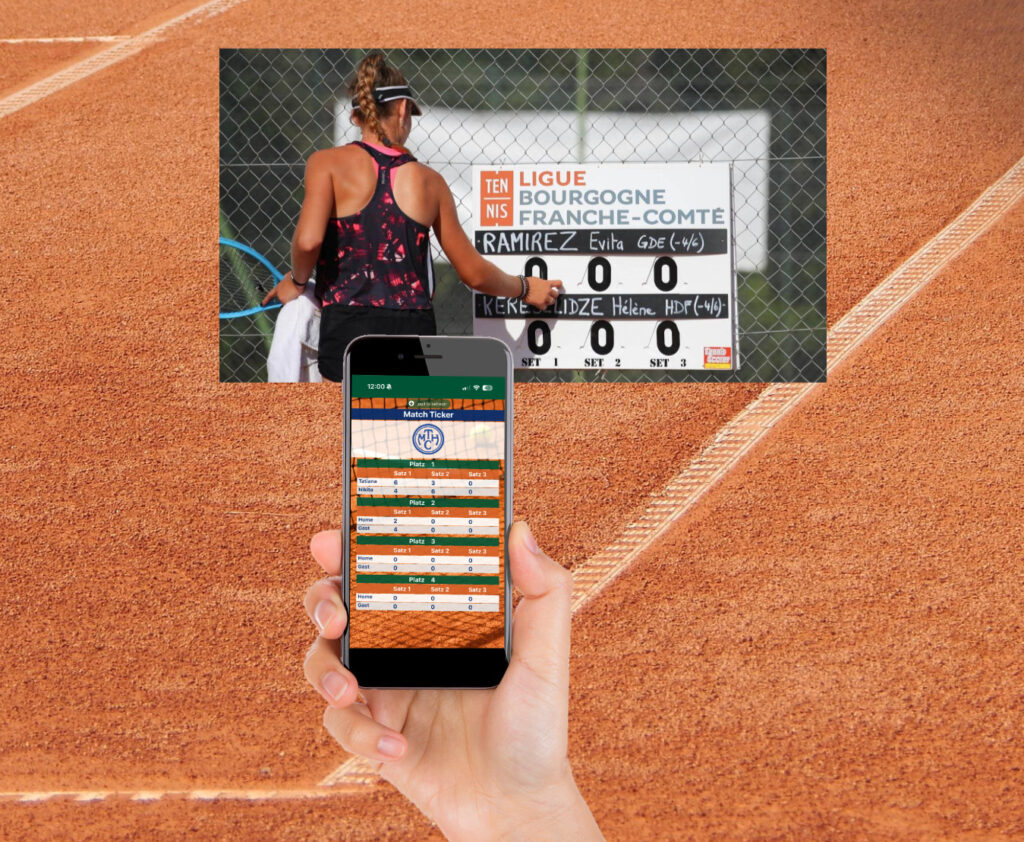
Digital tools allow officials to record live results directly from mobile devices. For a busy tennis club tournament, this prevents a massive bottleneck at the main desk.
Players check their phones instead of overwhelming staff with scheduling questions.
How to set up a tennis tournament format and draw
Your chosen tournament format immediately dictates court requirements, total match hours, and staffing levels. Define whether you are running a competitive ranking event or a casual fundraiser first—that single decision eliminates several scheduling options before you do any math on organizing a tennis tournament.
Choosing the right structure of a tournament for your players
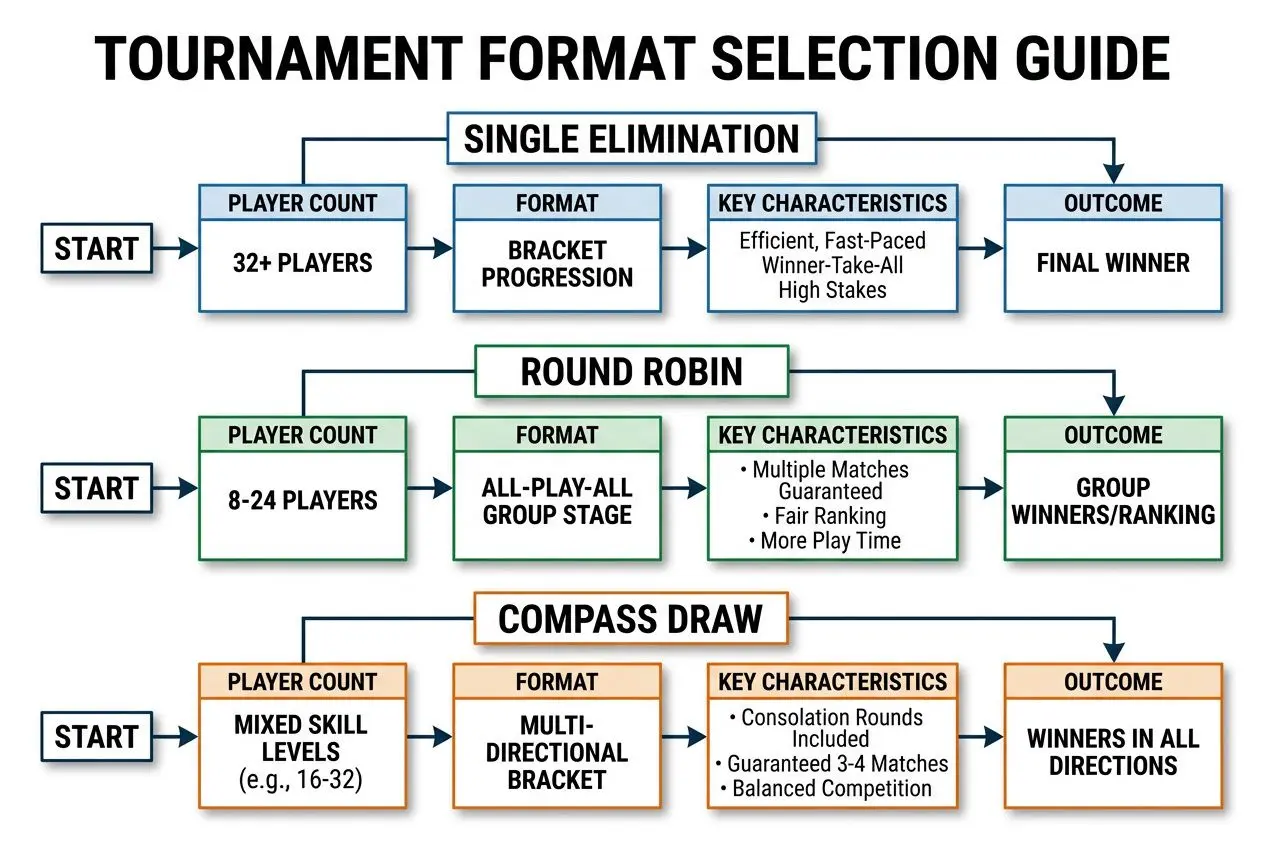
Match your format to your player count precisely before building the tournament draw. A 32-player roster using a round robin format across six courts will break your schedule completely. That same roster in single elimination finishes in exactly 31 matches, making court usage entirely predictable.
- Single elimination works best for 32 or more entries in championship play. It delivers efficient court usage and a clear tournament bracket with zero scheduling ambiguity.
- Round robin format fits perfectly for a small tournament of 8 to 24 players. Every participant gets multiple matches, avoiding the one-and-done exit that frustrates social players.
- Draw with consolation is recommended for fields of 16 to 32 players. Losing competitors keep playing, which maintains engagement across the entire event.
- Multiple divisions provide the only practical structure for 32-plus participants with varying skills. It separates categories to keep match quality consistent and fair.
A standard 32-player singles bracket always requires 31 total matches. Planning this on six courts with two-hour average match times demands 12 hours of court time before calculating weather delays. Secure these hours in your venue contract before publishing the tournament draw—modifying locations later creates unsolvable conflicts.
| Player count | Recommended format | Matches guaranteed per player | Best suited for |
| 4–8 players | Round robin | 3+ | Club social events, beginners |
| 8–16 players | Single elimination | 1–4 | Competitive club events |
| 16–32 players | Draw with consolation | 2+ | Mixed-level club tournaments |
| 32+ players | Multiple divisions | 1–5+ | Open tournaments, championships |
Scoring formats that keep matches on schedule
Organizing a tennis tournament successfully requires predictable match durations to prevent schedule collapse. Standard best-of-three sets with full advantage scoring often run three hours—that destroys a one-day schedule featuring 24 players on six courts. Select your scoring method based entirely on available time, not tradition.
No-ad scoring reduces match time by 20 percent while maintaining competitive intensity for recreational divisions. The pro set format creates a reliable 60-to-90-minute window, serving as the most schedule-friendly choice for any large tennis tournament. Use short sets when operating on a single day with limited court access—they prioritize getting all players onto the court.
Courts, equipment, and visibility for your tennis tournament
A successful tennis tournament demands infrastructure that withstands a full day’s match load. Courts failing ITF standards or scoreboards with poor visibility invite immediate player disputes. Verify net post tightness, locker room capacity, and clear court markings three weeks before your start date.
Court and off-court facility standards
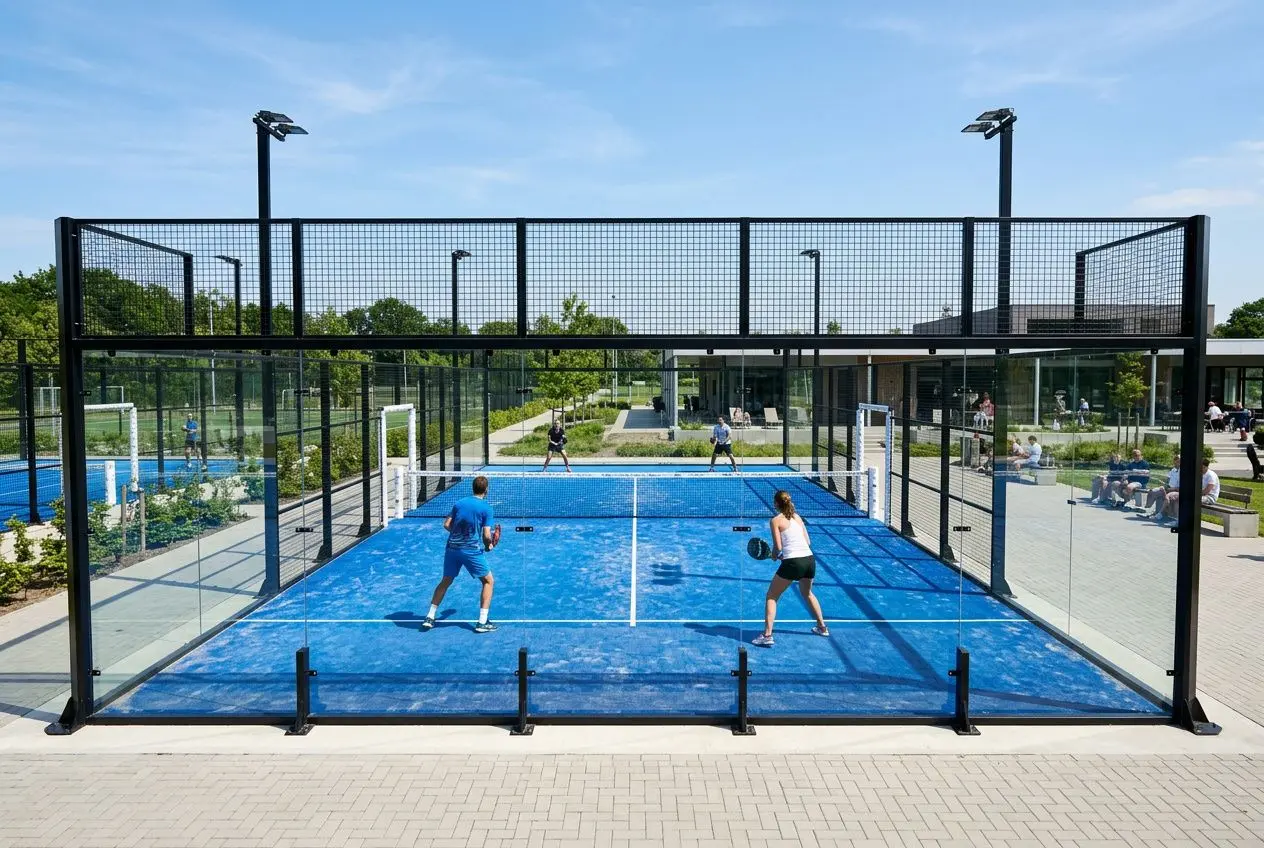
A 32-player draw requires six courts to maintain the official tournament schedule. Each court must provide the full 78 by 36-foot playing surface plus 12 feet of run-back space behind each baseline.
- Surface consistency: All tournament courts must share a uniform surface type—mixing hard and clay courts between rounds destroys competitive balance.
- Evening lighting: Artificial lighting must deliver a verified 500 lux minimum for safe play after dusk. Confirm this specification with the facility manager before scheduling any late matches.
- Off-court infrastructure: Secure locker rooms, dedicated player parking, and a highly visible tournament desk are non-negotiable. These elements separate an amateur event from a professional tournament.
Multi-day events strain waiting areas and locker rooms to their maximum capacity. Verify total court availability with the venue operator before releasing the official draw. One unavailable court on the opening morning derails the entire tournament progression by day two.
Scoreboards and essential tournament equipment
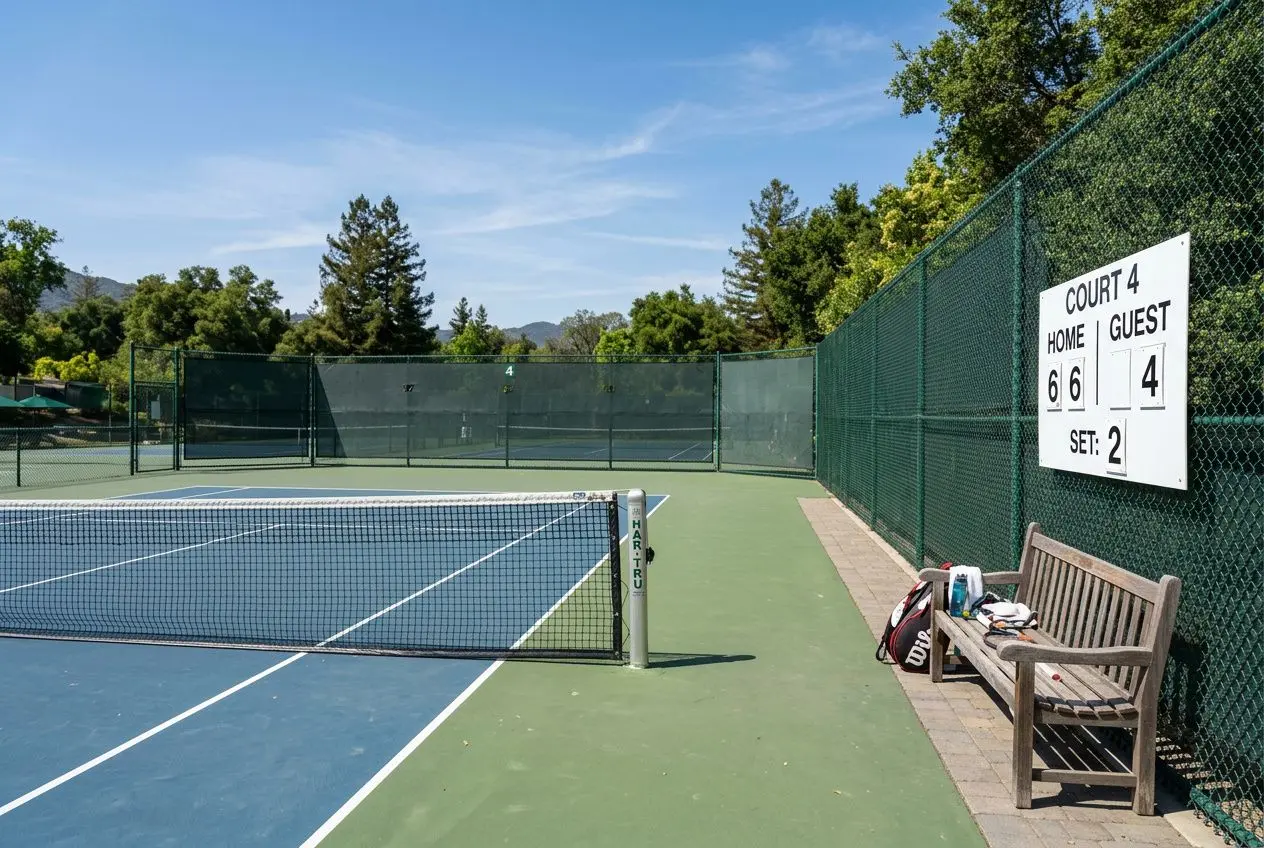
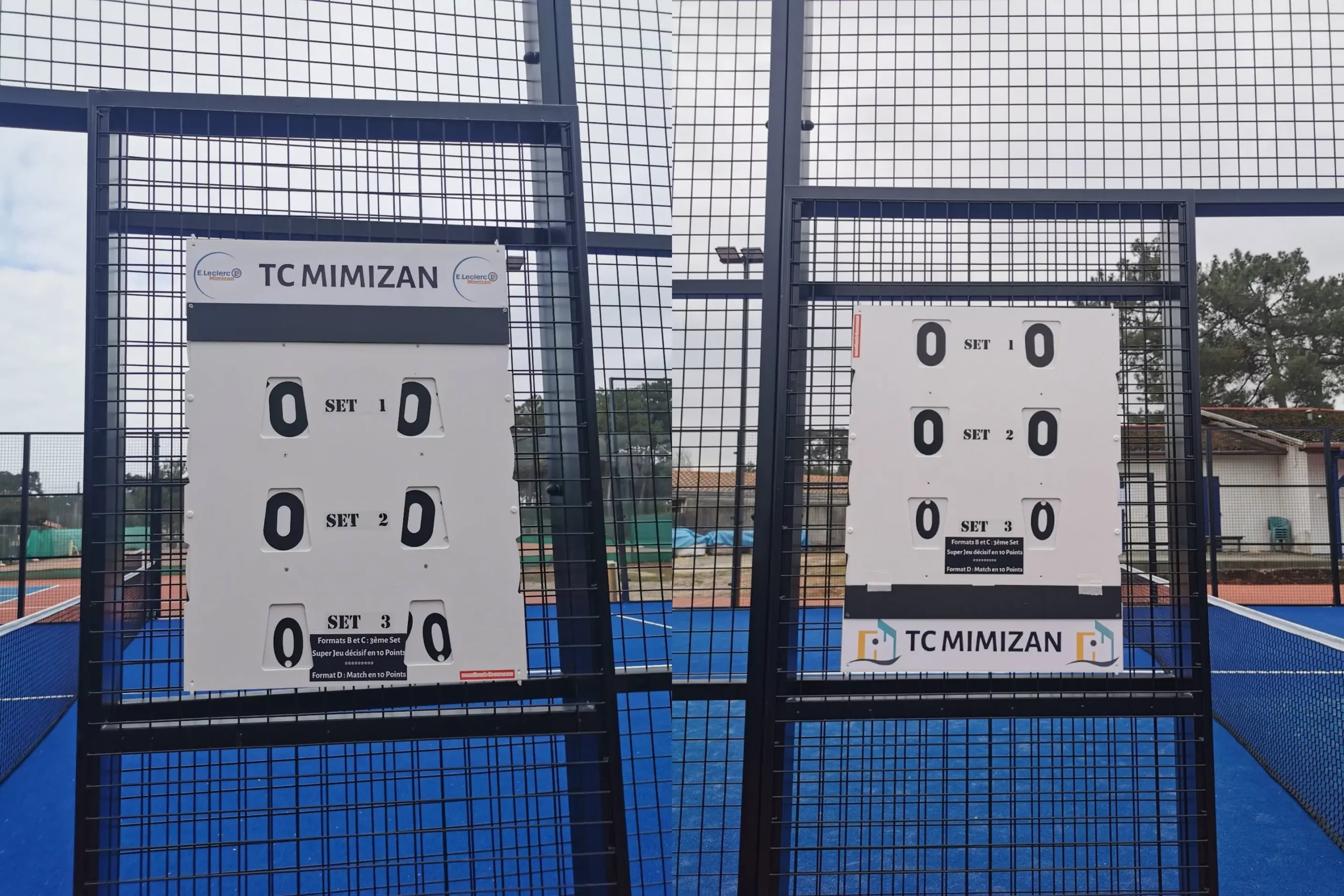
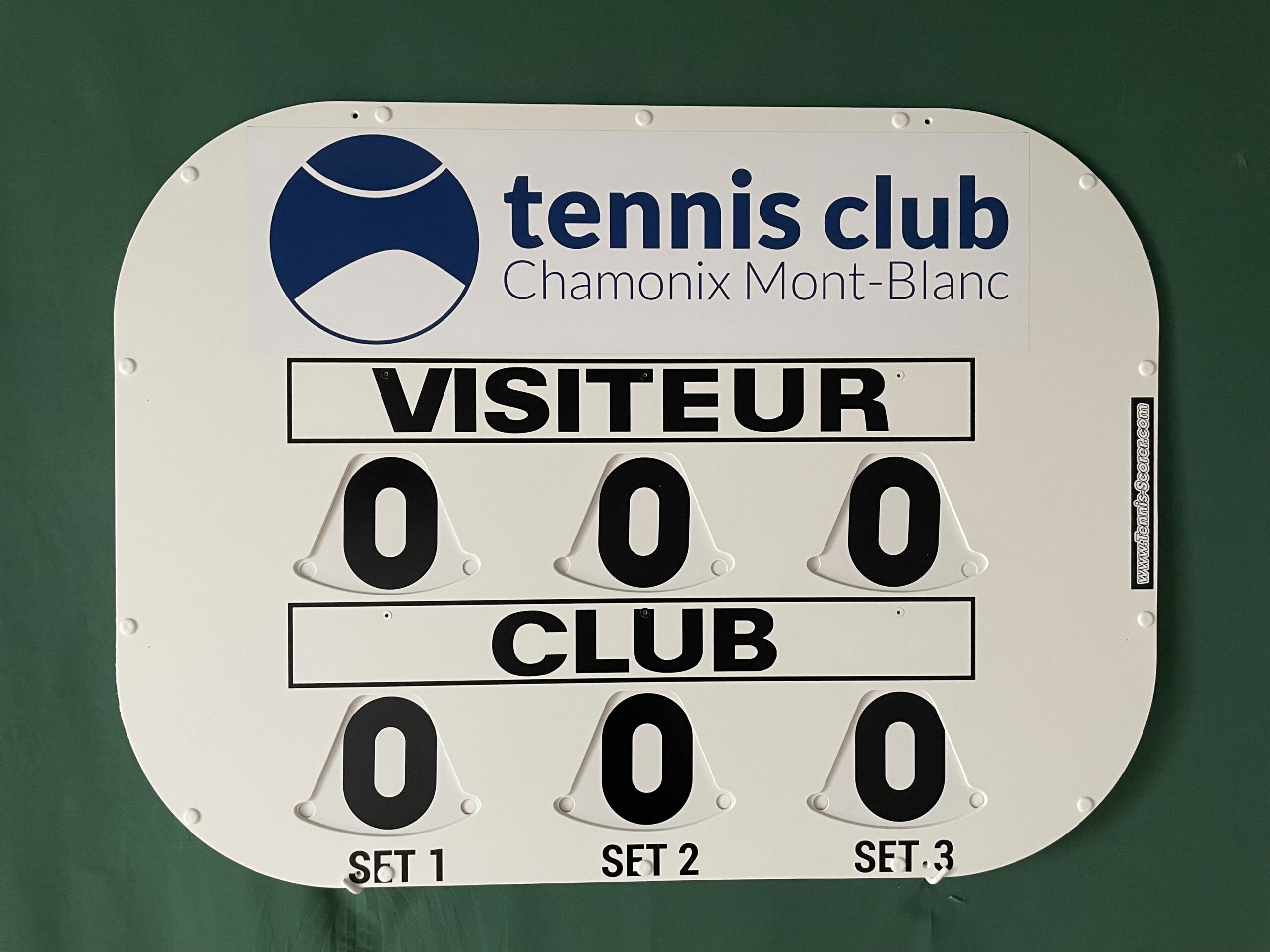
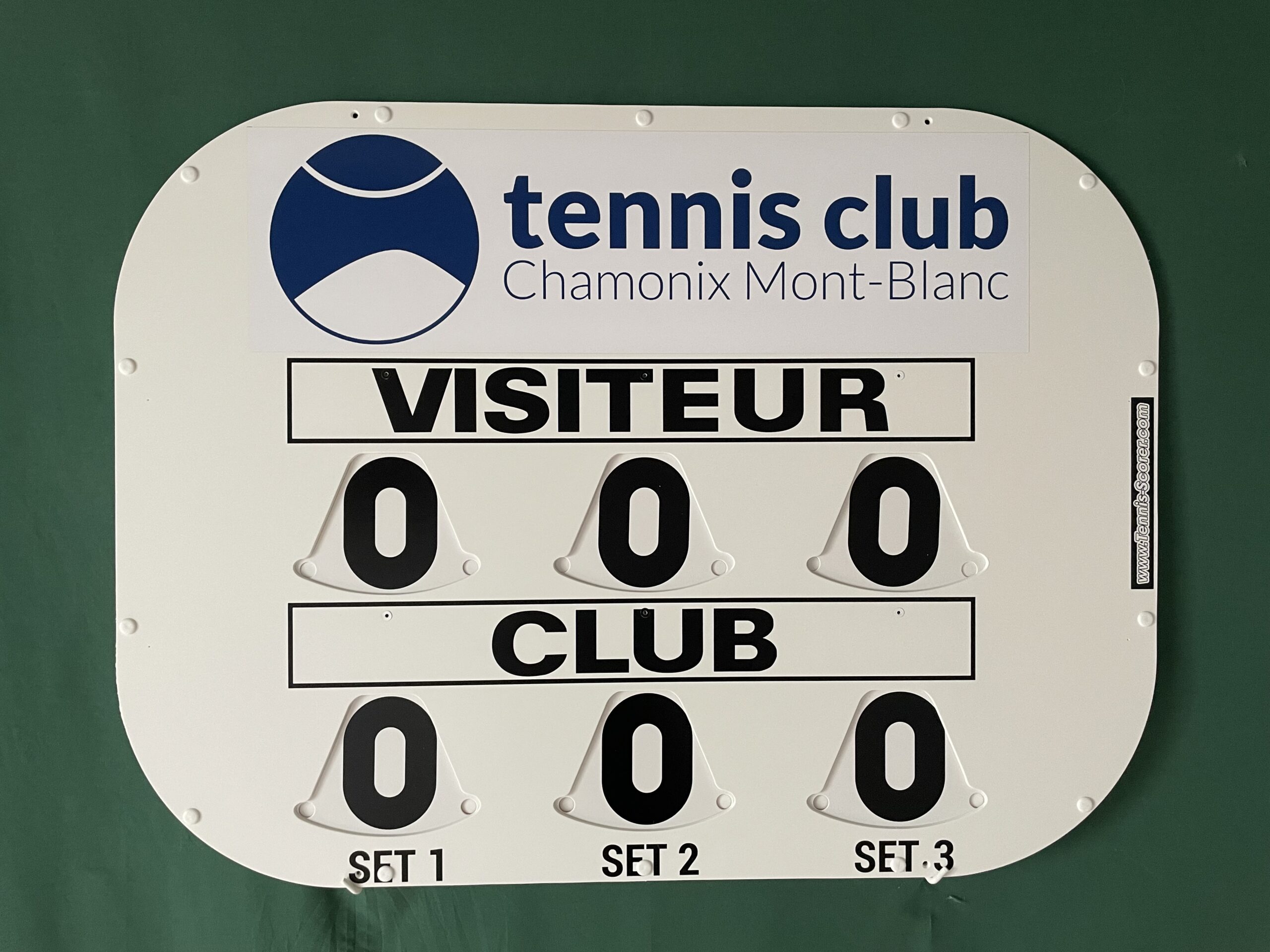
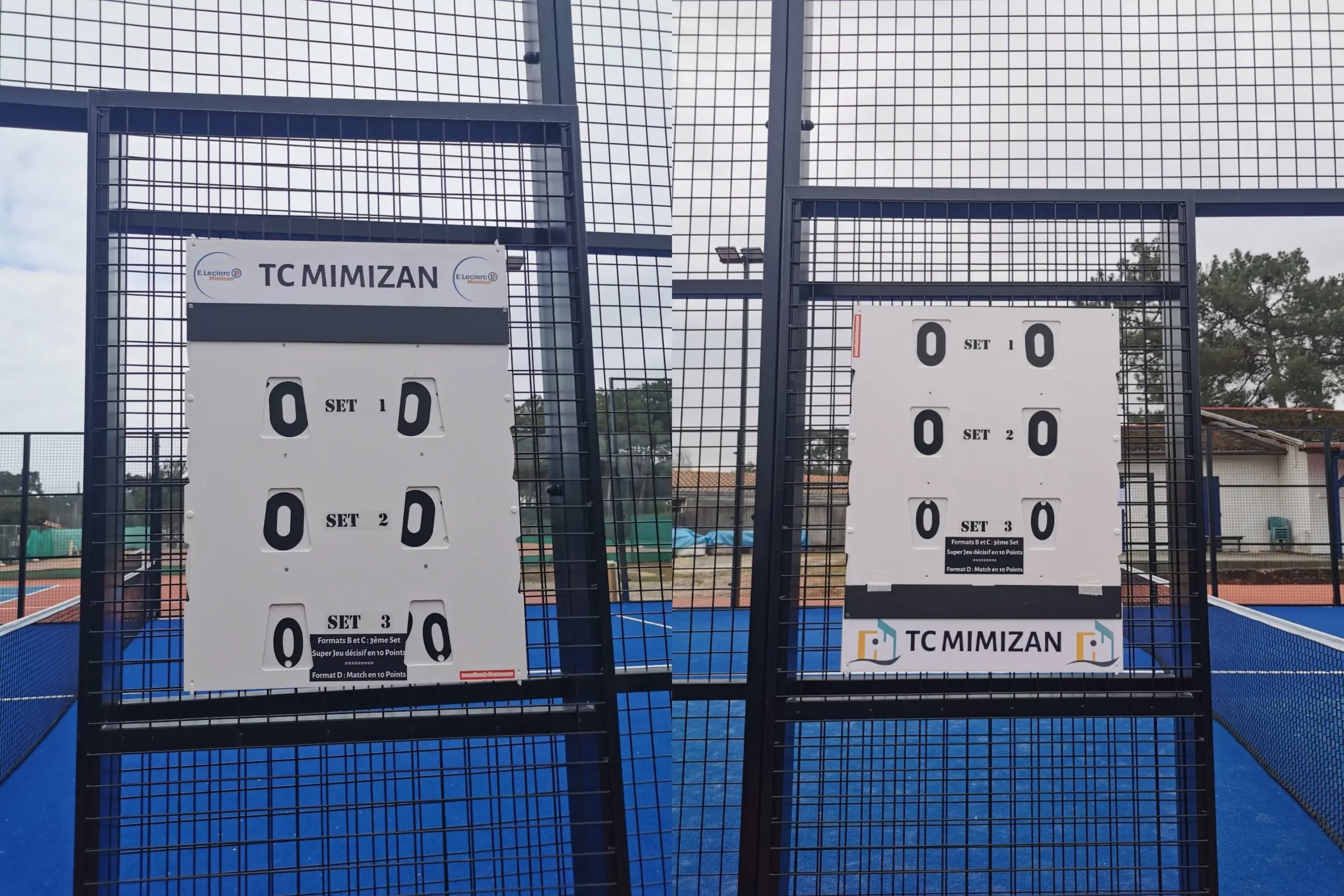
Tournament scoreboards must instantly display player names, current game score, and set status. Rot-proof PVC panels handle this with rotating discs that update via a finger swipe. This simple design lets court monitors keep pace without frustrating the players.
Large 20-centimeter characters guarantee full readability from 50 meters away. The 120×60 cm Grand model outfits main showcase courts, while the 80×60 cm Compact fits smaller club layouts. Interchangeable slate plates allow for seamless rotation of matchups between rounds.
Keeping players and spectators informed
If a player cannot read the score from their own baseline, your scoring setup has failed. A recto-verso display is perfectly readable from both ends of the court—this design eliminates the primary visibility complaint during intense doubles matches.
Custom adhesive stickers place sponsor logos directly onto the PVC panels without extra production cost. This provides continuous brand exposure for every match. For any manager, sponsor-funded scoreboards solve the upfront budget problem.
Clear on-site signage communicates tournament rules and check-in procedures. Digital alerts manage sudden schedule changes, while physical scoreboards handle the live on-court reality. Combining both elements wipes out confusion and keeps your event moving.
Frequently asked questions
How many courts do you need to run a tennis tournament with 32 players?
Six courts are the operational baseline for a 32-player singles tournament. You need to schedule 31 total matches—each lasting roughly two hours—which demands 12 hours of continuous play. Any fewer than six courts guarantees a failed schedule the moment weather delays or three-set matches occur.
What is the fastest scoring format for a one-day tournament?
The pro set—first to eight games—confines matches to a consistent 60 to 90-minute window, which is critical for managing tight court availability. No-ad scoring cuts 15 to 20 percent off standard match times, a necessary efficiency for dense weekend events. Short sets to four games provide the absolute fastest format for a massive one-day tournament.
What type of scoreboard works best for an outdoor club tournament?
Fixed PVC scoreboards require no seasonal removal because the material ignores frost, rain, and UV exposure. The 80×60 cm Compact model fits most perimeter fences, delivering clear scoring visibility without dominating the space. For seamless transitions between matches, large tournaments require two sets of slate nameplates per court.