
Table of Contents
A padel court installation project in the UK requires rigid concrete foundations, 12mm glass panels, and precise drainage gradients before the first post goes in the ground. This covers the exact material standards, real costs, and structural decisions you need to get right. Nail these details and your site runs from day one—miss them and you’re paying for remedial groundwork inside five years.
Padel court design, specifications and construction standards
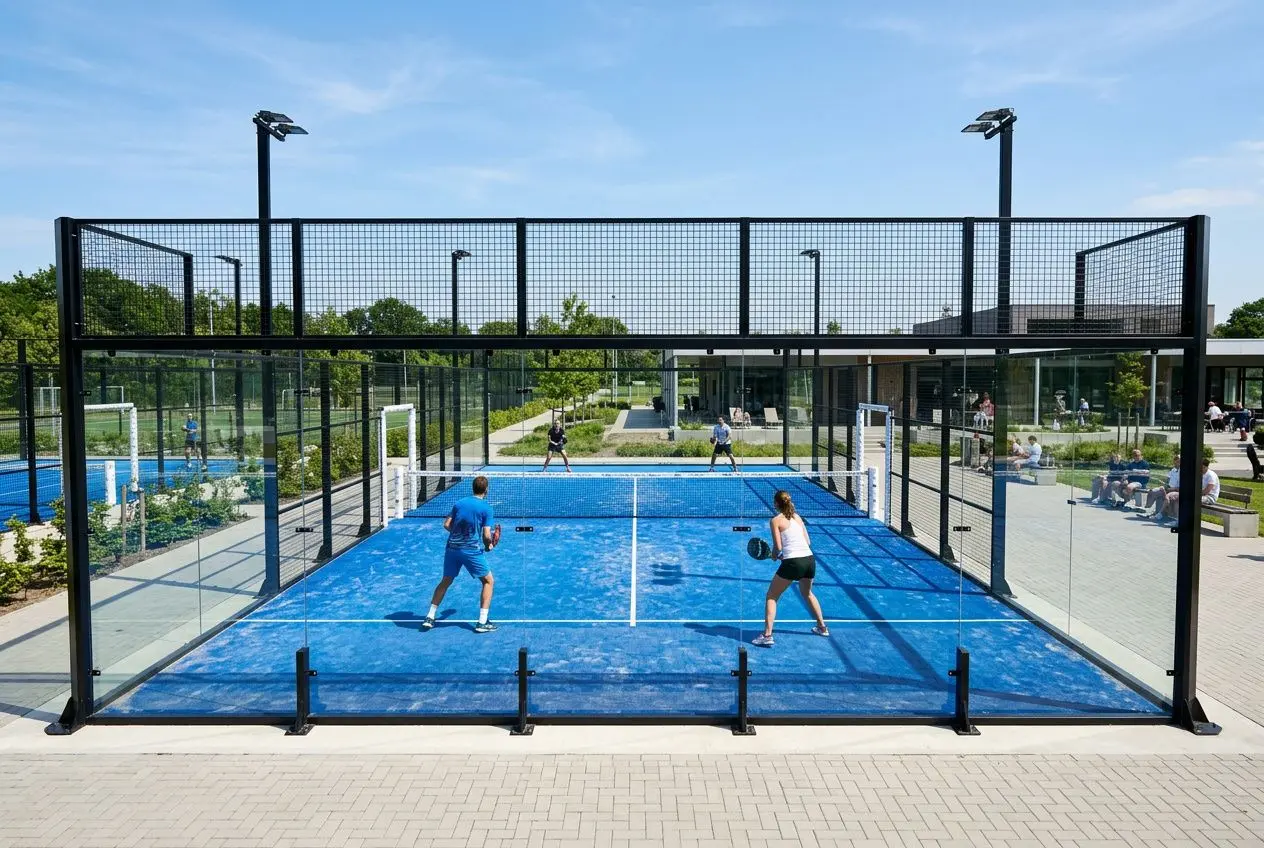
A standard padel court demands a 20 by 10-metre footprint, and that single figure dictates your entire facility layout. Getting the structural details right during padel court construction is what prevents expensive groundwork failures down the line. Every buyer must understand these exact padel court specifications before signing any contractor agreement.
Key padel court specifications every buyer should know
Precise dimensions are non-negotiable during court installation: a foundation ring beam allows zero tolerance for approximation. The following specifications apply to a standard single court type and must drive your groundwork plans from the start.
- Court dimensions run 20m by 10m, requiring a strict 1.5m gap between adjacent units to preserve adequate playing space.
- Net specifications require a 10m width and 0.88m height at the centre—this applies to every court build without exception.
- Enclosure height reaches 4m total: the lower 3m uses tempered glass, while the upper section uses rigid steel mesh.
- Player access requires an 8m by 2m opening per side; wheelchair-accessible setups need a minimum 1.2m of clear entry width.
Glass thickness is a structural absolute— outdoor padel courts require 12mm panels to handle high wind loads. Indoor courts can use 10mm glass, which reduces pillar interference and produces a cleaner finish. Your foundation ring beam still needs structural engineer sign-off based on local soil conditions, regardless of court enclosure type.
Facilities planning to install premium padel courts must treat these numbers as strict baselines. Deviating on glass thickness or enclosure height leads to failed safety inspections and voided supplier warranties.
Choosing the right materials for padel court construction
Outdoor courts face relentless UV exposure, wind stress, and heavy water demands—materials have to match. A premium padel court uses galvanised steel box sections rated for 80 mph winds as standard. Upgrading to heavier profiles handles 98 mph gusts, which is essential for exposed coastal sites.
Reliable outdoor padel court operation depends on proper drainage, UV-resistant turf, and heavy-duty panels—none of these are optional. Quality padel court design shifts substantially indoors, where ceiling clearance and compliant lighting take priority over weatherproofing. Use experienced court builders for these structural engineering decisions, not general landscapers.
Indoor vs outdoor padel court design considerations
The environment you choose fundamentally changes your court construction budget and your revenue ceiling. Outdoor courts cost less upfront but demand robust weatherproofing and effective water runoff systems from the start. Indoor facilities guarantee year-round play but carry significantly higher initial capital due to roofing and acoustic treatments.
A full court enclosure rated for 98 mph wind loads is mandatory for permanently exposed outdoor locations. Inside a warehouse, that wind specification is irrelevant—your budget shifts toward glare reduction and lighting quality instead. Always match your structural choices directly to your site.
Clubs without existing warehouse cover often add a canopy structure over their outdoor padel courts. This intermediate step adds capital cost but avoids the heavy planning regulations that come with permanent commercial structures. Assess your peak winter booking potential to decide whether that additional weather protection justifies the spend.
How much does it cost to build a padel court in the UK
A baseline outdoor padel court build in the UK starts at £45,000, while a multi-court indoor facility with bespoke canopies easily exceeds £200,000. Knowing exactly where that money goes—and separating structural necessities from optional upgrades—gives you real leverage when reviewing quotes from padel court builders. The total padel court cost always comes down to ground conditions before a single piece of steel arrives on site.
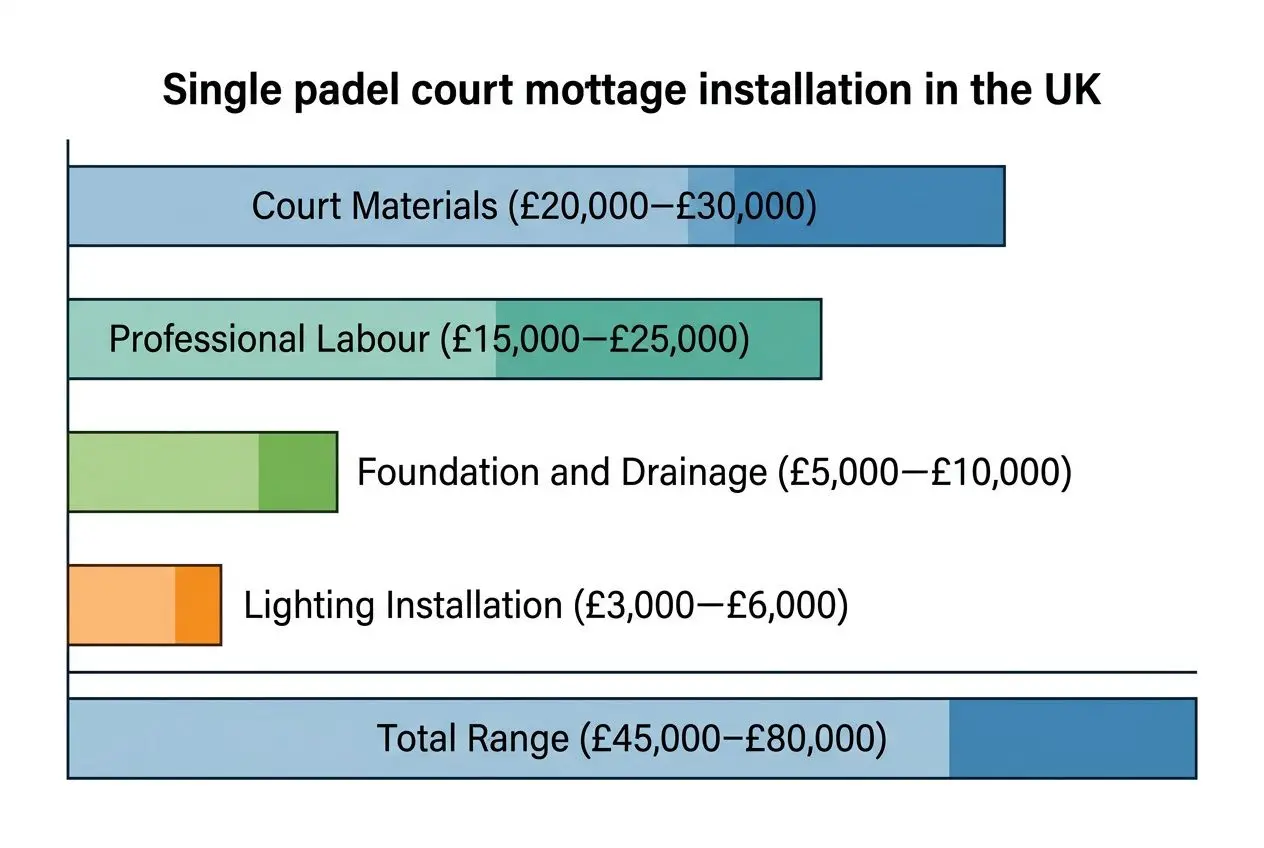
Cost breakdown for a single padel court installation
Meeting official padel court construction specifications requires a solid baseline investment, particularly for the playing surface and structural frame. The core materials alone—heavy-duty artificial turf, 10mm or 12mm tempered glass, and a galvanised steel enclosure—will consume £20,000 to £30,000 of your total court cost. Labour and foundation work add substantially to that figure before accessories are even considered.
- Court materials: The fundamental components of a standard court build—turf, glass walls, and the steel frame—range from £20,000 to £30,000.
- Professional installation labour: Certified crews managing the precise court installation of glass panels and surface alignment charge between £15,000 and £25,000.
- Foundation preparation: Groundwork, site clearing, and essential drainage infrastructure add £5,000 to £10,000. Proper drainage is non-negotiable for outdoor courts—stagnant water destroys the turf within a few seasons.
- Lighting installation: Adding LED floodlights for evening play costs £3,000 to £6,000, directly expanding your facility’s usable hours.
The baseline cost to build a standard outdoor padel court setup with lights typically settles around £71,000, assuming a flat site with stable ground. Any need for extensive preparation or complex foundation work will inflate that figure quickly. Always commission a proper site survey before signing contracts—it locks in your foundation budget early and prevents costly mid-project surprises.
| Cost category | Outdoor court (single) | Indoor court (single) |
| Court materials | £20,000–£30,000 | £20,000–£30,000 |
| Professional labour | £15,000–£25,000 | £15,000–£25,000 |
| Foundation and drainage | £5,000–£10,000 | £5,000–£10,000 |
| Lighting installation | £3,000–£6,000 | £3,000–£6,000 (advanced) |
| Roofing and insulation | Not applicable | Significant additional cost |
| Total range | £45,000–£60,000 | £60,000–£80,000+ |
Optional upgrades and their impact on total budget
Beyond the raw padel court construction, specific padel court setup requirements determine how many hours a day your facility can operate. Upgrading an enclosure, adding weather protection, or integrating scoring equipment directly affects both upfront capital and long-term revenue.
- Canopy or covered structure: Adding a canopy requires an extra £75,000 of budget per padel court. This ensures year-round playability regardless of local weather.
- Premium enclosure upgrade: Upgrading to thick steel box sections guarantees structural stability in heavy winds. For premium courts in exposed locations, this is the specification to use.
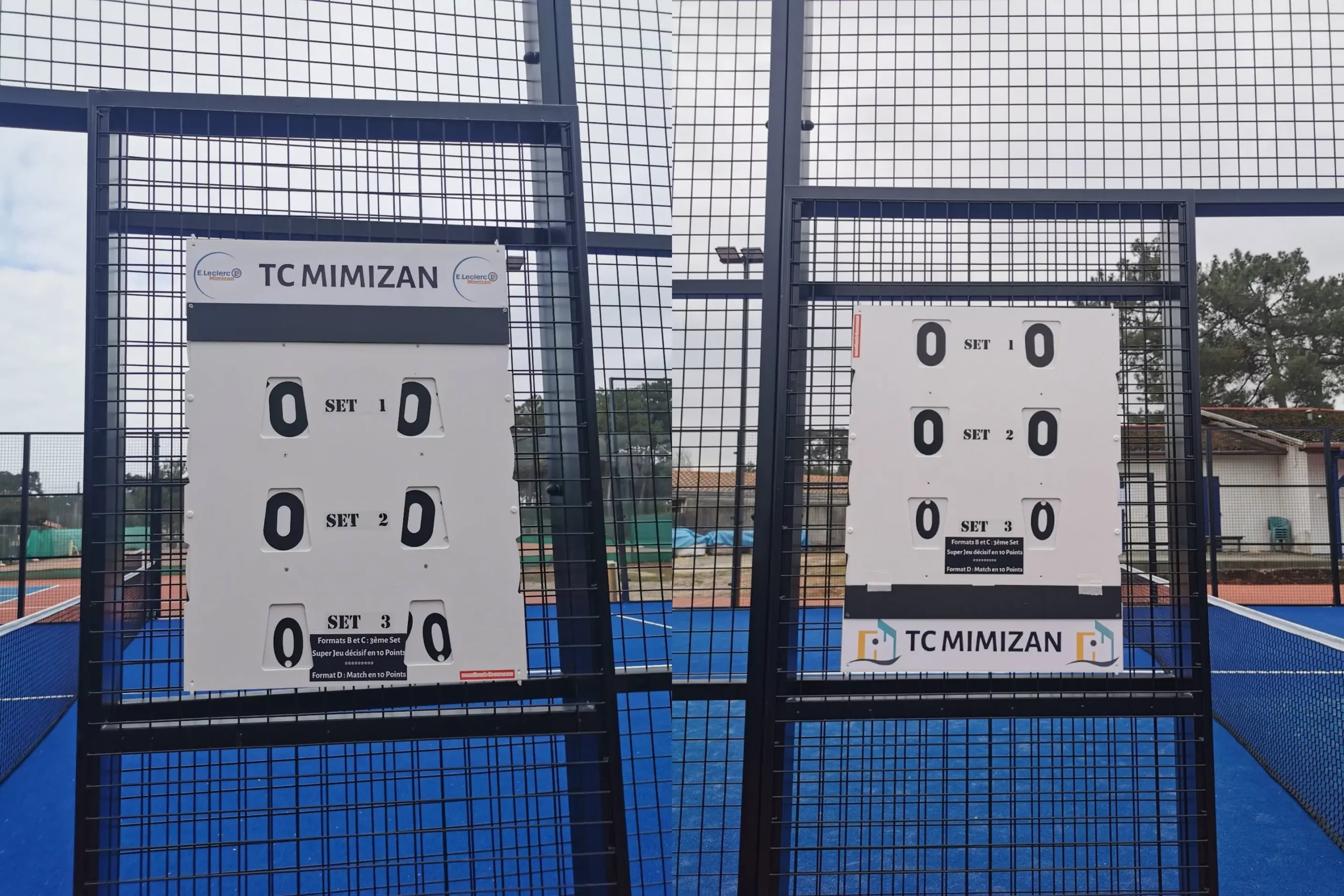
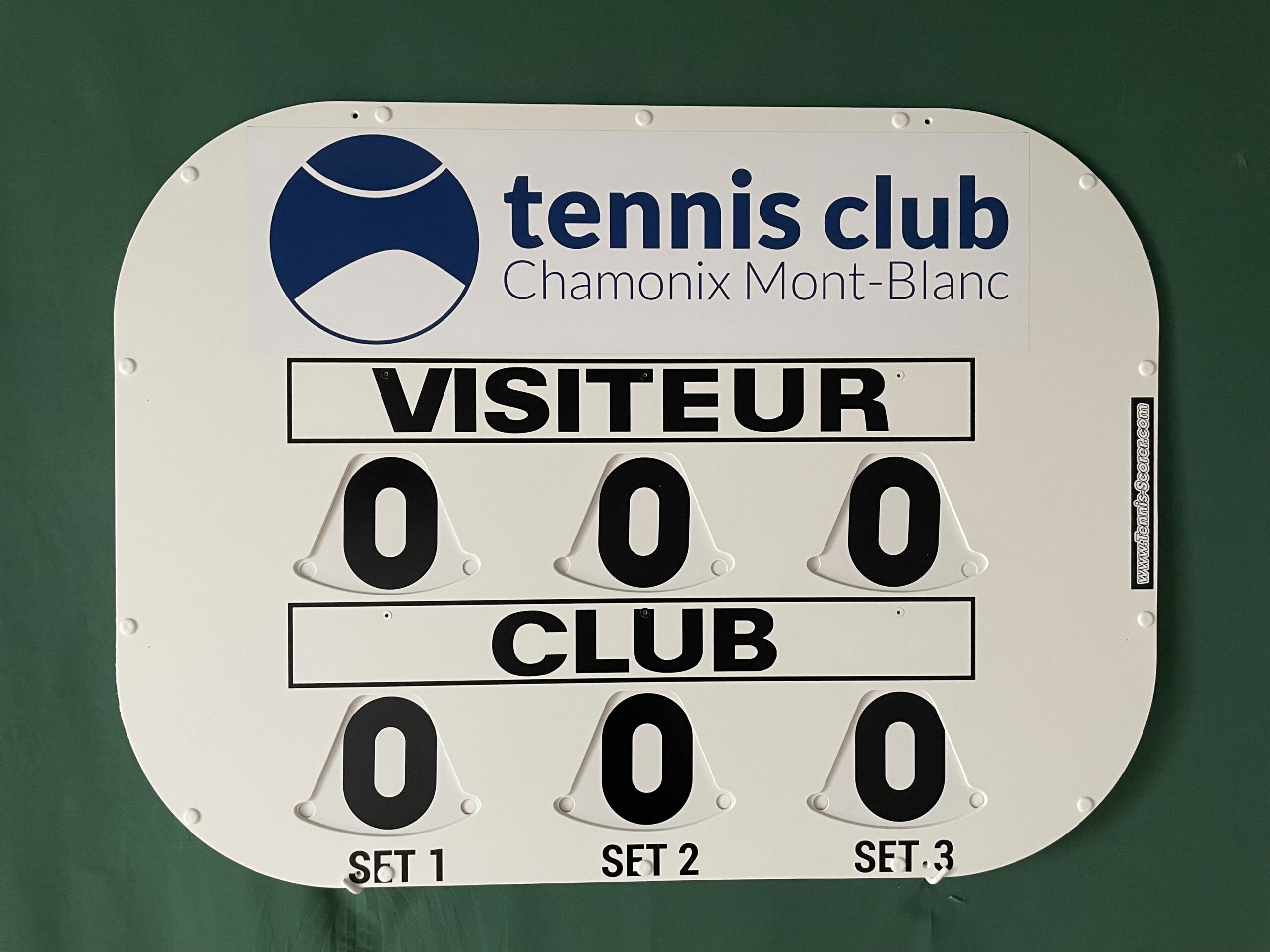
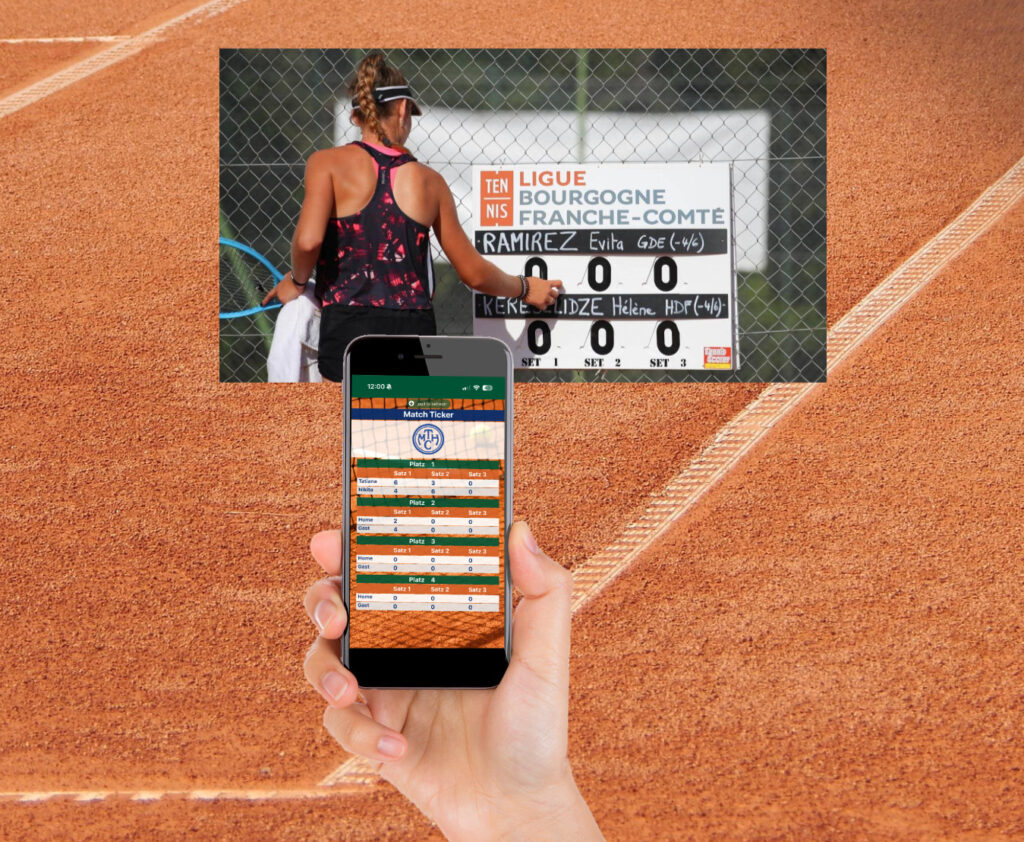
- Scoreboard: The compact padel scoreboard from Tennis Scorer uses weather-resistant PVC and mounts directly to the mesh fencing. It stays readable from 50 metres and includes a custom sticker—turning a minor accessory into immediate sponsor revenue.
- Annual maintenance: Budget £400 to £500 yearly for routine maintenance and lighting checks to extend the lifespan of your investment.
Adding a padel score board delivers the highest visual return on investment during a padel court installation. A double-sided PVC unit lets players track matches from both ends, while the integrated 56 × 11 cm advertising slots fully recover the purchase price when sold to a local sponsor. When you build a padel court, factoring in these self-funding details from day one protects your operational budget throughout the entire court construction process.
Padel court installation process, timeline and planning rules
A standard outdoor padel court requires a four-to-six-week installation process from the moment machinery arrives on site. A complex court build inside an existing facility takes considerably longer. Getting the sequence right—ground preparation, legal compliance, equipment fitting—keeps the project on track and ensures your space opens when it should.
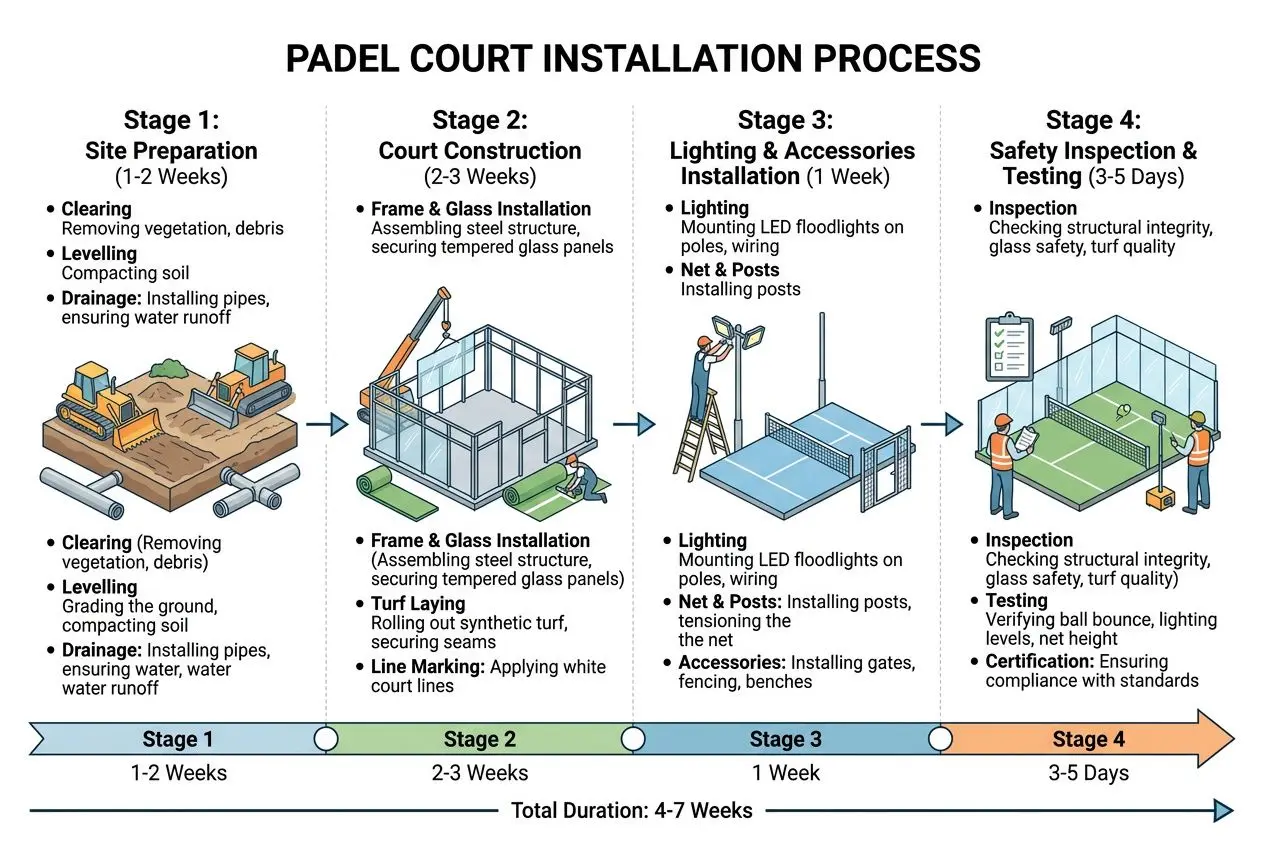
Step-by-step padel court installation process
Court installation divides into four rigid stages, none of which can be rushed. Skipping structural assessments during site preparation leads to sinking foundations that cost thousands to correct. The base determines how long the entire structure lasts.
- Stage 1, Site preparation: Clearing the ground, levelling the terrain, and installing proper drainage must happen before anything else. This stage includes casting a 400mm concrete ring beam, a structural requirement regardless of court type.
- Stage 2, Court construction: This phase covers erecting the steel frame, fitting toughened glass panels, laying artificial turf, and marking lines. Outdoor courts require 12mm glass; indoor courts typically use 10mm panels to meet safety standards.
- Stage 3, Lighting and accessories: LED floodlights, net posts, and scoreboards go in once the main structure is secure. For evening play, lighting must pass strict lux tests before contractors leave the premises.
The final step is a formal safety inspection and handover. A professional padel court build requires compliance with strict structural standards and sign-off by a certified engineer. Confirm your maintenance package and post-installation warranties are signed before the first player steps onto the turf.
Do not release final payment to any court builders until they hand over a signed structural compliance certificate.
Do you need planning permission for a padel court in the UK
Any outdoor court project introducing 6-metre floodlights in a UK residential area requires formal planning approval. Change the land use or add tall structures, and the council must sign off on it—regardless of padel court specifications.
That responsibility falls on the club manager, not the court builders. Adding a canopy or fully enclosing the space triggers the same planning rules. Secure written council consent before breaking ground on any padel court project.
Build an eight-week planning buffer into your timeline before booking groundworkers.
Finishing your court setup with the right equipment
Line markings, heavy-duty nets, and clear scoreboards turn an empty steel frame into a functional sporting venue. Cutting corners here undermines the quality of the entire build.
A standard 10-metre-wide court needs a scoreboard readable from both serving baselines at once. The double-sided Tennis Scorer PVC board clips directly to the mesh fencing with four heavy-duty cable ties. It uses rotating internal discs, requires no seasonal removal, and comes with free custom branding.
For a court that holds up year-round: fix a double-sided, rot-proof PVC scoreboard permanently to the mesh—zero maintenance, no storage requirement, full visibility from both ends.
Frequently asked questions
How much does it cost to build a padel court in the UK?
Base materials set the project budget from day one. A single outdoor padel court runs between £45,000 and £60,000, while indoor courts climb to £60,000–£80,000 depending on your specific roof and lighting setup.
Structural components— tempered glass, steel frames, and turf—consume £20,000 to £30,000 per court. The total cost to build a four-court block with lighting hits roughly £268,000. Lock down your financing around these heavy material costs before any other part of the process moves forward.
Do you need planning permission for a padel court in the UK?
Planning approval is mandatory for any lit installation or covered structure on your site. The developer must secure that paperwork before groundwork begins—factor four to eight weeks into your schedule just for this part of the process.
For anyone looking to build a padel court outdoors in a residential zone, local councils will scrutinise light spill and noise closely. Clear every planning approval completely before you book a groundworks contractor.
How long does it take to complete a padel court installation?
Groundwork drives the entire timeline of a padel court installation. A standard outdoor court build runs six to eight weeks from initial site preparation through to final handover. Indoor courts typically take around two weeks once the main building structure is in place.
The structural assembly itself moves fast. Once your concrete slab fully cures, the physical court installation takes just two to four days. Confirm curing times with your concrete supplier before scheduling steel delivery—that single step keeps the entire build timeline on track.