
Table of Contents
This guide covers everything needed about a tarmac tennis court: surface composition, installation costs, repair triggers, and year-round tennis court maintenance routines that protect playing quality and extend surface life.
Tarmac tennis court: installation, costs and maintenance guide
Tarmac remains the leading choice for outdoor tennis courts across Britain. Tennis Scorer sees the same pattern across clubs, schools, and private sites: durable construction, controlled running costs, and dependable use in mixed weather.
What makes a tarmac tennis court surface unique
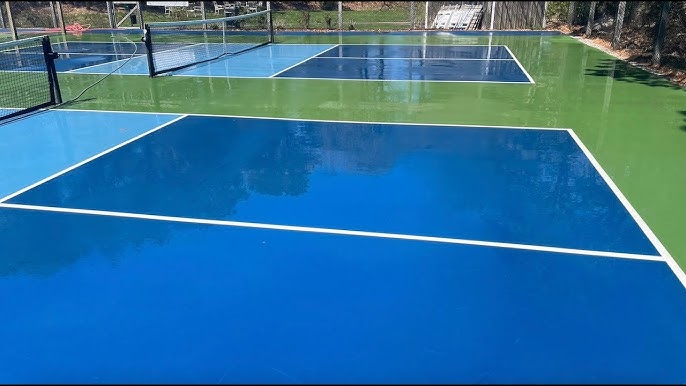
A modern tarmac tennis court surface is built from porous asphalt designed for sport. In many projects, that means a specialist system such as ultiporous tennis: a 6mm surface course laid at 25–30mm depth over a permeable binder course of 35–55mm, using modified 100/150 pen binder technology for strength and finish.
- True bounce The ball response stays predictable, which supports both development work and competitive play on any tennis court.
- Strong grip Compared with clay, grass, and astroturf, tarmac tennis offers more traction; extra sand within the paint system can also slow the game slightly and increase ball contact friction.
- Fast draining Porous construction channels water away rapidly, reducing surface pooling and cutting post-rain recovery time.
- All-weather resilience The court surface copes well with freeze-thaw conditions and UV exposure, which explains its widespread use for outdoor tennis facilities in the UK.
Reliability is the decisive factor: the surface reopens quickly, holds its bounce in winter, and demands little unplanned intervention.
Tarmac tennis court cost and installation breakdown
That reliability carries into the cost profile as well. A new macadam tennis court commonly falls between £35,000 and £55,000, often below the price of some artificial grass alternatives.
By contrast, the final figure depends heavily on the site: the existing base, required drainage, fencing, and line marking specification all shift the budget. The right choice when appointing contractors is a SAPCA- and LTA-compliant specialist, because quality control, warranty protection, and long-term performance depend on proper installation.
From that point, new build work and tennis court resurfacing projects follow the same principle. Site conditions drive cost as much as the chosen finish.
| Facility type | Estimated installation cost | Annual maintenance cost |
| Private home court | £45,000 – £60,000 | ~£300 per court |
| School or college | £55,000 – £75,000 | ~£300 per court |
| Sports club or leisure centre | £70,000 – £100,000 | ~£300 per court |
Repairing and resurfacing your tennis court
Once cost is understood, the next issue is timing. Not every worn surface needs full replacement.
In practice, the decision between repair and complete resurfacing depends on what sits beneath the acrylic finish. If a sealed crack opens again in exactly the same place, the base has moved and superficial patching is unlikely to hold for long.
- 20% colour loss Once fading affects around a fifth of the area, the coating system is usually at the point where planned tennis court resurfacing makes more sense than cosmetic repair.
- Cracks exceeding 6mm Fissures beyond 6mm point to movement in the structure; local repair is only realistic where the sub-base remains stable.
- Chronic birdbaths Pooling that repeatedly remains after rain shows the profile has failed; local work may help, but resurfacing is often the durable answer.
- Annual repair costs above £2,000 Once repeated patching passes this level per tennis court, a full scheme usually becomes the better investment.
Once installed, an acrylic-coated court surface commonly reaches the point of resurfacing after about eight years of regular use. At that stage, some owners also compare alternatives such as an artificial grass court, especially where long-term maintenance budgets matter as much as capital cost.
How to maintain a tarmac tennis surface year-round
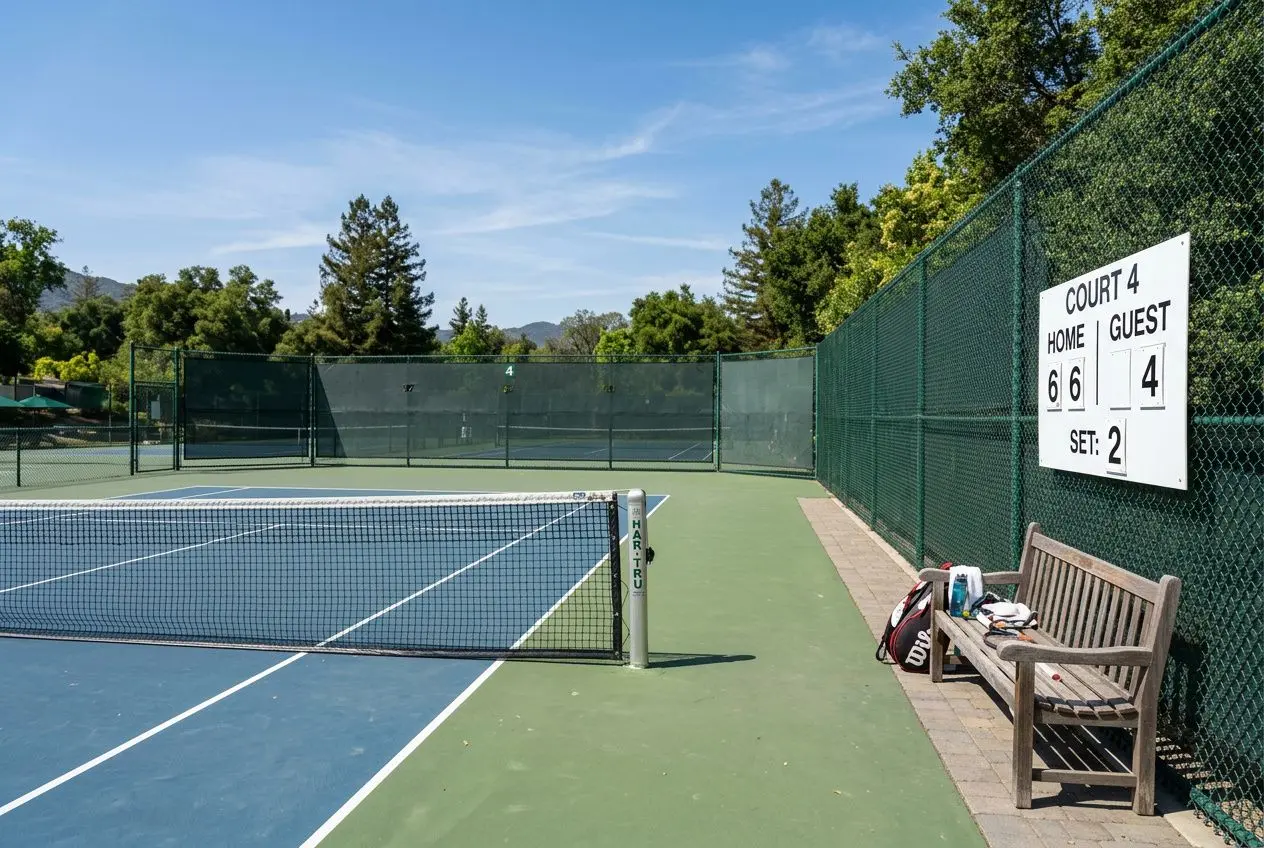
That lifespan depends on regular care. Daily maintenance usually takes around ten minutes: remove damp leaves before they bind to the coating, look for standing water near the baseline after storms, and check that net height remains at 36 inches.
Beyond the daily routine, weekly rinsing with low pressure and a wide-angle nozzle lifts embedded grit that dry sweeping can miss. For owners seeking a qualified team for periodic inspection, cleaning, or remedial work, this guide to tennis court maintenance explains how to assess suitable local contractors.
Frequently asked questions
What types of tennis court surfaces are available in the UK, and how does tarmac compare?
The main types of tennis court used in the UK are tarmacadam, artificial grass, clay, and natural grass. Tarmac is the most common choice for outdoor tennis and wider sports courts because it gives a reliable bounce, good grip, and effective drainage. The result is a consistent surface that holds up through variable British weather and suits regular play year-round.
That consistency makes comparison easier. By contrast, artificial grass usually costs more to install: typically £45,000 to £85,000, compared with £35,000 to £55,000 for tarmac surfacing on hard courts. It also needs specialist infill management, which adds to ongoing maintenance.
As a result, for clubs and schools looking for a practical court surface with lower running costs, a tarmac tennis court is often the right choice when all-weather use matters most. Tennis Scorer recommends SAPCA-approved contractors when comparing sports surfaces for a new tennis court, resurfacing scheme, or wider restoration project, especially where drainage, line marking, and long-term performance need to be assessed together.
How often should professional tennis court cleaning and maintenance be carried out?
That longer-term performance depends on regular upkeep. Standard outdoor acrylic hard courts should receive professional tennis court cleaning every 12 to 18 months to remove mildew and algae that routine hosing will not shift, while courts beneath heavy tree cover usually need annual court cleaning because of sap and leaf build-up.
Without proper maintenance, acrylic playing surfaces can lose around 30% of surface friction over five years. The difference comes down to method: tennis court cleaning should use wide fan tips at low pressure so the coating stays intact and line marking is not disturbed. Pairing an in-house routine with scheduled tennis court services keeps annual costs at about £300 per court and helps avoid early wear.
What are the key signs that a tarmac tennis court needs repair or resurfacing rather than routine maintenance?
That maintenance approach has limits once surface wear becomes structural. A tarmac tennis court usually needs repair or resurfacing rather than standard maintenance when cracks exceed 6mm, when visible colour loss reaches roughly 20% of the playing surface, or when standing water remains after rain because the profile has failed.
Those signs indicate different underlying faults. Structural cracking suggests sub-base movement that ordinary tennis court repairs or local court repairs will not solve for long, while widespread coating loss means court cleaning alone will not restore grip.
Once those issues appear, approved contractors can determine whether repair, restoration, or full resurfacing is the sensible route, including relining, patching, or a new 30mm tarmac application with high-quality surfacing. Products such as Ultiporous are specified for rebuilds where drainage compliance and surface stability must meet SAPCA standards.