
Table of Contents
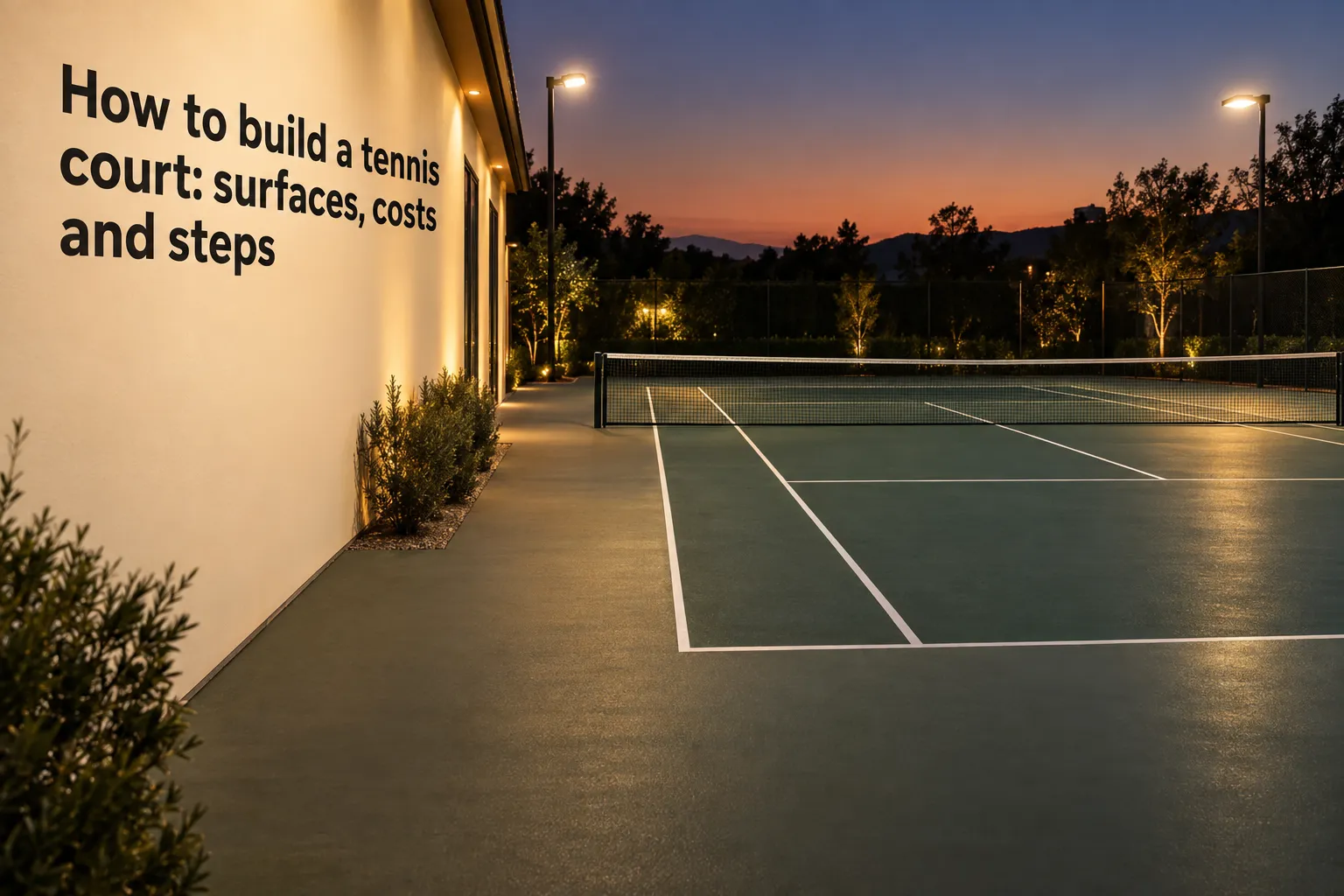
Choosing a colour for a tennis court involves more than taste. The colour affects how well players see the ball, how clear the lines are and how the coating behaves on the existing surface.
Which tennis court colour should a club choose?
No single colour is right for every club. The choice depends on the surface type, the court’s surroundings and the identity the club wants to show. Tradition, the rules and the experience of major tournaments each narrow the options in a different way.
Traditional colours and modern alternatives
Some surfaces come with their own colour: grass is naturally green and conventional clay is red-brown. Hard courts are different. Coloured acrylic finishes give them a much wider choice of colours.
That choice has grown over time. According to SAPCA, traditional UK private and public courts were usually green or two-tone green. Modern acrylic courts can now use blues, purples, pinks, greens, yellows, reds and terracotta, SAPCA notes.
What do the rules require?
The rules leave the colour open. The 2026 ITF Rules do not set a colour for the playing surface. They do require all lines to be the same colour and to contrast clearly with the surface.
Within that freedom, a two-tone coating is a common design option: one colour for the playing area and another for the surrounding court area, which sets the two apart.
The colour still has to go with a surface that suits the members who play on it. The LTA recommends letting players try a range of surfaces before a venue chooses one.
Why did major tournaments adopt blue?
The US Open changed its hard-court playing area from green to blue in 2005. Its stated reasons were better visibility of the yellow ball for players, spectators and television viewers, along with a distinctive look. Reports at the time said the surface system underneath stayed the same and only the colour changed.
The Australian Open went further. It moved to blue in 2008 and changed its cushioned acrylic system at the same time. Research before the change had found problems with base movement and with the consistency of bounce and pace. In practice, a new colour on its own fixes none of these.
How does colour affect visibility on court?
Visibility is about contrast, not about one colour on its own. The ball has to stand out from everything behind it, the lines have to be easy to read and safe to step on, and the finish must not reflect too much light.
Follow the ball against its surroundings
A ball can stand out against the playing area and still be lost against what lies beyond it. Visibility depends on contrast with the playing area, the court surround, fencing, windbreaks, advertising, clothing, foliage and buildings, under the venue’s real daylight or floodlights. LTA colour-vision guidance notes that some players find it hard to follow the ball against these backgrounds and to tell court lines apart.
Because the setting matters this much, a sample book is not enough. Look at physical colour samples on site in sun, in shade and under floodlights before deciding.
Keep court lines legible and safe
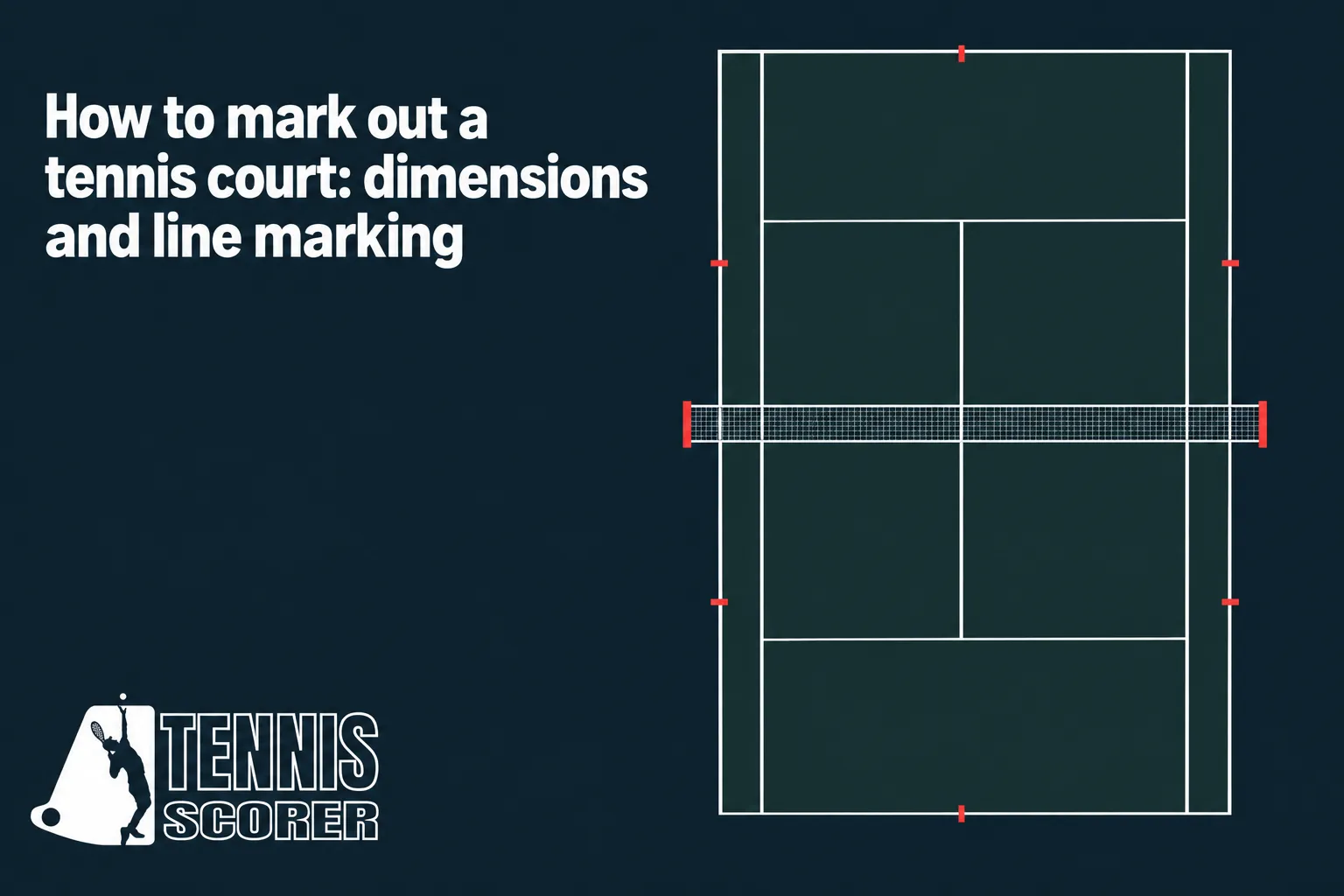
Line widths are standard. The LTA gives 50 mm for conventional tennis lines and 100 mm for the baseline.
Recolouring is a good time to check those measurements. SAPCA advises checking that lines are accurate against the rules of tennis before repainting. Inaccurate lines should be corrected, not painted over.
The type of paint matters too. SAPCA advises against aerosol cans for permanent lines because they wear poorly and are not slip-resistant enough. Lines are part of the playing area, so their finish needs the right slip resistance.
Balance contrast with reflected light
Contrast also works between the two zones of a two-tone court. A lighter surround can make a darker playing area stand out more.
The finish needs the same care. A highly reflective or glossy finish can send unwanted light back towards players, so acrylic court coatings are available with non-glare finishes.
For players with colour-vision deficiency, the LTA advises strong contrast rather than relying on colour alone. LTA and Tennis Wales guidance warns against red or orange markings on a green court and favours blue, yellow and white equipment where possible.
Does court colour affect surface heat?
Hotter summers have made surface temperature a factor in choosing a colour. Some of the evidence comes from physics, some from field studies and some from manufacturers’ own tests. These are not equally reliable.
How light and dark finishes differ
The basic principle is simple, but it involves trade-offs. A UK Government report on grassroots sport describes rising heat as a problem for facilities and participation. It notes that synthetic surfaces can absorb excessive heat.
- Dark finishes: they generally absorb more solar radiation.
- Light finishes: they reflect more sunlight and usually stay cooler.
- Reflectance trade-off: a more reflective finish can also cause more glare.
- Visibility link: a colour chosen to keep the court cool still has to give strong contrast with the ball.
The coolest colour on paper may therefore make the ball harder to see. Heat should be weighed alongside the contrast checks described above, not on its own.
What temperature studies actually show
In one pavement-coating experiment, not carried out on British tennis courts, maximum reductions against an uncoated dark control were about 19.3°C for off-white and 10°C for grey. Green reached 7.8°C and blue 7.9°C. Red reached 6.2°C. A 2024 study of tennis courts in Japan found outdoor hard courts were hotter than a nearby weather station, but its figures are not UK court temperatures. In one manufacturer’s test, a heat-management surface reached 45°C against 52°C for a conventional court at an air temperature of 29.8°C. That is a 7°C difference under those conditions.
How to assess cooling claims
Supplier figures vary widely. One acrylic coating maker claims a 5–8°C reduction in surface temperature for one specific formulation, not for coloured acrylics in general. Another reflective technology claims 20–30% higher solar reflectance than standard court coatings. It adds that the cooling effect depends on colour, location and site conditions.
To compare these claims, ask for measured solar-reflectance or surface-temperature data, the air temperature and sunlight conditions during the test, and whether the results apply to the whole court system or only to its topcoat.
What should clubs check before recolouring a court?
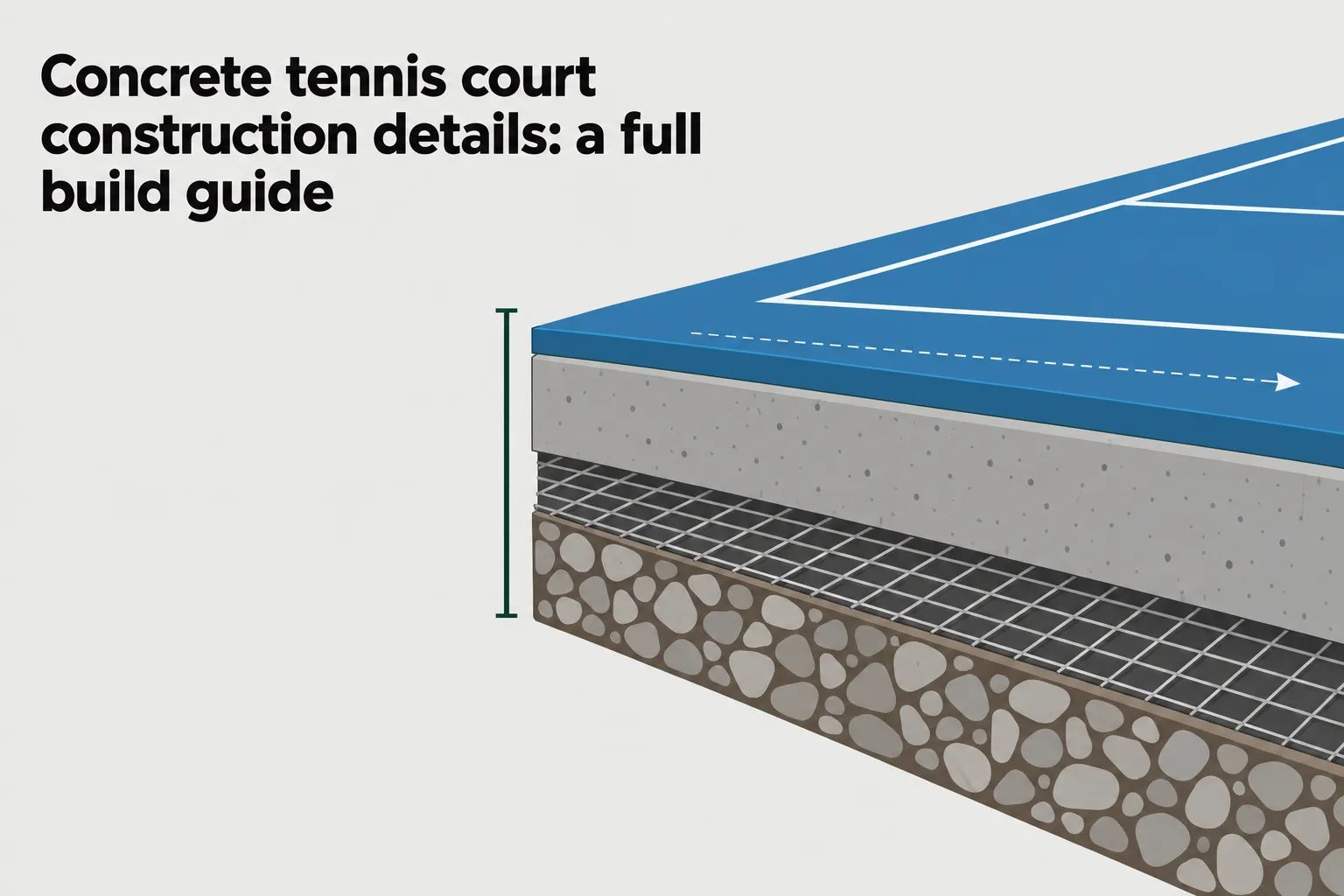
A new colour is only as good as what lies beneath it. Before recolouring, check three things: whether the coating suits the existing material, what grip and pace it will give, and what condition the court is in.
Choose a coating compatible with the surface
According to the LTA, porous macadam is normally finished with a coloured acrylic or polyurethane coating. This contains slip-reducing agents balanced for foothold and ball bounce. SAPCA says the water-based acrylic paint commonly used on porous courts is made of acrylic resin, water, oxide pigments, mineral fillers and processing aids.
- Water-based acrylic: for macadam or concrete courts.
- Acrylic–polyurethane hybrid: made for tennis; one UK-made product states coverage of 6–8 m² per litre per coat for its own formulation.
- Solvent-based polyurethane: for polymeric surfaces.
- Product data sheet: the reference for coverage and compatibility of each system.
Once the coating family matches the substrate, the next step is to specify how the court should play.
Specify grip, bounce and court speed
The amount of sand in court paint affects grip and court speed, the LTA explains. SAPCA also links sand content to pace and slip resistance. An acrylic-resin surface system can combine a durable finish with cushioning, impact reduction and resistance to cracks in the base showing through. These come from the system, not from the colour.
A 2025 UK public-sector refurbishment tender gives a model to follow. It specified two coats of UV-stable acrylic colour coating, slip-resistant play and permanent markings. Final checks covered evenness, bounce and slip resistance.
Inspect the existing court first
The court’s age sets what is realistic. The LTA says porous macadam typically lasts 10–12 years. It advises repainting at around five years and resurfacing at around 8–10 years, depending on condition. Repainting too often has a cost: one UK club found that repeated repainting or sealing reduced its courts’ permeability and drainage, so they held more water.
From there, the project follows a set order. Survey the base and drainage, define playing requirements and inspect colour samples. Check product limits, prepare and repair the surface, then apply a compatible coating. Mark lines once the coating has cured, inspect the result and plan maintenance. The product data sheets set the conditions for application and curing.
How can court-side branding complement the colour scheme?
A court’s visual identity does not stop at the surface. Scoreboards, banners and sponsor signs sit right next to the coating, and they should match the colour scheme without affecting play.
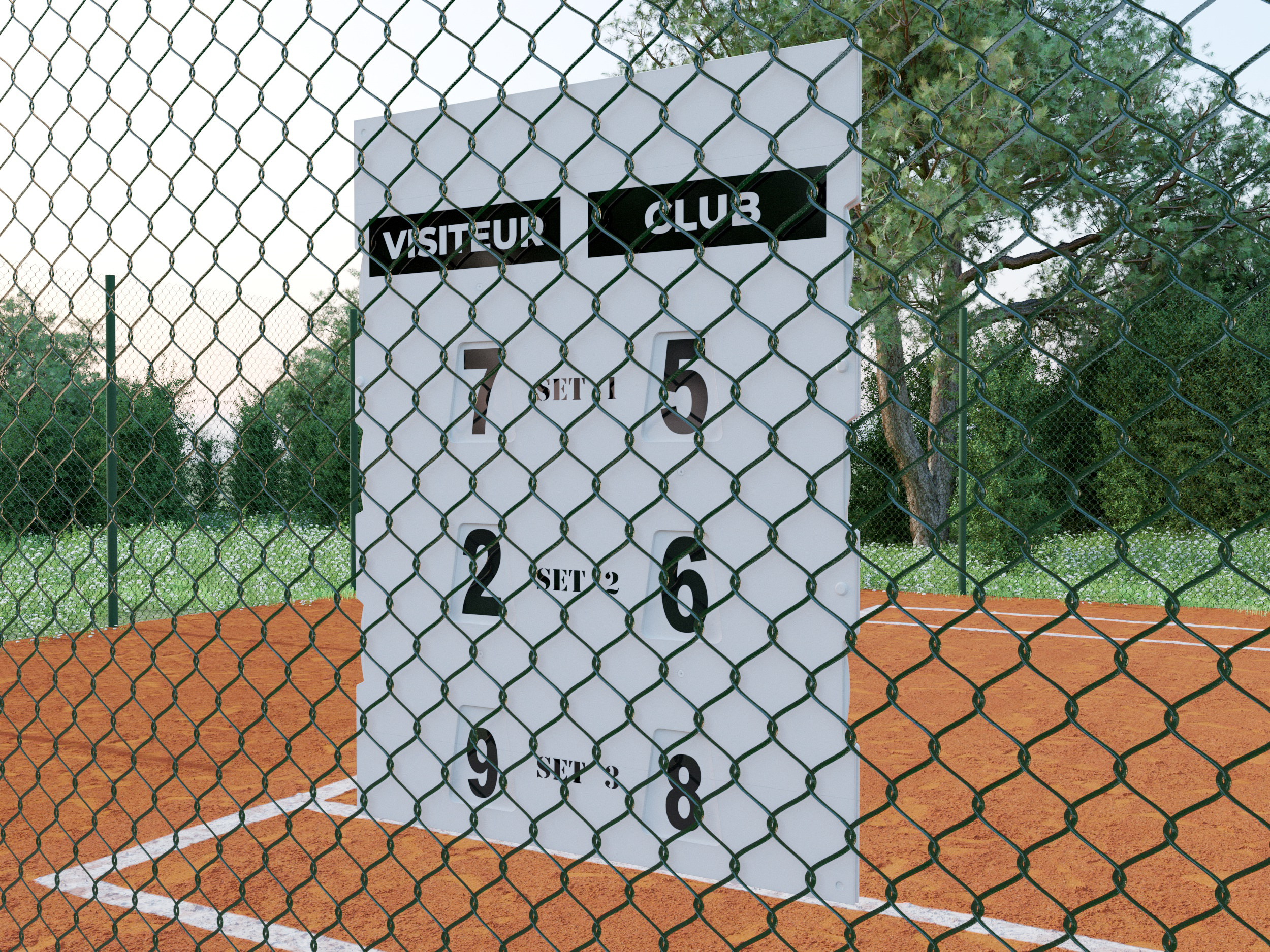
Position scoreboards within the court design
Neither the ITF nor the LTA sets a standard size for a scoreboard on an ordinary club court. Placement depends on two things: being visible from where people will watch, and staying out of players’ sightlines.
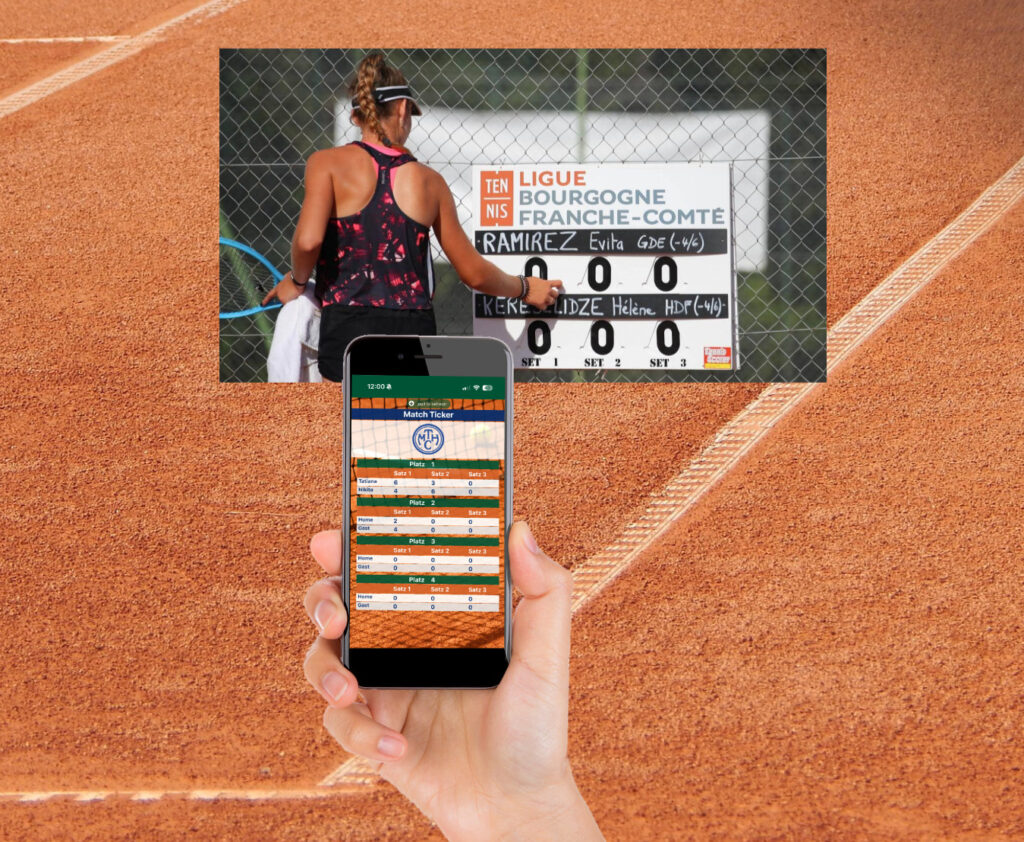
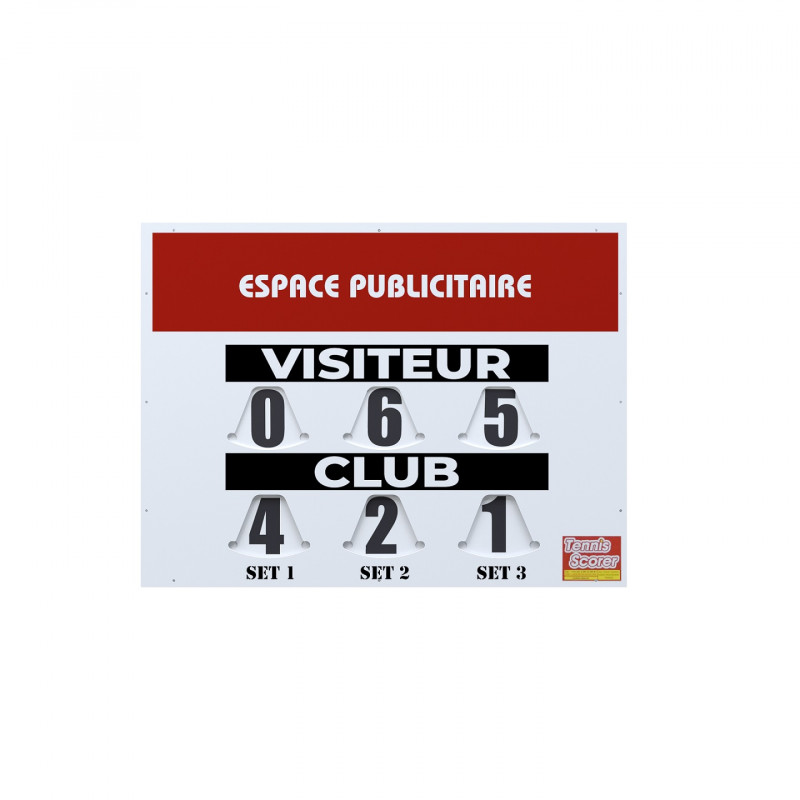
Tennis Scorer makes manual tennis and padel scoreboards from rot-proof PVC. The company states they can stay courtside all year in any weather. Tennis Scorer also offers free advertising stickers to personalise the boards with a club or sponsor logo.
- Viewing position: readable from the benches or clubhouse where people watch.
- Sightlines: kept out of the players’ line of vision.
Because the stickers put a logo on the board, the same visibility rules that apply to sponsor graphics apply to them as well.
Keep sponsor graphics clear of play
LTA club-sponsorship guidance lists court and fence banners, club signs and clubhouse areas as places for sponsor branding. The 2026 ITF Rules allow advertising at the back and sides of the court, and on the surface outside the lines, as long as it does not affect vision or playing conditions. Advertising inside the playing lines is not permitted.
Colour matters here as well. The 2026 ITF Rules restrict white, yellow and other light colours around the court where they could interfere with vision. For LTA-sanctioned events, the 2026 LTA Competition Regulations add conditions on marketing material on the court, the net and certain other equipment.
Check consent for court-side signs
In England, repainting a court like-for-like does not automatically need planning permission. Major engineering works, or a significant change in external appearance or use, need a check for that specific project.
A new or altered sponsor sign can raise a separate advertisement-consent question, even if the repaint needs no permission. From 1 April 2026, England’s national application fees are £174 for qualifying business-premises or specified directional advertisements. For other advertisements the fee is £610. These are not court-repainting fees, and English rules do not automatically apply in Scotland, Wales or Northern Ireland.
Frequently Asked Questions
When can a newly built porous court receive its colour coating?
According to the LTA, coloured coatings on porous asphalt are usually sprayed on once the bitumen has hardened. New porous courts can also soften in hot weather, especially in their first season. The exact limits for hardening, application temperature and curing come from each product’s data sheet. There is no universal statutory waiting period.
Which UK code of practice covers the construction and coating of tennis courts?
SAPCA’s current tennis code is The Construction and Maintenance of Tennis Courts, fifth edition, January 2026. SAPCA describes its codes as guidance based on governing-body and standards requirements. They are not contractual specifications in themselves.