
Table of Contents
Choosing durable materials for sports courts means comparing complete constructions rather than headline products. Concrete, acrylic, rubber, modular tiles and porous macadam differ in which games they suit, from tennis and basketball to multi-sport use, in the upkeep that keeps them playable, and in what UK courts cost to build and refurbish over their lifetime.
How durable are sports court materials?
Durability depends less on any one product than on how its layers work together. A sports court combines ground preparation, a supporting base, the court surfacing, the markings, the drainage and the edge details. As a result, comparing sports flooring materials on their own says little about how long the whole court will last.
Concrete bases and acrylic playing surfaces
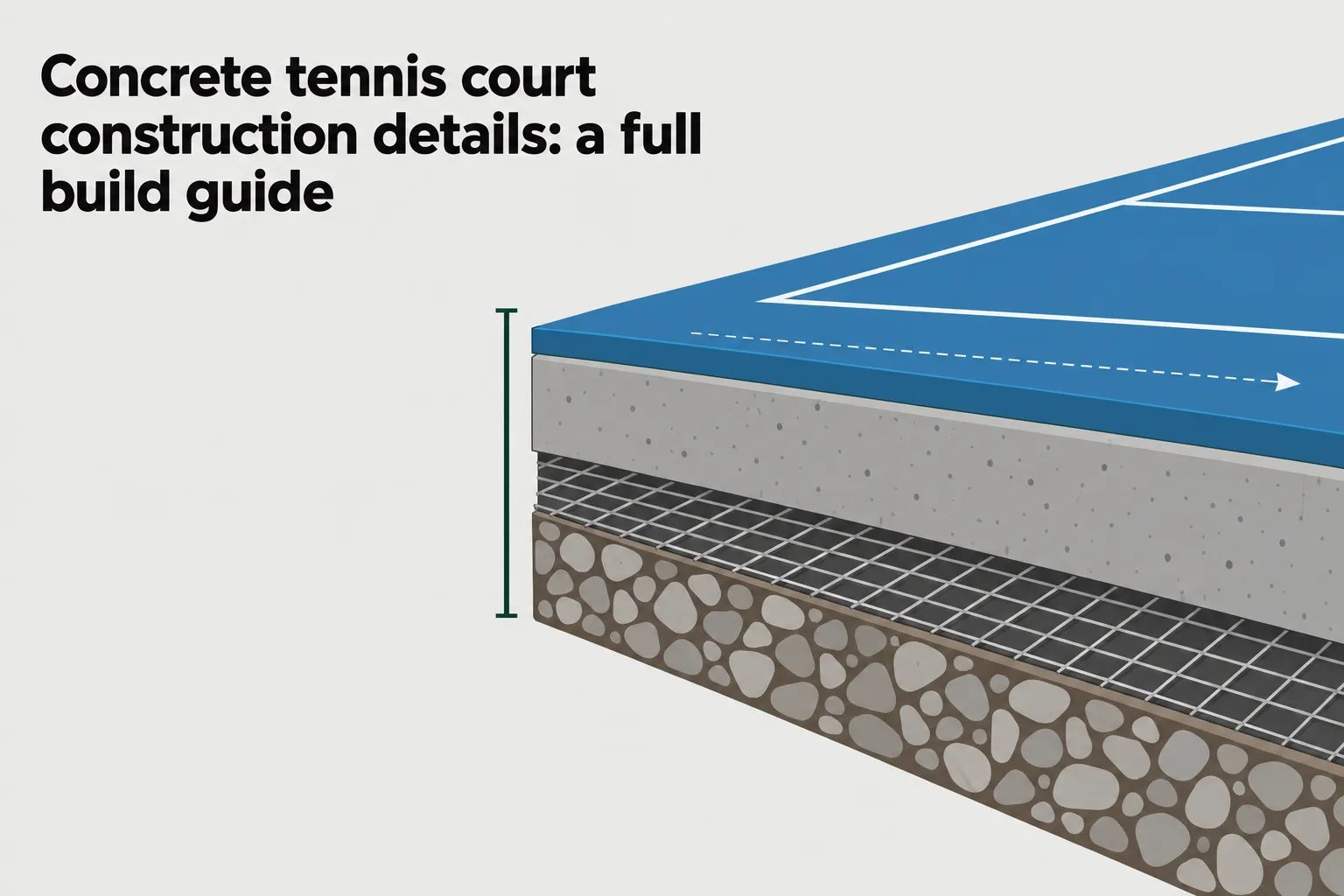
Concrete sits at the bottom of many hard courts. It gives a stable base for a playing surface such as acrylic or tiles. Poor ground conditions, careless placement or rushed curing can still lead to cracks and standing water. For that reason, the ITF advises reinforcing concrete laid beneath an acrylic tennis court.
The coating over that slab brings its own weak points. Acrylic gives consistent ball response. However, moisture, contamination, loose old paint or base cracks left unrepaired can make it peel, blister or crack early. A conventional acrylic coating also adds little cushioning: what players feel underfoot is largely the firmness of the base.
Rubber and modular court tiles
Softer systems come in several types. Rubber flooring includes bound granules, polyurethane-bound surfaces and prefabricated tiles, and its durability depends on formulation, thickness, installation, use and exposure. Typical failures include granule loss, binder deterioration, blistering, debonding and soft spots. In practice, how much cushioning a surface has is no guide to how long it will last.
Modular court tiles take a different approach: interlocking polypropylene panels laid over a sound hard base. A damaged tile can be replaced on its own. By contrast, broken connectors, lifted edges, UV damage and thermal movement can all impair the surface. Tiles cannot correct a base that is cracked or unstable.
Asphalt and porous macadam foundations
Asphalt is the other common base for outdoor sports coatings. It is less rigid than concrete. Movement, oxidation and water reaching the underlying layers can produce cracks or low spots. Porous macadam, a bound stone surface that lets water drain through it, depends on a carefully built foundation.
The LTA’s example porous-asphalt tennis construction sets out that foundation: at least 150 mm of compacted drainage aggregate, then a 40 mm binder course and a 25 mm surface course. Difficult ground may need a deeper foundation. The LTA gives this construction a typical life expectancy of 10–12 years, which varies with construction, drainage, use and care and is not guaranteed for every court.
Which sports flooring suits each game and weather?
The materials above perform differently depending on the game played on them. Choosing sports flooring means matching bounce, footing and drainage to the sport, its users and local weather. Tennis and basketball set different requirements, and multi-sport courts have to meet several of them at the same time.
Which surface suits an outdoor tennis court?
Porous macadam is an established surfacing material for a tennis court in the UK. It combines predictable bounce with drainage through the court structure. Other surface families give a different game:
- Acrylic over a firm base: consistent hard-court bounce, provided its texture and drainage design suit the venue.
- Artificial clay: slower play and a higher bounce.
- Natural grass: traditional play that needs intensive seasonal care.
Material names alone do not predict how a court plays. The ITF classifies surfaces by measured court pace, so the playability of an outdoor tennis court comes from testing. ITF pace classification is also a separate status from ITF recognition of a particular installed tennis court.
Outdoor basketball and wheelchair performance
Basketball puts different demands on a surface. An outdoor basketball court needs stable footing, traction for quick changes of direction and predictable bounce. Basketball England recommends porous macadam and accepts polymeric surfacing as another option. It does not recommend sand-filled synthetic turf or needle-punch surfaces for outdoor basketball.
Wheelchair use narrows the choice. Basketball England does not recommend polymeric surfacing for wheelchair basketball, and suitability also depends on rolling resistance, joints and level transitions. Modular court flooring can serve recreational play and portable 3×3 events. For higher-level 3×3, FIBA recommends a FIBA 3×3 Approved product, tested for factors including wet slip resistance and water infiltration.
Wet-weather safety and multi-sport use
Water infiltration, raised by the FIBA tests, depends on the whole construction of outdoor courts. Perforated tiles or a porous court surface cannot prevent puddles if the base and outlets below do not carry the water away.
Wet-weather safety therefore needs its own evidence. Wet and dry grip, shock absorption and ball behaviour should each be shown separately. A softer surface or an “all-weather” label does not prove that a court is suitable straight after rain.
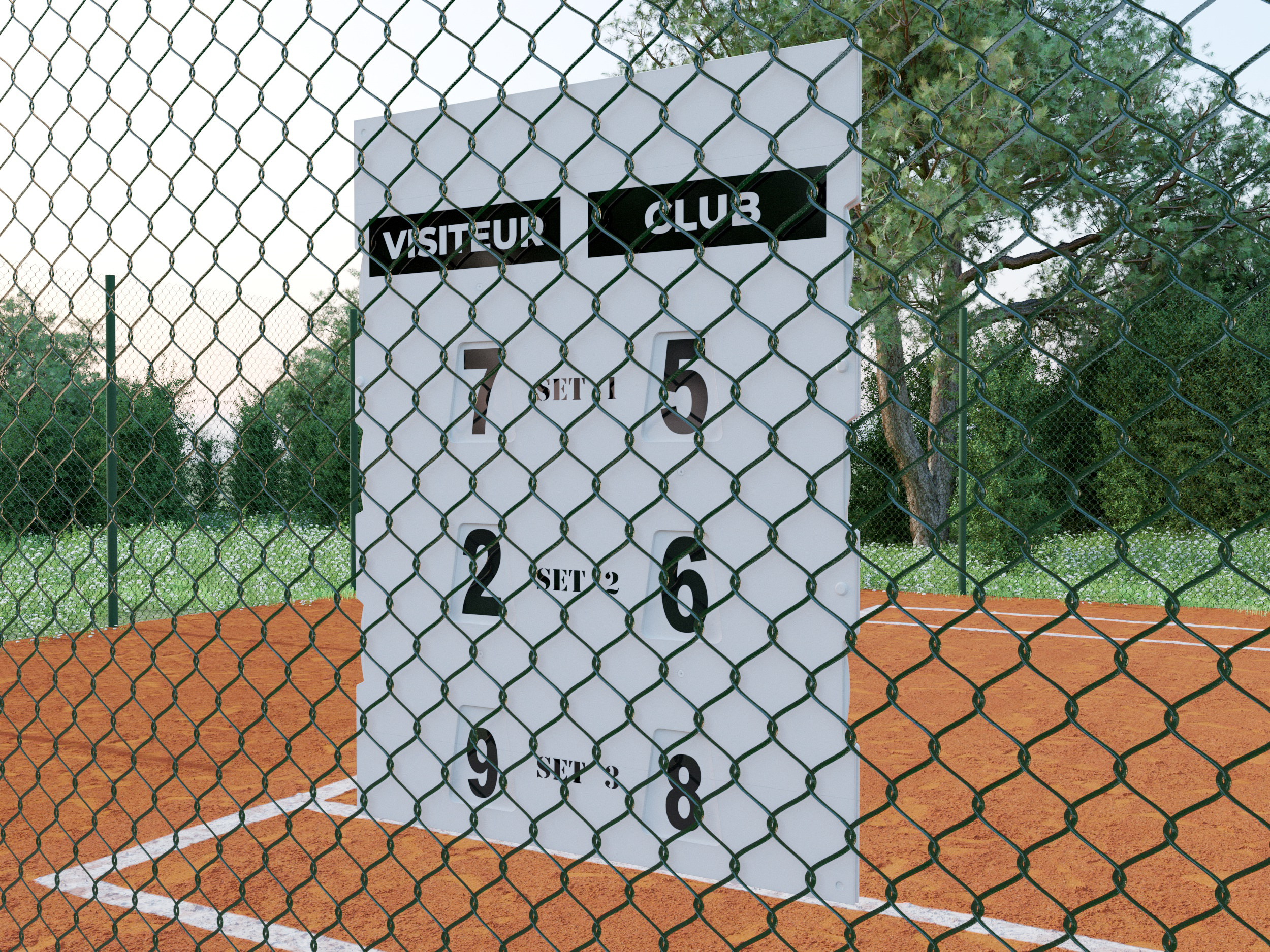
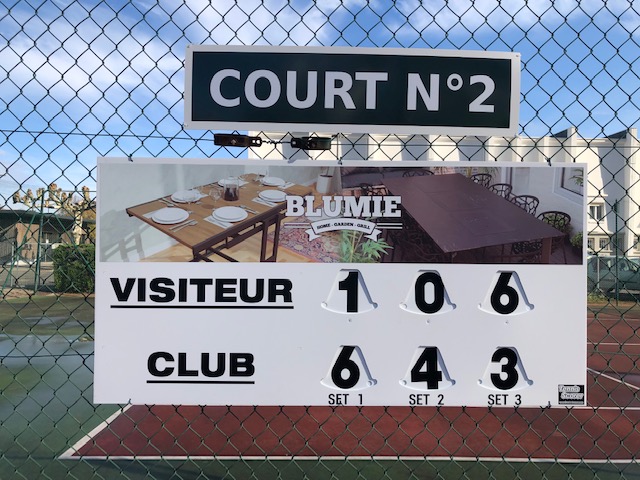
The same checks multiply on a multi-sport basketball court that also hosts other games. Each sport’s footwear, ball response and movements need checking, along with accessible routes, level changes and secure edges. Perimeter fittings, such as a slim weatherproof scoreboard fixed to fencing, can be reviewed at the same time.
What upkeep keeps court surfaces fit for play?
Once a court is built, how long it lasts depends on regular upkeep. Maintenance runs from routine cleaning to periodic recoating and targeted repairs, and each step has to suit the installed system.
Routine inspection and cleaning
Routine care starts with removing leaves and debris, which hold moisture and hide defects. After that, the court surface needs checking for problems that develop slowly.
Cleaning methods and chemicals must suit the installed system, since unsuitable treatment can damage coatings or rubber binders. SAPCA advises owners to follow the surface supplier’s maintenance instructions. Each inspection should cover:
- Standing water: puddles that remain after rain.
- Cracks and joints: new or widening lines in the surface.
- Edges and wear: lifting borders and worn texture.
- Drainage outlets: blockages that stop water escaping.
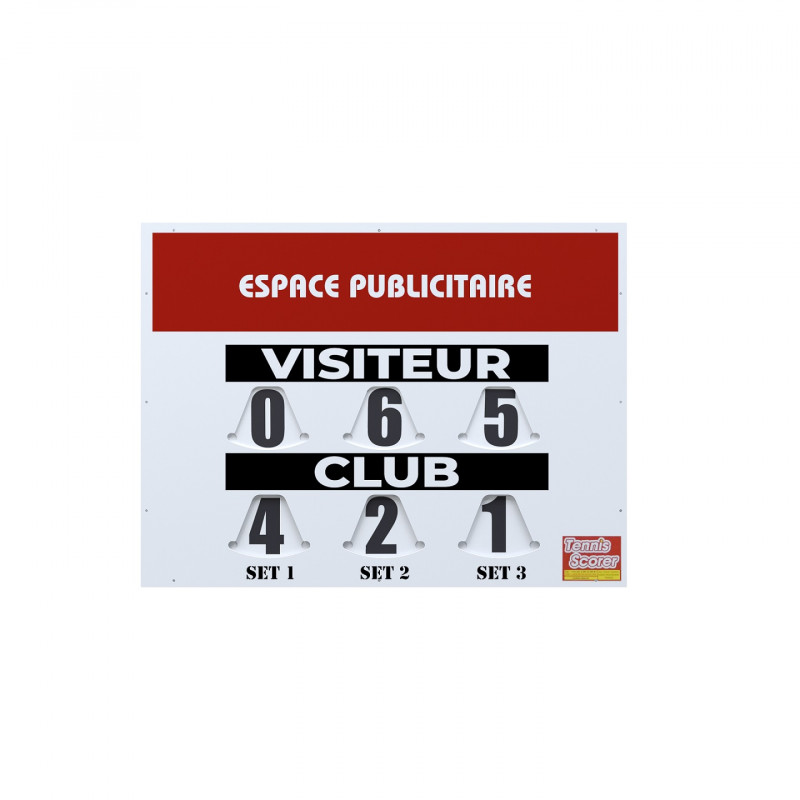
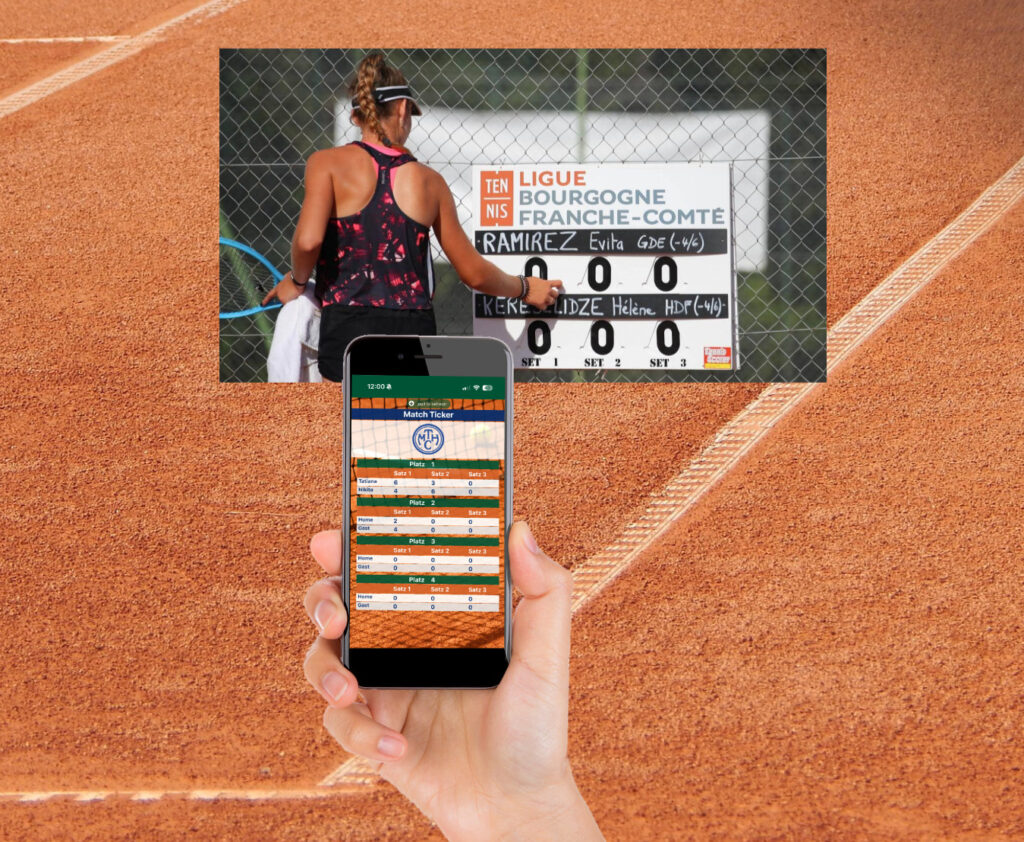
Recording these checks makes later decisions easier. A log of cleaning, defects, repairs and performance tests helps separate ordinary wear from structural problems when refurbishment is planned. The log can also include equipment left on court all year, such as a compact tennis and padel scoreboard.
Recoating hard courts
Before concrete is resurfaced, check it for cracks, moisture, contamination and loose old coatings; cracks caused by ongoing movement need their cause fixed first. Acrylic resurfacing follows a set order: repair the sound base, remove unsound material, apply the specified primer or resurfacer and coating layers, mark the lines, then inspect the cured finish. For porous macadam, the LTA recommends repainting every 5 years and resurfacing every 8–10 years, depending on condition. Repeated painting can reduce permeability.
Repairing rubber and modular surfaces
Softer systems need different checks. Rubber maintenance involves compatible cleaning and looking for loose granules, open seams, depressions and drainage problems. Any repair must also deal with a damaged base. Modular tiles can be replaced one at a time if compatible spares exist and the base is sound. Inspections should cover connectors, lifted edges and blocked openings.
Some symptoms go deeper than the surface. Recurring ponding, slippery areas, inconsistent rebound or suspected base movement call for a specialist assessment before any cosmetic repair.
What does a UK court cost over its life?
Construction price is only the first part of the cost. A realistic budget combines LTA averages for building new courts, refurbishment costs and the site factors that change both.
Indicative tennis-court construction costs
The LTA publishes indicative averages for sets of four new tennis courts. These are project averages, not a quotation for every site. For each surface, the set price breaks down as follows:
- Porous asphalt: £150,000 per set, or £37,500 per court.
- Artificial grass or impervious acrylic: £175,000 per set, or £43,750 per court for either option.
- Acrylic clay: £200,000 per set, or £50,000 per court.
The gap from cheapest to dearest is £12,500 per court. Refurbishment costs, compared below, change that picture over the court’s life.
| Surface | New set of four (LTA average) | New, per court | Refurbishment, per court |
| Porous asphalt | £150,000 | £37,500 | £15,000 |
| Artificial grass | £175,000 | £43,750 | £12,500 |
| Impervious acrylic | £175,000 | £43,750 | Not given |
| Acrylic clay | £200,000 | £50,000 | £17,500 |
Refurbishment and whole-life budget
A whole-life budget for a sports court should compare construction, routine maintenance, inspection, repairs, renewal and end-of-life work over the same period. Sport England’s lifecycle guidance also includes major replacement and day-to-day repairs.
Site conditions can change those figures significantly. Ground conditions, excavation, access, drainage, base specification, cushioning, markings and accessibility all affect installation costs. As a result, the price of a court surface is not the price of a complete court.
Comparing quotes and specifications
Quotes can only be compared when they cover the same scope: groundworks, drainage, base, playing surface, markings, accessories such as a large all-weather PVC tennis scoreboard, and expected refurbishment. A planning fee may apply where a chargeable application is needed. SAPCA’s tennis-court code is in its fifth edition, dated January 2026, and its bases guidance in its third, dated September 2024. SAPCA notes that both still need a project-specific specification.
That specification can ask for evidence on the installed system: slip resistance, impact response, ball behaviour, flatness and drainage. BS EN 14877:2013 covers outdoor synthetic sports surfaces, and whether it applies should be checked for each project.
Frequently Asked Questions
Which materials suit an indoor sports court?
Maple hardwood is a traditional choice for basketball and volleyball. It gives consistent ball response and can be refinished. Vinyl is water-resistant, easy to clean and suits busy multi-purpose halls. SAPCA identifies BS EN 14904 as the specification for indoor multi-sport surfaces. Before using ordinary gym rubber instead, check its ball bounce, friction, deformation and wear.
Can modular court tiles be used for competitive tennis?
Only after specific checks. The tiles’ bounce, pace, joints and grip must be tested, along with any governing-body requirements that apply. A general claim that tiles suit sport does not prove they suit competitive tennis.
Can a bare concrete slab be used as a finished court?
Not automatically. Bare concrete may lack the grip, cushioning, ball response or accessibility a sport needs. Untreated concrete is hard underfoot and absorbs no impact on its own.