
Table of Contents
Outdoor court advertising ideas work best when each one suits a position, an audience and a fence or glass panel that can take it safely. On tennis and padel courts, sponsor artwork also has to stay readable during play, be priced to cover its real costs and clear permission and installation checks before anything goes up.
Outdoor advertising formats for tennis and padel courts
Each outdoor advertising format around a court does a different job. Some cover a whole side with one continuous identity. Others give sponsors a compact, clearly bounded space close to the play. Club entrances and padel glass add further positions, each with its own constraints.
Windbreaks and fence banners
A printed mesh windbreak is a common starting point for outdoor court advertising. It screens a tennis court and displays club or sponsor artwork at the same time. A long stretch of printed mesh suits a large, continuous identity, such as the club’s colours running along a full side of the court.
Separate fence banners, by contrast, create advertising opportunities in positions that can change when sponsors change. The material then depends on the site:
- Mesh: lets some air through, which suits exposed, windy courts.
- Vinyl with UV-resistant ink: keeps artwork sharp in direct sun.
- Finished PVC: comes with eyelets or pole pockets for fixing to fences and other suitable structures.
Which of those finishes suits a court depends on the actual installation. A banner laced to a mesh fence calls for different fixings from one held in a pole pocket. In practice, the fence type and its condition decide the format before any artwork is drawn.
Sponsor-branded scoreboards
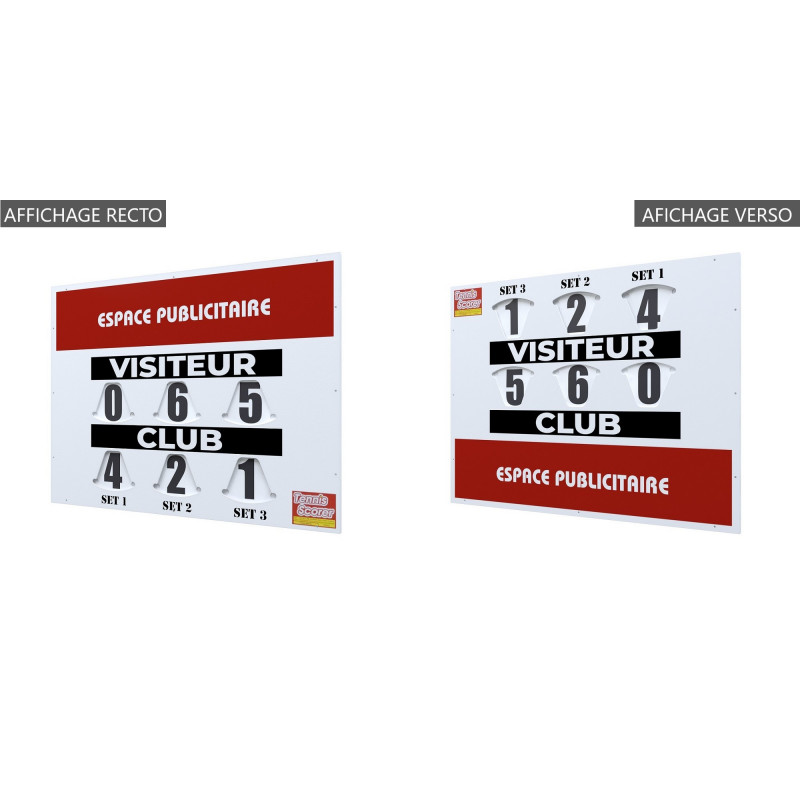
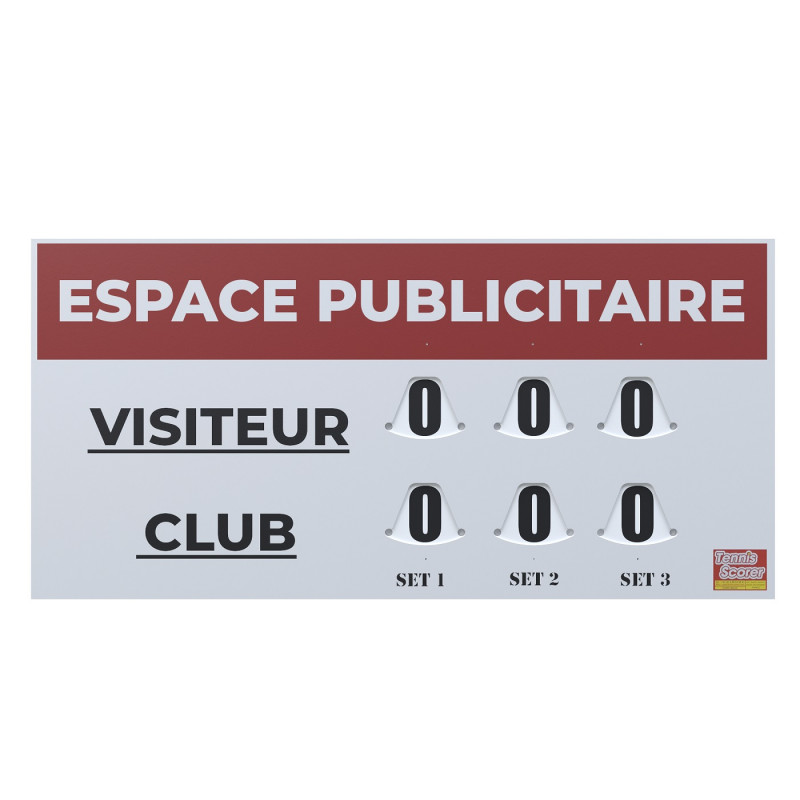
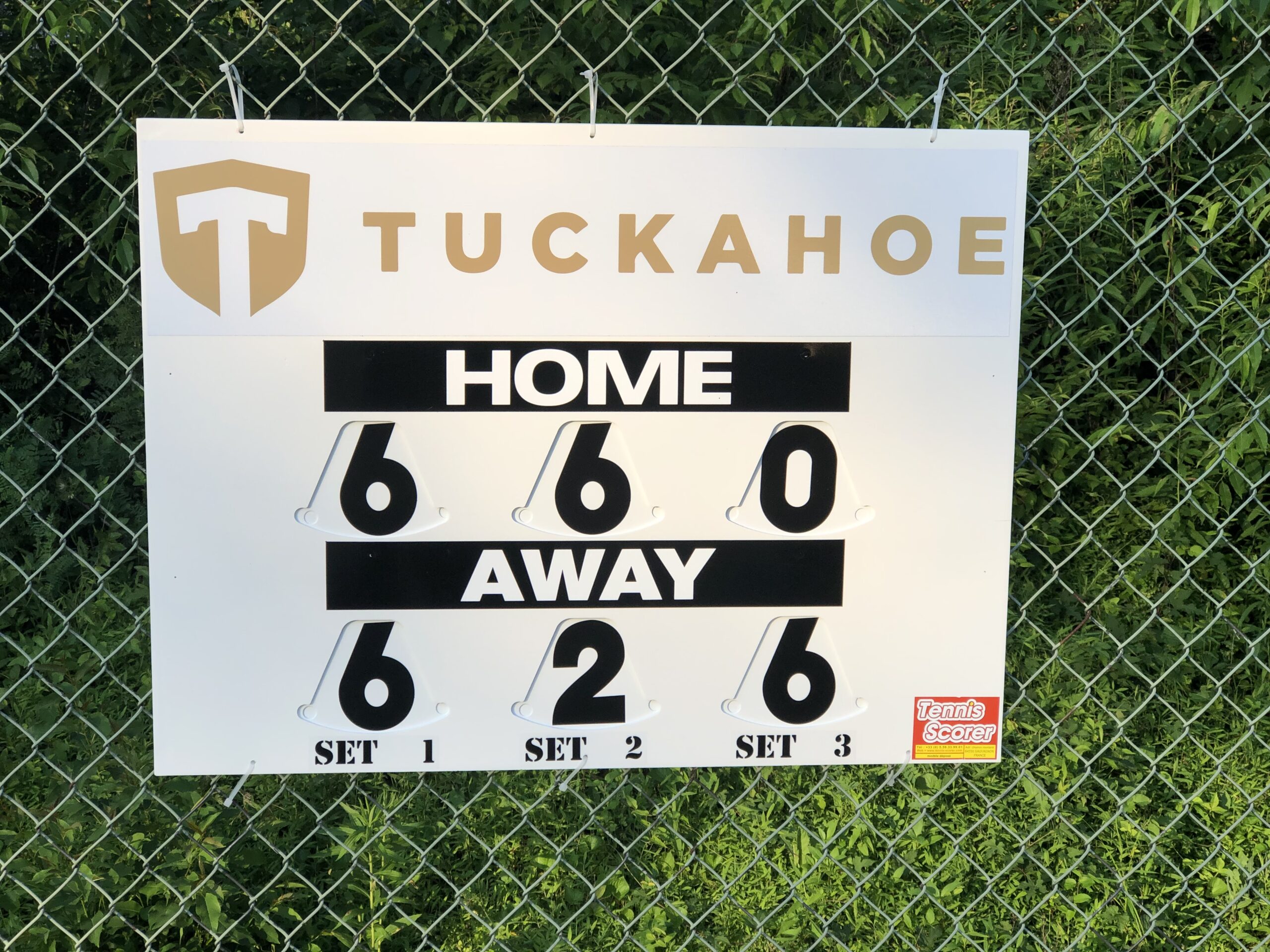
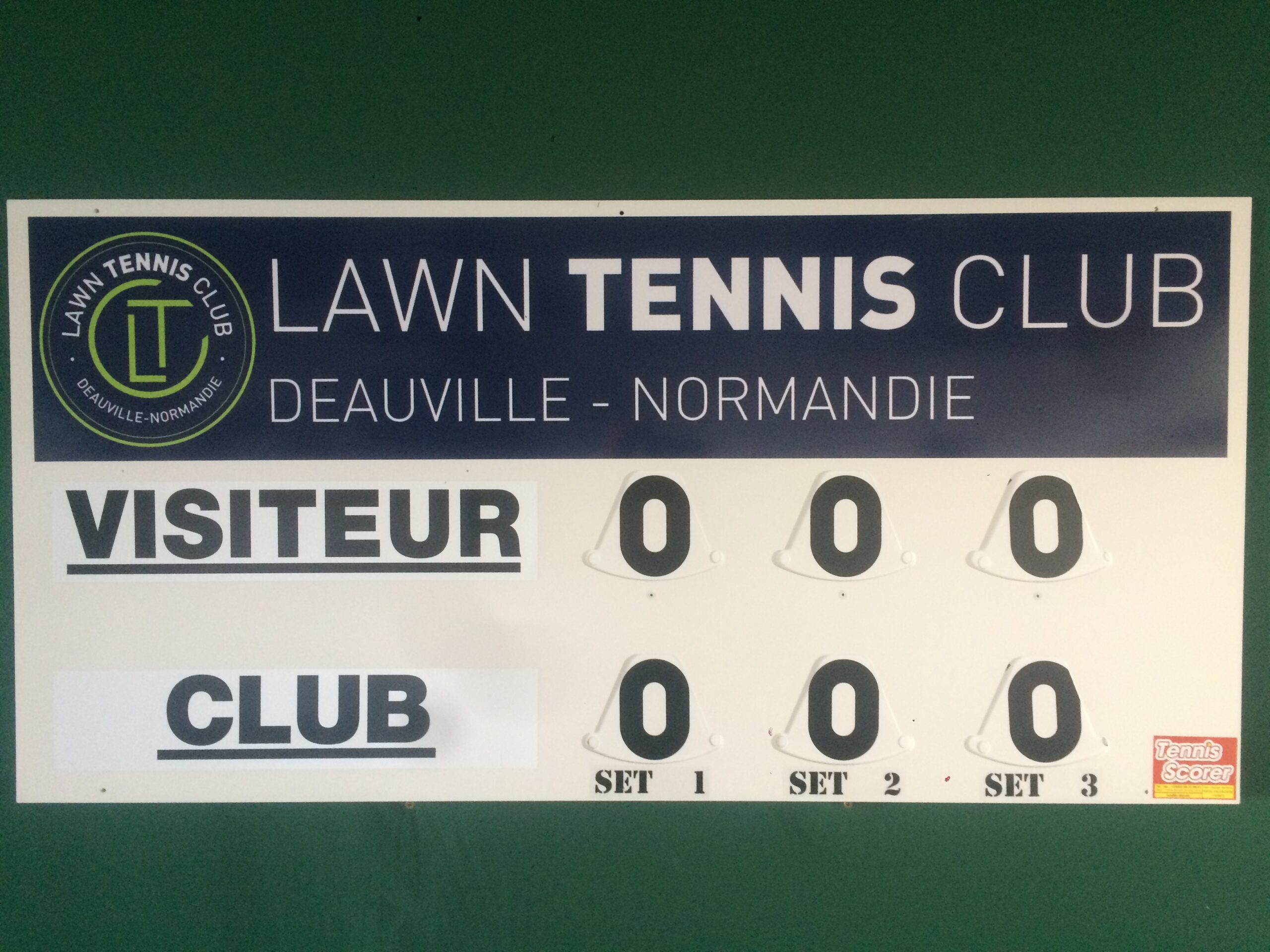
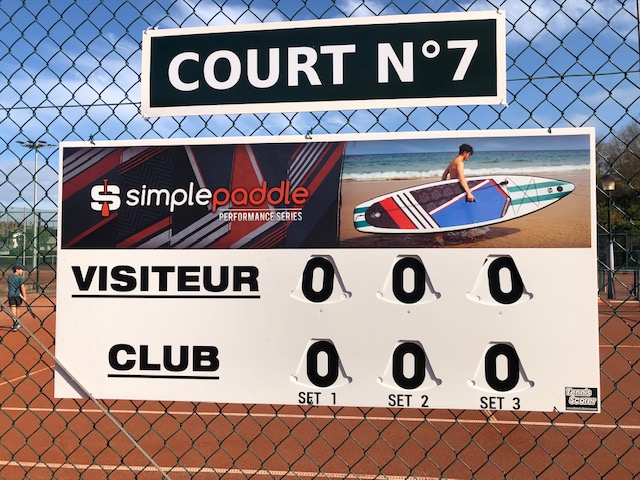
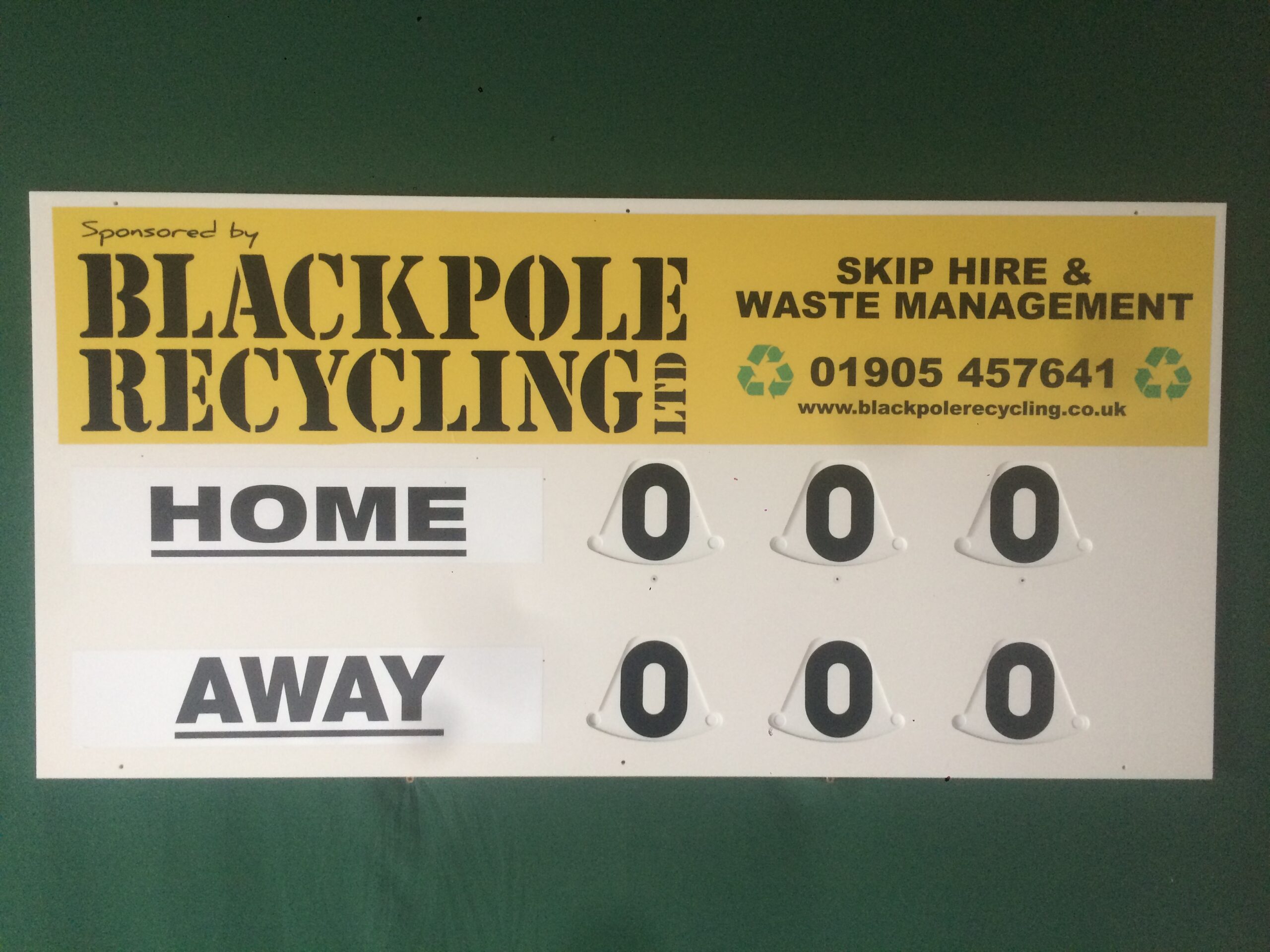
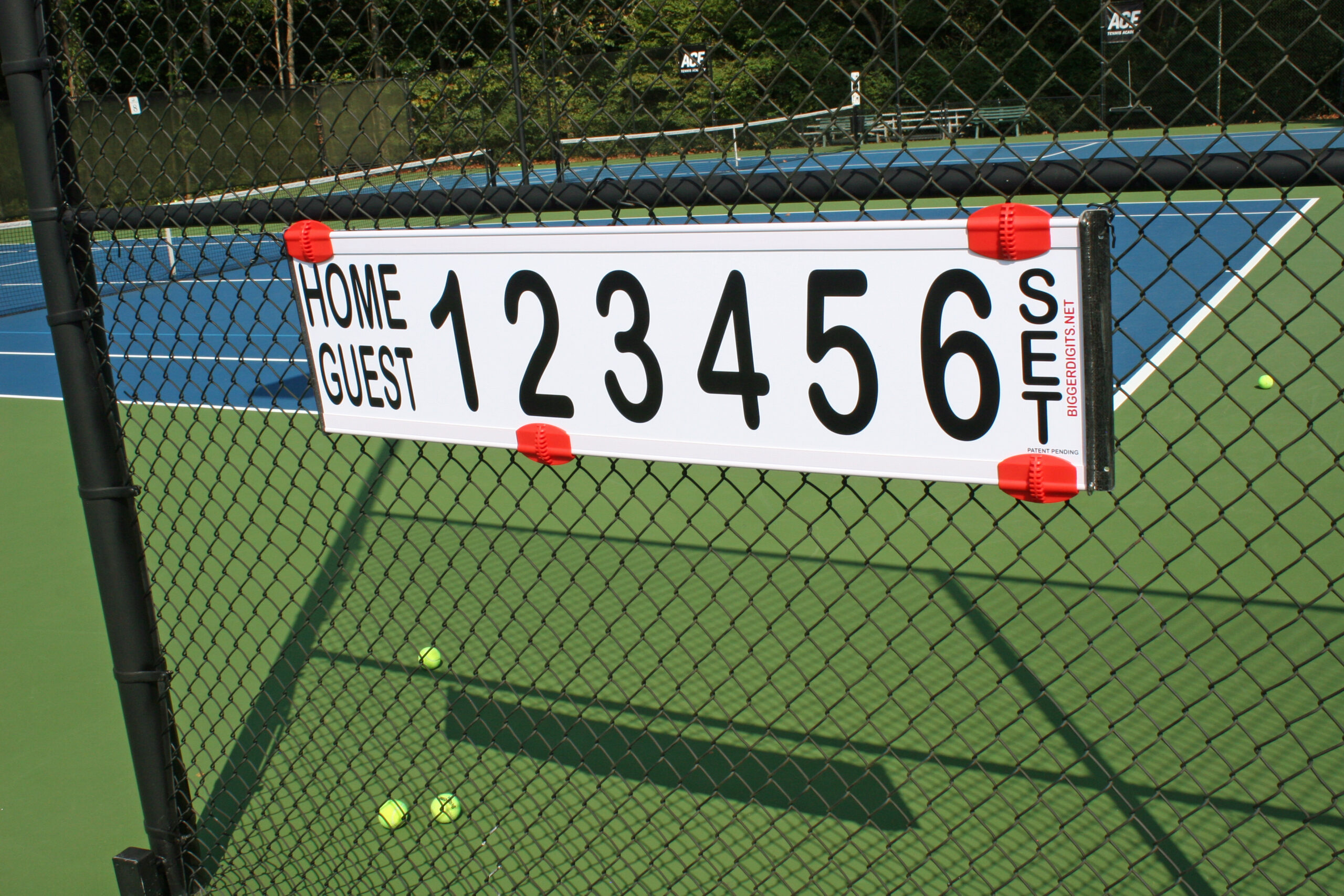
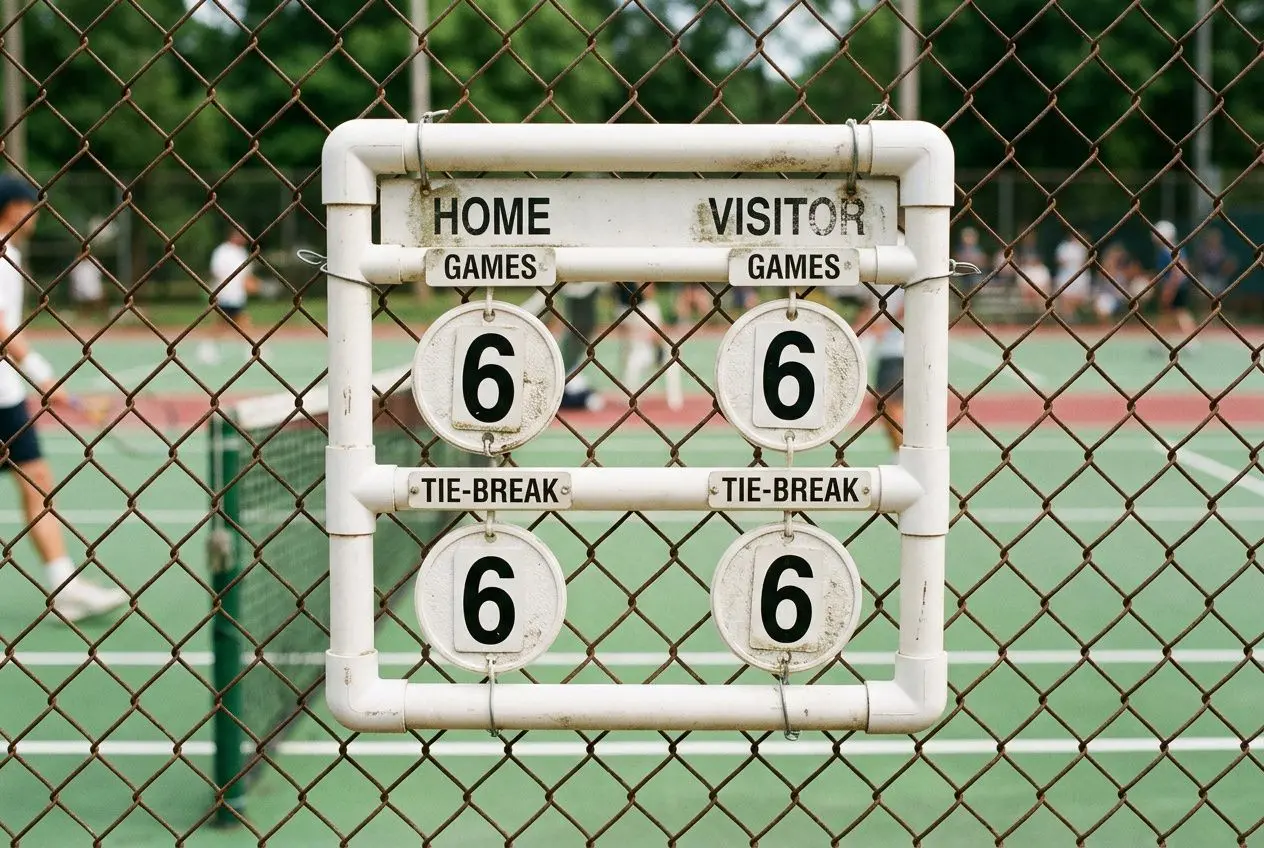
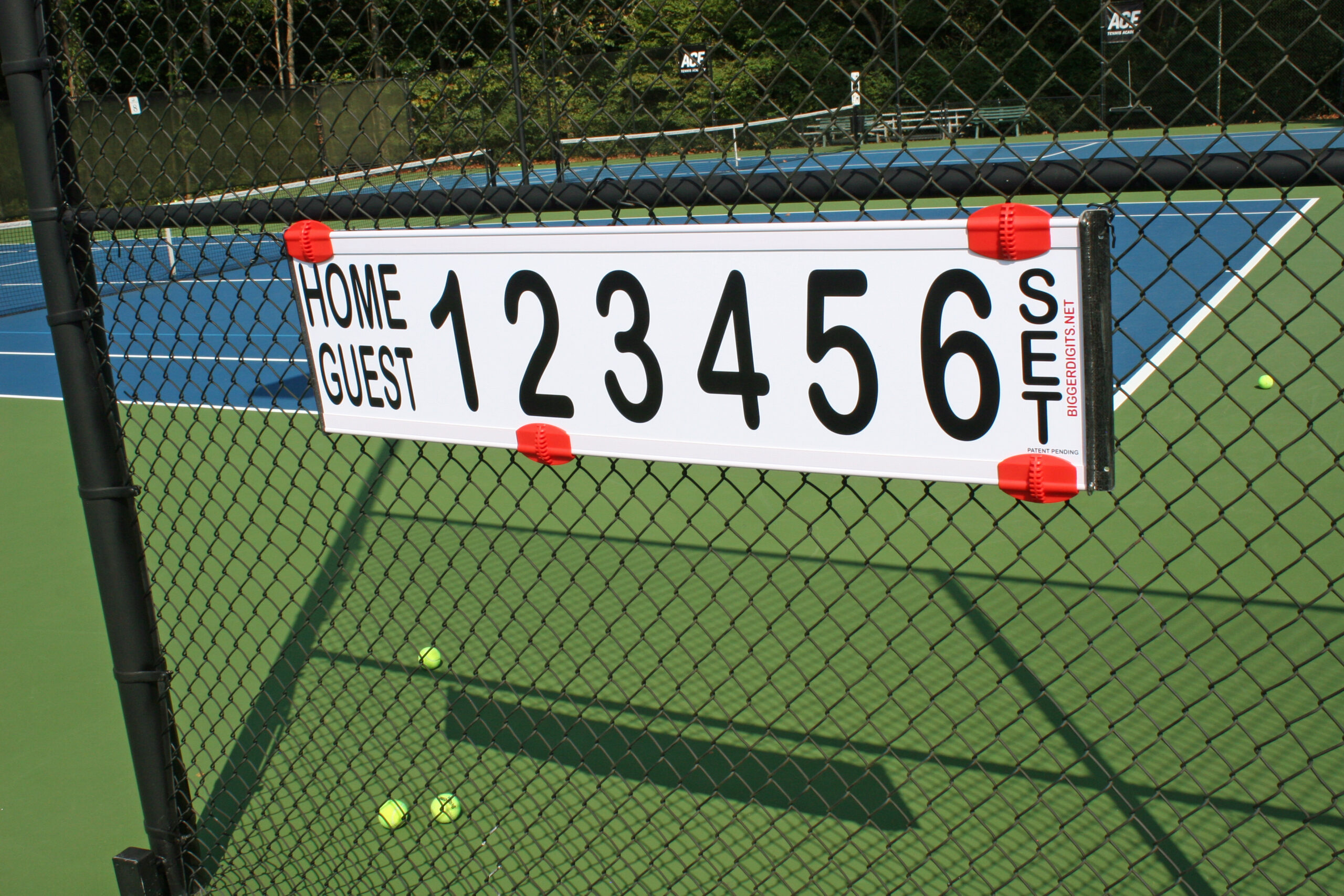
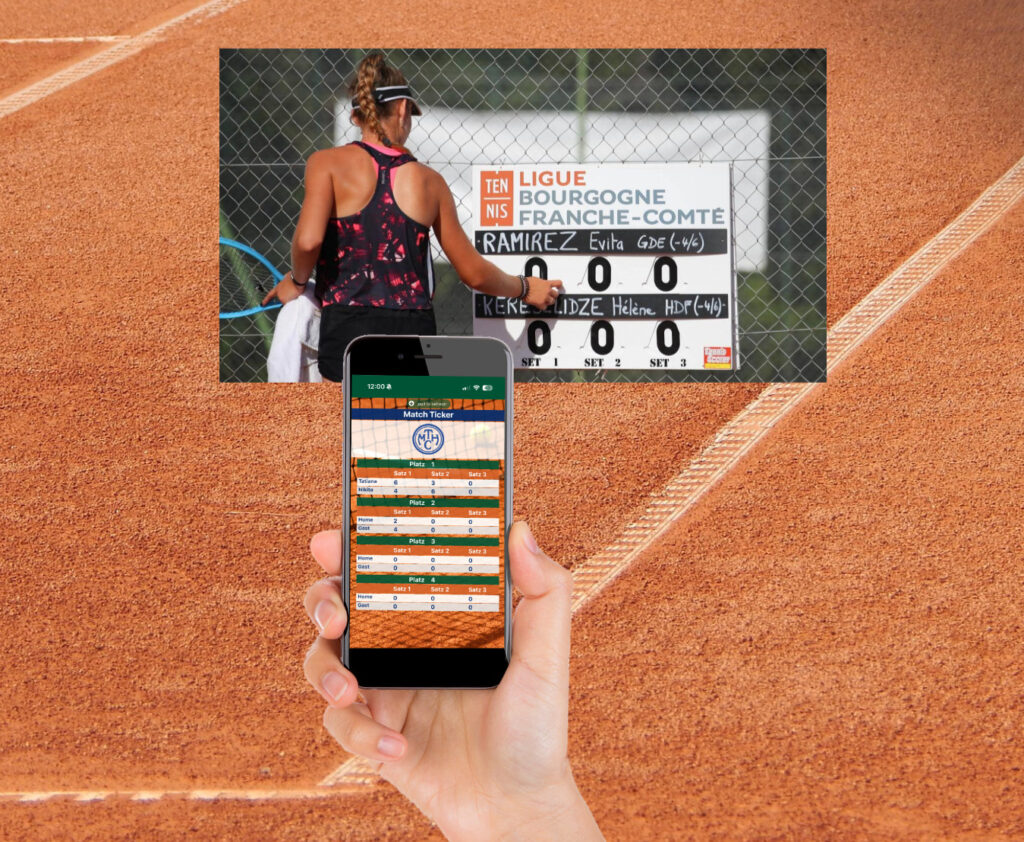
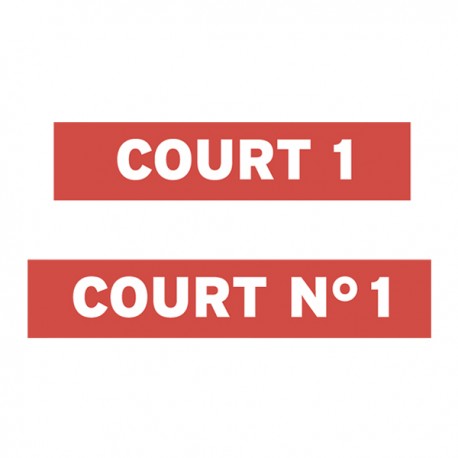
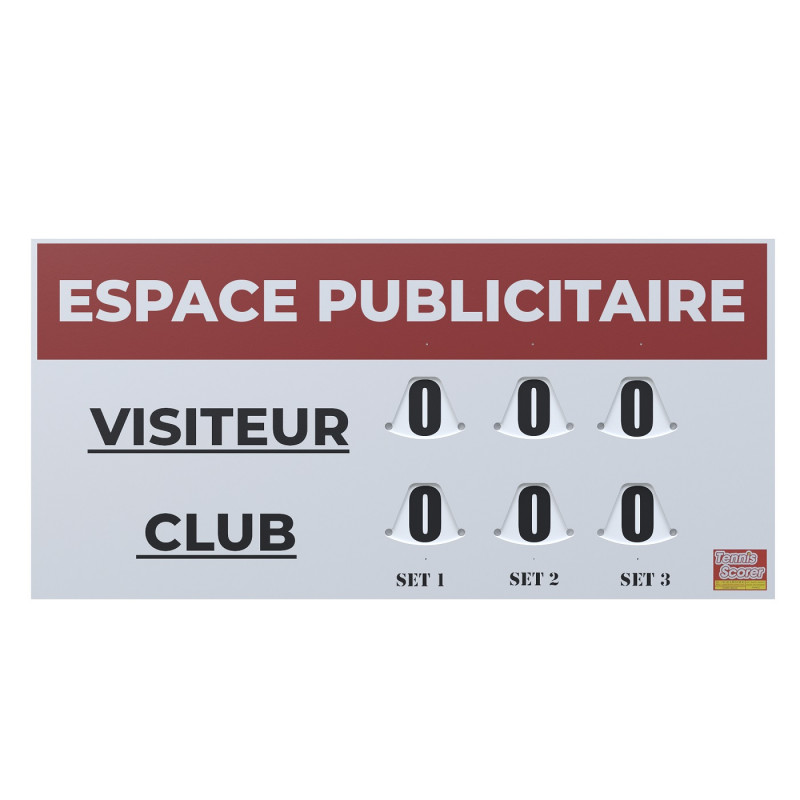
A scoreboard gives a sponsor a compact position right where players look between points. Tennis Scorer supplies custom advertising stickers for scoreboard spaces, showing a court number, the club’s name or logo, a sponsor, or club and sponsor logos together. The sticker format depends on the model. The weather-resistant white PVC Compact tennis or padel scoreboard measures 80 × 60 cm and fixes to court fencing. It comes with a 78 × 17 cm personalisation sticker. The durable large outdoor tennis scoreboard measures 120 × 60 cm, includes a customisable adhesive and comes with six attachments for mesh fencing. On both models the figures are 12 cm high and 2.5 cm wide. Tennis Scorer states both boards are readable from more than 50 m, and the score should always stay easier to read than the branding.
Entrances, events and padel glass
Away from the playing area, outdoor marketing ideas focus on the people arriving. Printed flags can mark an open day or a beginner session at the gate. A weather-resistant poster near the entrance, the clubhouse or a permitted spectator area can point visitors to a booking page.
Events add a further layer. A club mural mainly builds identity and visibility in the local community. A supervised, interactive serve or target challenge at an open day, by contrast, can pair a sponsor backdrop with an invitation to book. Promotional targets stay off the playing surface during normal play.
Padel courts offer one more surface: the glass. Before applying decals, check the graphic’s position, contrast, reflections, visibility through the panel, surface compatibility and removal method. Vinyl graphics should be viewed from both ends of the court and from spectator walkways as the daylight changes.
Make court adverts readable and useful
A well-made sign still fails if nobody sees it at the right moment, or if it distracts players. Readability depends on where the sign sits and how its artwork is designed. Its commercial value also depends on whether interest can be traced through to an enquiry or a booking.
Match positions to their audiences
A court advert’s target audience depends on where it sits. Entrance signs and court-number signs mainly reach people arriving. Perimeter displays can also be seen during changeovers, coaching and spectating. Photograph each proposed position from normal player and spectator viewpoints, then note when it is actually seen:
- During play: positions in the players’ line of sight while rallies are on.
- Between games: positions seen at changeovers and during coaching breaks.
- On arrival: gates, paths and court-number signs.
- From a viewing area: fences and boards facing spectators.
Tennis adds a specific test, building on those photographs. Proposed graphics are checked from both baselines, both service areas and the usual spectator positions. Any pattern that makes the ball harder to see is unsuitable.
Keep artwork clear during play
Once a position is chosen, the artwork has to work from that distance. Strong contrast, large clear type and few words make the message easy to grasp. A short sponsor name or logo suits a playing-area sightline better than a long promotion. A peer-reviewed sports-sponsorship study covering tennis, Formula 1 and sailing found that extra text explaining a sponsorship gave no reliable gain in attention or recall.
A separate study of printed sports sponsorship advertising, including tennis, linked sponsor count and fixation time to recall. It did not establish an ideal number of courtside signs. Before manufacture, confirm logo-use permission, dimensions, legible wording and a final proof. Where possible, check a full-size visual proof from the intended court viewpoints.
Connect attention to bookings
Clear artwork attracts attention. A short web address, booking link or QR code turns that attention into an enquiry. Place a QR code where someone can scan it while standing safely still, never on a walkway at the side of play. Give each poster, banner and location its own URL or code so every response can be traced to its placement.
From that point, scans, enquiries, trial bookings and paid memberships are counted separately, because a scan is not a new member. An advertising campaign is then compared with a baseline from before installation and with like-for-like days, allowing for weather, holidays and other club activity. That comparison is a sounder test of effective marketing than raw scan totals.
Package court positions for local sponsors
Court positions only bring in revenue when they are sold as clear, deliverable offers. That means defining what the sponsor receives, pricing it to cover real costs and agreeing what happens when artwork changes or sponsors leave.
Define a sponsor’s offer
The LTA’s club sponsorship advice recommends tailoring each proposal to the sponsor and setting out its benefits, duration and any exclusivity. Small business prospects nearby include trades, cafés, physiotherapists, estate agents and sports retailers. A series of fence panels can give each one a defined position.
A package can go beyond the fence itself. A physical court position can be combined with a named tournament, a mention in the club newsletter or a website listing, as long as the club can deliver every benefit it promises. Tennis Scorer also suggests having a sponsor fund a scoreboard in exchange for its advertising space.
Set a defensible budget and price
Published UK offers show how widely terms differ between clubs. One tennis club sells a 24-foot fence banner at £100. Another charges £300 for one year of banner sponsorship, or £450 for two. One padel operator lists £1,000 for 12 months with a 2 × 1 m banner, booking credit and a newsletter slot. Another lists £2,500 for 12 months including court naming.
None of these offers sets a market rate or shows typical returns. A budget is a more reliable starting point. In an illustrative example, a banner that costs £450 in its first year and is sold as a £600 annual sponsorship leaves £150. Maintenance, administration, tax and other obligations still come out of that margin.
| Published offer | Term | Price | Main benefits |
| UK tennis club | Not stated | £100 | 24-foot fence banner |
| UK tennis club | 1 year / 2 years | £300 / £450 | Banner sponsorship |
| UK padel operator | 12 months | £1,000 | 2 × 1 m court banner, booking credit, newsletter |
| UK padel operator | 12 months | £2,500 | Court naming and further benefits |
Agree delivery and changeovers
Once a price is agreed, the sponsor agreement sets out exactly what is delivered: the court or fence position, format, approximate dimensions, term and exclusivity. It also covers who supplies the artwork and how maintenance and removal are handled. Changeover terms state who pays for replacement artwork, removal and repairs, and what happens if a court closes or is refurbished.
Those same costs belong in the price: manufacture, artwork, installation, any fence repairs, maintenance, replacement and removal, plus the term and any event or digital benefits. To show what was delivered, keep installation photographs, campaign dates, event attendance figures and any enquiries recorded, rather than promising impressions nobody can verify.
Check permissions and keep displays safe
Outdoor advertising at a court involves two separate questions. Is the display allowed? Can the structure carrying it take the load safely? Answering one never settles the other.
Establish the permissions required
In England, the Town and Country Planning (Control of Advertisements) (England) Regulations 2007 have applied since 6 April 2007. Under them, a display may need no consent, may have deemed consent or may need express consent. Fixing a sponsor banner to an existing fence does not, on its own, settle which of these applies.
Where an application is needed, the fees in England changed on 1 April 2026. They are set per application category, not per banner. Further checks apply depending on the site and the nation:
- Lower English fee: £174 for qualifying on-site business advertisements or qualifying advance signs for local business premises; other advertisement applications cost £610.
- Wales: official guidance says consent may be needed, in the circumstances it describes, for a sign larger than 0.3 square metres or an illuminated sign of any size.
- Scotland: separate advertisement-control regulations apply, so English categories and fees cannot be assumed.
- Site and property: GOV.UK guidance requires the site owner’s permission; lease terms, planning conditions, listed-building controls and any new structure need separate checks.
Flags need particular care. English rules restrict the messages, number, size and location of eligible flags. As a result, a sports-club device does not automatically make a third-party sponsor flag eligible.
Check structures and playing conditions
Permission does not prove that a structure is sound. Mesh lets air through but does not remove wind loading. The load on a banner depends on its exposed area, height, shape, porosity, tension, fixings, the fence’s condition and local exposure. Inspect posts, rails, mesh, foundations and corrosion before anything is fixed. On padel courts, the manufacturer should approve the panel and the graphic method before vinyl is applied, and the glass is never drilled or cut without an approved design.
Playing conditions come next. Keep advertising clear of gates, dividers, emergency routes and any spot where players could hit brackets or loose fixings. Check the relevant tennis competition rules for signs near playing surfaces or nets.
Specify installation and routine checks
Those structural findings go into an installation brief. It records positions, fence type and condition, measurements, photographs, artwork, material, fixing points and who is responsible for maintenance. Compare quotes that cover installation, removal and replacement as well as production.
For exposed displays, confirm the capacity of the fence, posts, anchors and foundations. Then follow the specified fixing spacing and tension without overstressing eyelets or mesh. Inspect after installation, during routine court checks and after severe weather for tears, loose fixings, movement, damaged posts, fading and blocked gates. English regulations require display sites to be kept up without harming visual amenity, and structures must not endanger the public.
Frequently Asked Questions
Should a club choose a static or a digital sponsor scoreboard for an outdoor court?
A static scoreboard is simpler to run. A digital display can show changing sponsor material. Before choosing digital outdoors, check its weather protection, brightness, mounting, electrical safety, power, connectivity and what it does if it fails.
Do branded scoreboards deliver better advertising recall than fence banners or windbreaks?
No independent UK comparison shows a reliable recall rate or revenue gain for branded scoreboards over windbreaks, fence banners or glass decals. Any claim that one format clearly outperforms the others is unsupported.
How should a sponsor scoreboard be mounted safely at the court?
A raised or fixed scoreboard needs suitable supports and anchors and, where relevant, safe cable routing. It should also be positioned to limit collision and falling-object risks. The court number, club logo and sponsor can share the board as long as the score and wayfinding information stay clear.