
Table of Contents
Weatherproof outdoor signs for a tennis or padel club depend on more than a waterproof board. Rigid boards, PVC, vinyl and banners each behave differently outdoors, and mounting on fences, walls and posts matters as much as the format chosen for each club task. A complete specification, UK consent checks and planned cleaning and inspection then keep a sign durable.
Which materials make outdoor signs weatherproof?
No single material makes outdoor signs weatherproof. Durability depends on the substrate, the graphics, the finish, the edges and the fixings working together. A waterproof board on its own does not make the complete installation weather-resistant.
Rigid boards for permanent court signs
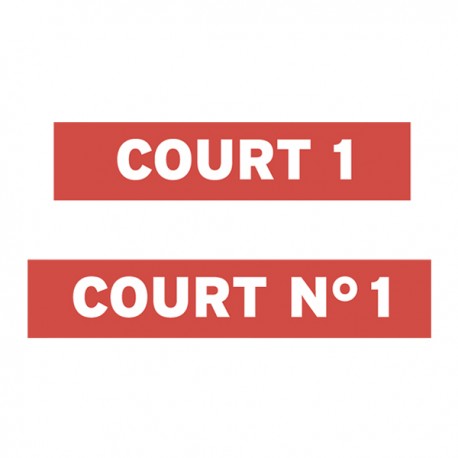
For permanent court numbers, directions and sponsor panels, aluminium composite is the usual reference. This lightweight board has thin metal skins bonded around a core and stays flat across wide sections. It can also be folded into tray signs, whose turned-back edges hide the fixings. Even so, cut edges, unsupported spans, fixings and any fire requirement for the core still need checking.
- Solid aluminium: suits exposed entrance signs and post-mounted exterior signs, provided the coating, compatible fixings and, at coastal sites, a suitable metal grade are specified.
- High-density polyethylene: resists moisture and does not rust, but durable outdoor signs made from it still need an outdoor UV grade, suitable lettering, room for movement and secure mounting.
- Acrylic and timber: acrylic signs work as illuminated faces or clear covers if impacts and cracking around mounting holes are considered, while exterior-grade timber gives a traditional look but needs continuing weather protection.
Each of these boards resists water differently, and none settles durability alone. In practice, weatherproofing an outdoor sign means matching the board to its exposure, then specifying its edges, finish and fixings with the same care.
| Material | Typical court use | Points to check |
| Aluminium composite | Court numbers, directions, sponsor panels, tray signs | Cut edges, unsupported spans, fixings, core fire requirement |
| Solid aluminium | Exposed entrance and post-mounted signs | Coating, compatible fixings, grade at coastal sites |
| High-density polyethylene | Exposed signs needing rust and moisture resistance | UV grade, lettering, movement allowance, mounting |
| Acrylic | Illuminated faces, clear covers | Impact exposure, cracking around holes |
| Exterior-grade timber | Traditional-look signs | Ongoing weather protection |
PVC boards and applied vinyl
Softer than the boards above, foamed PVC is easy to cut and drill without adding much weight. Foamex signs made from it fit smaller, sheltered notices better than large exposed panels. Their outdoor performance depends on thickness, support, exposure and print finish. By contrast, Tennis Scorer makes its large, compact and double-sided padel scoreboards from rot-proof white PVC for year-round outdoor use, and states that the large and compact formats need little maintenance.
Once a sound, smooth board is in place, exterior self-adhesive vinyl can personalise it. Planning estimates put many applications at around 2–5 years, and a separate supplier estimate gives 3–5 years. Neither is a guarantee: film grade, adhesive, UV exposure, print, laminate and installation all change the result.
Banners, print and protective finishes
Where a flexible format makes more sense than a board, PVC banners offer a waterproof option for an outdoor banner. Mesh banners take a different approach: small openings let some air pass through. For either type, hems, reinforced edges, eyelets, print and mounting decide how well it survives wind.
The print itself needs the same attention as the material carrying it. UV-resistant inks and compatible protective laminates help outdoor signage resist fading, scratches and wear from cleaning.
The choice of laminate finish then depends on where the sign is read. A matt laminate can reduce glare from low sun or floodlights, while a gloss finish can make colours look richer.
How should court signs be mounted?
A well-chosen board can still fail if its support gives way. Mounting is where the sign meets the court: fence, wall, post or foundation. Each support has to carry the forces the panel collects from the weather, so the fixing method deserves the same scrutiny as the material.
Fence and padel-court loading
Wind places a significant load on a court sign. The force it generates passes from the panel through every part of the installation in turn, and each part must carry it.
- Dimensions and orientation: a larger panel facing the prevailing wind collects more force.
- Exposure: open sites receive stronger gusts than sheltered ones.
- Support spacing: wider gaps between supports put more load on each fixing.
- Load path: panel, fasteners, brackets, posts and foundations must all be able to carry the load.
From that point, a light board offers no exemption. A lightweight rigid panel mounted on a mesh or chain-link fence can still apply substantial force. The fixing arrangement has to pass that load safely to the posts rather than relying on the mesh to hold it.
Padel enclosures add a site-specific factor. According to SAPCA, prevailing wind and corrosion exposure vary substantially between UK padel sites. Assess the particular enclosure before adding external signage to it.
Walls, posts and freestanding supports
Away from the mesh, rigid structures bring their own checks. Before drilling or clamping a fence post or structural frame, confirm its capacity, bracket spacing and corrosion, and the effect of the proposed attachment. On masonry or concrete, anchors must match the actual substrate, edge distances and loads, after an inspection for cracks and concealed services.
A freestanding sign moves the problem down to the ground. Its post, connections and foundation form one weather-resistant system. The design of that system depends on ground conditions and exposure.
Fixings and safe installation
Whatever the support, the fixings are where corrosion and movement show first. On exposed or coastal sites, specify compatible corrosion-resistant fasteners and isolate dissimilar metals where needed. Fixing details should avoid crushing thin panels, and holes should allow for thermal movement and water drainage.
Working on high signs adds a safety duty. The HSE states that the Work at Height Regulations 2005 apply wherever a fall could cause injury. Elevated sign work must be planned, risk-assessed and carried out by competent people with suitable equipment.
Which sign formats suit each club task?
Once materials and mounting are understood, each club task points to a format. Entrances need permanent identity, events need movable signs, and courts need score displays that players can read from a distance. The difference comes down to how long the message stays and how far away its reader stands.
Entrances, wayfinding and safety
Rigid outdoor business signs identify a club and its reception. Where the building sits back from the approach, a post-mounted sign does the job. Further in, directional signs should use the same court numbers, wording and arrows at each decision point. Rules and safety notices belong where people can read them without blocking play or access.
On that last point, the HSE advises clear, legible signs where significant risks remain after other precautions, and warns against excessive signage. For winter evenings, illuminated signs can improve visibility after dark. Their outdoor enclosures, cable entries, drainage and electrical installation then need assessment.
When do pavement signs make sense?
Pavement signs and A-boards suit short-term needs: directing visitors during open days and tournaments. Because they are movable, an exposed position makes their weight and wind stability critical. Temporary court closures and event directions can also use corrugated polypropylene, provided it is supported against wind.
Longer-term business signage calls for something more permanent than pavement signs. An aluminium-composite panel can carry replaceable vinyl, so custom printed club or sponsor graphics change without discarding a sound panel. A magnetic sign needs a ferrous surface to hold, while replaceable inserts or sheltered noticeboards suit information that changes often.
Visible, personalised court scoreboards
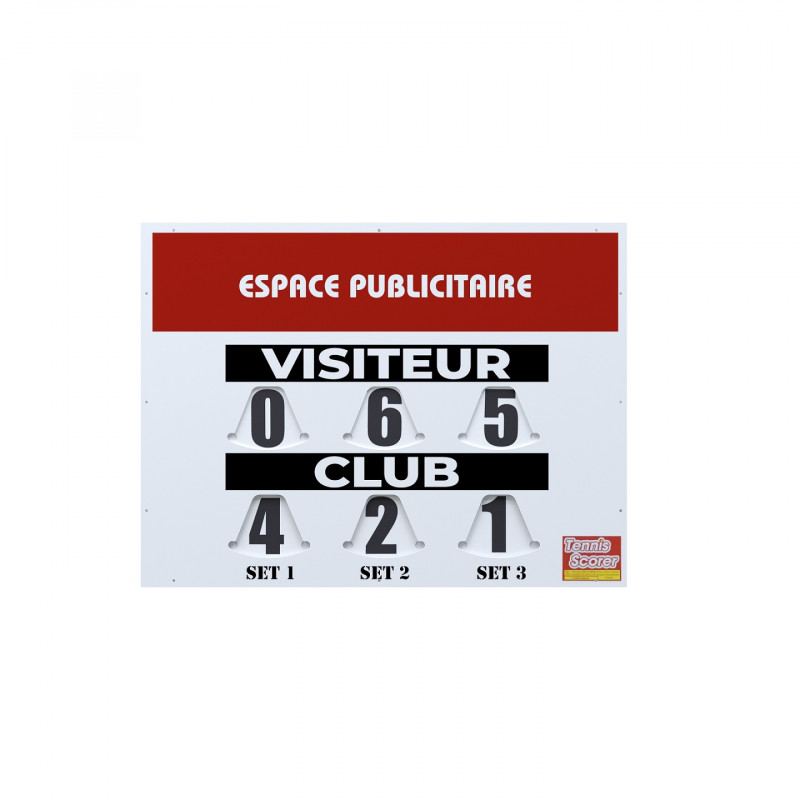
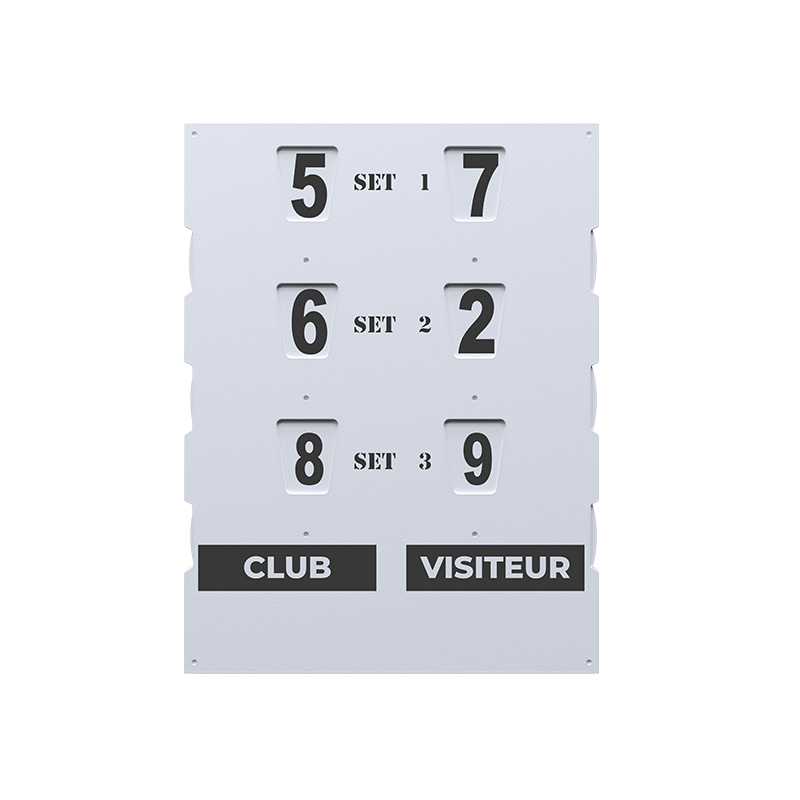
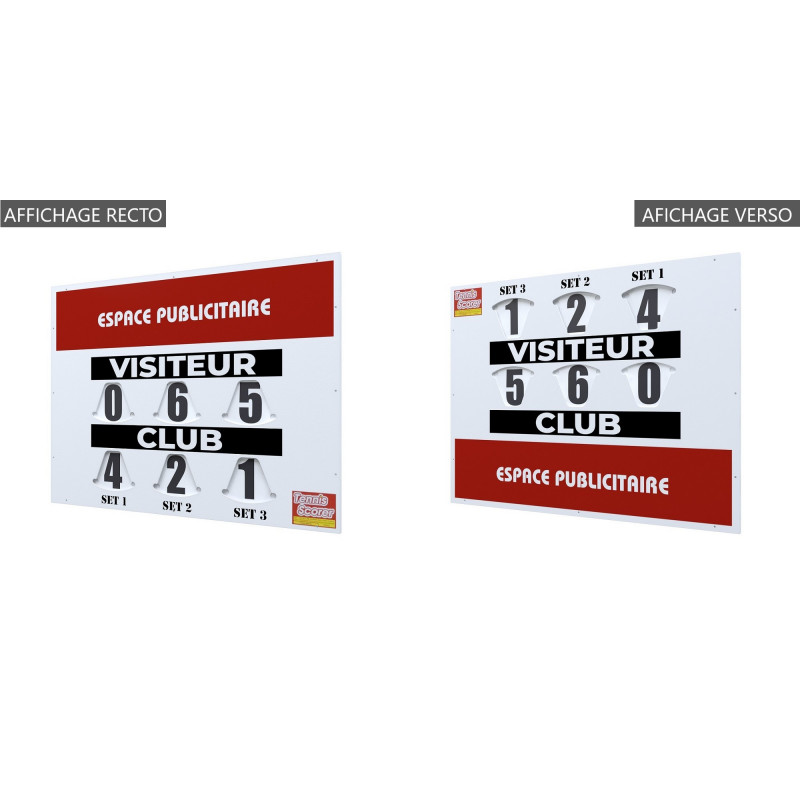
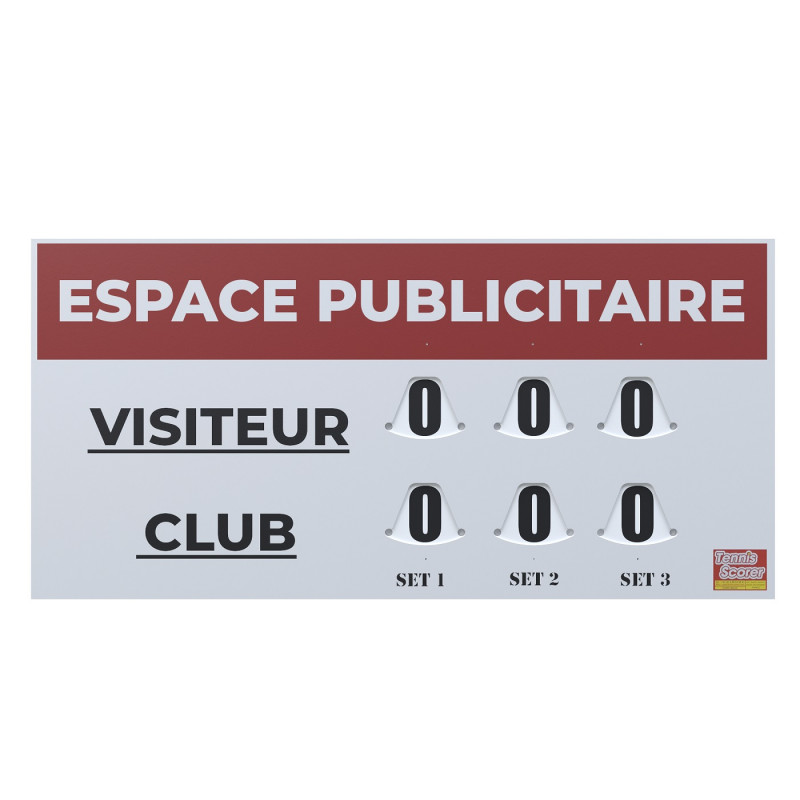
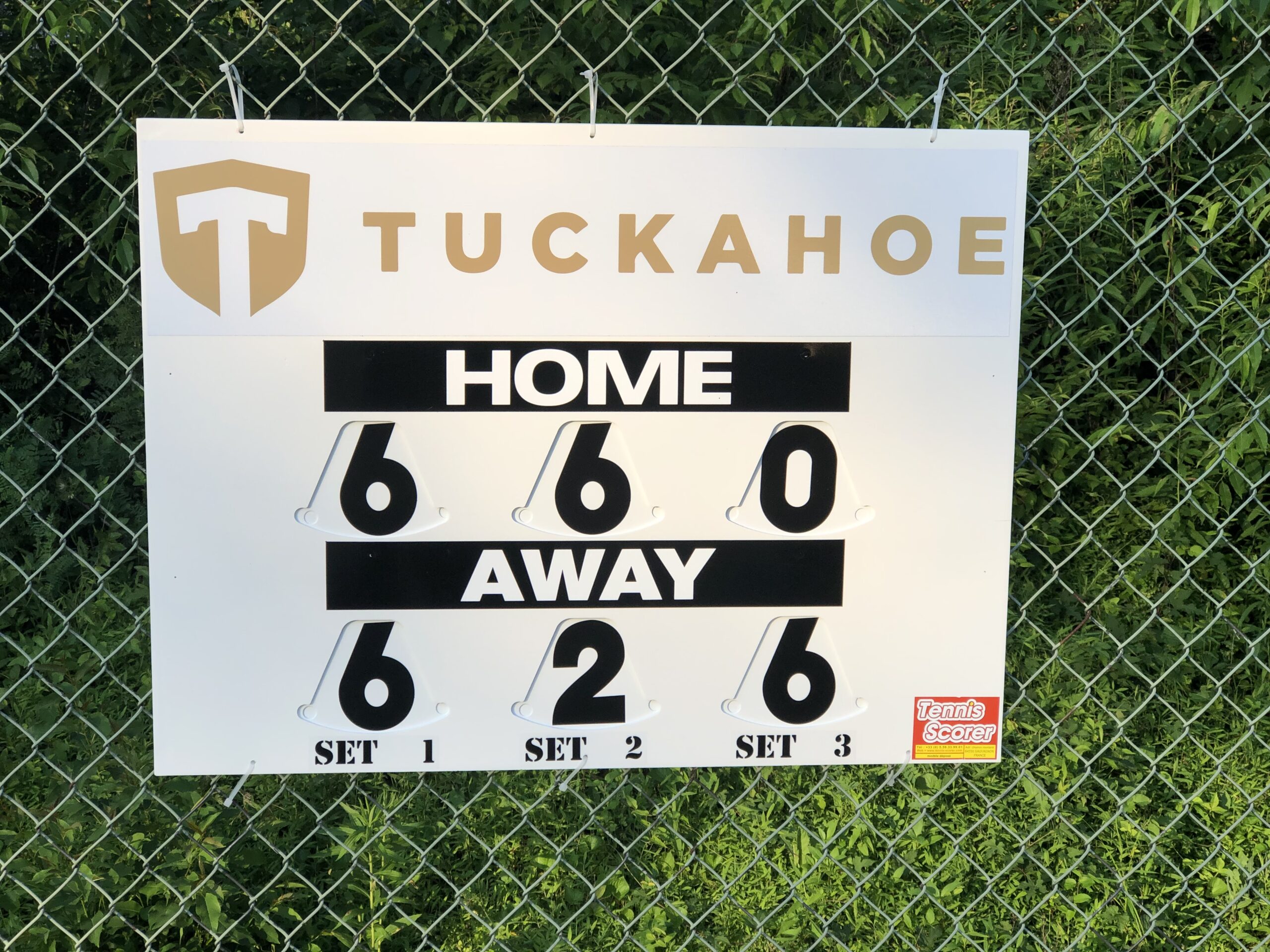
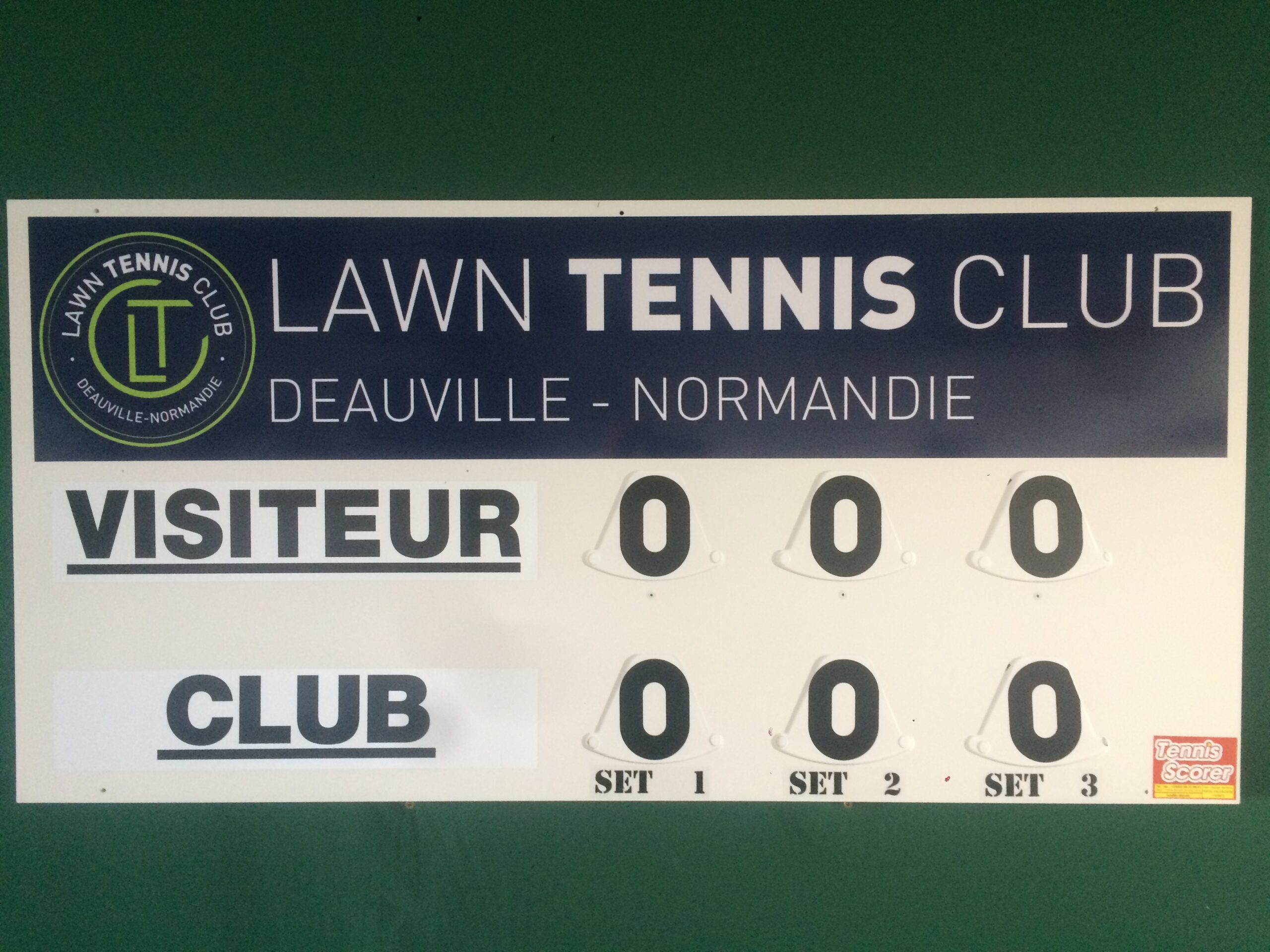
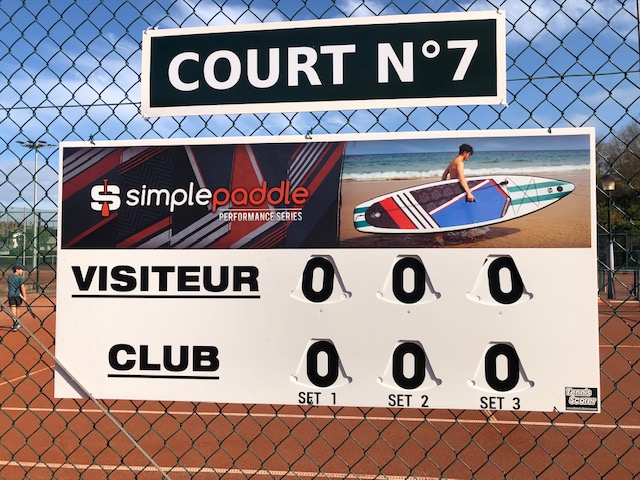
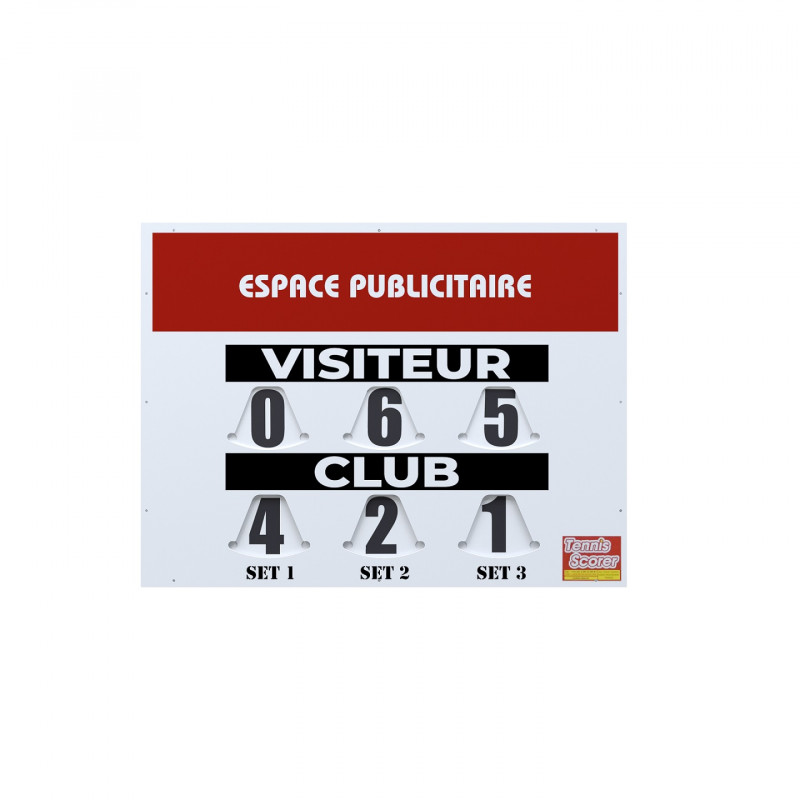
A bespoke score display should be judged from the route and distance of its reader, allowing for obstacles, lighting and viewing angle. Tennis Scorer specifies 12 cm-high figures with a 2.5 cm stroke on its large, compact and double-sided padel boards. These are readable from more than 50 metres, according to the brand.
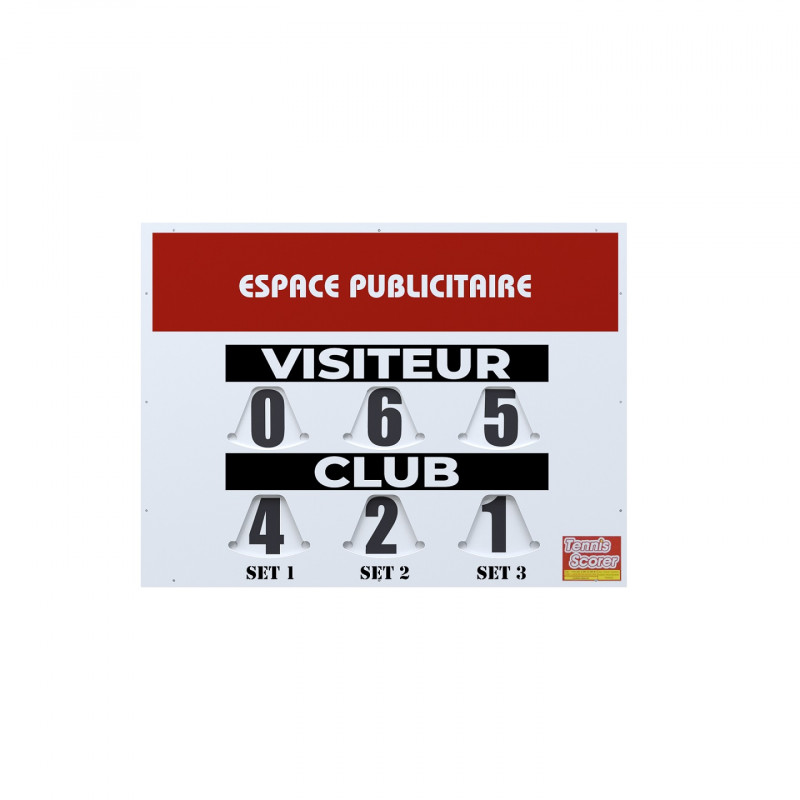
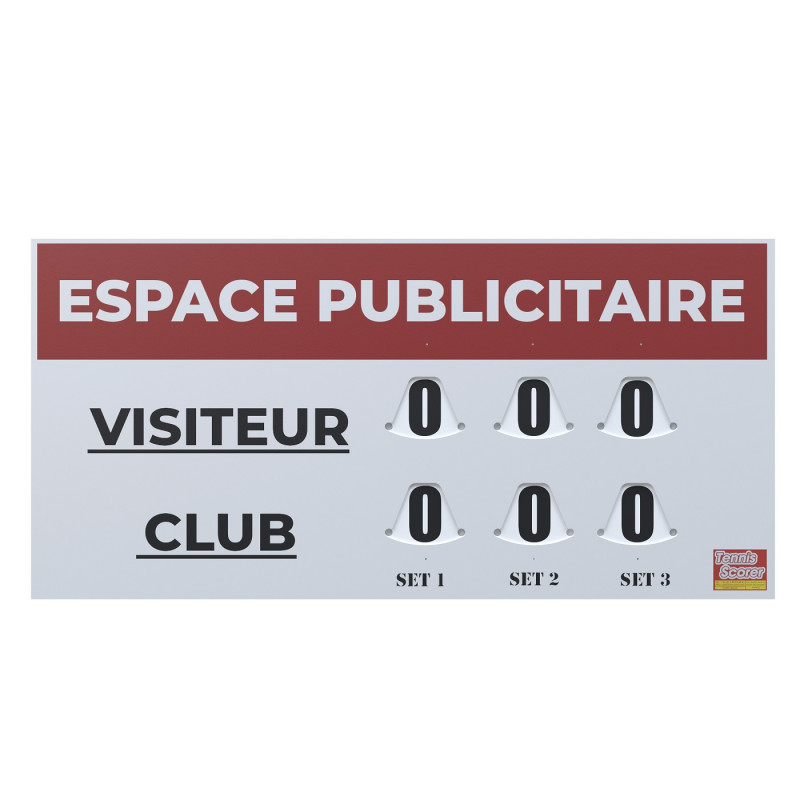
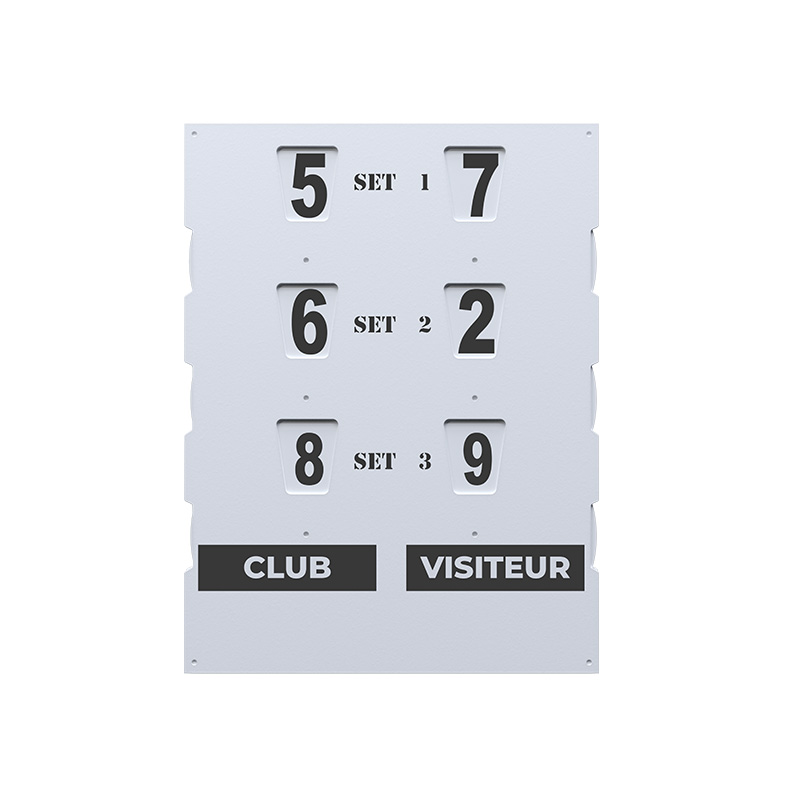
The large tennis scoreboard measures 120 × 60 × 1 cm. It weighs 4 kg, and rotating discs frame scores from 0 to 7 across three sets; six cable ties, a player-name plate and a sticker come with it. The double-sided padel scoreboard measures 60 × 80 × 1 cm and weighs 3 kg. Its upper and lower edges are sealed for rigidity and watertightness. Both sides show 0 to 7 in the first two sets. The third set runs to 9, and four cable ties, two writing plates and two stickers come with it, alongside a 59 × 11 cm advertising space. Finally, the compact tennis or padel scoreboard measures 80 × 60 × 1 cm and weighs 3 kg. It frames three sets from 0 to 7 for tennis or 0 to 9 for padel. It comes with mesh-court fastening and two name plates, plus a 78 × 17 cm sticker area.
How can clubs keep signs durable and compliant?
The formats above only last if they are ordered, approved and maintained properly. Three steps follow: write a complete brief, check consent rules, then plan cleaning and inspection over the sign’s life.
Specify the complete sign before ordering
A brief for outdoor signage should state finished dimensions, quantity, artwork, intended service life, exposure, mounting surface, hole positions and installation method. Standard panel sizes and fixing patterns make it simpler to replace signs across several courts. Ask suppliers for material grade, thickness, print system, maximum unsupported span and a wind-load or pull-out assessment, rather than trusting a “weatherproof” label. Durability of the graphic, the substrate and the installed system should be compared separately. BS 559-1:2023 covers the design, manufacture and installation of interior and exterior signs.
Check consent and display rules
In England, advertisement consent comes under the 2007 advertisement regulations. Planning Portal guidance flags exterior advertisements over 0.3 m² and illuminated advertisements of any size for a consent check. Staying under that threshold does not by itself guarantee permission.
- Business at its premises: from 1 April 2026, the express consent application fee is £174 for qualifying advertisements and advance signs.
- Other advertisements: the fee is £610.
- Unlawful display: section 224 of the Town and Country Planning Act 1990 allows a fine of up to level 4 on the standard scale.
- Heritage sites: listed buildings and conservation areas need a check with the local planning authority.
These figures apply to England only, as advertisement rules differ across the UK nations. For a pavement or street display in England or Wales, the local council sets the licensing conditions.
Clean, inspect and replace
Routine care starts with the face of the sign. Clean it with a soft cloth and mild detergent, within the finish maker’s instructions. Look at the same time for fading, peeling, cracks, obscured instructions and sharp edges.
A faded graphic does not always mean a new sign. Fading and structural damage are separate triggers: attractive graphics do not prove the fixings are safe.
The fixings need their own checks for loosening, corrosion, movement and pull-out, especially after severe weather. The LTA’s 2025 padel construction guidance calls for an operation and maintenance manual and regular upkeep. Inspection frequency should reflect exposure and the consequences of failure, not an assumed universal interval.
Frequently Asked Questions
How long does vinyl signage last outdoors?
Planning estimates give around 2–5 years for many exterior vinyl applications, and a separate supplier estimate gives 3–5 years. Neither is a guarantee: film grade, adhesive, UV exposure, print, laminate and installation all affect life. Indoor vinyl is not automatically suitable outside, as its adhesive or print may fail.
Does a weathering-test result guarantee how many years a sign will last outdoors?
No. A test result should not be turned into guaranteed years outdoors without a validated link between the test and real exposure. The graphic, substrate and complete installation each have their own expected life, and a board may outlast its legible message.
Is there a fee for listed building consent for a club sign in England?
GOV.UK states that there is no application fee for listed building consent in England. Consent may still be required for relevant sign work, so check with the local planning authority before installing.