

Table of Contents
Making outdoor equipment last longer depends on four habits: cleaning each item to suit its material, drying it completely, storing it in the right conditions and repairing small damage before it spreads. The same principles apply to the weatherproof PVC scoreboards that tennis and padel clubs leave on court all year.
How should you clean different outdoor gear?
Cleaning protects more than appearance. Dirt left in fabric, zips and finishes wears them down from the inside, so the cleaning method shapes how long each item lasts. The right method depends on what the item is made of, and that is where every routine begins.
Start with the material and loose dirt
Each item’s material, coating and construction set its care. Follow the care label or the manufacturer’s instructions rather than applying one method to all outdoor gear. Once the method is known, the sequence stays the same:
- Remove loose debris: a soft brush lifts grit that wears fabric and jams zips.
- Use the gentlest effective method: lingering grime and sweat can damage durable water-repellent (DWR) finishes, the coating that makes water bead.
- Rinse where appropriate: some cleaners leave residue that needs removing.
- Dry thoroughly: damp left inside an item causes problems in storage.
Backpacks follow this sequence by hand. Empty every pocket, brush out the compartments, then wipe the fabric with an approved mild cleaner. A washing machine can damage padding, frames and coatings, which makes hand cleaning the safer default.
Clean tents and waterproof clothing gently
The same gentle approach applies to shelters. Pitch the tent or spread it out, then sponge the coated fabric with lukewarm water and a compatible cleaner. Rinse where required. Aggressive scrubbing, or putting the whole tent in a machine, can damage the fabric and its waterproof coatings.
Outdoor clothing tolerates more, but only within the limits of its label. Compatible GORE-TEX garments may be washed at 40°C with a technical detergent. That temperature does not apply to everything, and fabric conditioner or bleach can damage technical fabrics. If the outer fabric wets out, clean and dry the garment before judging the membrane. Permitted gentle heat can reactivate the finish, and a compatible treatment is the next step if water still fails to bead.
Clean footwear and moving parts
Footwear needs care matched to its material. Leather, suede, nubuck, fabric and membrane uppers do not necessarily tolerate the same cleaner. On hiking boots, remove caked mud with a suitable soft brush or cloth, because dirt trapped in the uppers acts as an abrasive with every step. Take out the laces and insoles and clean them according to their own instructions.
Zippers suffer from the same grit as boots. Clear the teeth with a soft brush, then check for trapped fabric or a damaged slider instead of forcing a stuck zip. Use lubricant only if the manufacturer approves it for the surrounding material.
How should you dry and store outdoor equipment?
Once cleaned, equipment is only as safe as the conditions it is put away in. Damp and poor storage can undo careful cleaning: mould, weakened coatings and crushed shapes can develop during the months an item spends unused.
Dry every part before putting it away
A tent that travels home wet needs pitching, hanging or spreading out as soon as possible until it is fully dry. No number of hours counts as universally safe for leaving it packed wet. Before packing camping gear, look for hidden damp: under groundsheets and around seams, folded corners, straps, pockets and enclosed joints.
Canvas needs thorough drying and airflow. Damp natural fibres are vulnerable to mould and mildew. On synthetic tents, moisture left against coatings and seam tape can cause damage that cleaning alone may not repair.
Choose safe storage conditions for camping gear
Dry textiles keep best in a ventilated place, away from prolonged direct sunlight and extreme temperatures. Clean and dry the tent poles, pegs and other hard fixings too. Then store them apart from the fabric so they cannot abrade or puncture it.
The way fabric is folded also matters. Repeatedly folding a coated tent along the same sharp creases weakens both the fabric and the coating, so vary the folds. Before putting the shelter away, check that all poles and pegs are there and the guy lines are untangled.
Protect packs, boots and stove fuel
Packs need the same attention to trapped damp. After washing a backpack, open its pockets and zips and let the interior air-dry fully before closing it, because dampness left inside encourages mould.
Boots react badly to heat. Dry wet ones naturally, away from direct high heat, which can weaken adhesives. Once dry, store them upright without crushing the uppers so they keep their shape.
Stoves and heaters call for a separate precaution. Remove the gas canisters before storage, and keep the canisters upright in a ventilated place, away from heat and ignition sources.
When should you repair or replace damaged gear?
Inspections during cleaning and storage often reveal damage. The difference comes down to its nature: a small cosmetic flaw, a part that can be swapped, or a defect that affects safety. Each calls for a different response.
Make small fabric repairs promptly
Sew up a small rip or a loose button straight away, because a small rip can spread into a larger tear.
A low-stress hole in a backpack takes a patch. Clean and dry the area, choose a patch compatible with the fabric, and round its corners to reduce peeling. Backpack-care guidance recommends a patch extending about 1–2 cm beyond the hole, applied on both sides where suitable. Follow the patch’s instructions for pressure and curing.
Duct tape works as a temporary fix in the field. By contrast, it does not replace a patch matched to the tent or clothing fabric and its coatings.
Restore function, not just appearance
Closing a hole does not restore waterproofing on its own. A leaking seam needs tape or sealer compatible with how the item is built. Polyurethane-coated and silicone-coated fabrics need different products, and some treatments take 24 hours to cure fully.
Structural parts follow the same logic. Replace a broken tent-pole section with a compatible part for a lasting repair, and keep the splint for use in the field. Torn load-bearing seams or straps, major tent tears, damaged pole sleeves and widespread seam-tape failure all need assessment by a competent person rather than a cosmetic patch.
Decide when replacement is safer
Once the type of damage is identified, weigh the cost of parts and labour, the downtime and the expected remaining service life.
Before cutting, gluing or paying for a repair, check the warranty terms. Keep proof of purchase, product details and photographs of the fault. In the UK, a manufacturer’s commercial warranty does not remove statutory consumer rights against the seller. Whether a particular fault is covered depends on the terms and on what caused the damage.
How should clubs maintain PVC court scoreboards?
Court scoreboards face the same enemies as camping equipment: dirt, weather and loose fixings. Their care follows the same principles of cleaning gently, inspecting and repairing, with one added duty: a board mounted on court fencing has to stay safe for players.

Clean the PVC face and scoring parts
Cleaning a weather-resistant PVC scoreboard takes a few steps, carried out in order:
- Clear the surface: remove dust and leaves with a soft brush or cloth.
- Wipe face and housing: use water and, where needed, a mild cleaner approved by the manufacturer.
- Remove residue: leave no cleaner on the face or the scoring parts.
- Dry the board: do this before covering it.
Around number cards, hinges and fasteners, work gently. Abrasive pads can scratch the face, and solvents may damage the PVC, the printing or the adhesives.
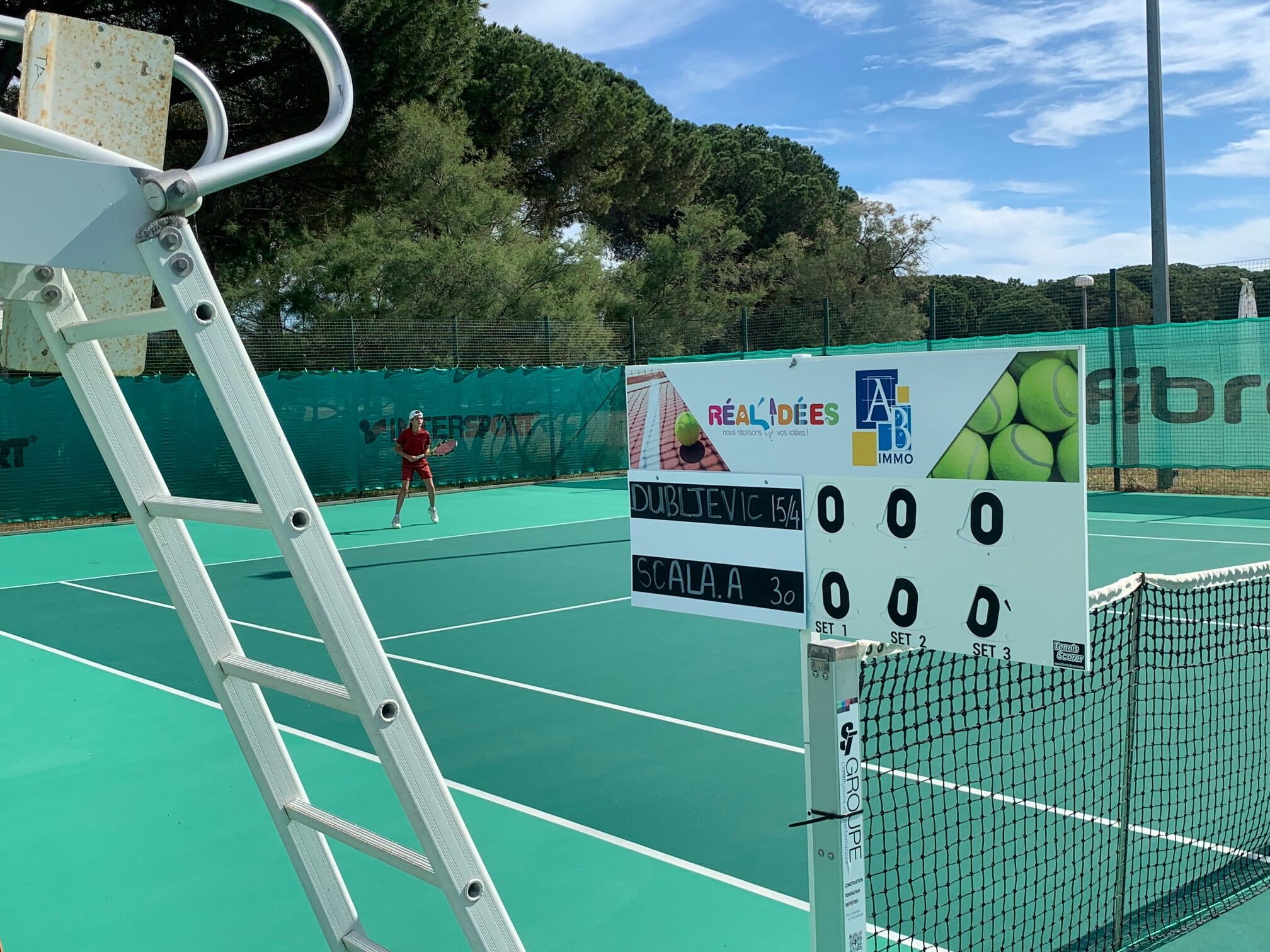
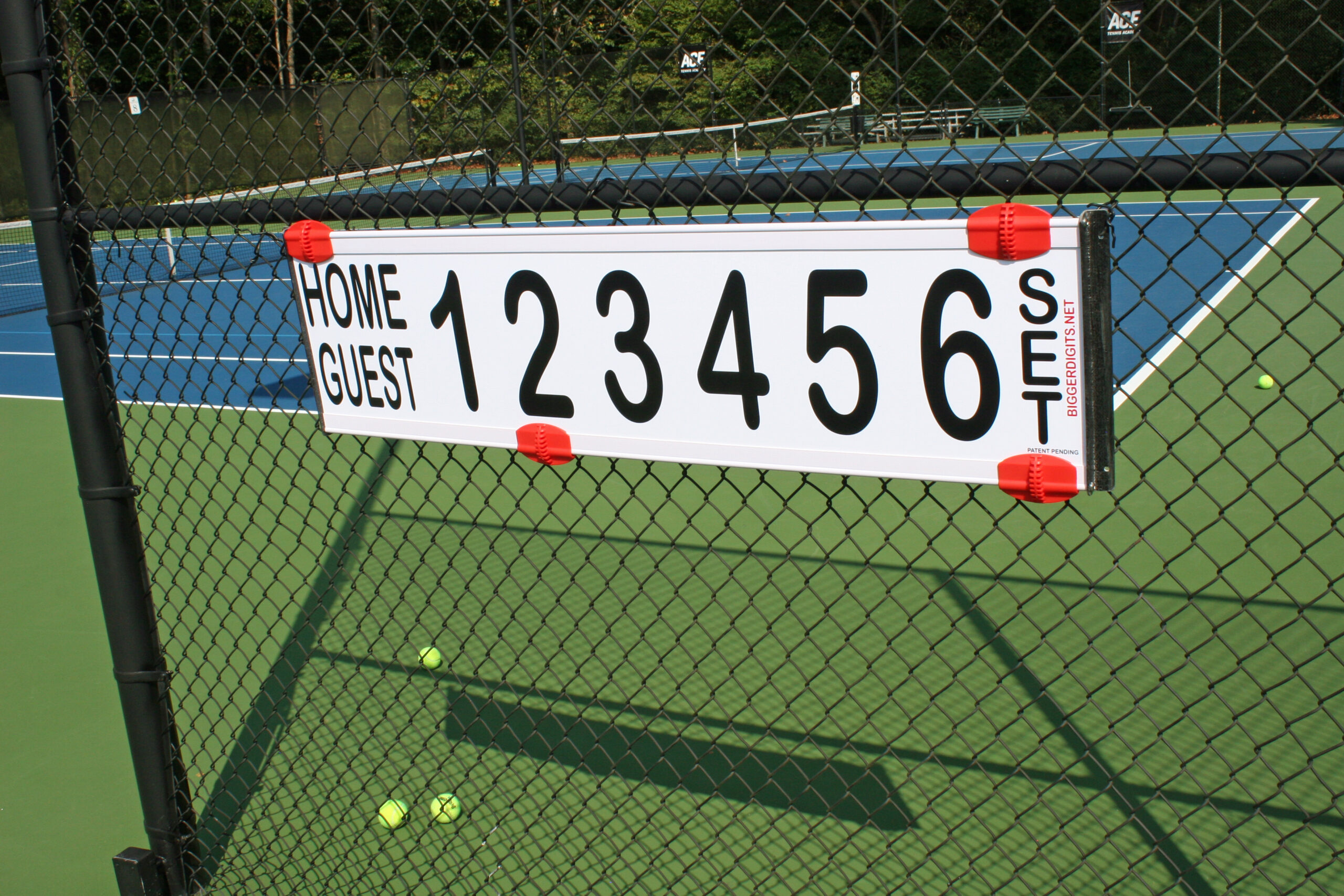
Moving parts deserve particular attention. Tennis Scorer makes its large tennis scoreboard from weatherproof white PVC for year-round outdoor use. Its rotating number discs still need to stay clean and turn freely.
Inspect the board and its mounting
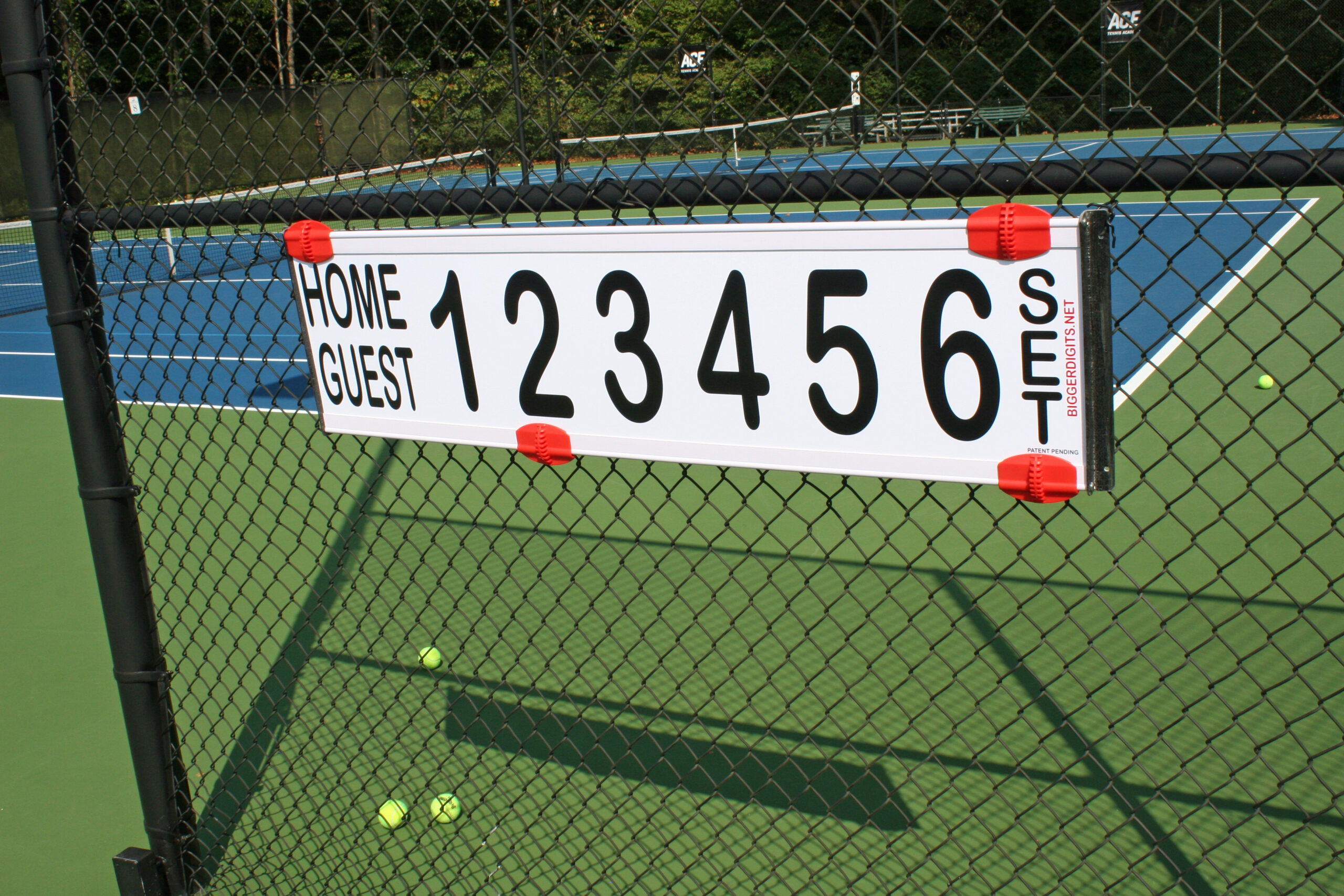
The construction of a board affects what an inspection has to cover. Tennis Scorer makes its compact tennis or padel scoreboard from weatherproof white PVC for use outdoors all year. Even with its enclosed design, the attachment still needs checking. On the double-sided padel scoreboard, counter-glued upper and lower edges provide watertightness, rigidity and longevity, according to Tennis Scorer. Check every board for:
- Mountings: loose or corroded fixings.
- Fixing points: cracks forming around them.
- Panel condition: brittleness or deformation.
- Edges: sharp areas that could cut a player.
A legible face does not make the assembly safe. On court, that means taking a board out of service if it could fall or injure someone.
Set a routine for use and off-season
The Health and Safety Executive says inspection needs and frequency for work equipment should follow a risk assessment, and harsh outdoor exposure may call for more frequent checks. Its PUWER guidance requires work equipment controlled by a business to be kept safe. In practice, a club can run a visual check during use, a recorded inspection and clean during the season, and an extra check after severe weather. A maintenance record keeps the findings, photographs and repairs.
Off-season care follows the same reasoning. If a scoreboard is removable, follow the manufacturer’s storage instructions rather than assuming weather resistance means it has to stay exposed. A damaged card, clip or screw may be replaceable with a compatible part. A cracked PVC panel, by contrast, needs its surrounding material and fixings assessed before any repair.
Frequently Asked Questions
Can white vinegar be used to clean a tent?
A one-to-one mixture of water and white vinegar may suit uncoated tent fabric. It can damage coated fabric and waterproof treatments, so check the manufacturer’s instructions before using it.
Does a faded court scoreboard need replacing?
Fading alone does not necessarily mean replacement, provided the score is still legible. Brittleness, cracks around fixings, deformation, sharp edges or an unstable mounting call for a more serious assessment.
Should you choose a wash-in or a spray-on reproofer for waterproof clothing?
A wash-in proofer covers the whole garment. A spray-on treatment targets high-abrasion areas, such as those under rucksack straps. Either way, clean and dry the garment first and check whether water still beads, because a new DWR treatment is not needed after every wash.