
Table of Contents
Choosing tennis court maintenance supplies starts with the surface, not the catalogue. Brushes, infill, dressing, cleaning products, line tapes and fittings each have to match sand-filled artificial grass, natural or artificial clay, or porous and acrylic hard courts. Quantities follow measured areas, and some faults need a contractor rather than another purchase.
How to choose supplies for your court
Every purchase depends on three facts about the court: its surface, its coating and any infill system. Once those are confirmed, quantities and supplier choices follow from measured areas and written specifications rather than from court count or habit.
Identify the installed surface
Court maintenance supplies must suit the installed court surface, coating and infill system. A tool built for one playing surface can damage another. The Lawn Tennis Association (LTA) names porous macadam, artificial grass and artificial clay as the principal all-year-round surfaces. Its older guidance estimated that porous asphalt covered approximately 80% of UK courts, a figure that is not a current census.
Within those families, construction varies widely. Natural clay has a loose mineral playing layer, while artificial clay combines a carpet with loose infill. Acrylic, by contrast, can be porous, impermeable or cushioned. The Sports and Play Construction Association (SAPCA) lists the fifth edition of its construction and maintenance guidance, dated January 2026, as technical guidance rather than a site-specific specification.
| Surface | Construction | Supplies to confirm first |
| Natural clay | Loose mineral playing layer | Specified mineral dressing, drag mat, watering equipment |
| Artificial clay | Carpet with loose infill | System-matched infill, compatible drag mat |
| Artificial grass | Sand-filled carpet | Approved brush, specified sand infill |
| Acrylic | Porous, impermeable or cushioned coating | Compatible cleaner and repair coating |
| Porous macadam | Open-textured asphalt | Debris tools, approved moss treatment |
Calculate treatment and material quantities
Measure the treated area before ordering, then work from the product’s stated coverage and dilution rather than the number of courts. Infill or dressing specified in kg/m² follows the same logic: multiply the measured area by the installed system’s application rate, after checking existing depth. For an eligible crack repair, measure length, width and depth, then compare the volume with the compound’s stated yield.
Compare suppliers and ongoing costs
Supply routes divide by trade. Specialist tennis-equipment suppliers commonly stock brushes, drag mats, nets and posts; surface suppliers provide specified infill and coatings. Drainage or structural faults, by contrast, belong to contractors. Whichever route applies, request written surface compatibility, technical and safety data, application instructions, replacement parts, quantities and delivery or handling arrangements.
Those written details then feed a seasonal budget with separate lines for labour, consumables, storage, servicing, water, waste, downtime and eventual resurfacing. The standard UK VAT rate is 20% where applicable, according to GOV.UK, in force since 4 January 2011. Import charges are another matter: they depend on the product’s origin, classification, value and import arrangements.
Supplies for sand-filled artificial grass
Sand-filled artificial grass relies on its infill to support the fibres and drain water. Its kit is therefore short: an approved brush, the specified sand and, on larger sites, machinery or a specialist vacuum.
Choose a compatible drag brush
The LTA’s artificial-grass guidance recommends weekly brushing and monthly checks of sand levels, subject to the installed system’s instructions. That weekly routine starts with clearing leaves and other debris. Only then should brushes approved for the carpet lift flattened fibres and spread the sand, following the manufacturer’s specified direction and pattern.
As court numbers grow, manual brushing becomes harder to sustain. For venues with several artificial-grass courts, the LTA recommends considering mechanical tennis court maintenance equipment, after consulting the installer or carpet manufacturer.
Specify and check the sand infill
Monthly checks focus where play concentrates: baselines, service boxes, entrances and areas beneath trees. Look there for compacted, displaced or depleted sand. A top-up uses only the carpet system’s specified sand, checked for grading, particle shape, cleanliness and moisture behaviour. Building sand, sharp sand and generic jointing sand are not substitutes.
Even the correct sand has limits. Extra material cannot repair breaking fibres, separating backing or a loose carpet: those faults need the installer.
Know when brushing is insufficient
Rain and foot traffic gradually compact the sand, which slows drainage and leaves hard, slippery patches. At that stage, specialist brushing or decompaction may be needed. A sports-turf vacuum can also collect fine dust, seeds and broken moss, provided its suction and collection arrangement keep the loose sand on the court.
From that point, the diagnosis changes. When routine tennis court maintenance tools no longer restore the surface, investigate slow drainage or slippery areas rather than assuming another sand top-up will solve them.
Equipment for natural and artificial clay
Natural and artificial clay both carry a loose top layer, yet their materials are not interchangeable. The difference comes down to what sits beneath: compacted mineral layers on one, a synthetic carpet on the other.
Groom and water natural clay
A traditional clay court needs a small, specific toolkit. Each item has its own role:
- Drag mat or brush: redistributes the loose playing layer after foreign material has been removed.
- Line brush: clears markings without digging into them.
- Watering equipment: keeps the layer from turning excessively dry or waterlogged.
Rolling follows a stricter rule. Use a roller on uneven areas only where the court specification calls for it. Dragging and rolling both wait until the surface is dry enough for that operation.
Select natural-clay dressing and repairs
A depleted natural-clay layer is replenished with its specified mineral dressing. Before buying, check composition, grading, colour, drainage and moisture retention. Artificial-clay carpet infill is not an alternative.
Where the layer has hardened rather than thinned, the specification may allow a fuller restoration: scarify the top layer, add fresh material, then roll.
Recurring symptoms point elsewhere. Repeated soft and hard patches, or pooling, call for investigation of drainage and construction rather than more dressing.
Maintain artificial clay infill
Artificial clay commonly needs a compatible drag mat or brush, a debris collector, a line brush and system-matched dressing. Remove larger debris first, so it is not worked into the infill. Then drag across back areas and the perimeter, spreading material evenly. Before topping up, check for exposed fibres and uneven coverage.
Depth targets belong to each system. One LTA-affiliated venue specifies approximately 2 mm of loose dressing above its carpet and deep cleaning at least twice yearly; neither figure is universal. A top spreader can distribute red clay or quartz sand on suitable systems, following installer instructions. A debris net cannot replace a drag mat when it does not redistribute infill.
Cleaning and repair supplies for hard courts
Porous macadam and acrylic hard courts carry no loose infill, so upkeep centres on keeping water moving and coatings intact. Cleaning tools, treatments and repair products all have to respect that.
Clear debris and surface water
Porous macadam needs regular debris removal to keep its pores and drainage routes open. The LTA recommends weekly clearance of leaves and detritus on the porous park courts its guidance covers, and shaded or tree-lined courts may need more. Suitable tools include:
- Soft-bristled broom: lifts loose material without aggressive abrasion.
- Rubber-tined rake: gathers leaves, branches and dirt with less risk to the surface.
- Leaf blower: clears leaves before they decay, aimed away from drains and neighbouring areas.
- Court squeegee: removes standing water, with a blade compatible with the coating.
Impermeable acrylic can retain standing water outdoors. A squeegee clears the surface, yet a depression or drainage defect remains until it is corrected.
Choose safe washing and treatments
For tennis court cleaning, a moss or algae treatment must carry label approval for the actual substrate, with dilution, application conditions, rinsing, drainage precautions and reopening time. Under COSHH, the Health and Safety Executive (HSE) requires employers to assess exposure to hazardous products. Washing follows similar care: the LTA warns against dislodging coating or aggregate and advises against steam cleaners.
Pressure settings need the same caution. One cleaning guide gives below 1,500 PSI, with the nozzle at least 12 inches above the court; these are not universal settings. Keep players off during treatment, following product instructions for protective equipment and waste. In winter, the LTA advises letting snow and ice melt naturally on porous asphalt park courts, moving powdery snow with a wide soft broom or wooden scraper, never metal tools, machinery, salt or urea.
Match repairs to the existing system
An acrylic repair coating must match the existing coating, texture, substrate and preparation requirements. Colour alone proves nothing about compatibility.
The same logic extends to structural defects. A crack compound must suit the substrate and its expected movement, while a binder, which stabilises loose particles, must preserve permeability and traction on fretting aggregate. Recurring movement or widespread failure calls for assessment instead of another routine repair.
Persistent pooling, widespread cracks or coating failure can justify a tennis court resurfacing assessment. The LTA gives porous asphalt a typical life of 10–12 years, depending on construction, drainage, usage and maintenance. Its current guidance recommends resurfacing every 8–10 years.
Choosing court lines and fittings
Lines, nets, posts and windbreaks wear on their own timetable, independently of the surface. Each fitting has its own compatibility checks before purchase.
Match line tapes to the surface
On natural clay and shale, tennis court line marking can use compatible tapes held by corrosion-resistant fixings. Artificial-turf and artificial-clay lines, by contrast, may be integrated into the carpet. For clay, typical specifications look like this:
- Roll length: a stated 149-metre roll marks one standard doubles court.
- Tape: 50 mm PVC.
- Perforation: 3 mm punched holes at 14 holes per metre.
- Fixings: 63.5 mm non-rusting aluminium nails, approximately 800 for one doubles court.
Once laid, the tape needs periodic checks. Every nail must stay secure without creating a trip hazard.
Inspect nets and posts
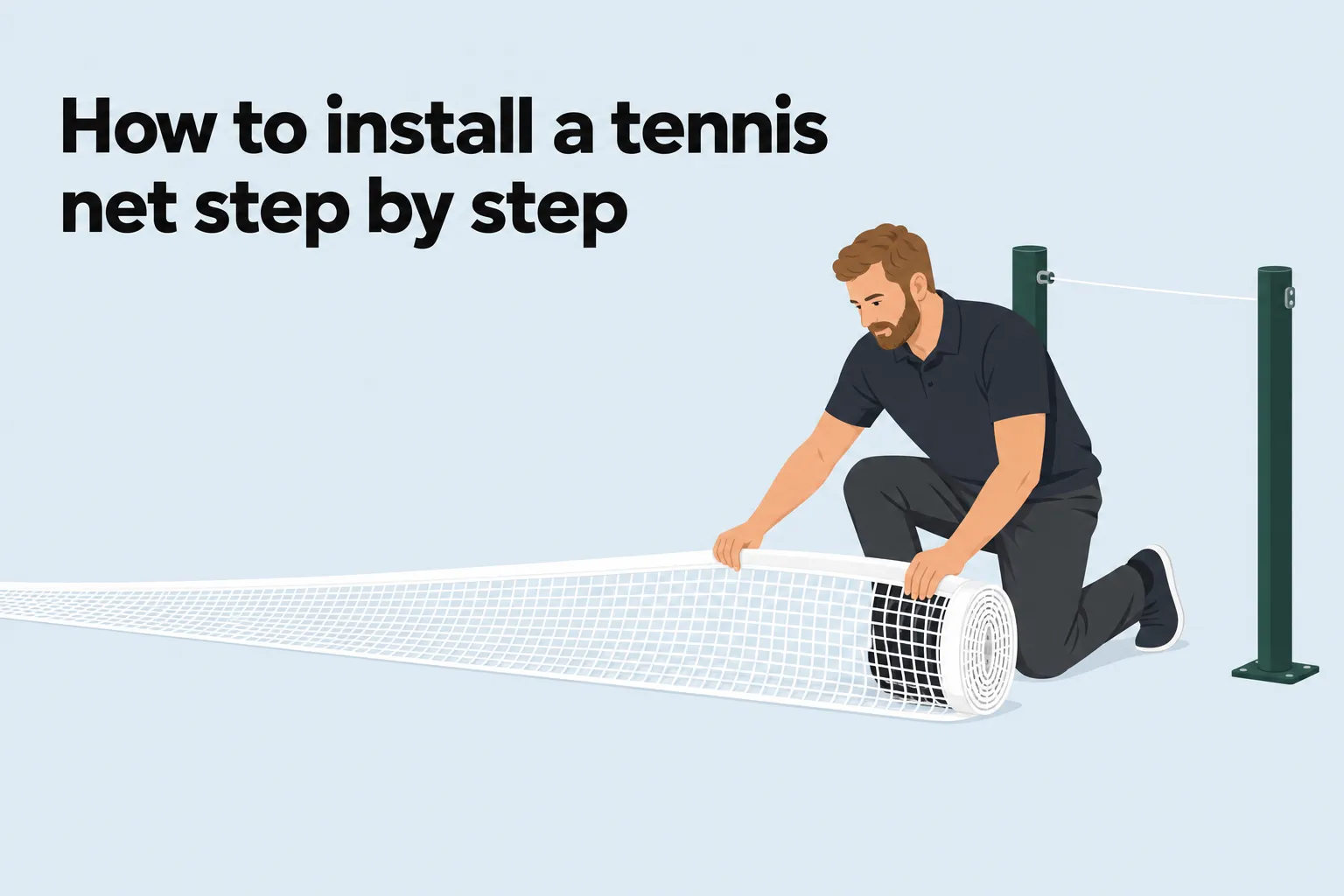
A tennis net headband should be inspected for fraying and UV damage. The centre strap, in turn, must stay securely anchored at the standard height of 3 feet (0.914 m).
The strap’s tension depends on the hardware at each end. Inspect and lubricate the winders on tennis posts to limit internal corrosion, and check post sockets for standing water before winter freezes.
Check windbreaks and court-side displays
Tennis windbreaks attach to the same fencing, so its condition matters. Compare mesh permeability, UV resistance, dimensions, fixings and wind loading: a solid sheet and a permeable mesh load a fence differently.
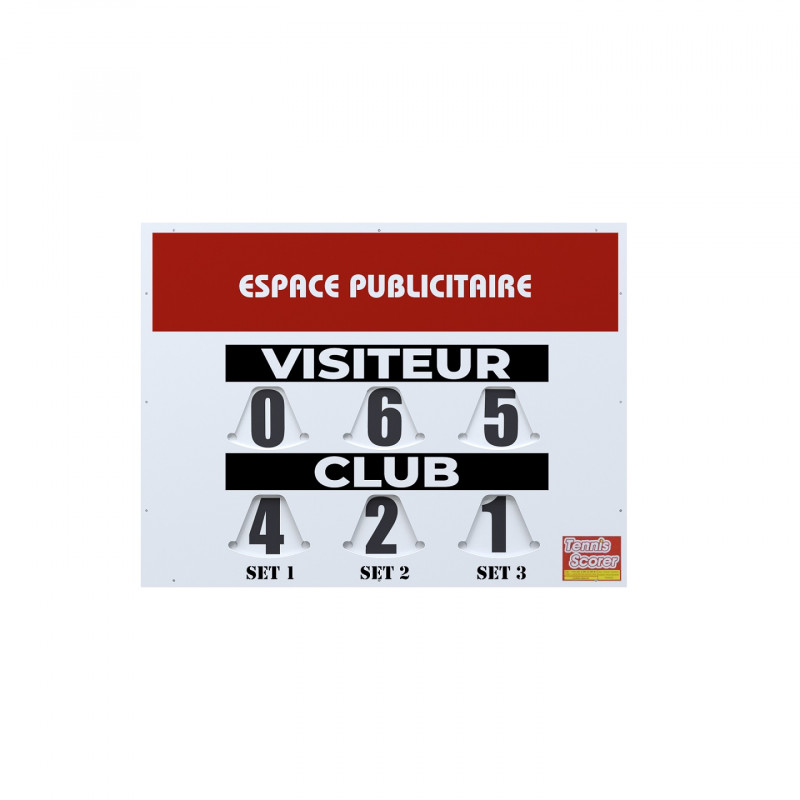
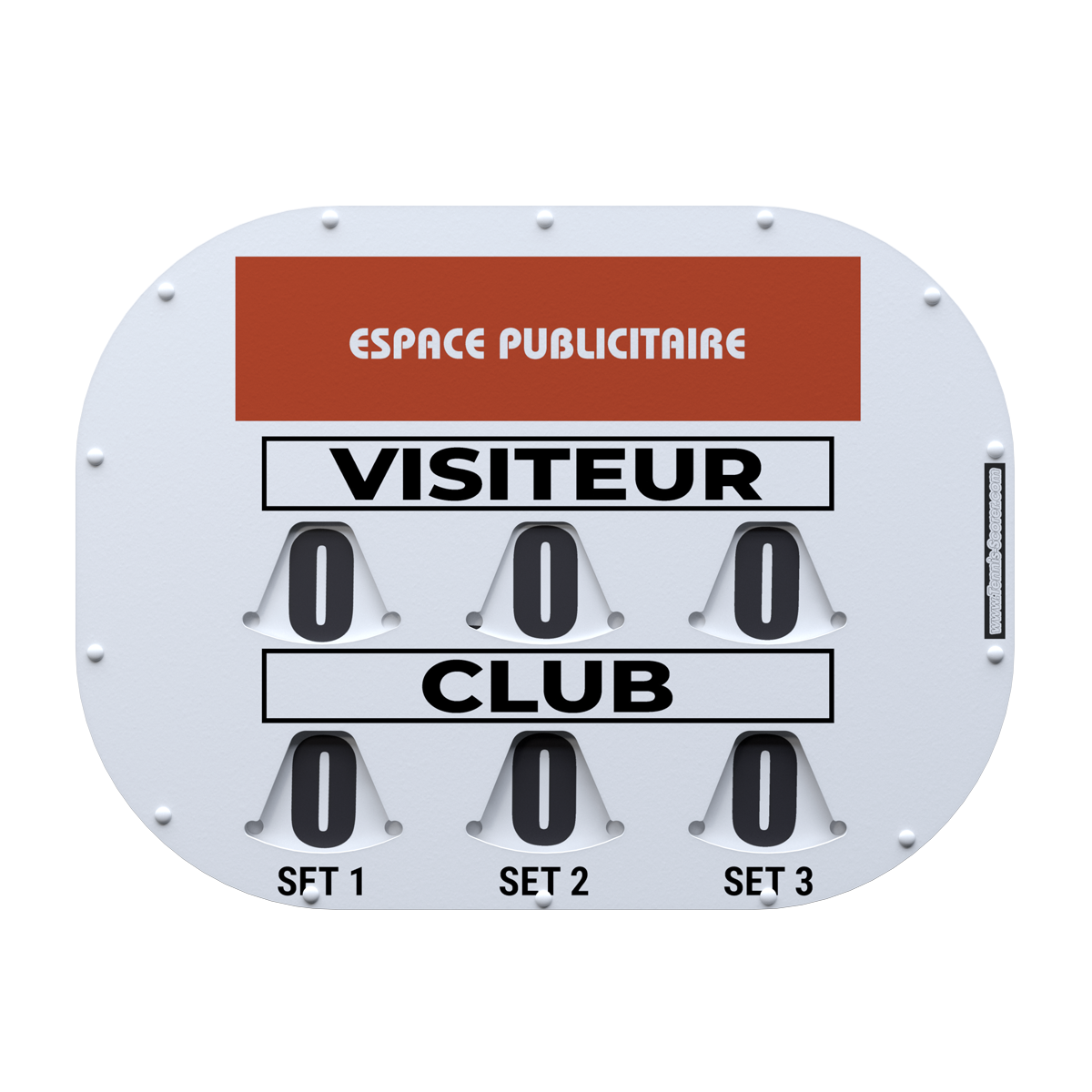
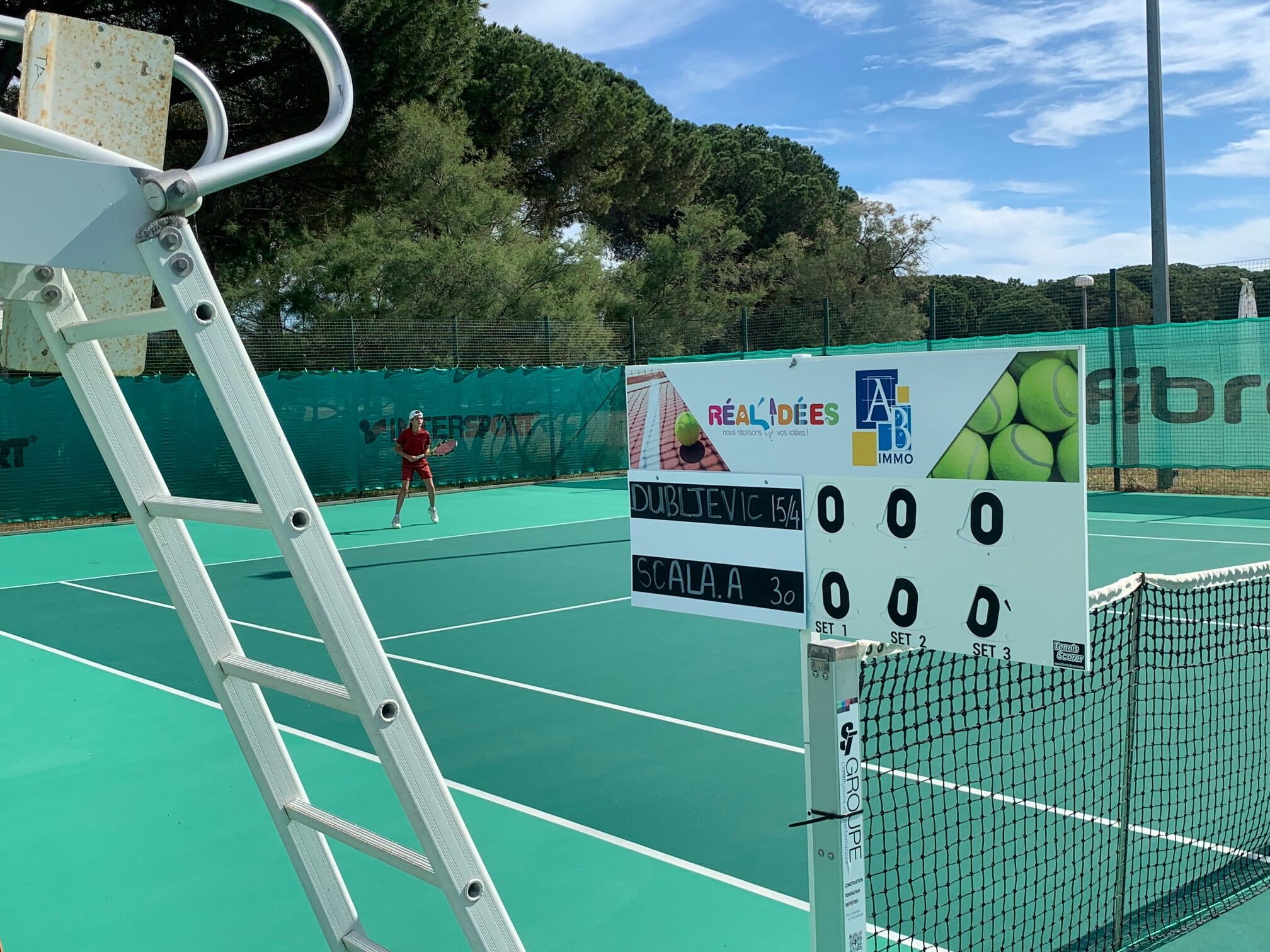
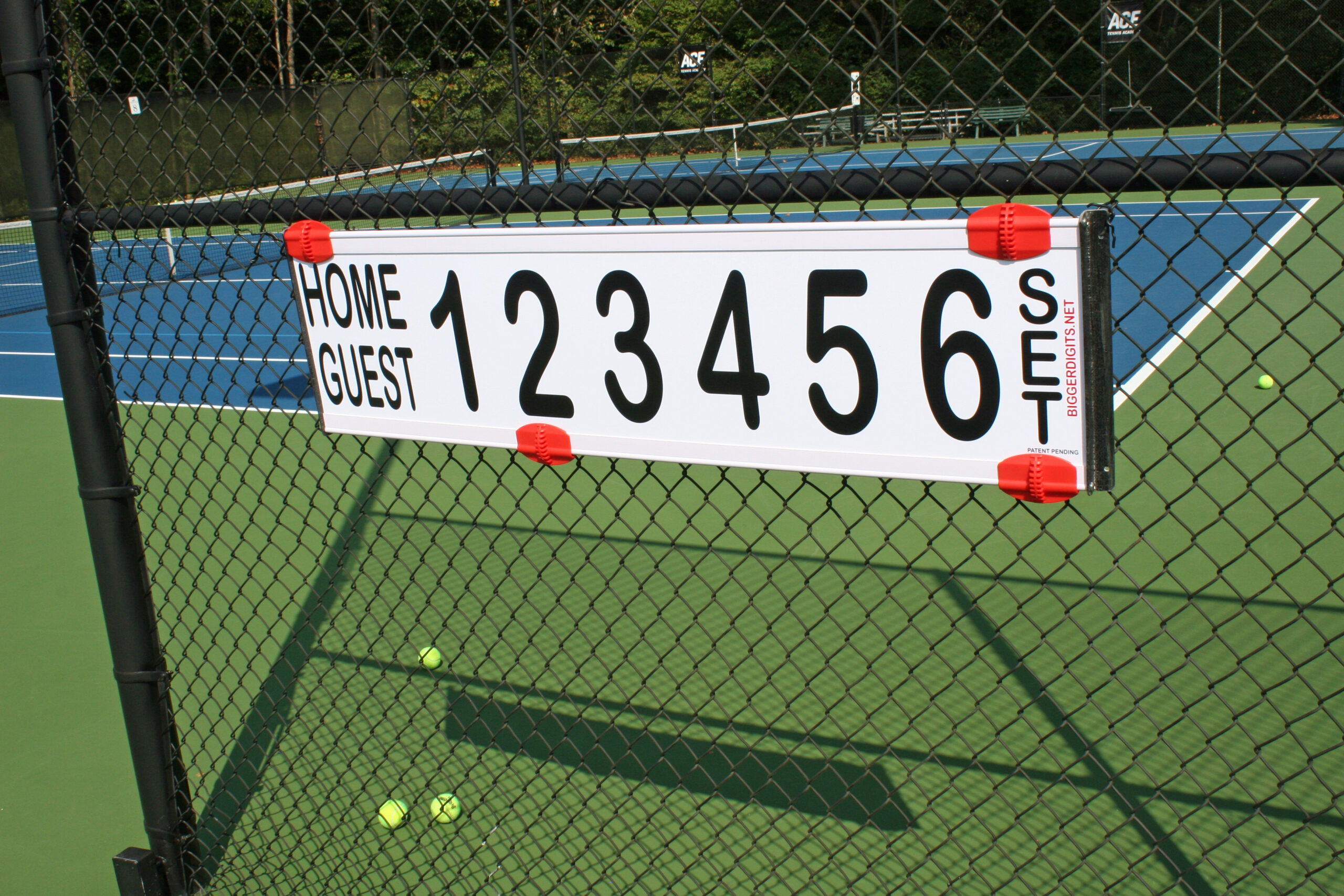
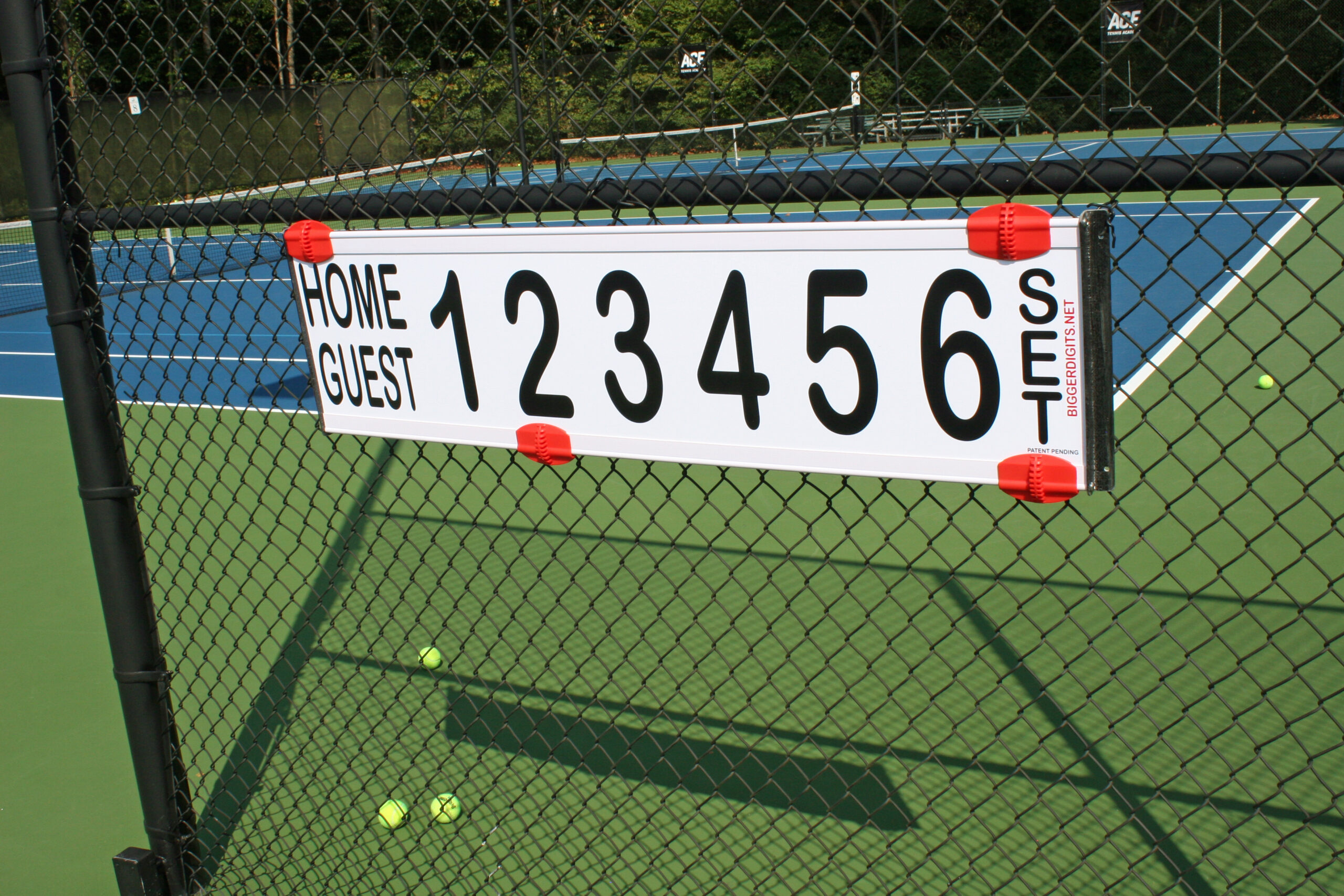
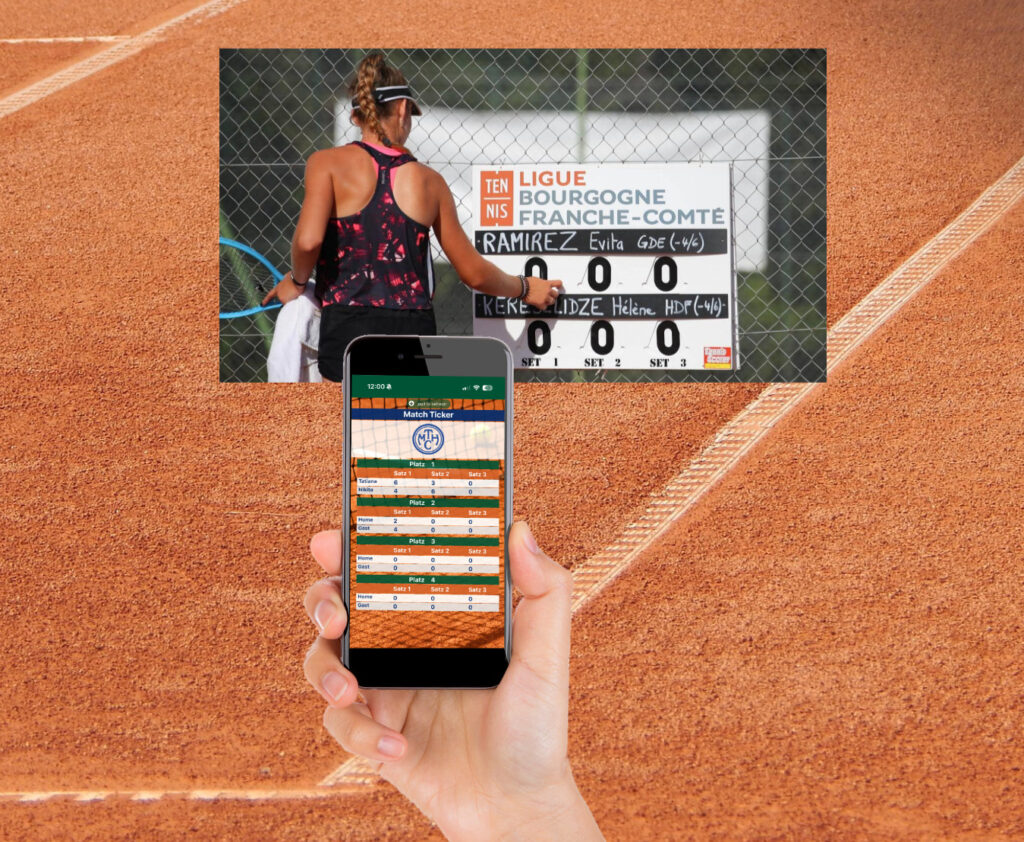
That fencing also carries other tennis court equipment. The range of weatherproof court scoreboards from Tennis Scorer includes single- and double-sided models, with replacement plates, markers, adhesives and a mast that attaches to a net post.
In practice, a double-sided manual tennis or padel scoreboard mounts to mesh fencing, with rotating score discs and name plates. Each rot-proof PVC manual scoreboard can stay outdoors year-round and accepts club or sponsor stickers.
Frequently Asked Questions
How should you clean a tennis court without damaging it?
On macadam or acrylic, remove loose debris first, then inspect shaded and low areas for moss or standing water. Clear accessible drainage points and check for cracks or coating wear. Avoid concentrated rotary pressure-washer nozzles where they could strip paint or dislodge surface aggregate.
Should you choose manual or powered court maintenance equipment?
That choice depends on court count, maintenance frequency, available staff, storage, training, servicing and replacement parts. Powered equipment is not automatically suitable for every surface, so check compatibility first.
What should a seasonal tennis court maintenance schedule include?
A surface-specific log can record debris removal after play, weekly moss and drain checks, monthly line and infill checks, seasonal reviews and an annual inspection. Spring covers winter damage, standing water, moss, nets, posts and windbreaks. Summer checks can include infill or dressing migration, coating wear, line visibility and net tension; autumn brings more leaf clearance and drainage-channel checks.