
Table of Contents
Understanding the maintenance cost of a tennis court scoreboard, from purchase to long-term servicing, helps a club or court owner choose equipment that retains value for decades. This guide compares manual and electronic scoreboard options, weatherproofing, mounting, sizing and the total cost of ownership over 20–30 years.
Tennis scoreboard maintenance cost and long-term value
Tennis court equipment represents a significant capital commitment, and a scoreboard is no exception. For anyone consulting choosing tennis court scoreboards, the key question is whether running costs matter as much as the purchase price. For most clubs, they do.
Manual scoreboards minimise maintenance costs
For a manual board, the maintenance cost of a tennis court scoreboard is close to zero under normal outdoor use. A manual board needs no power supply, software subscription or maintenance contract. As a result, the annual saving compared with an electronic model can be substantial.
- No running costs: The only variable is a replacement disc or digit, which a club member can usually fit in minutes without a callout.
- Replacement parts available: Score digits and discs are sold separately. A worn or damaged display component can therefore be replaced individually instead of forcing full-board replacement.
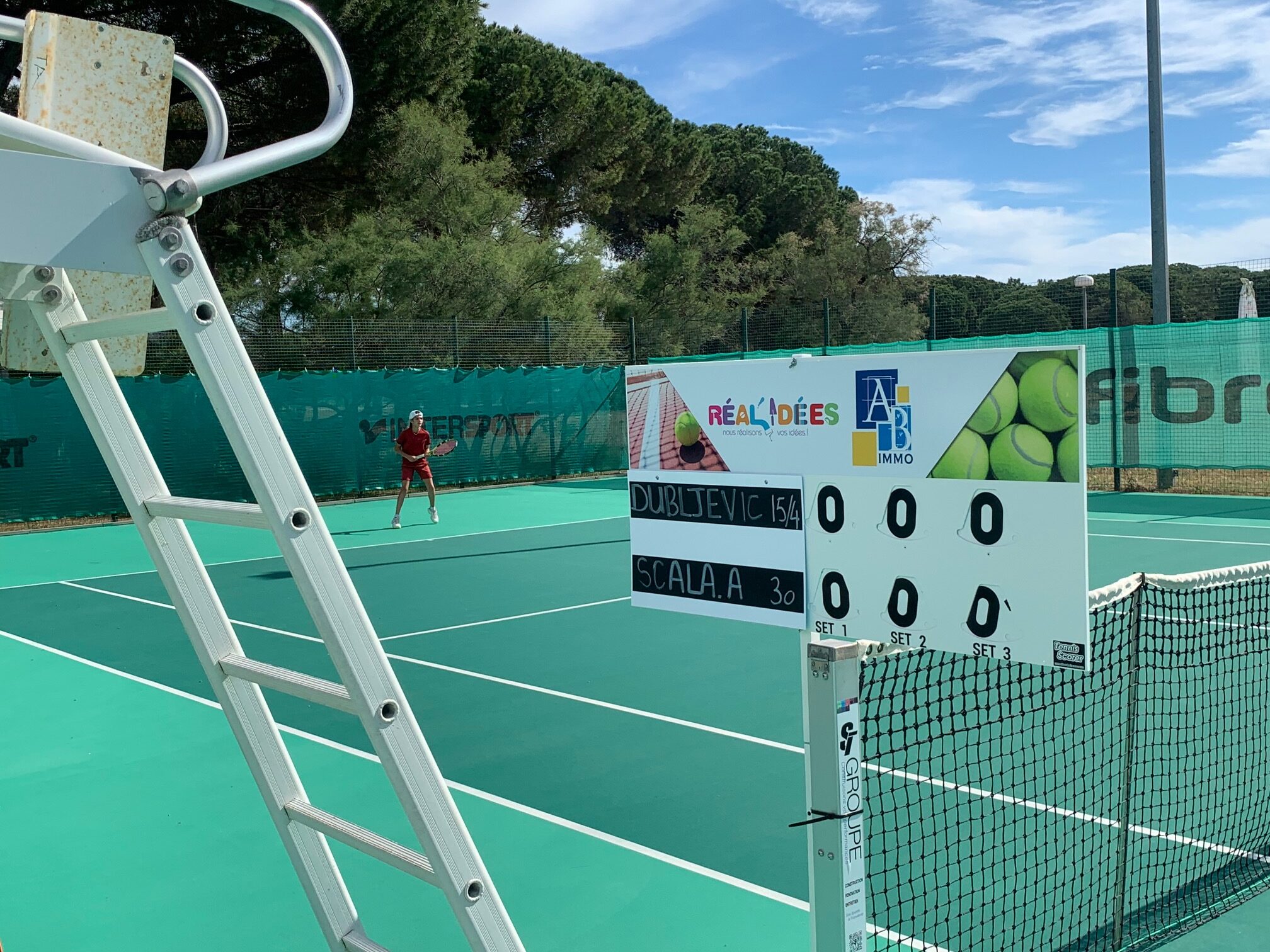
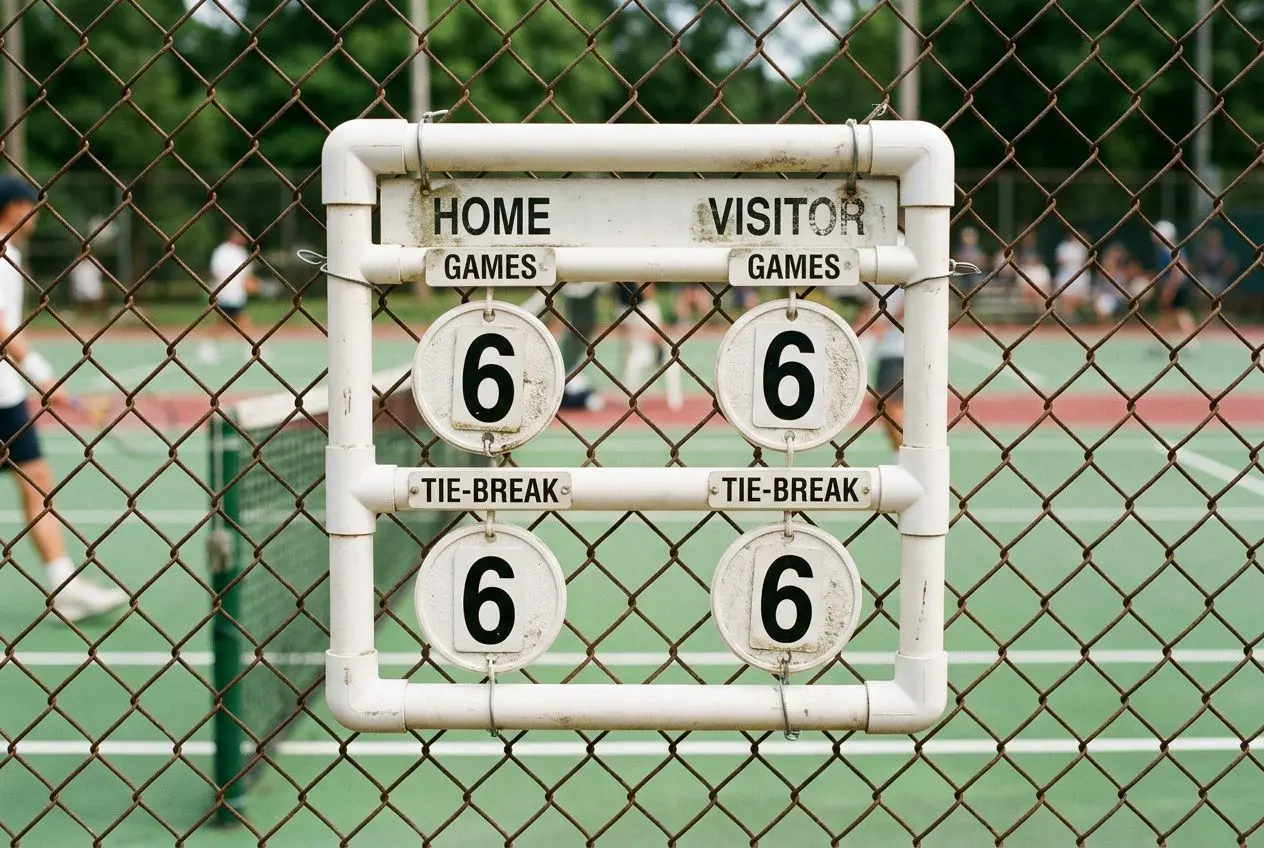
- Documented 20–30-year lifespan: Tennis Scorer records this service life for correctly installed PVC boards. Nearly 3,000 clubs and 16,000 courts across Europe and the USA were still using them in real outdoor conditions from the early 1990s.
Electronic systems create a different cost profile. Their first-year manufacturer’s warranty may cover parts, LED digits, labour and callouts, but from year two, without a service plan, labour charges, callout fees and non-LED components fall outside coverage. An annual plan can restore warranty-style cover, including telephone support, on-site repairs, annual inspection and priority callout.
Match Pointer weatherproofing and routine care
The durability of tennis scoreboards in the UK depends on weatherproofing at every contact point. Full-panel PVC boards use UV-stabilised, rot-proof material throughout rather than relying on a surface coating. Counter-glued watertight edges resist moisture ingress, delamination and frost damage: common causes of premature outdoor failure.
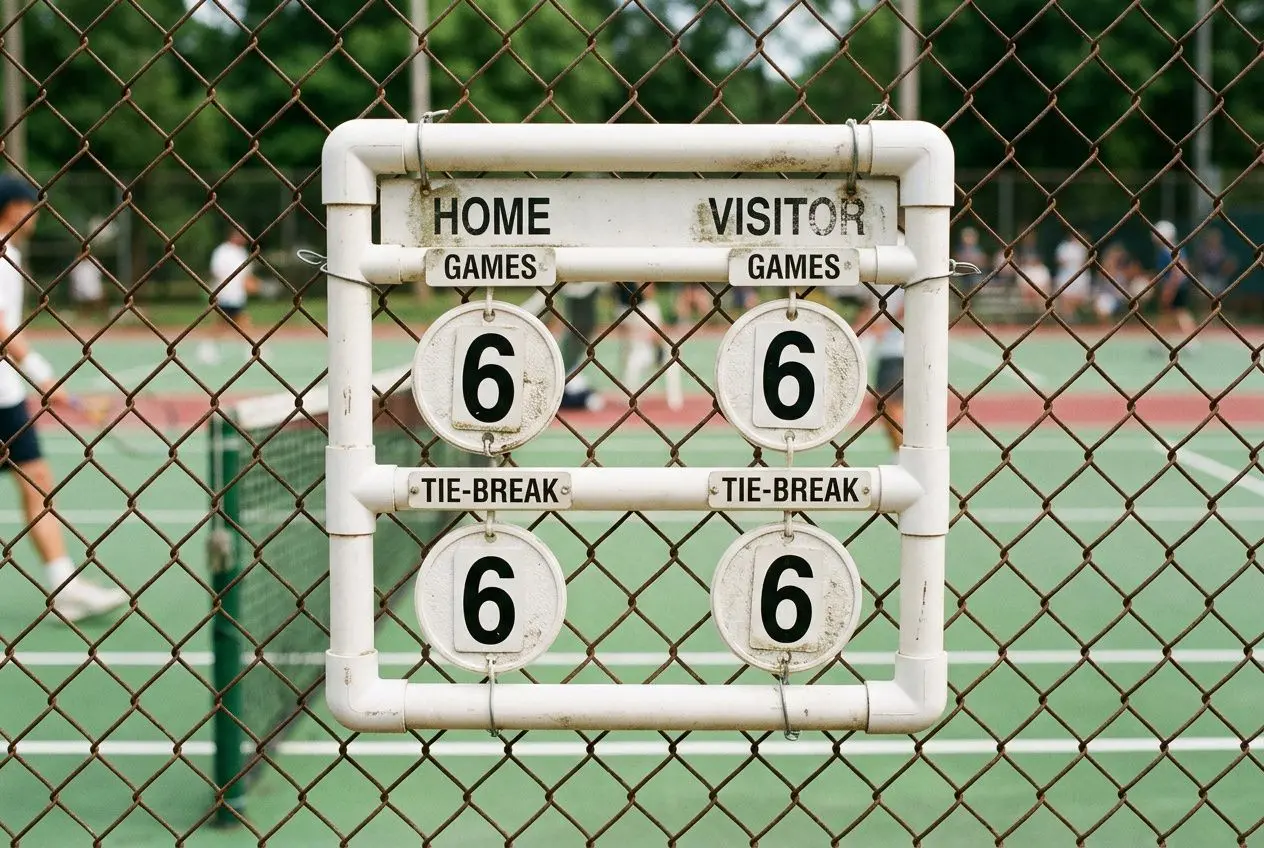
The Premium Match Pointer tennis scoreboard is described as 100% weatherproof and maintenance-free. Its sealed discs prevent water cohesion and do not require silicone lubricant under normal conditions. After prolonged rain, discs on standard rotating-disc models may stiffen: clean them with a strong water spray, allow them to dry fully, then treat them only with the supplier-approved lubricant. Alternative sprays may damage the discs. Replacement discs and name plates remain available as separate accessories, so the board can be repaired rather than discarded.
Tennis court installation and mounting durability
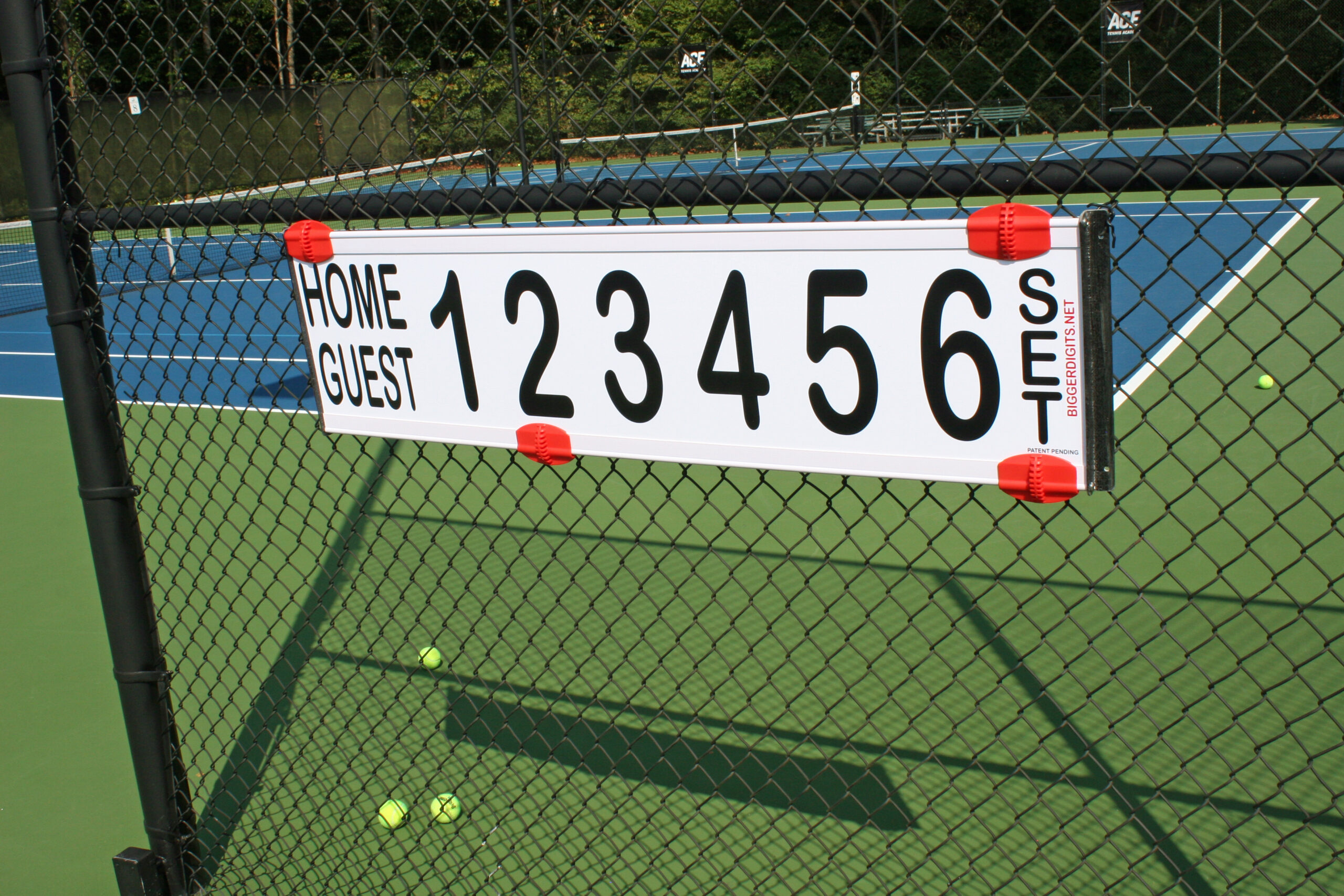
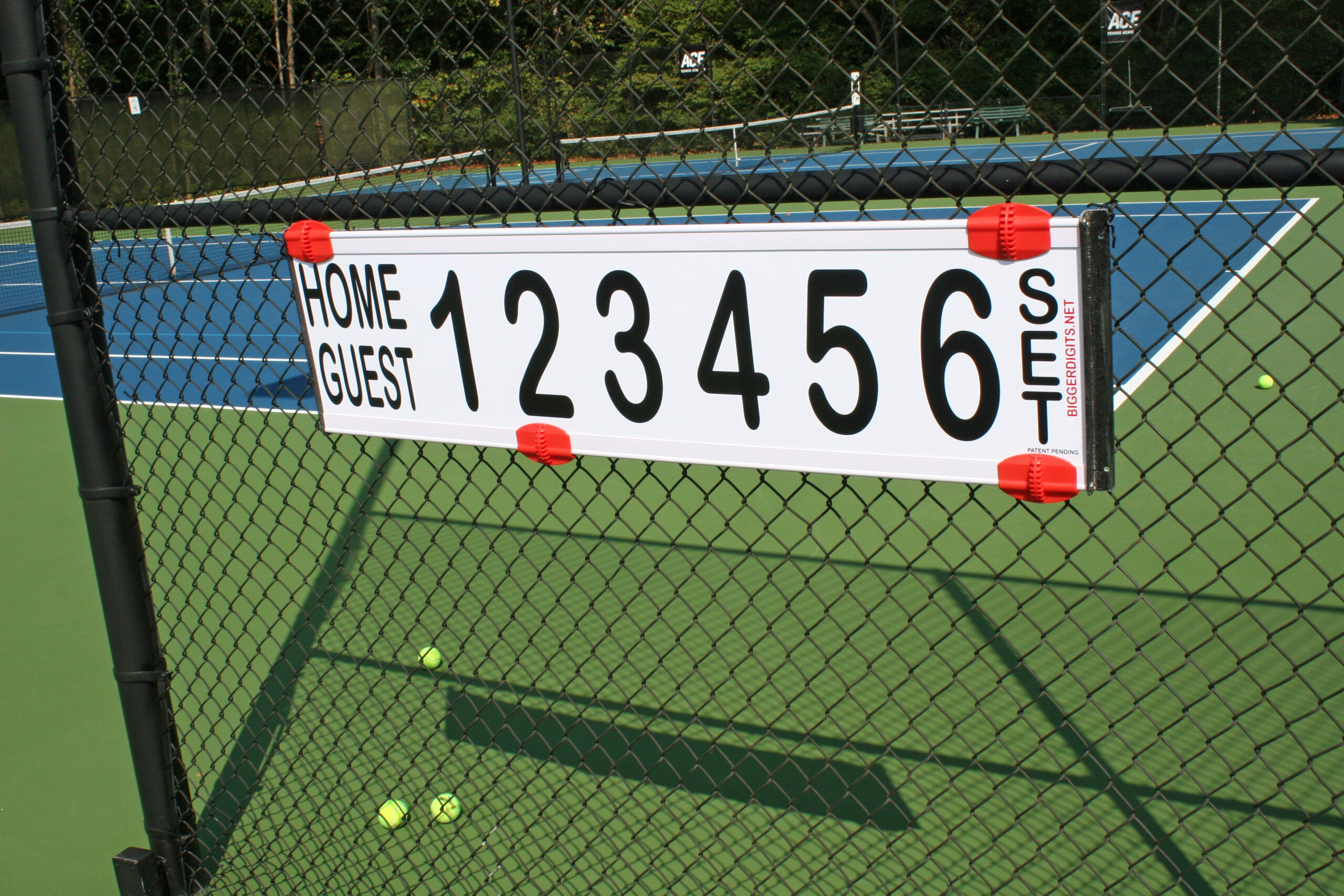
Correct installation protects both the scoreboard and the court fence. Full-panel boards attach with a no-drill serflex cable-tie system using four supplied heavy-duty ties, securing the board to fence wire without specialist tools or permanent drilling. Compact disc models use nickel-plated brass eyelets with anti-rust metal hooks, holding the board firmly across its surface during long-term outdoor exposure. The fence mounted tennis scoreboard buying guide explains how each fixing method performs at the net posts and along the fence line.
These nickel-plated and anti-rust parts continue to shield the contact zones even after years of vibration from play and wind. Once correctly installed, it requires no seasonal removal and can remain on court year-round through frost, UV exposure and heavy rain. The outdoor tennis scoreboard durability guide compares full-panel and disc systems across different climate zones.
Choosing a sport scoreboard size
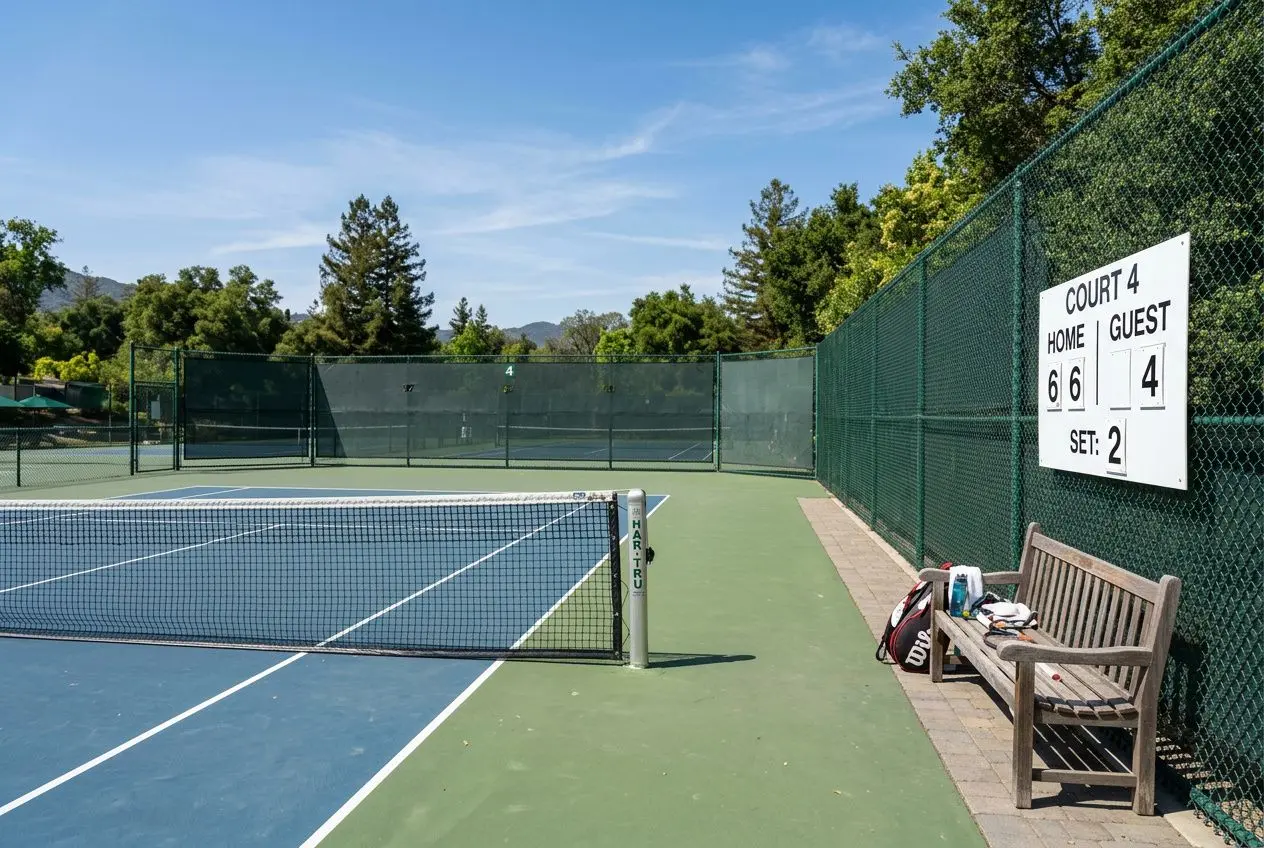
Viewing distance, not court status, determines the right format. The Small format, measuring 35 × 50 cm, suits net-side positioning on private or compact courts with short viewing distances. The Medium format, at 46 × 65 cm, is the standard club option: readable from both baselines and simple to mount on most mesh fences.
The Large format, measuring 56 × 80 cm, suits tournaments and courts with spectator areas or longer sightlines. Its 10 cm numerals on a white PVC background remain legible at over 50 metres, covering both baselines and courtside positions simultaneously. Every size includes a 56 × 17 cm branding zone for sponsor logos, club identity or set numbering with adhesive stickers, which can affect total prices when branding is part of the procurement requirement.
Frequently asked questions
What is the ongoing maintenance cost for a tennis court scoreboard?
For a manual PVC tennis court scoreboard, the ongoing maintenance cost of the board itself is effectively zero. It needs no power, service contract or specialist labour, while replacement score discs and name plates can be bought separately. That allows individual parts to be renewed without replacing the complete scoreboard.
Electronic equipment may require an annual service plan after the first year, including inspection, internal cleaning, labour and call-out charges. Over a 20–30-year lifespan, this recurring cost creates a substantial difference.
How long does a tennis court scoreboard last, and what affects its durability?
Tennis Scorer documents a 20–30-year service life for manual PVC scoreboards correctly installed outdoors. Their durability depends on three details: UV-stabilised, rot-proof PVC throughout; counter-glued, watertight edges that prevent moisture ingress and frost damage; and corrosion-resistant brass eyelets with anti-rust hooks at every contact point with the net posts or fence.
Boards with unsealed edges or untreated fixing points typically require seasonal removal to prevent water damage, which shortens their working life. The scorer of nearly 16,000 courts supports this service-life record through decades of field evidence.
Which scoreboard format is the right choice for a club court versus a tournament court?
For a standard club court, the Medium format (46 × 65 cm) is the practical choice: it remains readable from both baselines, mounts neatly on most mesh fences and covers the scoring requirements of a competitive match. Its board displays scores from 0 to 7 per set, cumulative set totals and a serving indicator.
For tournament courts with spectator areas or longer sightlines, the Large format (56 × 80 cm) remains visible at over 50 metres without electronic sport equipment or a power supply. The Small format (35 × 50 cm) suits private or compact courts, where the scoreboard can sit beside the net and viewing distances are short. All formats set up without specialist tools and require no ongoing servicing once installed.