
Table of Contents
Protecting sports equipment from rain starts before the first shower. Close-fitting covers, secure tarps and dry storage keep water out, then careful drying and regular checks stop damp turning into rust. For tennis and padel clubs, the same logic applies to sheltering, drying and maintaining court gear, while rot-proof PVC scoreboards are built to stay outdoors all year.
How to cover and store tennis and padel gear
Rain causes the least harm when it never reaches the gear. Equipment that stays outside needs a well-chosen cover. Short-term outdoor storage calls for a properly fixed tarp. Portable items belong indoors, somewhere that stays dry.
Choose a cover that keeps moisture out
A waterproof cover only works if it is tight and encloses the item completely. A custom fit leaves fewer gaps for rain to blow through, so a loose sheet over a ball machine or bench protects far less than it seems to.
Even a well-fitted cover can trap water vapour under it. Three details help keep the inside dry:
- Breathable fabric: keeps outside moisture out while limiting condensation underneath.
- Silica gel packs: placed in the corners under the cover, they absorb residual damp.
- Full coverage: the cover reaches every side of the item, so no edge is left exposed.
Secure a temporary tarp against rain
A tarp makes sense when gear has to stay outside for a short time and no fitted cover is available. Its protection depends on how it is pitched:
- Slope: angle the tarp so water runs off rather than pooling on a flat surface.
- Overhang: extend it at least two feet beyond the equipment on every side to stop wind-driven rain reaching the edges.
- Fastenings: use rope or cam straps, because bungee cords keep moving and can wear holes in the material.
- Tie-downs: spread the load across several anchor points when the wind picks up.
Over a spell of rainy weather, gusts keep tugging at those anchor points. Repeated stress loosens connections, so check and re-tighten them regularly until the tarp comes down.
Store portable equipment away from damp floors
Once indoors, portable court gear should sit off the floor in a dry, ventilated room. A wet floor wicks damp back into bags, nets and tools stacked directly on it.
Ventilation matters just as much in a closed store: it helps prevent condensation building up on stored equipment. Each manufacturer’s instructions say whether its bag or cover is suitable for damp contents, so check them rather than assuming.
How to dry court equipment after rain
A cover does not replace drying. Once play ends in wet weather, the water sitting on the gear has to go before anything is packed away.
Remove water from rackets, nets and tools
Wiping off surface water is the first step. Each type of item needs its own care:
- Padel rackets: wipe them and leave them to dry before closing the cover or bag.
- Removable nets: wipe off free water, because a wet net packed tightly away can stay damp.
- Maintenance and coaching tools: clean and dry brushes, rollers and coaching aids before putting them away.
Let hidden areas dry before enclosing equipment
Wiping deals with the faces you can see, not the places water hides. Leave folds, seams, sockets and handles open to the air, as moisture lingers there after the outer surfaces look dry. Never seal damp equipment in plastic or shut it in an unventilated cupboard.
How long should that take? No single figure applies to a wet tennis or padel court, net or racket. In practice, drying time depends on drainage, construction, shade, wind, humidity, temperature and how much water the item has absorbed.
Check items before returning them to storage
Because no fixed drying time exists, a hands-on check decides when gear is ready. Feel for lingering damp wherever an item will be covered or enclosed, and keep spare balls and grips dry so they bring no water into the stored kit.
Dry rackets need care too: racket-care guidance advises keeping them away from intense heat and direct sun. A cool, airy shelf suits them better than a sunny window or a radiator.
How to prevent and treat rust on court metalwork
Water that gets past covers and drying ends up on posts, winders and frames. Steel corrodes wherever moisture stays long enough. Prevention means knowing where rust starts, then giving tennis and padel metalwork the checks and lubrication the SAPCA codes set out.
Spot where corrosion can start
Rain, dew and condensation all give steel the moisture it needs to corrode. High humidity adds to the risk, and so do salt deposits on coastal sites.
From there, the weak points are predictable. A scratch through paint or powder coating exposes bare metal. Water also sits in joints and fixing holes long after the visible face has dried.
Maintain tennis posts, cables and winders
SAPCA advises checking a tennis net’s cable, headband and posts. BS EN 1510:2004 is the current functional and safety standard for tennis equipment, but meeting it does not replace inspecting kit after bad weather. Release net tension after use instead of winding harder to correct the height, and stop the net dragging on the court in wind.
Check the posts for rust and grease the winding mechanism from time to time. Where appropriate, lightly grease the post sockets and the inserted part of removable posts, as the maker specifies. If a court will be unused over winter, SAPCA recommends drying the net and posts carefully before removing and storing them. Courts used through the winter do not need dismantling.
Protect padel fixings and coated metalwork
The SAPCA padel code calls for monthly checks of enclosure anchors, structural fixings and net tensioning, with anchor checks repeated after a storm or severe wind. Check that the net works, that its posts are secure and that the tensioning mechanism stays lubricated. A loose enclosure or damaged glass needs assessment by the installer or another competent specialist before anyone plays.
Coatings need the same prompt attention. Repair exposed metalwork to the manufacturer’s specification before rust appears, because every scratch left open invites damage. Where rust has started, remove it, seal the area and touch it up. Avoid any treatment that goes against that specification.
Can PVC scoreboards stay outdoors all year?
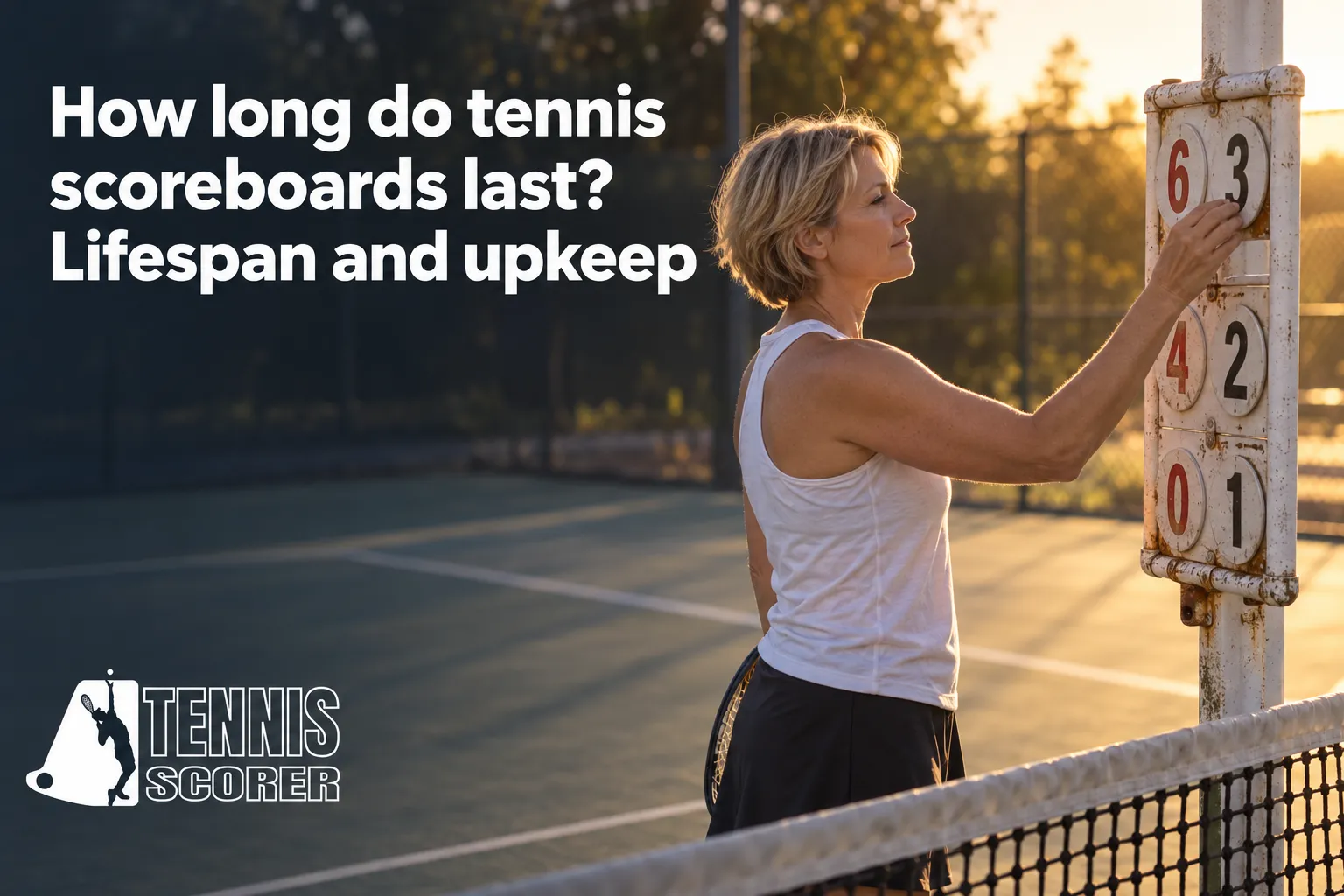
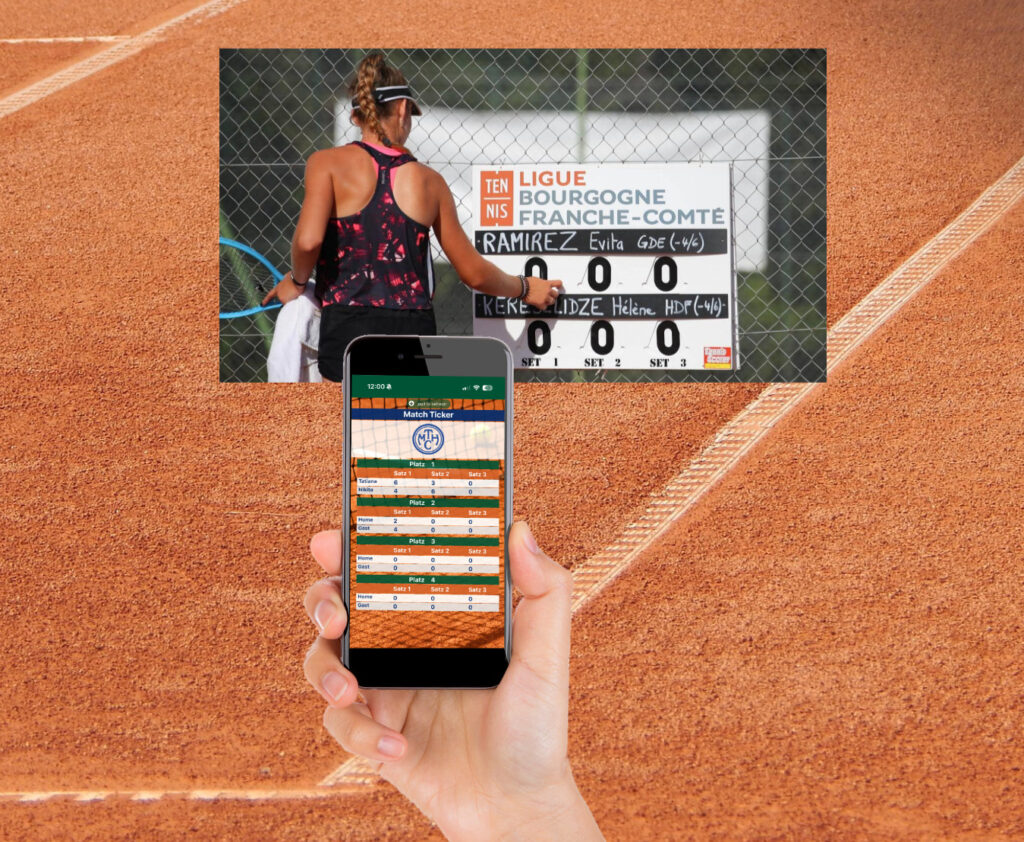
Unlike nets and portable kit, a court scoreboard usually stays in place whatever the weather. The answer depends on what it is made of and how it is built. PVC removes the risk of rot, but the whole board still needs checking, gentle cleaning and a realistic view of what weathering tests prove.
Choose a board made for outdoor courts
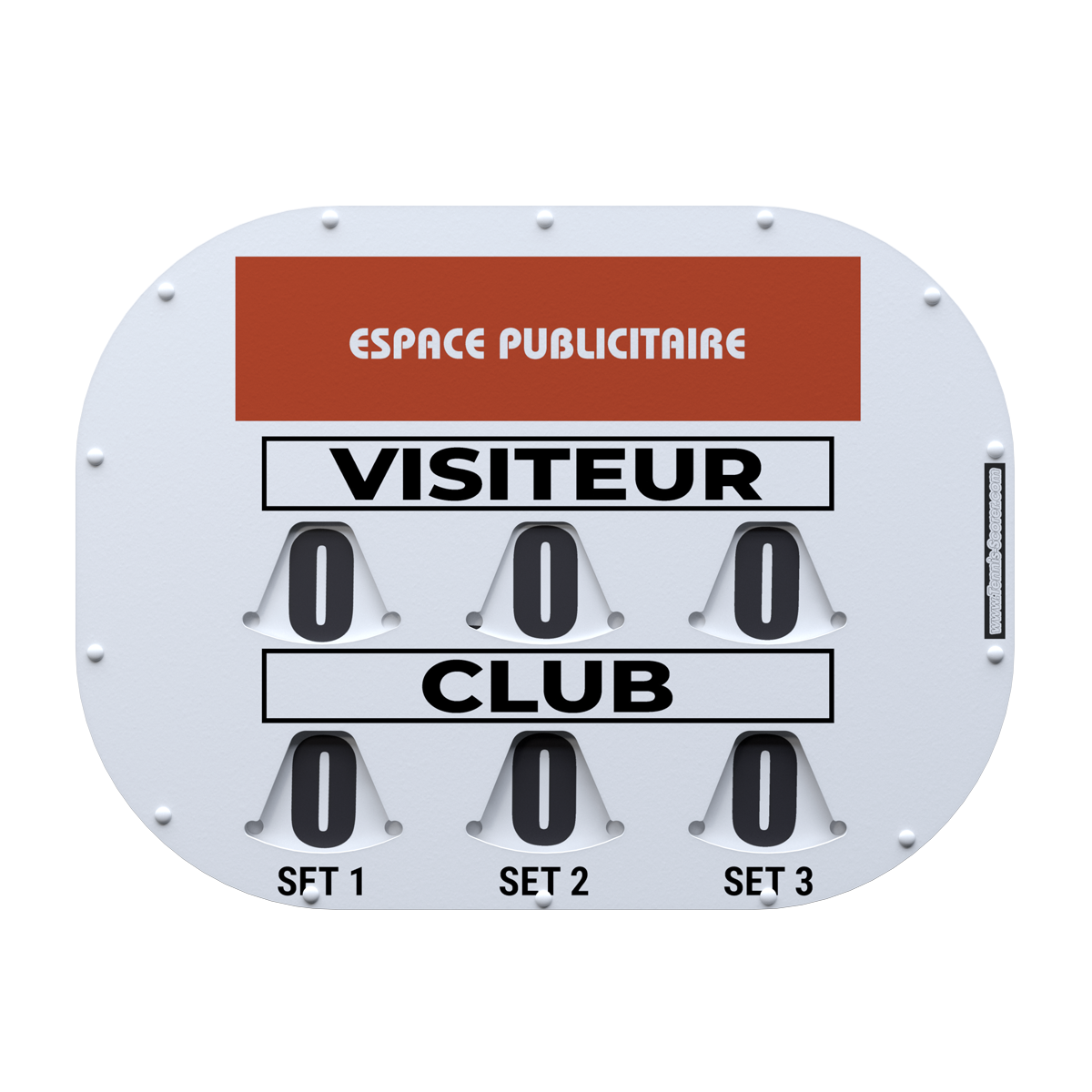
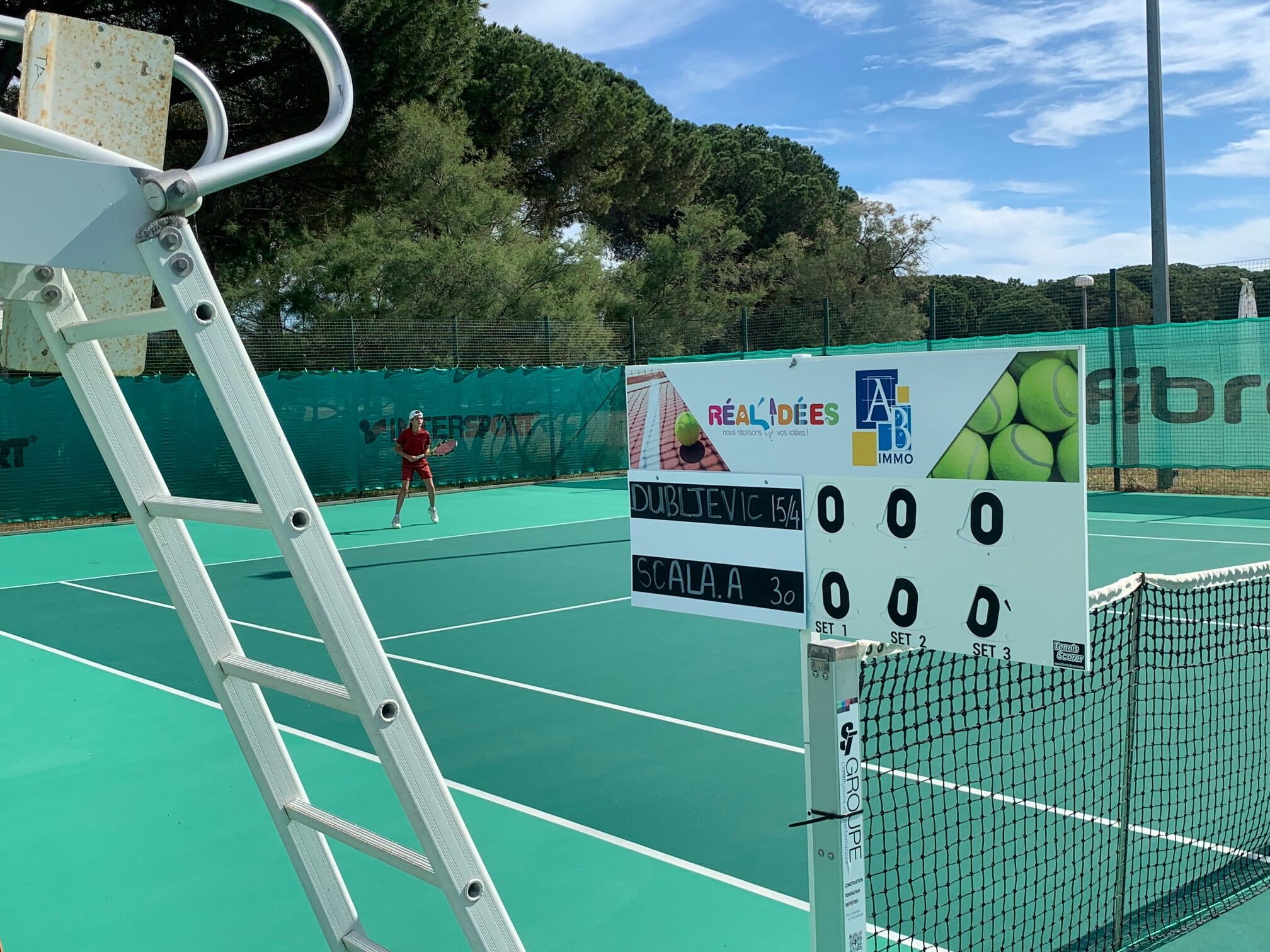
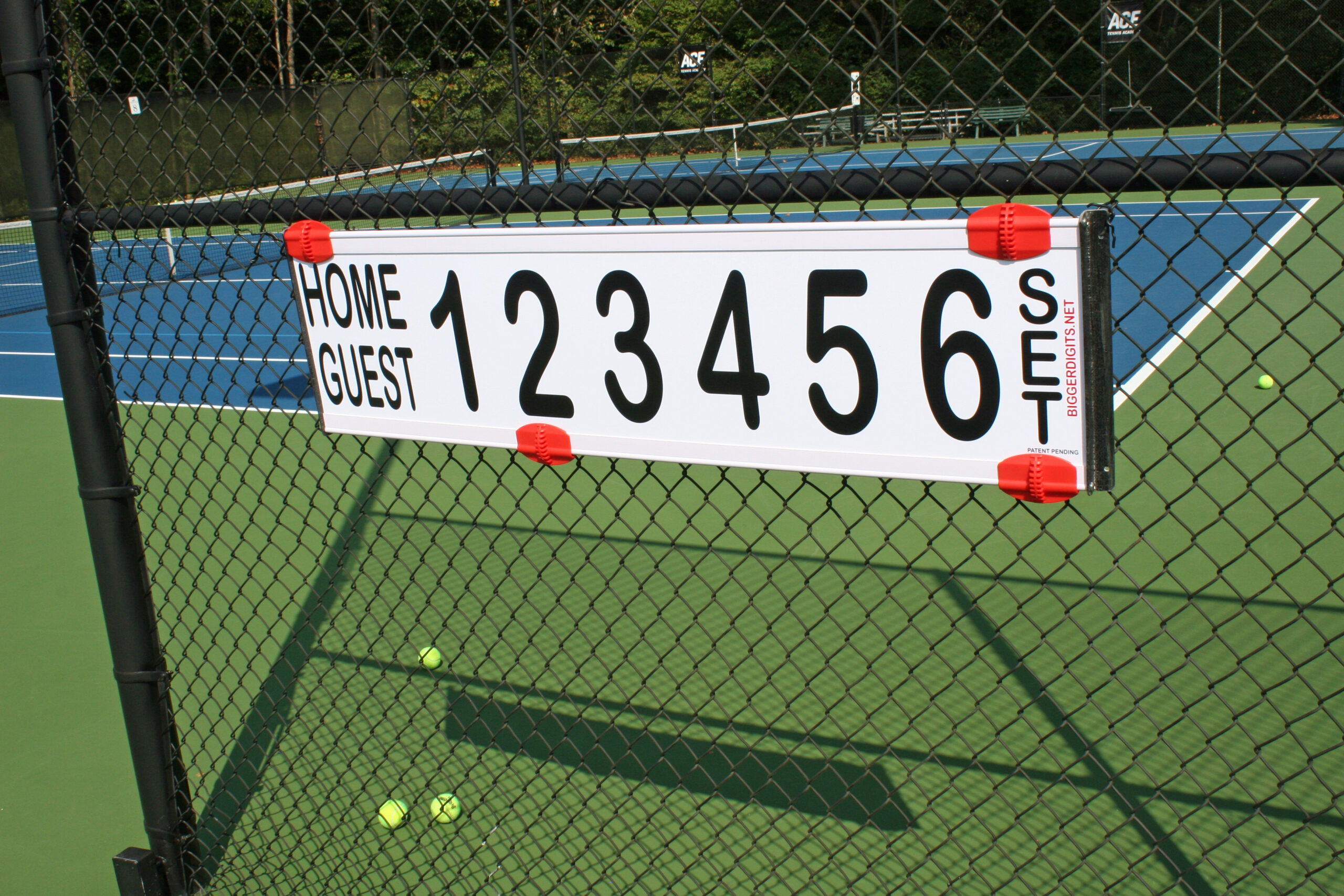
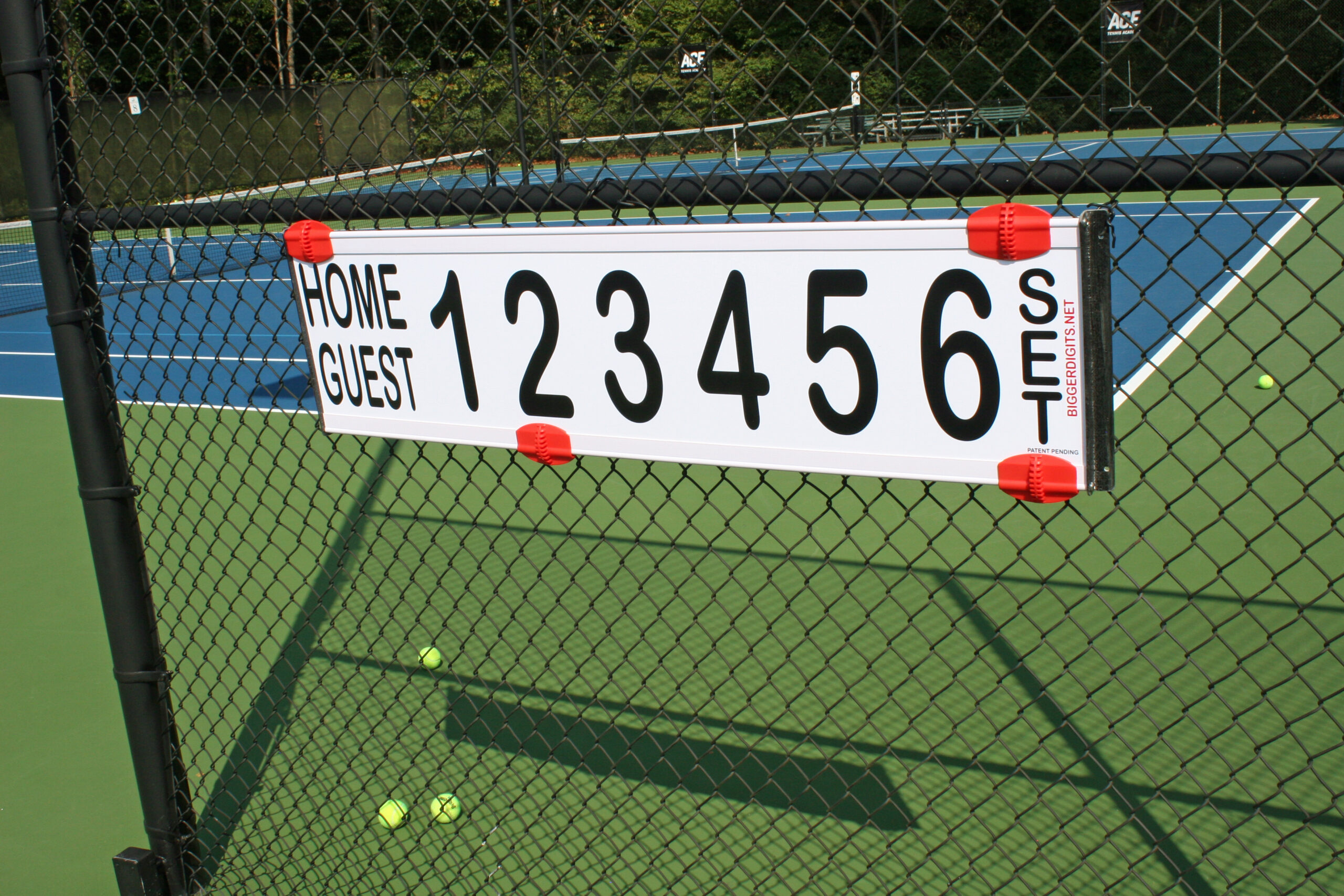
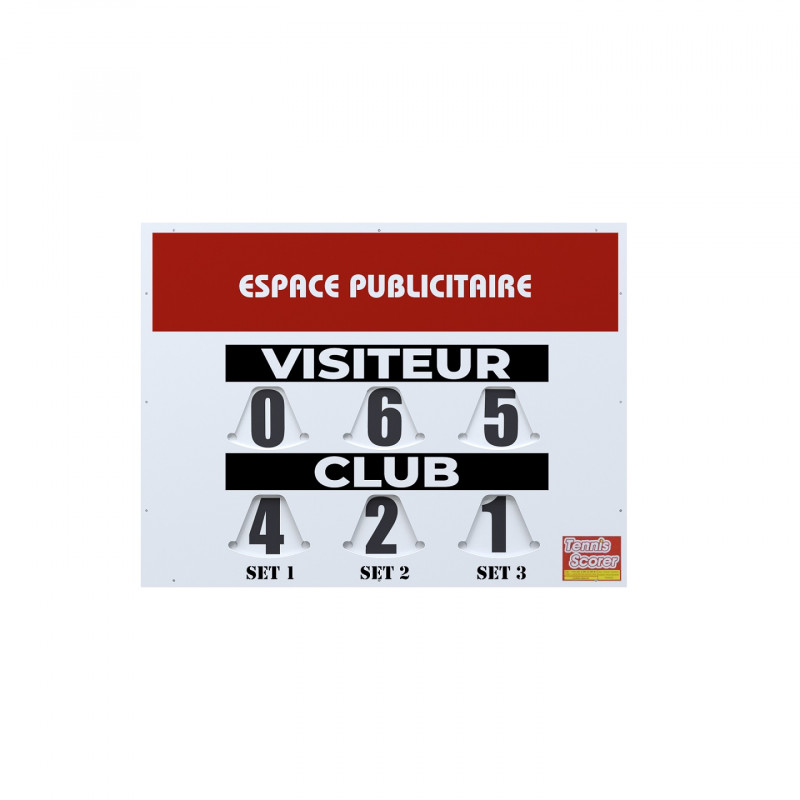
Tennis Scorer designs its manual scoreboards in white PVC to stay on the court through all weather conditions. Each format suits a different court:
- Double-sided padel, 80 × 60 cm: white PVC for all-weather use, with scores visible from both sides.
- Compact, tennis or padel: 100% white PVC with rotating number discs.
- Large tennis, 120 × 60 cm: 100% white PVC in a format that stays readable around the court.
- Little upkeep: the protected compact and large formats need little maintenance.
On the double-sided all-weather padel scoreboard, the upper and lower edges are bonded to keep it waterproof. Tennis Scorer designs the compact weatherproof tennis and padel scoreboard to stay outdoors all year, and the large outdoor tennis scoreboard as well.
Check the complete board, not just the PVC
PVC does not suffer the biological rot that affects timber. A rot-proof panel does not, on its own, make a whole scoreboard fit for permanent outdoor use. On a UK court, check the model’s outdoor suitability, how legible and UV-resistant the printing is, the sealed edges, freely turning discs and sound corrosion-resistant fixings. Inspect fence-mounted panels after severe weather for wind damage.
Clean and assess long-term weather exposure
Once the board is in place, upkeep stays simple. Clean a dirty manual scoreboard gently with a soft cloth or sponge, following the maker’s instructions. Avoid abrasive products that damage protective surfaces.
How long the panel lasts is another matter. Published research on PVC weathering reports possible changes in colour and mechanical properties, depending on the formulation and the exposure. As a result, an all-weather claim is not an independently measured service life.
Standards back up that caution. BS EN 513:2026 describes artificial-weathering tests for PVC-based profiles but does not certify a complete scoreboard. ISO 29664:2010 states that results from its artificial-weathering method cannot predict service life.
Frequently Asked Questions
Does a manual PVC scoreboard need an IP rating?
No. A manual PVC scoreboard needs no electrical ingress rating. An electronic scoreboard needs weather protection suited to where it is installed. The IP-code standard BS EN 60529 covers ingress into enclosures, not how long a PVC panel lasts.
What should be done with portable items near padel glass in stormy weather?
The LTA advises removing loose objects near padel glass in bad weather. Take down any portable item that the wind could blow into the glass.
Which maintenance mistakes can damage court equipment after wet weather?
Over-tightening nets and greasing or painting against the maker’s specification both cause harm, as does abrasive cleaning that strips protective coatings. SAPCA also warns against using salt or other de-icers on tennis courts, because their effects on surfaces are unpredictable.