
Table of Contents
A stable tennis serve starts with the same foundation every time: a clean ball toss, sound body alignment, and enough control to reach consistent contact.
Step one: mastering the tennis serve toss
That foundation begins with the toss. Before adding power, a bigger serve swing or more advanced variations such as a flat serve, slice or kick serve, players need a reliable release that supports a good serve under pressure. Find more serve toss tips to complement the steps below.
How to hold and release the ball correctly
A cleaner toss starts in the hand. Hold the ball where the palm opens into the fingers, rather than at the fingertips: that grip reduces tension and gives the release better directional control.
From there, the arm should travel straight up from the shoulder, with minimal wrist action and no sideways drift. Release around eye level with a relaxed arm and an open hand: in practice, that helps players toss the ball without adding unwanted spin and keeps the motion simple.
Toss height and ball placement for each serve type
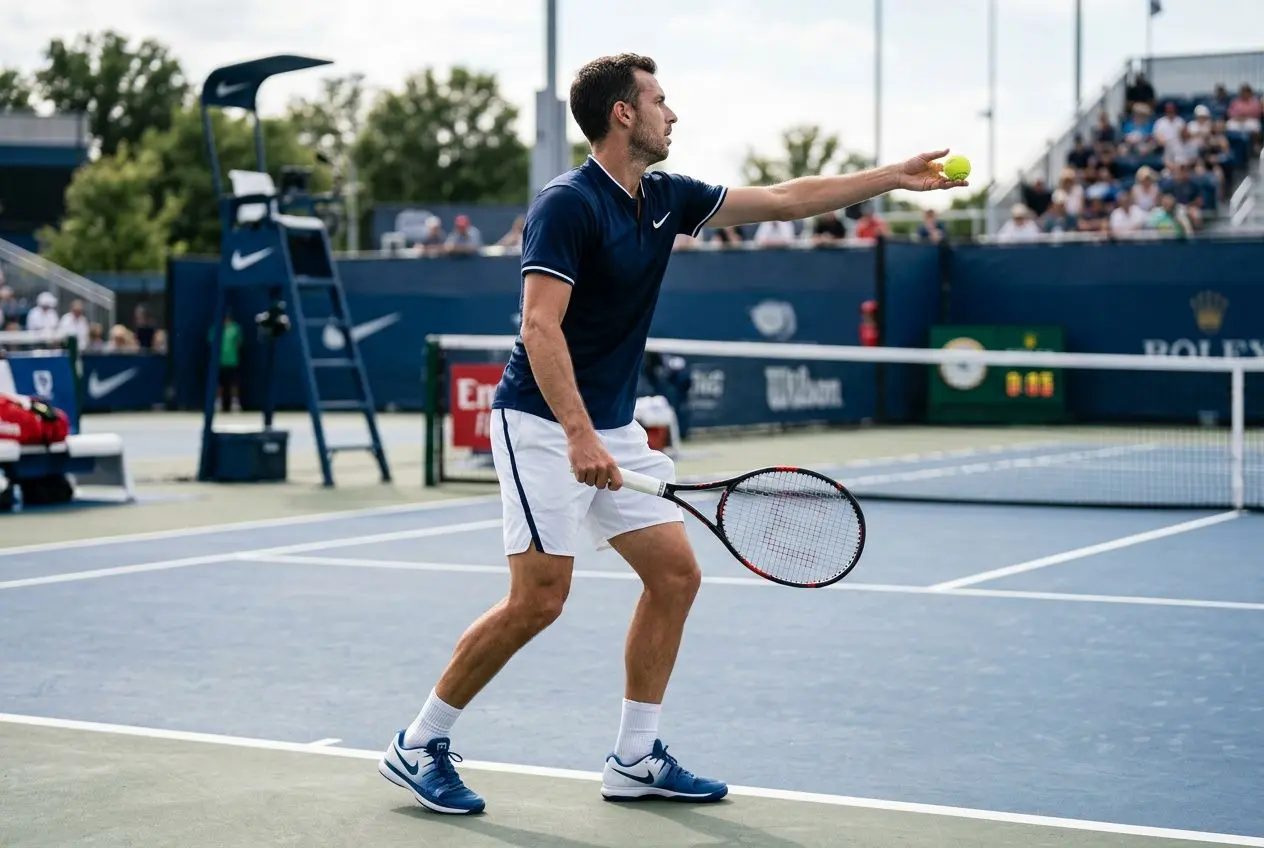
Once the release is sound, height and ball placement become the next priority. The ball toss should rise just above the full reach of the extended arm and racquet, giving enough space for upward acceleration, balanced contact and a complete follow-through.
- Flat serve placement: toss the ball slightly in front of the body and towards the hitting side, which supports a direct path through contact and greater power.
- Slice serve placement: place the toss a little more to the hitting side, allowing the racquet to brush across the ball and create slice.
- Kick serve placement: set the toss slightly behind the head, so the serve swing can travel up and over the ball for topspin.
- General rule: if the tossing arm moves across instead of up, body balance changes, the step into the serve is disrupted, and contact timing usually suffers.
As a result, a low toss or one that drifts too far behind the body often forces late adjustments in the arm, the backswing and the rest of the tennis serve motion.
Drills to build a consistent toss pattern
Practising without a racquet sharpens the release, helps players feel how to toss the ball on line, and makes it easier to check whether the shoulder, arm and hand stay smooth through the action.
Once installed, the toss can be linked to the full motion in stages: start with the release, then add the backswing, then the upward drive to contact, and finally the follow-through. Tennis Scorer recommends this progressive method because it helps players build a cleaner serve without embedding compensation into the swing, whether the aim is more control or more power.
Step-by-step tennis serve technique from stance to contact
Grip, stance and trophy position explained
The continental grip underpins sound tennis serve technique across a flat serve, slice and kick serve. To check the serve grip, place the index finger of the non-dominant hand into the valley between the thumb and index finger of the playing hand: the base knuckle should sit on the second bevel of the racquet handle.
- Continental grip check: the racquet edge stays perpendicular to the ground, like a hammer, so the hand and arm can pronate cleanly through contact.
- Stance setup: the front foot aims towards the net post while the back foot remains roughly parallel to the baseline, giving the body the sideways stance needed to coil.
- Trophy position: the backswing should feel relaxed and pendular. The trophy position is reached when the racquet tilts diagonally and the lower edge touches the back of the head, rather than falling into a waiter’s-tray shape.
From that base, two stance patterns are common: platform and pin-point. In the platform stance, the feet stay in place and power comes from the leg drive and coil; in the pin-point stance, the back foot steps in before the jump. The deciding factors are typically height, timing preference and the player’s natural source of power.
Body rotation and weight transfer through the serve
Once the stance is set, loading the body correctly becomes the next priority. Starting the rotation early is the key cue: the hips and core begin to coil as the weight moves into the back foot.
As a result, energy travels upward through the shoulders, arm and hand instead of being forced at the last instant. On court, that means a smoother tennis serve motion, better timing in the trophy position and a cleaner path into contact.
Hitting phase and achieving the correct contact point
Once that loading is established, the hitting phase becomes easier to sequence. The serve swing follows two linked racquet paths: first, roughly 45 degrees with the edge leading; then, after contact, a path that finishes perpendicular to the net as pronation carries the racquet through. Upper-arm internal rotation combined with forearm pronation is what generates racquet head speed.
Contact should occur with the arm fully extended above the head. Hitting the ball at the top of the toss suits a flat serve, while letting it fall slightly suits slice and kick variations.
From that point, relaxation matters just before acceleration begins. Keep the arm and body relaxed: a loose hand, a smooth backswing and a balanced foot position help the racquet move continuously into the strike, rather than forcing power late in the swing.
Tennis serve types, follow-through and recovery tips
Choosing the right tennis serve for the moment is what turns raw power into pressure. Once the serve motion finishes cleanly, the follow-through and the first recovery step decide whether the point starts in control or on the back foot.
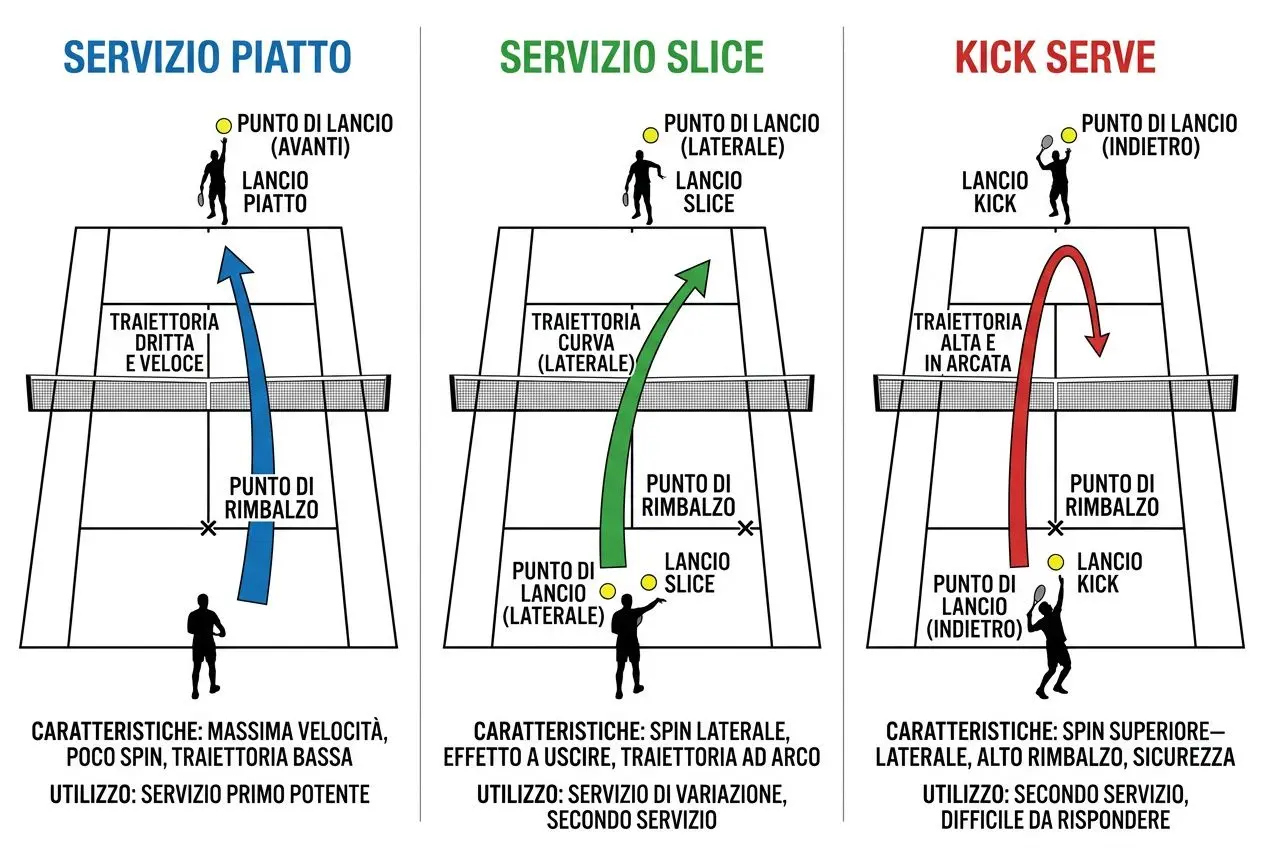
Flat, slice and kick serve, what each one does
Understanding the main tennis serve types gives players clear tactical options. The flat serve carries little spin and drives through the court with pace: it can win cheap points, but only when the toss, serve grip, contact point and racquet path stay precise.
By contrast, the slice serve bends away after the bounce and is especially useful for dragging a returner wide or jamming the body. The kick serve uses topspin to create more net clearance and a higher bounce, which is why it remains the reliable second serve at every standard.
How to vary serve placement to keep opponents guessing
Among the best tennis tips on serve, changing both direction and spin prevents a returner from settling into a rhythm.
- Wide serve: pulls the opponent off court, opens space for the next shot, and limits return angles.
- Body serve: drives into the torso or hitting zone, often with slice, making clean timing harder and reducing return power.
- Down the T: attacks the centre line, cuts down the available angle, and restricts movement on the first step.
From that point, the difference comes down to unpredictability. Vary target and spin in sequence, and avoid any pattern the returner can read early.
Follow-through and recovery after every tennis serve
A full follow-through lets the racquet continue naturally after contact, helping the arm decelerate safely, a direct factor in shoulder and wrist health.
As a result, the body rotates through the shot instead of stopping abruptly. On court, that means the server lands balanced, transfers weight forward, and completes the motion facing the target rather than falling away from it.
From that landing, recovery starts immediately after the follow-through: knees flex, weight shifts to the balls of the feet, and the racquet comes up in front, the body alert but not tense. Training a dependable serve means building smooth timing through the toss, contact and finish: lasting control, whether flat, slice or kick, comes from a connected motion rather than a forced swing.
Frequently asked questions
What is the most common mistake in a tennis serve toss?
The most common fault in a tennis serve starts with the toss: the arm drifts out to the side instead of rising straight up. That small error alters ball placement, pulls the body off balance, and changes the racquet path before contact, so the whole motion becomes harder to repeat.
Because the toss sets the rest of the tennis serve technique, direction and control are the variables that matter most. In practice, rehearsing the toss without the racquet helps groove a cleaner serve pattern and protect the contact point before the full motion, backswing, trophy position, and follow-through are added.
How can beginners improve their tennis serve quickly?
Progress comes faster when the tennis serve is built in stages. Rather than forcing the full motion at once, beginners should start with stance and toss, then add the backswing, trophy position, arm action, contact, and follow-through.
On court, that means better control and a more dependable serve sequence, especially when using a continental grip to develop sound technique from the start.
Which tennis serve technique is best for a second serve?
For most players, the kick serve is the right choice when a safer second serve is needed. It adds topspin, creates more net clearance, and produces a higher bounce, which lowers risk while still making the return uncomfortable.
That reliability depends on a few essentials: a consistent toss placed slightly behind the head, a continental grip, and a full follow-through through the contact zone.