
Table of Contents
This guide covers every key decision for buying tennis scoreboards for courts: format, size, weather resistance, installation, and long-term cost. A fence mounted scoreboard suits most outdoor sites, while a portable option remains useful where boards need to move between courts.
Best tennis scoreboards for courts, complete buyer’s guide
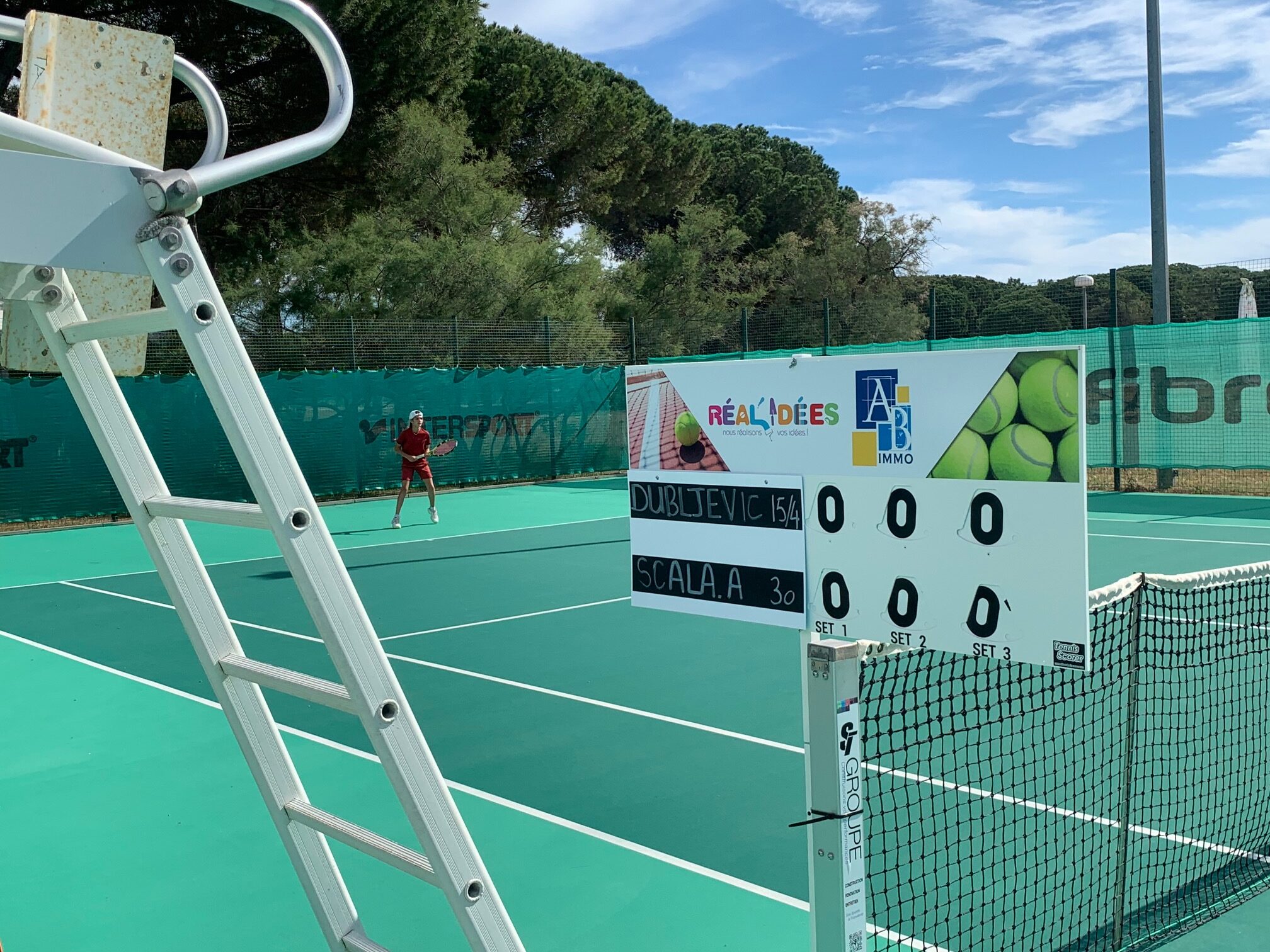
That choice starts with format. Most outdoor tennis court scoreboards fall into two categories: compact rotating-disc models and full-panel PVC scoreboard designs. Each answers a different need: visibility, fixing method, and handling ease. Tennis Scorer has refined both formats across nearly 3,000 clubs since 2002.
What size tennis scoreboard does your court need?
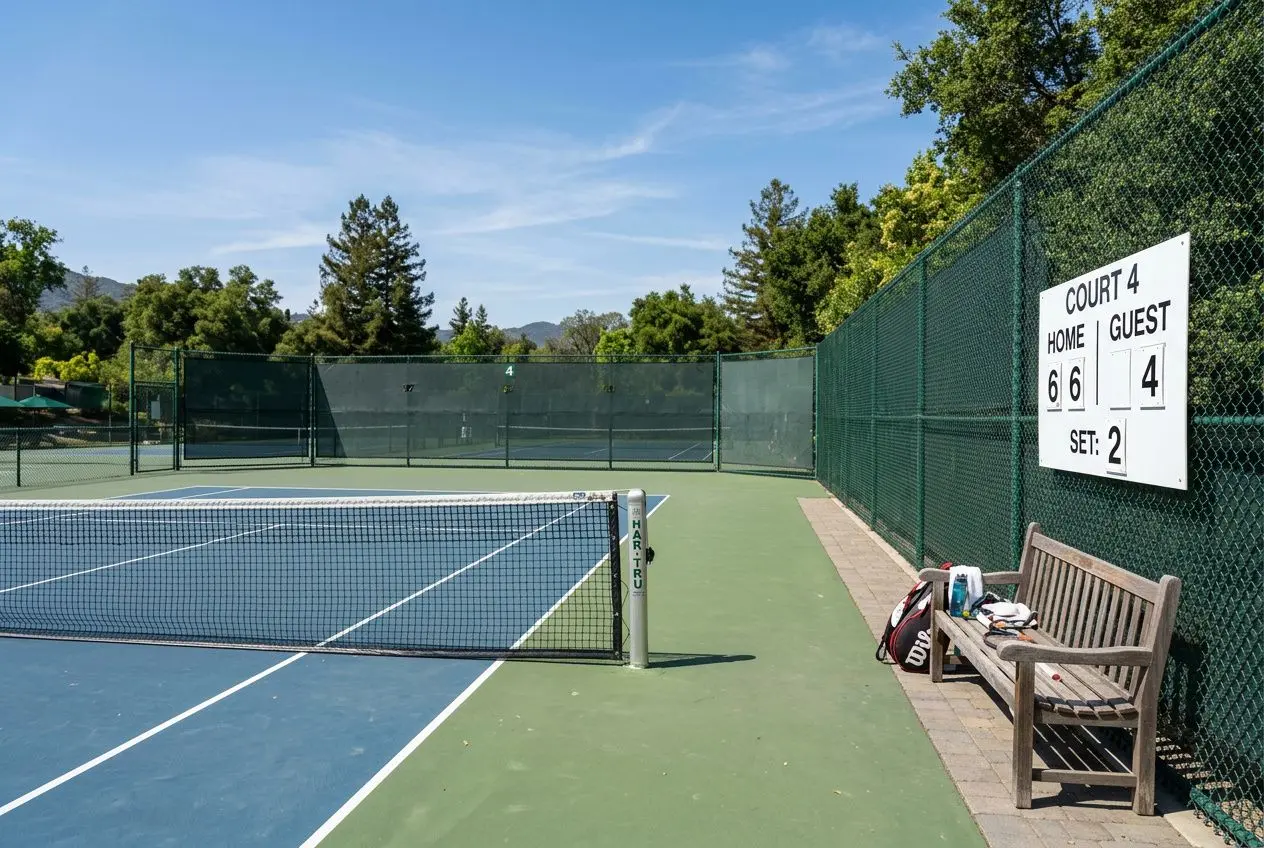
The next decision is size. The board needs to be clear from both baselines without players stepping forward to check the score.
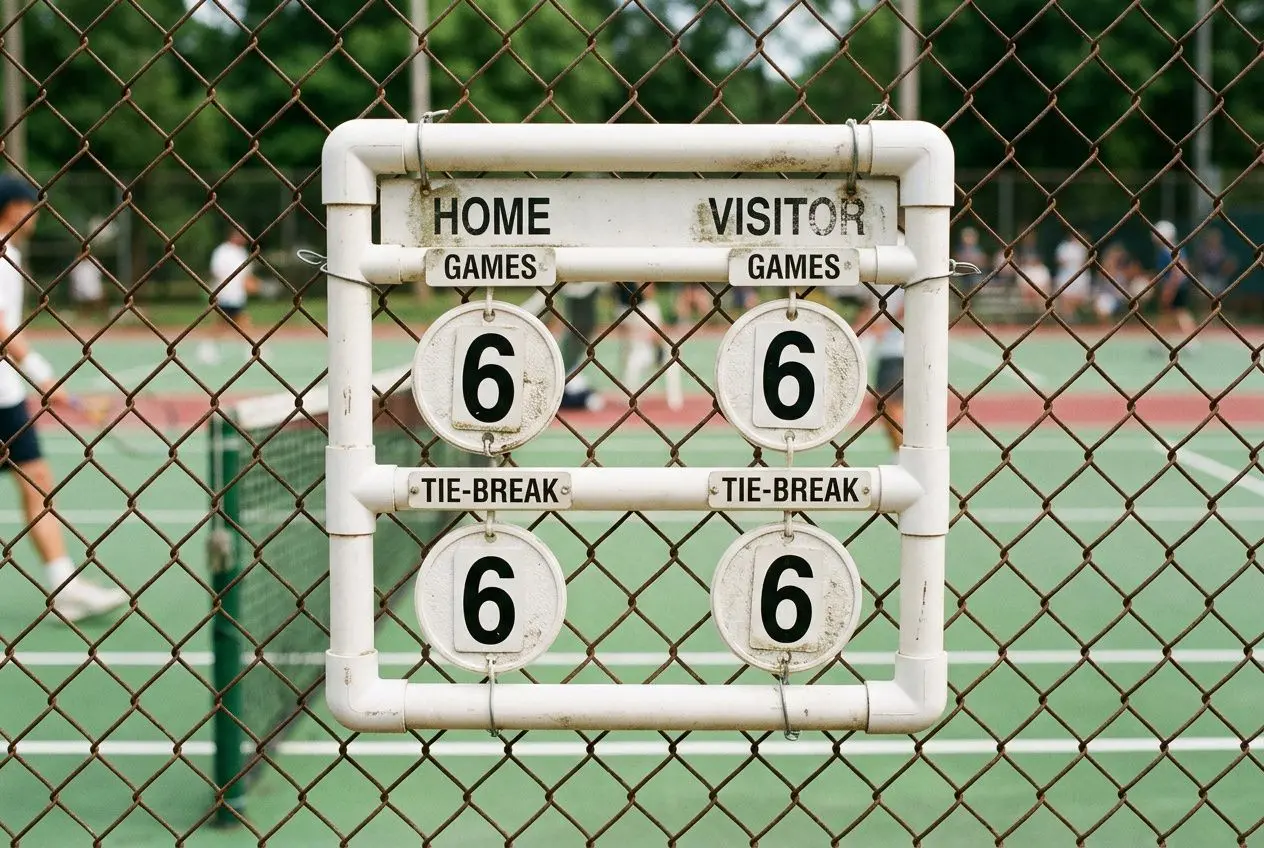
- Small (35×50 cm): suited to net-side positioning on private or compact courts where viewing distances stay short.
- Medium (46×65 cm): the usual club format, readable from both baselines and easy to mount on most mesh fences.
- Large (56×80 cm): better suited to tournaments or courts with spectator areas and longer sightlines.
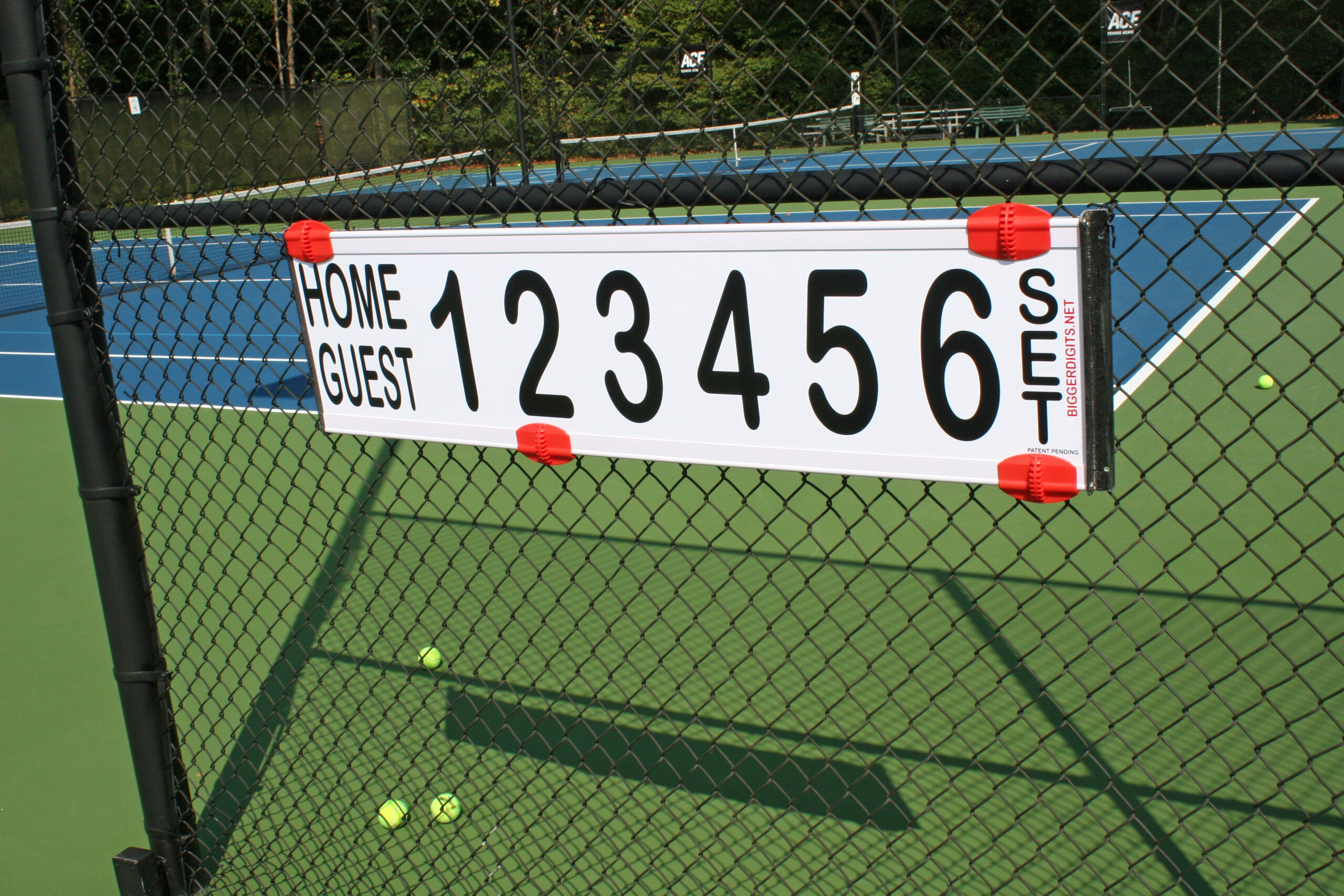
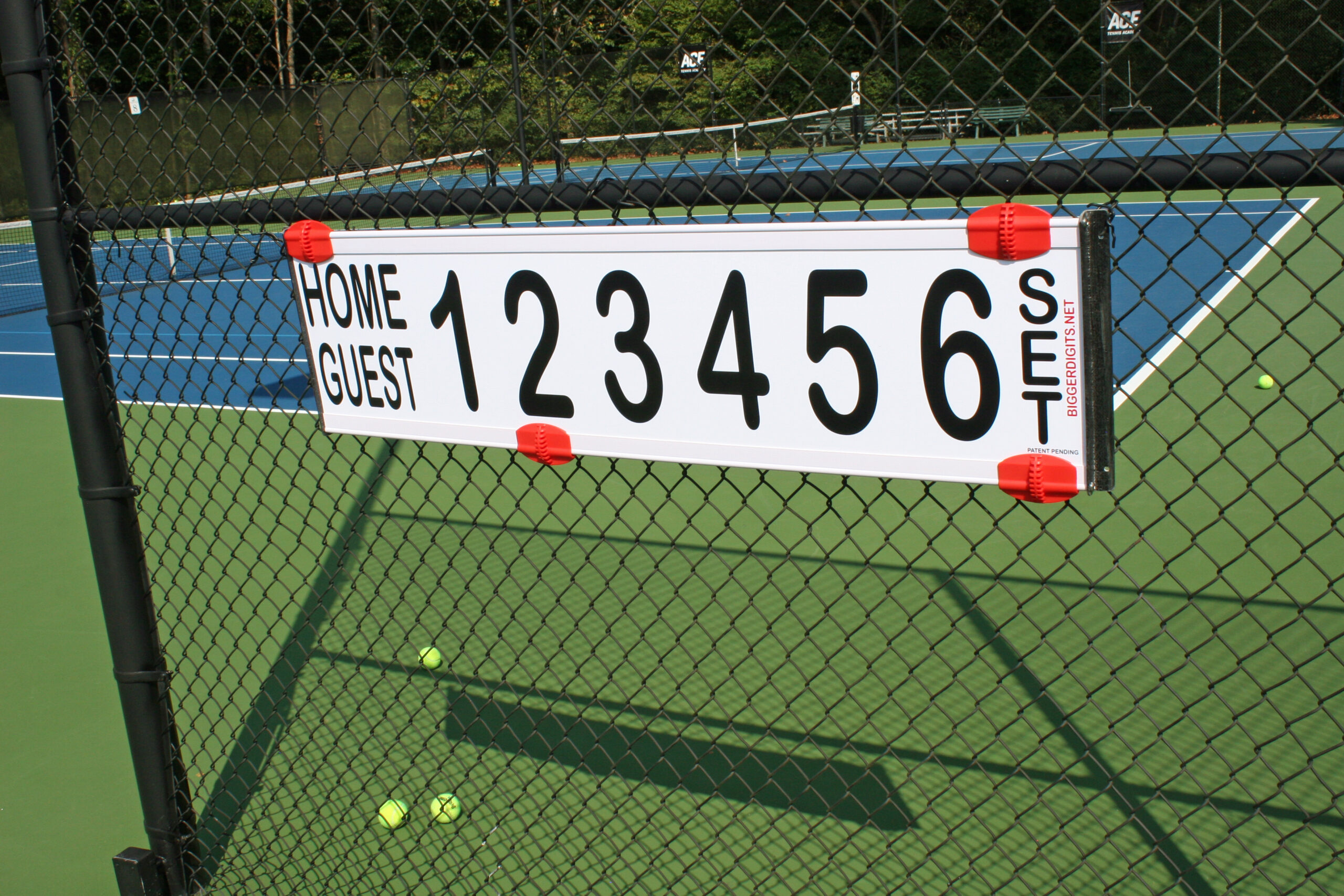
By contrast, the full-panel board offers a different reading experience: around 60×60 cm for 2 kg, with 10 cm numerals on a white background that remain legible from beyond 50 metres. A double-sided version improves visibility where courts are approached from more than one side or where spectator positions change during play. A single board therefore covers more viewing angles without adding fixings.
All-weather durability and outdoor installation methods
Once size is settled, fixing method becomes the next filter. Every model is supplied with mounting hardware and installs without specialist tools. For year-round outdoor use, the full-panel board fixes via a no-drill cable-tie system with four supplied serflex ties, while disc models attach to the fence with brass eyelets and anti-rust metal hooks.
From that point, durability depends on materials rather than seasonal removal. A tennis scoreboard all weather model in full-panel PVC uses UV-resistant, rot-proof construction with counter-glued watertight edges. Disc models rely on engineered score discs designed to prevent water cohesion, so operation stays smooth even in heavy rain.
| Format | Mounting method | Weather protection | Portability |
| Full-panel PVC scoreboard (60×60 cm) | Cable-tie (serflex), no drill | UV-resistant, watertight edges | Lightweight, portable |
| Compact disc model: Small (35×50 cm) | Brass eyelets, anti-rust hooks | Sealed disc, corrosion-resistant fittings | Highly portable |
| Compact disc model: Medium (46×65 cm) | Brass eyelets, anti-rust hooks | Sealed disc, corrosion-resistant fittings | Portable |
| Compact disc model: Large (56×80 cm) | Brass eyelets, anti-rust hooks | Sealed disc, corrosion-resistant fittings | Fence-mounted primary use |
Scoring features, serving indicators and professional layout
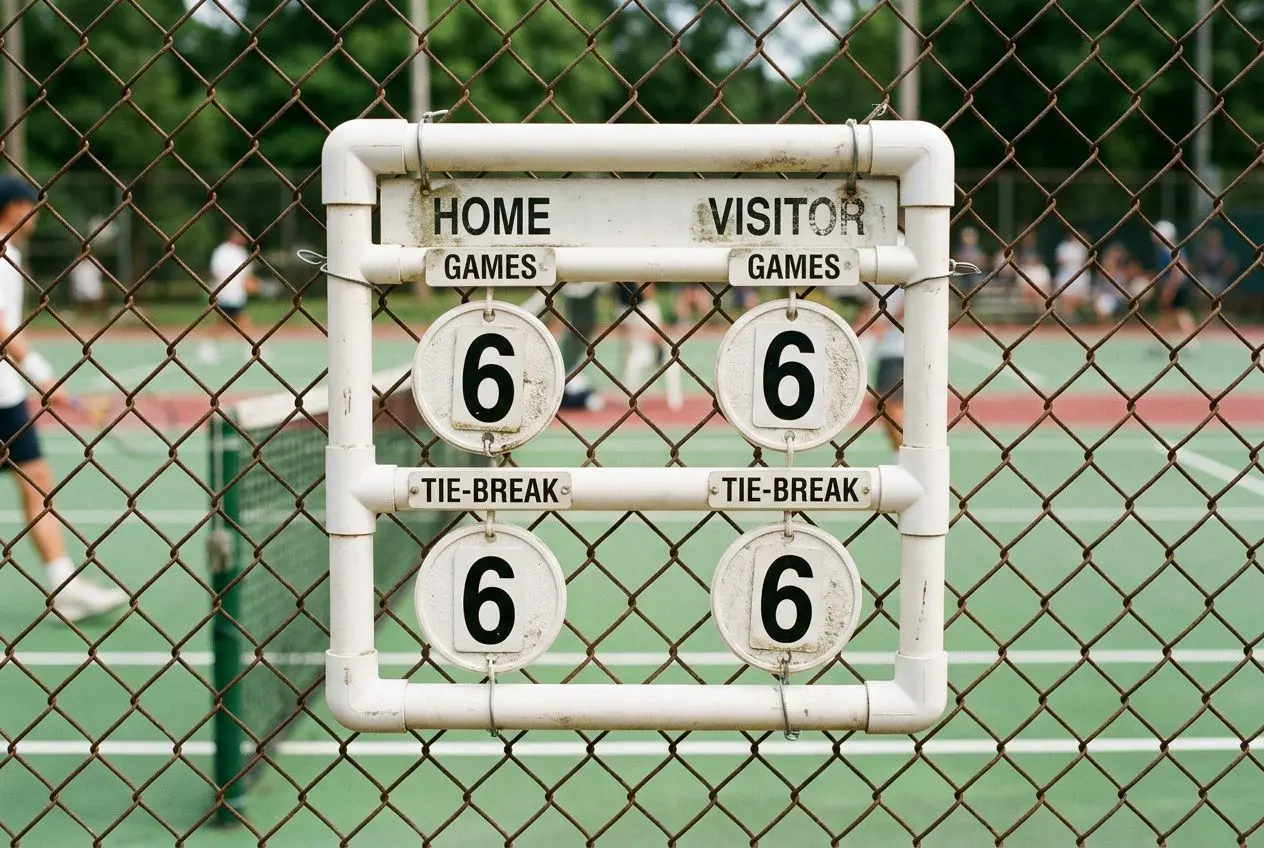
That construction supports the way the board is used in match play. The match pointer tennis scoreboard gives a clear manual layout without relying on electronics. In practice, the rotating-disc system records game scores from 0 to 7 per set and cumulative set totals up to 99, while the standard match pointer serving indicator identifies the current server in either dot or triangle format.
The same principle applies to score reading. Tie-break results appear in brackets, such as 7-6 (7-4), making them easy to distinguish from ordinary game scores. Removable slate name plates simplify player changes between matches.
From there, customisation becomes straightforward rather than cosmetic. Through personalized scoreboards, clubs can add sponsor logos or court numbering within a 56×17 cm branding area. Green, Blue, and Black finishes help the board sit neatly alongside existing court equipment, whether the requirement is for a court scoreboard, a pointer tennis scoreboard, or a manual alternative to an electronic tennis scoreboard.
Affordable tennis scoreboards for clubs, cost and long-term value
Once features are clear, cost is easier to judge properly. Manual tennis scoreboards avoid running costs altogether: no power supply, no electronics servicing, and no maintenance contract. The difference comes down to lifespan. Tennis Scorer documents 20 to 30 years of use, with replacement digits available separately instead of forcing a full-unit replacement.
Frequently asked questions
What size scoreboard do I need for a tennis court?
The right size depends on viewing distance. For a standard club court, a medium disc model at 46 × 65 cm or a full-panel court scoreboard at 60 × 60 cm, both with 10 cm numerals, remains readable from both baselines at distances beyond 50 metres.
Once that baseline is clear, larger venues are easier to assess: courts with spectator seating generally suit the 56 × 80 cm model. By contrast, the small 35 × 50 cm format is better reserved for private courts with net-adjacent positioning, where sightlines are much shorter. This is the right choice when the board is viewed close up rather than across a full playing area.
Are tennis scoreboards weatherproof for outdoor use?
Tennis Scorer manufactures full-panel PVC boards in UV-resistant, rot-proof material, with counter-glued watertight edges: no seasonal removal is required.
That same principle extends to the hanging models. The fence-mounted scoreboard disc versions use corrosion-resistant brass eyelets and anti-rust hooks at every fixing point, so a manual tennis match scoreboard can stay in place through seasonal weathering across a documented 20–30 year lifespan.
How does a manual match scoreboard compare to an electronic tennis scoreboard?
A manual match scoreboard removes every layer of technical dependency. Models such as the pointer tennis scoreboard and match pointer disc format need no power supply, no wiring, and no ongoing maintenance contract.
From that point, the difference comes down to operation and scale. A manual board updates during changeovers and covers tie-breaks, serving indicators, and set totals up to 99 without electronic parts, while an electronic tennis scoreboard suits larger venues that need automated updates and longer viewing distances but brings added installation complexity, power dependency, and servicing costs.