
Table of Contents
This guide explains how much an all-weather tennis court costs in the UK, from surface selection to drainage, fencing and long-term care. It sets out realistic budgets, identifies site factors that shift the final figure, and compares practical all-weather options before construction begins.
How much does a tennis court cost?
A full-size all-weather court commonly requires £45,000 to £85,000 for Astroturf, while the broad UK average is about £60,000. That average hides real variation: lighting, cushions and specialist specifications can take the tennis court cost above £100,000. The tarmac tennis court guide explains this lower-cost hard-court route in detail.
Typical UK installation budgets
For a homeowner, a court generally falls between £45,000 and £60,000. Schools commonly allow £55,000 to £75,000 for a full-size facility with fencing and basic lines. In practice, the final cost depends on the surface, the type of specification and the ground conditions.
Sports clubs and leisure centres often spend £70,000 to £100,000 where floodlights, shock pads and multi-sport markings are included.
- Porous tarmac: A new hard-court installation generally starts at £35,000 and commonly reaches £55,000.
- Private court: A typical domestic project ranges from £45,000 to £60,000 before unusual access work.
- Education site: Full-size school or college courts usually cost £55,000 to £75,000 with core fittings.
- Club facility: Larger specifications with added amenities commonly require £70,000 to £100,000.
The difference comes down to the base, drainage connection, fencing standard and equipment allowance, and those items do not rise in direct proportion to court size. The tennis court maintenance guide covers the expenses that follow installation.
Quoted figures may also be shown with or without VAT, so like-for-like comparisons matter.
| Project type | Typical budget | Common scope |
| Porous tarmac | £35,000–£55,000 | Affordable all-weather hard court |
| Private Astroturf | £45,000–£60,000 | Full court with minimal extras |
| School or college | £55,000–£75,000 | Fencing and basic markings |
| Club or leisure centre | £70,000–£100,000 | Lighting, shock pads or multi-sport lines |
Size and number of courts
Size affects excavation, materials, fencing and drainage, even though a meaningful square-foot rate rarely captures the whole budget. A club footprint can measure 33.53m by 16.55m including runoff, while the minimum LTA-approved layout is 17.07m by 34.77m. As a result, any UK tennis court cost should be judged against the required playing space, not the doubles lines alone.
That matters even more on multi-court schemes. The right choice when planning more than one court is to assess each installation against access, runoff and shared infrastructure, rather than assuming a simple rate by area.
Across all options, artificial surfaces such as astroturf remain common because they balance playability with year-round use. The surface type influences not only the initial cost, but also the maintenance pattern that follows.
Tennis court construction and site costs
Surface budgets only become dependable once the site has been assessed. In building a tennis court, groundworks, levels and water management shape performance first, and they can absorb £10,000 to £20,000 of a project. Tennis Scorer treats that as the starting point: a court intended for year-round tennis depends on a stable base and controlled runoff, not just the visible tennis court surface.
Groundworks, levels and drainage
Excavation, levelling and a porous sub-base sit at the heart of the tennis court installation cost, especially on uneven or poorly draining land. A court generally needs about a 1% fall to move water away, along with perimeter drainage to protect the playing area.
- Site clearance: Vegetation, roots and debris must be removed before compaction begins.
- Earthworks: Uneven terrain can require extra excavation, grading and imported material.
- Porous sub-base: This layer supports the surface and helps water move through the drainage design.
- Drainage connection: A suitable outfall stops perimeter channels backing up after heavy rain.
Once those levels are fixed, soil quality determines how much reinforcement and drainage the design will need. Poor ground often calls for deeper preparation, while clean, level land reduces earth-moving. Design drainage for the local soil and the chosen tennis court surface together, rather than add it later as a generic item.
A minimum LTA-approved court may require around 300 tonnes of high-quality material and at least 14 lorry loads. Delivered aggregate rates, haulage distance and the ability to unload efficiently all affect the final cost and the installation, particularly where access prevents normal plant operations.
Access and local price factors
Restricted gateways, slopes and confined gardens increase labour needs because machinery, tools and deliveries still have to reach the work area. This matters when considering the tennis court construction cost in London, where haulage, labour, drainage connections and access constraints can all raise the price.
Sites close to aggregate sources may avoid part of the transport burden, while awkward delivery routes can create extra handling. As a result, the cost to build on a clear, accessible plot is materially different from the cost of building a tennis court behind occupied buildings or across difficult ground.
Access also shapes programme risk. Delays to deliveries or drainage work can extend plant hire and labour time, and poor weather may postpone compaction or surfacing. A clear quote for the tennis court cost should separate these site allowances from the stated surface price, so proposals can be compared on an equivalent scope.
Programme and quote checks
On a clean, level site with suitable access, standard construction usually takes around six to eight weeks. More difficult earth-moving, drainage alterations or weather conditions can extend that period. Contractors should sequence excavation, sub-base preparation, drainage, surfacing, fencing and final markings so that each layer is protected before the next stage begins.
An itemised quote needs to confirm groundworks, drainage, fencing, markings, nets, lighting, access allowances and VAT. It should also state the surface system, drainage connection and exclusions clearly, so the tennis court installation cost, the broader tennis court construction cost and the final price are easy to verify before a project proceeds to build.
Surface price and tennis performance
Surface selection determines bounce consistency, care routines, and roughly a third of project cost once the site boundary is fixed.
Porous tarmac versus Astroturf
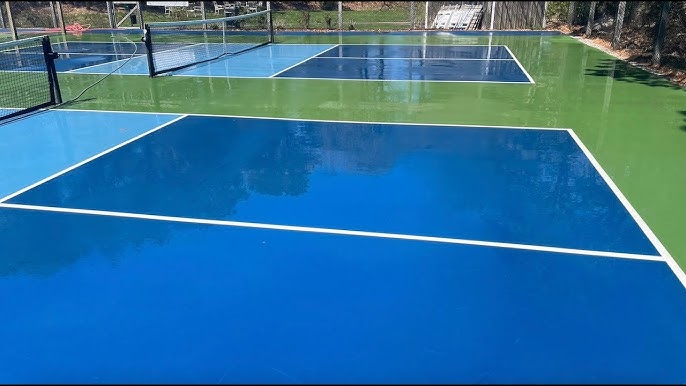
Porous macadam is typically the lowest-cost all-weather option, with new installation costs starting at around £35,000. Modern sports tarmac uses porous asphalt rather than standard road material: an ultra-porous system may have a 6mm surface course at 25 to 30mm over a permeable binder course of 35 to 55mm. This structure moves water away rapidly after rain.
The finished hard surface provides strong traction compared with clay, grass and Astroturf. A modified 100/150 pen binder supports strength and finish, while extra sand in the paint system can slow play slightly and increase ball-contact friction. In practice, a court can be back in play within minutes of rain and hold its bounce through winter frost.
By contrast, an Astroturf tennis court uses short-pile, sand-dressed turf to provide grip and a more natural-feeling bounce. The artificial turf element typically costs £12,000 to £20,000 before groundwork and surrounding works. A shock pad costs a further £3,000 to £5,000, improving comfort and helping some projects meet LTA expectations.
Acrylic, clay and grass options
Beyond tarmac and artificial grass, cushioned porous acrylic usually starts at a higher level than either option. Non-porous acrylic is generally a premium surface, while artificial clay is normally the highest-priced listed type. The right choice when selecting a synthetic tennis court is the one that matches player use, drainage strategy and the operator’s maintenance capacity.
- Porous tarmac: Lower initial cost, quick drainage and high traction for frequent all-weather play.
- Artificial grass: A softer underfoot feel, sand infill and a mid- to higher-tier project budget.
- Cushioned acrylic: Added comfort through a higher-priced porous acrylic system.
- Clay and natural grass: Different playing qualities but substantially greater routine maintenance requirements.
Natural grass and clay can be demanding for schools and clubs because daily care is more intensive than with synthetic surfaces. Tarmac needs regular debris removal and periodic professional cleaning, whereas grass needs mowing and clay needs watering and brushing. As a result, annual upkeep costs for tennis court prices often rival the initial material selection.
Extras, maintenance and tennis court cost
Once the playing surface has been selected, perimeter equipment and maintenance planning complete the budget. These provisions protect the court, extend usable hours and preserve performance. When budgeting, owners should remember that the construction specification remains responsible for safe fencing, drainage and compliant playing infrastructure, while durable outdoor equipment protects the court and extends usable hours.
Fencing, lighting and equipment
A 3 to 4 metre tennis court fence commonly costs £8,000 to £12,000. Floodlighting usually adds £10,000 to £15,000, extending evening use. When reviewing how much it costs to resurface a tennis court in the UK, owners should separate future surface work from retained fencing, lighting and net equipment.
- Lighting: LED systems, security requirements and bespoke layouts can change the £10,000–£15,000 allowance.
- Markings: Tennis, netball or mini-football lines generally cost £1,500 to £3,000.
- Nets: Club-standard nets cost about £140, while tournament-standard nets can reach £280.
Check equipment against the turnkey scope rather than assuming it is included. The same applies to multi-sport lines, electrical works and access-control provisions, each of which can alter the final tennis court cost.
Resurfacing and annual care
Routine in-house maintenance for a tarmac court costs about £300 per court each year, covering basic sweeping and sealant work. Courts beneath large trees need more frequent attention, and morning removal of organic debris protects traction. Professional cleaning is usually required every 12 to 18 months, or annually where sap and leaf fall accumulate.
Low-pressure washing with a wide fan tip removes embedded biological matter without stripping acrylic coatings or line markings. Resurfacing becomes the more durable option when cracks exceed 6mm, colour loss reaches around 20%, chronic puddles remain, or annual repairs exceed £2,000 per court.
Long-term value and compliance
Artificial grass generally needs £1,000 to £1,500 in annual maintenance and can last 10 to 15 years with proper care. A tarmac or acrylic-coated court commonly reaches planned resurfacing after around eight years of regular use, provided routine cleaning and inspections continue.
SAPCA- and LTA-compliant contractors help align the design with recognised industry specifications and protect warranty expectations. Their itemised proposals make it easier to distinguish immediate construction expenditure from lifecycle allowances. A properly drained and maintained court offers better value than repeated cosmetic repairs to an unstable base.
Frequently asked questions
How much does a tennis court cost in the UK?
The tennis court cost for a full-size, all-weather facility can range from around £35,000 for porous tarmac to £85,000 for a typical Astroturf project, with extras taking some schemes above £100,000. The average cost is about £60,000, although surface selection, access, drainage, fencing and lighting determine the final price more accurately than any headline figure. VAT may also affect the total quoted cost.
What affects the cost most when building a tennis court?
Ground conditions and drainage often have the greatest effect when building a tennis court because they determine excavation, levelling, sub-base depth and service connections. Groundworks and drainage alone commonly account for £10,000 to £20,000. Court size, restricted access, local haulage, fencing, floodlights and multi-sport markings create further variation in the overall budget to build a tennis court.
Is an all-weather tennis court a good investment?
For clubs and schools, dependable year-round availability can support regular use and bookings, while shared infrastructure may reduce the relative cost per court on multi-court developments. The investment performs best when the design matches expected use, drainage is robust and maintenance is properly funded. A consistent care plan also delays premature resurfacing and helps protect playing quality.