

Table of Contents
A tennis scorekeeper’s responsibilities run through the whole match: preparing before the first point, counting during play, keeping the court display right, then handling interruptions and the final result. It also shows where a scorekeeper’s authority stops, so clubs and court operators know who records the score, who displays it and who settles disputes.
What is a tennis scorekeeper responsible for?
The job goes beyond writing numbers down. A tennis score keeper sits between the players and the official record. Accurate scoring keeps the match moving, while decisions on rules and conduct belong to other officials.
The scorekeeper’s match-day role
The core of the role is counting: the scorekeeper follows every point, game and set as the match goes on. Where the appointment includes it, the scorekeeper also communicates the score to the players. At the end, the scorekeeper helps confirm the final result.
That outline changes from one event to the next. The exact duties depend on how the scorekeeper was appointed and on the competition’s own procedures, so a club volunteer and an appointed official will not carry the same tasks.
Decisions outside the scorekeeper’s authority
Announcing the score does not give anyone the right to rule on play. LTA guidance says an approved scoring helper calls out the score and does not get involved in line calls or other on-court matters. Under the LTA Competition Regulations 2026, when there is no chair umpire, each player or doubles pair calls the balls on their own side of the net, and the scorekeeper does not take over those calls.
Discipline follows the same limit. The LTA Competition Code of Conduct provides for warnings, point penalties and game penalties. A scorekeeper can record violations once they have been properly issued, but never imposes one alone.
How other officials’ roles differ
By contrast, an appointed chair umpire has authority over the match. The chair umpire calls and records the score, applies the rules and makes on-court decisions within that authority. Where there is no chair umpire, a court supervisor helps the match along, deals with disputes and player behaviour, and can refer matters upwards.
Those matters go to the referee. A tennis referee runs the competition as a whole: scheduling, player appeals against umpire decisions and any issue that cannot be settled courtside.
What should be checked before the first point?
Reliable scoring depends on what is settled before the warm-up ends. A few checks on the match, the format and the record give the scorekeeper a reliable baseline before the first serve.
Confirm the match and responsibilities
The first check is identity: the players or pairs, and the court they have been given. Next comes the division of tasks, settled before the scorekeeper takes up the role.
- Score announcements: who is responsible for calling the score aloud during play.
- Line calls and disputes: who calls the lines and who handles disagreements or misconduct.
- Result reporting: who passes the final score to the organiser or referee.
Who can act as scorekeeper also depends on the event’s level. For scoring help at LTA Grade 1–5 competitions, LTA guidance usually suggests a court supervisor, a tennis leader or a club volunteer. At a local, club or informal event, a friend or family member may be allowed to help with the score.
Check the scoring format
Once roles are clear, the format decides how the score is counted. Check whether games use advantage or no-ad scoring, since the deciding point works differently in each. Confirm standard or short sets, and whether a set or a match tie-break decides the match. Note any other special rules, and who must receive the result under the competition procedures.
Prepare the record and serving order
Tennis scorekeeping preparation ends at the court itself: the scoreboard must be reset and readable, and the authorised scorecard or match record ready. Then record the toss result, each player’s choice of serve, receive or ends, and the first server. Under ITF procedures, these entries are formal scorecard duties for a chair umpire.
Doubles adds one more step: the serving and receiving order must be fixed before play. LTA scoring guidance says partners choose their serving order at the start of each set and keep their receiving positions for the whole of that set.
How is the match score kept?
Scorekeeping works in layers. Each point changes the game score, each game changes the set score, and each set moves the match towards a result.
Count points within each game
The tennis scoring rules for a game use their own vocabulary, with the server’s score always stated first. In practice, a scorekeeper only needs four rules to follow any standard game.
- Point sequence: love, 15, 30, then 40.
- Winning a game: at least four points with a lead of at least two.
- Deuce: the score at 40–40.
- Advantage: under advantage scoring, the point after deuce gives advantage, not the game.
Serves follow a separate logic. A first-service fault gives the receiver nothing, and the server serves again. A double fault, by contrast, awards the point to the receiver.
| Situation | Effect on the score |
| First-service fault | No point awarded; second serve follows |
| Double fault | Point to the receiver |
| 40–40 | Deuce |
| Point won from deuce (advantage scoring) | Advantage, not the game |
Under advantage scoring, a player needs two points in a row from deuce.
Advance games, sets and tie-breaks
Games build into sets on the same principle. A standard set is normally won at six games with a lead of at least two, and the prescribed format decides what happens when the games are level. In a tie-break, points are counted as plain numbers starting from zero: the first to seven points with a two-point lead wins it.
From there, sets decide the match. The match ends when a player or pair wins the required number of sets, whether the format is best of three, best of five or another authorised version.
Maintain the running match record
Keeping tennis score accurately means writing each point down as soon as it ends, never rebuilding several points at the end of a game. The set’s game total changes only when a game is finished, and completed set scores are carried forward in order.
Not every point is won through play. An officially issued point or game penalty must appear in the score. The ITF’s 2026 official scorecard procedure also gives specific notations for aces, first-service faults and double faults.
How should the score be announced and displayed?
A correct record is only half the job. Players and spectators also need to hear and see the same score, and the method depends on whether a chair umpire is present.
Make the spoken score clear
With a chair umpire on court, announcing the tennis score is that umpire’s official task. Under ITF 2026 procedures, the call normally comes clearly after the point and before the umpire writes it on the scorecard.
Without a chair umpire, the responsibility moves to the players. Under the LTA Competition Regulations 2026, the server calls the score before each first serve, loudly enough for the opponent to hear.
Keep the court display aligned
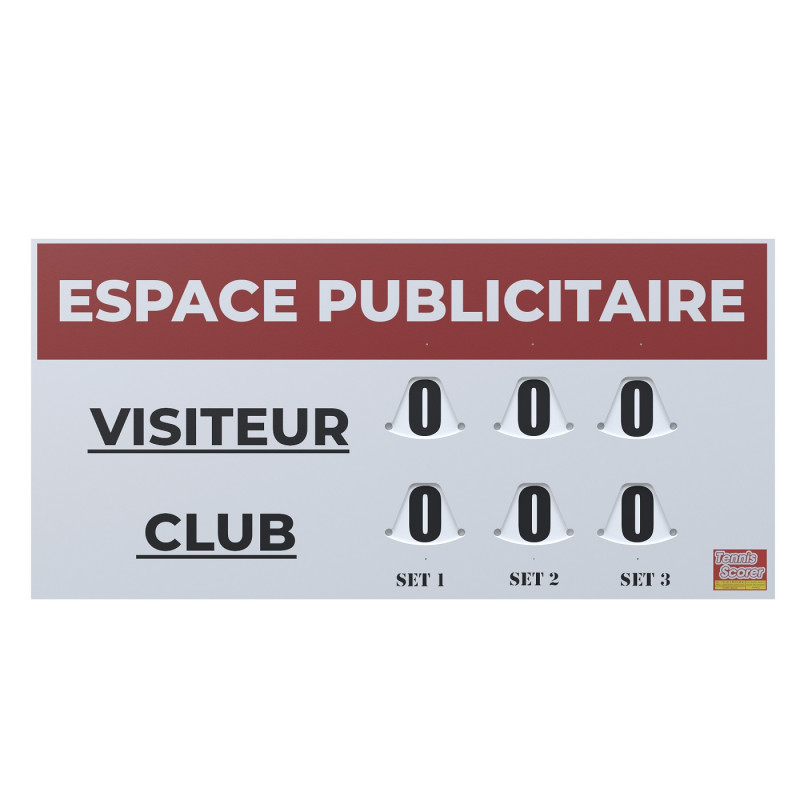
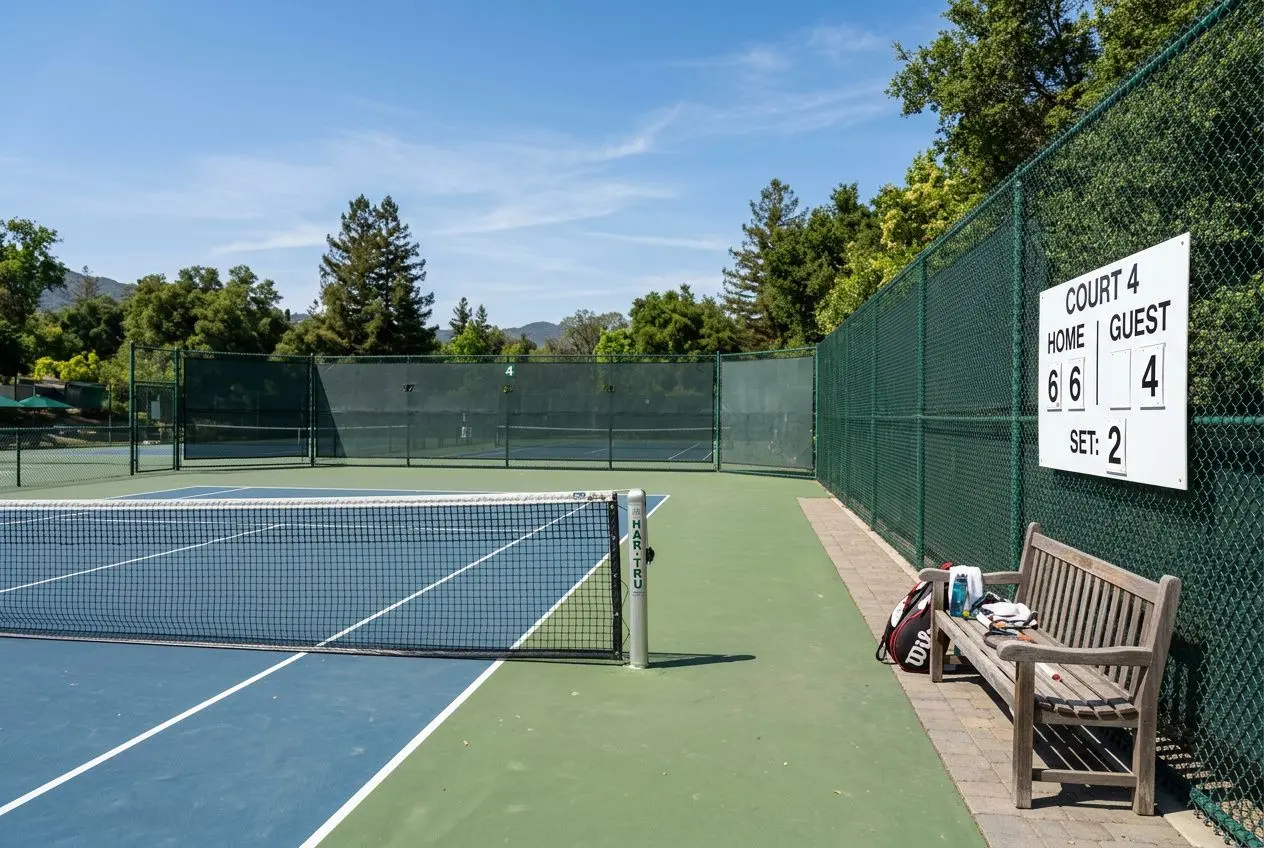
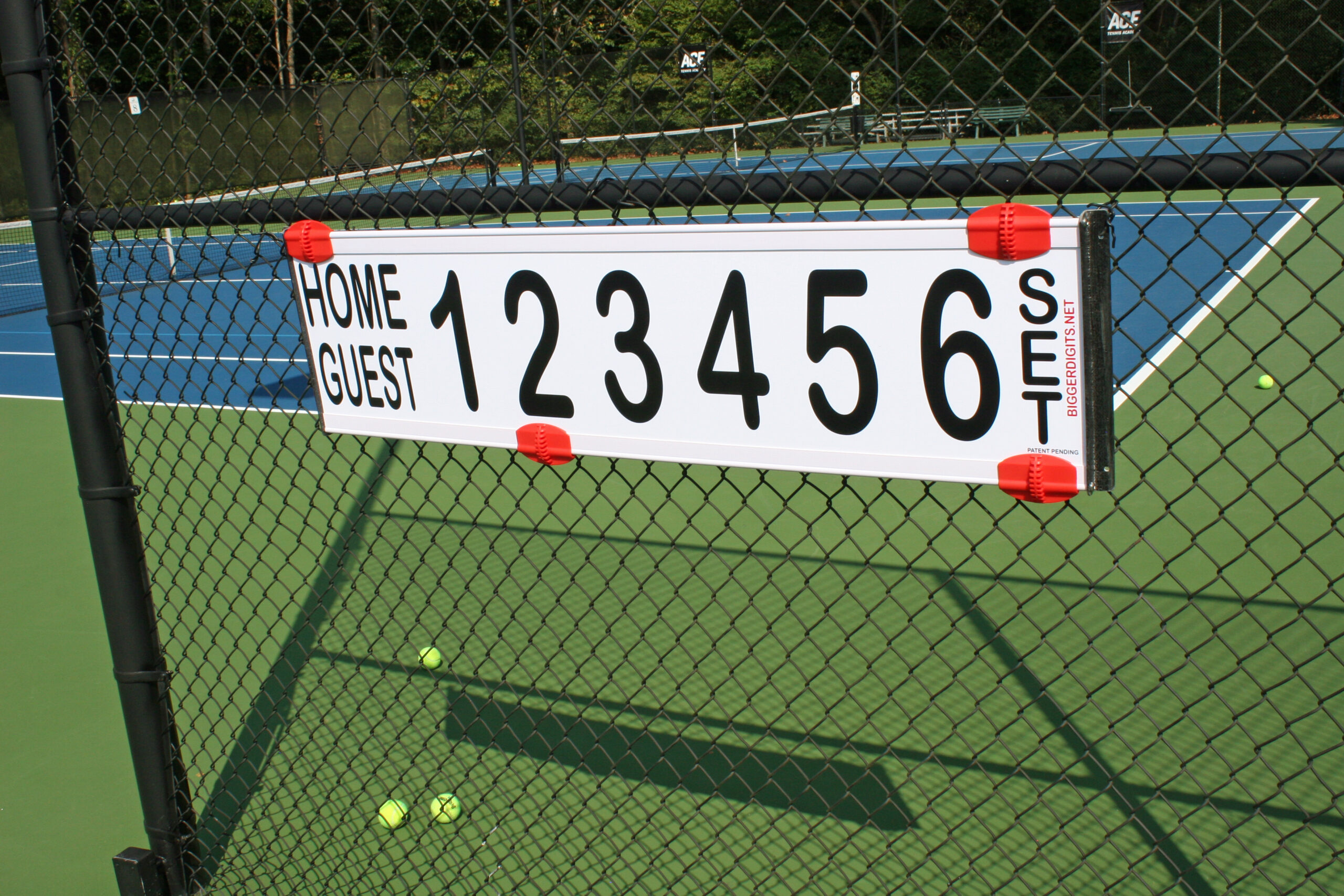
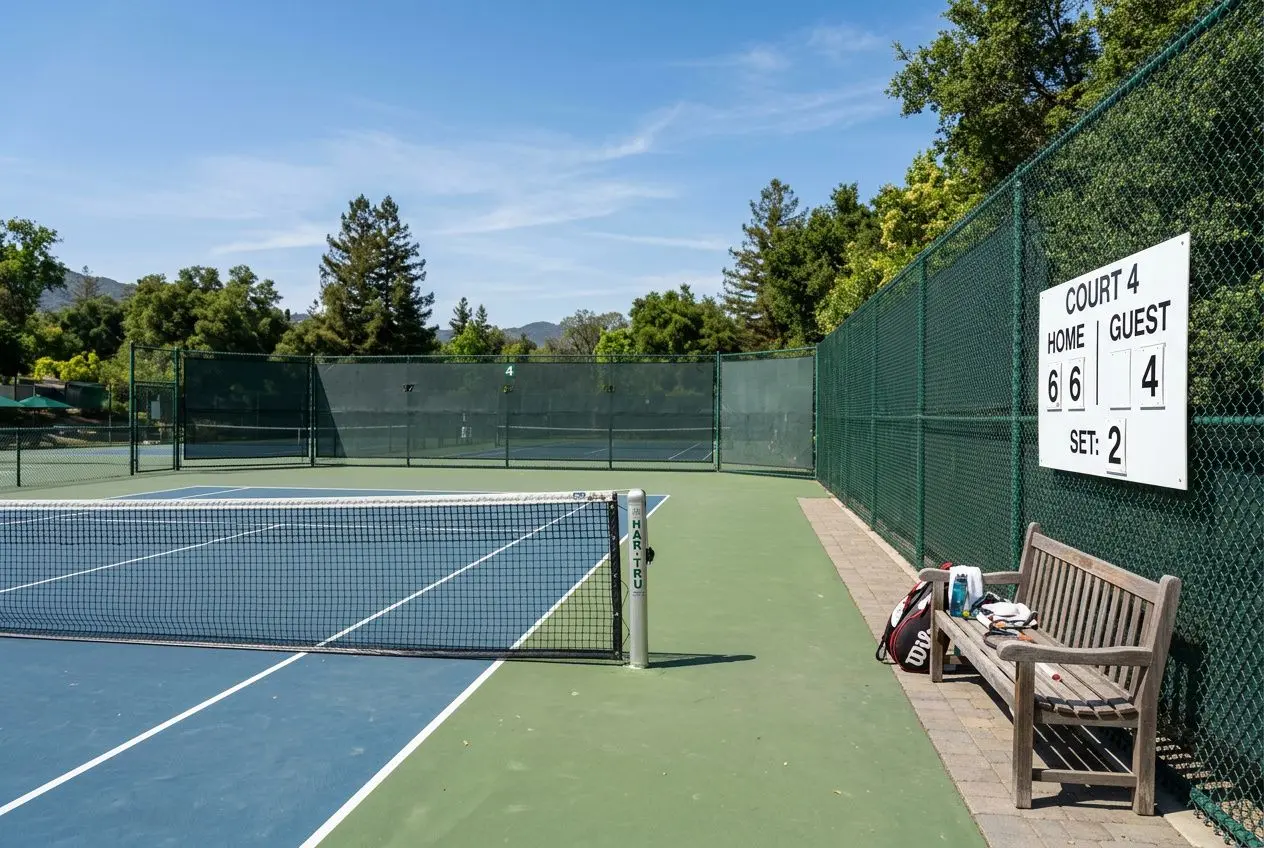
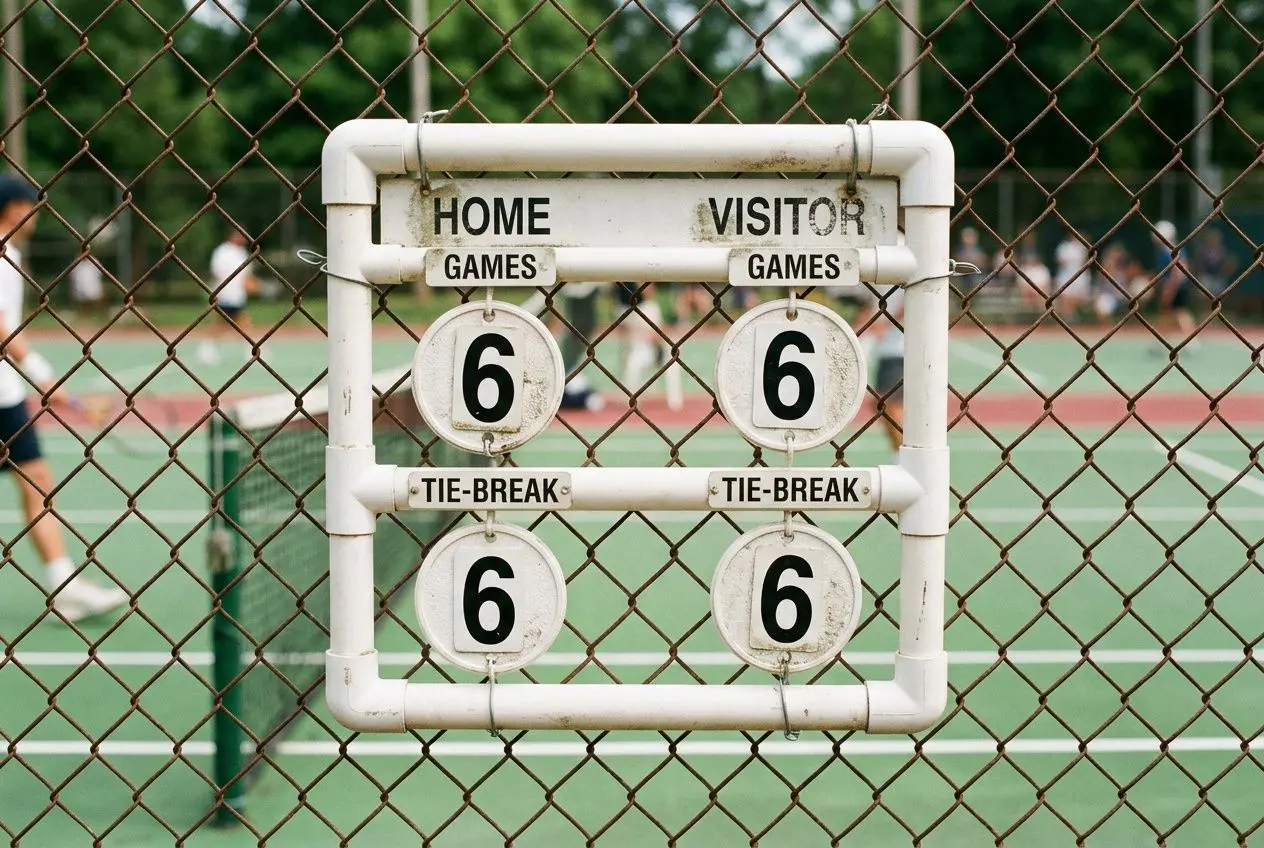
The spoken score then has to match what the board shows. A player-operated tennis court scoreboard displays games and sets for players and spectators. It does not settle a disputed point or replace the match record. After each game, move the winner’s game total on by one, and check the finished set score before showing the next set.
Checks happen at game and set changes, comparing the board with the spoken score and the written record. LTA court-supervisor procedures dated 12 January 2024 tell supervisors to make sure players update the board at least at every change of ends. Fix any difference only once the score is established. A board that shows games and sets may not show tie-break points.
Make player-operated scores visible
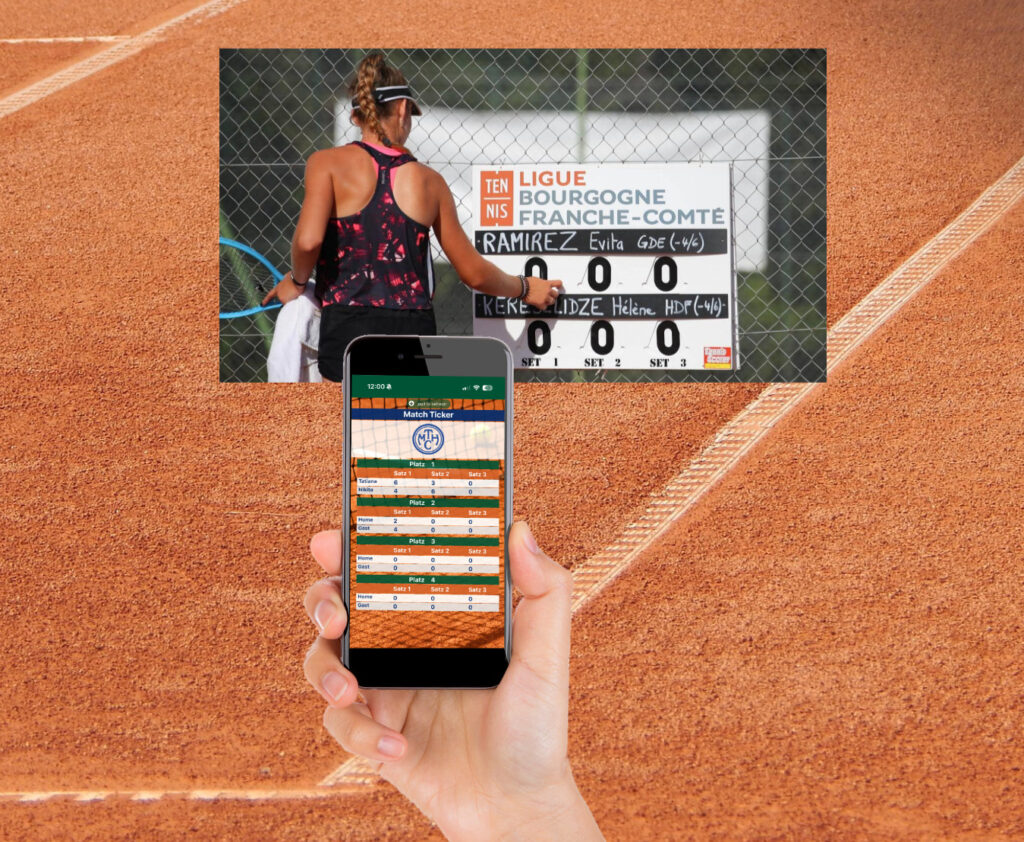
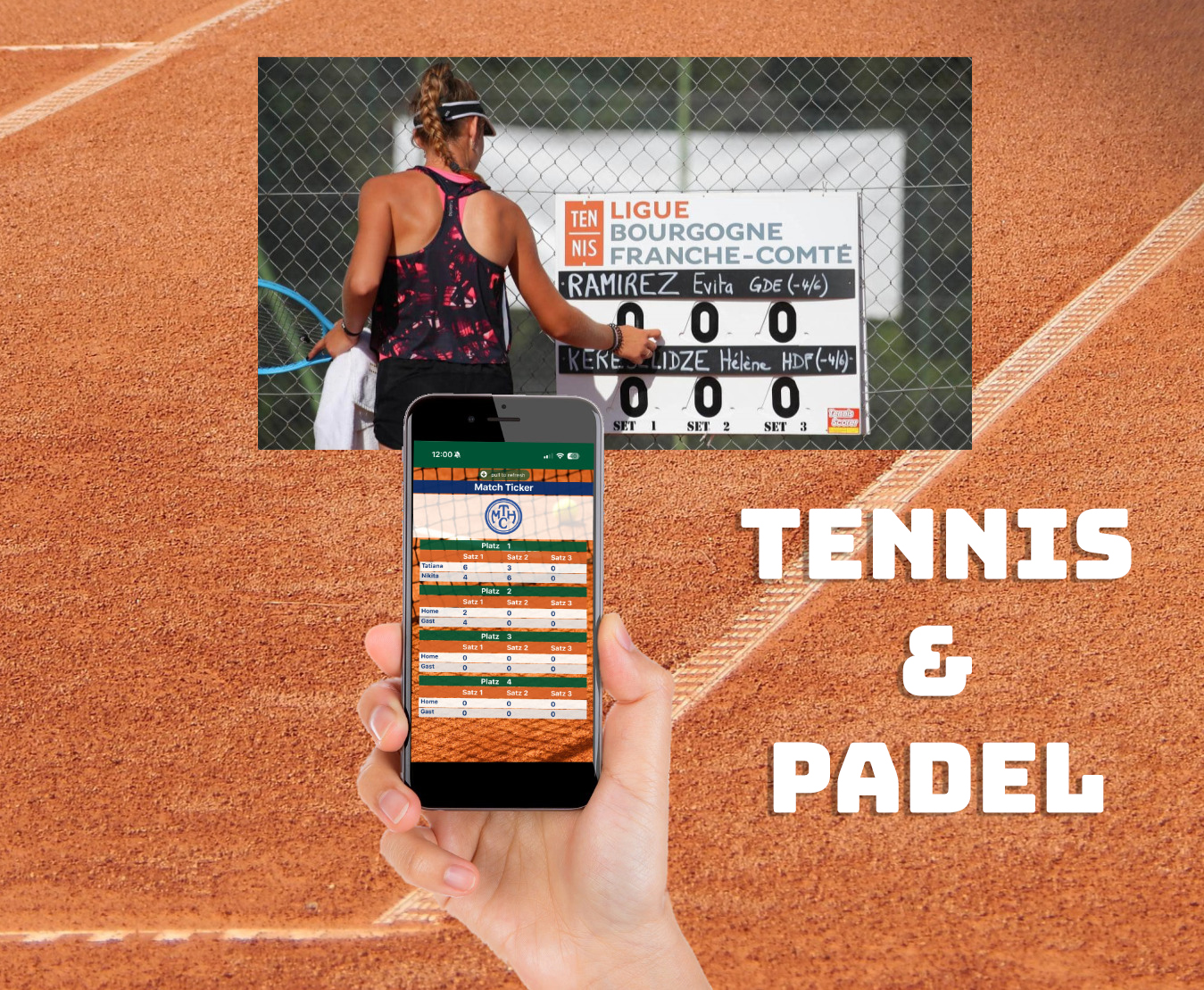
On court, that means a board players can update during changeovers. Tennis Scorer’s large weatherproof manual scoreboard fixes to the court fencing and shows games across three sets, with figures readable from 50 metres. A plate shows player names and rankings. The compact tennis scoreboard works the same way, using integrated rotating number discs, with plates for names and rankings.
The manual gesture stays the same for clubs that want scores online. On the Tennis Scorer connected scoreboard, players still set the score by hand. Each change goes through a receiver to the club’s wireless network, then online, so spectators and tournament directors can follow every court.
How are interruptions and results handled?
Disagreements, stoppages and the final handover put the record to the test. In each case, the scorekeeper’s job is to keep the score in the correct state and pass decisions to whoever holds the authority.
Resolve a disputed score
Tennis score disputes are settled from evidence, not memory, and the display is never conclusive on its own. Before anything else, check four things.
- The written record: the points and games already noted.
- The last agreed score: the most recent score both sides accept.
- Accountable points: the points both players can recall.
- The serving order: who should have served each game.
If those checks leave the question open, the relevant scoring rules decide it. Under the LTA Competition Regulations 2026, a player unhappy with an opponent’s decision may call the referee or a designated court supervisor.
Line-call disputes are a separate matter, handled by the appropriate official where one is appointed. LTA regulations also bar spectators and player support staff from trying to resolve or influence a disputed decision.
Preserve the state of suspended play
Once play stops, the match must be able to restart exactly where it left off. Keep the point, game and set score, the server and the players’ ends. ITF 2026 procedures also require a chair umpire to record the time of the suspension and the side each player was on.
The decision to stop belongs to officials. A chair umpire may stop play when needed, while a referee may suspend it for darkness, weather or poor court conditions. The referee also decides whether it continues on another day.
Confirm and hand over the result
Reporting a tennis match result begins with a check: the recorded set scores must support the winner, and the final score must follow the competition’s required format.
Some matches do not finish normally. A retirement, walkover or default is recorded as that match status, not as an ordinary completed score. The organiser or referee decides how it is entered.
From that point, the result or scorecard goes to the designated organiser or referee through the set process. A volunteer scorekeeper is not automatically responsible for official submission. Under LTA 2026 regulations, an appointed chair umpire signs and returns the scorecard or scoring device to the referee, with a report of any code violations. The referee then submits the winner and score for Grade 1–5 competitions.
Frequently Asked Questions
Can a scorekeeper call a foot fault?
No, keeping or announcing the score does not give the right to make calls. Under LTA Regulation 29.1, in a match without a chair umpire, the opponent cannot call a foot fault either. An on-court official may make that call.
Who has to update the court scoreboard, and how often?
The 2026 LTA regulations do not name one player who must update every board after every point. LTA court-supervisor procedures dated 12 January 2024 tell supervisors to make sure players update it at least at every change of ends.