
Table of Contents
This guide covers every layer of tennis club visibility and branding strategy: from court-side scoreboards and custom signage to social media, email campaigns, and local search optimisation, giving clubs a clear, actionable path to stronger recognition and sustainable membership growth.
Building a strong tennis club visual identity
A tennis club brand is not a logo on its own. It is a complete visual identity system: colours, typography, signage, event materials, digital communication, and the way those elements stay consistent across every touchpoint.
That consistency shapes how members, visitors, and sponsors read the club brand. It also supports clearer positioning and more effective club branding across the facility and online.
Why facility visual identity shapes member perception
Tennis club visibility and brand consistency signal organisational quality before any conversation starts, whether that first contact is digital or in person.
Online channels often set expectations first: website design, social media graphics, and event materials shape early judgement. Once on site, facility visual identity carries that message into physical space, with court signage, scoreboards, and membership documents either reinforcing credibility or weakening it.
- Colour consistency: A fixed palette across court signage, printed communication, and digital platforms improves recognition and gives the brand a polished appearance.
- Typography discipline: Consistent typefaces on websites, coaching information, and event notices strengthen trust in the club brand.
- Signage coherence: Court-side banners, scoreboards, and entrance signage aligned with the visual identity make the facility feel intentional.
- Digital alignment: Social media, email headers, and website design that match the physical environment create a seamless brand experience.
Court customisation options and branding design essentials
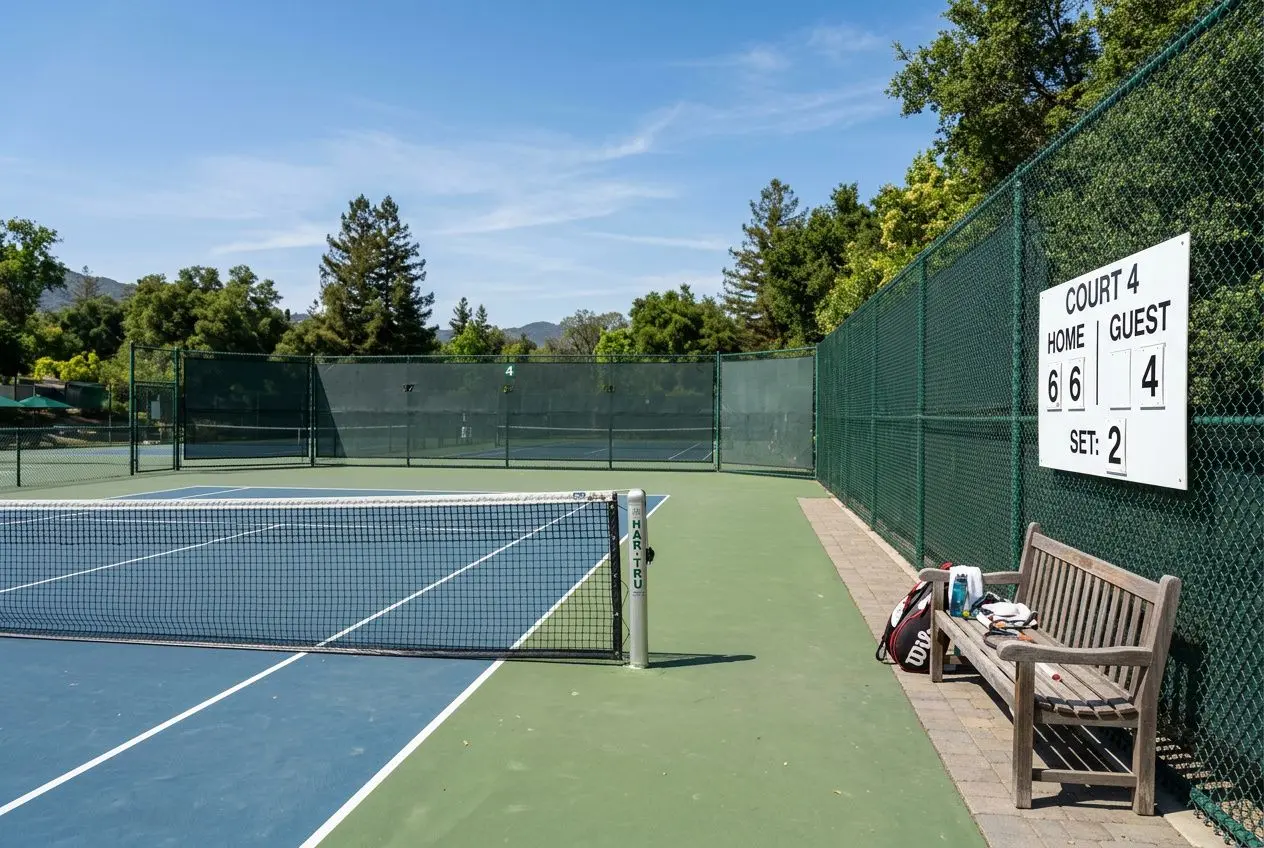
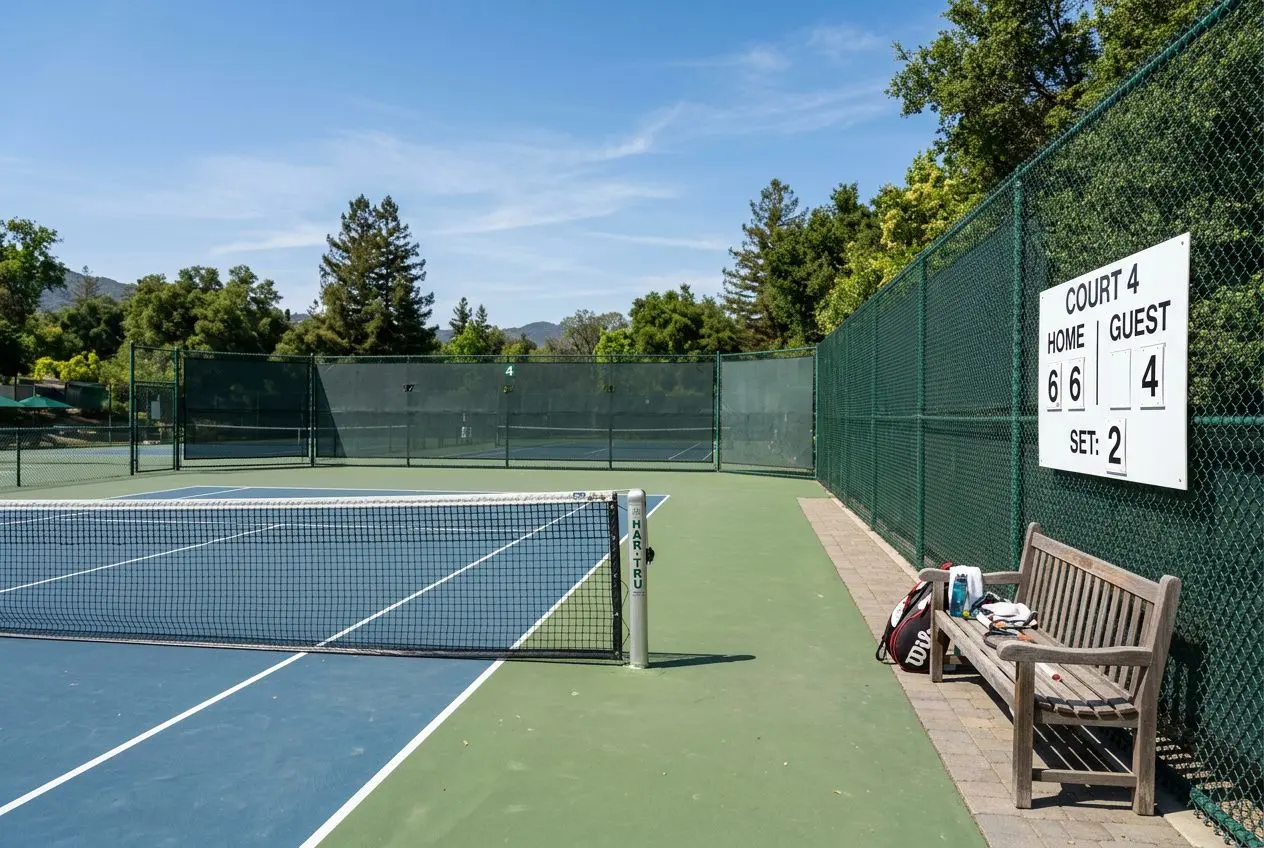
That visual discipline becomes visible at court level. Effective club branding starts at the boundary line, where scoreboards, stickers, and perimeter signage shape the day-to-day environment seen by members, spectators, and players during practice as well as formal events.
DIY design templates in PSD and EPS formats give clubs control over colours, mascot graphics, and typography before print. From that point, adhesive mounting solutions simplify installation: no permanent structural changes, no specialist contractor, and a practical route to stronger tennis club visibility and brand presence.
- PSD and EPS templates: Full design control for scoreboard graphics, so the final branding matches the existing visual identity.
- Adhesive logo placement: Stickers applied to advertising zones place sponsor and club branding directly on court equipment without altering the base unit.
- Mounting bracket systems: No-drill brackets allow installation within one to two days, including shipping and positioning.
Once installed, these elements support the facility visual identity every day. Rot-proof PVC construction is built to last through UV exposure and sub-zero temperatures, making the branded display a durable asset rather than a seasonal fix.
Scoreboards as permanent branding assets on court
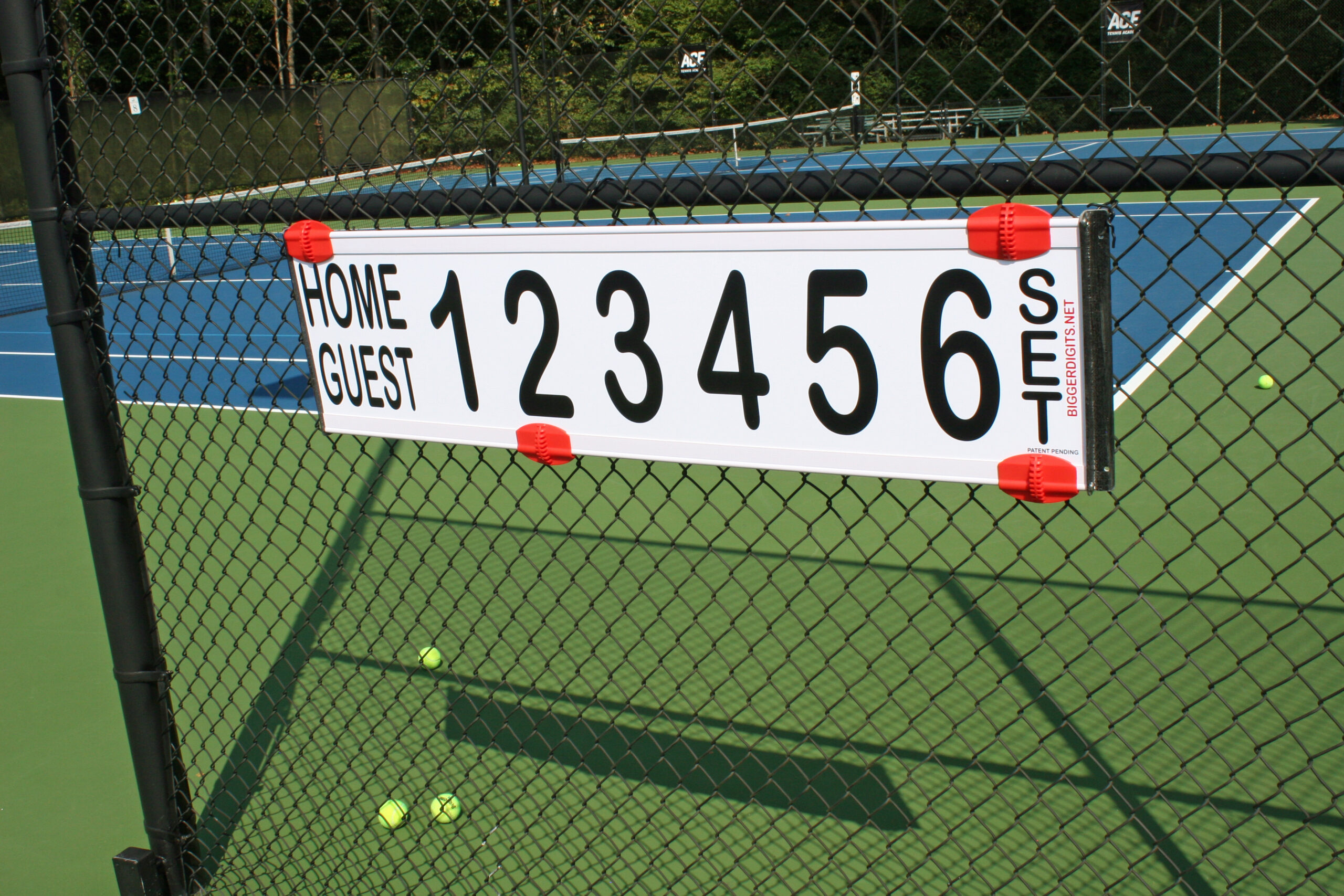
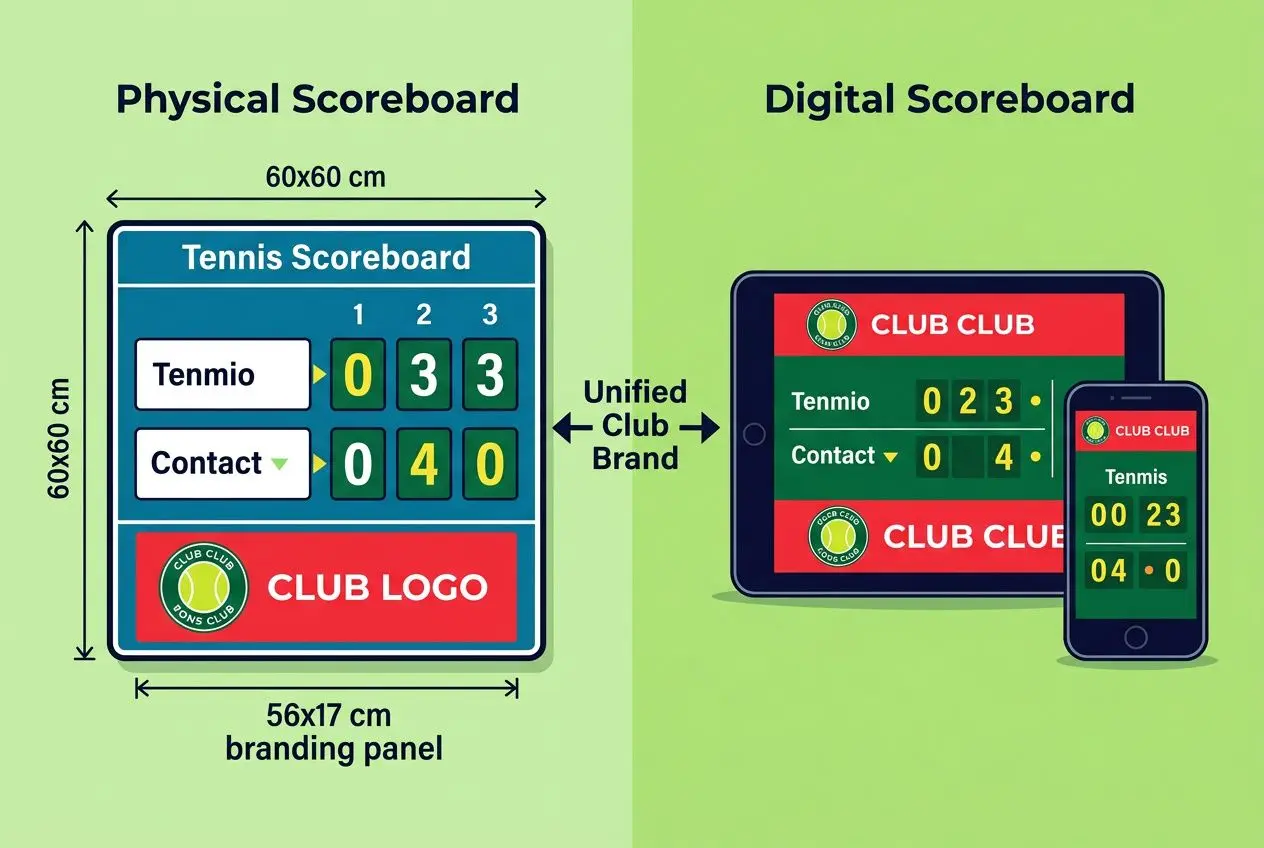
That durability matters because scoreboards do more than display points. Tennis Scorer physical scoreboards measure 60 × 60 cm, use 10 cm numbers readable from more than 50 metres, and include a 56 × 17 cm advertising zone for club branding and sponsor visibility.
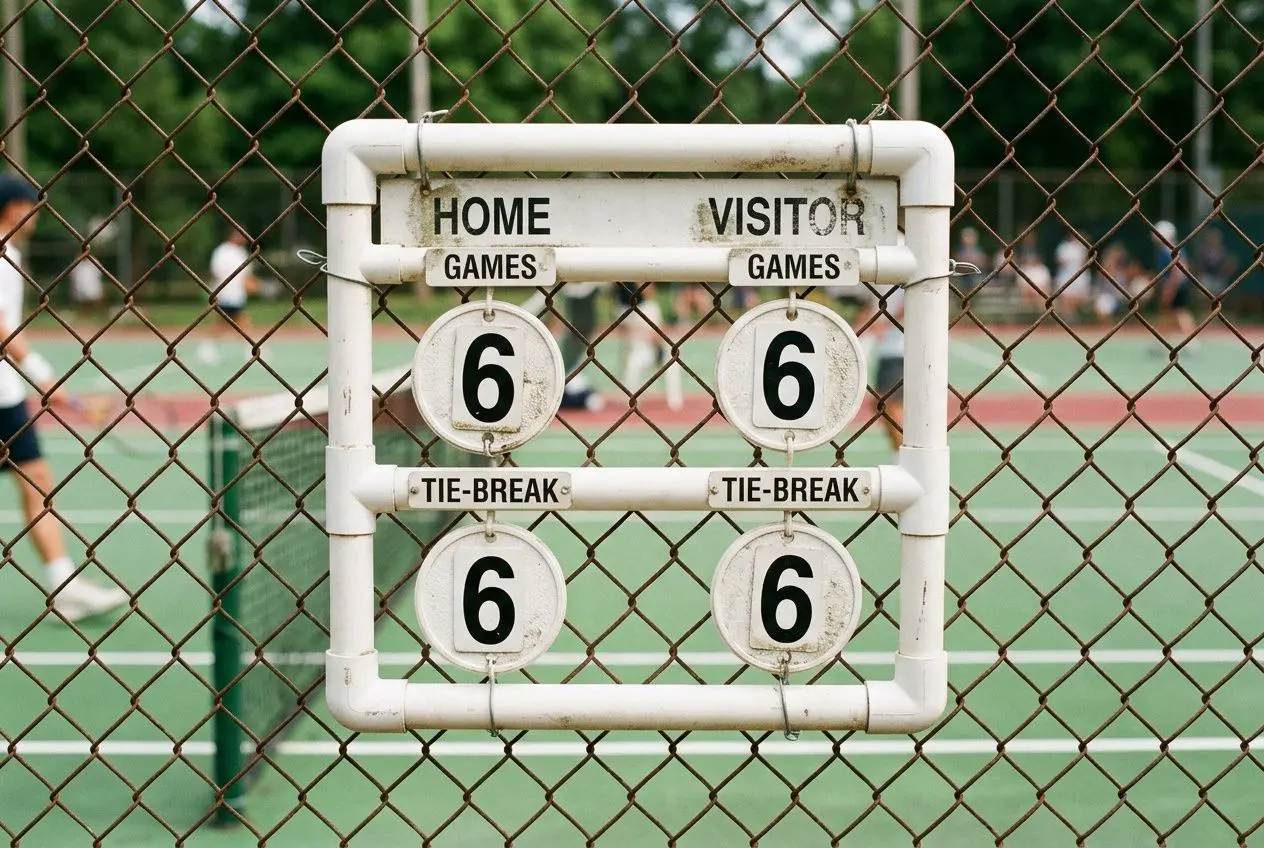
From training sessions to regional events, the scoreboard supports communication, sponsor exposure, social content capture, and the overall design language that strengthens tennis club visibility and brand recognition.
Professional presentation also improves commercial value. A sponsor featured court-side throughout the season gains credible exposure, and 81% of sports consumers report trusting brands seen at sporting events, which makes this format relevant to campaigns, social media, email promotion, and broader branding strategy.
Club branding solutions from court to digital platform
Strong clubs carry the same visual identity from the court to the screen, using physical scoreboards for permanent presence and digital tools for live online engagement across different audiences.
Custom advertising stickers and scoreboard branding options
That cross-channel approach starts with the court. Among the most accessible club branding solutions for any budget, custom advertising stickers applied to physical scoreboards create immediate visibility without structural work, and Tennis Scorer includes them free with physical board orders: clubs can place their logo and sponsor artwork on court from day one.
From that point, the difference comes down to format. A personalised scoreboard can take the form of a rot-proof PVC board, a digital platform, or a DIY template, yet the purpose stays the same: keep a consistent club brand visible during matches, training, and events.
That shared purpose carries into the practical details. Physical boards bring durable signage with clear numbers visible from 50 m and a 56 × 17 cm advertising area, while digital options share scores in real time across devices. Used together, they support tennis club branding through one coherent design system.
| Scoreboard type | Cost range | Installation time | Branding zone | Durability |
| Physical PVC board | 300–600 EUR (one-time) | 1–2 days | 56 × 17 cm advertising panel | Year-round, 3-year warranty |
| DIY printed board | Free to 100 EUR | 2–4 hours | Fully customisable layout | Depends on print material |
| Digital online scoreboard | Free to 50 EUR/month | 5–10 minutes | Custom brand fields (premium) | Browser-based, no hardware |
Digital scoreboards reinforcing branding beyond the court
Once the court-side presence is established, digital scoreboards extend the same branding beyond the fence. Web-based platforms need no hardware, no coding knowledge, and only five to ten minutes for setup, while live score updates reach connected devices at the same time and maintain engagement for spectators who are not on site.
Once installed, that same identity can continue without interruption. With Tennis Scorer, clubs combine a physical scoreboard built to last through year-round outdoor use with an online platform that keeps results current.
From that point, the scoreboard also serves sponsors and event presentation. It presents each sponsor in a structured format and helps position the venue for larger tennis events, where a professional design and consistent brand presence can attract external organisers and broaden the club’s visibility through stronger tennis club branding.
Social media and email marketing for tennis clubs
Digital marketing extends every physical branding investment a club makes. A strong online presence turns on-site visibility into year-round discoverability, and members who have never visited can find the club through search, social media and referrals while existing players stay engaged between sessions.
Social content strategy to grow tennis club visibility
That discoverability grows faster when the club already has strong material to show. Court customisation options, branded scoreboards, perimeter signage and custom stickers create natural content: during matches, training and events, these details give social posts a professional look without the cost of a dedicated photographer or production team.
- Platform targeting: Facebook suits established members and parents, while Instagram and TikTok are better aligned with younger audiences through short-form video and action-led tennis content that supports the club’s visual identity.
- User-generated content: Photo contests and member spotlights deliver 28% higher engagement rates than brand-produced posts, making them effective tools for community building and social proof.
- Storytelling over promotion: Individual player journeys, milestones and match-day moments usually outperform direct promotions because they feel more relevant and more human.
- Content calendar discipline: Scheduled posting keeps communication consistent across social platforms, reducing pressure on staff and volunteers while protecting the club brand.
That structure works best when content reflects the real club community rather than generic templates. Short video series with local coaches or tennis personalities strengthen branding, improve local SEO through location-tagged posts, and support an online presence that feels rooted in place.
Email campaigns that reinforce club branding and retention
That same principle applies to email marketing. Tennis club marketing often underuses email, even though segmented campaigns can deliver 760% more revenue than untargeted broadcasts: the right choice when different member groups need different messages and event invitations.
Once segmentation is in place, performance usually improves quickly. A/B testing subject lines can raise open rates by up to 49%, while personalisation such as using a recipient’s name or referring to previous interactions turns routine email into more effective brand communication that strengthens club branding over time.
- Welcome sequences: Introduce new members to coaching options, court booking and upcoming events in the first week to reduce early dropout.
- Segmented newsletters: Separate lists for juniors, competitive players and social members keep content relevant, improve engagement, and create room for sharper campaign planning.
- Review requests: Post-event email prompts encourage satisfied members to leave reviews; 87% of consumers read reviews before choosing a local business, making post-event prompts a high-value automation for any club managing its reputation at scale.
From that point, list growth needs a simple system. Opt-in forms on the website, QR codes at reception and sign-up stations at open events keep new contacts flowing in, giving the club a measurable channel for content, offers and long-term digital marketing.
Referral and seasonal promotions to attract new members
With that foundation in place, referral campaigns become far more effective. Promoting a club through structured member recommendations pairs trust with reach, and incentives such as free lessons, branded merchandise or leaderboard recognition often outperform cold advertising when the goal is to attract new members.
Seasonal campaigns add momentum. Promotions tied to the outdoor season, junior enrolment periods or post-Wimbledon interest spikes help maintain brand visibility across the year, while early-bird pricing can increase conversion rates by up to 226% and tiered timing discounts add a further 30% uplift.
Frequently asked questions
How can a tennis club improve its local visibility and online presence?
Improving local visibility takes work in two places at once. On site, court-side branding, custom scoreboards, adhesive logo stickers and perimeter signage keep the club’s brand visible during every tennis match and training session: in practice, that repeated exposure strengthens recognition with players, visitors and potential sponsors.
That physical presence needs a digital counterpart. A fully optimised Google Business Profile, tennis-focused content, review collection, active social media communication and solid local SEO all improve online presence for location-based searches, and the difference comes down to consistency rather than budget.
What are the most effective marketing strategies for tennis clubs on a limited budget?
That need for consistency matters even more when budgets are tight. The most effective marketing strategies for tennis clubs usually start with low-cost tools that extend branding without adding heavy overhead: free digital scoreboards can be set up in five to ten minutes and accessed from any browser.
From that point, simple production choices help maintain a professional brand image. DIY scoreboard templates in PSD or EPS format support court signage from free to 100 EUR, while referral offers often outperform paid promotion for membership acquisition.
The same principle applies online. Well-timed, segmented email campaigns, member spotlights, photo contests and regular social content can increase engagement without a dedicated budget.
How do scoreboards contribute to a tennis club’s branding and sponsorship strategy?
Scoreboards do two jobs at once. They keep scoring clear during play and provide a permanent space for branding between matches.
Tennis Scorer physical boards include a 56 × 17 cm advertising zone for sponsor placement, visible throughout every session rather than only during tournaments. On court, that means the sponsor message remains part of the setting during coaching, league fixtures and everyday club activity.
By contrast, digital options extend the same visibility into the club’s online presence. Premium web-based scoreboards add custom branding fields that support sponsor recognition across social media, email marketing and broader marketing strategies for tennis, while well-presented equipment also helps position the club as a credible venue for organisers and prospective partners.