

Table of Contents
This guide covers tennis club visibility and branding costs in full, from physical court signage and PVC scoreboards to digital marketing channels, so clubs can compare options, set realistic budgets and build a strategy that improves recognition and supports membership growth.
Building a tennis club brand identity that works
A strong club identity does more than make courts look polished. It signals organisational quality before any conversation begins and shapes how prospective members, sponsors and local partners perceive the tennis club, whether they first encounter it online, through the website, on social media or on site. Clubs exploring a club branding strategy quickly find that effective branding reaches well beyond a logo file.
What a complete tennis club identity actually includes
That broader scope shapes every part of communication. A useful tennis club visibility and branding template covers each touchpoint where members, visitors and sponsors meet the club identity, from court furniture to welcome packs and online materials. When planning starts early, the result is a more coherent brand identity across every channel.
- Colour palette and typography: A disciplined set of colours and typefaces used across courts, signage, emails, the website and social media builds local visibility over time far more effectively than ad hoc design choices.
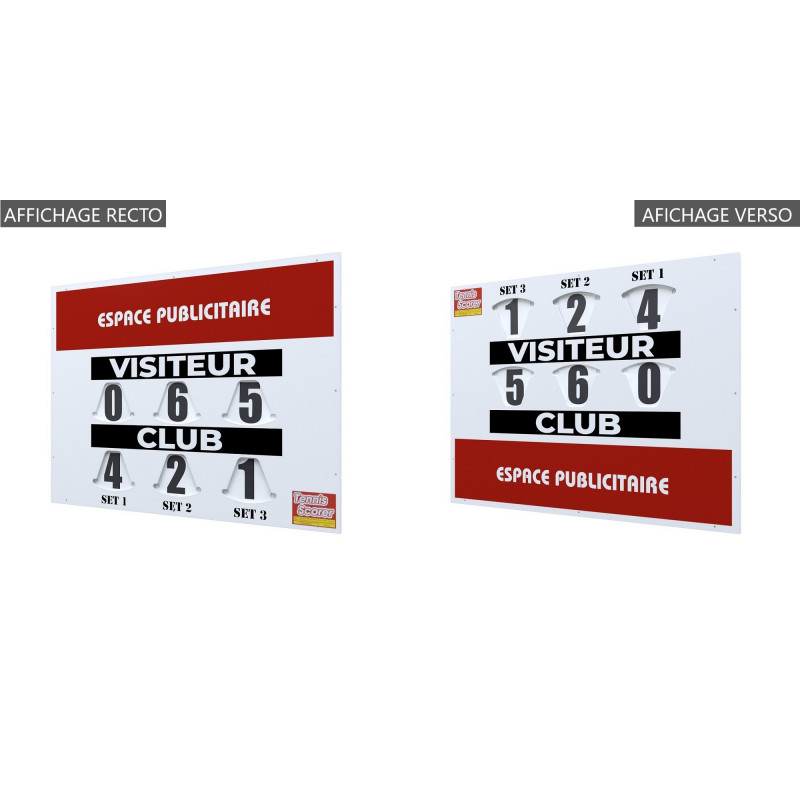
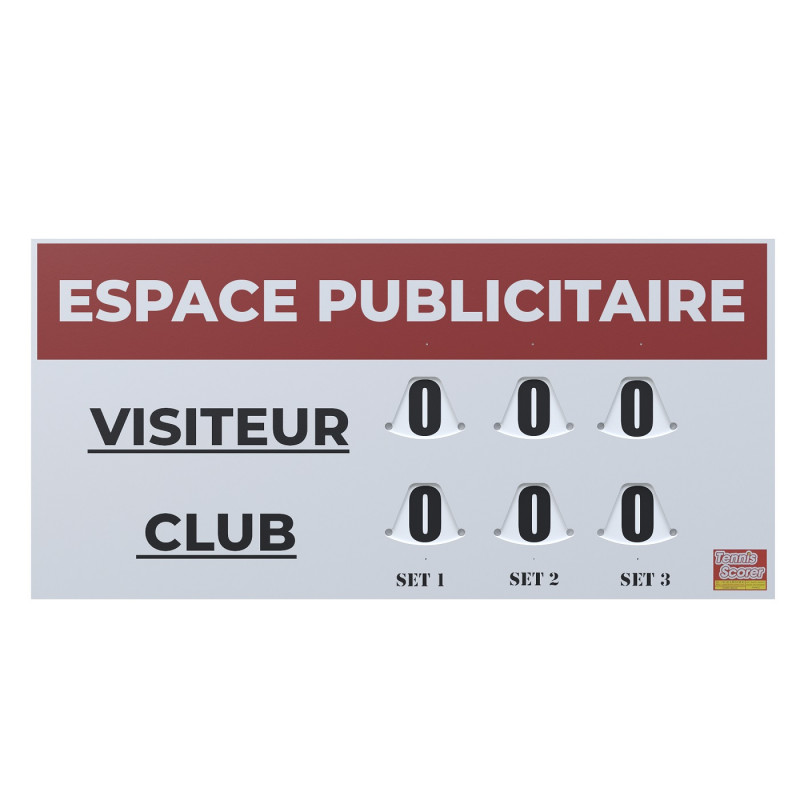
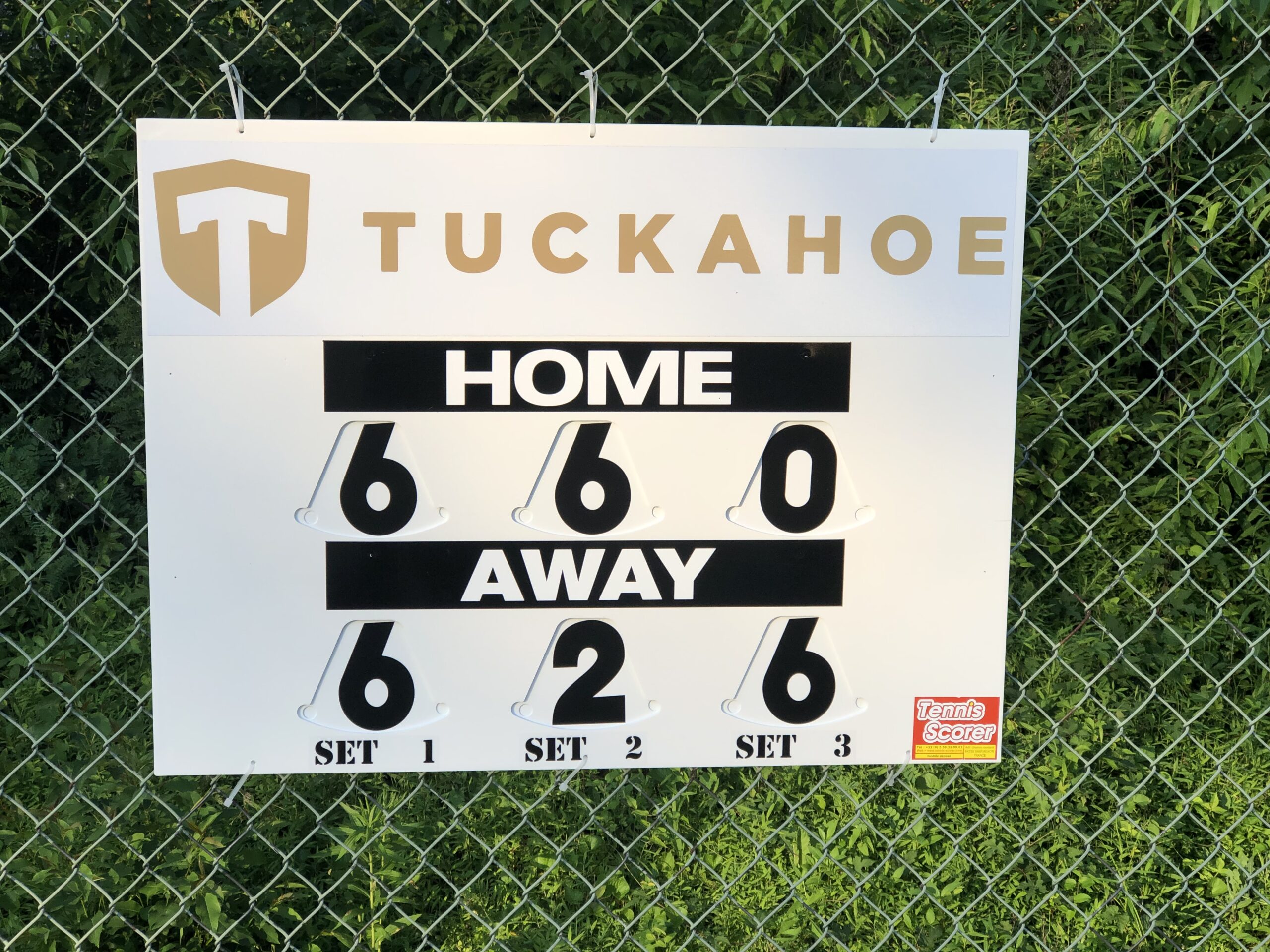
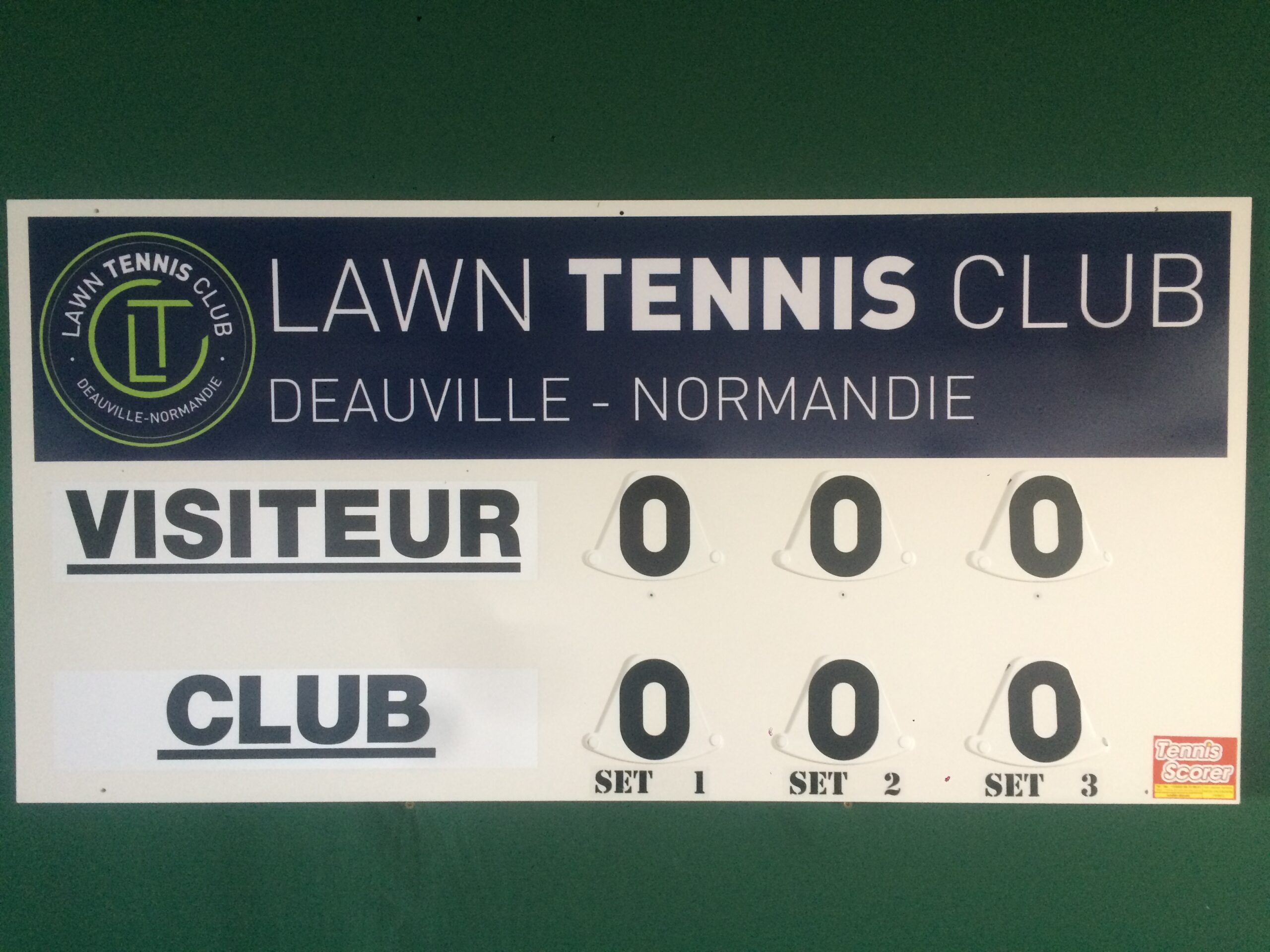
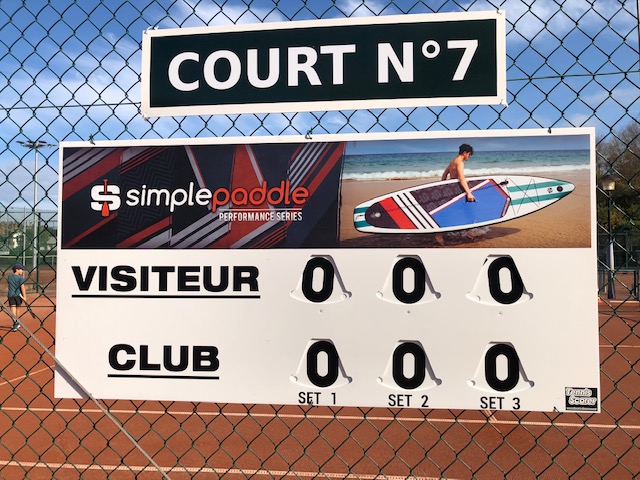
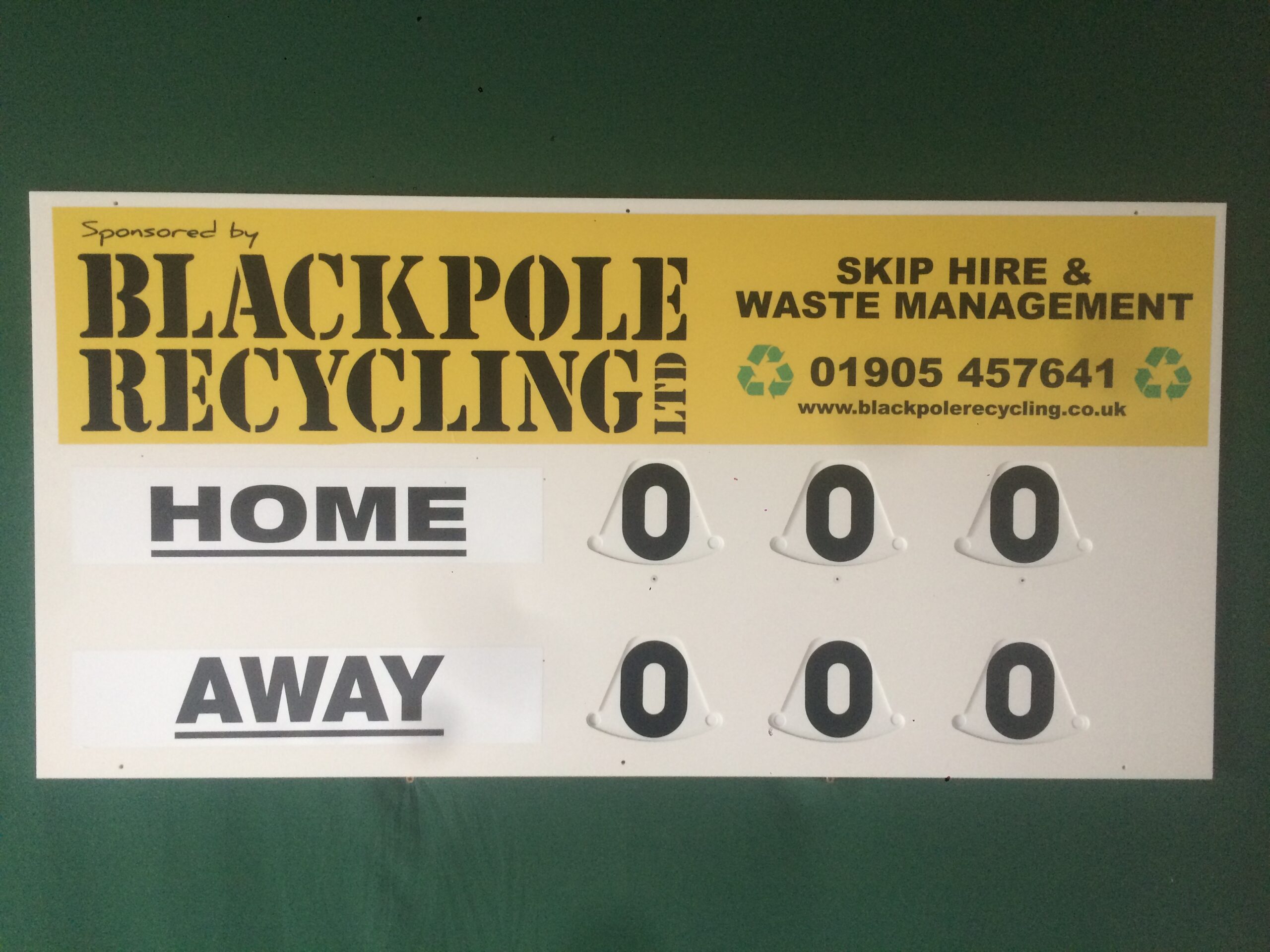
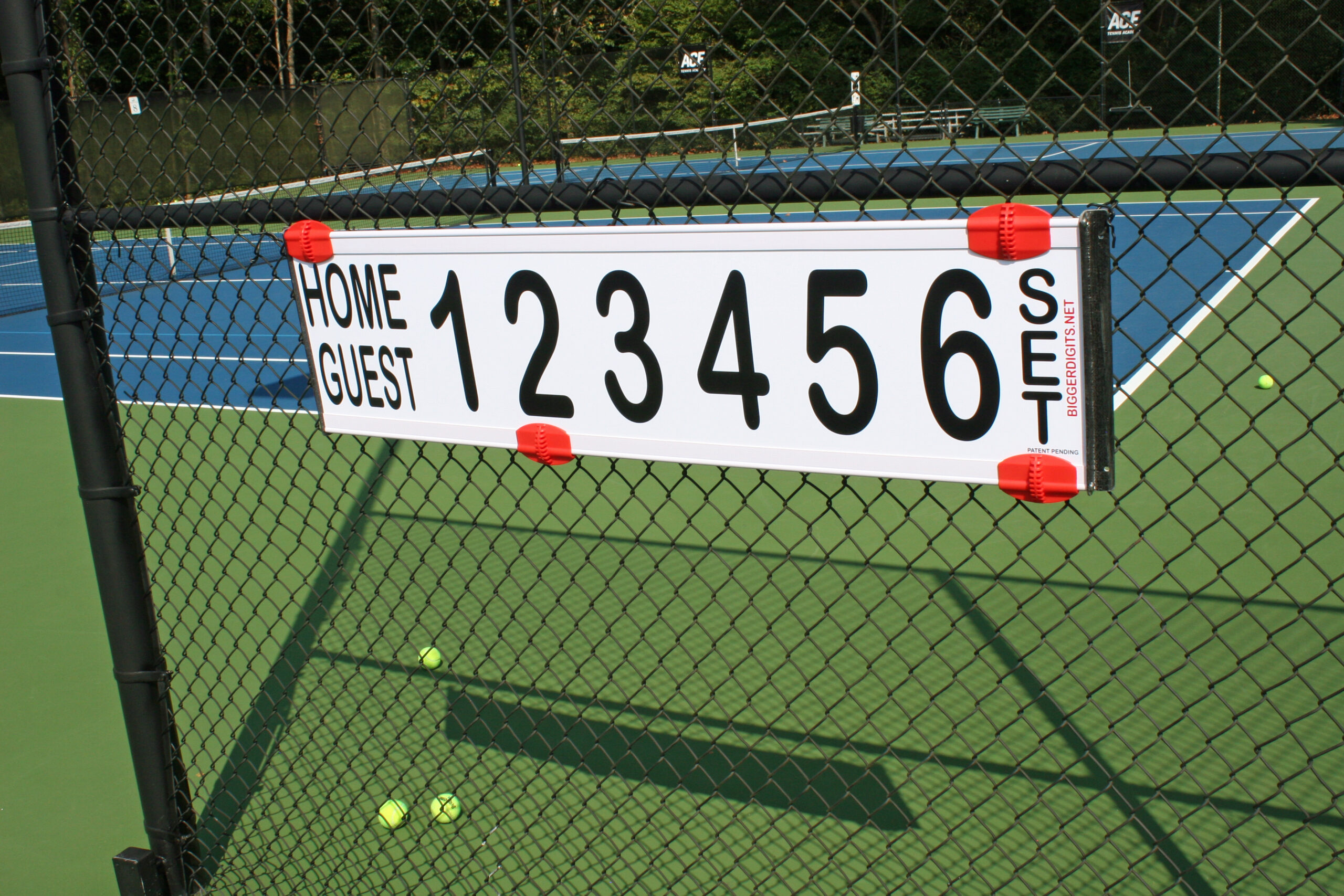
- Court signage and scoreboard branding: Physical assets such as fence-mounted PVC scoreboards with dedicated advertising zones carry club branding directly onto the court, where players and spectators see them throughout play. Clubs looking for practical court advertising ideas often find these among the most efficient options for sponsorship and visibility.
- Digital and printed materials: Website layouts, digital graphics, event flyers and membership documents should follow the same visual rules to support consistent communication across physical and online spaces.
Consistency carries weight. Clean typography across notices, coaching information and digital materials makes the tennis club appear organised and reliable, which strengthens positioning when competing for members and presenting sponsorship opportunities to local businesses.
Why planning branding from the start saves money
A structured strategy reduces waste. Clubs that assemble their branding gradually across several seasons often end up with clashing colours, mixed fonts and signage that no longer fits the club’s communication style. As a result, later corrections cost more than early planning.
Tennis Scorer has supplied equipment to nearly 3,000 clubs across Europe and the USA, and the same pattern appears repeatedly: the strongest local visibility usually comes from early planning rather than larger investments. Treating identity as a system from the beginning is what separates strong local visibility from costly patchwork corrections.
Templates and tools to apply consistent club branding
Once that principle is established, applying it does not need an agency-sized budget. DIY PSD and EPS templates are available free with a scoreboard purchase, or at a design cost of 0–100 EUR, giving clubs a practical starting point for club branding without agency fees. These tools support planning for colour use, logo placement and signage layouts across digital, printed and court-based materials.
That practical approach extends onto the court itself. Free custom advertising stickers supplied with Tennis Scorer PVC scoreboards let clubs display sponsor logos, club colours or court numbers on a 56 × 17 cm branded area. For a tennis club that wants equipment and branding in one purchase, this format turns a scoring tool into a durable communication surface.
From that point, long-term cost control becomes clearer. Replacement digits can be ordered separately, so the full unit does not need replacing when one part wears out. Built to last through 20–30 years of use, the scoreboard remains a dependable branding surface with lower replacement costs over time.
Tennis club signage costs and branding options compared
Signage budgets vary widely. The final figure depends on format, material and, above all, whether the spend is a one-time purchase or a recurring media commitment.
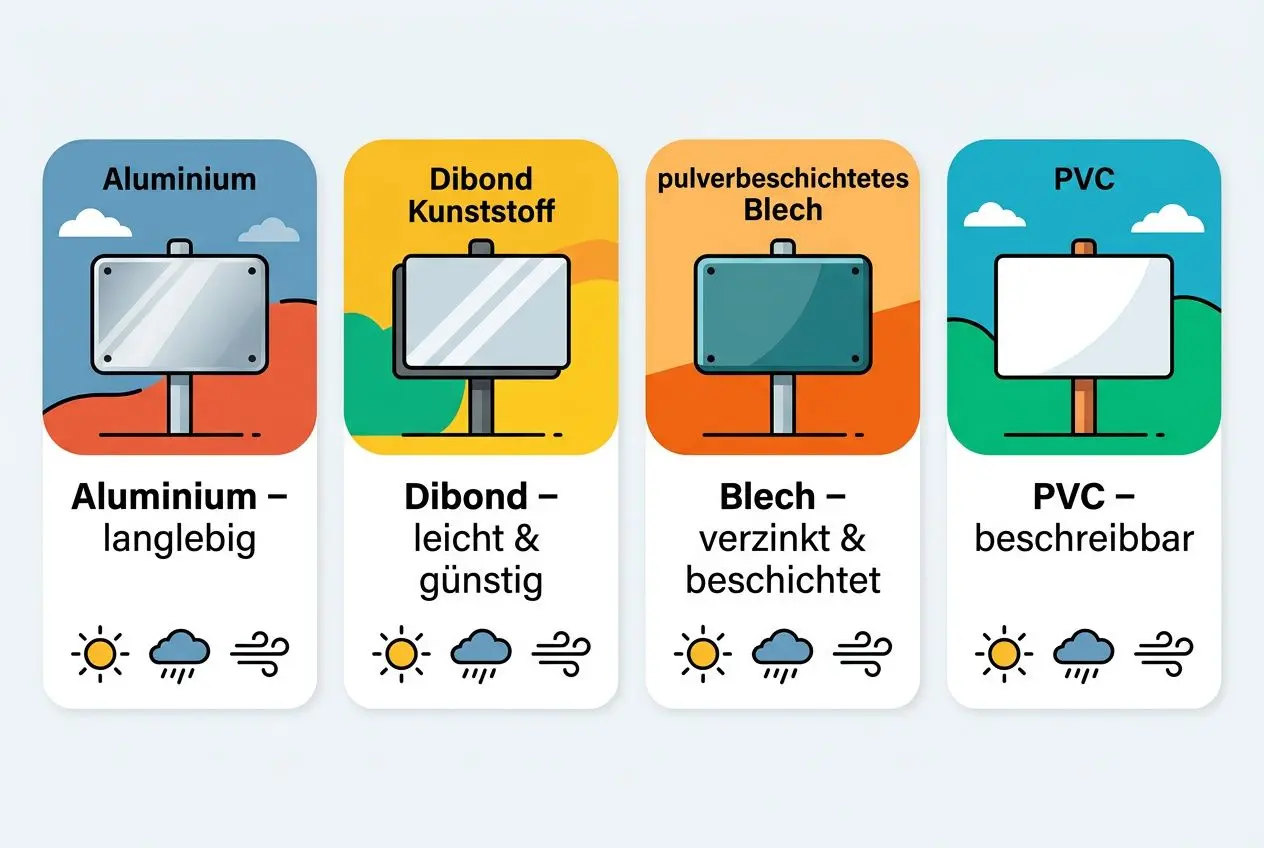
One-time versus recurring signage investment for clubs
That distinction separates purchased assets from rented visibility. Court signage costs fall into two clear groups: fixed assets bought once, and advertising placements charged each month.
A-frame signs at court entrances typically cost 50–150 EUR, while window decals for clubhouse glazing or perimeter panels usually sit at 30–100 EUR. These options can support short-term communication or seasonal club branding without ongoing fees.
By contrast, paid media keeps running. Street furniture placements cost 200–800 EUR per month, and transit billboards 500–2,000 EUR per month, so a single season can absorb tens of thousands of euros without leaving the tennis club with any lasting asset.
The difference comes down to ownership. A purchased sign remains available for daily club use, while rented media stops the moment payments end.
PVC scoreboards as low-cost long-term branding assets
That ownership model makes full-panel PVC scoreboards a strong option for tennis club branding. They require a one-time investment of 300–600 EUR, include a 3-year warranty, and have a documented lifespan of 20–30 years.
Once installed, no recurring fees apply. In practice, that keeps total ownership costs well below most offline or digital media placements over the same period.
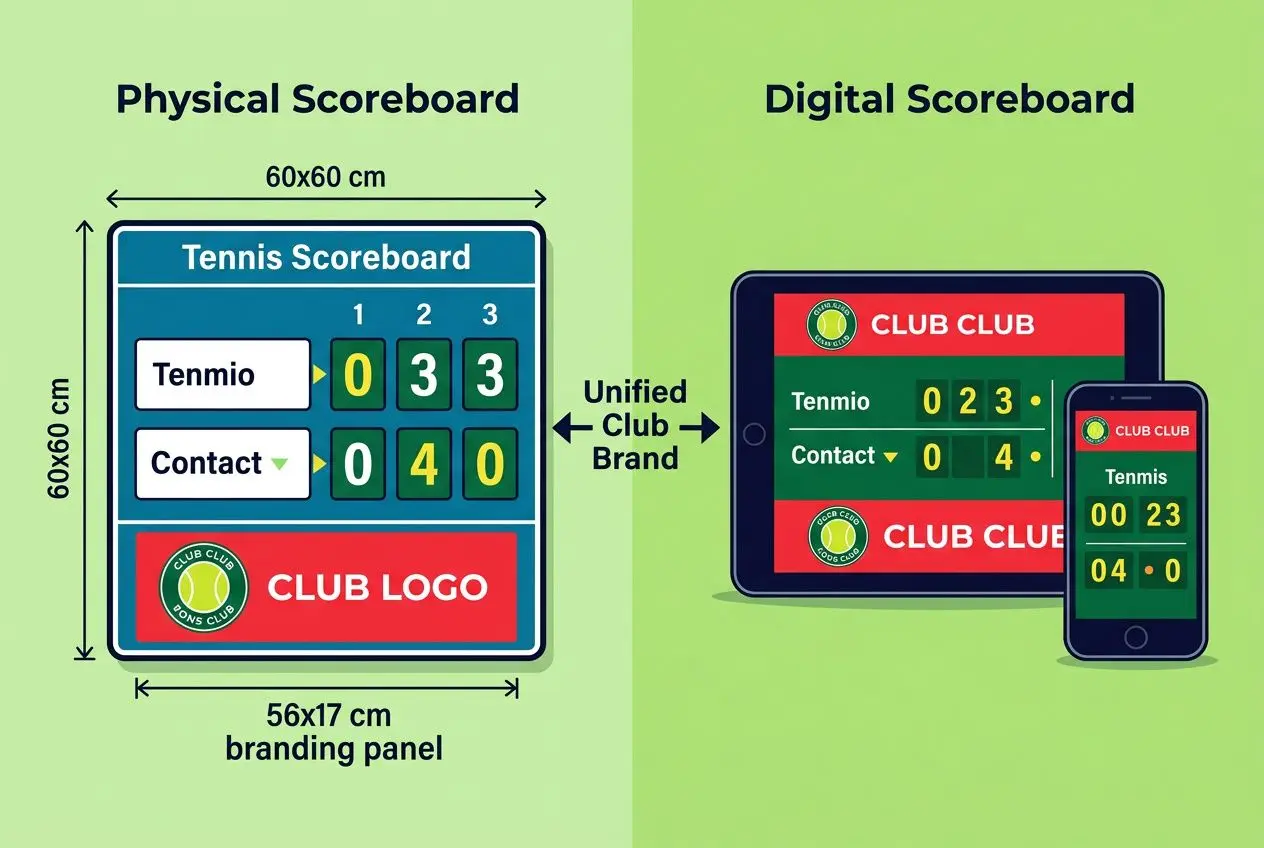
That long service life also supports the format’s dual role: scoring and branding. A 60 × 60 cm board includes a 56 × 17 cm advertising area that remains readable from more than 50 metres, giving a tennis club a permanent on-site surface for branding and sponsor communication.
On court, that means constant visibility to players and spectators without additional spend. The board is not only functional during matches but also present during training sessions, club events and everyday court use.
That 20–30 year lifespan rests on material choice. UV-resistant, rot-proof PVC stays in place throughout the year, eliminating both seasonal removal labour and off-season storage costs.
Tennis Scorer has built this approach around practical club branding needs rather than short-lived display cycles. The right choice when long-term visibility matters more than temporary campaign reach.
Once durability is established, installation becomes the next cost factor. A no-drill cable-tie fixing system can be fitted in 1–2 days without specialist tools or outside contractors.
As a result, upfront costs stay predictable and the board can start supporting local advertising from the first session. Once installed, the board begins delivering value immediately without creating an additional service contract.
| Signage option | One-time cost | Monthly cost | Estimated lifespan |
| Full-panel PVC scoreboard | 300–600 EUR | None | 20–30 years |
| A-frame entrance sign | 50–150 EUR | None | Short-term / seasonal |
| Window decal | 30–100 EUR | None | Seasonal |
| DIY printed board | 0–100 EUR | None | Variable |
| Digital online scoreboard | Free setup | 0–50 EUR | Subscription-based |
| Street furniture placement | Variable | 200–800 EUR | Ongoing contract |
| Transit billboard | Variable | 500–2,000 EUR | Ongoing contract |
Online branding channels that keep tennis club members engaged
Physical signage builds recognition on site. By contrast, digital channels carry a tennis club’s identity into the everyday routines of members and prospective joiners, sustaining visibility well beyond court hours through clear communication across a website, email and social media.
Email and social media strategy for club members
That wider reach depends on consistency. Segmented email campaigns perform far better than generic sends: campaigns split by juniors, competitive players and social groups deliver 760% more revenue than untargeted broadcasts.
- Personalised welcome sequences Automated emails in a new member’s first week introduce coaching options, court booking and upcoming events, helping to protect membership by reducing early dropout and lowering the cost of replacing departing members.
- A/B subject line testing Testing two subject line variations can lift open rates by up to 49%, producing useful analytics and stronger future strategy without increasing email spend.
- User-generated content campaigns Member spotlights and photo contests on social media generate 28% higher engagement than brand-produced posts, strengthening community identity with content that organic reach alone cannot replicate.
Once that structure is in place, social media can support different audiences at the same time. A maintained presence on Facebook and Instagram gives local audiences regular evidence of activity: coaching images, tournament results and player milestones posted on a consistent visual template.
How digital and physical branding work together online
That consistency matters even more when physical branding feeds online activity. Court-side scoreboards and perimeter signage create a recognisable backdrop for match and event photography; every shared image can therefore reinforce identity and sponsor recognition simultaneously.
- Sponsor visibility amplification A sponsor logo shown on a physical scoreboard and carried into match posts or email headers improves brand recall across several touchpoints from one branding investment.
- Local SEO support Weekly blog content, a mobile-friendly website and a maintained Google Business profile improve local search visibility, converting passive discovery into membership enquiries.
- Referral programme promotion Digital channels give referral campaigns broader reach, whether the offer is a discount, a free lesson or branded merchandise, with lower distribution cost than most paid local marketing.
From that point, the difference comes down to integration. Tennis Scorer’s web-based digital scoreboards are ready in 5–10 minutes and include custom brand fields for sponsor recognition across email and social media, linking physical presentation with online channels in under ten minutes of setup.
Planning sponsorship and revenue through tennis club branding
Consistent branding does more than improve appearance. It shapes sponsorship and revenue by giving a tennis club a clear, professional club identity that local businesses can assess before any communication begins.
When a club presents a coherent identity across courts, signage, digital assets and its website, commercial partners find it easier to justify sponsorship internally and to see how the association supports their own visibility.
How consistent branding attracts sponsors to your club
That same clarity should carry into sponsorship offers. A structured branding store model, with tiered packages and defined deliverables, removes uncertainty and gives local partners a straightforward route into sponsorship and revenue planning.
Each package links fees to defined exposure across courts, scoreboards, social media, the website and event materials, turning informal interest into a proposal a business can price, compare and approve.
- Executive Club Sponsor tier: courtside printed banners, naming rights for an annual competition, sponsor branding on the trophy, prominent social media promotion and website banner advertising. This is the highest-visibility option for anchor sponsors.
- Court Sponsor tier: advertising on one specific court through two branded boards and a website link, giving local businesses targeted exposure to players throughout the season.
- Junior Competition Sponsor tier: courtside banner placement during a week-long junior event, plus social media promotion before and after, aligning the sponsor with youth sport and the wider community.
Once packages are defined, the commercial case becomes stronger. 81% of sports consumers trust brands seen at sporting events, a figure that sits well above general street advertising benchmarks, and tennis sessions typically deliver 60 to 90 minutes of dwell time.
Sponsor visibility on scoreboards and signage therefore carries measurable value. Tennis Scorer positions that professional presentation as a foundation for sponsorship discussions grounded in quantifiable exposure rather than vague promise.
Membership growth strategies supported by strong identity
Sponsorship and revenue planning works best alongside a broader membership strategy, not in isolation from it.
A strong club branding system gives members something they are willing to recommend. Referral activity then becomes more effective than cold advertising, because the club identity already signals quality through every touchpoint, from digital communication to the in-person experience at the tennis club.
From that point, multiple revenue streams become easier to manage. Tiered membership options, with monthly and annual choices as well as special packages, can lift club revenue by around 20% compared with a single-price model, especially when presented through consistent club branding in a brochure or digital pack.
- Early-bird discount campaigns: when promoted consistently across email, social media and court signage, these campaigns increase conversion rates by 226%, while tiered timing discounts add a further 30% uplift in sales.
- Referral incentive schemes: discounts on membership, free lessons or branded merchandise for successful referral activity outperform cold advertising for attracting new members and rely on trusted community recommendation.
- Coaching-linked retention: members involved in coaching show stronger loyalty than court-only users, so pricing strategies that bundle coaching into membership tiers improve retention and reduce annual attrition.
Events and tournaments as branding and revenue planning tools
That integrated approach extends naturally to events. Tournaments and hosted competitions can increase club revenue by up to 15% compared with clubs that rely only on membership subscriptions.
Branded court environments designed for a full season of use help justify higher entry fees and encourage repeat bookings: scoreboards with sponsor identification, clear signage and polished presentation all reinforce the professionalism expected by visiting players and clubs.
By contrast, an event without visible branding offers limited long-term value. A well-run tournament creates concentrated social media content, local coverage and stronger community engagement, while also giving sponsors proof of reach beyond the core membership base.
Tennis Scorer supports that broader planning by treating branding, sponsorship and revenue as connected parts of one strategy.
Frequently asked questions
How much should a tennis club budget for branding and signage?
A sensible budget combines one-off purchases with any recurring spend. For many clubs, the starting point is court-side branding: a full-panel PVC scoreboard with a branded advertising area typically costs 300–600 EUR as a single investment, with no ongoing fees.
From that point, smaller items can extend the same identity across the site: A-frame signs and window decals usually add 30–150 EUR per unit. DIY branding templates are often included with scoreboard purchases, or available separately for 0–100 EUR.
By contrast, wider local advertising such as street furniture or transit billboard campaigns usually requires 200–2,000 EUR per month. The difference comes down to duration: permanent court-side assets support visibility over time without adding repeated fees, making them a more efficient choice for a tennis club focused on branding, sponsorship and stable revenue streams.
What is the fastest way to improve a tennis club’s local visibility?
The quickest gains usually come from assets already seen on site. Fence-mounted PVC scoreboards with custom advertising stickers can be installed in 1–2 days with a no-drill cable-tie system, giving a tennis club immediate visibility during sessions that typically last 60–90 minutes.
Once installed, that physical presence works best alongside a strong digital foundation: an up-to-date website, a maintained Google My Business profile and regular social media activity. That combination strengthens local and online discovery simultaneously, while supporting communication with current members, prospective enquiries and referral activity.
How does branding directly affect tennis club membership numbers?
Most prospective members look at a club’s website and social media first, so a clear and consistent identity makes membership feel more credible and easier to choose.
That first impression then needs support through ongoing communication. Segmented email campaigns, structured welcome sequences and referral programmes help retain members, reduce dropout and encourage satisfied tennis club members to recommend the club to others.
From that point, stronger branding supports more than recruitment alone. Clubs that present themselves consistently across physical spaces and digital channels tend to find sponsorship discussions easier, build steadier revenue streams and protect fees from unnecessary pressure.