
Table of Contents
- How to host a tennis tournament from scratch
- Fun tennis tournament formats for every player level
- Understanding the order and structure of tennis competitions
- Choosing and preparing the right tennis tournament venue
- Picking the right scoreboard template for your tennis tournament
- Frequently asked questions
This guide on how to organize tennis tournaments for beginners covers every practical stage, from forming a committee and selecting a format to scheduling matches, preparing courts, and choosing scoreboards.
How to host a tennis tournament from scratch
Organising a beginner-friendly event starts long before the first check-in. Effective tournament planning depends on a defined committee, a workable schedule, and a realistic timeline from the outset.
Building your planning committee and timeline
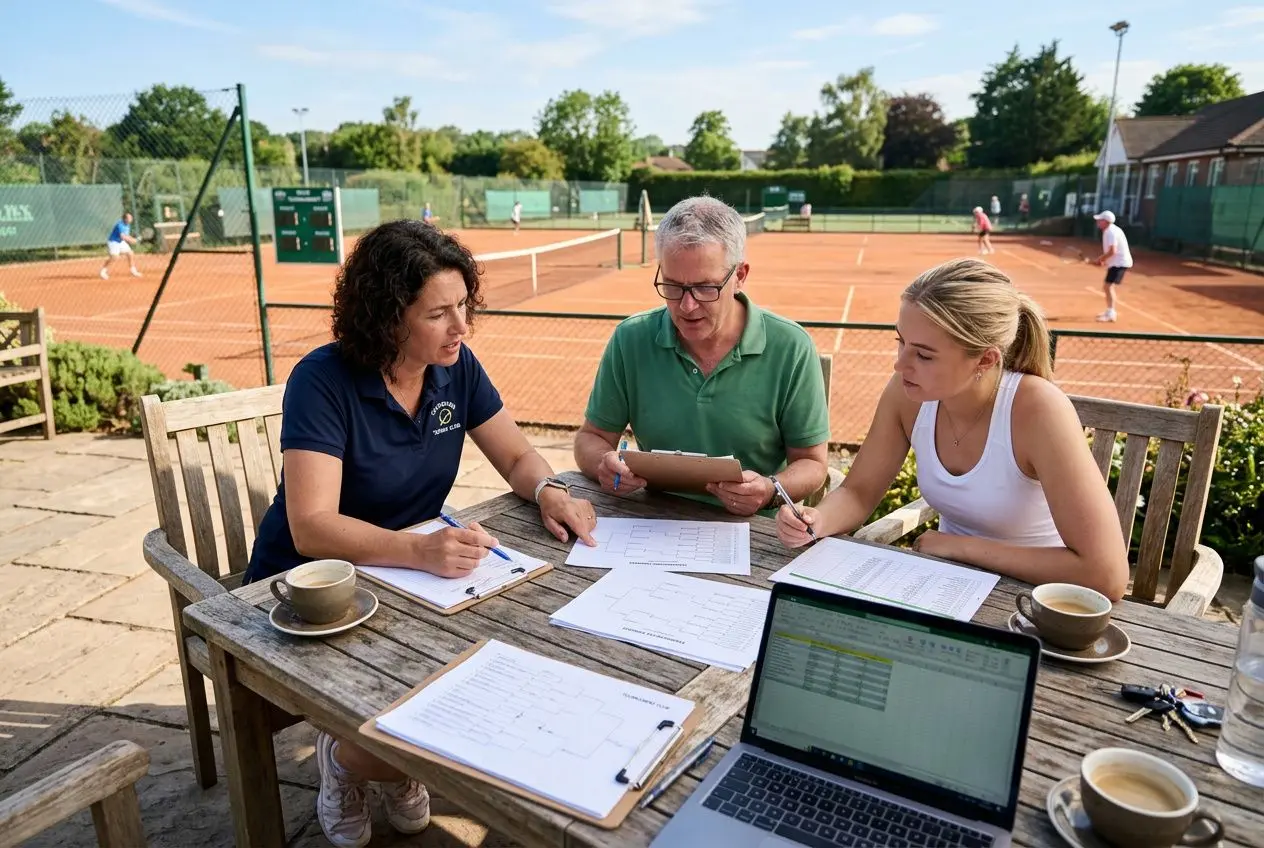
That foundation begins with the right committee. For a fair structure, appoint one host club representative and two independent non-participant members: this keeps decisions neutral and reduces conflicts of interest during tournament planning.
From that point, one tournament director should hold final authority over weather delays, rule interpretations, and scheduling matches on the day. Without that role, delays multiply quickly. Court availability should be confirmed and any permits secured at least 12 weeks in advance.
Defining your tournament’s purpose and players
Once the structure is set, the purpose of the event must be clear. The same principle applies to how to organise a table tennis tournament: define whether the aim is recreation, competition, or fundraising before choosing the format, divisions, bracket, and tournament schedule. Clear expectations from the start reduce withdrawal rates and last-minute format changes.
Registration should open at least six weeks before the event, with entries closing three weeks out. Publish division criteria early so players know where they belong.
During the registration period, sponsorship and marketing materials should also be completed. In practice, four to six weeks before the event gives the best balance between visibility and commitment from participants. A dedicated guide on the tennis scoreboard can support communication at this stage and help organisers compare display options.
Recruiting and briefing your volunteer staff
Once entries are taking shape, staffing becomes the next priority. Confirm volunteer availability and issue written duties at least three weeks before the event. Clear responsibilities prevent gaps in coverage and make scheduling matches far easier during busy periods.
For most beginners, one staff member for every three to four courts is a sensible ratio at peak times. On court, that means faster score collection, quicker updates to the bracket, and fewer delays at the tournament desk.
- Tournament director: Holds final authority over scheduling changes, weather delays, and rule interpretations throughout the event.
- Court monitors: Collect live scores from players, update the bracket in real time, and relay information to the tournament desk.
- Registration staff: Handle check-in, distribute the tournament schedule, and direct participants to the correct courts efficiently.
Drag-and-drop tools help organisers adjust the schedule around withdrawals or poor weather, while live mobile updates let players check court allocation and match times without crowding the desk. Once installed, a clear tennis scoreboard also improves on-court visibility, and a solid fence scoreboard guide shows what works best for clubs learning how to host a tennis tournament.
Fun tennis tournament formats for every player level
Choosing the right tournament format early shapes the whole event. That decision affects match volume and court time, and whether beginners leave encouraged or knocked out after a single short outing.
Round robin versus single elimination for beginners
That first choice matters most in entry-level tennis competitions. Round robin suits 4 to 24 participants and guarantees each player repeated court time, a direct advantage over single elimination at entry level.
By contrast, single elimination is a cleaner fit for larger entries. A 32-player draw creates 31 matches with highly predictable court time, but for new players, one early loss can make the day feel very short, a significant drawback in entry-level events.
- Round robin: Guarantees multiple matches for all participants; ideal for fields of 4 to 24 and for beginner events that prioritise involvement over fast elimination.
- Single elimination: Best suited to 32 or more entries; efficient for scheduling and simple to manage, but less forgiving for beginners.
- Draw with consolation: Fits 16 to 32 players; keeps first-round losers active through a second bracket, balancing structure with participation.
Players who lose in round one still continue. From that point, the consolation bracket keeps the tennis tournament active across more courts and for more of the day.
Once that structure is set, doubles can strengthen the programme further. Two players working as a pair against another team adds a more social rhythm, reduces pressure on individuals, and is often the right choice when beginners are still building confidence.
Junior and beginner-specific tennis competitions
Junior tennis competitions are designed to introduce young players gradually. The same principle applies to any entry-level event: guarantee play, keep formats simple, and avoid unnecessary pressure.
Level 7 Ranked Junior Tournaments for players aged 11 and over are single-day, entry-level events that use non-elimination structures to provide multiple matches. Junior Circuit events for ages 5 to 10 are shorter half-day competitions focused on enjoyment first, with ranking a secondary concern rather than the purpose of the day.
How skill divisions shape your tournament bracket
That approach only works when the field is divided properly. Setting divisions by skill level before registration opens protects competitive balance, improves the tournament bracket, and avoids one-sided matches that frustrate both stronger and weaker players.
Seeding also matters. Place the top players within each bracket carefully so they do not meet too early, especially when a tennis tournament includes several divisions and varied participant experience.
- Age groups: Separate juniors, adults, and seniors to maintain fair physical and experiential balance.
- Experience levels: Define beginner, intermediate, and advanced categories clearly before registration so players select the right level.
- Singles and doubles: Run them as distinct divisions with separate draws to reduce scheduling pressure and court overload.
- Multiple divisions for 32+ entries: Essential when participants vary widely in standard; without them, the bracket quickly loses competitive integrity.
As a result, players know where they belong, seeding becomes more accurate, and the tournament format supports fairer matches from the opening round.
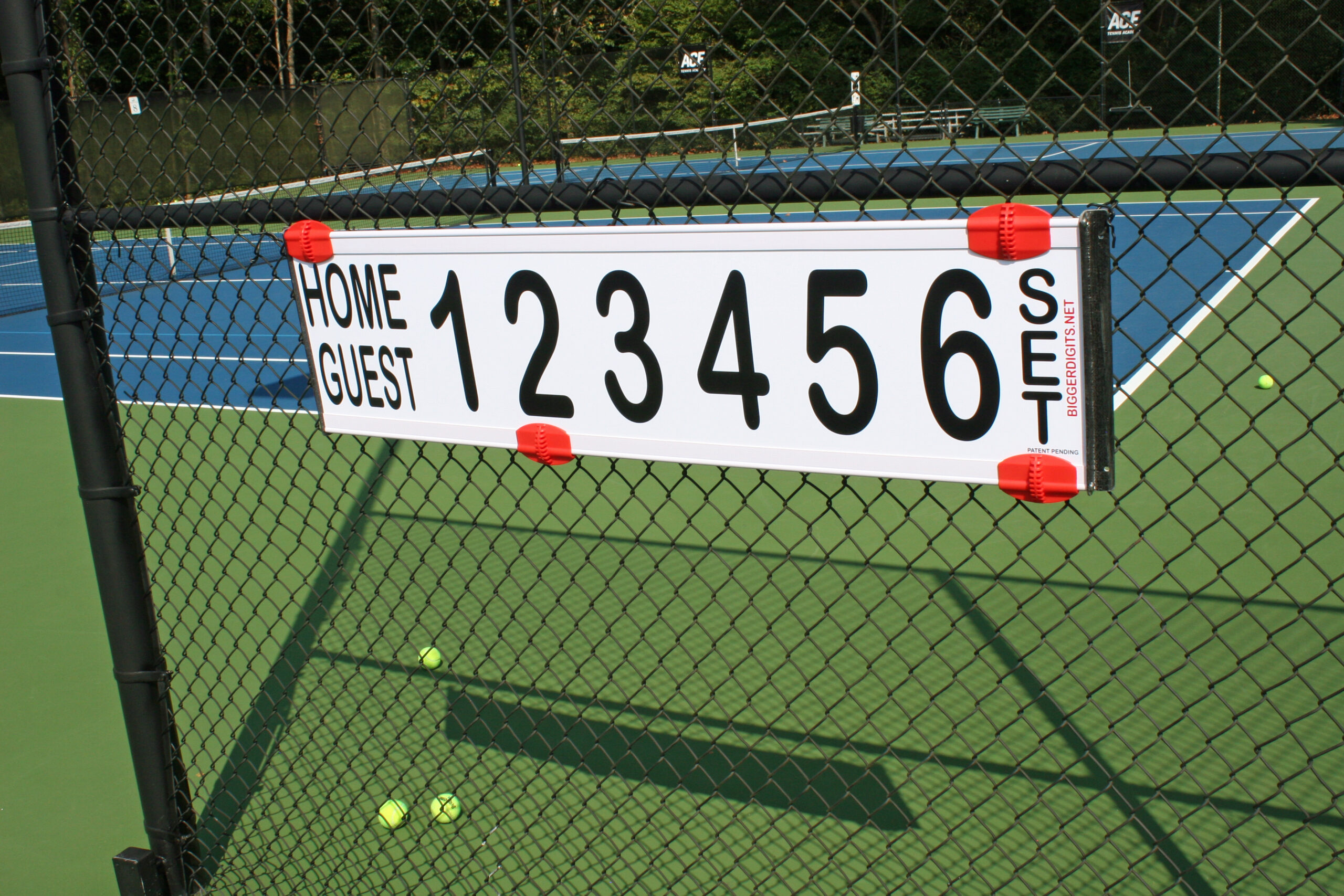
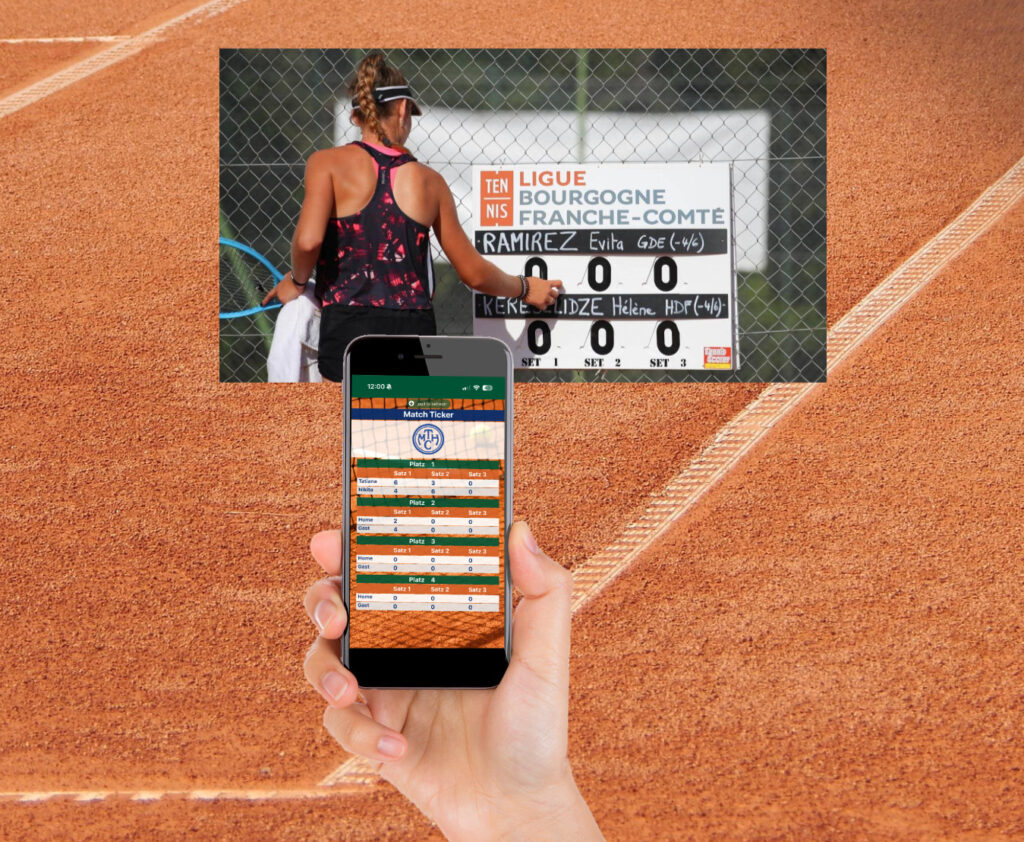
Visible scoring adds another layer of structure: a fence-mounted tennis scoreboard at each court helps players and spectators follow every match. For Tennis Scorer, that practical detail supports tennis competitions of every size, from first events for beginners to larger draws with a formal tournament bracket.
Understanding the order and structure of tennis competitions
Before any match is placed in the schedule or a bracket is published, organisers need a clear grasp of tennis scoring and structure.
Tennis scoring rules every tournament organiser must know
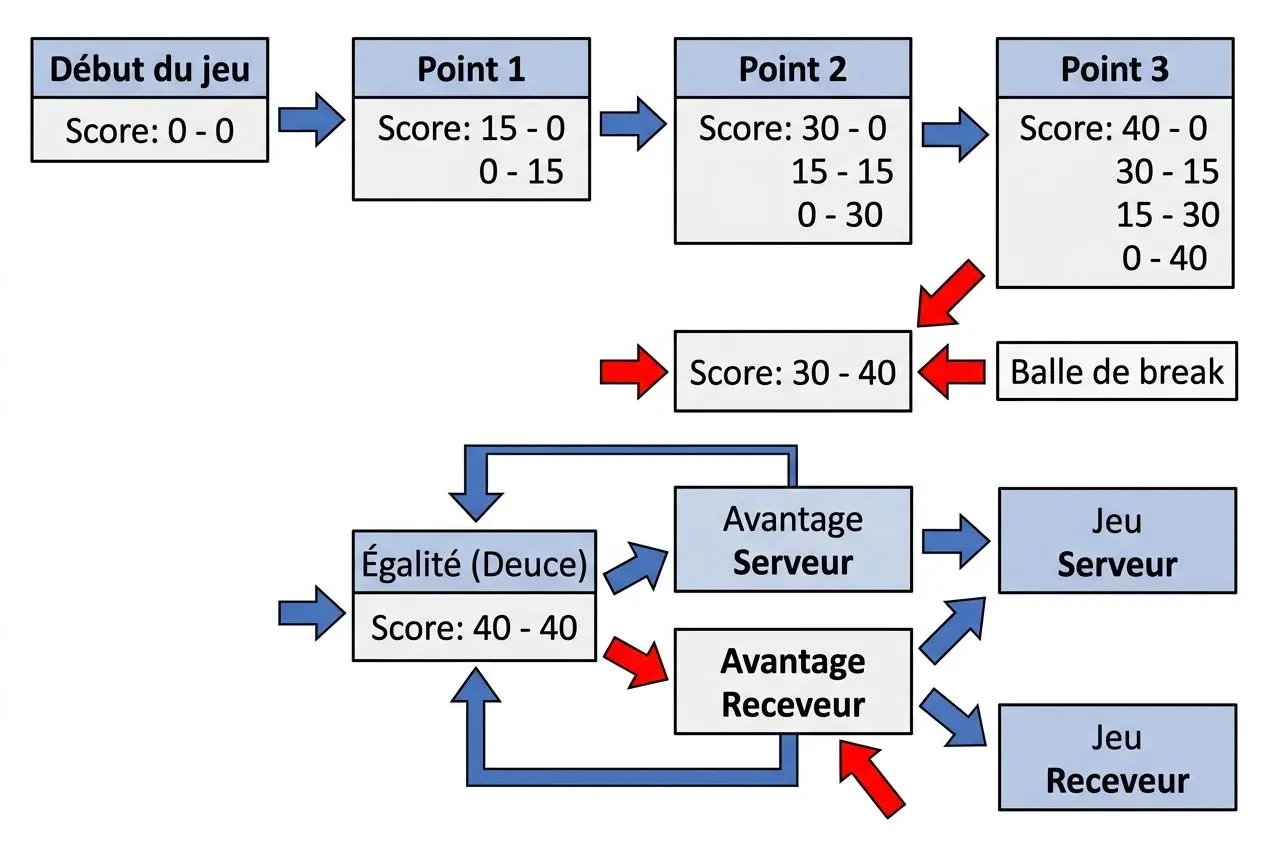
The order of tennis tournaments rests on four nested levels of scoring: points, games, sets and matches. Each level is governed by a margin requirement, so ties are resolved by playing on rather than stopping level, which matters just as much for briefing beginners as it does for planning court time.
- Points sequence: Love (0), 15, 30, 40; at 40-40, deuce applies and one player must win two consecutive points to take the game.
- Set scores: Standard winning scores include 6-0, 6-1, 6-3, 6-4 and 7-5; a set must be won by at least two games.
- Tie-break at 6-6: Numerical scoring runs from 1 upwards; first to 7 points with a two-point margin wins the set, recorded as 7-6 with the tie-break score in brackets, for example 7-6 (7-4).
Once deuce is reached, the next point creates advantage: Ad-In if the server wins it, Ad-Out if the receiver does. Win the following point and the game is over; lose it and the score returns to deuce. In practice, that open-ended sequence is one of the main variables affecting schedule planning in tennis competitions.
| Score situation | Terminology | Next step |
| 0 points | Love | First point played |
| 40-40 | Deuce | Advantage point required |
| After deuce: server leads | Ad-In | Win point = game won |
| After deuce: receiver leads | Ad-Out | Win point = game won |
| Set at 6-6 | Tie-break | Numerical scoring to 7 (2-point margin) |
| Final set tie-break variant | Super tie-break | First to 10 points with 2-point margin |
Tie-breaks, deuce, and match formats explained
That same principle affects every beginner event. For anyone researching how to organise tennis tournaments for beginners, deuce is often the first rule that unsettles new players because a single game has no fixed length. A short pre-event briefing reduces confusion on court and protects the schedule from avoidable delays.
Some tennis tournament formats replace a full third set with a 10-point super tie-break, sometimes called a Championship tie-break, where a two-point margin is still required. The right choice when court availability is tight, this format keeps court time under control in one-day events for beginners.
Fast-track formats that keep your bracket on schedule
No-ad scoring removes the deuce cycle by awarding the game to whoever wins the next point at 40-40. As a result, match duration typically falls by 15 to 20 per cent, which makes the schedule more predictable across a full bracket.
Other match formats are designed for even tighter windows. A pro set, played first to eight games, usually fits within 60 to 90 minutes and works well for large one-day tennis competitions. Short sets to four games move faster still, making them useful when court availability is limited and the schedule must hold across a large field.
From that point, the format choice has to translate into a workable order of play. Tennis Scorer provides the bracket management and scheduling tools that translate these format choices into a running order from first match to final.
Choosing and preparing the right tennis tournament venue
Venue selection is one of the earliest decisions in tournament planning, and one of the most decisive. Court numbers, surface consistency, lighting, and support areas shape whether a tennis tournament runs to schedule or slips into avoidable delays. Confirming those points by the 12-week mark limits costly changes later.
Court requirements for your tennis tournament template
That early decision sets the limits for everything that follows, from registration capacity to the final schedule. Any practical tournament template should open with a clear court count: a 32-player singles draw needs at least six courts and 12 hours of continuous play. With fewer courts, scheduling matches becomes fragile as soon as rain or three-set contests appear.
The same principle applies to playing conditions. All courts should use the same surface, since mixing hard and clay within one event creates uneven conditions for players and inconsistent match standards across the draw.
Lighting matters just as much once play extends into the evening. Artificial lighting should provide a verified minimum of 500 lux for safe play, and that figure needs confirmation from the facility manager before any late sessions are placed on the schedule. The right choice when evening finishes are expected is a tennis venue that can supply lighting certificates or recent test data before booking is completed.
Scheduling players across courts without overrunning
Once the court inventory is fixed, the venue’s operational limits can be mapped properly. In practice, those limits should be defined before the draw is built.
Match length then shapes the rest of the day. The difference comes down to realism in scheduling matches, not optimism.
When sessions are packed too tightly, delays spread fast. Participants often arrive 30 to 45 minutes before play, so the tennis venue should provide warm-up courts and a visible tournament desk for check-in. From that point, late starts and queueing at registration become far less likely.
- Court turnover buffer: Allow 15 minutes between matches on each court for player changeover, net inspection, and score confirmation.
- Weather contingency: Build a 20 per cent time buffer into the full-day schedule during tournament planning to absorb rain delays without wider disruption.
- Match duration by division: Reserve longer slots for competitive and advanced divisions; recreational matches average 1.5 to 2 hours, not a 60-minute minimum.
Digital tournament software helps officials adjust the schedule quickly when courts become available early or delays push play back. With live result updates from mobile devices, players check revised timings immediately, cutting confusion at the desk before it reaches the court.
Player facilities that improve the tournament experience
Good scheduling only holds up when the surrounding facilities support it. Secure locker rooms, dedicated player parking, and a prominent tournament desk give the event a more professional structure, while shaded seating, water stations, and first aid improve comfort between matches. Parking for 100 or more vehicles should be confirmed with the venue before the tournament is announced.
Clear signage keeps movement simple across the venue. It helps participants move from check-in and registration to their court without constant staff support, and it reduces avoidable congestion around key access points. Equipment repair stations and readily available ice add practical value during longer events.
As a result, staff spend less time resolving routine questions and bottlenecks. Those details reduce staff workload and complaints in equal measure: Tennis Scorer is built to support venues where operational precision matters as much as the match itself.
Picking the right scoreboard template for your tennis tournament
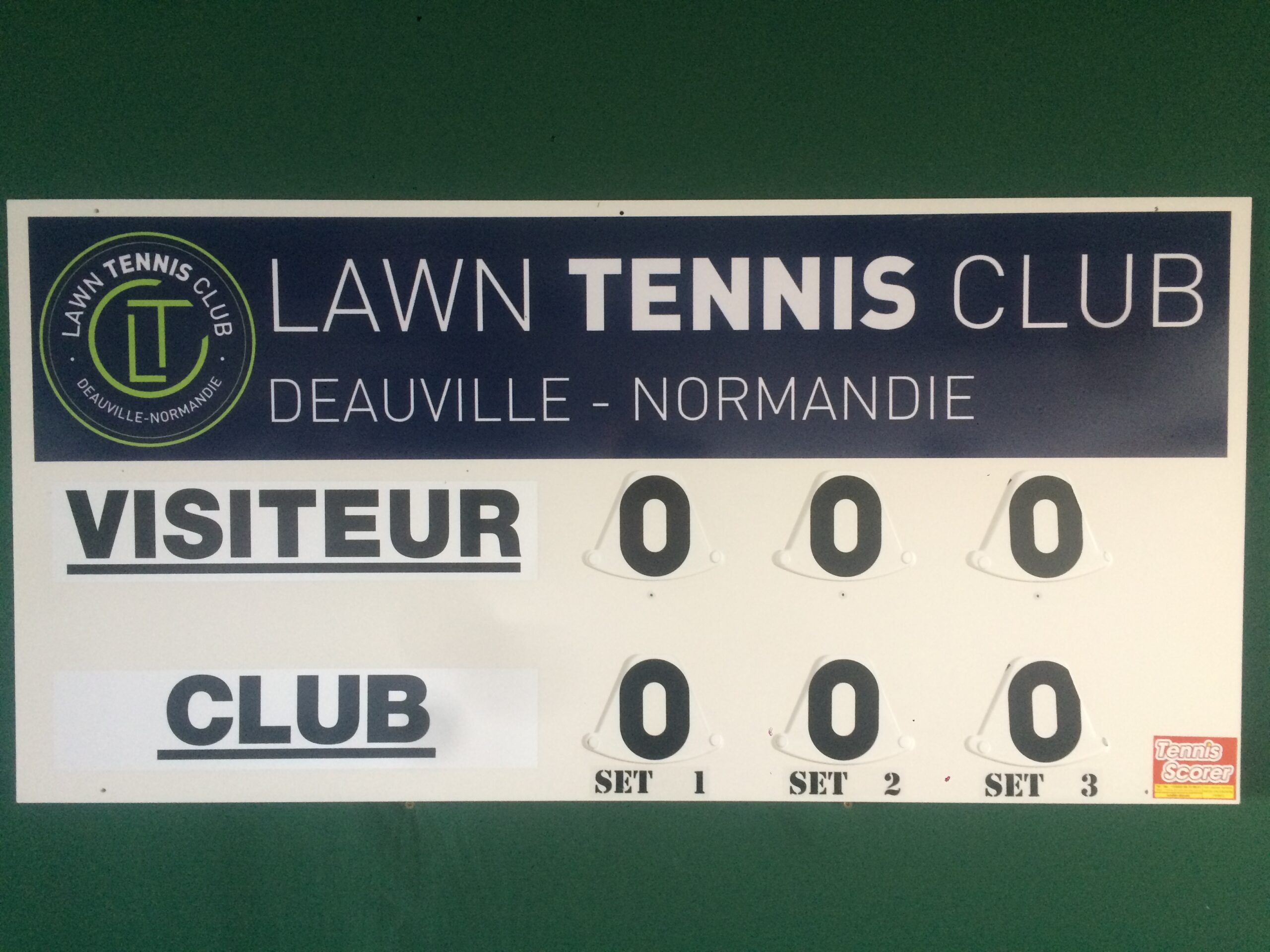
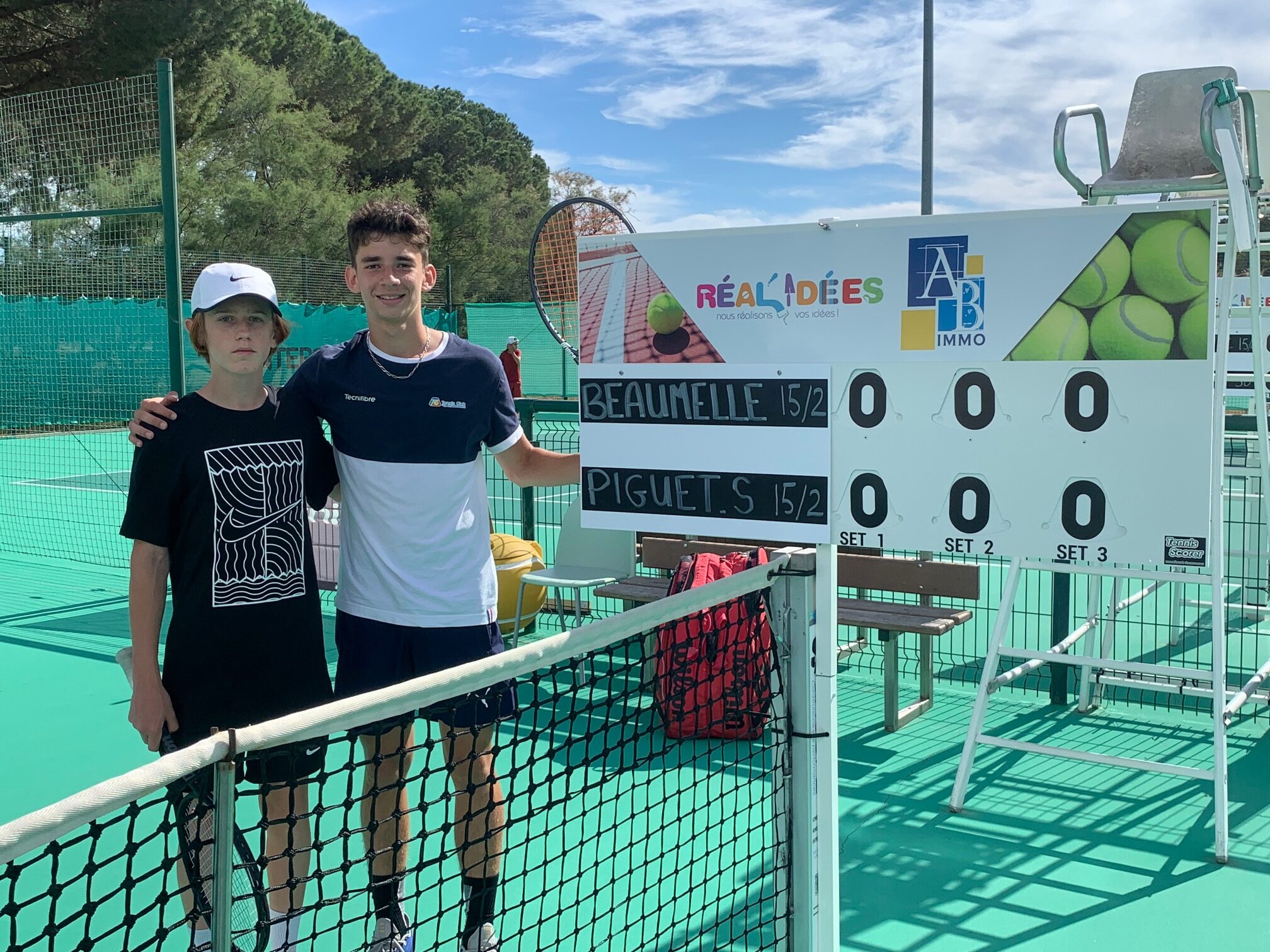
A clear, accurate tennis scoreboard is not an optional extra. It forms part of the operating setup for any tennis tournament, because players need to read the score from both baselines and spectators need immediate confirmation of match progress.
For beginner events, manual boards remain the practical choice. They are easy to handle, need no power, and can be put in place quickly by volunteers managing check-in, court allocation and the rest of the event setup.
Compact disc versus full-panel PVC scoreboards compared
The tennis scoreboard market for clubs and entry-level events is mainly split between compact rotating-disc models and full-panel PVC boards.
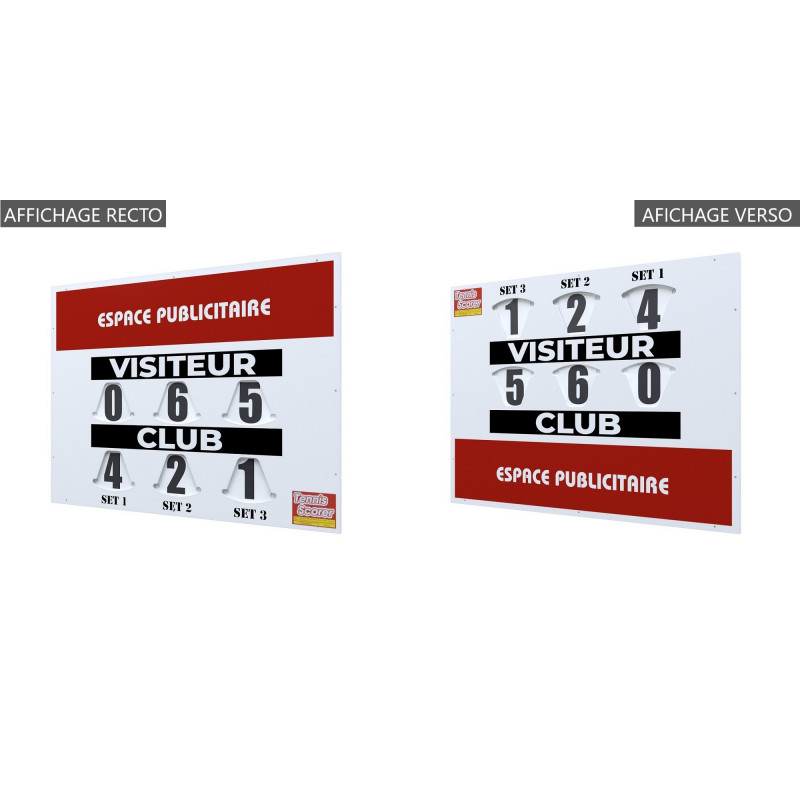
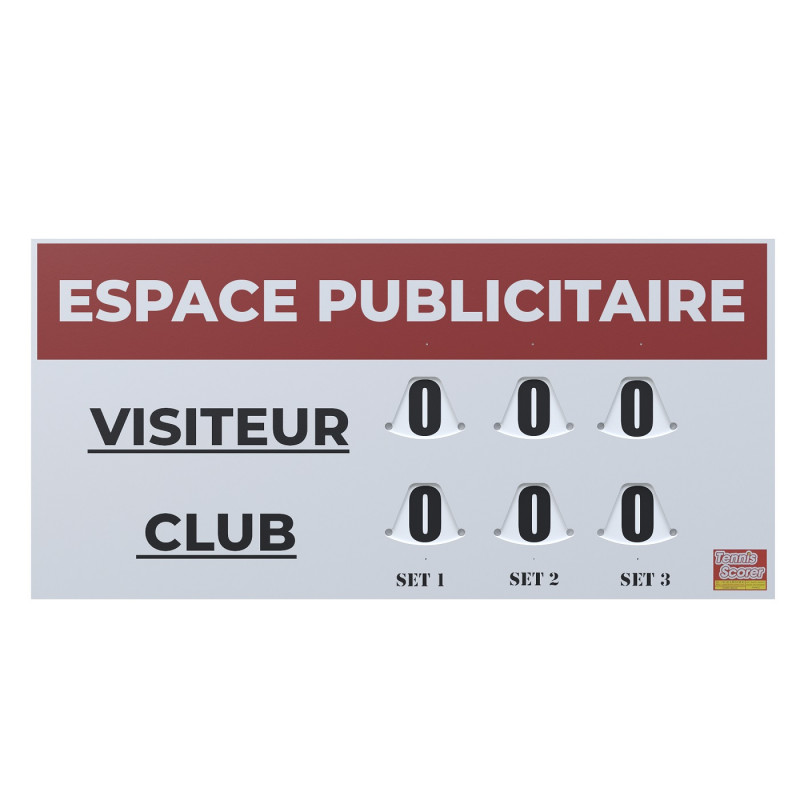
Compact models come in three sizes: Small (35×50 cm), Medium (46×65 cm), and Large (56×80 cm). Full-panel PVC boards measure about 60×60 cm and weigh around 2 kg. The deciding factor is viewing distance and mounting position.
- Small compact disc (35×50 cm): Best placed beside the net, suited to informal club play and courts where the reading distance is short.
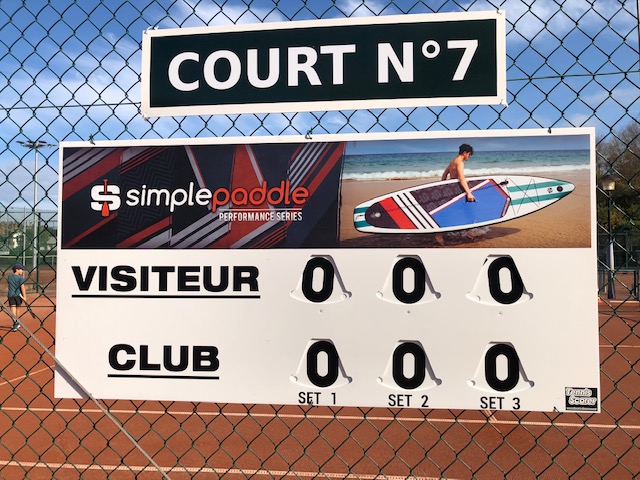
- Medium and large compact disc (46×65 cm / 56×80 cm): Designed for fence mounting and readable from both baselines, which makes them well suited to tennis competitions with spectators.
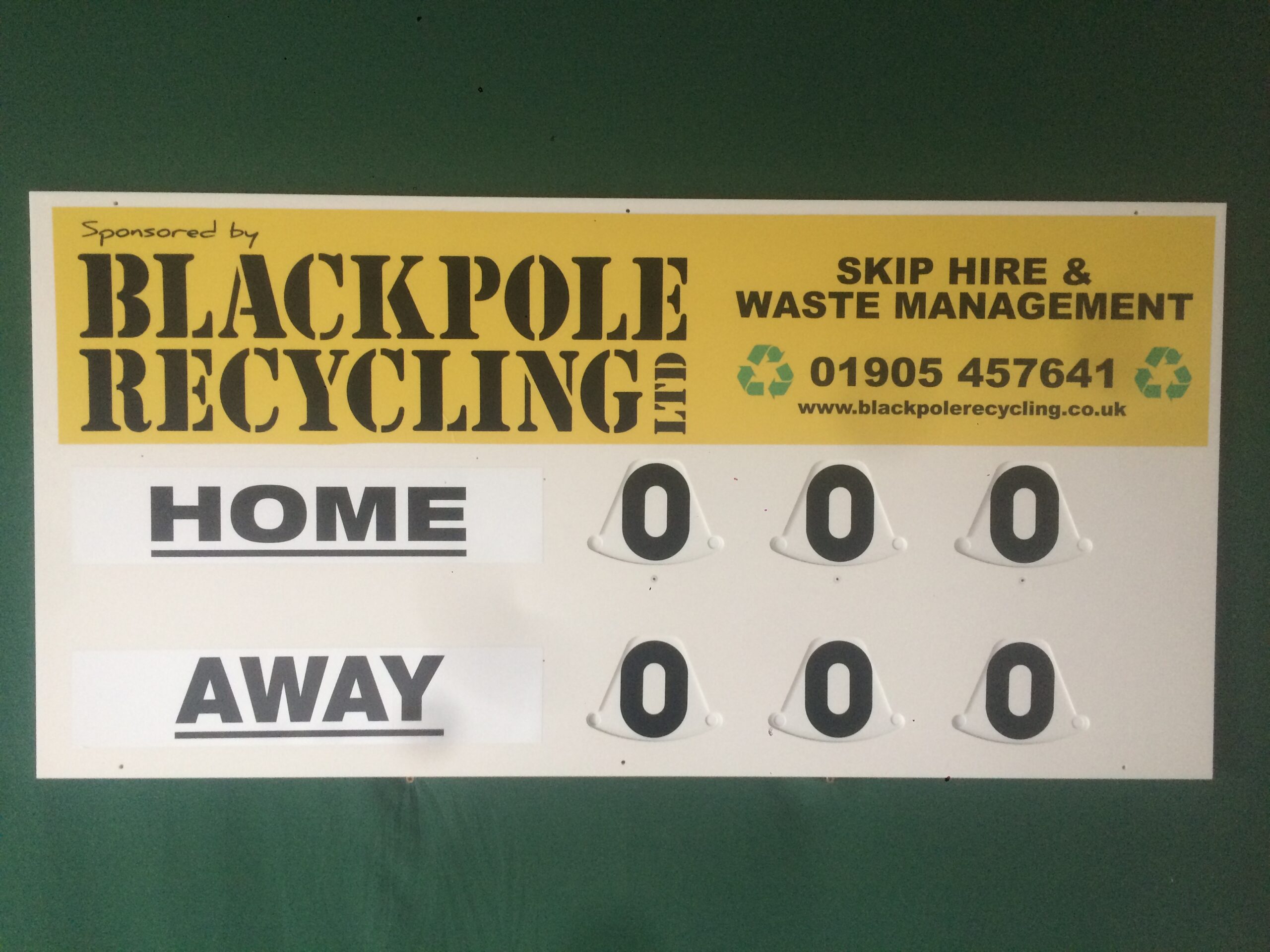
- Full-panel PVC board (approx. 60×60 cm): Easy to handle and strong in on-court visibility, making it a solid option for clubs without electronic systems.
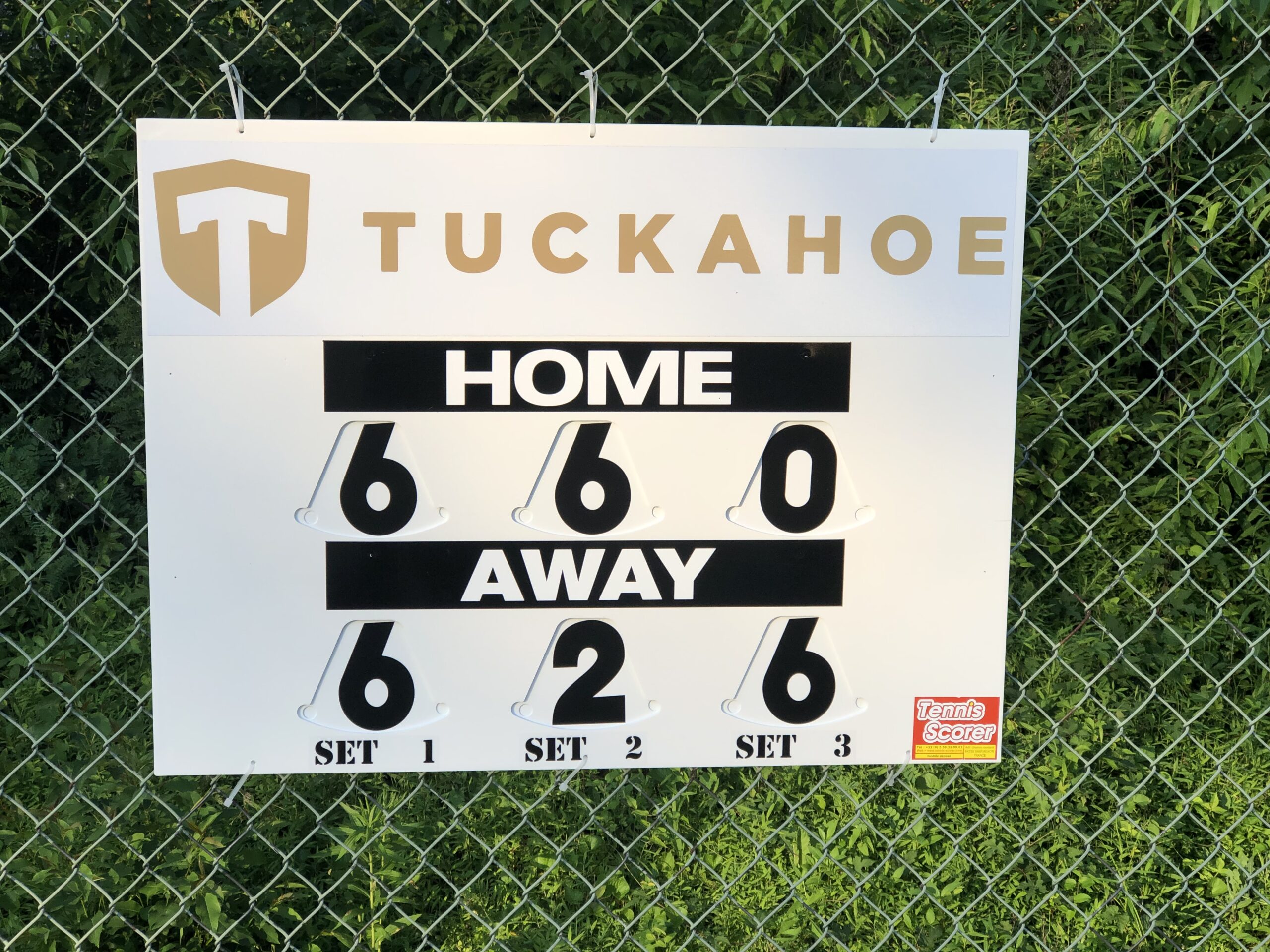
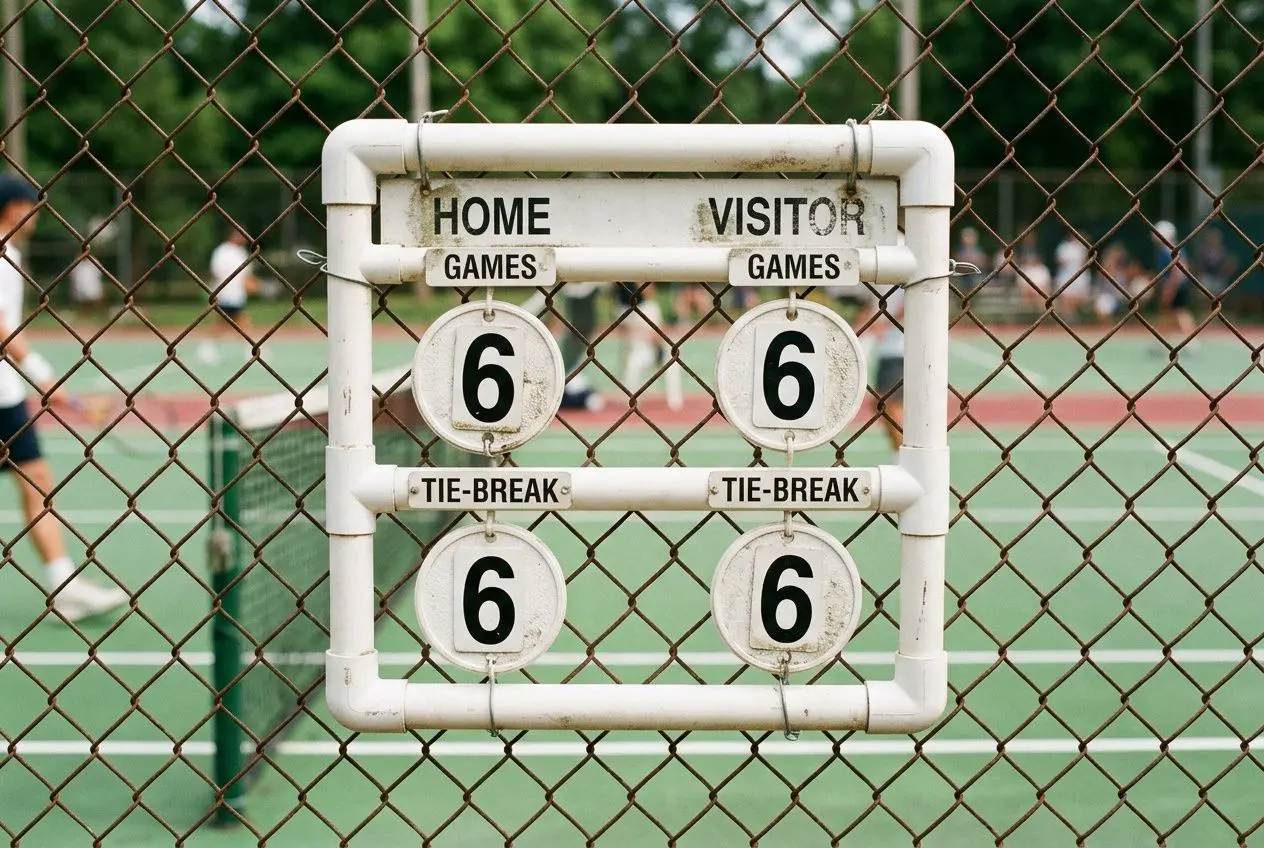
Manual boards use rotating discs marked 0–7 for games within a set. The digits are typically 12 cm high and readable from more than 50 metres: on court, that means players can follow the score from either baseline without moving forward, while spectators keep track of the match just as easily.
Durability, mounting and visibility for outdoor courts
On-court visibility depends not only on character height but also on how well the board performs in bright sun, shade and dull conditions.
Tennis Scorer manufactures full-panel PVC boards in UV-resistant, rot-proof PVC with counter-glued watertight edges. That construction supports a 20–30 year lifespan and avoids the need for seasonal removal. Large characters on a white PVC background keep the score legible across changing outdoor light.
Mounting is equally straightforward. Full-panel PVC models use a no-drill serflex cable tie system: four supplied cable ties fasten the board directly to the perimeter fence without specialist tools.
By contrast, compact disc models attach to fence wire or netting through corrosion-resistant brass eyelets and an anti-rust metal hook, again using only the supplied hardware.
Why manual boards suit beginner tennis competitions
That simplicity becomes even more valuable during live play. Digital systems rely on power, technical familiarity and a fallback plan if batteries fail or software freezes mid-match.
Manual boards remove those dependencies. Once installed, a quality PVC board remains usable throughout the event without intervention, which is the right choice when organisers need reliability more than extra features.
For clubs running early-stage tennis competitions, that reduces pressure on volunteers already handling players, draws and check-in.
- No power required: Manual rotating-disc boards operate independently of electricity, removing a common risk during outdoor events.
- Volunteer-friendly installation: No-drill cable ties or hook-and-eyelet fixing allow fast setup without specialist tools or training.
- 20–30 year lifespan: UV-resistant, rot-proof PVC provides long service life for clubs investing in a first board.
- 50-metre readability: 12 cm rotating digits support clear score reading for players and spectators around the court.
The full fence-mounted tennis scoreboard range covers different court dimensions, fence types and viewing distances, with each board supplied with the required mounting hardware for straightforward first-time installation.
Frequently asked questions
What tournament format is best for beginner players?
For beginner players, the right tournament format is usually a round robin for fields of 4 to 24 participants. Each player gets multiple matches, which keeps the tennis tournament moving and avoids the frustration that can come with single elimination after one loss.
From that point, slightly larger groups need a different balance: for 16 to 32 players, a draw with consolation gives first-round losers a secondary bracket and more court time. In practice, that keeps engagement high without making the schedule too difficult to manage.
How many courts does a 32-player tennis tournament need?
A 32-player singles bracket needs at least six courts for a full-day tennis tournament. That draw produces 31 matches, so the total court time required is roughly 12 hours when all six courts are in use at the same time.
As a result, fewer courts make availability too tight, especially if weather interrupts play or one three-set match pushes later rounds back, so a 20 percent buffer should be built in from the outset.
What is the simplest scoring format to use in a beginner tournament?
For beginner scoring, no-ad scoring is often the simplest option. It removes the deuce-and-advantage cycle, shortens match length by around 15 to 20 percent, and makes the schedule easier to predict.
By contrast, a pro set to eight games also works well when court availability is limited. It offers a reliable 60 to 90 minute match window and is easy for participants and volunteer officials to follow, making it well suited to larger one-day events.