
This article delivers practical outdoor court advertising ideas for small businesses, covering every format from permanent scoreboard signage to guerrilla tactics, with clear guidance on design, placement, and measurement.
Outdoor advertising formats that work for small businesses
That starts with choosing formats that fit both the audience and the site. Across nearly 3,000 club installations, Tennis Scorer has shown that permanent court-side signage can hold attention season after season, with no recurring media spend once installed. The right choice comes down to where local customers move, where they pause, and how often they return to the same location.
Which traditional formats suit small business budgets?
From there, it helps to compare the main types of outdoor advertising by cost, flexibility and dwell time: some require significant upfront investment, while others suit a constrained local budget with minimal infrastructure.
- Posters and A-frame signs: A-frame signs placed at entrances or beside walkways are easy to move, quick to update and well suited to short-run promotions. An A-frame can catch footfall at the exact point people enter the venue, making it one of the simplest advertising ideas for small businesses.
- Window decals: decals applied to clubhouse glazing, gates or perimeter panels create low-cost signage without heavy structural work.
- Street furniture and transit: bus shelters and transit-hub billboard panels can attract commuters around the catchment area. The difference comes down to placement: one strong location usually delivers more value than several weak ones when cost control matters.
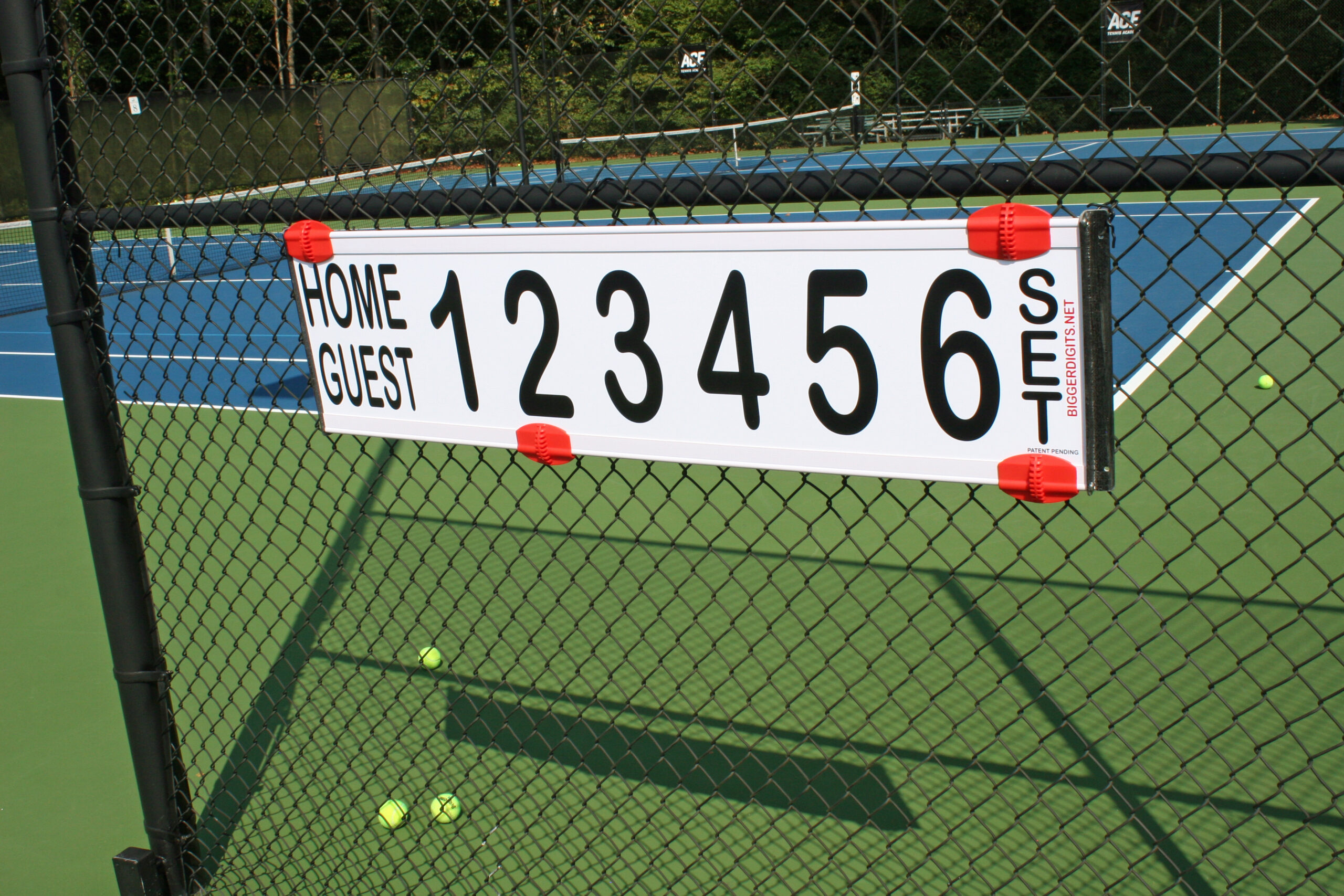
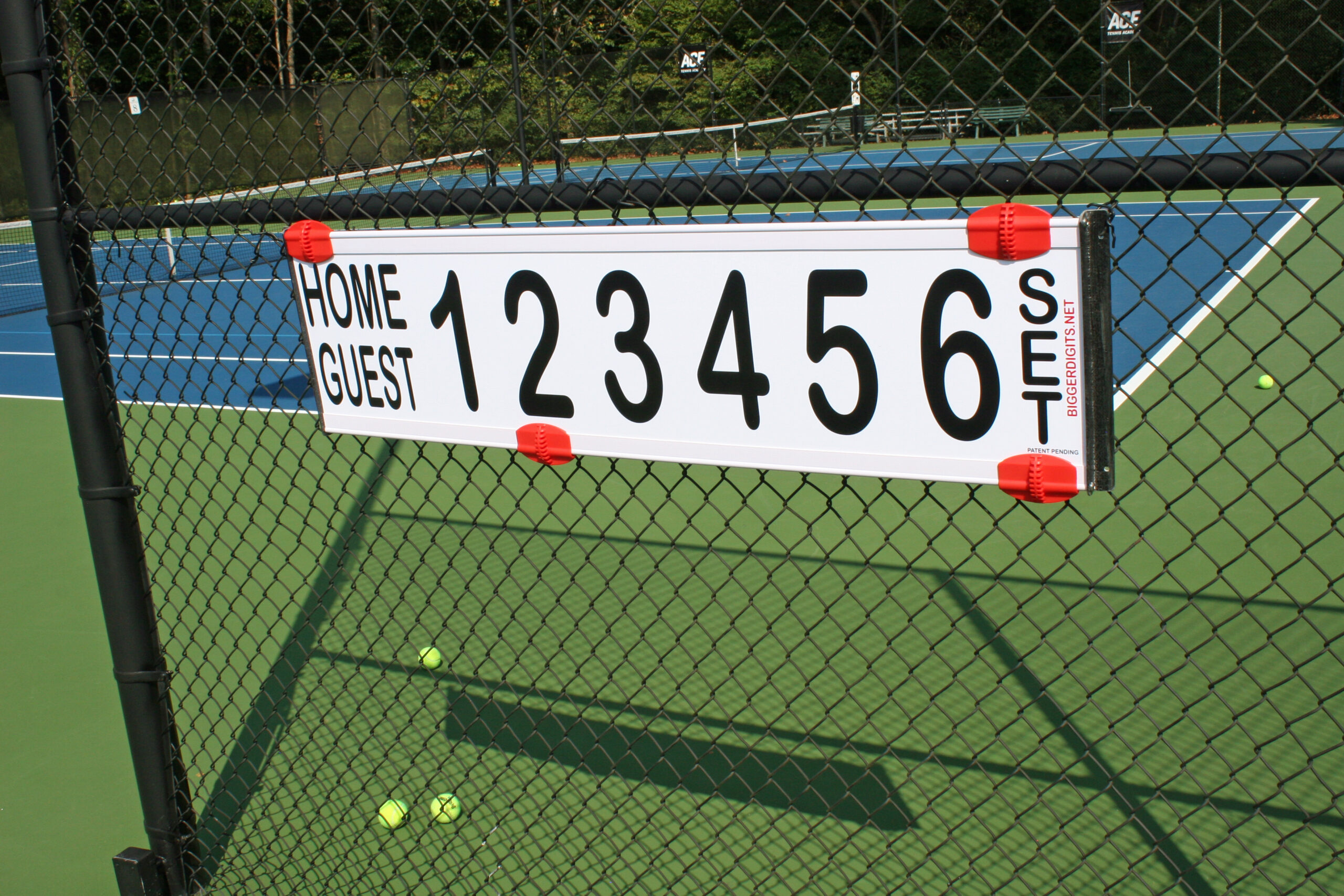
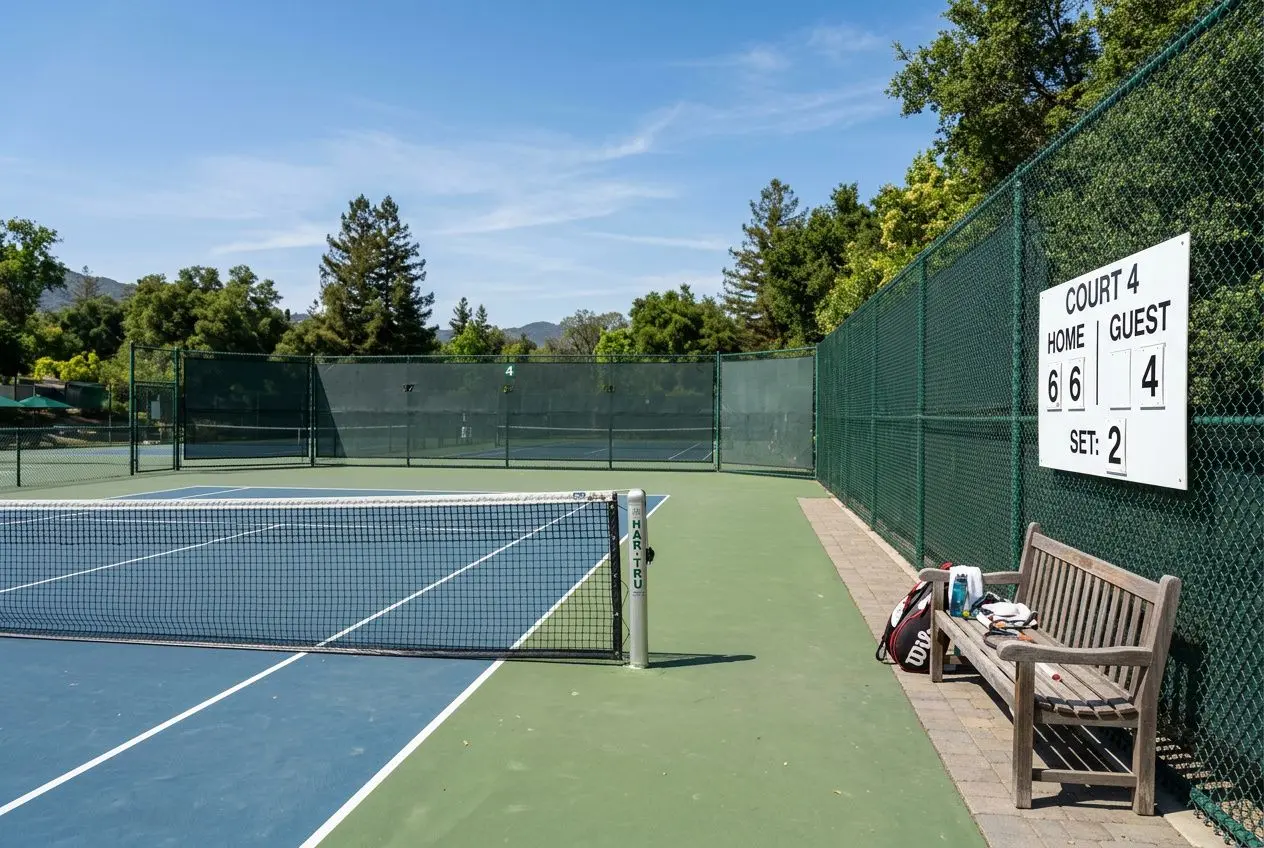
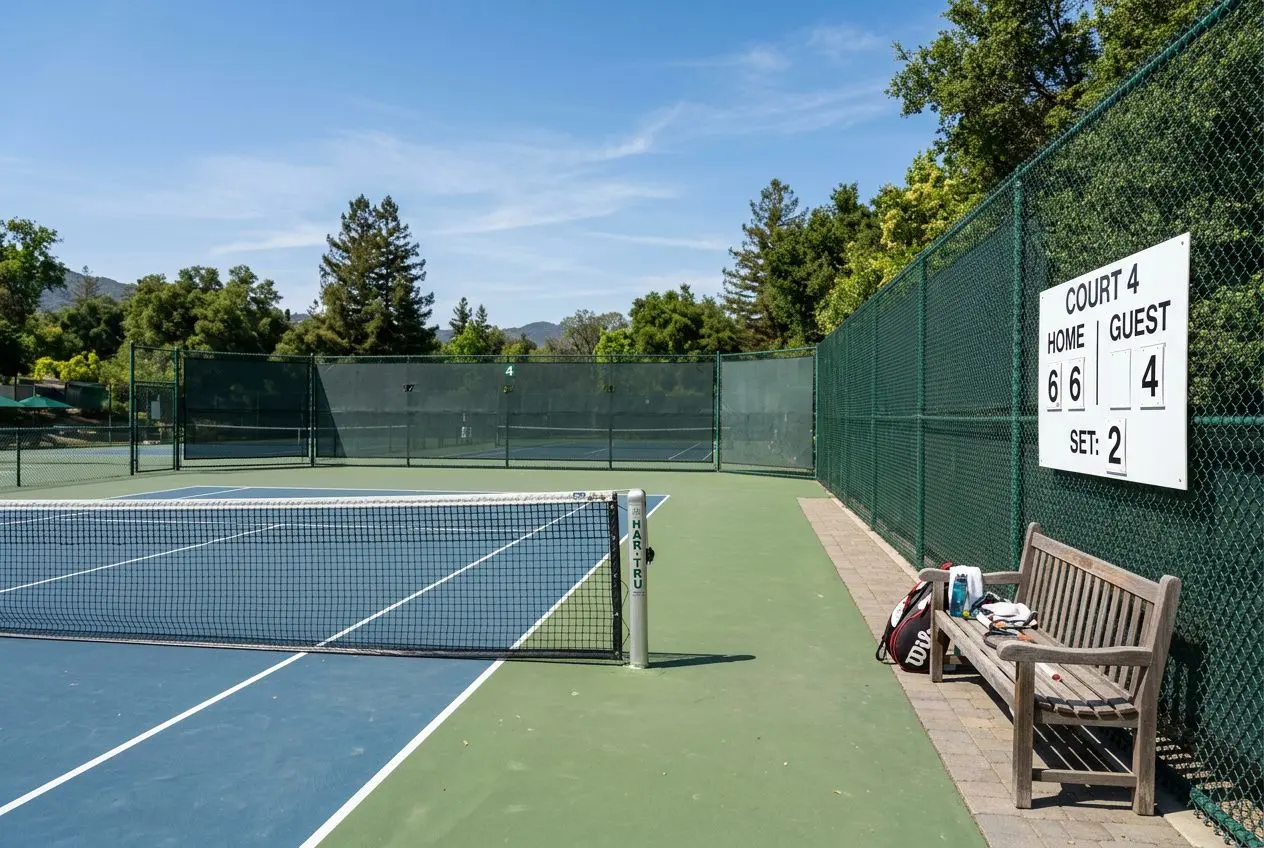
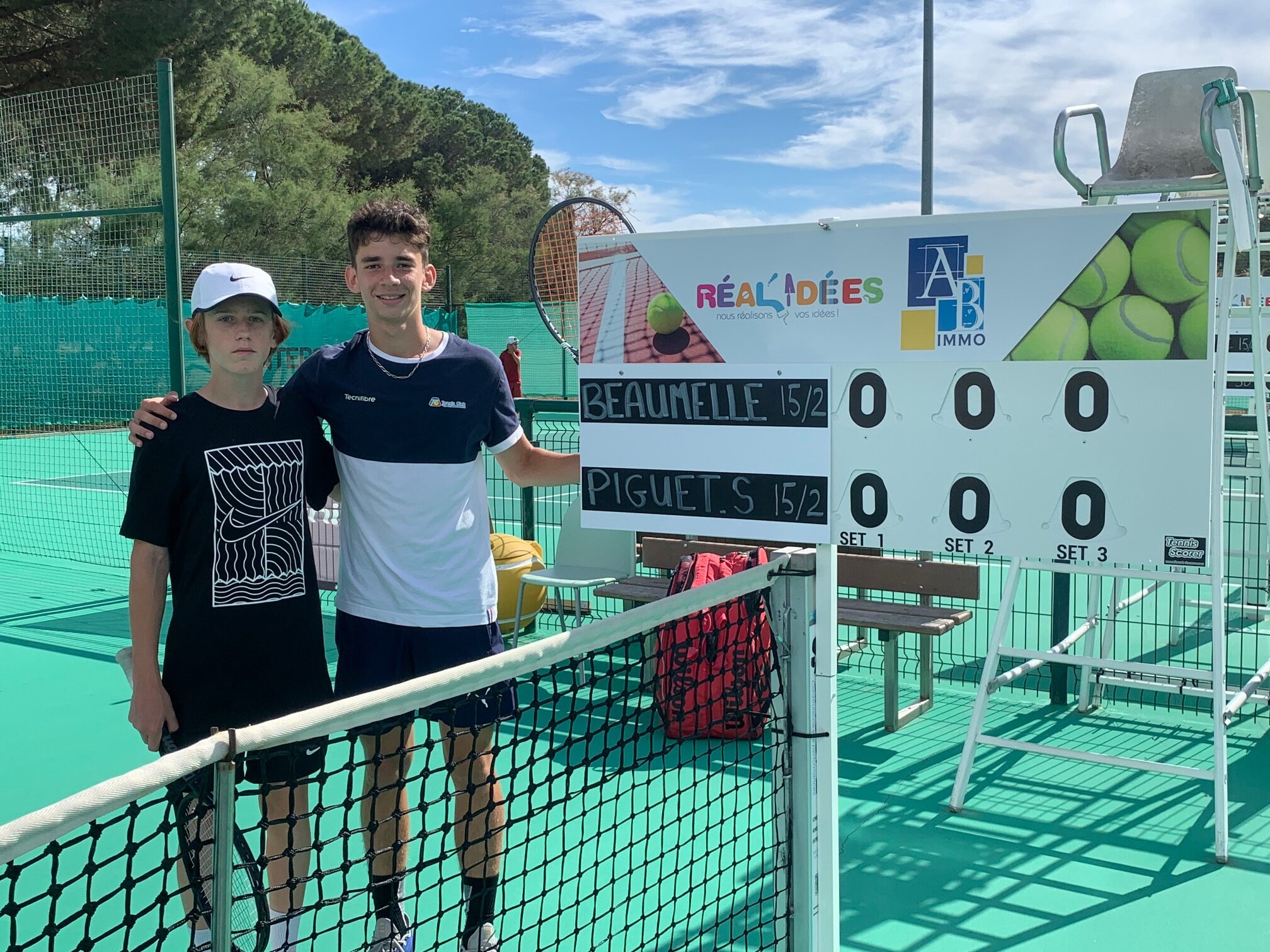
- PVC scoreboard advertising zones: a 60 × 60 cm board with a 56 × 17 cm branded panel stays readable from more than 50 metres. It provides durable outdoor signage at a one-time cost of 300–600 EUR, backed by a 3-year warranty.
That same logic extends to installation. The court advertising stickers supplied free with scoreboard purchase allow sponsor artwork to appear immediately, using no-drill brackets and adhesive mounting: most setups are completed within one to two days.
Why court-side signage outperforms generic outdoor placements
Once formats are compared, dwell time becomes the decisive factor. Court-side outdoor signs are seen repeatedly by players and spectators who stay on site for 60 to 90 minutes, so the message has time to register properly. As a result, brand awareness tends to build faster than with many forms of out-of-home advertising seen only in passing.
By contrast, a roadside billboard only earns its keep when traffic is heavy, slow-moving and close to the business location. Near sports facilities, outdoor advertising works differently: the audience is already local, already engaged, and often part of the same community that small businesses want to reach. On court, that means stronger relevance for a local business trying to attract repeat visits rather than one-off glances.
Scoreboard advertising as a permanent small business asset
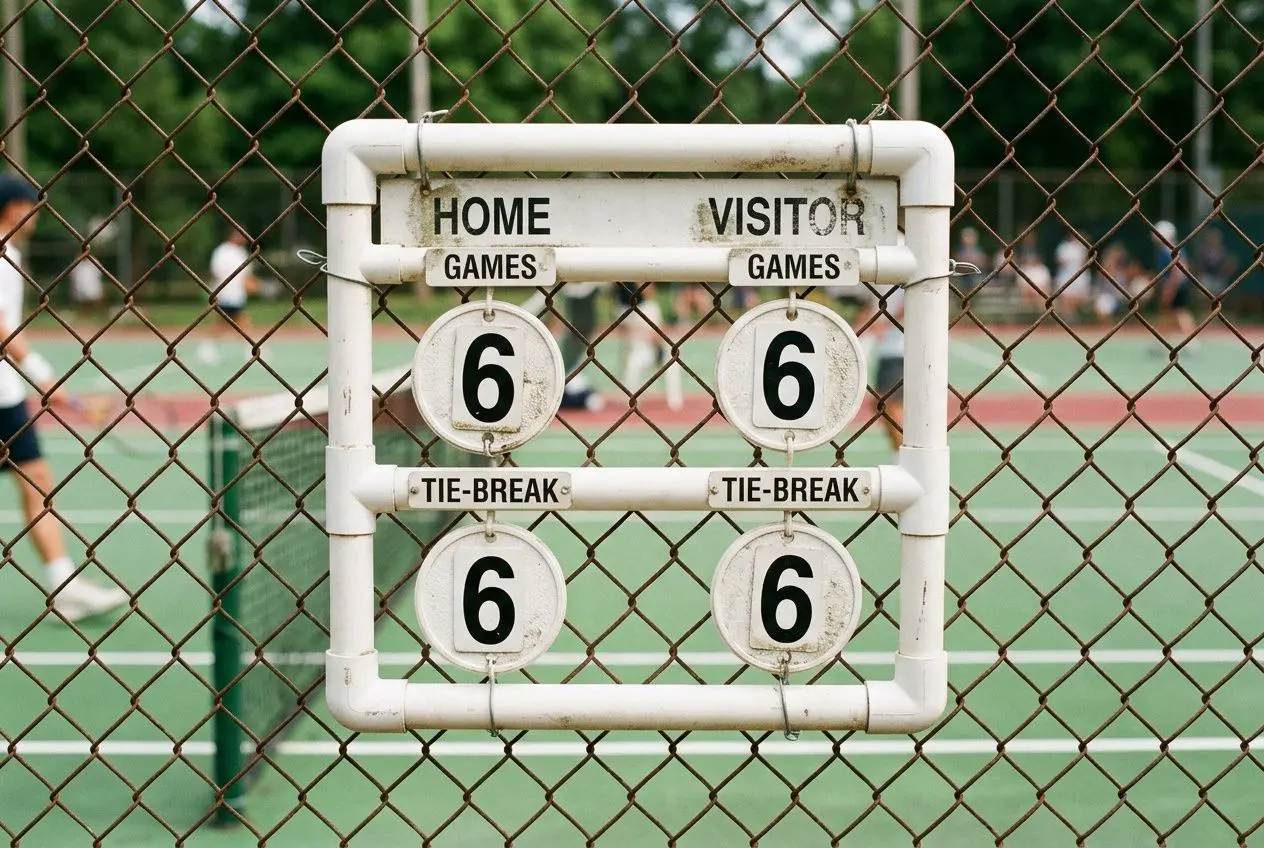
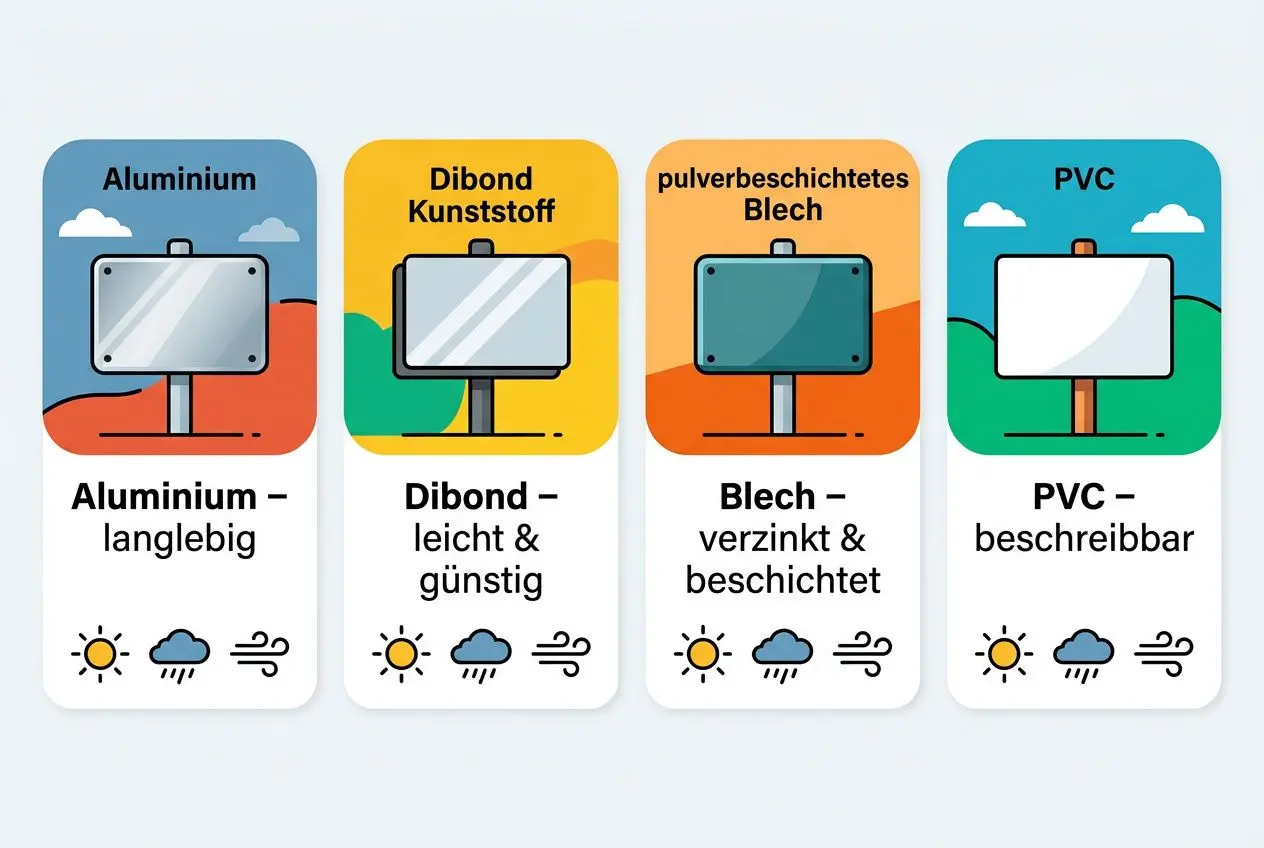
That advantage becomes more obvious with fixed equipment. A scoreboard functions as effective outdoor advertising and as durable outdoor signage, made from rot-proof PVC that handles sub-zero temperatures and prolonged UV exposure without needing seasonal removal. Built to last through regular club use, it keeps branding visible during matches, training sessions and events with no ongoing media cost.
From that point, the scoreboard becomes a practical asset for a small business rather than a short campaign. Tennis Scorer provides DIY PSD and EPS templates so a local business can control colours, typography and mascot imagery before print, with design cost ranging from free to 100 EUR. This makes it one of the clearest outdoor court advertising ideas, especially for small businesses looking for effective outdoor advertising, stronger visibility and steady brand awareness in the local area.
Beyond scoreboards, other outdoor signs can support the same strategy. Signage around entrances, seating, fences and waiting zones helps shape a coherent site presence, while billboard placements, decals and A-frame signs can extend reach outside the club itself.
For small businesses exploring a broader range of advertising formats, the key is matching each format to behaviour.
Design and placement principles for outdoor court advertising
Effective signage has roughly four seconds to register. That limit shapes every decision: typeface weight, colour contrast, message length, and where the sign sits on the site.
How to design signs that communicate in seconds
Outdoor court boards viewed from 20 to 50 metres leave no room for decoration: decorative fonts, unnecessary details and passive graphics all reduce visibility at that range.
Design for the furthest viewer. On court, that means prioritising clarity over ornament, whether the format is a billboard, fixed signage, an A-frame, or decals applied to glazing or fencing.
- High-contrast colour: Dark text on a light background, or the reverse, holds readability in changing daylight and under mixed weather conditions.
- Bold, simple typefaces: Decorative fonts break down at distance; 10 cm minimum character height supports visibility from 50+ metres on court-side boards.
- WIIFM messaging: Lead with the benefit. “Screen fixed in 30 minutes” works harder than a brand name alone, then support it with a trackable phone number or dedicated URL.
- Matched sign size: A scoreboard advertising zone measuring 56 × 17 cm suits court-side viewing, while road-facing outdoor advertising needs larger panels for the same legibility.
DIY PSD and EPS templates make it easier to test colour options and layout variations, cutting avoidable errors early in the process.
Once the layout is settled, engagement should be measurable. A QR code linked to a dedicated landing page connects physical outdoor advertising to digital response from day one.
Choosing the right location for maximum small business visibility
A sound design and placement strategy starts with foot traffic, dwell time and audience fit, because a simpler sign in the right place will often outperform a better-looking panel in a weak spot.
High-traffic community venues, public transport hubs and outdoor courts inside residential catchments create concentrated exposure. For a small business, those settings build frequency of exposure with the same local audience rather than delivering a single, forgettable impression.
Relevance matters just as much. A sports nutrition retailer placed beside a padel or tennis court reaches people already aligned with the offer, which reduces wasted impressions and can lower acquisition cost compared with a generic street billboard.
| Advertising format | Best location | Approximate cost | Dwell time |
| PVC scoreboard zone | Court-side, community club | 300–600 EUR (one-time) | 60–90 min per session |
| A-frame sign | Court entrance, pedestrian path | 50–150 EUR | Seconds (point of decision) |
| Street furniture panel | Bus shelter, high-traffic crossing | 200–800 EUR/month | 2–5 minutes |
| Transit billboard | Train station, travel hub | 500–2,000 EUR/month | Daily repeat exposure |
| Window decals | Clubhouse glazing, perimeter fence | 30–100 EUR | Variable, site-dependent |
Why sports venues build trust faster than street advertising
Research suggests that 81% of sports consumers trust brands seen at sporting events, a materially higher rate than general street advertising achieves in equivalent audience surveys.
That effect is strongest at local level. When a small business appears in a well-kept sports setting, the community often reads it as a sign of real local involvement rather than simple media buying.
Tennis Scorer strengthens that impression through professional scoreboard presentation. Tennis Scorer’s scoreboards maintain consistent presentation across seasons: clear sponsor branding in a professional court setting reinforces reliability and supports local recall among repeat visitors.
Guerrilla tactics and tracking results for small businesses
For a small business or local business working without a media agency, well-placed outdoor activity around courts can lift recall well beyond its cost, provided the campaign is built with measurement from the start.
Low-cost guerrilla ideas for outdoor court locations
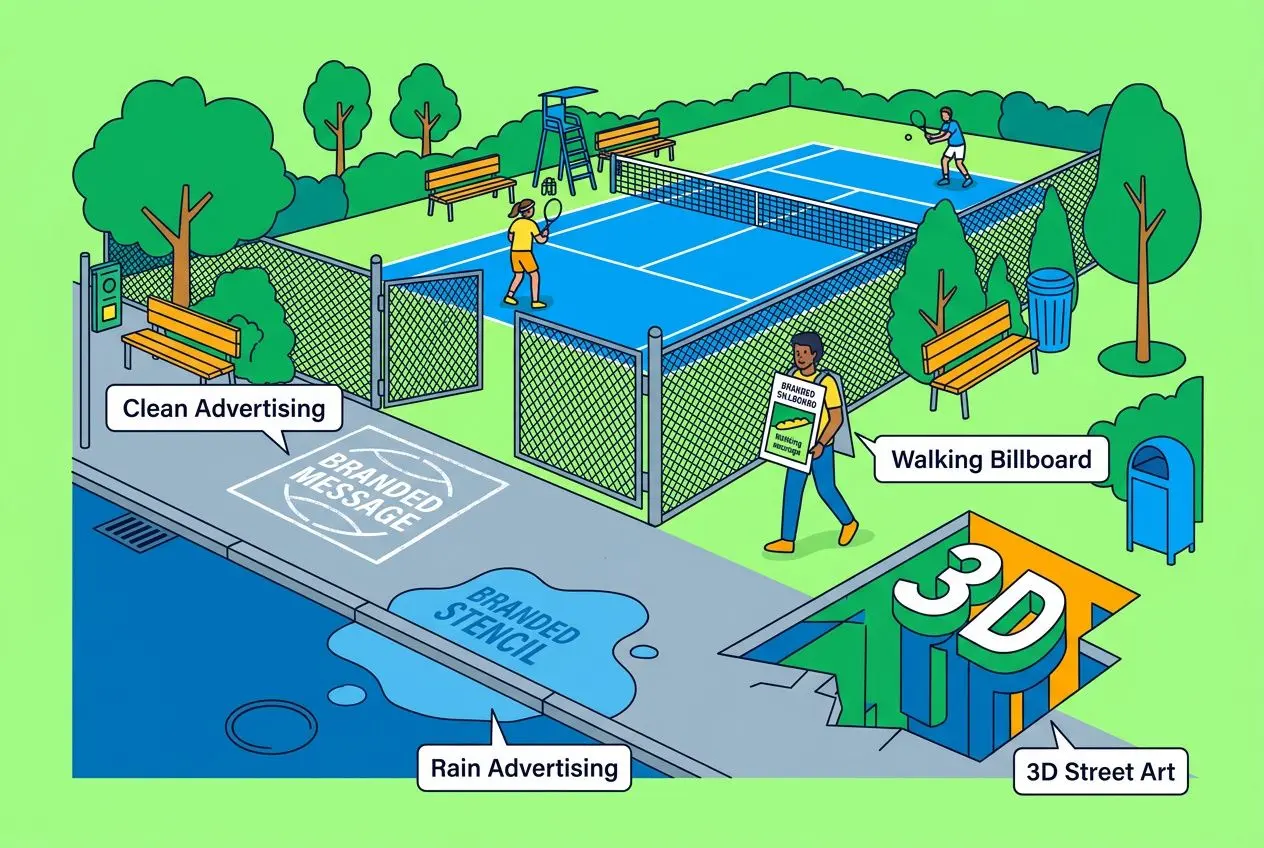
Outdoor courts suit guerrilla outdoor advertising: audiences are predictable, the location is fixed, and players pause before matches, between sets and at exits, where dwell time peaks. In practice, that concentration of foot traffic gives small businesses unusually efficient access to local customers and other potential customers.
- Clean advertising stencils: industrial cleaning applied through stencils on pavements outside court entrances reveals high-contrast messages exactly where dwell time peaks. Placement is precise, and the cost stays low.
- Rain-activated pavement art: water-resistant solutions create branded imagery visible only when wet. The novelty encourages sharing and extends visibility beyond the physical site.
- 3D vinyl installations: optical-illusion street art near entrances interrupts movement and encourages photography. The campaign then generates organic social content that supports brand awareness without extra spend.
- Walking billboard formats: branded clothing or sandwich boards used during peak periods combine human presence with outdoor signage. They are especially effective during club events.
Surprise and contextual relevance routinely outperform raw budget. For practical advertising ideas for small businesses, a chalk-art activation outside a padel court on a Saturday morning may outperform untargeted poster drops across the local area.
That only works when access is legitimate. Confirm land ownership or club approval before installing pavement work or temporary signage, because a removed activation wastes spend and can damage standing within the surrounding community.
How to track which outdoor advertising drives real sales
Once the format is chosen, tracking small business advertising results has to be planned before launch. Every piece of outdoor advertising, from court-side boards to street-level outdoor ads, should carry one distinct tracking element: a dedicated phone number, a unique URL or a QR code linked to a campaign-specific landing page.
By contrast, trying to reconstruct attribution afterwards usually muddies the numbers. Google Analytics combined with a simple in-person question at purchase gives a clearer view of what each placement actually delivers, and the difference comes down to whether sales can be tied to a specific format, message or billboard position.
From that point, true performance becomes easier to judge. The business can compare response by placement, calculate acquisition cost, and decide whether to expand court-side outdoor signage or reduce spend in weaker locations.
Integrating outdoor court ads with digital small business marketing
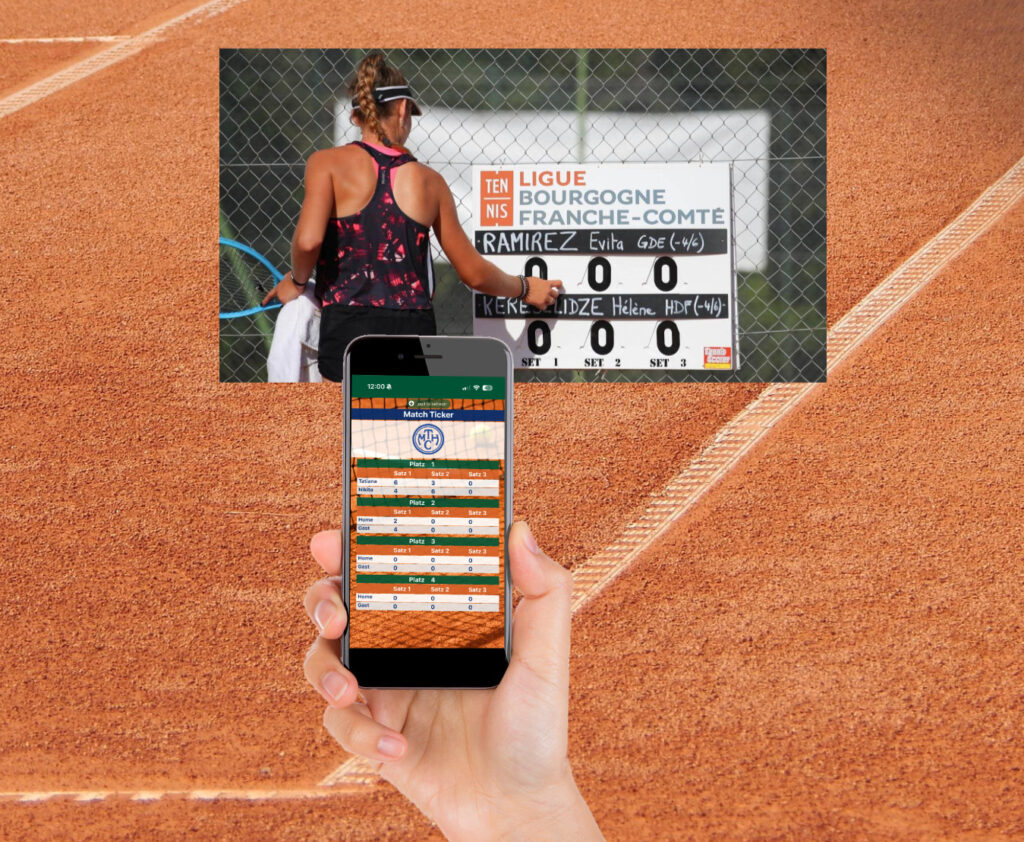
That evidence matters even more when physical campaigns connect to digital channels. Tennis Scorer’s web-based digital scoreboards set up in 5–10 minutes and include custom brand fields for sponsor recognition across social media and email, extending the reach of court-side display into live updates during events.
Once installed, a sponsor identity shown on a physical board and repeated in match updates strengthens recall, while a complete Google Business Profile helps turn court-side exposure into searchable local visibility.
For a small business serving a defined catchment, aligned branding across boards, digital scoreboards, email and packaging delivers steady recognition among local customers within a defined catchment.
Frequently asked questions
What is the most cost-effective outdoor advertising format for a small business with a tight budget?
For most small businesses, court-side PVC scoreboard zones and a-frame signs at court entrances offer the best return on a limited budget. The numbers are straightforward: a scoreboard advertising panel typically costs 300–600 EUR as a one-time investment, includes a 3-year warranty, and delivers repeated impressions to a captive audience during every session.
That matters because recurring street furniture, transit placements, or a traditional billboard usually bring ongoing monthly fees without the same audience fit. At a sports venue, visibility is built into the setting. Tennis Scorer positions this as effective outdoor advertising for advertising your small business in a community environment, with custom advertising stickers included free with the scoreboard purchase from day one.
How do I know if my outdoor court advertising is actually generating customers?
Before launch, a dedicated phone number or unique landing page URL should be assigned to each placement, whether it is a scoreboard, a-frame, pavement stencil, or other outdoor advertising format, with responses tracked separately from other channels.
From that point, digital and offline signals should be read together. QR codes on court-side boards can increase engagement and provide click-through data through Google Analytics, while asking walk-in customers how they heard about the local business remains the most dependable offline method. After four to six weeks, the difference comes down to one figure: cost per acquisition for each format.
Can small businesses run guerrilla advertising at outdoor courts without large budgets or specialist agencies?
Yes. Chalk stencils, rain-activated pavement art and branded walking billboards rely more on creative planning than heavy spend, which makes them practical for small business owners working without an agency.
Once that approach is established, permission becomes the first requirement: secure approval from the club or landowner, then define a message that can be understood in seconds, using the same principle as strong billboard communication. DIY templates costing up to 100 EUR keep production accessible and remove contractor dependency entirely.