
Outdoor tennis scoreboard durability: fence-mounted & pointer tennis scoreboard guide
Table of Contents
Assessing the fence-mounted scoreboard durability guide is a practical starting point when comparing formats.
From that point, the comparison is straightforward: full-panel PVC boards and compact rotating-disc models. This article examines the durability of outdoor tennis scoreboards through construction, weatherproofing, mounting hardware, and the field evidence behind a 20-to-30-year service life.
Choosing a durable outdoor tennis scoreboard
Not every tennis scoreboard for sale is designed for permanent outdoor use. The right choice when exposure includes frost, prolonged UV, and heavy rain comes down to the materials used, the way each surface and edge is sealed, and how securely the unit is mounted to the fence under wind load.
Materials that withstand year-round exposure
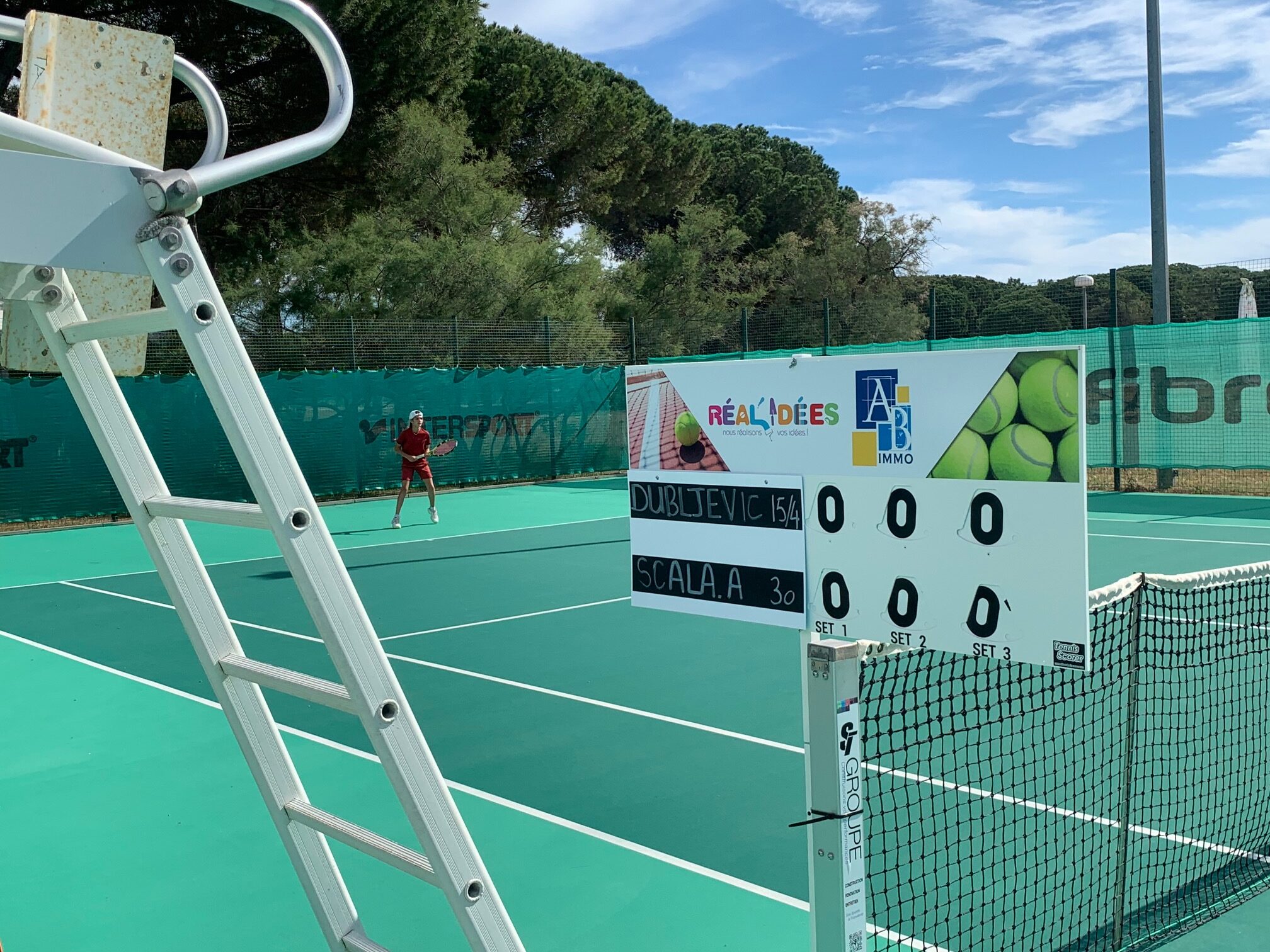
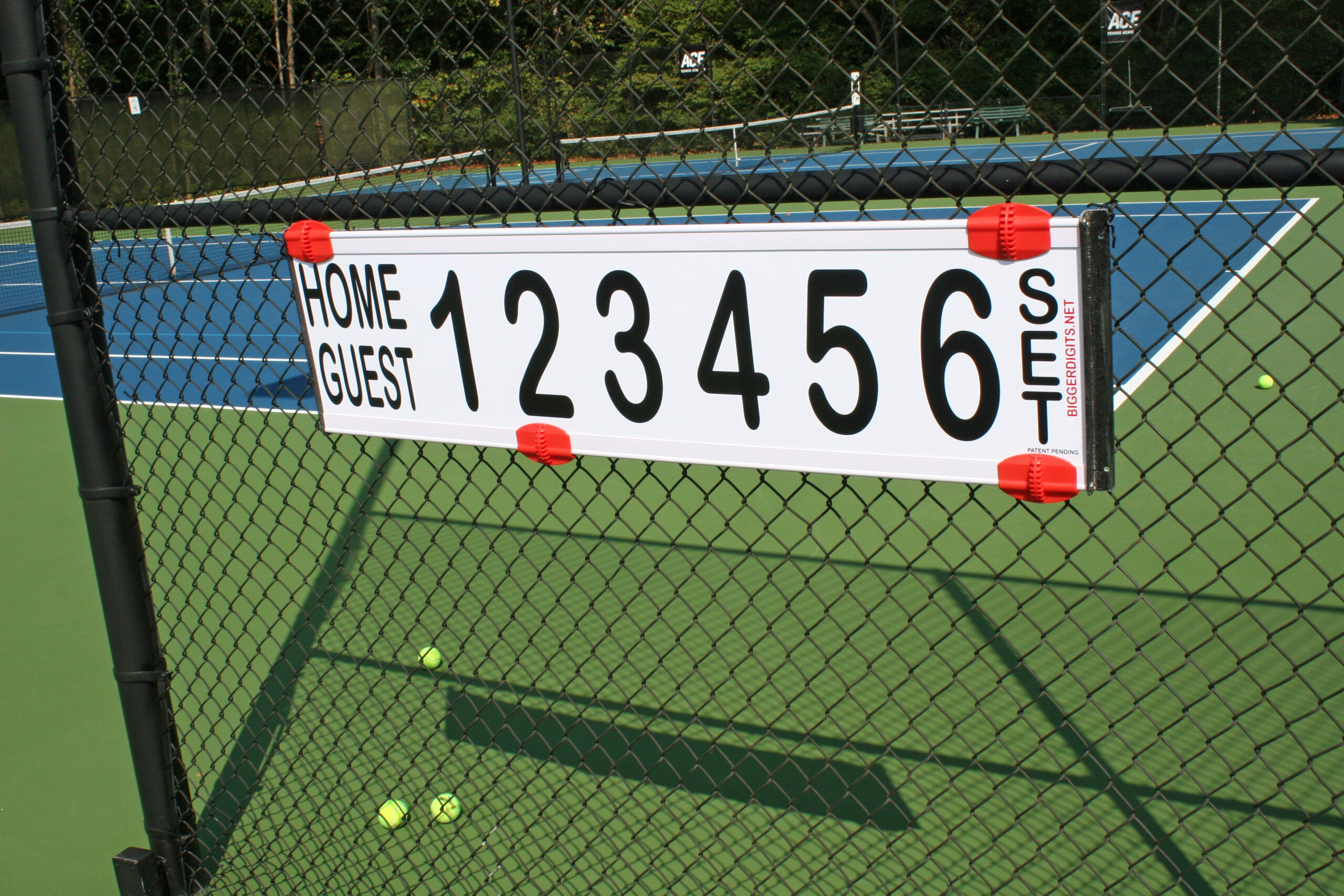
Full-panel PVC boards manufactured for year-round tennis use rely on UV-stabilised, rot-proof plastic. That base material is uv-resistant throughout, not merely covered with a coating, which helps preserve the surface and overall durability after repeated freeze-thaw cycles.
- UV-resistant PVC body: rot-proof, UV-stabilised plastic limits colour fade and structural weakening during long periods of direct sunlight.
- Counter-glued watertight edges: each edge is sealed to create a weatherproof barrier, reducing the risk of moisture ingress, delamination, and frost damage.
- Sealed disc engineering: compact rotating-disc formats use engineered discs that shed water cleanly, so the scoreboard remains readable in heavy rain.
- Corrosion-resistant fixing points: brass eyelets and anti-rust metal hooks protect vulnerable fixing points against long-term outdoor exposure.
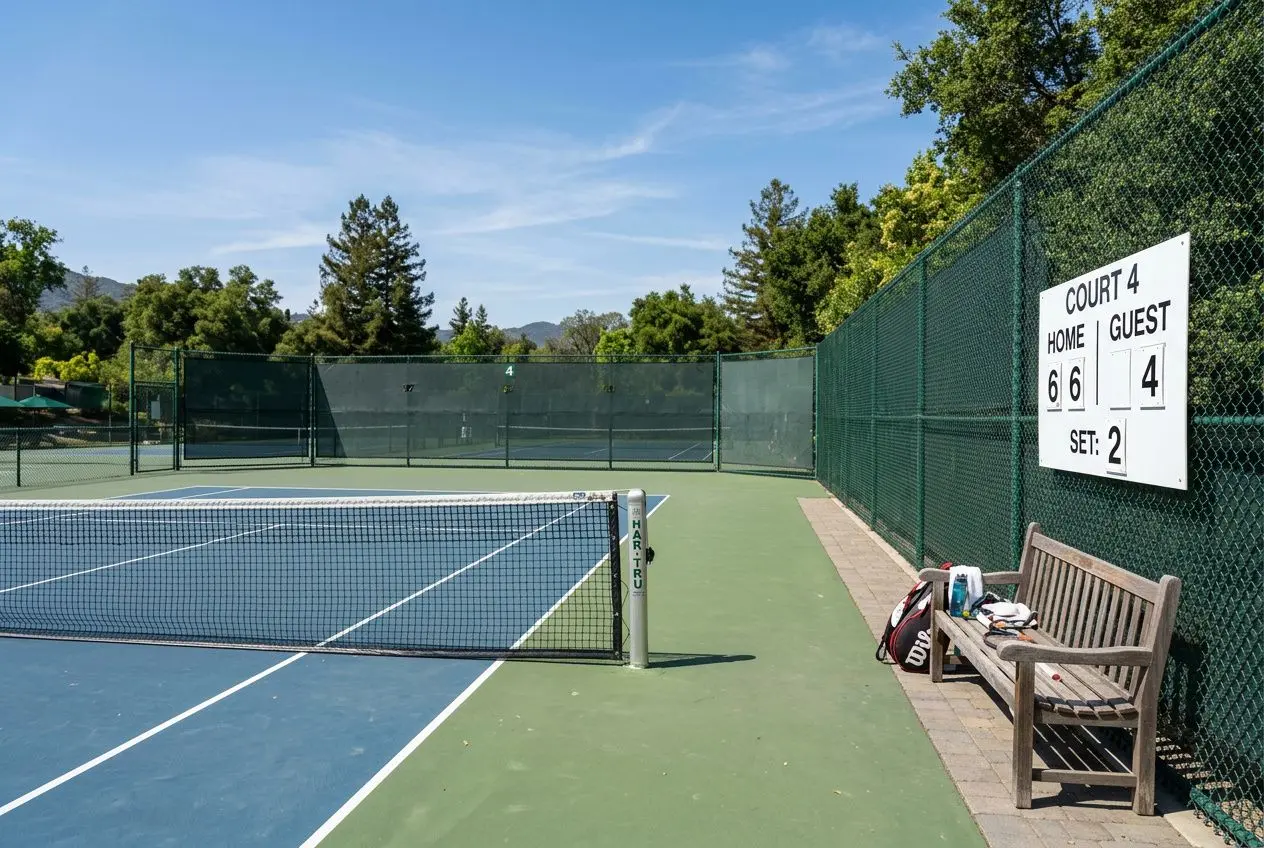
As a result, a full-panel board with a weight of around 2 kg can stay mounted on the perimeter fence throughout winter. Its all-weather build needs no seasonal removal, and replacement digits can be ordered separately, which is a strong advantage for clubs managing long-term equipment costs.
Evidence of long-term tennis court use
That specification matters because field history confirms it. Tennis Scorer has supplied manual scoreboards continuously since 1994, with nearly 3,000 clubs and 16,000 courts across Europe and the USA still using them in practice.
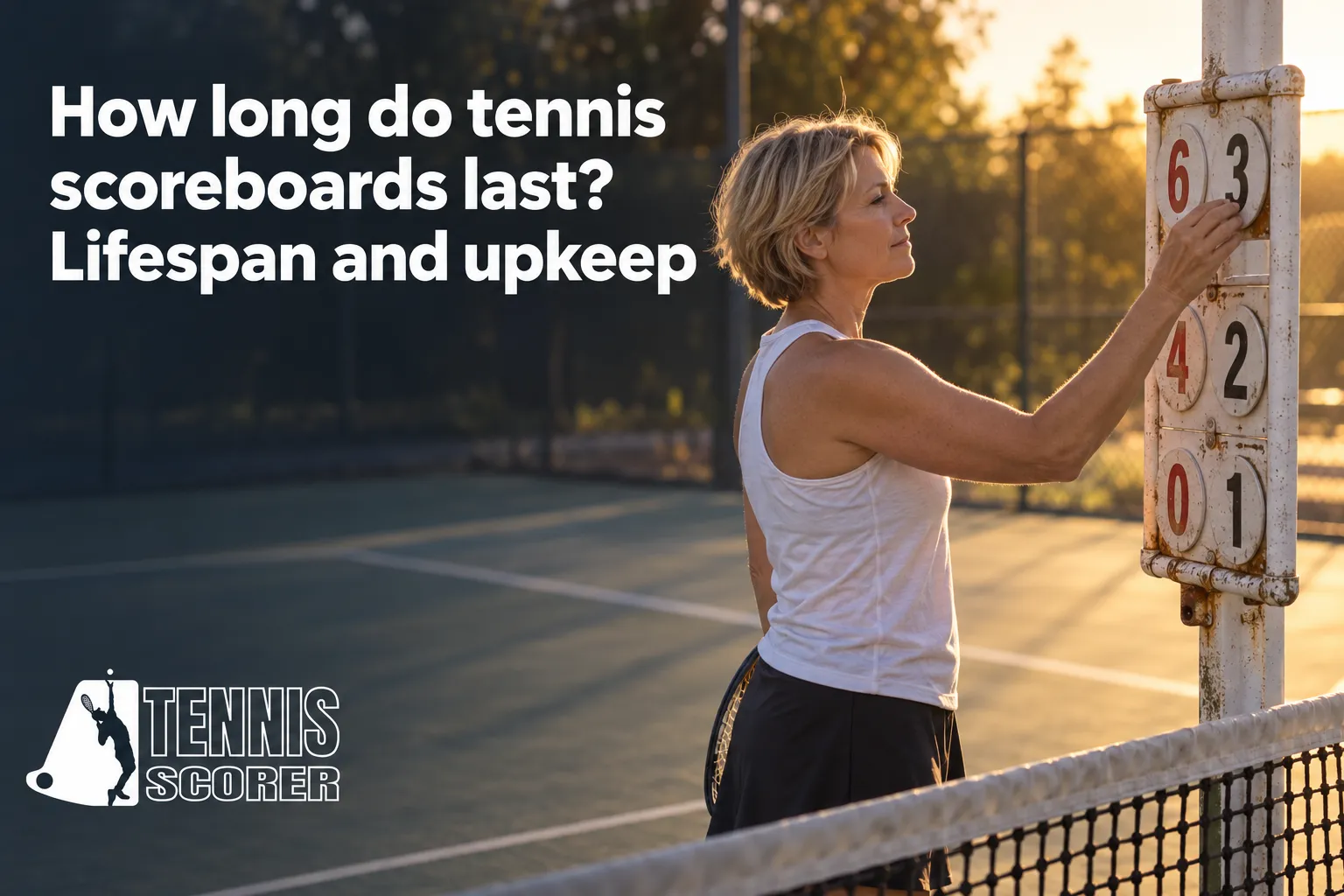
The documented service life for properly mounted PVC models is 20 to 30 years. For buyers reviewing a tennis scoreboard for sale, that installation base is direct evidence of the durability of an outdoor tennis scoreboard rather than a short-lived product claim.
By contrast, boards manufactured from untreated materials, or without sealed edges, often need winter removal to avoid water damage. The difference comes down to built-in weather resistance at manufacture, not to extra maintenance after installation.
Fence-mounted weatherproof construction
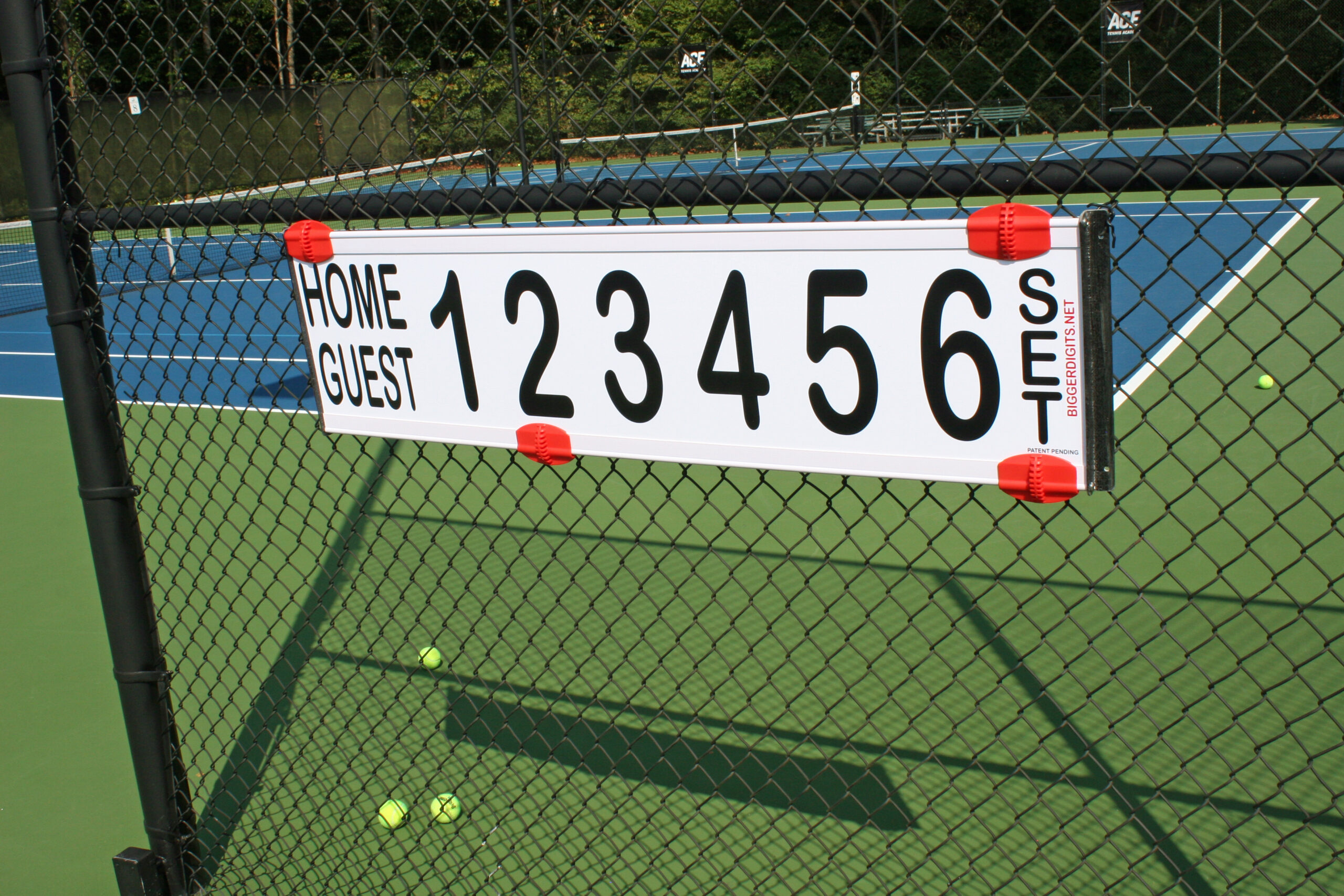
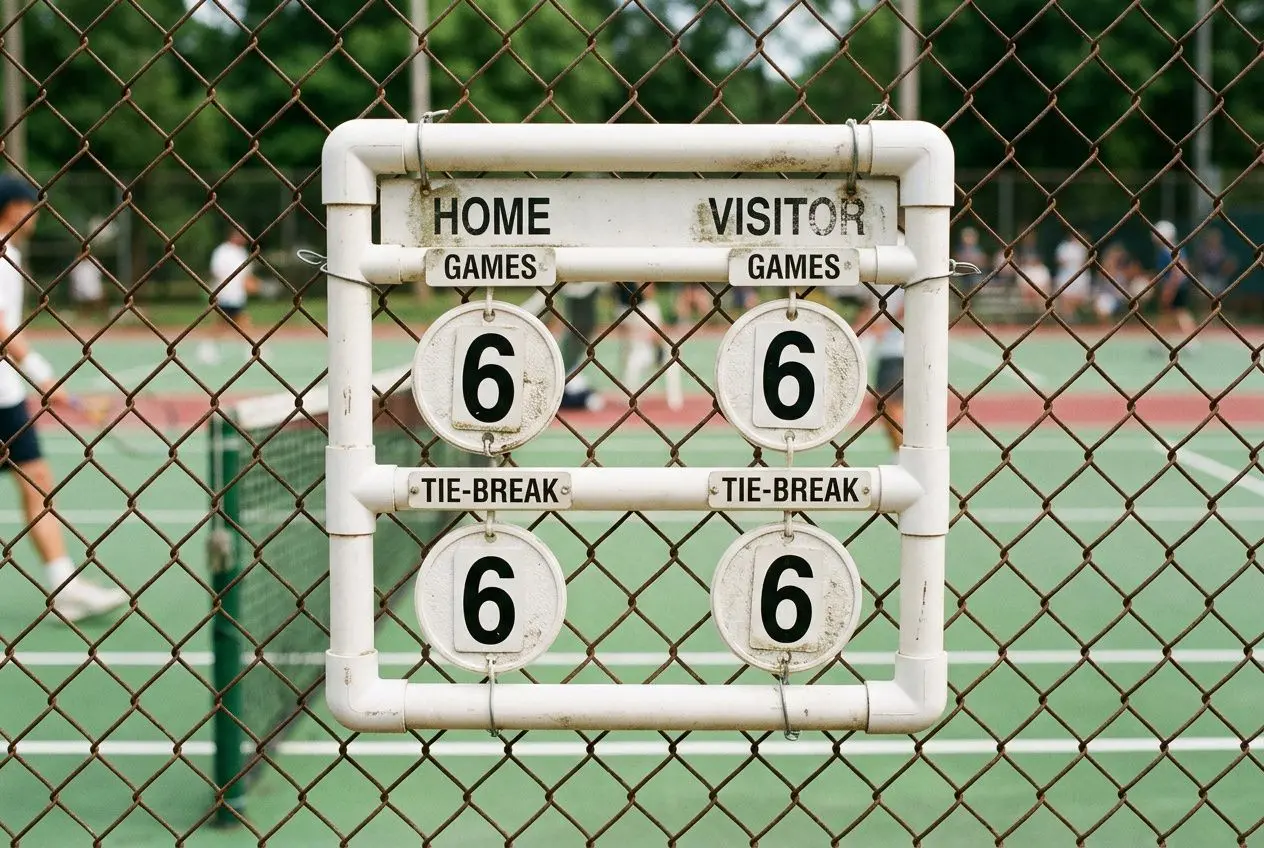
The same principle applies to the fixing system. Full-panel PVC boards are mounted to the perimeter fence with a no-drill serflex cable-tie arrangement: four heavy-duty ties are supplied, so the scoreboard can be secured to fence wire without specialist tools or permanent drilling.
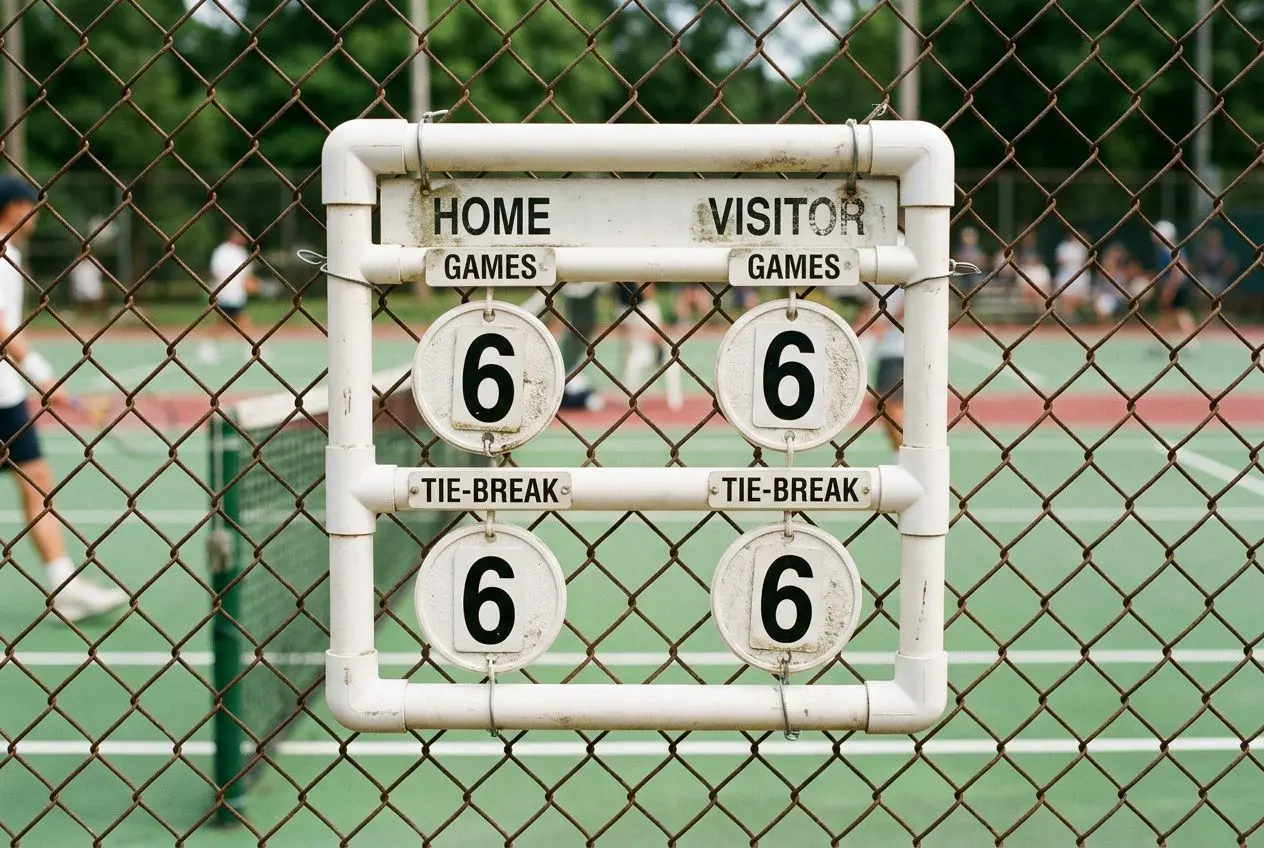
Compact disc models use brass eyelets and an anti-rust metal hook. Those mounting hardware components are corrosion resistant. They suit wire, netting, and mesh structures. They hold the board firmly across its full surface area over long outdoor exposure.
Match Pointer stability and portability
Once fixed models are accounted for, the pointer tennis scoreboard answers a different need. It is the right choice when a club wants a lightweight unit that can move between courts or venues while keeping an all-weather, high-quality build.
A freestanding model still has to be strong. In practice, that means the weight, base geometry, and balance matter as much as the display itself, because stable use on hard or soft ground depends on a low centre of gravity rather than bulk alone.
| Feature | Full-panel PVC fence-mounted | Compact rotating-disc model |
| Material | UV-stabilised, rot-proof PVC | UV-stabilised engineered plastic |
| Edge sealing | Counter-glued watertight edges | Sealed disc construction |
| Mounting system | No-drill serflex cable-tie (4 ties supplied) | Brass eyelets + anti-rust metal hook |
| Sizes available | 60 × 60 cm | Small 35×50 cm / Medium 46×65 cm / Large 56×80 cm |
| Weight | Approx. 2 kg | Varies by size |
| Documented service life | 20–30 years | 20–30 years |
| Seasonal removal required | No | No |
| Replacement parts | Digits supplied separately | Discs replaceable individually |
Across both formats, the same checks apply: anti-rust metal at exposed connections, corrosion-resistant fixing points, weather resistance in the core material, and a high-quality plastic body built for permanent outdoor use. These details, rather than price or brand, separate scoreboards that stay readable and secure through years of use from those that fail early.
Frequently asked questions
How long does an outdoor tennis scoreboard typically last?
A properly installed, fence-mounted tennis scoreboard can last 20 to 30 years. Made from UV-stabilised, rot-proof PVC, it has a documented service life. The difference comes down to material quality and correct installation—not to taking the board down between seasons.
That figure is supported by field use. Tennis Scorer has sold fence-mounted models since 1994, with installations across nearly 3,000 clubs in Europe and the USA, showing this level of durability under real outdoor conditions: frost, sustained UV exposure, and heavy rain. For buyers comparing formats, the durable outdoor tennis scoreboard guide sets out which size and layout remain most readable for each court configuration.
What tennis scoreboard features matter most for weatherproof outdoor use?
That expected lifespan depends on construction details. The key tennis scoreboard features for long-term outdoor use are UV stabilisation in the plastic body, watertight sealing at each panel joint, and corrosion-resistant mounting hardware at all fixing points.
Once installed, those details protect the board where failures usually begin: along the edges and at the attachments. Counter-glued edges on full-panel PVC boards limit moisture ingress that can lead to delamination, while sealed discs on compact models help keep the display readable in heavy rain.
From that point, the hardware matters just as much. Anti-rust metal hooks and brass eyelets reduce the corrosion risk that untreated parts can develop after one or two winters, especially where a scoreboard is mounted directly to a fence. In practice, a weatherproof design needs every contact point to stay protected, secure, and waterproof.
Is an indoor and outdoor tennis scoreboard the same construction, or are there differences to consider?
The same PVC base construction can suit indoor and outdoor use, but the operating environment changes the requirement. Covered courts, humidity, temperature variation, and artificial lighting place different stresses on a scoreboard than open exposure to frost and direct sun.
By contrast, outdoor use leaves less room for compromise. Full UV stabilisation and sealed edges are essential, whereas some indoor settings may accept a simpler specification.
As a result, the right choice when a club wants one board for indoor and outdoor service is usually a model designed for external conditions from the outset. That approach gives extra resilience in high-use venues, whatever the surface nearby, and regardless of whether the unit is mounted to a wall or a fence structure.
Where fixings are concerned, the same principle applies. Durable mounting hardware, anti-rust metal components, brass details, and secure fixing points help preserve performance over time, whether the scoreboard sits beside a covered court or on an exposed tennis fence.