
Table of Contents
Understanding the skills needed to be a scorekeeper effectively involves far more than watching a game unfold. The role combines accurate scorekeeping, real-time record keeping, referee communication and careful data tracking, giving anyone entering the position a practical roadmap from the first whistle.
Core scorekeeper skills for every game
A scorekeeper holds genuine responsibility within any sporting event. The scorebook is the official record of the game; if it conflicts with electronic scoreboards, the scorebook governs without exception. That standard requires a precise, structured set of skills before anyone takes on the role.
What a scorekeeper records
The skills needed to be a scorekeeper begin with knowing exactly what must be captured during live play. Every scoring play, including each basket, goal or point, must be entered immediately in the scorebook according to the official rules. Reconstructing events from memory is unsafe. Delayed entries undermine fairness and may affect the result.
- Points and goals: Each scoring play is logged as it occurs, tracking scores continuously so the running team total remains accurate throughout the game.
- Player participation data: The names and numbers of every player who may participate are obtained at least ten minutes before tip-off, with the starting five confirmed no later than three minutes before the scheduled start.
- Fouls and time-outs: Personal fouls are numbered from one through five for each player. Team fouls reset each half, so two separate running totals are required.
- Scores and statistics: Alongside the primary score, assists, substitutions and individual performance metrics form part of the complete record, depending on the sport and competition level.
Once the game begins, the scorekeeper must monitor key thresholds and alert the referee promptly: when a player accumulates five personal fouls, when a team reaches seven personal fouls in a half, or when permitted time-outs are exhausted. Missing one of these triggers can affect the outcome for both the team and the player involved.
Accuracy under pressure
High-stakes scoring requires each play to be logged quickly while several events unfold at once. A goal, substitution and foul may occur within seconds of one another. Sustained attention to detail therefore protects the accuracy and fairness of every entry under official review. The scorebook must stay with live action.
- Real-time entry: Scores and statistics are recorded immediately after each play; the official record is built live rather than assembled at half-time or reconstructed after the game.
- Error management: If an error involving a foul or time-out is spotted while the ball remains in play, the scorekeeper waits until the ball is dead before signalling. Live action must not be interrupted improperly.
- Mathematical accuracy: Running totals are updated after every scoring play. Strong arithmetic skills ensure that the scorebook never diverges from what occurred on court.
- Neutral impartiality: The scorer records what happens, not what a team or crowd expects. Impartiality protects the integrity of the official record throughout the event.
Organizational skills support accuracy directly. Clear entries, structured score sheets and orderly documentation allow any official reviewing the scorebook during the game to verify the data without ambiguity. Preparation makes the difference: a well-organised scorer is less likely to scramble under pressure, while disorganisation can create disputes affecting both teams.
Rules knowledge for each event
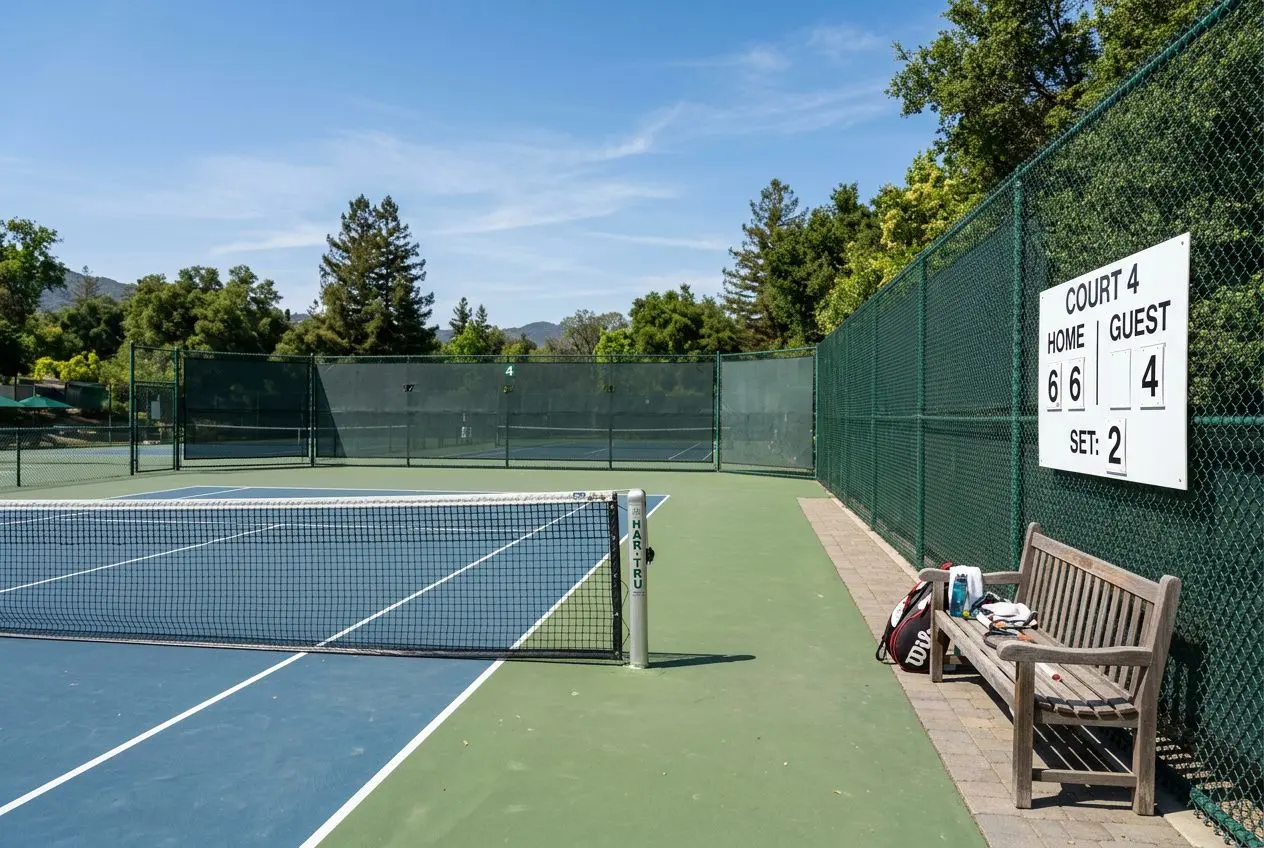
Effective scorekeeping depends on thorough knowledge of the sport being scored. The scorekeeper must recognise which incidents require immediate notification of the referee and which events change the scoring structure. In tennis, that includes love, 15, 30, 40, deuce, advantage and the tiebreak format, together with serving faults and the rule that a ball touching any boundary line is in. Consulting the essential tennis scoring rules provides a reliable foundation for anyone preparing to score a tennis event. Rules knowledge also determines the response to edge cases: a serve that clips the net but lands in the correct service box is a let and is replayed, while a double fault costs the server the point immediately. These distinctions require study before the event.
Build a strong resume
A compelling scorekeeper resume begins with demonstrated experience, ideally gained at amateur or youth level before progression to higher-stakes competition. The margin for error narrows at senior and professional level, so experience at lower levels offers concrete evidence of competence. Reviewing the duties of a scorekeeper helps candidates describe their responsibilities accurately and ensure that their listed skills match what officials and league organisers expect.
Communication belongs on every scorekeeper resume. The ability to resolve discrepancies effectively with coaches and officials, make clear announcements and coordinate with the referee under pressure matters as much as technical accuracy. Tennis Scorer recognises that the scorekeeping role, whether beside a manual scoreboard or at a dedicated scoring table, demands professional standards from the first game.
Frequently asked questions
What does a scorekeeper actually do during a game?
A scorekeeper accurately records scores and statistics throughout a game, logging points, goals, fouls, substitutions and time-outs in real time. The role also includes operating scoreboards, alerting the referee when limits are reached, and maintaining the official scorebook as the authoritative record of the event. If the scoreboard conflicts with the scorebook, the scorebook governs. Beyond tracking scores, the scorekeeper may make public announcements, report results to league officials and ensure that all data is tallied correctly before the session ends.
What are the six most important skills for scoring a sporting event?
Effective scorekeeping depends on six core skills. Sustained attention and attention to detail help a scorer accurately record scores as each play unfolds, while strong knowledge of the sport’s rules ensures that every incident is interpreted correctly. Quick, accurate arithmetic keeps the running total sound. Organisation keeps score sheets ordered and legible under pressure. Clear communication supports coordination with officials and the referee when discrepancies arise. Finally, calm impartiality keeps the record fair and trustworthy for both teams throughout the game.
How does scorekeeping experience strengthen a resume?
Documented scorekeeping experience shows employers and league officials that a candidate is reliable, accurate under pressure and familiar with official procedures. Starting at amateur or youth level builds practical habits such as prompt recording, foul tracking and threshold alerts, which transfer to higher-stakes competition. Progression to college or semi-professional events then demonstrates adaptability and growing expertise. Some scorekeepers advance to head scorekeeper or supervisory positions; others move into coaching. A resume that lists the sports scored, competition levels covered and proficiency with electronic scoring systems carries more weight than a generic administrative profile.