

Table of Contents
This guide covers the full range of tennis court net accessories, from centre straps and ground anchors to post winders and adjuster sets. It helps buyers compare components, understand specifications, and choose the right fixings to keep a tennis net correctly tensioned and ready for match play.
Choosing tennis net accessories for every court
A well-tensioned net depends on more than the netting itself. Each fixing, adjuster and anchor has a defined role, so choosing compatible components from the outset helps prevent repeated adjustments and premature wear throughout the net assembly.
Essential net fittings explained
The full range of tennis court net accessories includes structural fixings, tensioning hardware and height-verification tools. Understanding each function helps buyers avoid parts that do not suit an existing tennis post system or the type of court surface.
- Post winder and socket The winder tensions the net headline wire from inside or outside the post. The socket, available in 83 mm round or 80×80 mm square formats, anchors the post firmly into the ground. A damaged winder can be replaced independently, without removing the complete post assembly.
- Net headline wire The net headline wire or cord suspends the net between the posts. Regulations limit cable diameter to 0.8 cm, while a replacement steel headline wire sized for a standard 12.8 m net can be fitted as a direct spare instead of replacing the entire tennis court net.
- Retaining rods and bars Spare retaining rods, suitable for S8, S1 or aluminium tennis posts, hold the headline inside the post head. A retaining bar performs the same securing function and can be bought separately when the existing post remains serviceable.
- Singles sticks Supplied in pairs, singles sticks raise the net to the correct height at the singles sidelines when doubles posts are used. They remove the need for separate singles post accessories on courts designed for more than one format.
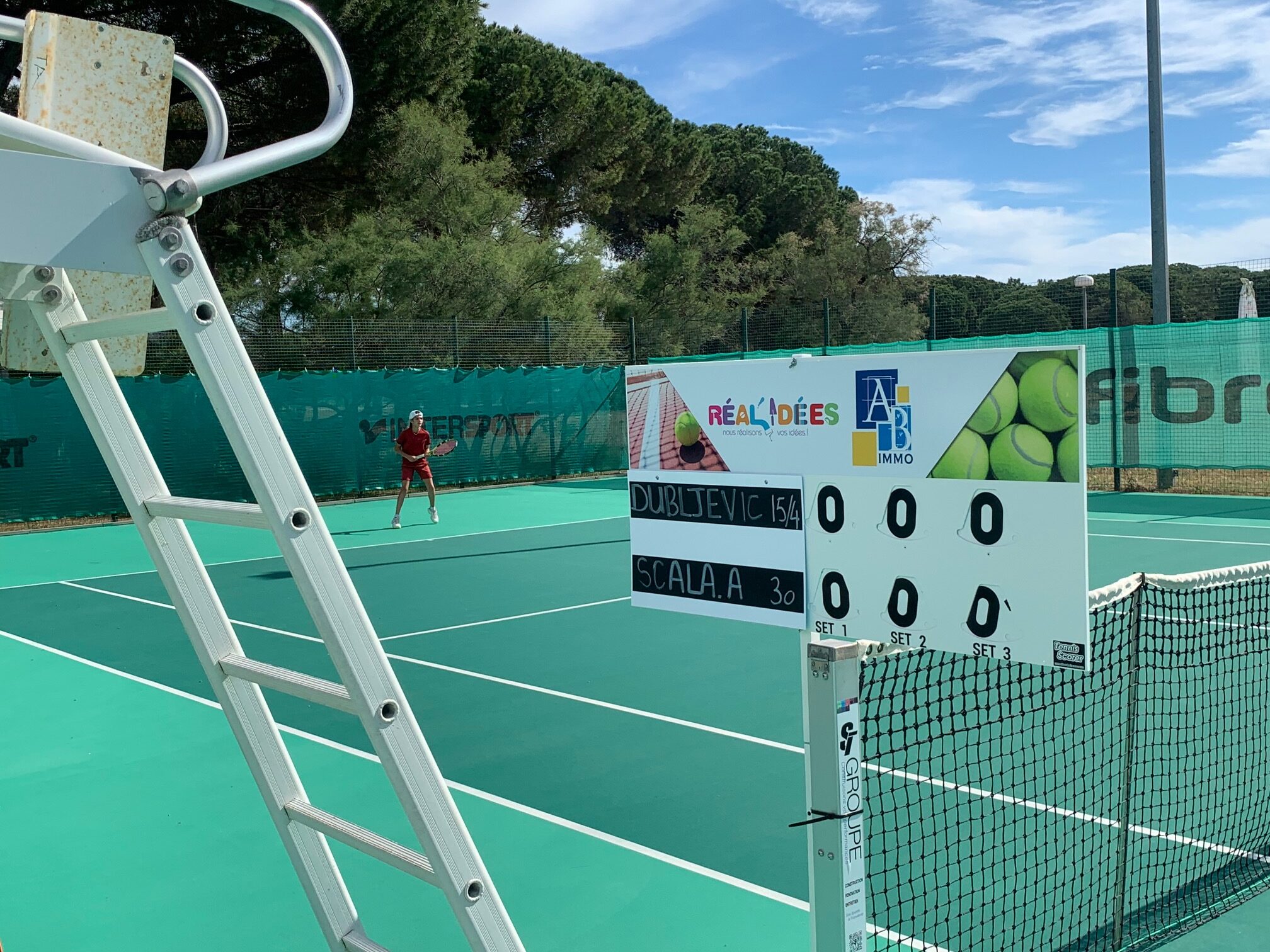
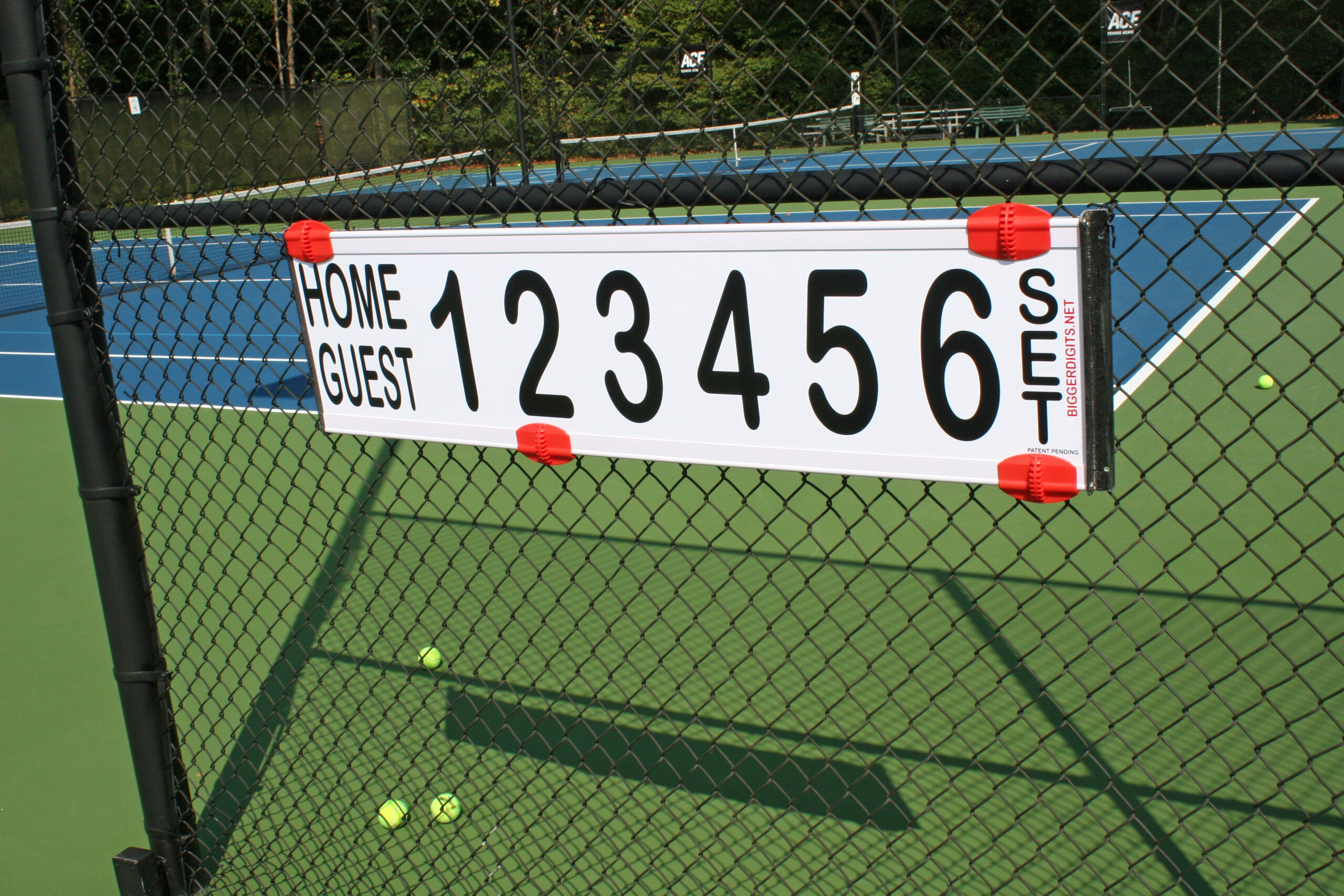
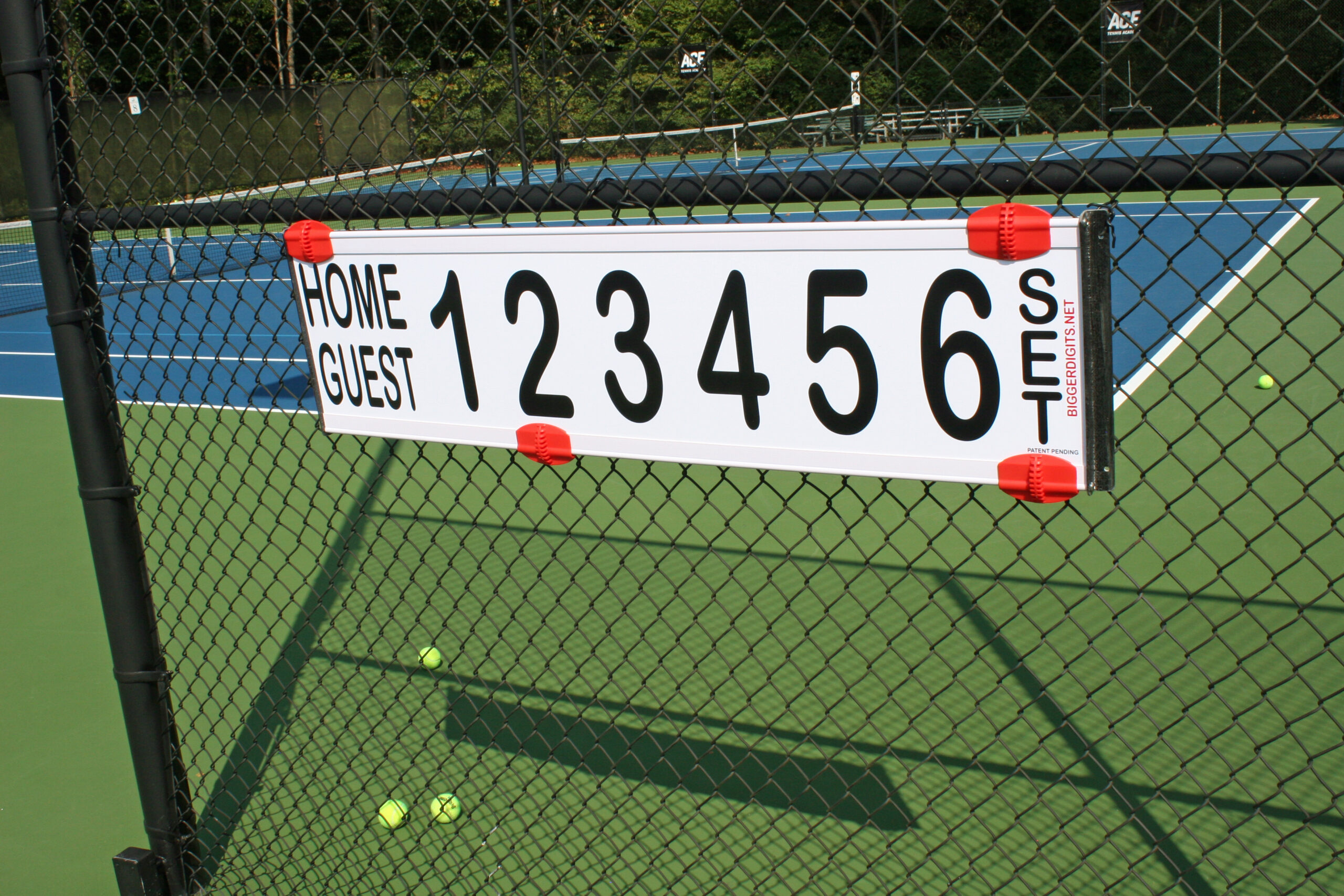
Other court accessories complete the playing area, including tennis scoreboards and ball baskets. Tennis Scorer has equipped nearly 16,000 courts across Europe with durable court accessories, showing how reliable hardware, from the scoreboard to the tennis post, supports the playing environment over time.
Centre strap and height control
The net height at the centre is exactly 0.914 m (36 inches), held taut by a dedicated strap. In match play, a tennis net centre strap must be completely white and no wider than 5 cm, so the choice affects compliance as well as performance.
Adjustable centre straps allow small tension changes without altering the post winder. A polyester centre strap with eyelets provides an alternative fixing method for different ground anchor arrangements. Replace worn or stretched webbing promptly: daily checks should confirm a centre height of exactly 36 inches, because even slight sag can alter the trajectory of low shots. For courts that are frequently assembled and dismantled, a centre tape adjuster or complete adjuster set offers a practical single-component solution.
Ground anchors for secure tension
The net centre anchor holds the strap at court level and resists the upward force created by net tension. Two main formats are available: a tubular centre ground anchor, cast into the court base during construction, and a spiked centre ground anchor for surfaces where an embedded fixing is impractical or a temporary installation is needed.
The choice depends on the court surface and the permanence of the installation. In practice, a tubular anchor embedded in a hard court base remains more stable during years of daily use because it does not shift under repeated lateral loads. Replace centre straps and anchors together when either shows wear; mismatched components can create uneven tension along the base of the net.
Tennis net measurements for match play
Official dimensions govern every part of the net assembly. Tennis court posts must be positioned with their centres exactly 0.914 m outside the court on each side, and posts may not exceed 15 cm square or 15 cm in diameter. The white top band covering the cable and the top of the net must measure between 5 cm and 6.35 cm deep on each side.
An aluminium net height gauge provides a reliable, portable way to verify the centre height before competitive play. For clubs planning wider court infrastructure, the tennis court maintenance guide covers weekly post inspections, drainage checks and resurfacing thresholds that affect the lifespan of post sockets and ground anchors.
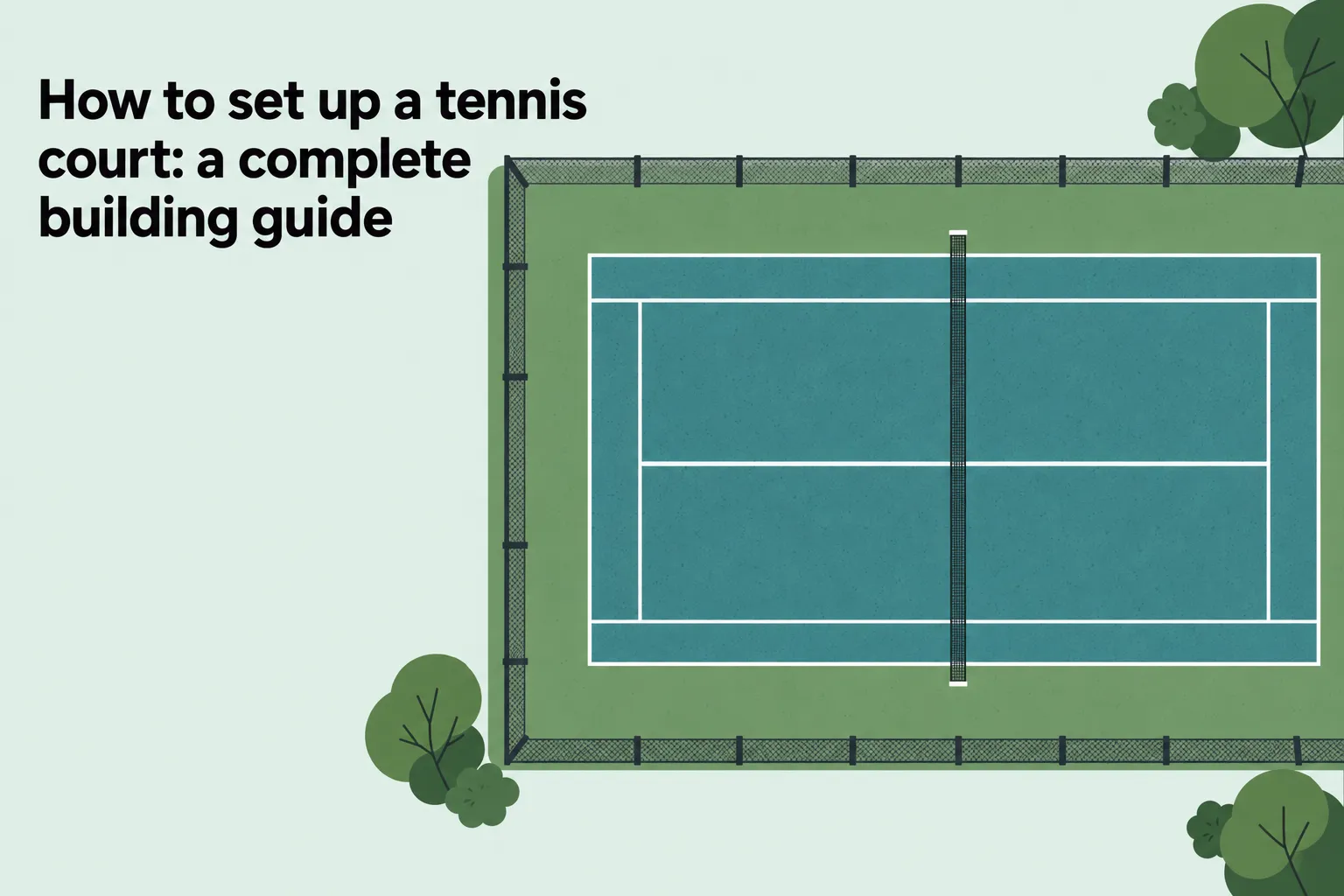
Courts preparing for events can also consult the guide to organising a tennis tournament, which includes net setup and equipment checks in pre-match preparation. Clubs equipping new facilities from scratch will find the tennis club setup guide useful for planning construction budgets and selecting net and post accessories.
Frequently asked questions
Which adjuster set should I buy for my tennis post system?
Adjuster sets come in T2, T3 and T4 variants for different post systems. The t4 adjuster set fits the corresponding mechanism, while the other versions suit alternative winding configurations. To identify the correct model, check the part number stamped on the existing adjuster or send a photograph to a specialist supplier. A torque limiter can also prevent excessive tension from damaging the net headline wire or the post winding mechanism.
What is the difference between a replacement tennis net and repairing individual fixings?
A replacement tennis net is the practical choice when the netting is torn, the head band has deteriorated beyond repair, or the net headline wire is kinked and cannot be tensioned evenly. By contrast, individual fixings, centre straps, winder handles, retaining rods and post accessories can be replaced at lower cost when the fabric and wire remain serviceable. This measured approach reduces both downtime and expenditure across a multi-court facility. Woven polyester head bands and centre straps are also straightforward to source and replace without specialist tools.
How often should tennis net components and tennis court equipment be inspected?
Inspect the tennis post, winder mechanism, net centre anchor and all fixings weekly. Each check confirms the net centre sits at exactly 36 inches. The post winder engages without slipping. The ground anchor shows no movement. Repair any rip or tear in the netting immediately to limit further deterioration. When not in use, tennis court equipment, including spare fixings, singles sticks and height gauges, should be stored in a dry, protected location to reduce corrosion and UV degradation between sessions.