
Table of Contents
A manual tennis scoreboard made from outdoor PVC can stay in service for decades, but no fixed age tells a club when to retire one. The answer depends on how sunlight, rain, frost and wind act on each part of the board, and on how it is inspected and maintained. Realistic service-life figures and regular upkeep shape that judgement, as do the signs that call for repair, replacement or immediate removal.
How many years does a manual tennis scoreboard last?
Manual PVC boards have long service records. Still, no figure works as a countdown. The panel, the discs and the fixings age at different rates, and warranties measure something different again. Each of these points changes how a club should plan the replacement of a scoreboard.
A lifespan estimate, not a replacement date
There is no independent UK average and no universal replacement age for manual PVC tennis scoreboards. Each board’s condition decides whether it stays in use. One manufacturer estimates 20–30 years for a properly installed board. That figure is a supplier estimate, not a guaranteed lifespan.
Real-world examples reach further. Some boards first sold in 1994 are still in use, which means about 32 years of service by 2026. These are individual boards that have survived that long, not a statistical life expectancy, so they show what is possible without promising it.
Why the panel may outlast its working parts
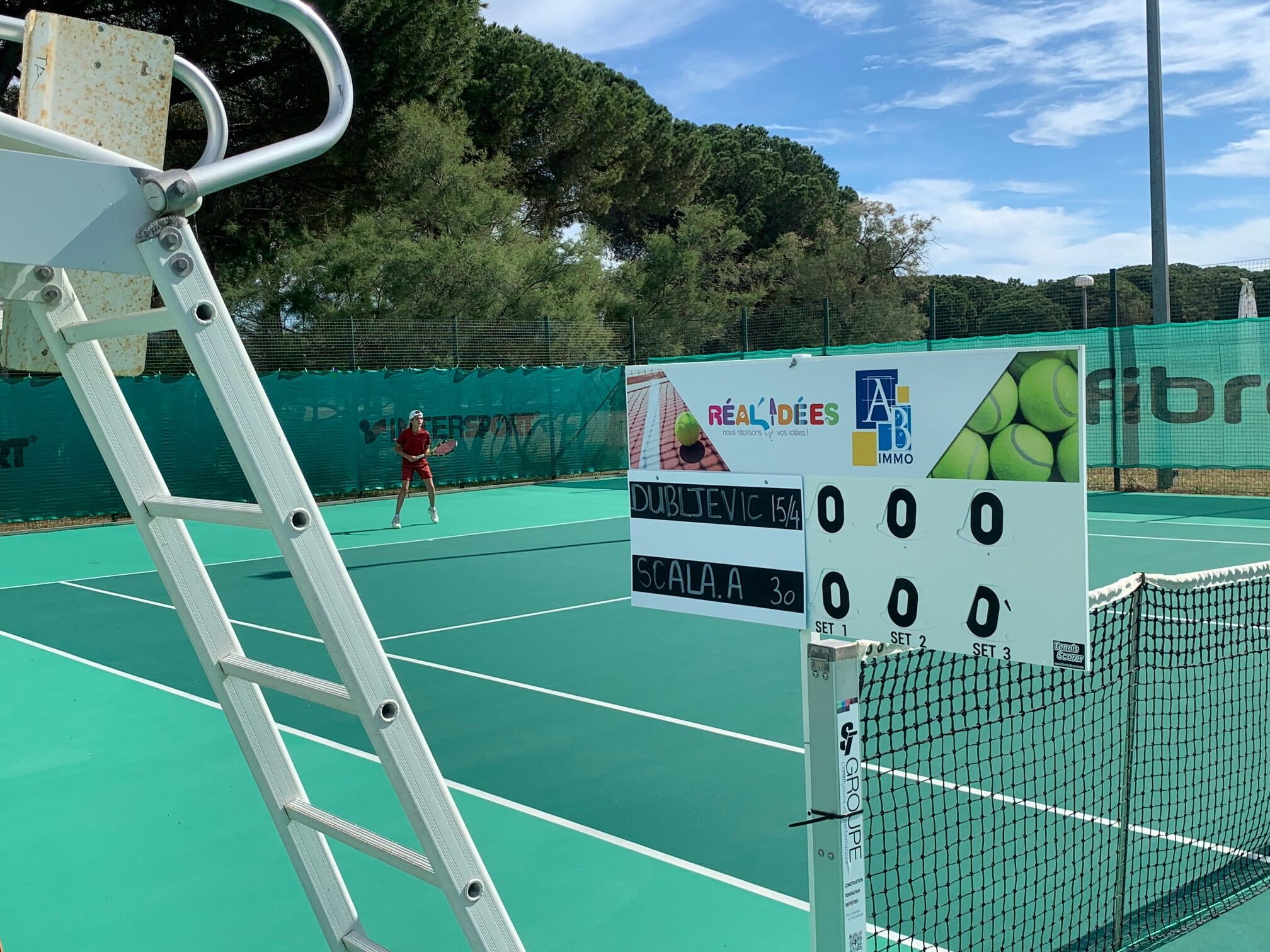
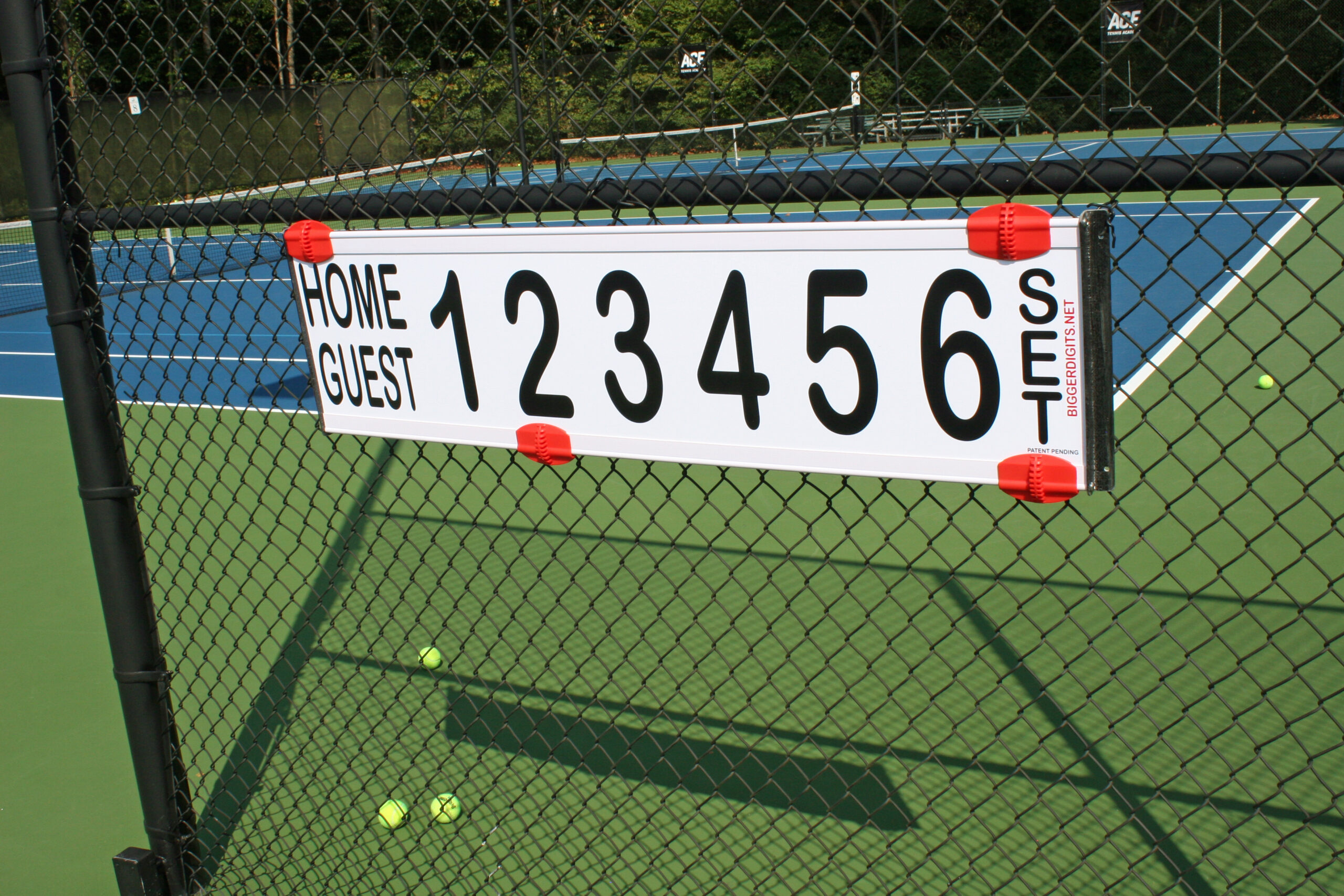
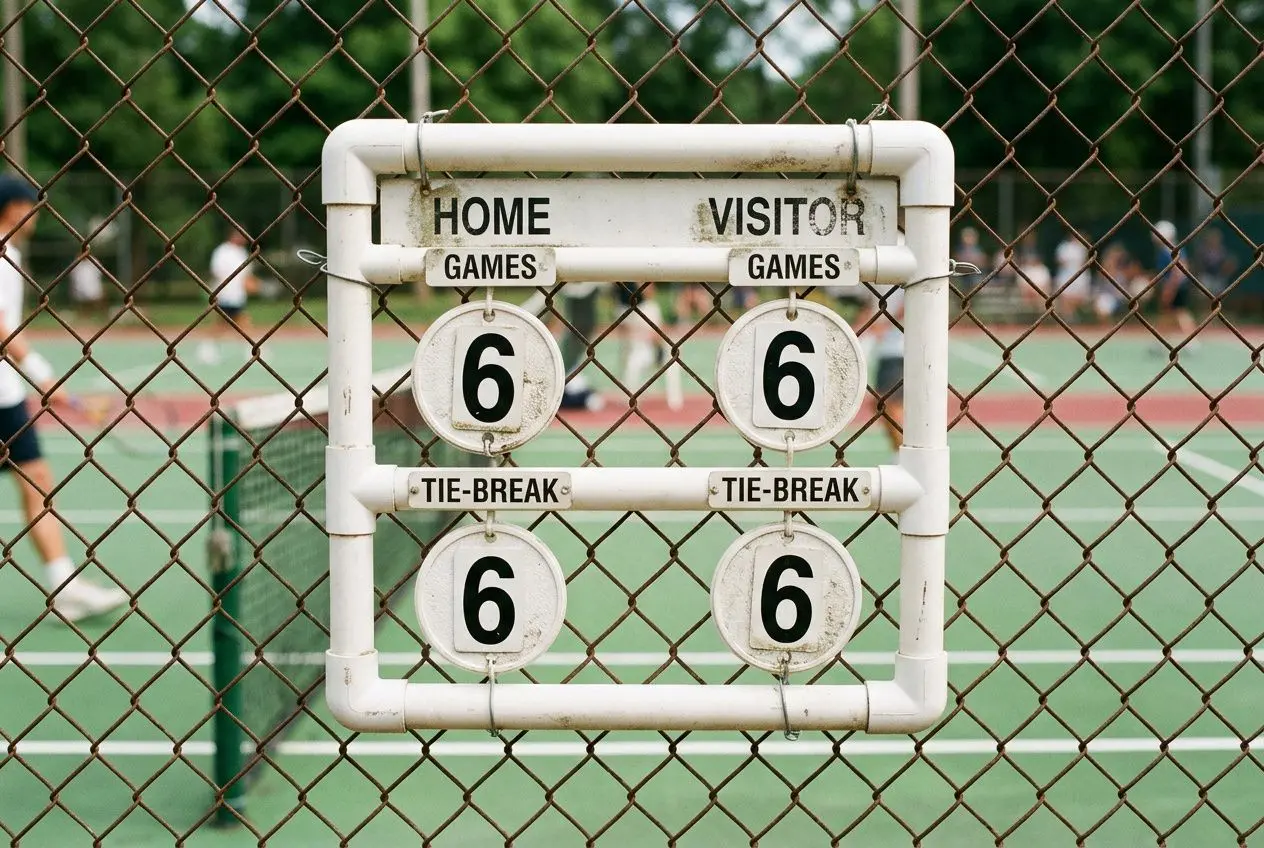
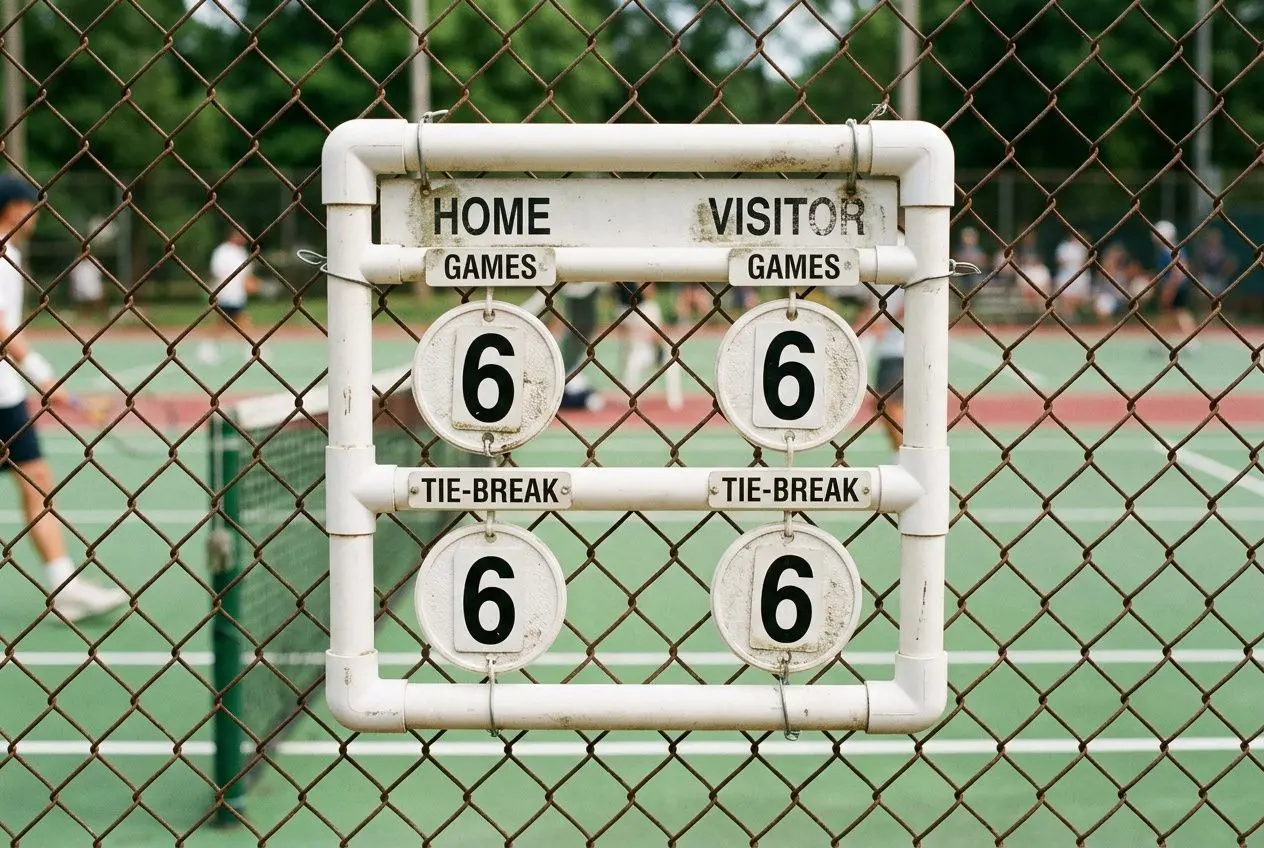
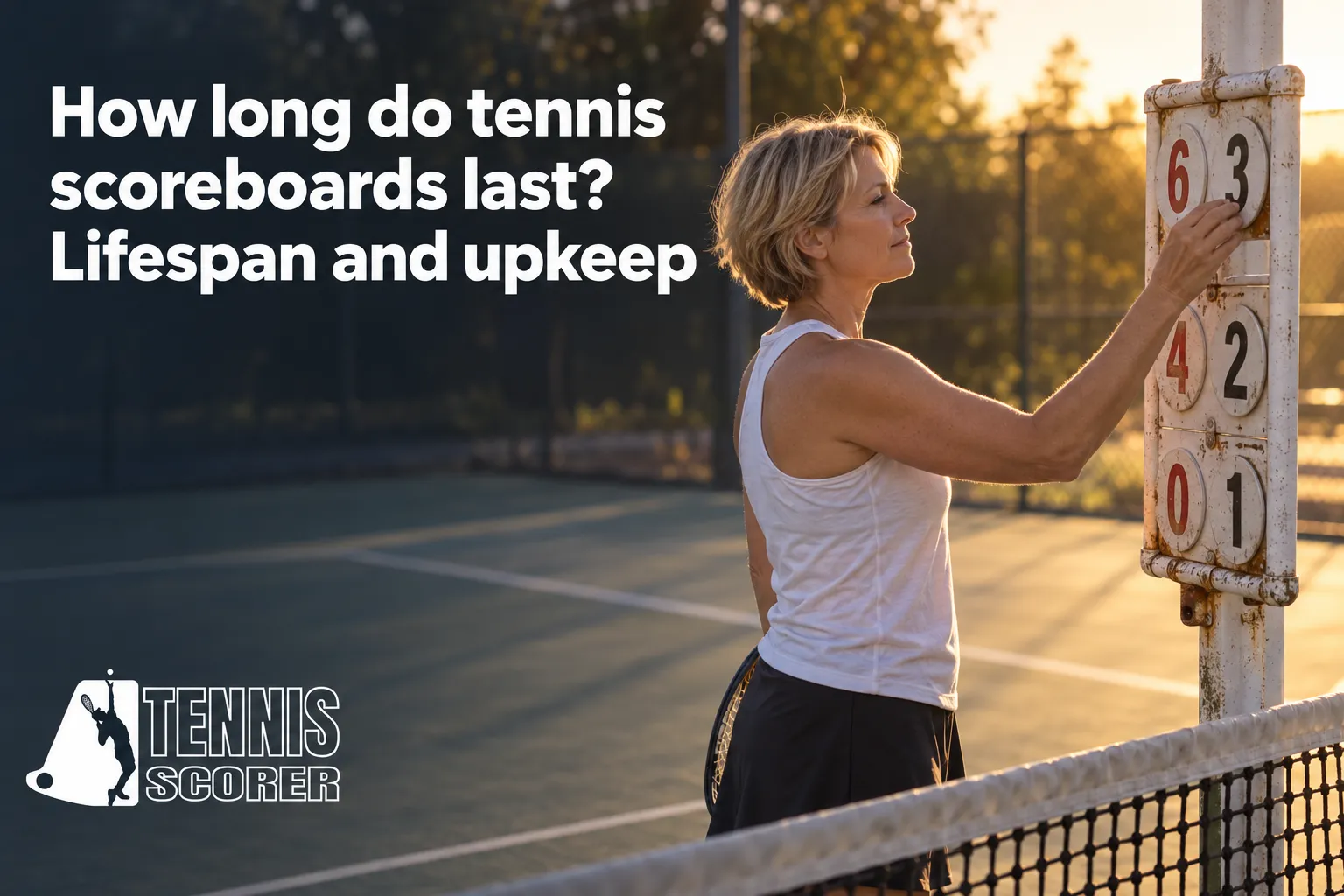
A conventional manual board changes score when a player turns its physical indicators. Its scoring mechanism needs no power at all. As a result, wear builds up in visible, mechanical places: the PVC panel can stay sound while score discs, printing or attachments need attention. The panel and these smaller parts do not have to share the same service life.
The body material matters for the same reason. Tennis Scorer makes manual tennis and padel scoreboards from rot-proof PVC, and states that this equipment can stay on court all year in all weather.
What guarantees and standards can establish
Tennis Scorer’s range carries guarantees of 3, 5 or 8 years. Check the written guarantee for the chosen board, and treat it as warranty cover, not as the board’s expected lifespan. The LTA offers no fixed benchmark either: it lists scoreboards as venue equipment but sets no material, service life or replacement age.
Laboratory testing does not close the gap. ISO 29664:2010 warns that artificial-weathering results cannot predict a plastic product’s service life. In practice, hours in a test chamber cannot simply be converted into years on a UK court.
How does UK weather wear a scoreboard down?
Outdoors, three forces act on a tennis scoreboard at once. Sunlight works on the PVC surface, water finds every joint and moving part, and wind loads the fixings. Each one leaves different marks, and the fixes differ too.
Sunlight and changes to PVC
PVC does not rot the way timber does. UV exposure still changes it: colour shifts, gloss fades, the surface chalks, and over time the material can become brittle or crack.
UV stabilisation, meaning additives that slow this process, improves weathering resistance. It does not stop printed numbers from fading, though. Colour change alone also says little about how much structural strength the panel has left, so its condition has to be checked as well as its look.
Formulation plays a part as well. A 2008 study followed uPVC window profiles through five years of natural weathering and found that additives affected durability. It measured window profiles, however, not how long a scoreboard lasts.
Rain, water entry and frost
Rain works differently from sunlight. The PVC itself does not rot, yet water can reach layered edges, joints, drilled holes, moving discs and fixings. On some conventional manual boards, prolonged heavy rain makes the rotating score discs stiff. That stiffness does not mean the panel has failed.
Frost matters once water has found a gap. Water freezing inside a crack, joint or cavity can widen the opening further. No reliable number of freeze–thaw cycles converts into years of scoreboard life, so cracks are judged on sight.
Wind and exposed fixings
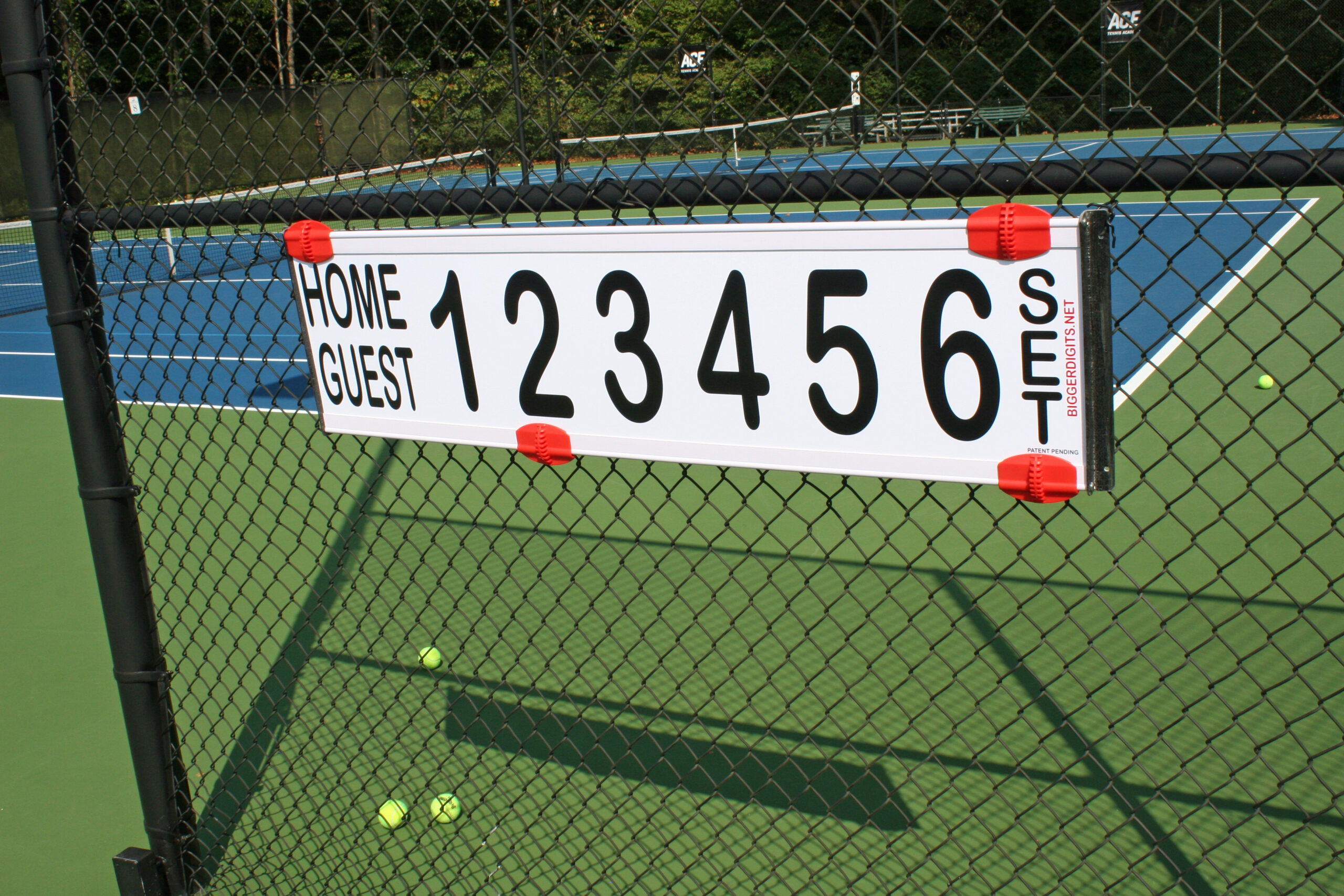
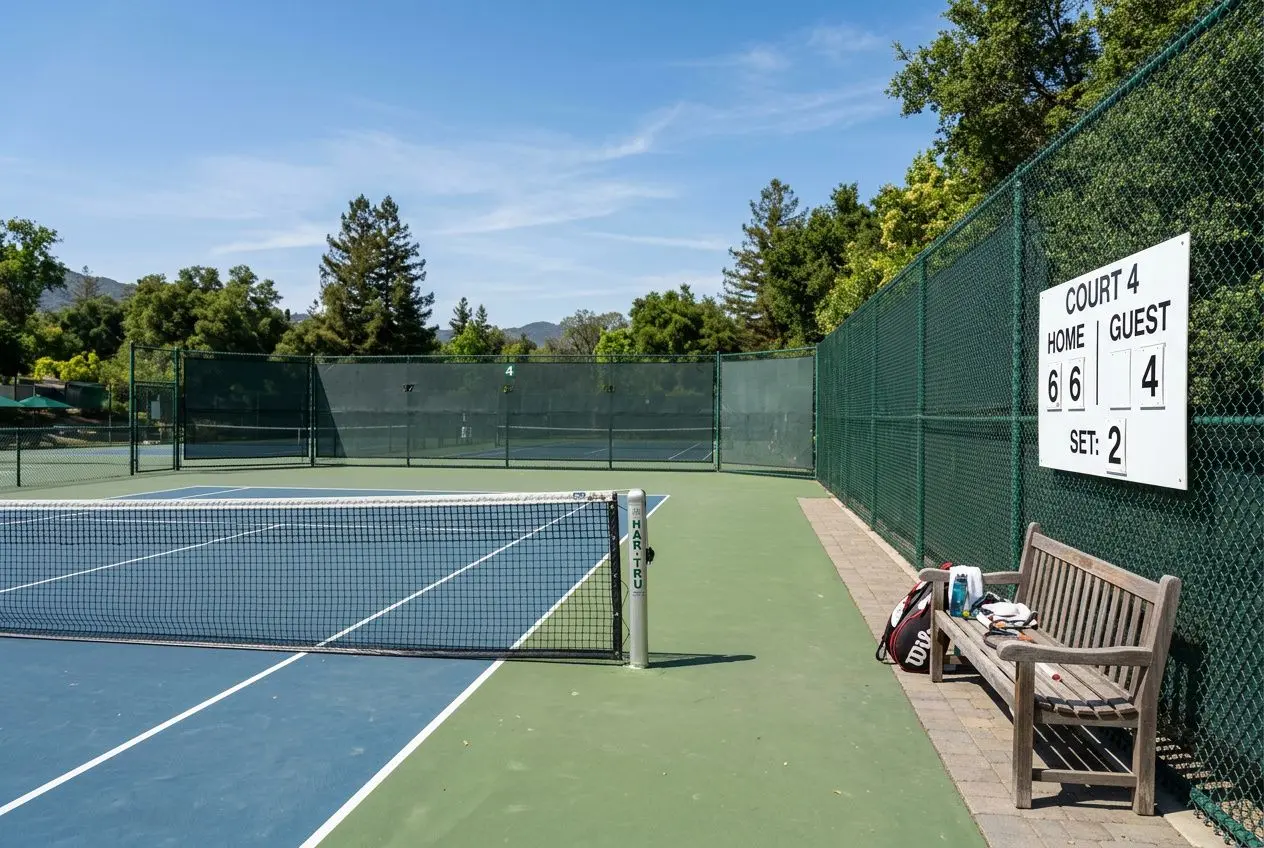
On a fence-mounted board, wind load depends on the exposed area, the orientation, the wind speed and the position and strength of the attachments. Several attachment points spread the load. By contrast, a single hook concentrates it and can let a heavy board swing or twist.
Those fixings also face corrosion. According to the Galvanizers Association, rainwater that is trapped and cannot drain and dry increases the likelihood of bimetallic corrosion where dissimilar metals meet.
What upkeep helps a scoreboard last longer?
Upkeep follows the same three areas the weather affects: the panel and its print, the score discs, and the mounting. Short, regular checks catch problems while they can still be repaired.
Inspect the panel and its readability
Before each outdoor season, inspect the panel closely. Corners, seams and fixing holes need the most attention, because stress and water gather there.
Readability deserves its own check. Printed numbers must keep enough contrast to be read from the positions where the board is actually used, not just from close up. The panel check covers these signs:
- Cracks and brittle edges: signs the PVC is losing its resistance to knocks.
- Chalking and localised whitening: surface weathering from UV exposure.
- Distortion and impact damage: warping or marks left by balls and knocks.
After severe weather or an impact, recheck the mounting and look for new cracks. These are practical checks for operators, not an inspection timetable set by the LTA.
Test and care for score discs
Turn every disc through its full range. Note any damaged disc, any excessive play, and whether stiffness appears only after wet weather or turns into binding that persists.
For a conventional disc design that stiffens after prolonged rain, the documented care is to clean and dry the discs. Apply silicone lubricant only where that model’s instructions call for it. Other manual-disc constructions work without repeated silicone treatment, so lubrication depends on the model and is not a routine task for every board.
Maintain the mounting and track its condition
Inspect hooks, eyelets, rivets, cable ties, clamps, fixing holes and the fence mesh beside them separately from the panel. Look for corrosion, brittleness, loosening or enlarged holes. Then check how much the board moves in wind: post clamps can loosen under repeated loading, and freestanding boards also need a stable base.
A condition log makes these checks comparable from one season to the next. Record the court, the first known installation date, the panel, discs, print, fixings, mounting, inspection date and action needed, plus a photograph. Gradual deterioration then shows up before it becomes a failure.
When should a scoreboard be repaired or replaced?
A condition log turns the repair-or-replace decision into a clear judgement. Some faults allow the board to stay in use, some call for a replacement part, and some mean the board must come down at once.
Keep it in use or remove it immediately
A board that is secure, legible and fully working can stay in use despite slight cosmetic fading. Safety comes first, however. Remove the board from use in these cases:
- Sharp broken plastic: edges that could cut a player or an operator.
- A crack that could spread: damage that could grow into a full break.
- A failed fixing or excessive looseness: enough play for the board to fall.
Position counts as much as condition. A board placed where it creates an obstacle or an impact hazard for players must also be taken out of use until it is moved.
Repair faults without discarding a sound panel
When the panel, printing and mounting are sound but the scoring mechanism is faulty, look for compatible replacement parts before replacing the whole board. One outdoor-board supplier offers replacement score discs for all its board sizes, which buyers can fit themselves. Discs damaged by a ball or by vandalism can therefore be replaced alone. Corroded or brittle hardware is assessed separately, since a sound panel can outlast it.
Recognise replacement triggers
Replacement becomes necessary once a board is unserviceable. The triggers are cracking, severe distortion, insecure mounting that cannot be fixed, or a scoring mechanism that cannot be recovered.
Legibility sets its own limit. Printed numbers that have lost the contrast needed to read the score defeat the board’s purpose. If that legibility cannot be restored, the display no longer serves its purpose.
For permanent outdoor use, check these points in the specification of a replacement tennis scoreboard: the PVC grade and UV stabilisation, how the edges are built, whether parts and accessories can be replaced, whether the fixings suit the existing fence, and the written warranty terms. Boards chosen this way can be maintained part by part rather than replaced whole.
Frequently Asked Questions
Do British Standards specify how long a tennis scoreboard should last?
No. BS EN 1510:2004 covers functional and safety requirements and tests for tennis equipment, but it does not set a number of years. BS EN 513:2026, published 31 August 2026, covers artificial weathering of PVC profiles, and BS EN 1991-1-4:2026, published 24 March 2026, covers wind actions. Neither sets a scoreboard lifespan.
Do all PVC scoreboards weather in the same way?
No. Formulation and additives affect how outdoor PVC changes colour, loses gloss, chalks, becomes brittle or cracks. A 2003 study compared four titanium-dioxide-pigmented outdoor PVC formulations under xenon-arc and natural exposure. It showed that products simply described as PVC should not be assumed to weather identically.
Are warmer UK summers shortening the life of outdoor scoreboards?
This has not been measured. The Met Office reports that 2025 was the warmest year in the UK series that began in 1884. It also reports that 2016–2025 averaged 0.51°C above 1991–2020. No evidence quantifies any resulting reduction in scoreboard life.