
Table of Contents
Good court care is mostly simple, regular work: clearing debris, inspecting the surface, adapting to each surface type and spotting when cleaning is no longer enough. On UK courts, how a court is built also shapes how much of that upkeep it needs.
What routine maintenance does a tennis court need?
Routine upkeep rests on three habits: keeping the surface clear, inspecting it on a schedule and checking the equipment around it. Each habit is cheap in time. Skipping them is not: debris left in place and defects nobody records become expensive repairs a few seasons later.
Clear debris and spills
Tennis court maintenance starts with keeping the playing surface free of anything that can block drainage or stain the coating. The LTA recommends removing leaves and other debris from porous park courts every week. Courts in shade or near trees and hedges may need clearing more often.
- Rubber-tined rake: for small debris, the LTA considers it generally more effective than a soft broom.
- Mechanical garden vacuum or leaf sweeper: can clear the surface more effectively still.
- Spot cleaning: food and drink spills and bird droppings come off straight away, because they can damage the surface if left.
Whatever equipment is used, it must not scratch or contaminate the surface. A tool that damages the coating while removing the dirt has only moved the problem somewhere else.
Inspect and record court condition
Weekly cleaning shows the surface. A formal inspection shows what the court actually needs. The LTA recommends inspecting park courts at least once a year and treats its scheduled intervals as minimums, not a substitute for watching how the site behaves. A written record makes each inspection useful:
- Conditions: recent weather, debris, and where moss or algae is growing.
- Defects: cracks, standing water, and the state of the coating and lines.
- Follow-up: surrounding vegetation, work completed and the next inspection date.
Photographs make the record stronger. Taken from the same reference points each time, they let a club compare the court’s condition year on year rather than relying on memory.
Check nets and outdoor scoreboards
Inspections should cover more than the surface. Check the net, centre strap, cable, top band and posts for wear or damage. The 2026 Rules of Tennis set the net height at 1.07 m at the posts and 0.914 m at the centre, so measure both points once any repairs are done.
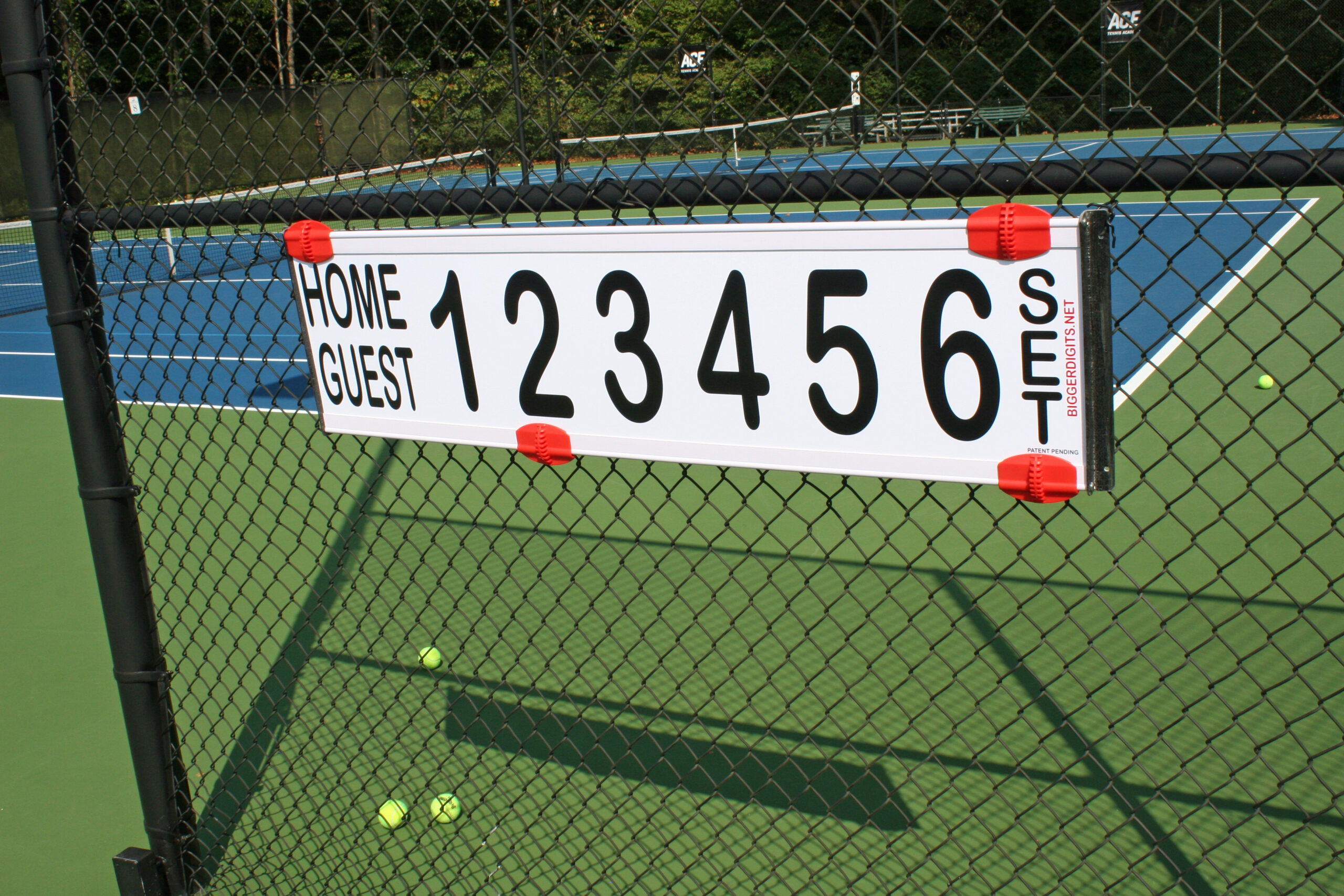
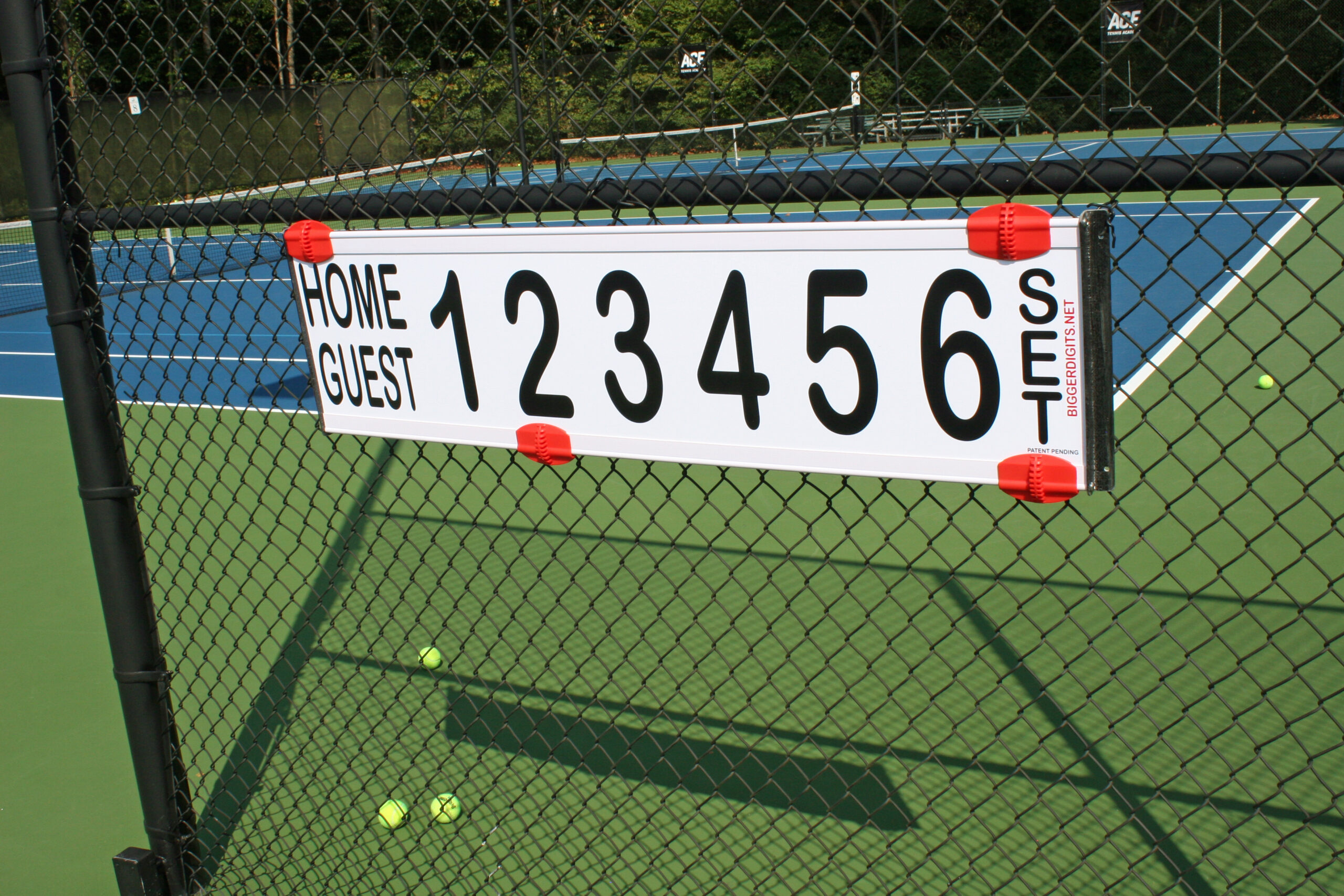
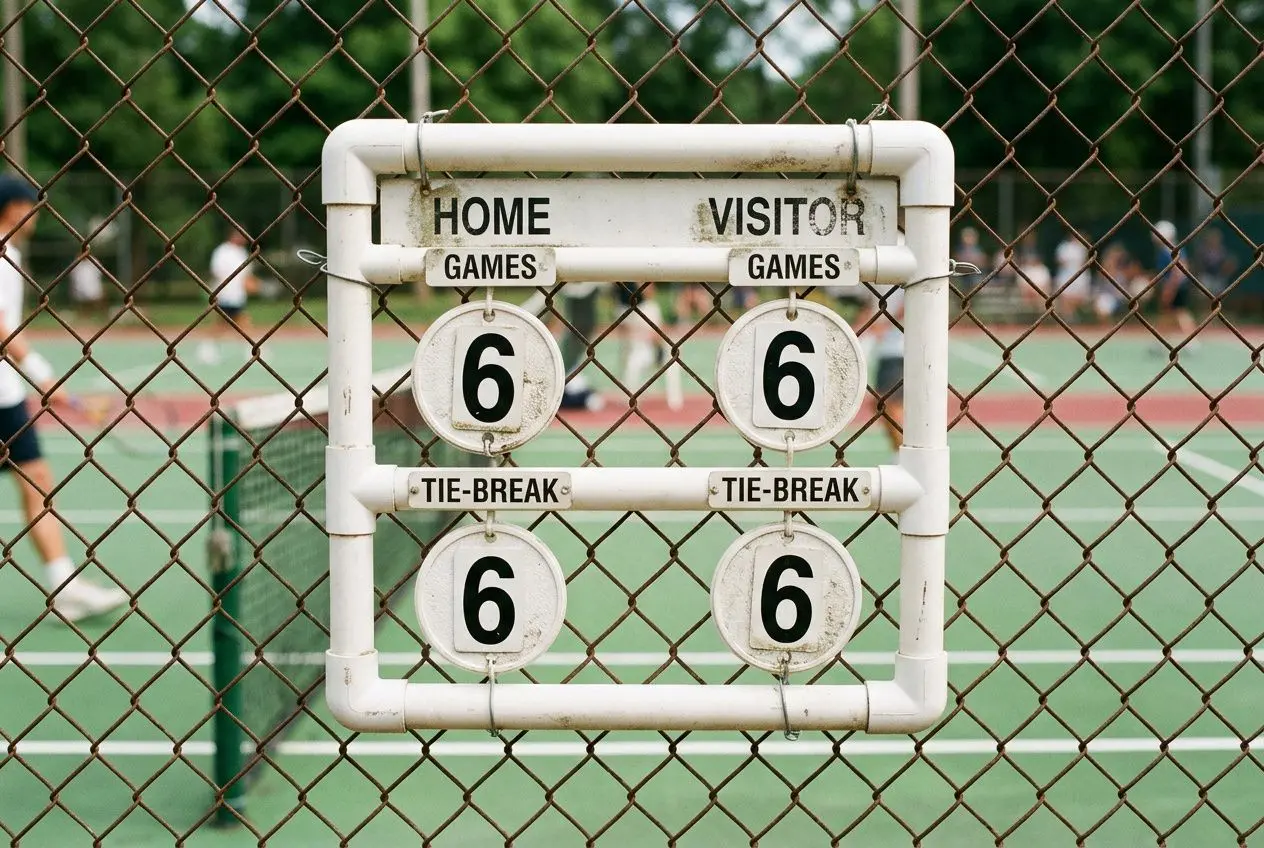
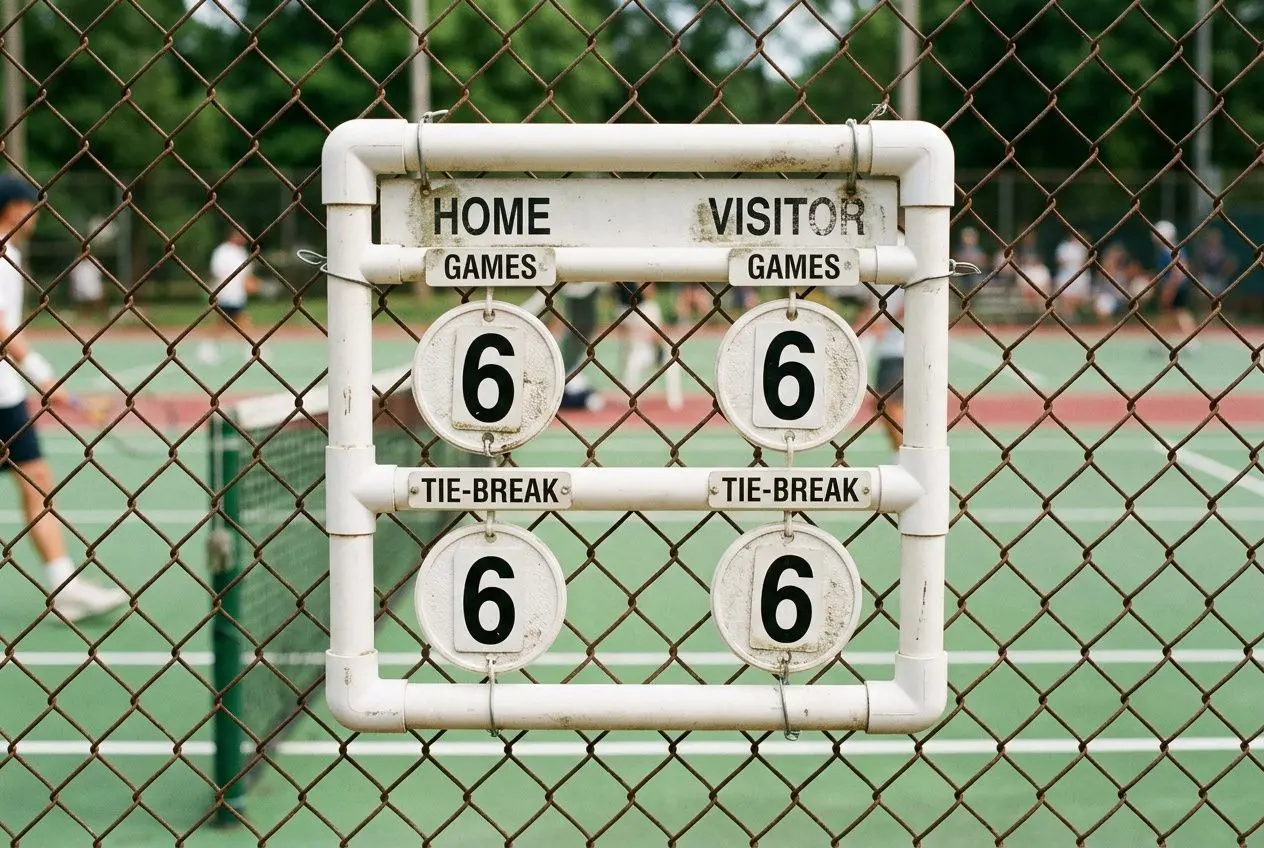
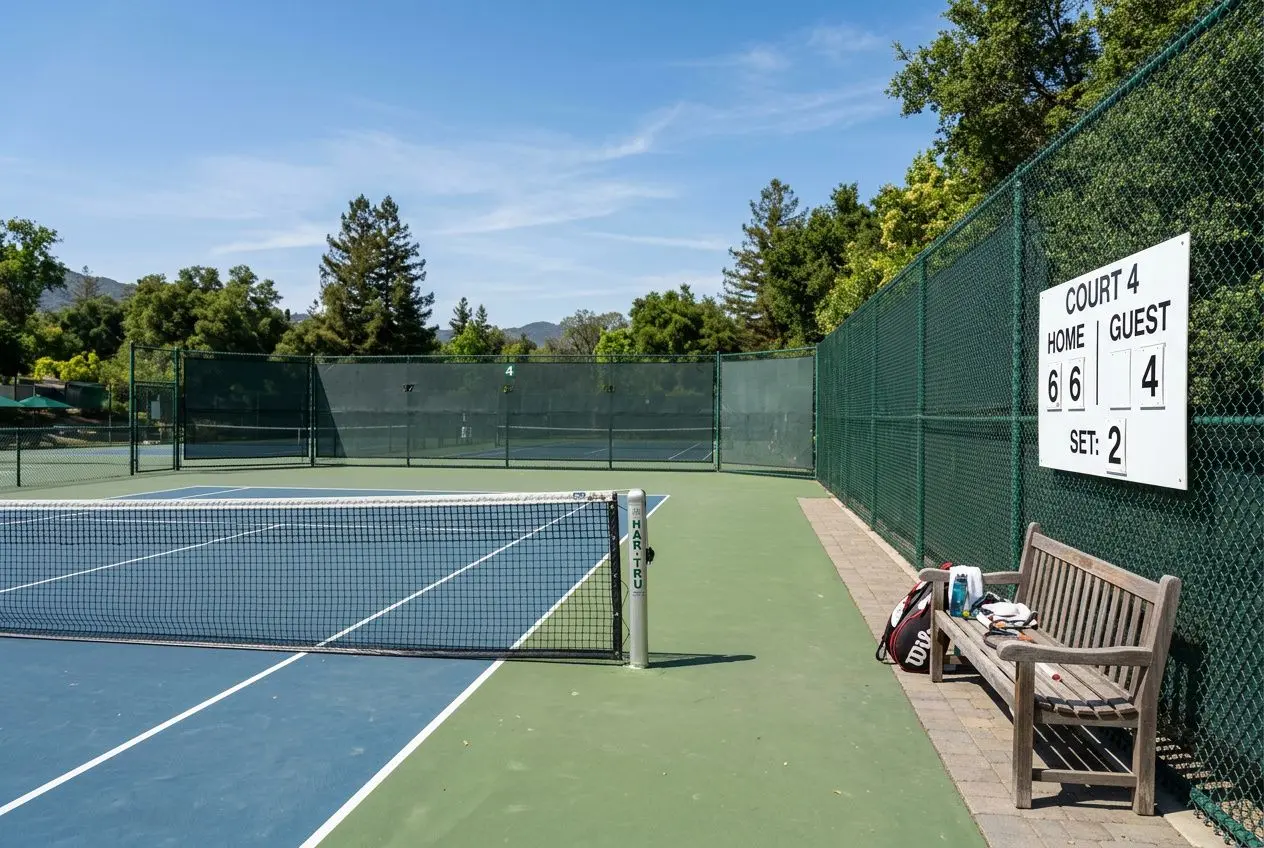
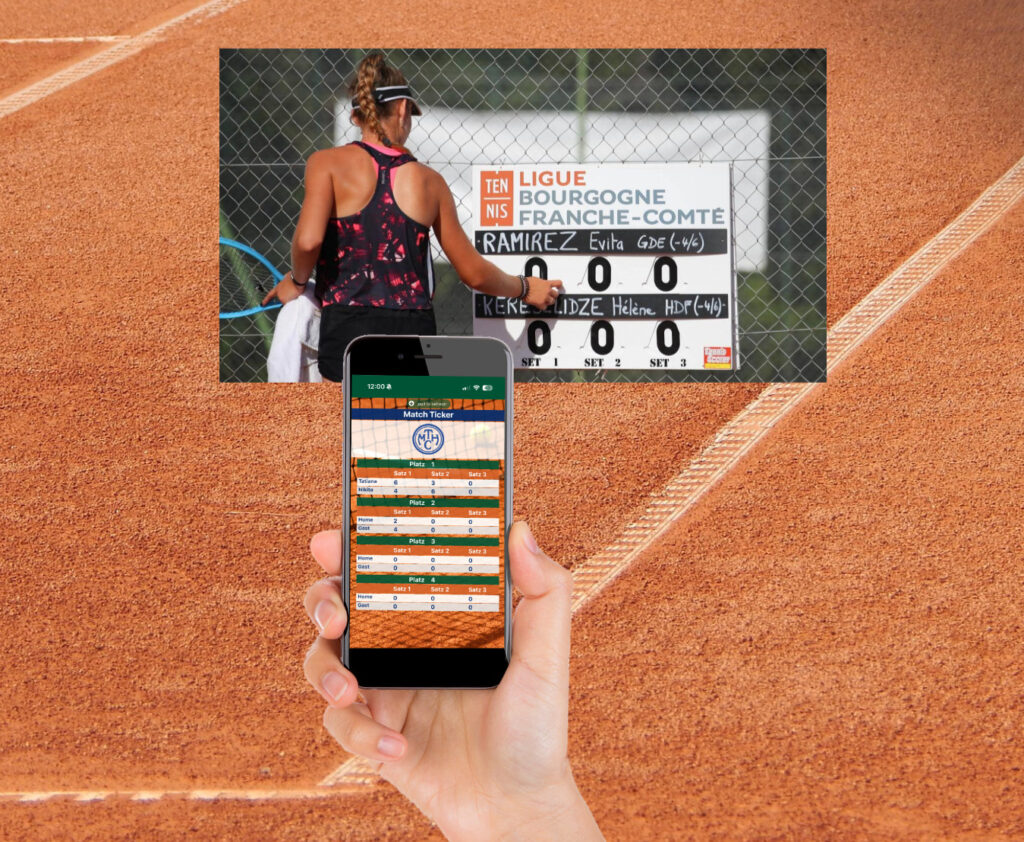
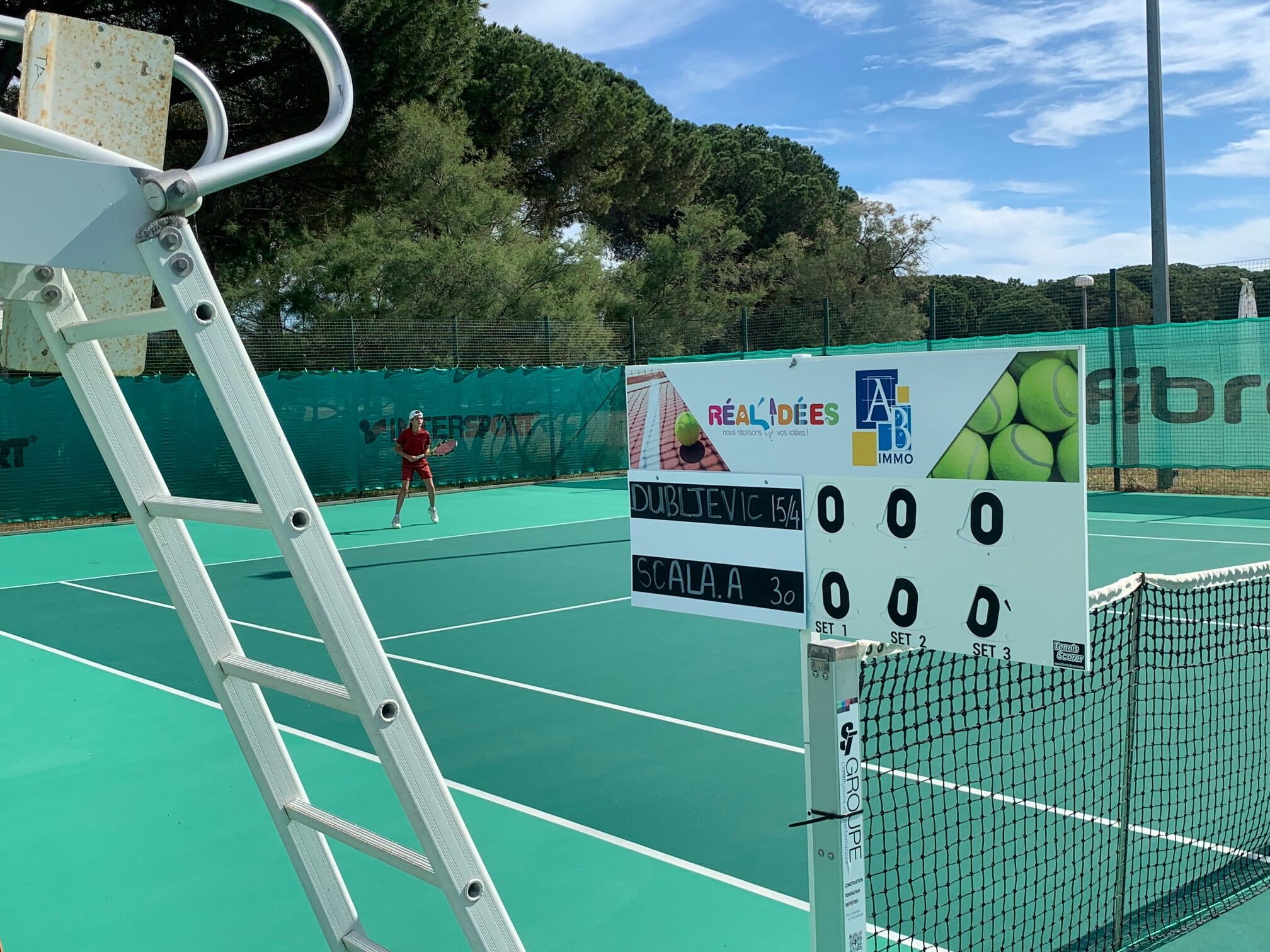
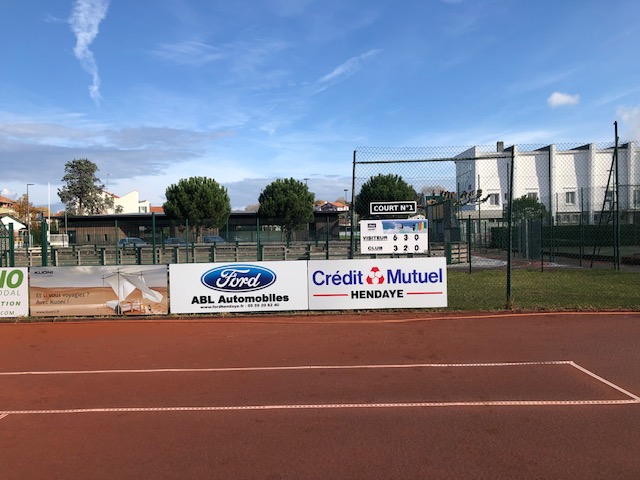
Fixed equipment on the fencing belongs in the same check. Tennis Scorer makes its large tennis scoreboard from weatherproof white PVC that clips onto court mesh and stays outdoors all year with little maintenance. Its compact tennis or padel scoreboard uses the same PVC and the same mesh fixing.
How does maintenance differ by court surface?
Every tennis court surface has its own weak point. On asphalt, the problem is blocked pores. On synthetic grass and artificial clay, it is the infill. The clearing and inspection routine above applies everywhere, but the deeper work depends on what the court is made of.
Porous macadam and coated hard courts
The LTA describes porous macadam as open-grade asphalt laid over a free-draining foundation. It is usually finished with an acrylic or polyurethane colour coating, which contains slip-reducing agents for grip and consistent bounce. Sweep or vacuum this hard court regularly and wash it from time to time. Dirt and biological deposits clog the voids, slowing drainage and leaving a slippery film after rain.
Weather affects the surface in other ways too. New macadam can stay slightly soft while it reaches final hardness, especially in hot weather during its first season. When snow or ice covers a porous park court, the LTA prefers to let it melt. Salt, chemical de-icers and metal scrapers are ruled out.
Sand-filled artificial grass
Synthetic turf on porous asphalt depends on its sand. In line with LTA guidance, remove leaves regularly, brush weekly and check sand levels monthly. Use the installed carpet’s specified level rather than a generic depth. Lost or compacted sand flattens the pile, which affects drainage, traction and ball bounce.
Compaction can also form a relatively impermeable sand layer that encourages moss. When a carpet needs vigorous grooming, arrange mechanical brushing: the LTA considers hand brushing essentially ineffective for that job.
Artificial clay and traditional clay
An artificial clay court needs attention after every session. The LTA recommends drag-matting after each game, sweeping excess infill back from the perimeter and net line, and filling low spots promptly. Once a week, a more robust brushing or dragging limits compaction. Some systems may benefit from sub-base and infill rejuvenation after approximately 5–6 years of use, though this is not a fixed replacement deadline.
Traditional clay or shale works differently. It needs its own instructions for watering, rolling, brushing and seasonal work. Artificial-clay infill specifications should never be applied to a natural clay court.
How should you control moss and algae?
Moss and algae grow where organic matter and damp meet, and once rooted they make a surface slippery and slow to drain. Control works best in a fixed order: prevent, wash with care, then treat with a product that is legal for the job.
Prevent growth before it spreads
Prevention starts with the leaves and other debris already covered in routine cleaning. Organic matter lodges in porous surfaces and gives moss and algae a place to grow. Treatment timing depends on the surface:
- Porous park courts: water-based biological treatment in early spring and/or autumn, more often on damp, shaded or wet sites.
- Artificial clay: check for moss and algae every 6 months.
- Whole-court treatment: once a year on artificial clay where appropriate, following the installed system’s instructions.
As a result, most of the work happens before growth is visible. Dealing with established moss carries more risk, because cleaning living moss aggressively can damage the playing surface.
Wash porous courts without causing damage
Before deep cleaning, remove loose debris, identify the installed surface and test the method on a small area. The LTA recommends a vigorous wash at least once a year. It allows annual or twice-yearly pressure cleaning depending on site conditions, but sets no universal operating pressure. Too much pressure can dislodge coloured coating or stone chippings, and steam cleaners are ruled out.
If washing does not restore drainage, the difference comes down to cause, not force. Ask the installer or a specialist for advice instead of turning up the pressure. Control where wash-water and residues go, too: in England, discharging contaminated water to surface water or groundwater may require a permit.
Select and apply treatments legally
Neither LTA nor HSE guidance establishes household bleach as a standard tennis-court moss treatment. Check the product’s authorised use and the surface manufacturer’s instructions. Approval for amenity turf does not, on its own, mean a product can be used on a playing surface. HSE also notes that professional plant-protection rules can apply to sports grounds and amateur-club volunteers. These include certification or direct supervision and professional-user registration.
Where an employer uses hazardous treatments, a COSHH (Control of Substances Hazardous to Health) assessment is required, and a safety data sheet alone does not count as one. Once a court has been treated, follow the product’s access restrictions rather than assuming a standard closure period.
When is repair or resurfacing necessary?
Some problems don’t come out with any amount of cleaning. Knowing when a court has gone past routine care decides whether a club pays for a new coat of paint, a new surface or a full rebuild.
Recognise defects beyond dirt
Cracks, rips or tears, pooling water, unevenness and fading are signs that a court may need a resurfacing assessment, not another clean. They tend to show up first in the inspection photos described earlier.
From that point, the key question is depth. Find out whether the surface damage is confined to the coating or playing layer, or linked to settlement, cracking or problems with the drainage underneath.
When the cause is below the surface, the LTA recommends a professional specification for courts with subsidence, poor drainage or cracking.
Match the work to the defect
Tennis court resurfacing can mean a new finish on an existing hard court or replacing worn synthetic carpet. It does not automatically mean rebuilding the whole court. However, the LTA notes that a badly deteriorated court may need reconstruction instead. To resurface a suitable porous-macadam tennis court in the UK, LTA guidance specifies piercing the surface at 450 mm centres before laying new macadam. This is specialist work, not routine maintenance.
Plan intervals and approvals
For budgeting, the LTA recommends repainting porous macadam approximately every 5 years and resurfacing it approximately every 8–10 years. It gives porous asphalt a typical surface life of 10–12 years. These are planning intervals, not a diagnosis of any particular court: actual life depends on construction, drainage, use and maintenance.
Court resurfacing normally needs no planning consent, according to the LTA. If the court’s construction, colour, level or surface will change, it recommends checking with the local authority first.
How does construction affect long-term upkeep?
Many maintenance problems start with how the court was built. Tennis court construction decides how water leaves the surface. When the layers underneath are wrong, cleaning the top only treats the symptoms.
Understand the layers beneath the surface
Porous asphalt makes up approximately 80% of UK courts, according to LTA technical guidance. The LTA’s example build is made of these layers:
- Foundation: at least 150 mm of compacted, free-draining aggregate.
- Total asphalt: a recommended 65 mm, in two courses.
- Binder course: 40 mm, the lower asphalt layer.
- Surface course: 25 mm, the playing layer on top.
The foundation has to give water a route away.
Check ground conditions and court falls
Poor site soil can undermine stability and drainage, leading to standing water and an uneven playing surface. To help water drain away, the LTA specifies a 1:200 formation fall, meaning a gentle slope built into the ground beneath the court.
Flatness has its own limit: the LTA allows a surface-course tolerance of 8 mm beneath a 3 m straightedge. These are guidance figures, not legal requirements, but they are a useful benchmark when checking low spots.
Account for changing drainage pressures
Weather is putting more strain on drainage. Sport England lists flooding, drought, heatwaves and other extreme weather as risks to sports facilities. That makes weather exposure a fair question in any assessment of how well an outdoor court drains.
Vegetation can cause trouble underground as well as on the surface. A 2026 UK tender for two outdoor macadam courts included removing intruding roots alongside sub-base repair and drainage improvements.
On court, that means reading persistent pooling as a warning. A stable, properly graded base limits later problems. Where water keeps collecting because of drainage faults or settlement, the base is what needs assessing.
Frequently Asked Questions
How should you pressure wash a tennis court safely?
HSE guidance on low-pressure washers at work calls for checking the equipment for leaks, wear and damage before each job and using suitable protective measures. Stay gentle on growth: cleaning living moss aggressively can damage the playing surface.
What can be used to kill moss on a tennis court?
Use only a product authorised for that use. According to HSE, moss control falls under plant-protection-product rules, and suitability for lawns or amenity turf does not by itself allow use on a tennis surface. HSE’s lists of authorised biocidal products show each product’s status, active substance, product type, dates and user category. The professional exemption known as “grandfather rights” ended on 26 November 2015.