
Table of Contents
This guide explains the easiest way to keep tennis score, from the first point call to completed sets. It covers every layer of the tennis scoring system, so a beginner can follow a match with confidence.
How to keep tennis score one point at a time
Understanding the tennis points system fundamentals starts with a clear hierarchy: each point builds a game, each game contributes to a set, and sets decide the match. Once that structure is clear, the rest becomes easier to follow.
Learn the point calls
Tennis uses four calls instead of ordinary numbers. Zero is love, one point is 15, two points are 30, and three points are 40. A player wins the game on the fourth point only when leading the opponent by at least two points. The sequence is love, 15, 30, 40, then game.
Say the server’s score first
The server announces their score before the receiver’s: a server with two points against an opponent with one calls 30-15, never 15-30. When both players have the same score below 40, the call uses “all”, as in 15-all or 30-all. This convention, standardised at Wimbledon by 1877, keeps the score clear throughout the game.
Use court sides as a memory check
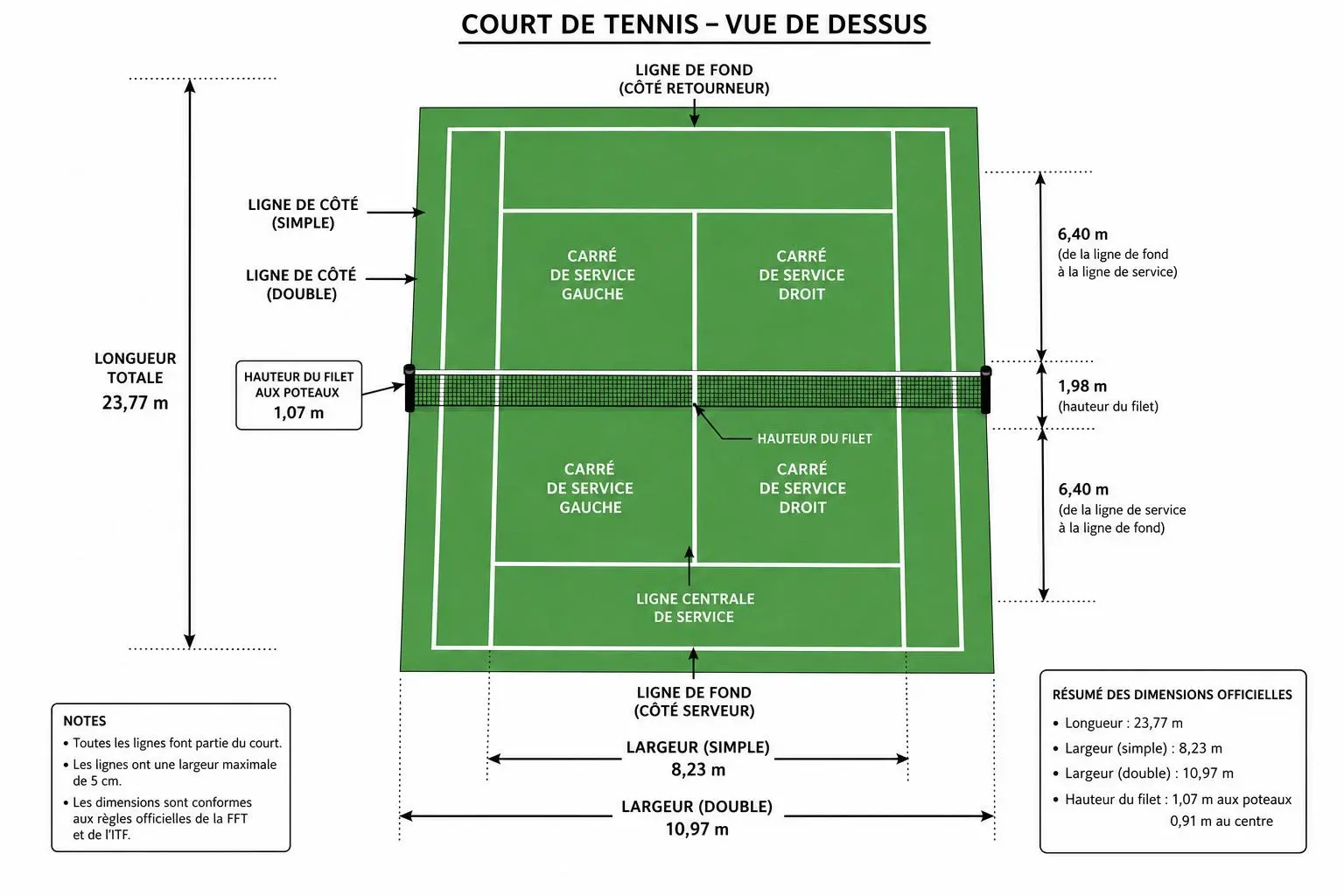
Serving from the correct side provides a useful check on the score. Every game begins on the deuce side, the right-hand side when facing the net, because no points have yet been played and the total is even. After each point, the server moves to the opposite side.
The server uses the advantage side whenever the total number of points played in the game is odd, such as after the first, third or fifth point. In practice, an even total means the deuce side, while an odd total means the advantage side. The court position therefore confirms the point count without mental arithmetic.
Record every game and set clearly
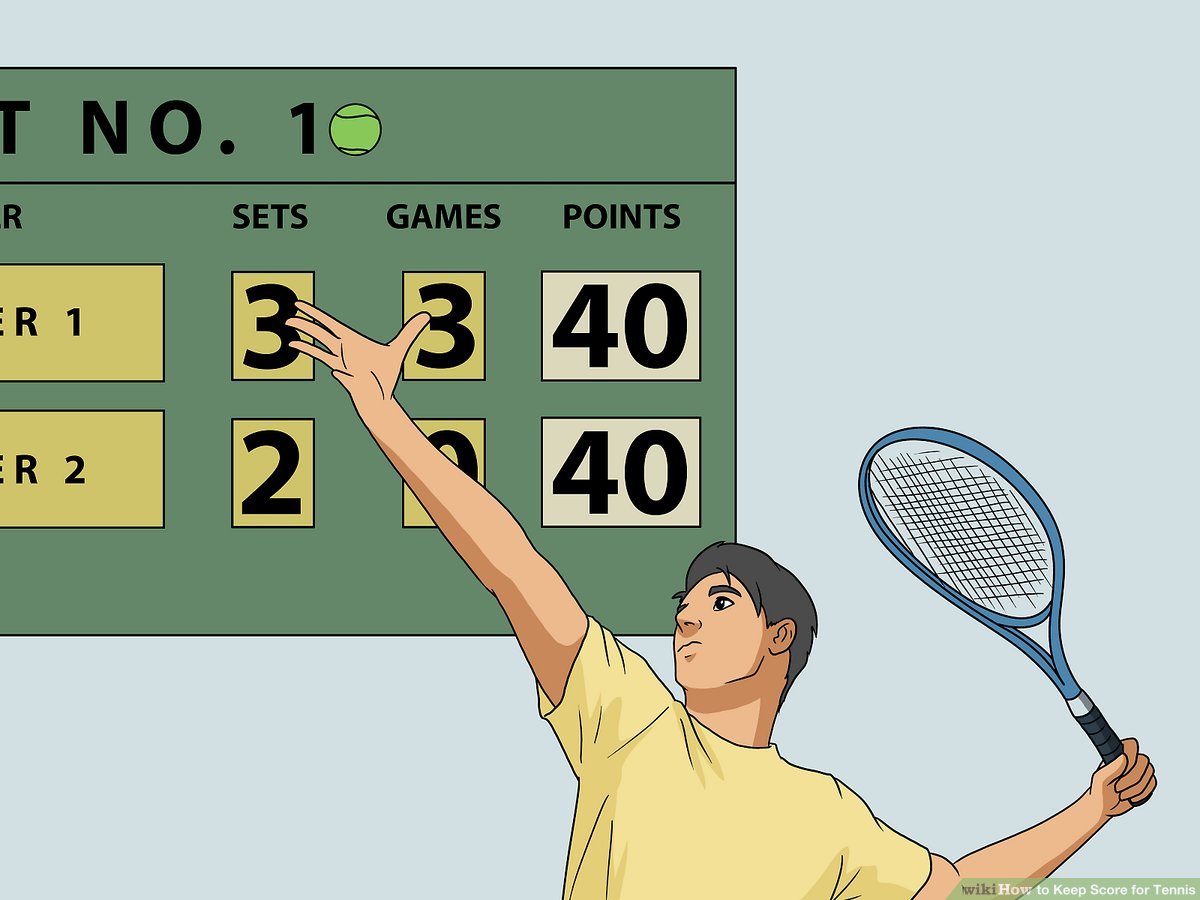
Once the point sequence is secure, the next task is tracking games and sets. A tennis score sheet separates point scores, game tallies and set columns, preventing confusion when a match reaches a third set or goes further.
Handle deuce without losing track
When both players reach three points, the score is deuce rather than 40-all. Neither player can win the game with one further point; a two-point lead is required. A clear score sheet helps record each deuce cycle accurately, particularly during a long game.
- Deuce: both players have three points. If the player with advantage loses the next point, the score returns to deuce.
- Ad-In: the server wins the point after deuce and gains advantage; one more point wins the game.
- Ad-Out: the receiver wins the point after deuce and gains advantage; the same single-point-to-win rule applies.
- Return to deuce: the player holding advantage loses the next point, so the score goes straight back to deuce.
A double fault gives the point to the opponent and affects the score like any other lost rally; it can send advantage straight back to deuce. Some recreational leagues and professional doubles events use no-ad scoring instead. At 40-40, one deciding point settles the game, with the receiver choosing the return side, making the score easier to track.
Write games into each set
A set is won by the first player to reach six games with a margin of at least two. Scores of 6-3, 6-4 and 7-5 complete the set, but 6-5 does not: the trailing player must win one more game to force 6-6 before a tiebreaker decides it.
A best-of-three format, standard for most club tennis and all women’s singles, ends when one player wins two sets. A best-of-five format, used for men’s singles at the four Grand Slam tournaments, ends at three sets. Recording completed set scores in separate columns keeps the match overview readable, especially when a player recovers from one set down.
Count tiebreak points as numbers
When the game score reaches 6-6, a tiebreak replaces the standard point calls. Points are counted as plain numbers—0, 1, 2, 3 and so on—instead of love, 15, 30 and 40. A typical tiebreaker is won by the first player to reach seven points with a two-point lead; at 6-6, play continues until one side leads by two. Players change ends after every six points during a tiebreak.
Since 2022, all four Grand Slam tournaments have used a 10-point match tiebreak in the final set when the score reaches 6-6. To play a tiebreaker in this format, the first player to reach ten points with a two-point margin wins the final set and the match. A completed bracket might read 7-6 (8), showing that the loser made eight points during that tiebreak, unlike the standard 7-6 (4) notation used in a conventional set tiebreaker.
Choose a tennis score keeper app or board
Keeping score mentally works well for a friendly match. In competitive play, however, doubles scoring or a deciding final set can create unnecessary mental load.
What a score keeper does
A reliable score keeper does more than count. It records each point, updates the game and set totals, identifies the current server and keeps the displayed score aligned with the selected match format. The result is straightforward: fewer disputes and less time lost between points.
- Point tracking: advances the score from love through 15, 30, 40 and game after each rally, switching to deuce and advantage when required.
- Game recording: adds each completed game to the running set total and checks whether the required two-game margin has been reached.
- Serve rotation: identifies the serving player after each game and alternates correctly, including at the first point of each tiebreak.
- Format compliance: applies advantage scoring, no-ad scoring or tiebreak rules according to the competition format selected before the match.
Consistency matters most under pressure. A human score keeper can lose track during a long deuce sequence, whereas a correctly configured tool follows the selected rules. In doubles, it also handles team names and the fixed serve rotation across all four players, adding control where manual counting often becomes unreliable.
Use an app for automatic scoring
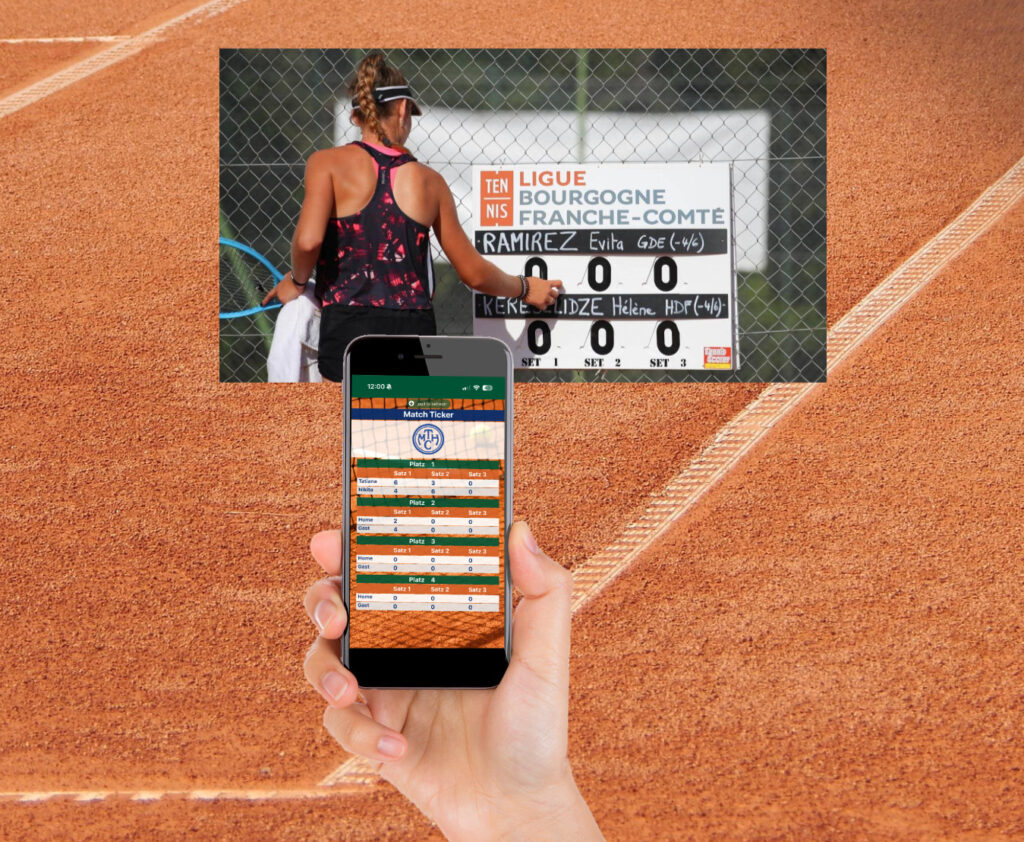
A tennis score keeper app automates each stage of the tennis scoring rules without requiring a dedicated device. Most apps run on phones, tablets or laptops, with responsive layouts suited to courtside use. A free online scoreboard can also track points through a browser and apply ITF tiebreak rules at 6-6, changing the display to numerical scoring when a tiebreaker begins.
- Undo control: reverses an incorrect tap before it affects later points, preserving accuracy without restarting the match.
- Offline operation: stores match data locally when reception is unreliable, making the app more dependable than a browser-only tool on a weak signal.
- Format selection: supports advantage scoring, no-ad scoring, a standard tiebreak and a 10-point match tiebreak for recreational and competitive formats.
For an overview of tennis scoring rules across different formats, this guide to tracking tennis scores easily compares apps, online scoreboards and physical devices. The right choice for doubles scoring or a multi-set match is the tool that manages serving, rotation and tiebreak logic without manual intervention.
Choose a visible court scoreboard
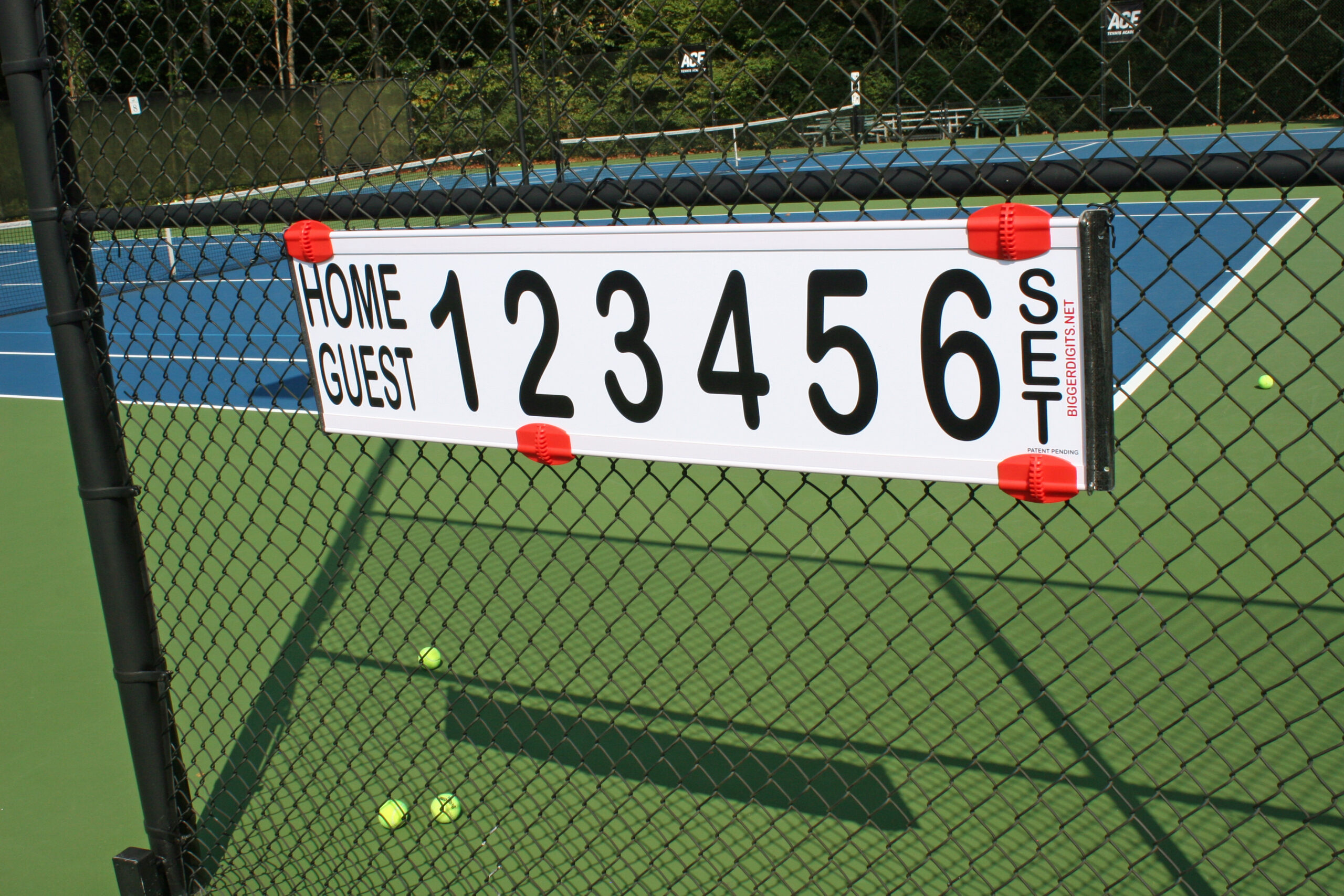
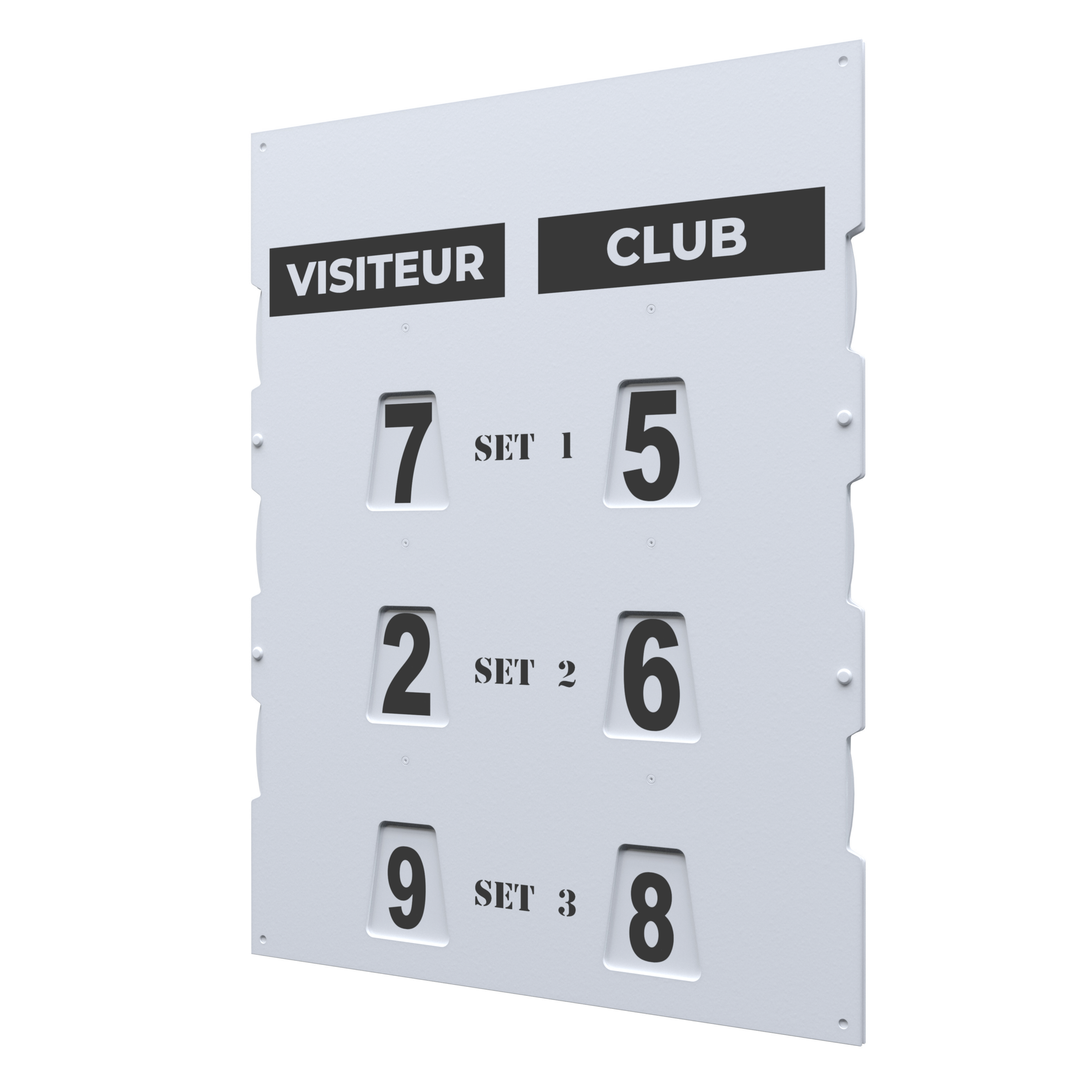
A manual PVC scoreboard avoids batteries, screens and signal problems. Fixed boards remain visible from both baselines, while a full-panel board measuring 56×80 cm stays legible beyond 50 metres without electrical power. Net-post models fit over the post and remain outside the court lines, keeping the score visible without altering the court surface or net structure.
Tennis Scorer has manufactured manual PVC boards in France since 2002, supplying nearly 3,000 clubs and 16,000 courts across Europe and the United States. These weather-resistant boards suit year-round outdoor use in clubs and tournaments where visibility matters more than digital statistics. When infrastructure is unreliable, a physical board remains a dependable option.
Frequently asked questions
How do you keep score in tennis for beginners?
Start with the point sequence: love, 15, 30, 40, then game. The server announces their own score first, so 30–15 means the server leads. A player wins the game by being the first to reach four points, unless the score reaches 40–40, when a two-point lead is required.
When both players reach 40, the score is deuce. Two consecutive points are then needed: one creates advantage, and the next wins the game.
Why does tennis use 15, 30 and 40 instead of 1, 2 and 3?
The 15, 30 and 40 point calls are historically linked to medieval France and quarter-hour clock markings. The original sequence was 15, 30 and 45, but 45 was shortened to 40 because it was quicker to call during play.
Wimbledon had standardised the current tennis scoring system, including the 40 call, by 1877.
What is the easiest tool for keeping tennis score during a match?
For a casual singles match, a free online scoreboard is the simplest option: it requires no installation, handles tiebreak logic automatically and works in a browser on any device. For competitive or doubles matches, where serve rotation and format selection matter, a dedicated tennis score keeper app with offline capability is more reliable.
This beginner’s guide explaining how to keep tennis score covers every format, from standard advantage scoring to the 10-point match tiebreak used in Grand Slam final sets since 2022. On club courts where several players need immediate visibility, a fixed PVC scoreboard from Tennis Scorer offers a straightforward solution with no power supply required.