
Table of Contents
A tennis score tube is a simple way to show a match score on court, using tennis balls as markers. What it displays, how it attaches to a net post, the net or a fence, how it stands up to weather and what it costs in GBP all shape the choice, as does the point at which a fuller manual scoreboard suits a club better.
What does a tennis score tube show?
A score tube is a manual display mounted beside the court. It holds no electronics and no mechanism, only numbered openings and the balls placed in them.
Sets won, not every point
The tube is a manual tennis score keeper. It shows the sets won by each player or doubles pair. Its two tracks carry the labels Home and Visitor, and documented models number each side from 0 to 7. That range is a product specification, though, not a standard every tube follows.
- What it shows: completed sets for each side, such as 2–1, meaning one side has won two sets and the other one.
- What it leaves out: the current point score, the game count and any tie-break points.
- What else is missing: service order, which players have to track themselves.
As a result, a 2–1 display gives no indication of the tennis score within the set being played. Anyone arriving mid-set can see how the match stands overall, but not how close the current set is.
Updating the ball markers
The update takes one move: when a player or pair wins a set, someone places a ball in that side’s next numbered opening. The openings exist to hold these scoring markers. They are not designed for general tennis-ball storage.
The display only shows progress. It is not an official match record, and it does not replace an umpire’s score announcements.
Reading the score on court
Once in place, the balls stay visible, so players and spectators can see the completed-set score, and some tubes carry numbers on both sides. On court, whether the display is easy to read depends on number contrast, tube and ball colour, the background and the lighting. Check it with balls inserted, from both ends and from the spectator area. The Home and Visitor labels should stay clear from those positions, and the tube must stay out of the playing area and away from the net.
How will a score tube fit your court?
A tube can be mounted in three documented ways: slid over a round post, clamped to the post or net, or hung from the fence. Each method has its own compatibility checks, and the right one depends on what the court has.
Sliding over a round net post
An over-post score tube slides down over a compatible round net post. The fitting is specified for round posts only. A tube sold for round posts should not be expected to fit over a square or rectangular one.
Before ordering, measure the outside diameter of the tennis net post and confirm the tube’s internal clearance. Then look at the top of the post: a winding mechanism or other fitting there can block the tube.
Published figures do not settle the question. One tube is listed at 107 cm long with an external diameter of 9 cm, yet the same specification also gives 4 inches, which is about 10.16 cm. Neither figure states the internal clearance. A UK round steel post specified at 76 mm outside diameter is just one example, and the ITF’s 15 cm maximum post diameter says nothing about tube compatibility either.
Clamping to the post or net
Where sliding over the post is not an option, some score tubes use an adjustable clamp around a round post. Stainless-steel clamps are also specified for attaching a tube to the post or the net. The clamp’s usable range must match the structure it grips, and the clamp must not interfere with the net tensioning hardware, the centre strap or normal movement around the court.
Formal play adds a further check. The ITF’s 2024 Rules of Tennis contain provisions on attachments to net posts and their approval, so read the applicable competition requirements before fitting any accessory to a post used for competition.
Hanging from a fence
By contrast, fence hooks are the alternative when a square or irregular post will not take a slide-over tube. This method relies on compatible mesh or rails on the tennis court, a suitable attachment point and correctly sized hooks. The shape of the net posts says nothing about whether the fence will work.
After any installation, test the tube: it should not slide, rotate or swing excessively, and its numbers should face the intended viewing area.
How weatherproof is a score tube?
Score tubes stay outdoors, so the materials matter as much as the mounting. Construction details explain what the manufacturers claim, and routine checks cover what those claims leave out.
Body, finish and fittings
Documented outdoor tubes have a plastic body. One construction uses sealed, lacquer-coated HDPE (high-density polyethylene) with coated numbers and graphics. Stainless steel is specified for the mounting hardware rather than the tube itself.
- The HDPE body: it does not rust the way steel does.
- The ball-based scoring: no flip cards or rotating number wheels, so none of the moving parts that can seize or break.
- The stainless fittings: they resist corrosion, but their condition still depends on exposure and maintenance.
A weatherproof score tube is therefore a product claim, not a tested result. No independent long-term weather test, certified resistance rating or tested service life has been identified.
The standards do not fill that gap. BS EN 1510:2004 covers tennis equipment including posts, nets and net hooks, but its published scope does not establish score-tube certification.
Routine outdoor checks
Without a certified rating, regular inspection still matters. A sealed exterior does not remove the need to look at the parts most exposed.
- Body and numbering: look for cracks, and for printed numbers that have faded or lost contrast.
- Clamps and hooks: check clamps for looseness or corrosion, and hooks for bending or insecure engagement.
- Before play: confirm the tube is secure, the numbers are readable and the tennis-ball markers are present.
After severe weather, recheck the mounting and remove any dirt that has built up.
Limits of weather resistance
Those checks reflect what sealing and coating are meant to do. A sealed exterior is intended to reduce water ingress, and protective coatings are meant to keep printed graphics visible for longer.
Seams, printed numbers and attachments still need attention, whatever the body is made of. The manufacturer information reviewed gives no universal mandatory cleaning interval and no fixed replacement life for tennis score tubes.
What should clubs budget for scoring equipment?
A club’s budget depends on what it needs to show. A tube records sets won, while a fuller display carries more information for the people watching.
Score tube prices and package contents
In the UK, observed tennis score tube listings ranged from £26.50 to £89.98. Those are individual listing prices, not a verified market average. The final total can rise once other costs are added.
- VAT: HMRC states that standard-rated goods are generally subject to VAT at 20%, depending on the transaction.
- Tennis balls: some tubes come without them, so markers and replacements may be an extra cost.
- Mounting and delivery: a package may include a clamp, a fence hook or both, and delivery may be extra.
For several courts, buy one unit first. Test-fit it and check visibility, then order the rest.
When a fuller display matters
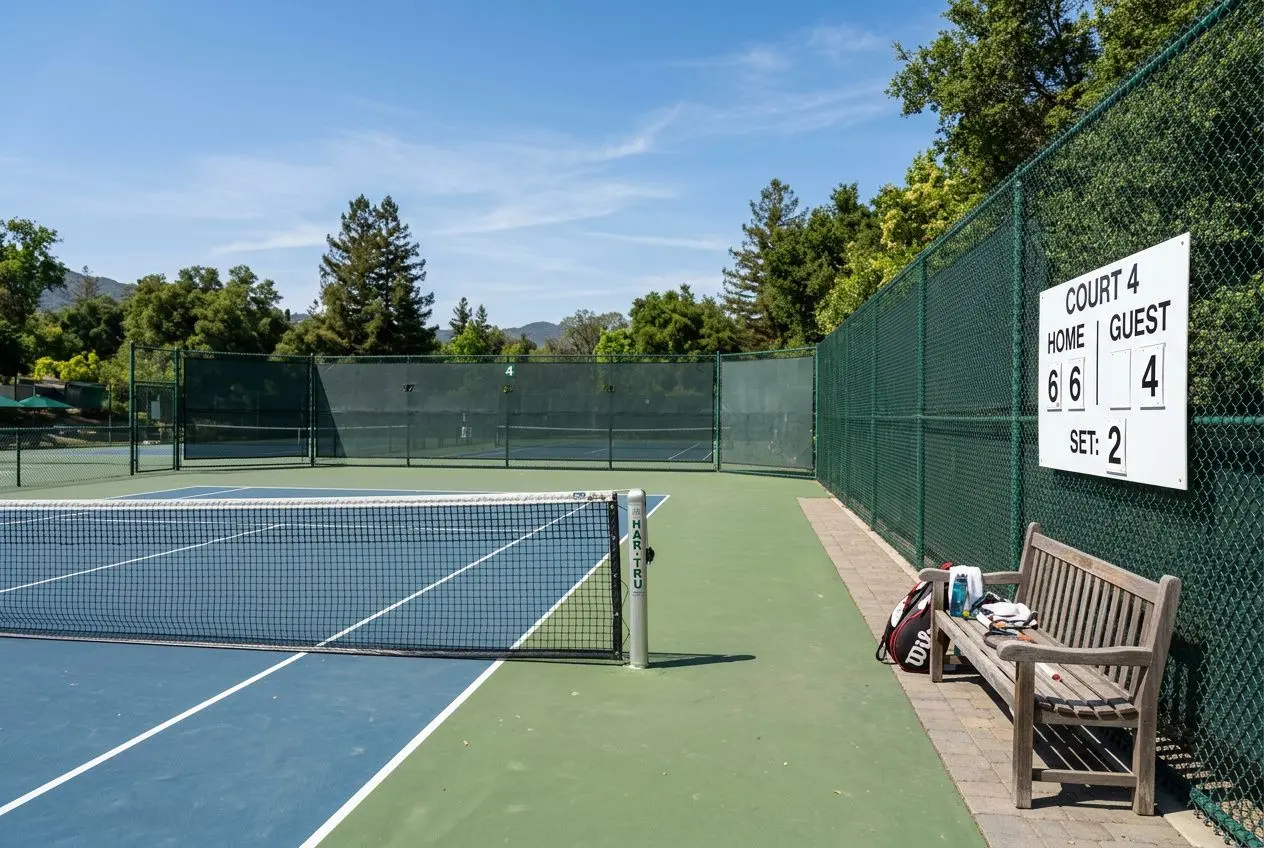
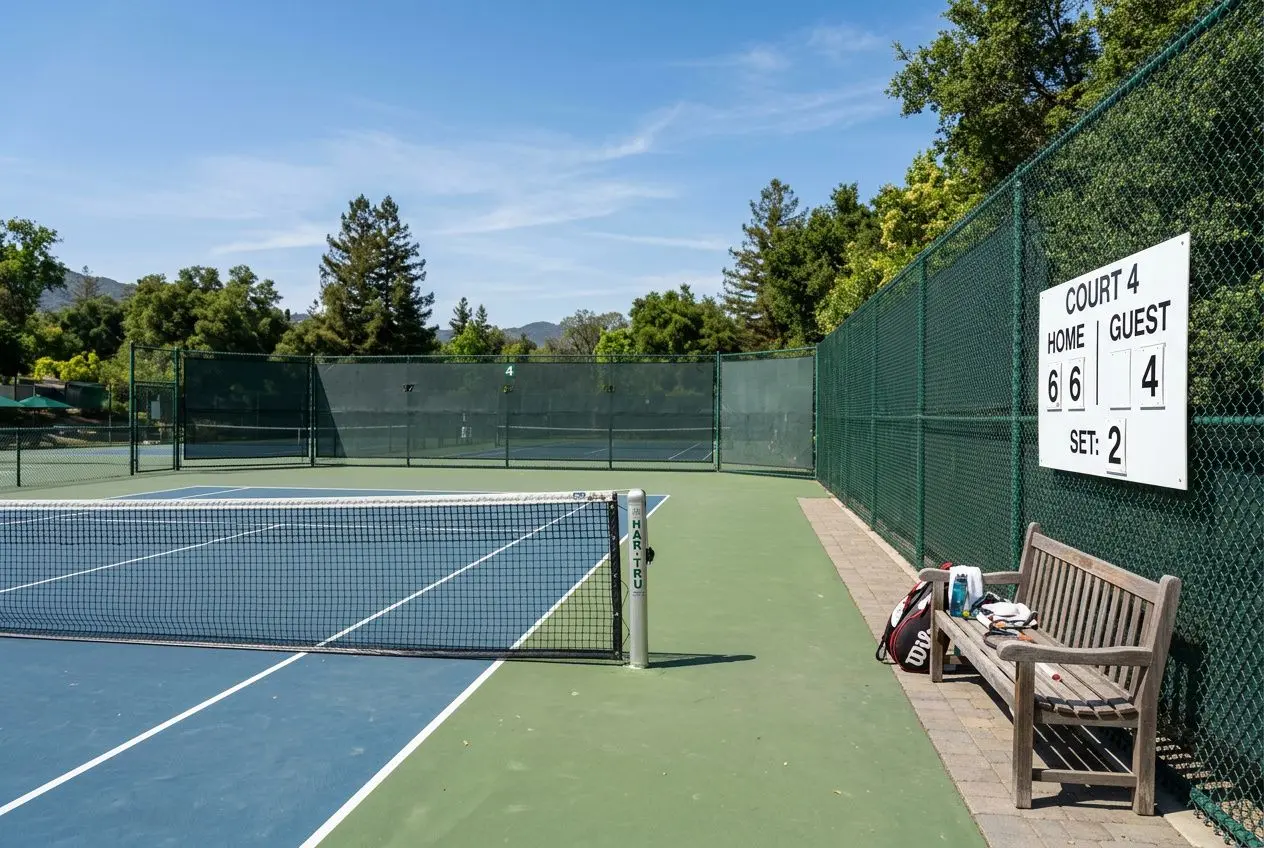
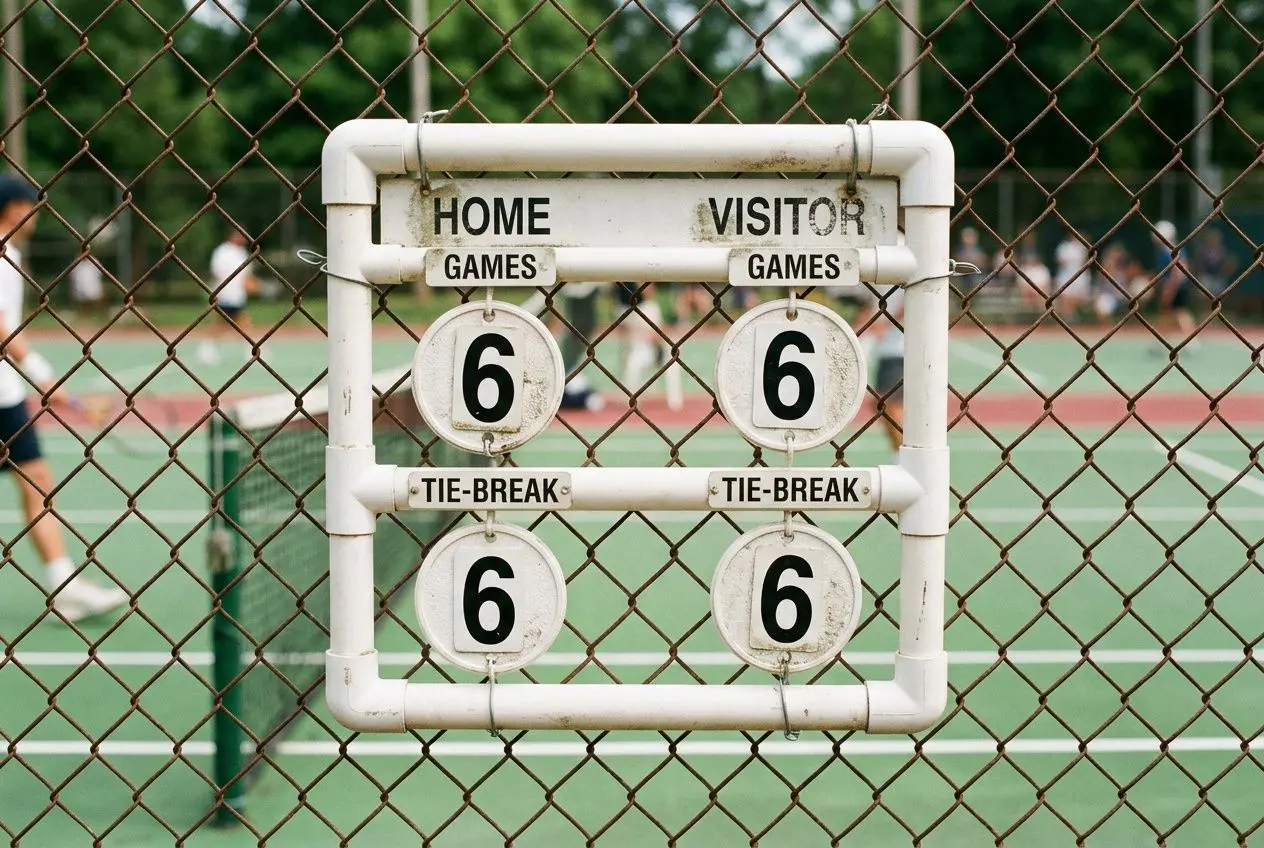
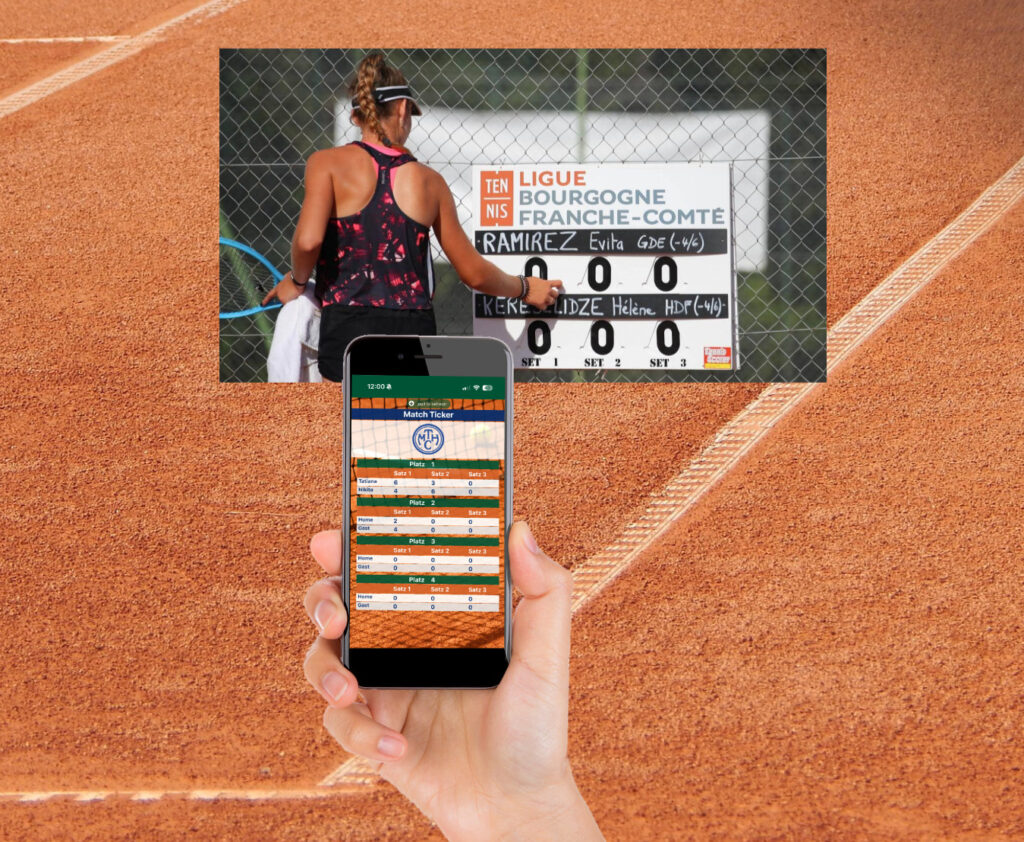
Spectators who want to follow games need a fuller tennis scoreboard.
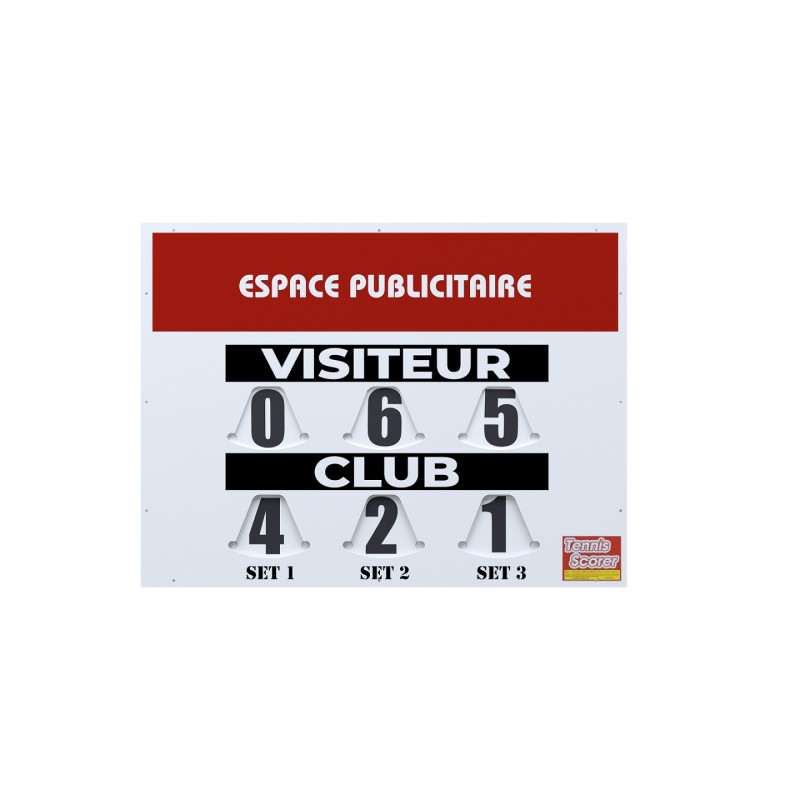
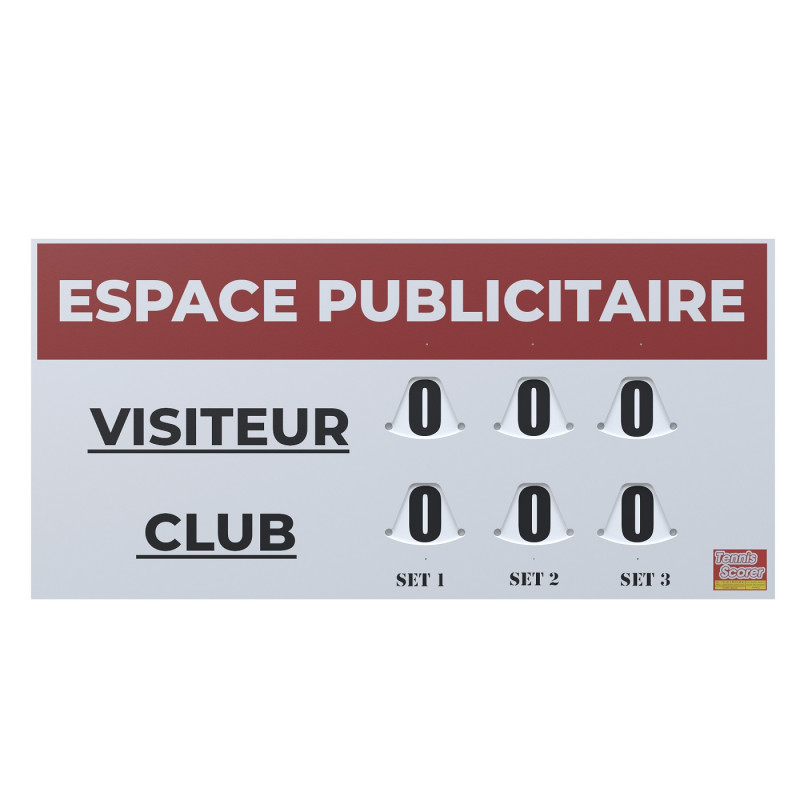
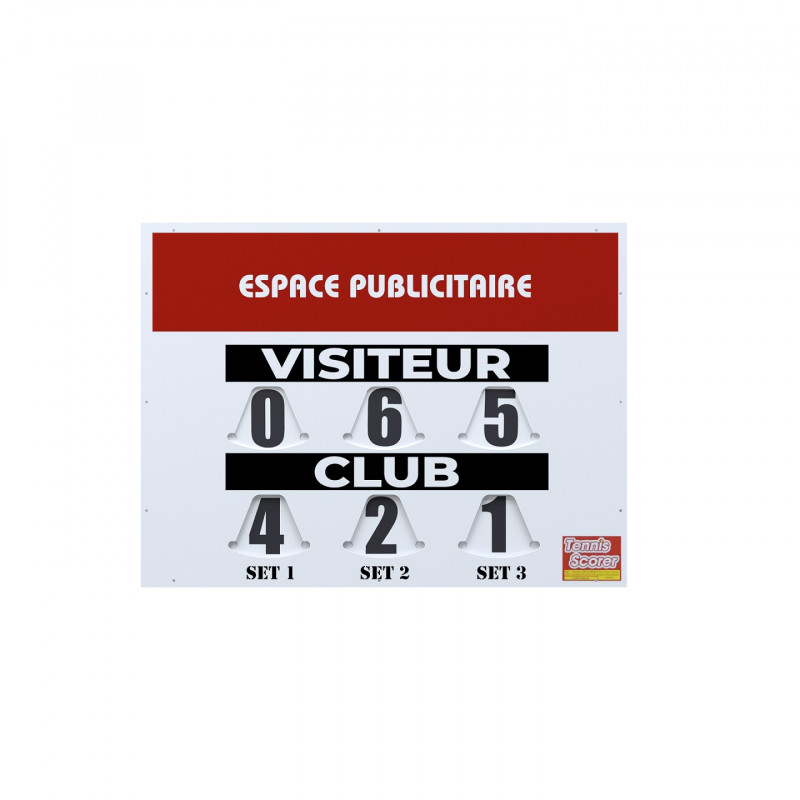
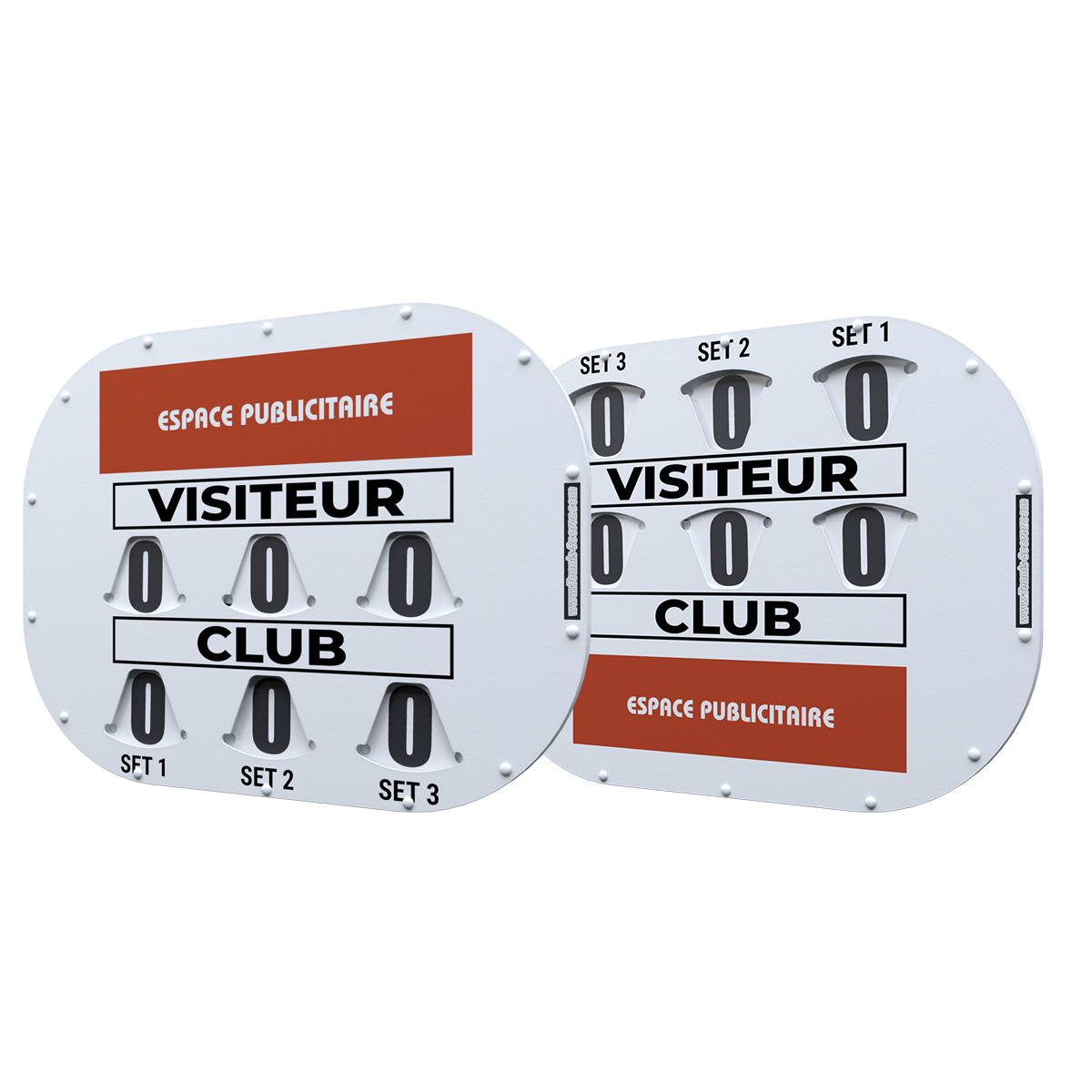
Tennis Scorer makes its manual scoreboards in France from weather-resistant white PVC. They use integrated rotating number discs and fix to the court fence. The figures are 12 cm high and 2.5 cm wide, and Tennis Scorer states they are readable at 50 m. Players update the board at changeovers, which takes two seconds every two games.
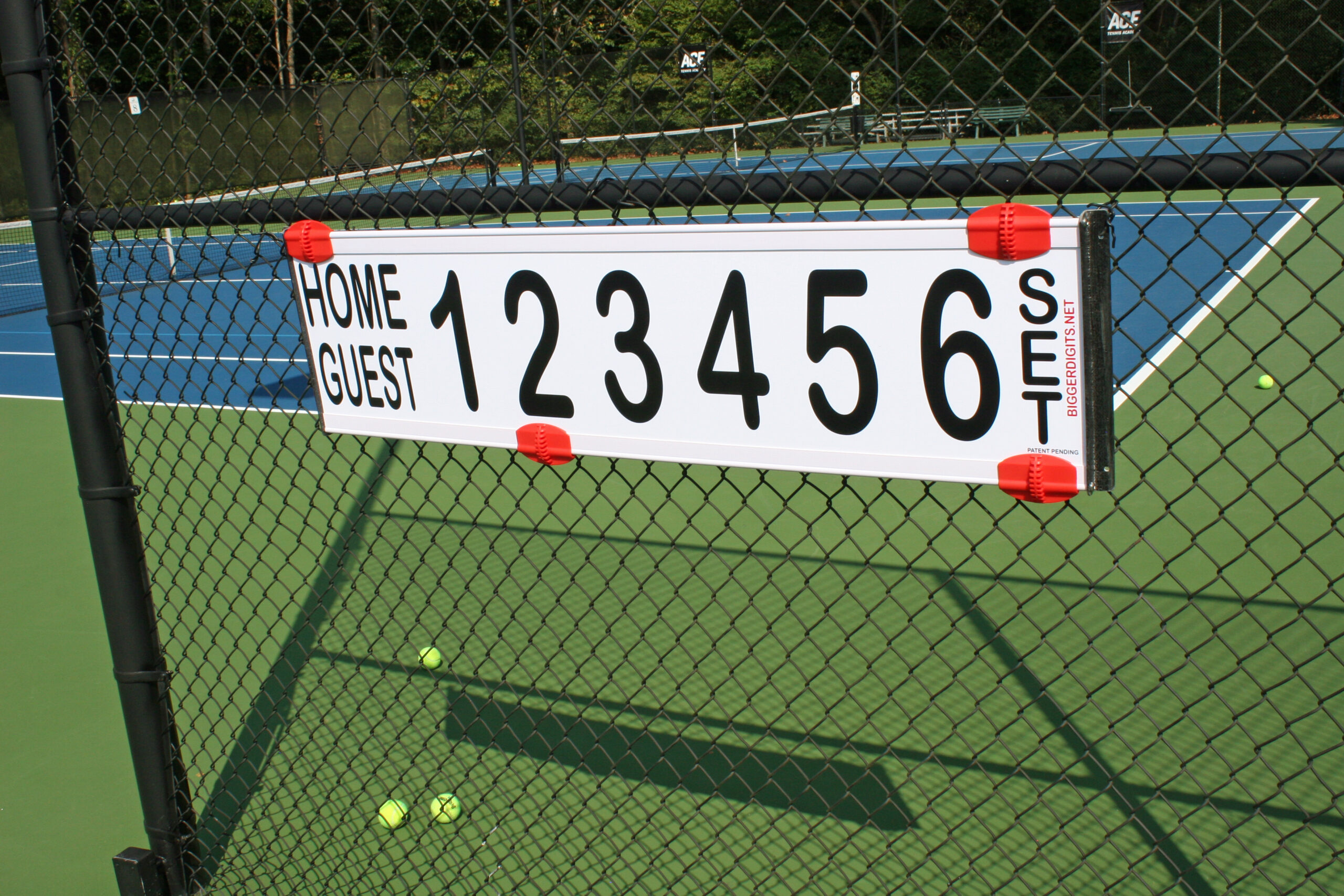
Other display types come with different trade-offs. Flip-card boards add hinged or rotating parts, while electronic boards need power or batteries.
Tennis Scorer’s weather-resistant court displays
The range has three models. The CLIPTEC tennis or padel board measures 80 × 60 × 0.8 cm and weighs 2.5 kg. The COMPACT tennis or padel board measures 80 × 60 × 1 cm and weighs 3 kg. Each comes with two manual plates for player names and rankings, plus a 78 × 17 cm customisable sticker.
For tennis, the LARGE 120 × 60 tennis board measures 120 × 60 × 1 cm and weighs 4 kg. It comes with six Serflex ties and one name and ranking plate, and has space for a club, sponsor or court identification.
| Model | Sport | Dimensions | Weight | Included |
| CLIPTEC | Tennis or padel | 80 × 60 × 0.8 cm | 2.5 kg | 2 name plates, 78 × 17 cm sticker |
| COMPACT | Tennis or padel | 80 × 60 × 1 cm | 3 kg | 2 name plates, 78 × 17 cm sticker |
| LARGE | Tennis | 120 × 60 × 1 cm | 4 kg | 6 Serflex ties, 1 name plate, sticker |
Frequently Asked Questions
Will a tennis score tube fit any net post?
No. A claim that a tube fits a round post covers one mounting method, not every post shape or every court. Do not assume a round-post tube will slide over a square or rectangular post. A fence hook is the alternative, provided the fence and the hook are compatible.
Should a score tube go on the net post or on the fence?
A net-post position is handy for players. Fence mounting may give spectators a better viewing angle. Fence mounting does not depend on the shape of the post, but it does depend on the fence mesh or rails and on the hook dimensions.
Can a score tube be used in LTA competitions?
Check the event requirements first. The LTA’s 2026 Competition Regulations took effect on 1 January 2026, and the ITF’s 2024 Rules of Tennis contain provisions on net-post attachments and their approval. Confirm both before using a tube in formal play.