
Table of Contents
Choosing waterproof outdoor advertising boards for a tennis or padel club depends on more than the material. The sign type, how the whole board keeps out water, its size, its mounting and its full cost all play a part.
Choosing outdoor advertising boards for each club location
Each part of a club calls for different outdoor signage. An entrance needs a sign people notice as they walk past, while a notice area needs shelter. Courtside, the board has to serve players first. In practice, start with the location and how often the message changes, then pick the board type.
A-boards and chalkboard pavement signs
A-boards, also known as a-frame pavement signs, are portable signs with two display faces hinged together in an A shape. As a result, an a-frame board reads from both directions at a pedestrian entrance and folds flat for storage. Choose the face by how messages change: a chalkboard pavement sign takes handwritten updates, while a pavement sign board with replaceable posters suits coaching, membership or event messages that change often.
Open entrances and car parks have room for more. Forecourt signs are larger, and swing signs carry a panel that moves. Whatever the format, a portable sign stand must leave space for people to walk past.
Poster cases, fixed panels and banners
Some notices only need shelter, not mobility. Fixed poster frames and lockable notice boards suit club notices or menu signs. Here the wall, post or railing they mount on matters more than portability, and so does the space the door needs to open.
Fixed boards can also carry identity. A rigid aluminium panel suits a court number, club name or sponsor graphic, but it needs a suitable support and fixing design. Fence banners are replaceable outdoor advertising signs. Solid PVC catches the wind across its whole surface. By contrast, perforated mesh lets some air through, although it is not windproof.
Double-sided PVC scoreboards for courts
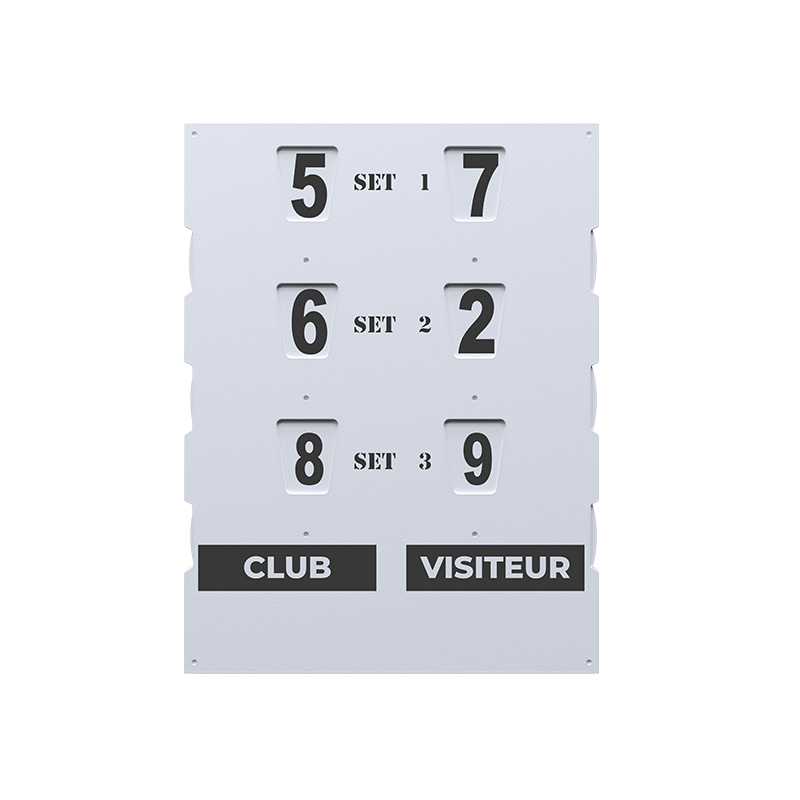
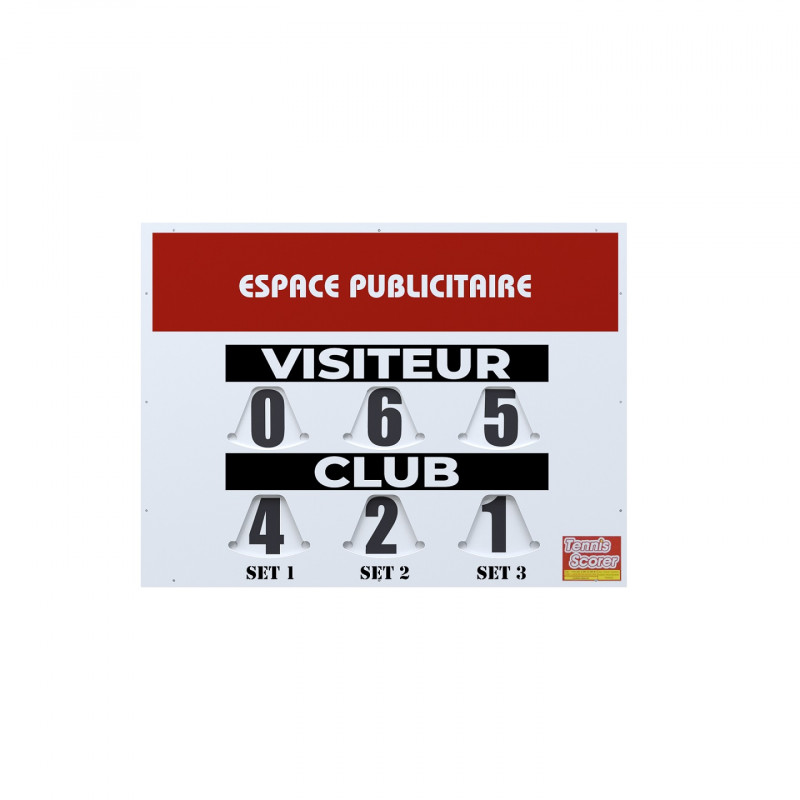
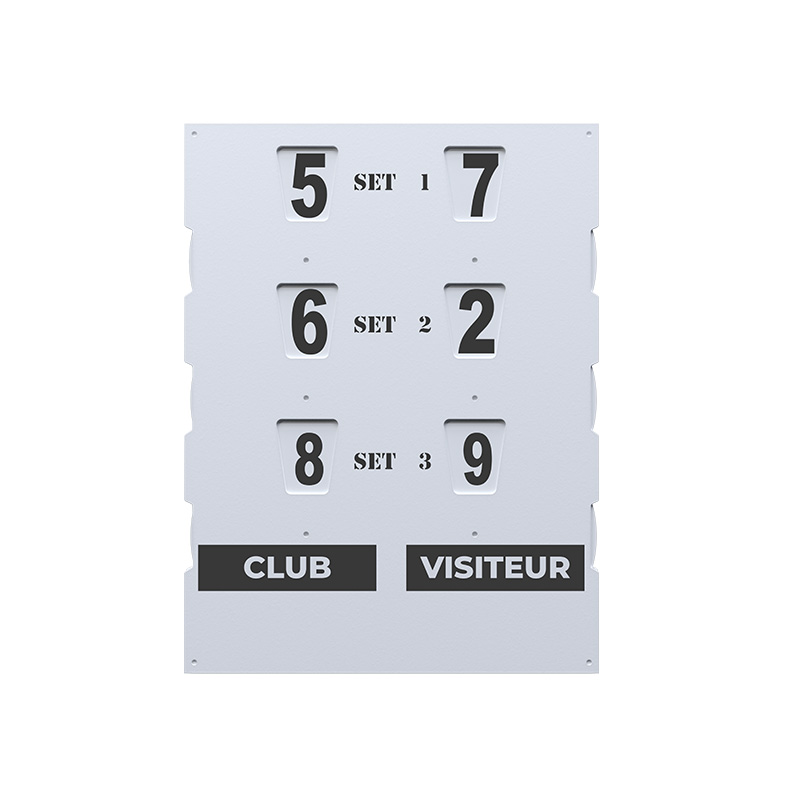
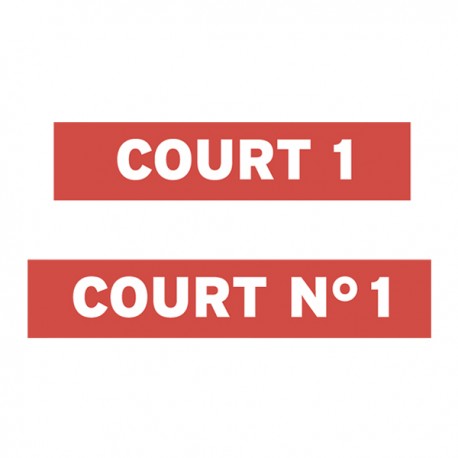
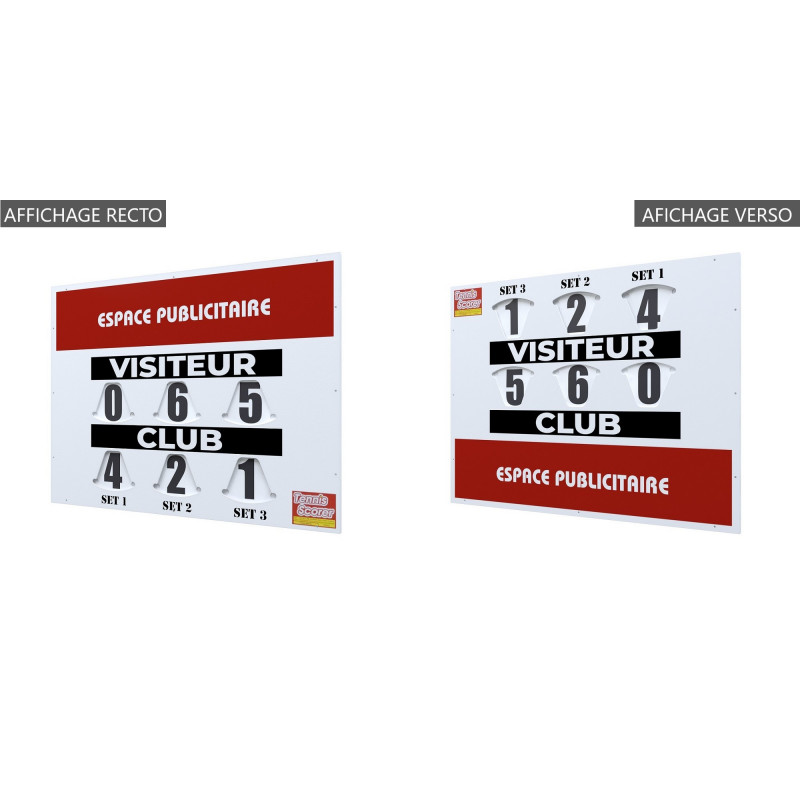
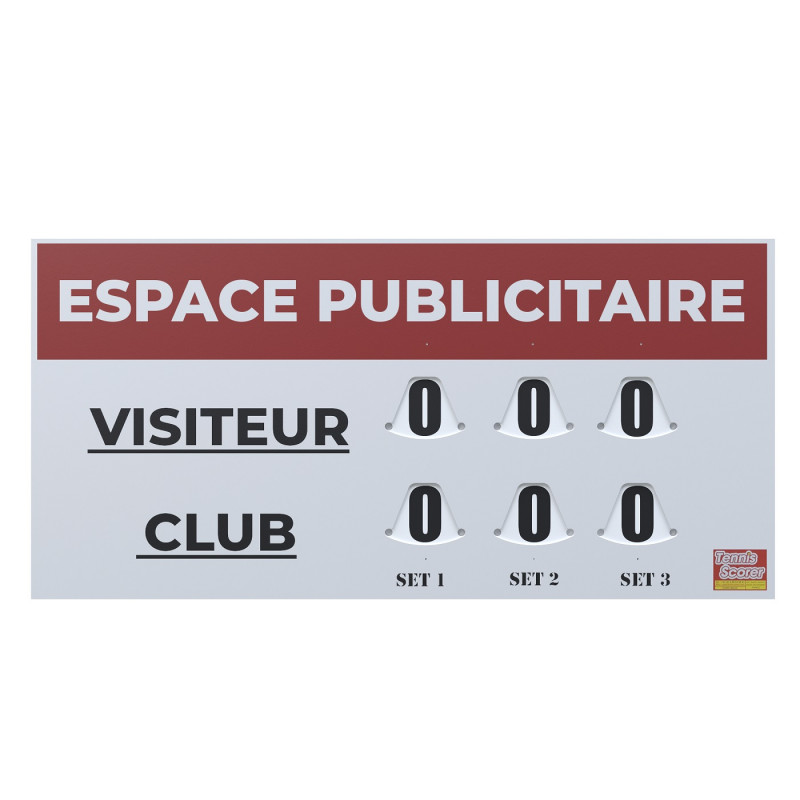
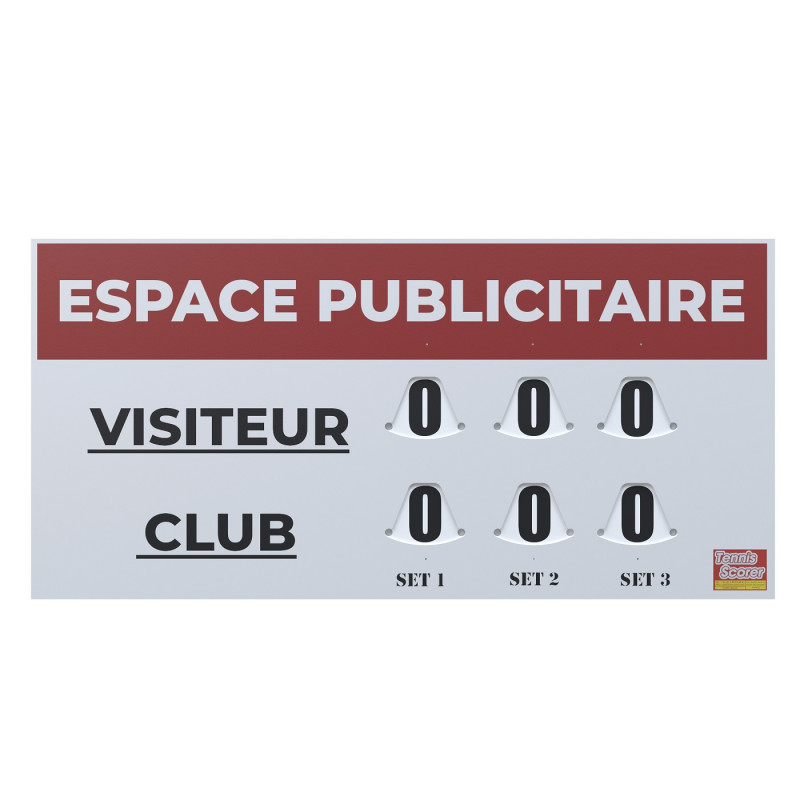
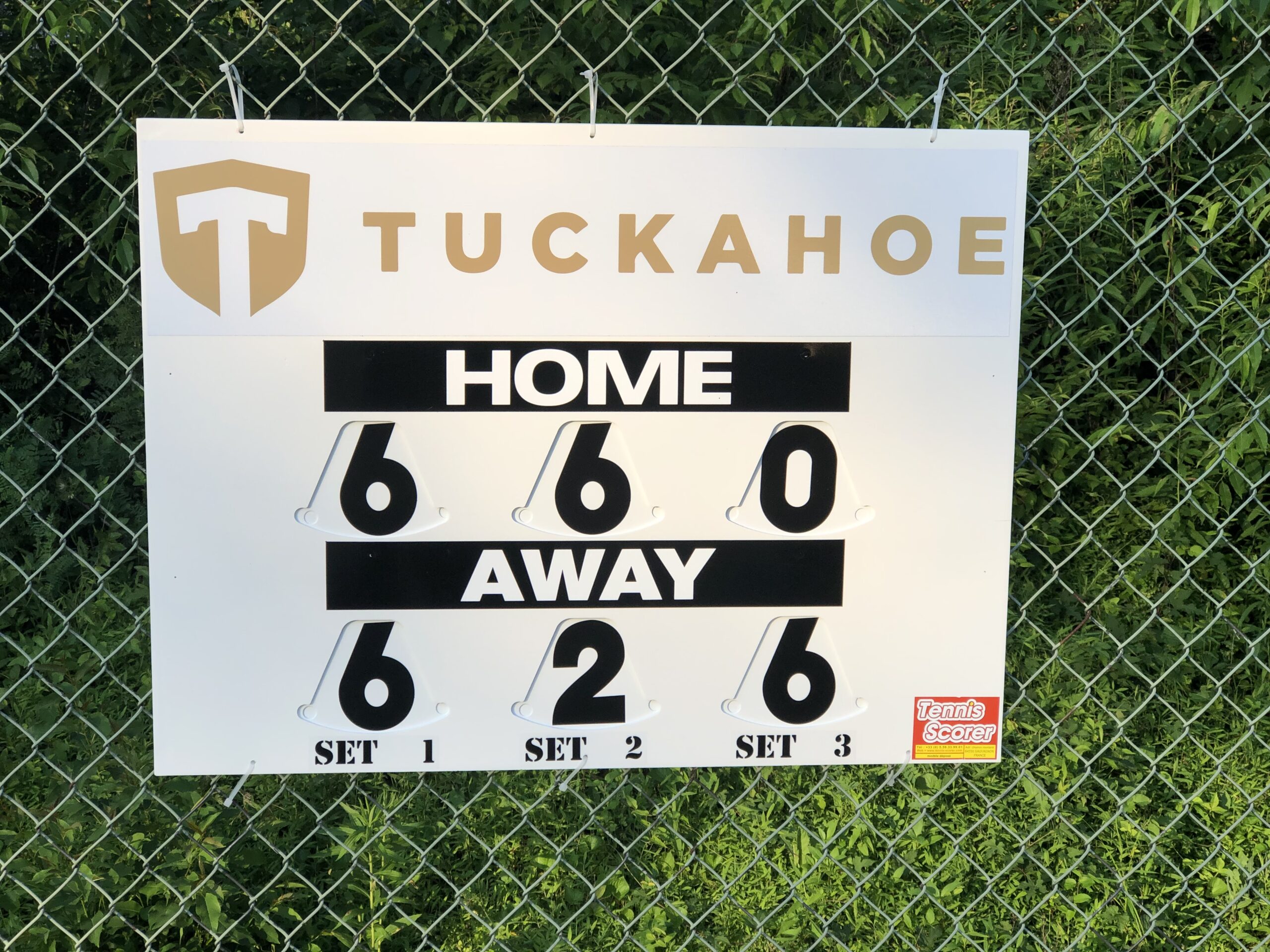
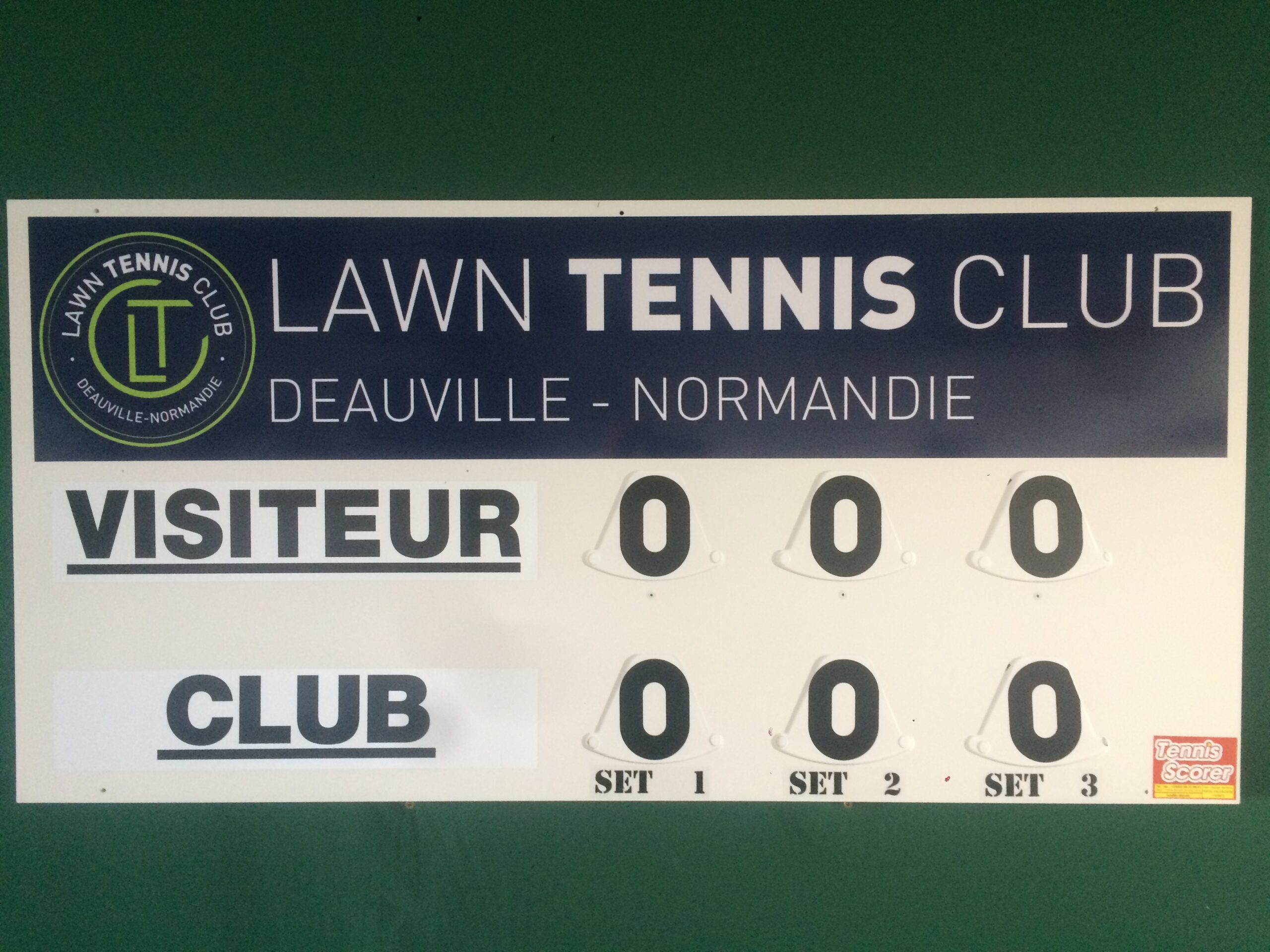
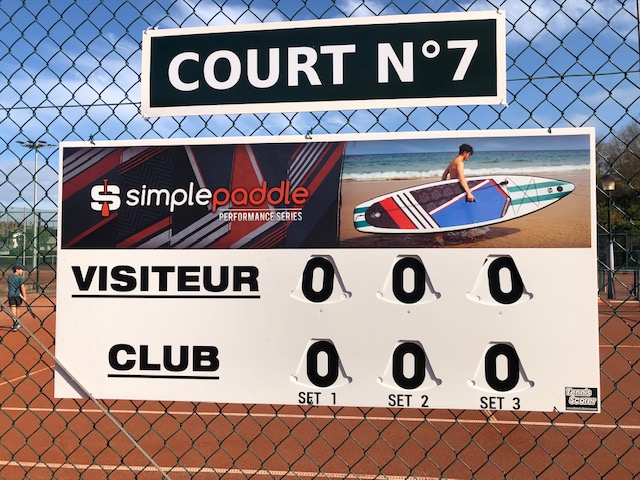
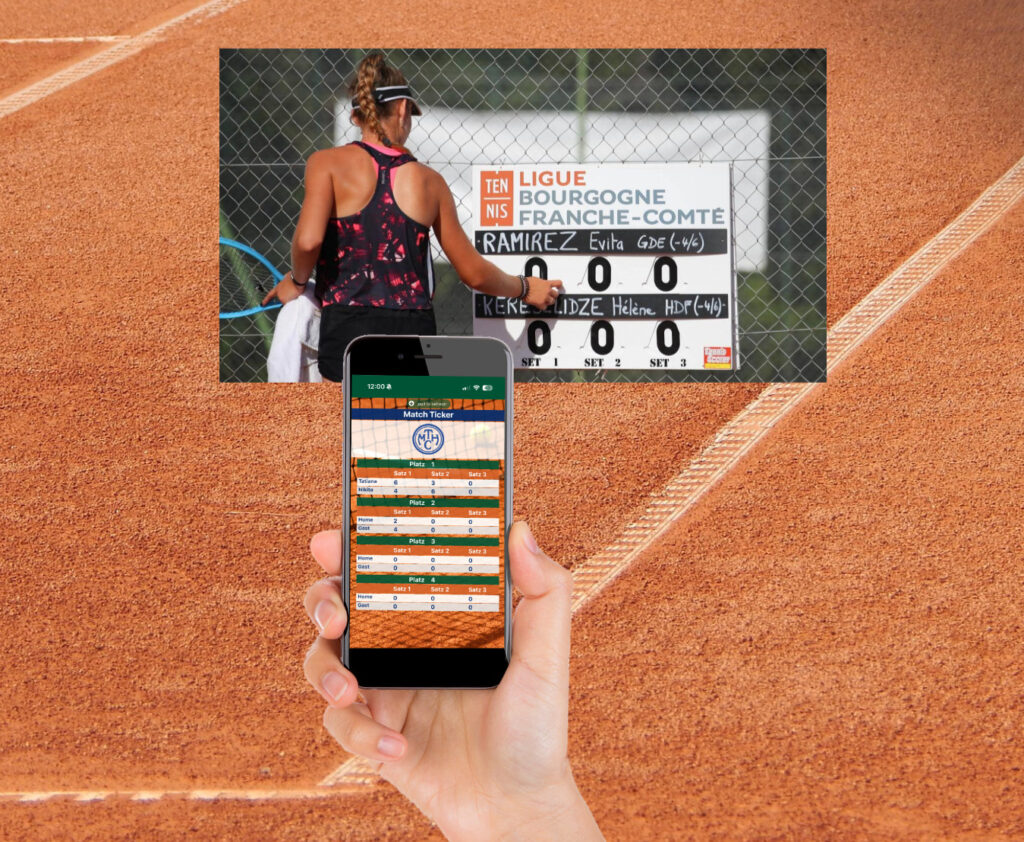
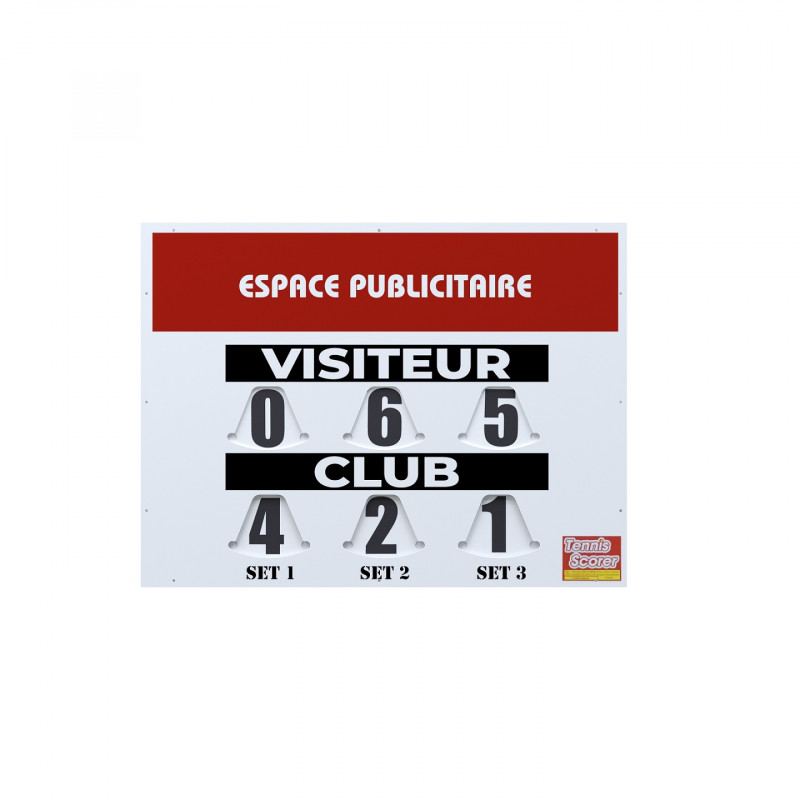
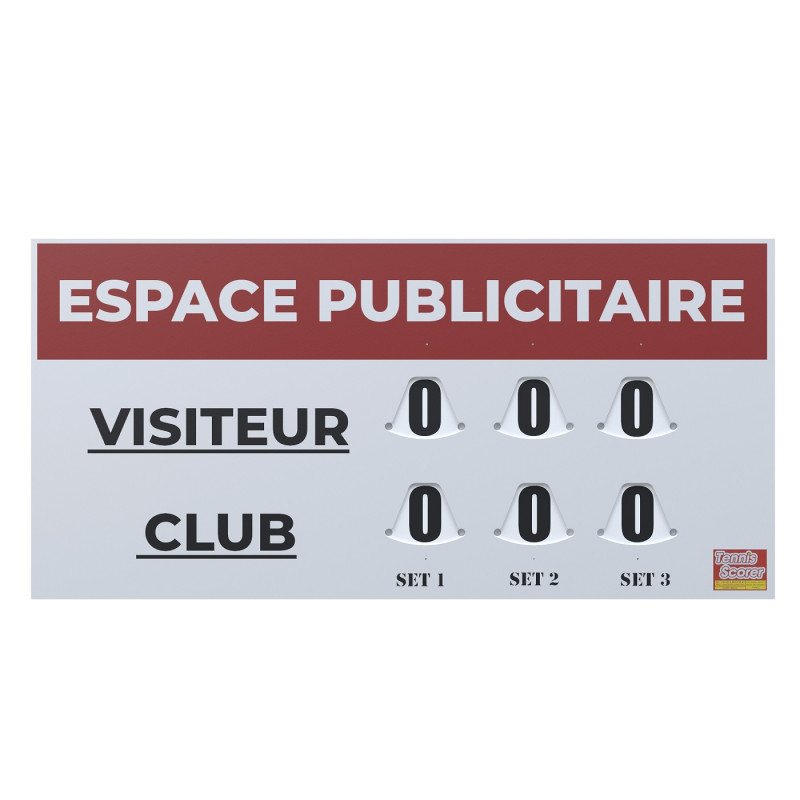
A courtside scoreboard is an outdoor display for players and spectators, not an entrance sign. Tennis Scorer’s large tennis scoreboard combines scores changed by hand with an advertising area for the club or a sponsor. Its compact tennis or padel scoreboard adds plates for player names and an advertising strip that can show a club name, a logo or a court number.
Padel and tennis spectators often watch from more than one side. Tennis Scorer’s double-sided compact scoreboard shows the score to both sides of the court and keeps a strip for club or sponsor identification.
How waterproof is the complete board?
A label on the material does not cover the finished sign. Rain gets into poster compartments through joints, and sunlight fades the print. Ratings also have limits on what they cover. Each of these needs checking on its own before ordering.
Substrate claims versus an assembled sign
A waterproof substrate, a waterproof printed poster and a waterproof assembled sign are three separate claims. The difference comes down to the parts around the board: graphics, edges, fixings and installation. Each material shows where the gaps can appear:
- Solid PVC: resists water, but its grade and exposed edges still matter.
- PVC foam board: is not automatically waterproof once it is made into an advertising board.
- Aluminium composite: a weatherproof sign face that works outdoors, but its print, edges and installation decide how well the whole display copes with the conditions.
Protecting posters from rain and sunlight
Poster frames make up for some of these gaps with rubber seals, clear covers and drainage holes. Drainage in an ordinary snap frame still leaves the poster compartment less than fully watertight. Water can get in through joints or exposed edges, and condensation can form inside a case. As a result, waterproof synthetic or laminated printed posters protect better than plain paper.
Sunlight is the other threat. Some water-base signs use anti-glare covers over the artwork. A UV-resistant cover reduces one cause of fading, but it does not show how long the complete sign will last.
Ingress ratings and standards
BS EN 60529 sets out ingress-protection (IP) ratings, which describe how well an enclosure keeps water out. IPX4 means protection against splashing water from any direction. IPX5 means protection against water sprayed from a nozzle. Neither promises watertightness forever or stops condensation. For illuminated outdoor displays, check that the rating covers the whole enclosure, not just an LED strip or transformer.
Older standards need the same care. According to BSI, BS 559:2009 was withdrawn on 21 February 2023 and replaced by BS 559-1:2023. Do not ask for the withdrawn edition as the specification for a new sign.
What board size fits the space and viewing distance?
Size decides whether a board is read and whether it fits. Entrance signs depend on poster format and footprint. Scoreboards depend on how far away people read the numbers.
Poster formats for entrances
Poster-fed signs are sold by standard UK poster sizes. Each format suits a different space:
- A3: 297 × 420 mm, the smallest standard format.
- A2: 420 × 594 mm, suits a compact entrance or a sheltered walkway.
- A1: 594 × 841 mm, gives routine club, coaching or event messages more room.
- A0: 841 × 1,189 mm, needs more entrance or forecourt space than A1.
The step up to A0 affects more than the space it takes. The complete sign may become much heavier. Compare the assembled dimensions and the capacity of the filled base, not just the poster size.
| Format | Poster size | Typical club use |
| A2 | 420 × 594 mm | Compact entrance, sheltered walkway |
| A1 | 594 × 841 mm | Coaching, membership and event messages |
| A0 | 841 × 1,189 mm | Open entrance or forecourt; heavier sign |
The table shows only the insert, not the footprint of the sign around it.
Overall dimensions of portable signs
An A-series label describes the poster, not the overall width, height or base depth of a pavement sign. Measure the proposed spot against the full product dimensions. A water base pavement sign has a hollow base that is filled for stability. A water base pavement sign for A1 or A0 posters is usually larger than a compact A-board.
Large waterproof outdoor advertising boards for forecourts may combine double-sided frames, springs and wheels. Once installed, the space the sign takes when moved and when stored also decides whether it fits a club entrance.
Scoreboard scale and legibility
Scoreboards are measured differently. Tennis Scorer’s compact tennis or padel scoreboard measures 80 cm wide and 60 cm high. It is 1 cm thick and weighs 3 kg.
The Large Model tennis scoreboard measures 120 × 60 cm. A courtside board’s useful size depends on how visible the numerals are, the court layout, the fence height and the reading distance, not on an A-series format.
On court, that means checking visibility from the baselines and from where spectators sit. Test a full-size sample rather than relying only on a stated viewing distance.
Where can a board stand or be mounted safely?
Being waterproof does not make a board stable. Portable signs face wind, fixed boards load the fence, and anything near a footway raises questions of access and permission.
Portable signs in wind
A lightweight pavement sign is easy to move, but it can blow out of place. Bring it indoors in gales, storms and very bad weather. A filled base, springs or wheels do not give a sign stand a universal safe wind speed, so follow the handling and storage instructions for the chosen product.
Exposure changes the picture. The Institute of Highway Engineers’ Sign Structures Guide 2021 says wind load depends on a sign’s shape, dimensions and location. It recommends more detailed assessment at very exposed sites or where wind funnels.
Fence-mounted boards and banners
Fixed boards pass that wind load somewhere else. A scoreboard or banner transfers it through its fasteners into the mesh, posts, foundations and ground. As a result, panel area, orientation, support spacing and fence condition all affect the mounting.
For outdoor advertising signs fixed to mesh, check that the mesh is compatible and how many fasteners there are and where they sit. Check corrosion resistance, movement and resistance to accidental removal as well. A few cable ties do not prove the board is safe.
Padel enclosures follow their own guidance. The LTA’s 2025 padel guidance describes a 20 m × 10 m playing area and a 4 m-high rebound enclosure. The top 1 m of that enclosure is weldmesh, and foundations must suit local ground and wind conditions. BS EN 1991-1-4 covers wind on structures, and its first-generation UK edition is due to be withdrawn on 30 March 2028.
Clear routes and UK permissions
Before ordering, record the board’s full width, height, projection and base depth, plus how the gate moves and the clear route around the board. The Department for Transport’s Inclusive Mobility guidance recommends a normal clear footway of 2,000 mm. It allows 1,500 mm where space is tight, though that alone does not authorise a board.
Permission is a separate matter. Government advertisements guidance says A-boards on highways, including some pedestrianised footways, need express advertisement consent and highway-authority permission under section 115E of the Highways Act 1980. In England, a sponsor sign may be exempt, have deemed consent or need express consent. The Planning Portal says signs over 0.3 m² may need consent. According to GOV.UK, unlicensed street displays risk penalties of up to £2,500. A further £250 can be charged for each day the display stays.
What should the board cost over its life?
The purchase price is only part of the cost. Over the life of the board, the full specification, graphic changes, fees and upkeep add to it.
Compare the installed specification
Compare outdoor advertising boards by everything that gets installed: material, protective cover, seals, print, artwork and mounting, not a headline hardware price. Each type of quote should be broken down:
- PVC scoreboard: board grade and dimensions, printing and sponsor stickers.
- Scoreboard extras: fixings, personalisation, installation and maintenance, each with its own price.
- Pavement sign hardware: frame and base materials, ballast capacity, springs, covers and seals.
- Pavement sign graphics: printing on one or both faces and replacement posters.
Plan for changing club and sponsor graphics
Graphics change more often than structures. Tennis Scorer’s compact and double-sided compact scoreboard each include a 78 × 17 cm advertising sticker, which gives club or sponsor artwork a fixed spot that can be replaced. Snap-open frames take new printed posters, and a chalkboard takes handwritten updates. By contrast, swing signs or panels with directly printed messages usually need a new face or panel.
Keep the approved sponsor logo, the print-ready artwork and the insert dimensions on file. From that point, new graphics fit the existing display and the reusable structure stays in place.
Allow for fees and maintenance
For reference, Tennis Scorer lists its Compact Model at €149.00–€149.90. The Double Sided Compact Model is listed at €169.00–€169.90. These are euro catalogue prices, not GBP quotes for an installed UK sign. When express consent is needed, the English planning-fee schedule in force from 1 April 2026 sets £174 for qualifying on-premises business or advance-direction adverts and £610 for other adverts.
How durable a board proves also needs checking over time. A warranty, a poster’s outdoor life and the useful life of an installed sign measure different things. Inspect covers, seals, hinges, bases, fixings and scoreboard graphics after wear or bad weather.
Frequently Asked Questions
Which outdoor advertising boards are fully waterproof?
No board type is waterproof on its name alone. Being waterproof, weather-resistant, wind-resistant and structurally safe are separate properties. A water-filled base says nothing about the advertising face, and an ordinary poster holder with a clear cover does not have to be watertight. In a weatherproof snap frame, the seals, drainage, cover and construction decide how much water stays out.
Can outdoor advertising boards withstand strong winds?
That depends on the board and where it stands. Signs by a court gate, a fence end or a padel enclosure may face stronger gusts than one at a sheltered entrance. Bring portable pavement signs indoors in gales. Spring-mounted boards can flex rather than stay rigid. For large or exposed fixed installations, ask for an assessment of the complete mounting.