

Table of Contents
Tennis scoring operates on four connected layers: points, games, sets and the match, each one building directly on the last. This structural clarity guides players from the opening serve to the final match point. For a complete breakdown of every rule variation, consult the tennis scoring guide.
The basics of tennis scoring for beginners
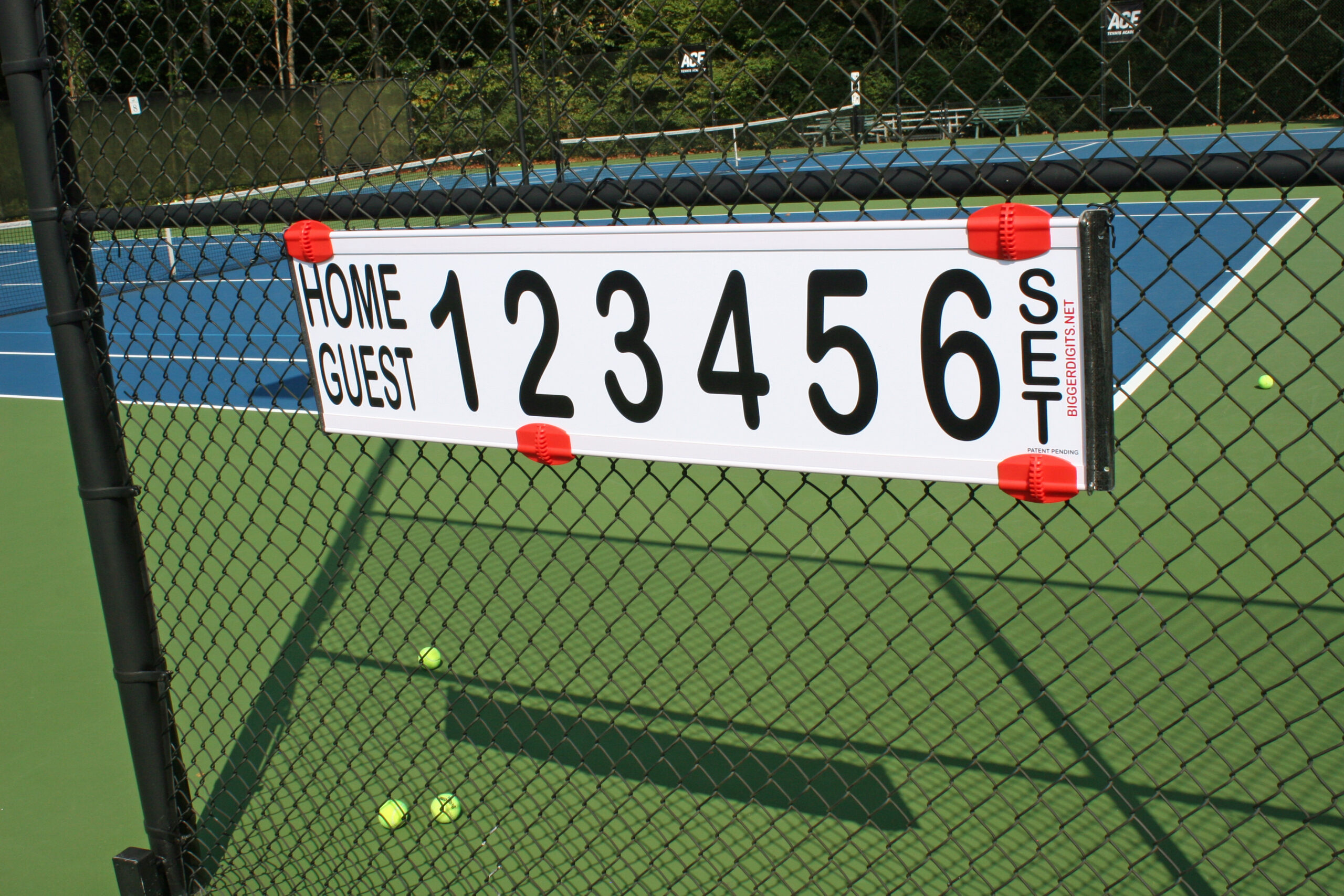
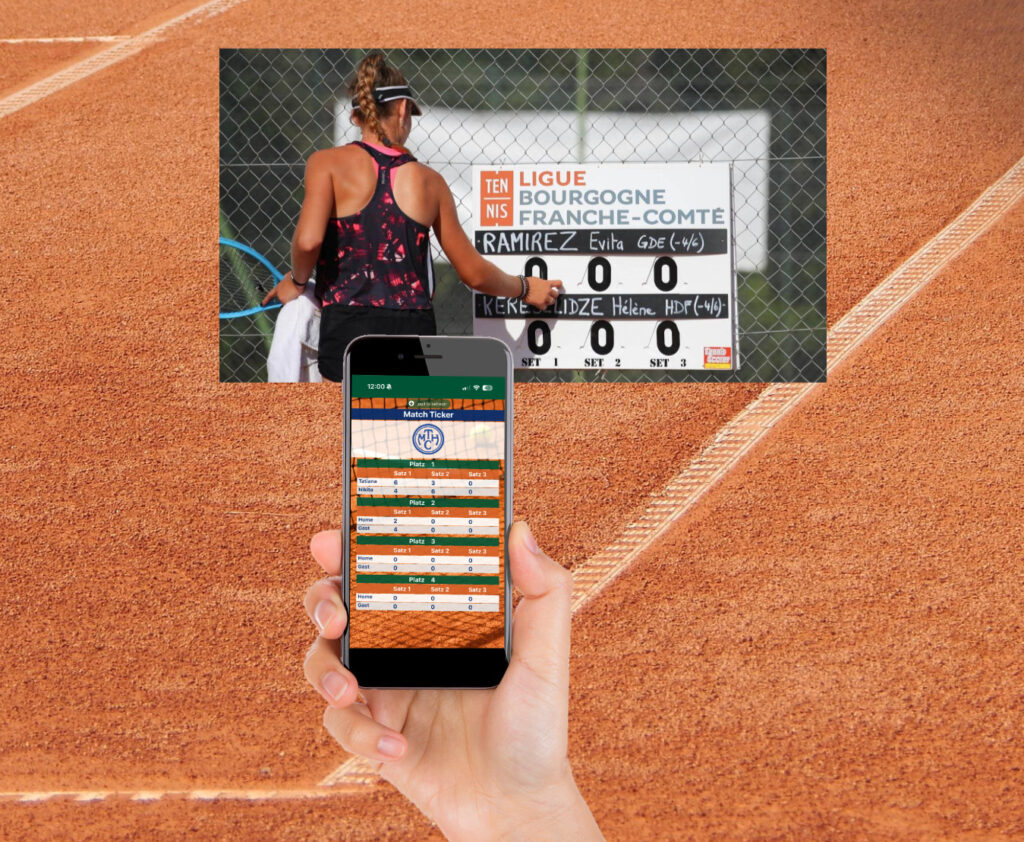
To see how these layers appear together in real play, the tennis scoring guide shows how a scoreboard displays each stage at once. Once installed, a manual scoreboard makes the progression of the match far easier for beginners to track.
Why does tennis use love, 15, 30 and 40?
This progression relies on a unique vocabulary. Tennis does not count points 1, 2, 3, 4, but uses traditional calls that have stayed in the game for centuries. Both serve custom and spoken clarity: a short, distinct call matters more than numerical sequence when play is fast.
- Love: zero points, often linked to the French word “l’œuf” because the shape of an egg resembles zero.
- 15: one point won, commonly associated with the first quarter-hour mark on a clock face.
- 30: two points won, following the same clock-face theory.
- 40: three points won, thought to have been shortened from 45 so the scoring call worked more neatly with deuce and advantage.
From that point, the score is always called with the server first: “15-love” means one point to the server and none to the receiver. When both players are level before deuce, the call uses “all”, as in 15-all or 30-all.
The four levels of tennis scoring explained
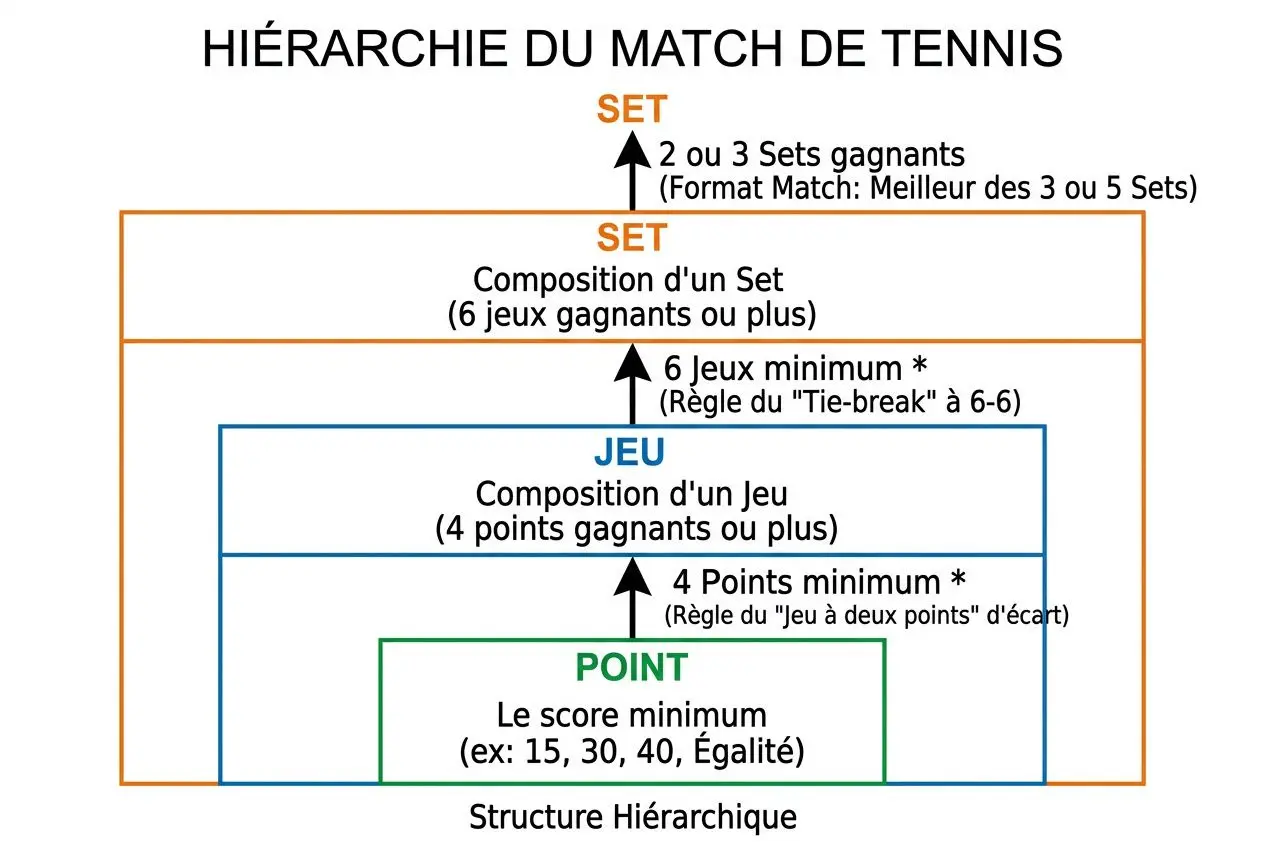
That calling system sits inside a broader framework. The origin of the tennis scoring system remains debated, yet the architecture itself is settled: points accumulate into games, games into sets, and the set count decides the match.
- Points: the basic unit; a player usually needs four points to win a game, unless both players reach three points each and the deuce-advantage sequence begins.
- Games: normally won by reaching six with a lead of two; at 6-6, a tiebreak is typically played.
- Sets: made up of games and commonly recorded as 7-6 when settled by a tiebreak.
- Match: won by taking the required number of sets, usually two in best-of-three and three in best-of-five formats.
Once these components are clear, displaying them correctly becomes the priority. Data from nearly 3,000 clubs served by Tennis Scorer confirms that players and spectators read a scoreboard far more confidently when each level is recognised for what it represents. On court, that means clean visual tracking reduces disputes and keeps the focus entirely on the game.
How points and games are won in tennis
A tennis game is won point by point. This structure remains simple until both players reach 40, at which point the scoreline stretches because a two-point margin becomes necessary.
From love to game: winning a single game
To understand this progression, the clearest starting point is a game that does not reach deuce. The server announces the score before each point, with their own score called first: love, 15, 30, or 40.
This sequence moves forward one step at a time. In practice, a player wins the game after four points if the opponent has won no more than two. Once that game is over, the points reset to love for the next game while the overall tally carries on toward the set.
What happens at deuce and advantage?
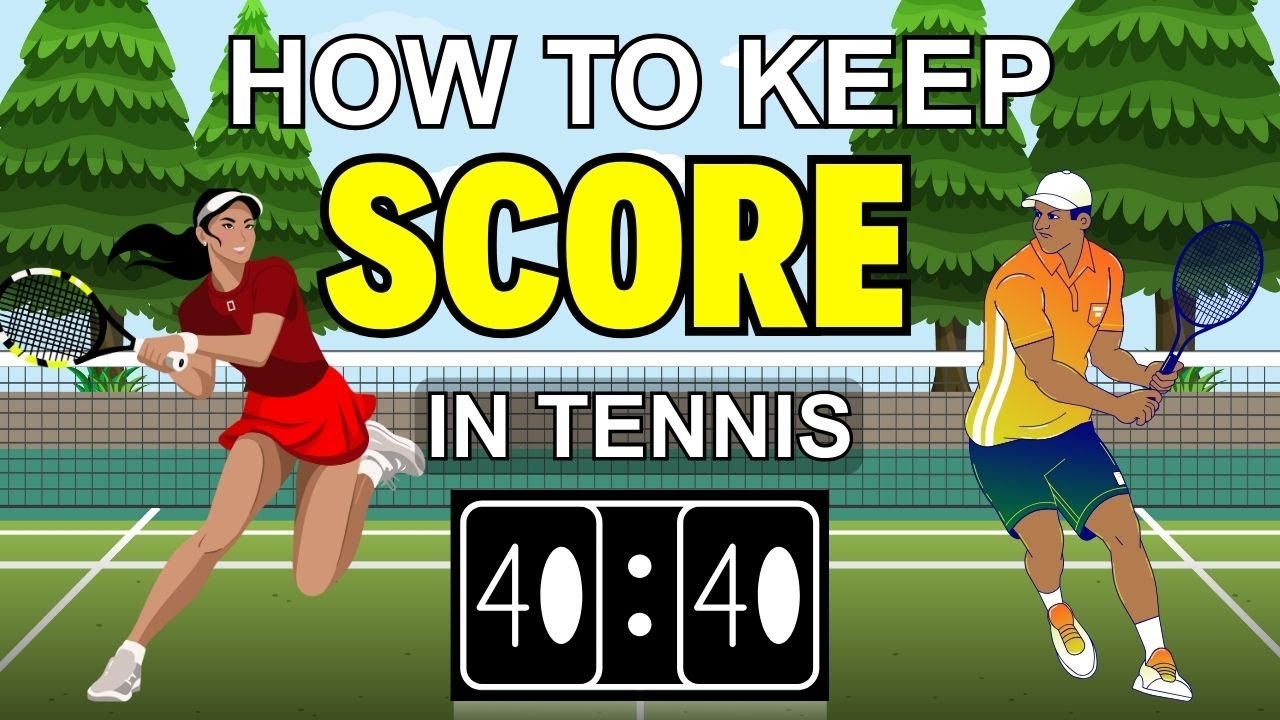
From that basic pattern, how score keeping works in tennis becomes clearer at 40-40. This tied score is called deuce, where a single point is no longer enough to secure the game. The difference comes down to winning two consecutive points from this neutral position.
The next point awarded gives the winning player the advantage: Ad-In for the server, or Ad-Out for the receiver. If that same player wins the following point, the game ends. If not, the score returns to deuce and the cycle starts again.
How faults and lets affect scoring
This cycle of play relies entirely on a valid serve to begin each point. A double fault, meaning two missed serves in succession, gives the point to the receiver at once. By contrast, a let is simply replayed if the serve touches the net and still lands in the correct service box.
For accurate tracking, Tennis Scorer designs robust indicators: visual scoreboards built to last through intense outdoor matches. These products keep players focused on the match rather than disputing the tally.
How sets work and what triggers a tiebreak
The same rule governs every standard set: a player must reach six games and lead by two.
Winning a set: the six-game rule
That requirement decides the most common set scores: 6-3, 6-4 and 7-5. A score of 6-5 does not end the set, because the two-game margin has not been established.
From 5-5, play continues until one player moves two games clear. If that gap appears at 7-5, the set is over; by contrast, if the score reaches 6-6, a tiebreak is used to decide it.
Set point comes when one more point would secure the set, such as at 5-3 in games with a 40-30 lead in the next game.
How does a tiebreak work at 6-6?
A standard set lasts at least six games and can finish 7-6 when a tiebreak settles a 6-6 score. The tiebreak uses numerical scoring, 0, 1, 2 and upward, rather than the love/15/30/40 sequence used in standard games.
Once the set reaches 6-6, the player due to serve next opens the tiebreak by serving one point from the deuce court. From that point, service changes every two points, and the players switch ends every six points instead of after each odd-numbered game.
The first player to reach seven points with a two-point lead wins the tiebreak and therefore the set 7-6. If the score moves to 6-6 in the breaker, play continues until that margin appears; on court, that means the score can extend beyond seven. On the scoreboard, the tiebreak result is shown in brackets after the set score, such as 7-6 (4), where the number records the losing player’s total.
Match formats: best-of-three vs best-of-five sets
The format of a match decides how many sets a player must take to secure victory. In practice, professional tennis relies on two main structures, chosen according to the event and the physical demands involved. The two-point margin principle remains constant throughout.
How many sets do you need to win a match?
To understand how the scoring system works in tennis at match level, the format must come first. In a best-of-three match, the first player to win two sets takes the contest; this is the standard format across most professional events, Grand Slam women’s singles, and most club competition.
By contrast, best-of-five requires three sets to win. It is used only in men’s singles at Grand Slam tournaments, where the longer format places endurance under as much pressure as shot-making.
Grand Slam final sets and the 10-point tiebreak
That distinction also shapes how many sets are needed to win at Grand Slam level, especially in a deciding set. Historically, some tournaments used advantage-set rules: at 6-6, play continued until one player moved two games clear, which led to exceptionally long final sets.
Since 2022, all four Grand Slam events have adopted a 10-point match tiebreak when the deciding set reaches 6-6. The first player to reach ten points with a two-point lead wins the match immediately, rather than playing out the full set. The same tiebreak format is also used in many doubles matches in place of a full deciding set, keeping scheduling under control.
Reading a tennis scoreboard and scoring variations
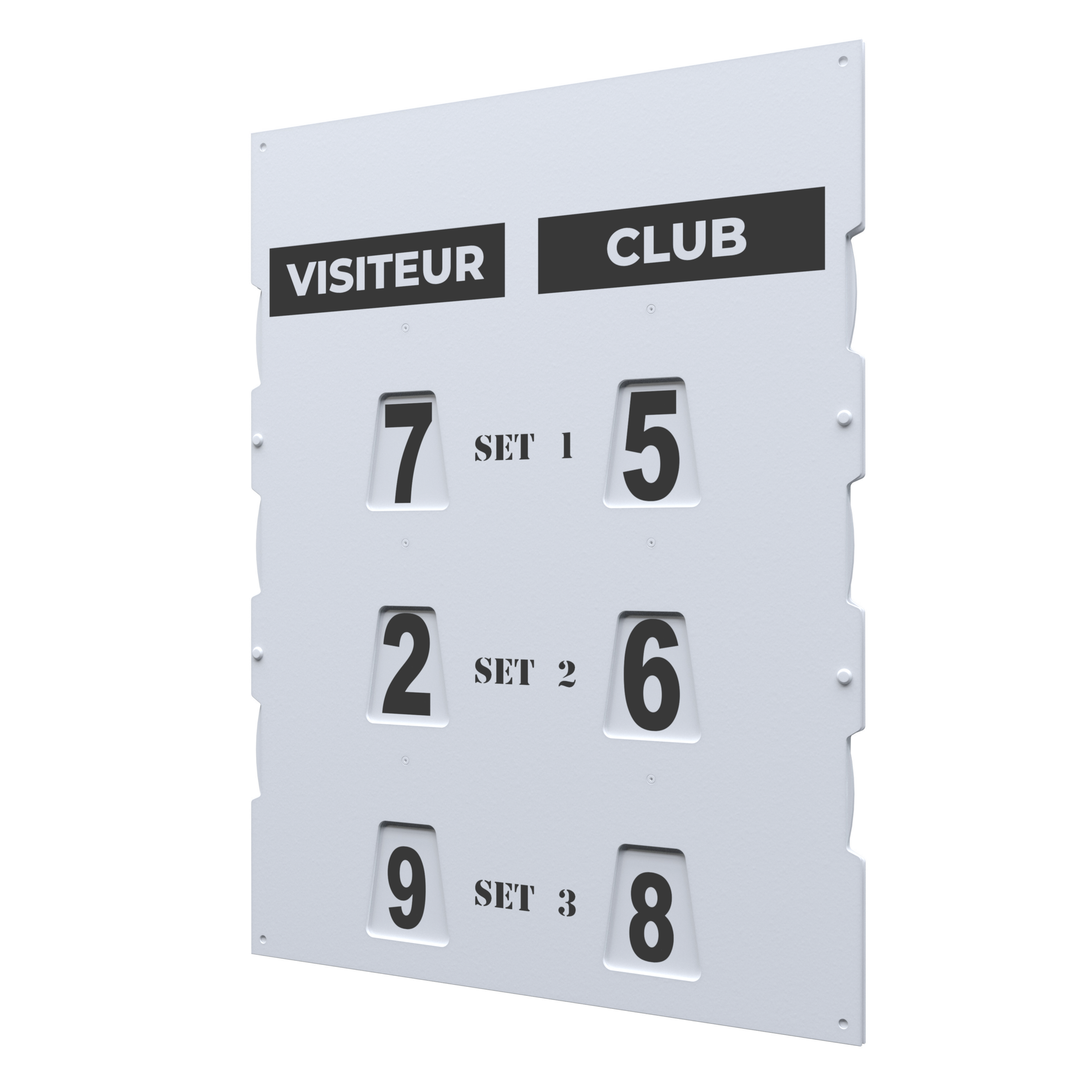
A scoreboard compresses every layer of a tennis match into one display. From the baseline or the stands, it shows the score at a glance: points in the current game, games in each set, any tiebreak detail, and the player due to serve.
How to read a tennis scoreboard
From that point, the active game score shows the immediate position in the current game: love, 15, 30, 40, deuce, or advantage. Set columns then record how many games each player has won in each set, while completed sets remain visible for the rest of the match.
The final cue is the serving indicator. Usually shown as a dot or small symbol next to a name, it identifies the current server and gives the score proper context.
- Player names: Listed on the left, one row per player, showing whose scores run across each line of the board.
- Point score: The score in the active game, shown as love, 15, 30, 40, deuce, or advantage, and updated after every rally.
- Set columns: One column per set, showing the number of games won by each player in that set.
- Serving indicator: A dot or small symbol next to a player’s name, marking whose turn it is to serve.
Tiebreak scores appear in brackets after the set score: 7-6 (4) means the set finished 7-6, with the losing player scoring 4 points in the tiebreak.
By the same principle, a score such as 6-4, 2-3 shows that the first set was won 6-4 and that the second set currently stands at 2 games to 3 for the player listed on the top row. Reading a score such as 6-4, 2-3 means the first set was won 6-4 and the second set currently stands at 2 games to 3 for the player listed on the top row.
| Display element | What it shows | Example |
| Point score | Current points in the active game | 30-15 |
| Set column | Games won per set by each player | 6-4 (first set) |
| Tiebreak bracket | Losing player’s tiebreak score | 7-6 (4) |
| Serving indicator | Identifies current server | Dot next to player name |
No-ad scoring and other format variations
The difference comes down to which moments the format removes or shortens.
No-ad scoring removes the deuce cycle entirely. At 40-40, one deciding point is played, and the receiver chooses the side from which to return; the winner of that point takes the game.
By contrast, formats such as FAST4 Tennis shorten the set itself: a tiebreak is played at 3 games all instead of 6-6, and that tiebreak is played to seven points with a two-point lead. As a result, matches are completed much more quickly.
Frequently asked questions
Why does tennis use 15, 30, and 40 instead of 1, 2, 3?
The most widely accepted explanation links tennis scoring to a clock face: points were marked at 15, 30, 45, and 60 minutes. Over time, 45 became 40, which fitted more neatly with the deuce and advantage system.
The term “love” for zero is also thought to have French roots. It is commonly traced to l’œuf, meaning egg, because the shape of an egg resembles a zero.
What happens if the score reaches 5-5 in games during a set?
At 5-5, neither player has the two-game lead needed to take the set. Play continues until one player moves ahead by that margin: 7-5 wins the set outright.
If the score reaches 6-6 instead, a standard tiebreak is usually played. From that point, the set is decided 7-6, with the usual two-game margin replaced by a two-point margin in the tiebreak.
Is a tennis match always best-of-three sets?
Not always. Most professional tournaments and club matches use a best-of-three format, so the first player to win two sets takes the match.
By contrast, men’s singles at Grand Slam events are played over best-of-five, which means three sets are needed for victory. Some doubles formats use a 10-point match tiebreak instead of a full deciding set, while shortened formats such as FAST4 Tennis reduce the structure more broadly.