
Table of Contents
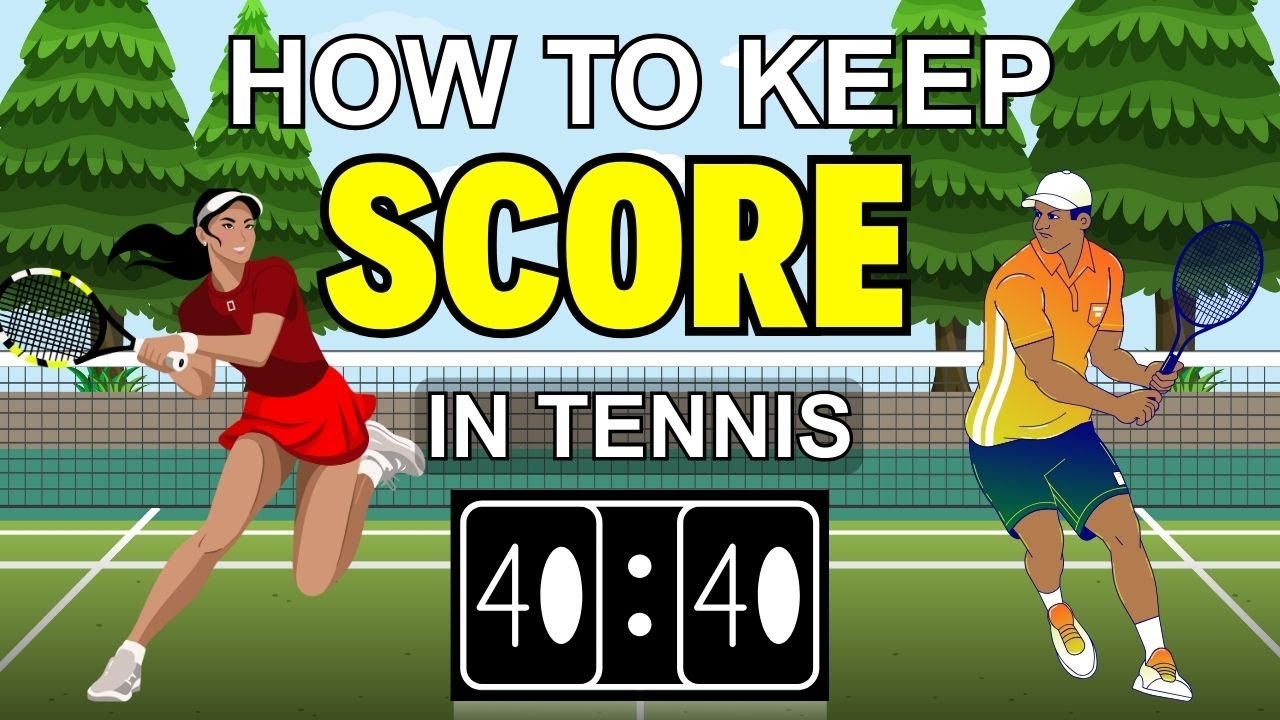
This article explains why tennis is scored 15, 30, and 40, tracing the roots of the tennis scoring 15 30 40 system to medieval France, the clock face, and the long history of court play.
Why is tennis scoring 15, 30 and 40: origins explained
The origin of the scoring system lies in the Middle Ages, when the rules of the game were tied to medieval court culture in France. This early system was shaped by the divisions of the clock face, long before modern lawn tennis rules were codified.
The clock-face theory behind tennis scoring system origin
That historical setting leads to the best-known explanation of the tennis scoring system origin: the minute hand moved in quarter steps. A quarter move marked 15, then 30, then 45, then 60, with each step representing points toward a game.
- 15 (one point): the first quarter mark on the clock face.
- 30 (two points): the second quarter mark.
- 40 (three points): originally 45, later shortened in spoken scoring.
Medieval clocks such as those at Wells Cathedral in 1386 and Rouen in 1389 used these quarter-hour divisions. For people in the Middle Ages, that pattern would not have felt arbitrary at all.
Why tennis scoring is 15, 30, 40 and not 45
Once that clock-based logic is clear, the shift from 45 to 40 comes down to spoken ease: in medieval France, where jeu de paume laid the roots of modern tennis, quarante-cinq was longer to call than quinze or trente.
The written record supports that shift. A ballad by Charles d’Orléans in 1435 uses 45, and a Latin text from 1522 still shows the 15-30-45 sequence. By 1877, when Wimbledon codified lawn tennis rules, 40 had already taken hold.
That shorter call also worked neatly within the structure of a game: when the score reaches deuce at 40-40, a player can move to advantage and then to game while preserving the old sense of 50 and 60 on the clock face.
What ‘love’and ‘deuce’mean in tennis scoring
From that point, the vocabulary of tennis reveals the same French influence. Love, the score for zero points, is commonly linked to l’oeuf, or egg, because its shape resembles 0, though other origins have been suggested over time.
Deuce is clearer. It comes from deux, the French word for two, and it marks the moment when the score is tied at 40-40 and one player must win two consecutive points to take the game.
What does ad mean in tennis and how deuce works
Because deuce requires a margin, the next term follows naturally: “ad” represents advantage, meaning the player who wins the point immediately after deuce is one point ahead and needs one more to secure the game.
If the server holds that lead, the call is Ad-In. If the receiving player holds it, the call is Ad-Out. For a broader explanation of tennis point scoring and scoreboard reading, see tennis point scoring.
If the player with advantage loses the next rally, the score returns to deuce. As a result, the sequence can continue until one player has won two points in a row, which is also the basic reason a game cannot be taken from deuce by a single point. On court, that means the scoring format rewards a clear winning margin, just as a set can require a tiebreak when games are tied.
| Points won | Score called | Clock-face equivalent |
| 0 | Love | 0 minutes |
| 1 | 15 | 15 minutes |
| 2 | 30 | 30 minutes |
| 3 | 40 (originally 45) | 45 minutes |
| 4+ | Game (with 2-point margin) | 60 minutes |
| 3-3 tied | Deuce → Advantage → Game | 40 → 50 → 60 |
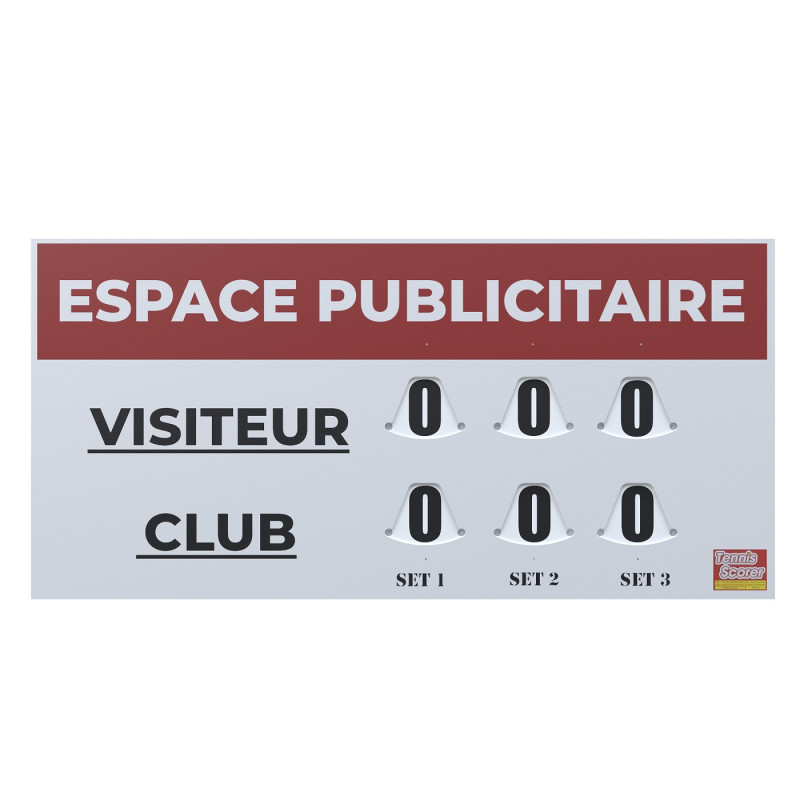
Tennis Scorer traces these origins across France, French words, jeu de paume, and early lawn tennis to show how a score that looks odd today still follows a coherent logic.
Frequently asked questions
Why does tennis go 15, 30, then jump to 40 instead of 45?
The explanation combines language with arithmetic. In medieval France, the scoring of tennis grew out of jeu de paume, a court game played across social classes. Within that tradition, quarante-cinq was likely shortened because 45 was awkward to call across the net during play.
From those roots, 40 became the standard call instead of 45. When the rules were formalised at the first Wimbledon in 1877, that shorter number remained in place. The sequence still follows the old clock-face logic: 15, 30, 40, then deuce, advantage, and finally the game.
From that point, the scoring terms become more specific. A score of 40-40 marks the point where the score reaches deuce; the next point gives one player an edge, and another closes the game, advancing the player toward the set and ultimately the match.
Why is 40-40 called deuce in tennis?
That same system leads directly to the term. Deuce comes from the French deux, an explanation that reflects the central rule: from 40-40, a player must win two consecutive points to take the game.
From that rule, the next step is clear. If the server wins the next point, that side holds advantage; if not, the opponent does. Lose the following rally and both return to deuce, so neither side can close the game on a single point alone.
That requirement also carries into the wider structure of scoring. The difference comes down to margin: two clear points are needed here, just as they matter in parts of a set, a tiebreak, and the management of pressure across a full match.
Where does the word ‘love’come from in tennis scoring?
The most familiar theory connects love with the French l’oeuf, meaning egg. The link is visual: an egg resembles zero, so the term could naturally attach to a score of no points in tennis.
That etymology, however, is not the only account. Some linguists, including Heiner Gillmeister, dispute the l’oeuf theory on phonetic grounds and trace the word instead to the Flemish lof, associated with honour. Under that reading, a player competed for esteem rather than stakes.
Whatever its exact origin, the term stayed. Tennis Scorer recognises that modern governing rules preserved love as the official call for zero, so it remains part of the language of every game, set, and match score today.