
Table of Contents
This guide covers the ten most important rules of tennis, including serving, scoring, court boundaries and common faults, in plain terms that any newcomer can follow. Whether a complete beginner or someone returning to the game, these tennis rules for beginners provide a clear foundation. Each rule builds on the last, so the full structure of a match becomes easier to understand.
10 Rules of tennis for beginners
Tennis rewards players who understand its structure before stepping on court. The basic rules of tennis are straightforward, but they interlock: scoring depends on games, games depend on points, and points depend on legal play. Learning each layer in order makes everything else more intuitive, from reading a scoreboard to making a fair line call under pressure.
Start with the toss
Every match begins before a single ball is struck. A racquet spin or coin toss determines who chooses to serve, receive or select an end of the court. The toss winner may defer the choice to the opponent, but that opponent cannot defer it back. Learning the ten rules of tennis in sequence makes sense because the toss establishes the match order.
Respect the court and opponents
The tennis rules for beginners extend beyond scoring: etiquette governs how a player behaves between points, during changeovers and at the final handshake. In an unofficiated match, each player announces the score before serving and makes honest line calls on their own side of the court. Equipment abuse, striking the net post and throwing a racquet are unacceptable and can result in point penalties at organised level.
- Line calls: A ball touching any part of a boundary line is in; the lines form part of the court surface.
- Let calls: A player may call a let when an external distraction genuinely affects a point in progress.
- End changes: Players switch ends after odd-numbered games, keeping conditions fair across a match.
Silence during points is equally important. Players should not walk behind an adjacent court while a rally is in progress, and interruptions to a live point should be avoided.
At the conclusion of a match, a handshake at the net is standard practice. Tennis Scorer considers fair play especially important when no official is present, since the integrity of every result depends on the players themselves. Deliberately unfair calls damage both the result and a player’s standing within the club.
Tennis scoring in each game
The point-scoring system is one of tennis’s most distinctive features. Points are not counted as one, two, three and four; they use names rooted in centuries of French court culture. Once those names become familiar, the rhythm of a game feels natural and the scoreboard is easier to read.
Call points correctly
Understanding tennis rules and scoring begins with the sequence inside a single game: love (zero), 15, 30 and 40, representing the first, second and third points won. The server’s score is always called first. When both players are level before 40-40, the call is 15-all or 30-all rather than 15-15 or 30-30.
A player wins the game by reaching four points, provided the opponent has fewer than three. From 40-love, 40-15 or 40-30, the player is one point from winning; this is called game point. For a complete explanation across games, sets and matches, an understanding of the tennis scoring system is the logical next step, as detailed in this guide.
The server calls the score before each point, which reduces disputes during play.
| Points won | Score called | Notes |
| 0 | Love | From the French l’œuf (egg), reflecting the shape of zero |
| 1 | 15 | First quarter of the clock-face sequence |
| 2 | 30 | Second quarter of the clock-face sequence |
| 3 | 40 | Originally 45, shortened for ease of calling |
| 4 | Game | Reached only when the opponent has fewer than three points |
Understand deuce and advantage
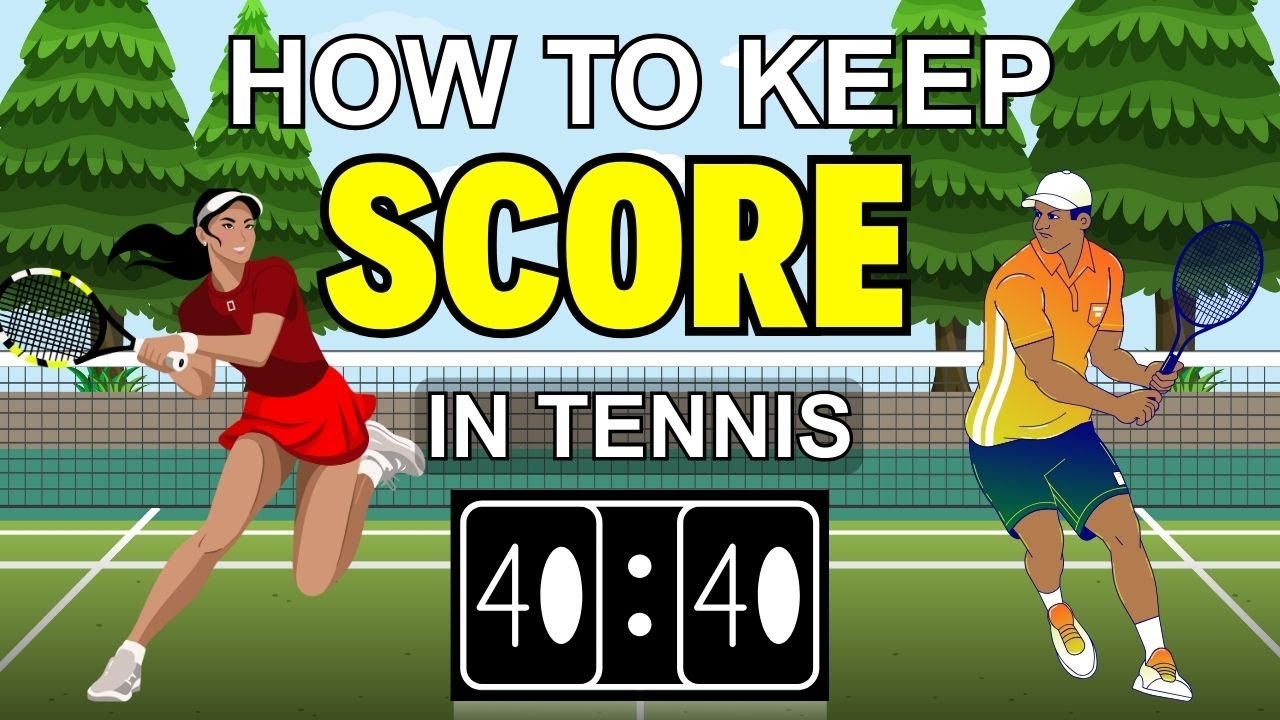
When both players reach 40, the score is deuce, from the French deux. A two-point margin is then required to win the game, so one point from deuce is never enough.
- Deuce: The score at 40-40; neither player can win the game with the very next point alone.
- Ad-In: Advantage to the server after winning the first point from deuce.
- Ad-Out: Advantage to the receiver after winning the first point from deuce.
- Return to deuce: If the player holding advantage loses the next rally, the score returns immediately to deuce, not to 40-30.
No-ad scoring is a modern variation used in some leagues and doubles formats. At deuce, the next point decides the game, with the receiver choosing the deuce or advantage side of the court for the decisive serve. This shortens matches and is common in team tennis competitions and recreational club leagues.
Why the scores have unusual names
The 15-30-40 sequence originated in medieval France and is linked to jeu de paume, the indoor precursor to modern tennis. The most widely cited clock-face theory connects it to quarter-hour divisions: 15, 30, 45 and 60 for game. Wimbledon codified the current system in 1877. For more detail, the tennis scoring origins traces each term to its source.
The change from 45 to 40 was partly practical: quarante-cinq was longer and harder to call quickly than quarante. The same preference for efficiency helped establish deuce, with the French deux serving as shorthand for a two-point margin. Love has a separate likely origin in l’œuf, the French word for egg, whose shape resembles zero on the scoreboard.
Terms such as quinze, trente, quarante, deux and l’œuf preserve a fragment of medieval French court culture in tennis vocabulary. Tennis Scorer’s tennis scorekeeping guide shows how to apply those terms during a match, from calling the first point to recording a tiebreak set score.
Winning a set and match
Individual games accumulate into sets, and sets determine the match result. Understanding when a tie-break replaces normal set play is as important as knowing the point sequence inside a game. The margin rule runs through every level of tennis scoring.
Reach six games with a margin
A standard set is won by the first player to reach six games with a lead of at least two. Common final set scores—6-0, 6-1, 6-2, 6-3 and 6-4—satisfy both conditions. How many sets in tennis are needed to win a match depends on the format: best-of-three requires two sets, while best-of-five requires three.
At 6-5, the leading player must win the next game to close the set at 7-5. Losing it produces 6-6 and triggers the tiebreak procedure. The same two-game margin rule applies at set level as within a game; only the unit being measured changes, from points to games.
Use the tiebreak rule
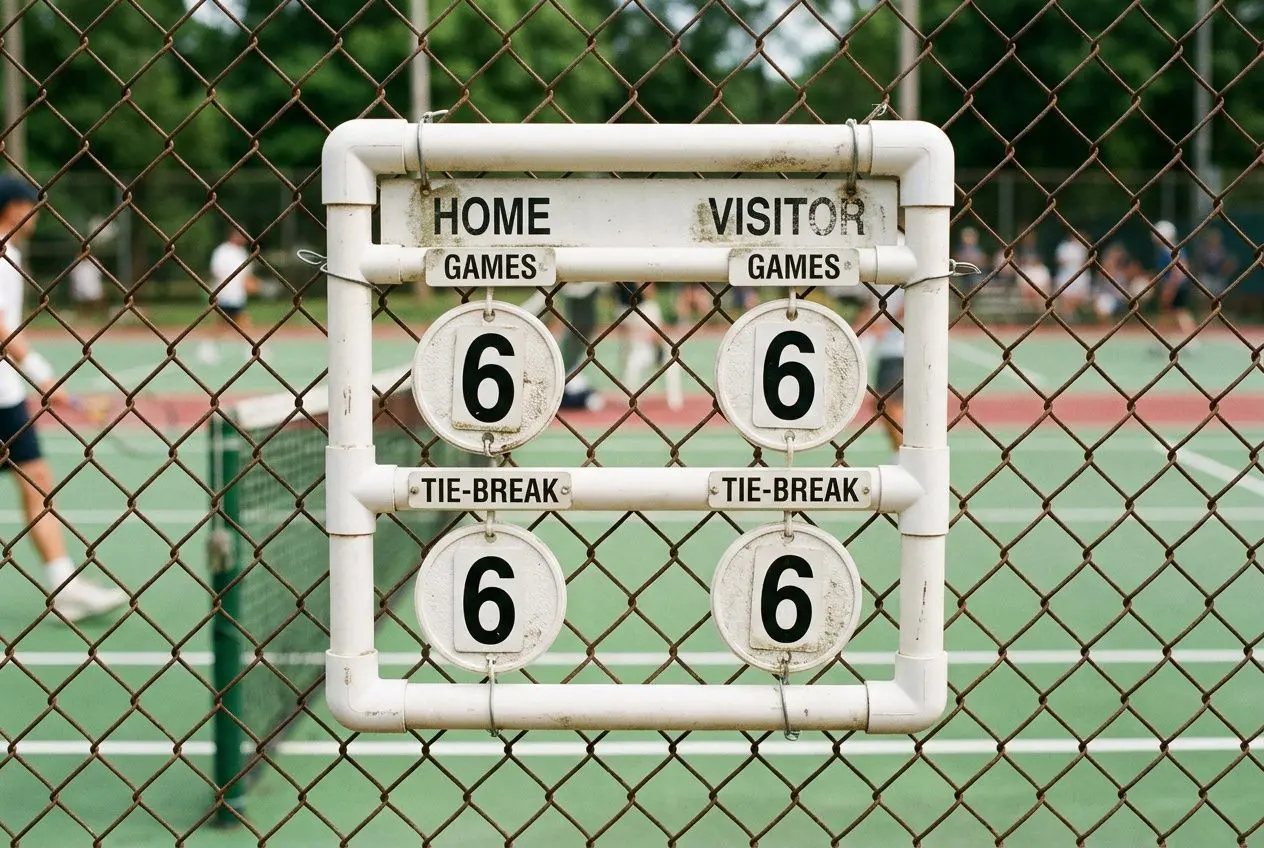
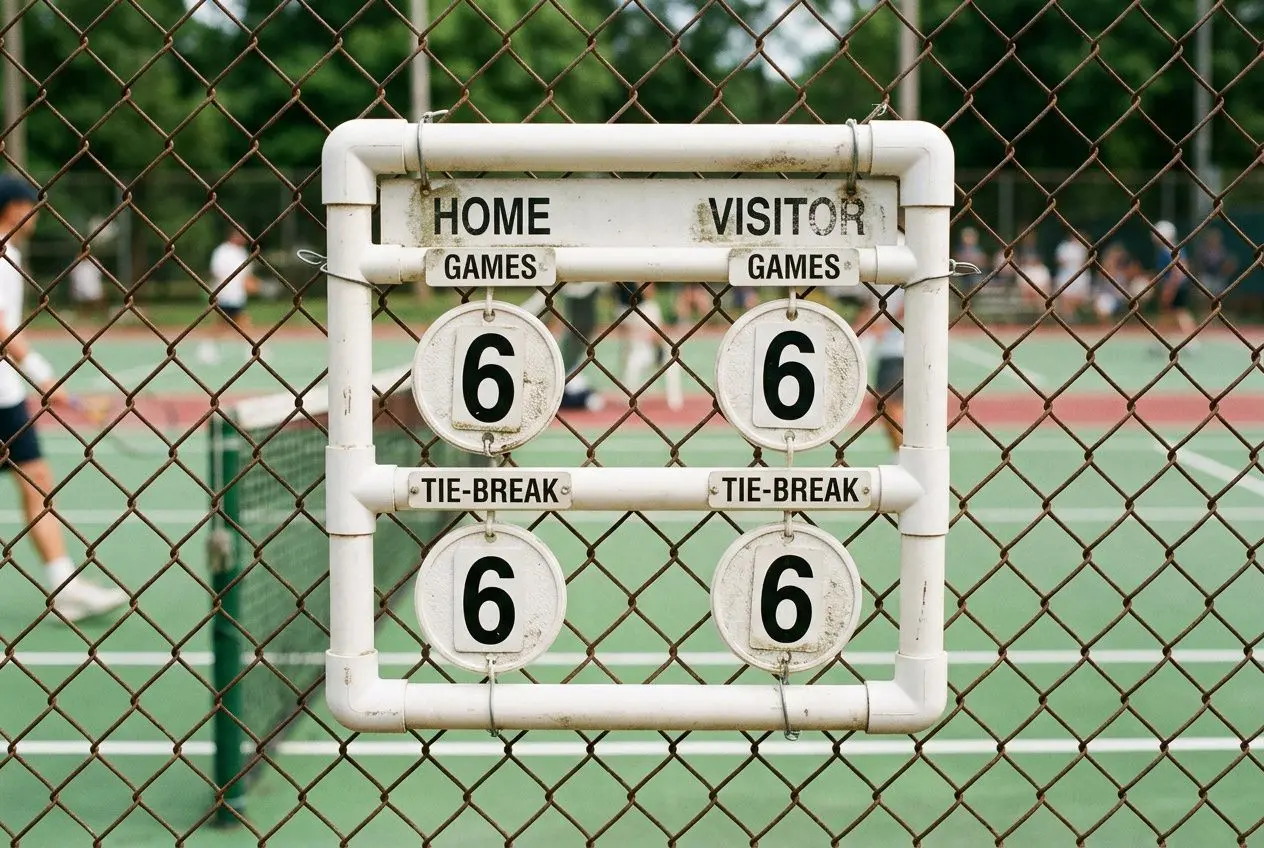
At 6-6 in most standard sets, a tie-break game decides the set, which is recorded as 7-6 for the winner. Points in a tiebreak use running numbers—1, 2, 3 and so on—rather than love, 15, 30 and 40. The first player to reach seven points with a two-point lead wins the tie-break game and the set. If the score reaches 6-6 inside the tiebreak, play continues until one player leads by two.
The serving order inside a tiebreak follows a precise rotation. The player due to serve opens with one point from the deuce side; the opponent then serves two points, beginning from the advantage side. Thereafter, the serve alternates every two points. Players change ends every six points, preserving the same fairness principle used for end changes between games.
- Opening serve: The player due to serve starts the tiebreak with one service point from the deuce side.
- Two-point rotation: After the opening point, each player serves two consecutive points, alternating throughout.
- End changes: Players switch ends every six points played during the tiebreak.
- Next set serve: The player who served the first tiebreak point receives serve in the opening game of the following set.
Since 2022, Grand Slam final sets have used a 10-point match tiebreaker at 6-6 instead of an advantage set. The first player to reach ten points with a two-point lead wins the set and the match. This format replaced indefinite advantage-set play at all four Slams and is also standard in many doubles formats as a super tiebreak.
Know the best-of-five format
Most recreational and professional women’s matches use a best-of-three format: the first player to win two sets wins the match. Best-of-five is reserved primarily for men’s Grand Slam singles, where three sets must be won. The additional sets increase physical and tactical demands, while match point—the single point that would end the entire match—can arrive at very different moments depending on the score.
Match point, set point, and game point are states of play. No announcement interrupts the match to declare them. They are simply the next point with set- or match-ending potential. A player at 5-3 in games and 40-30 on their serve holds set point, one point from taking the set. The same player at two sets to love and in that position simultaneously holds match point. Recognising these moments is part of reading a tennis match intelligently, whether as a player or a spectator.
Serve the ball into the right court
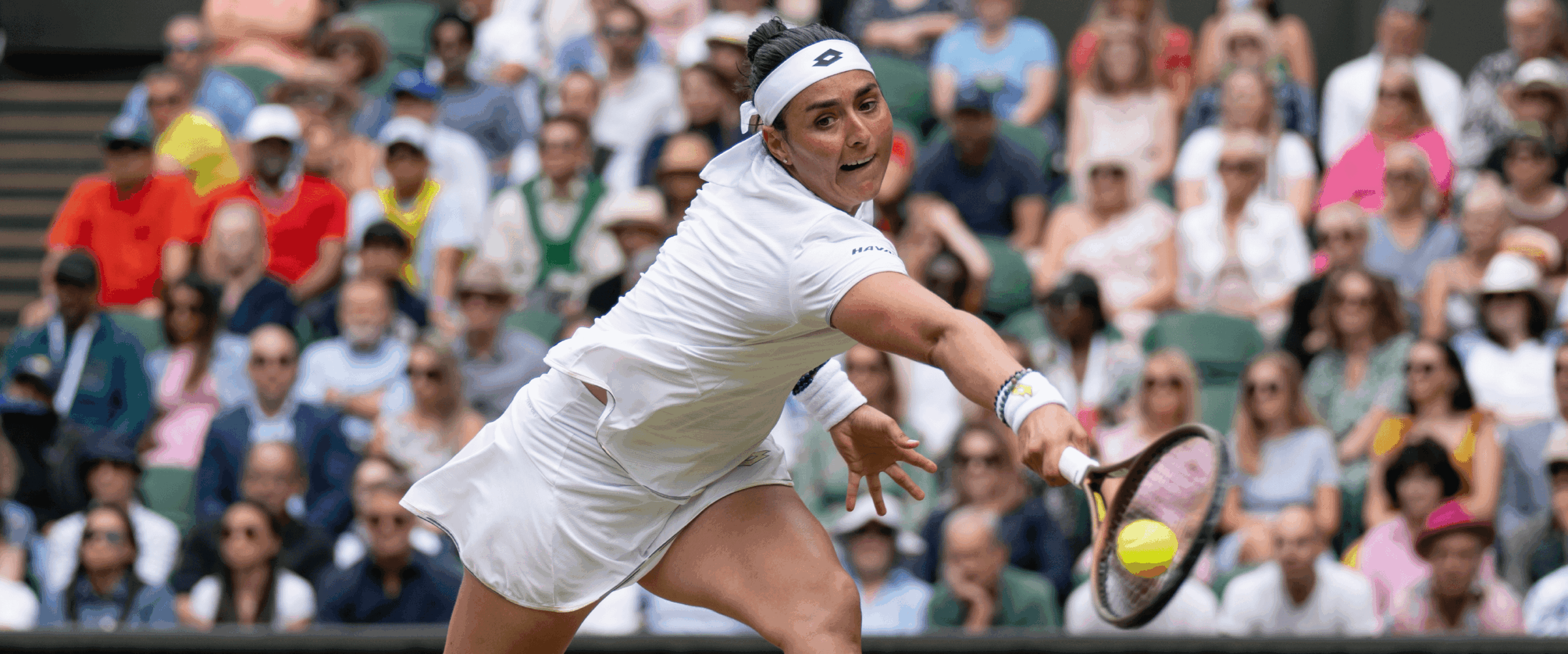
The serve opens every point in tennis and follows specific rules for position, motion and target. A player who understands those requirements avoids unnecessary losses from technical faults. Knowing what counts as a let or a legal underhand serve also brings clarity to the start of each rally.
The first and second serve
The server must stand behind the baseline, between the imaginary extensions of the centre mark and the singles sideline, before striking the ball. Each point begins with a diagonal serve into the opponent’s correct service box: from the right side of the baseline at the start of a game, then from alternate sides for each following point. The ball must be released before contact. Tossing and catching it again is allowed when there is no forward swing, but swinging and missing counts as a fault.
- Fault: A serve that misses the correct service box, clips the net without landing in it, or is struck illegally.
- Double fault: Two consecutive faults on the same point; the server loses that point immediately.
- Foot fault: Contact between the foot and the baseline or court surface before the ball is struck counts as a fault.
An underhand serve is legal provided the ball is struck before it bounces.
Lets, foot faults and doubles
A serve that clips the net cord but lands correctly inside the service box is a let and is replayed without penalty. There is no limit to consecutive service lets; each one is simply retaken. A foot fault is treated like any other fault and counts towards the double-fault tally. Both feet must remain behind the baseline until contact is made.
In doubles, the serving order and receiving order bring additional rules. Serving partners alternate service games in an established rotation maintained throughout the set. The receiving pair must keep the same receiving order for the entire set, with each player consistently receiving from the same side. Before the match, a toss determines which side serves first, allowing each player to follow the agreed order of play on court.
Court boundaries and point-play faults
Knowing where the court ends and which actions cost a player a point are among the most practical rules in tennis. Court dimensions and net height are standardised, while line calls follow a clear principle. Beyond the boundaries, certain actions during a rally automatically lose the point; others, such as a ball rolling back over the net, are fully legal.
Know the lines and net
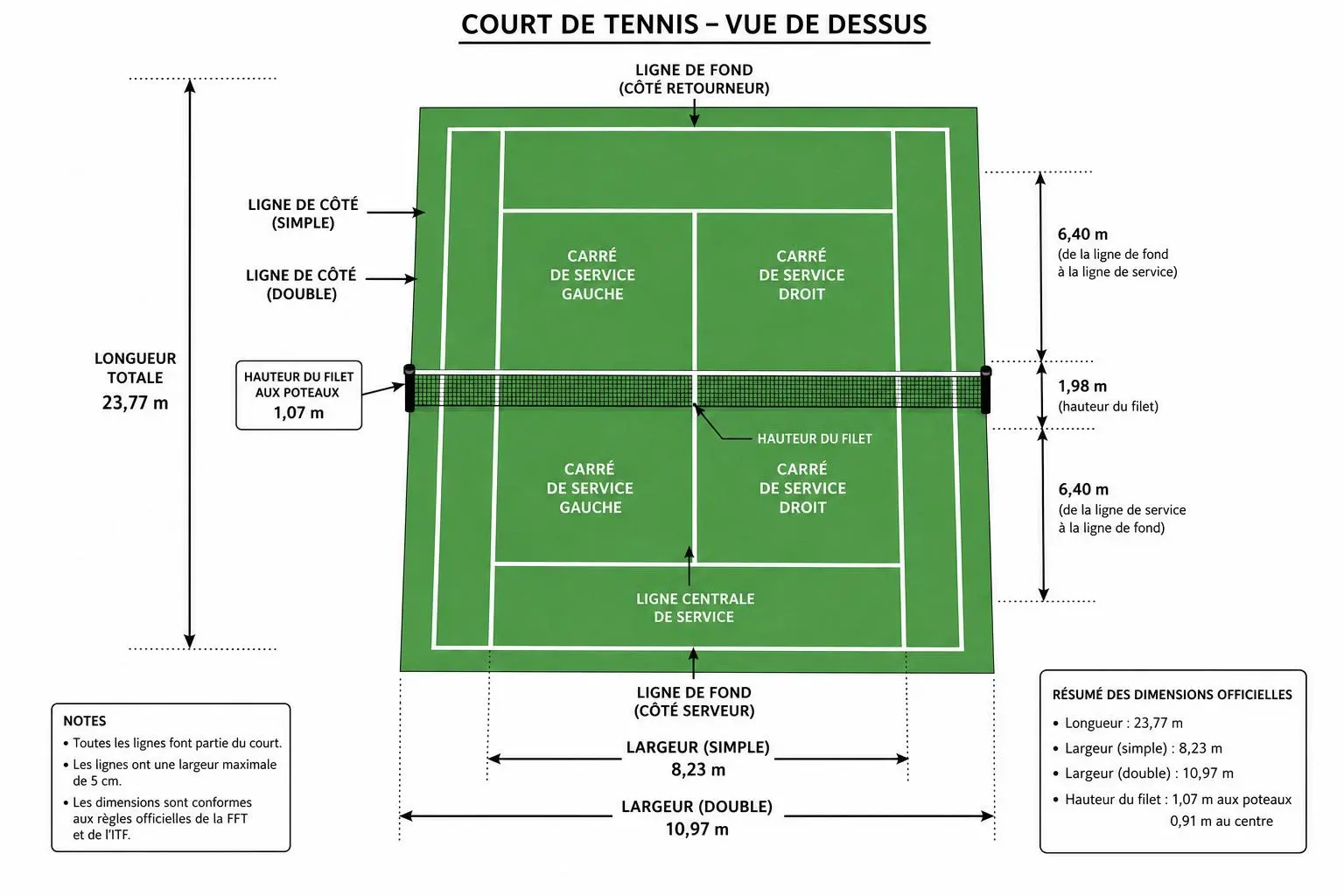
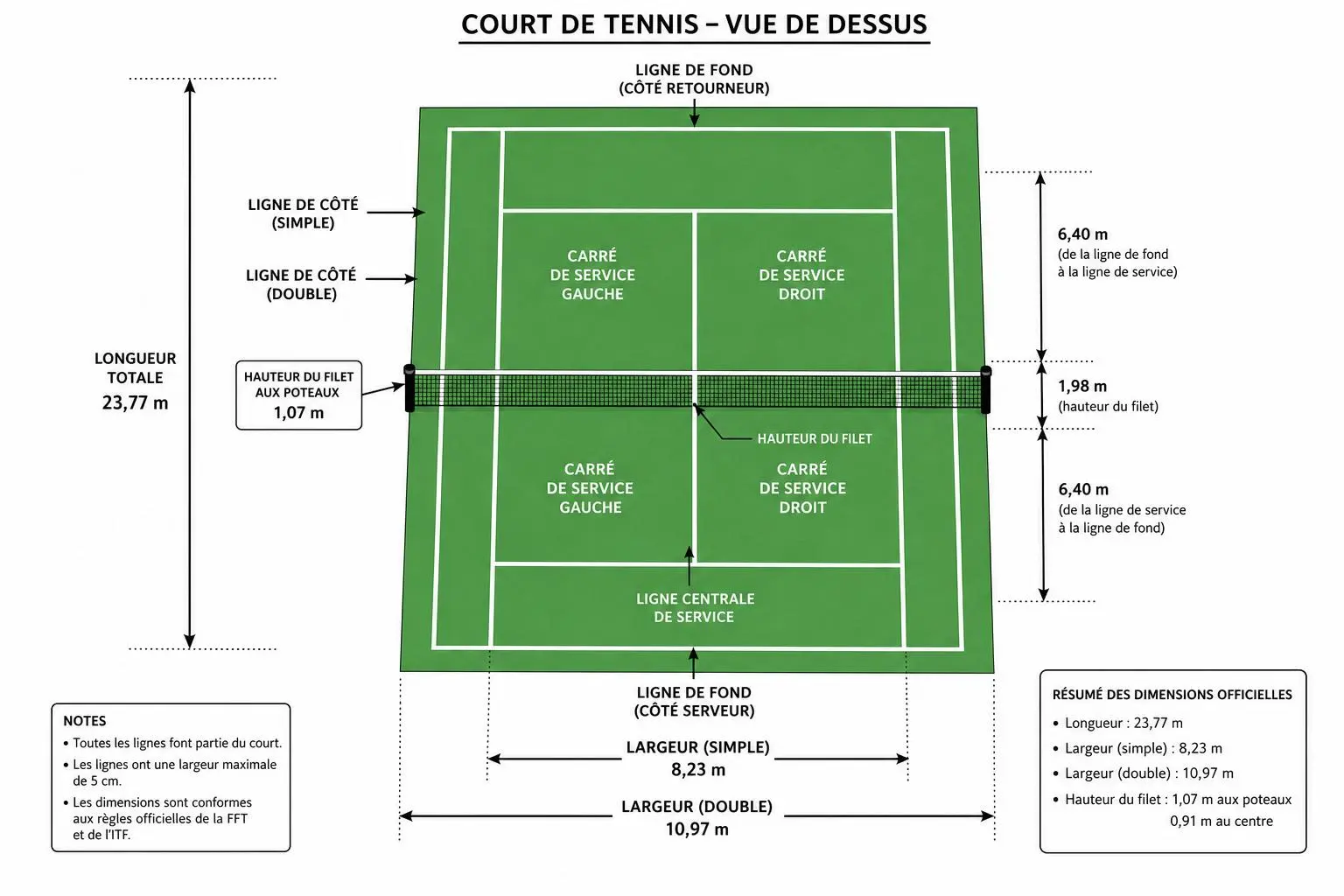
A singles court measures 78 feet (23.77 m) long and 27 feet (8.23 m) wide. The doubles court has the same length but extends to 36 feet (10.97 m) wide, with tramlines on each side. The net stands at 3 feet (0.914 m) at the centre, held down by a strap, and rises to 3.5 feet (1.07 m) at the posts. Service lines are drawn 21 feet (6.40 m) from the net, while the centre service line divides the service area into two diagonal boxes.
- Line rule: A ball touching any part of a line is in; all measurements are made to the outside of the lines.
- Net height: The net is 3 feet high at the centre and 3.5 feet at the posts. That difference matters when assessing borderline net shots.
- Service box: The net, service line and centre service line define the box; the player must use the correct diagonal box for each serve.
All court lines must be the same colour and clearly contrast with the playing surface. Measurements run to the outer edge of each line, so the line itself forms part of the court. A ball that clips even the outermost edge of the baseline or sideline is therefore in. At club level, that rule settles most disputed calls without further discussion.
Win a point legally
A player wins a point when the opponent fails to return the ball, sends it outside the court boundaries, drives it into the net or commits a double fault. By contrast, several rally actions immediately hand the point to the opponent and are among the most important faults to avoid during open play.
- Net touch: A player who touches the net or the opponent’s court during a point loses it immediately.
- Body contact: Striking the ball with any part of the body instead of the racquet loses the point.
- Deliberate double hit: Intentionally hitting the ball twice loses the point; an accidental double contact during one continuous stroke is allowed.
Less obvious rules apply as well. A racquet follow-through may cross the net, provided the ball was contacted first on the player’s own side. Hitting the ball around the net post is also legal when it lands in the correct opponent’s court. A player may reach over the net to play a ball that has spun back across to the opponent’s side with backspin, provided nobody has touched it; doing so legally wins the point.
Frequently asked questions
What are the basic rules of tennis for a complete beginner?
The basic rules of tennis cover ten core areas. A match begins with a toss, followed by serving diagonally from behind the baseline. Scoring uses love, 15, 30 and 40; a player wins a game by taking four points with a two-point lead. At 40-40, the deuce and advantage rule applies. A set normally goes to six games with a two-game margin, while a tie-break game is played at 6-6. Court boundaries also matter: a ball landing on the line is in. Point-losing faults include touching the net, and tennis etiquette calls for honest line calls and a handshake at the end of the match. These basic rules give a beginner a practical map of play before the first session on court.
How does the deuce rule work in tennis?
At 40-40, the score is called deuce. The player must then win two consecutive points to take the game. The first point after deuce creates advantage: Ad-In when the server wins it, or Ad-Out when the receiver does. If the player holding advantage loses the next rally, the score returns to deuce rather than falling to 40-30. In standard scoring, this cycle can continue indefinitely. No-ad scoring, used in some club and team formats, works differently: one deciding point determines the game, and the receiver chooses which side to receive on for that serve.
What is a tiebreak and when is it played in tennis?
A tiebreak is played when a set reaches 6-6, replacing further game play to decide the set. Points are counted as ordinary numbers—1, 2, 3 and so on—instead of the usual love, 15, 30 and 40 system. The first player to reach seven points with a two-point lead wins the tiebreak and the set, recorded as 7-6. If the score reaches 6-6 in the tiebreak, play continues until one player leads by two. Since 2022, Grand Slam final sets have used a 10-point match tiebreaker at 6-6 instead. The player who served the first point of the tiebreak receives in the opening game of the next set.