

Table of Contents
In standard tennis, a player must win six games to take a set, provided there is a lead of at least two games. That requirement defines the basic set structure: the score can finish quickly at 6-0 or extend further when the contest stays close.
The short answer is six at minimum. The difference comes down to the margin, because the scoring system does not allow a player to take the set by a single game.
How many games do you need to win a tennis set
That margin is what shapes the final score. Completed set results can be 6-0, 6-1, 6-2, 6-3, or 6-4, each showing a clear advantage of two games for the winning player.
Once the score reaches 5-5, the set cannot end at 6-5. One player must either win games consecutively to finish 7-5, or the players remain tied at 6-6 and move into a tie-break. As a result, a tennis set typically lasts between six and thirteen games.
The six-game rule and two-game margin
That same principle appears at every level of the score. Points require a two-point margin; games resolve through deuce and advantage; sets demand the same two-game lead.
At 5-5, neither player can end the set with the next game alone. Once at 6-5, the leader still needs one more game to close the set 7-5; if the opponent responds, the set is tied again at 6-6 and a tiebreak game begins.
What happens at 5-5 and 6-5 in a set
A player must win a game by reaching four points with a two-point margin, which is where deuce and advantage matter most. From that point, games build sets, and sets decide the match.
That framework places the set count within the wider scoring system. The tennis set games count sits within that structure, while the related guide on games per set explains how many sets played determine the final winner.
How many points are played in a tennis set
Points are the smallest unit in tennis, yet they add up fast across a set. There is no fixed maximum because deuce can repeat indefinitely, so a set may contain far more rallies than the scoreline suggests.
The love-15-30-40 scoring sequence explained
That basic structure starts with the sequence used in every game: love, 15, 30 and 40. A player needs at least four points to win a game when no deuce intervenes.
- Love: zero points for both players at the start of a game.
- 15, 30, 40: the names given to the first three points won.
- Deuce: 40-40, where a two-point margin is required to take the game.
From that point, the arithmetic becomes clearer. A set won 6-0 with no deuces contains exactly 24 points: four points per game, across six games. By contrast, once deuce appears, the total rises quickly, and sets with repeated deuce games or a tie-break can stretch deep into triple figures.
Why is 40-40 called deuce in tennis
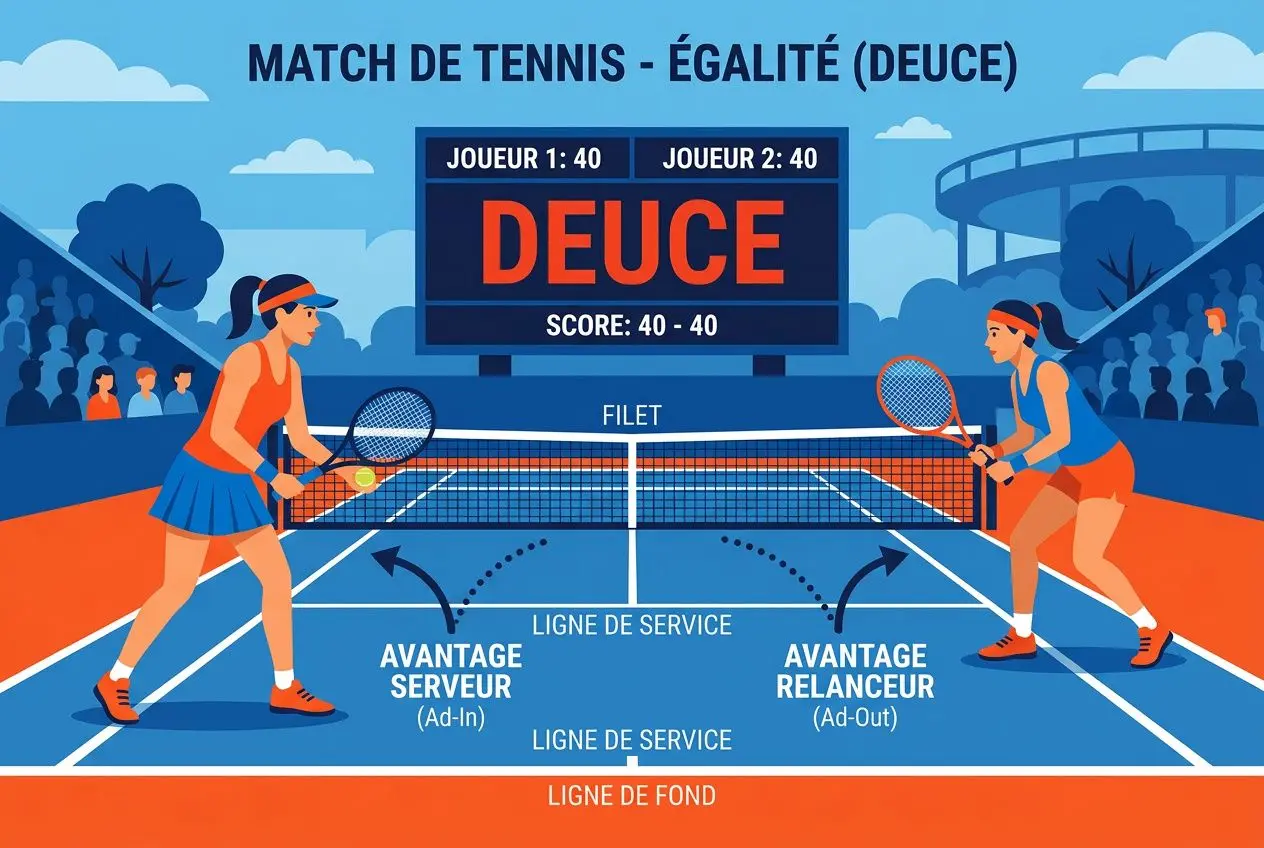
That same principle explains the term deuce. In tennis scoring, it comes from the French “deux”, or two, referring to the two-point margin required from 40-40 before the game can be closed out. On court, that means no player can take the game with a single point once deuce has been reached.
The next point creates advantage: Ad-In for the server, Ad-Out for the receiver. If the player with advantage loses the following point, the score returns to deuce and the sequence starts again.
Tiebreak rule at 6-6 and how the score is recorded
When a set reaches 6-6, the tennis scoring system switches from the standard sequence of games to a tiebreak game. The set is then recorded 7-6, with the losing player’s points shown in brackets.
How a standard seven-point tiebreak works
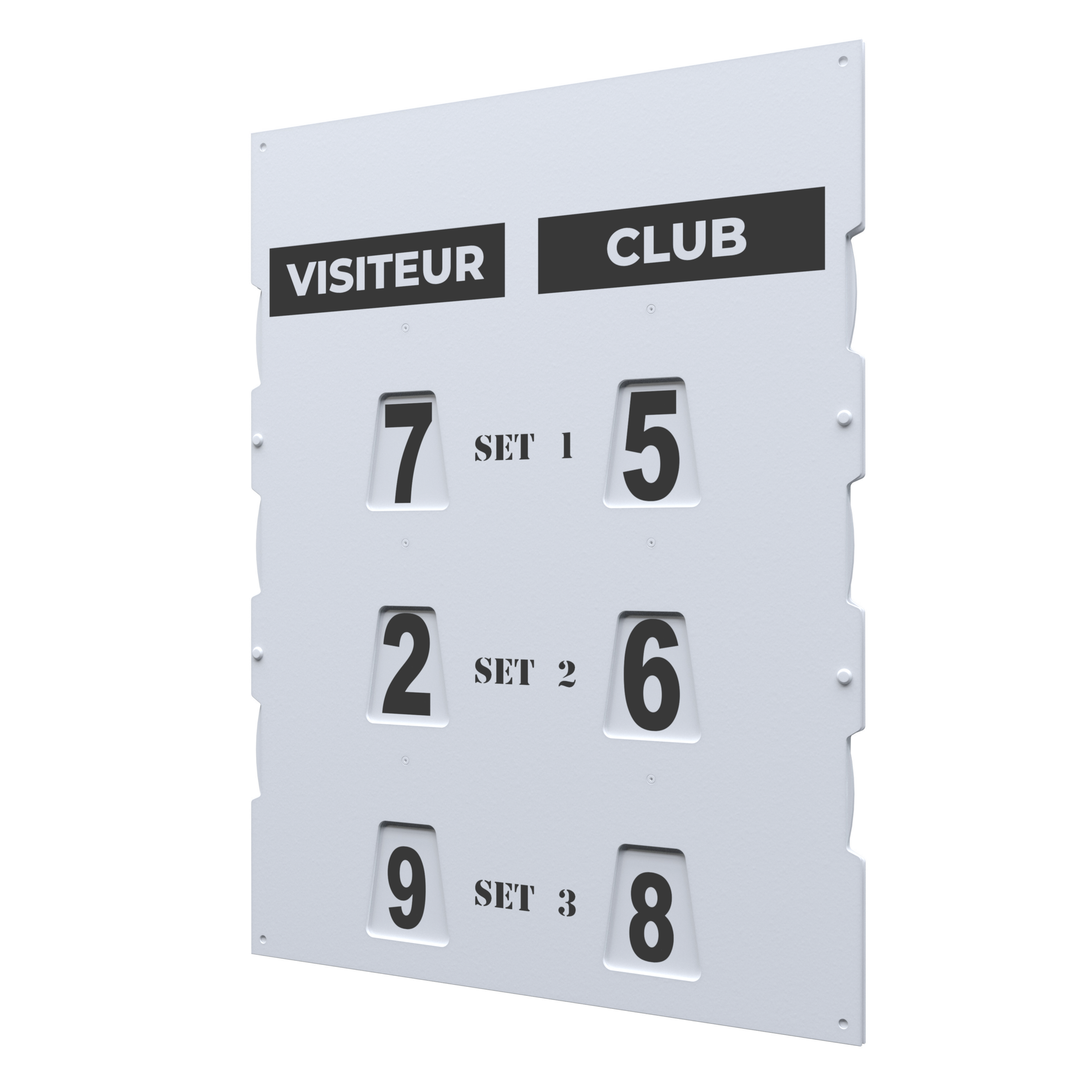
A score such as 7-6 (4) often leads to the same query: what does 7 6 4 mean in tennis? It means the set was settled by a tie-break, with the winner reaching seven points and the loser finishing on four. The figure in brackets always shows the losing player’s total, not the margin.
A tiebreak uses numerical scoring rather than love, 15, 30 and 40. The player due to serve begins with a single serve from the deuce court, then service changes every two points. Players also change ends every six points: at 3-3, 6-6 and so on, to balance conditions.
- Numerical scoring: points are counted 0, 1, 2, 3 rather than through the usual game sequence.
- Service rotation: serve changes every two points, which reduces any serving advantage.
- End changes: players switch ends every six points to equalise wind, light and court conditions.
If the tiebreak itself gets to 6-6, the same rule still applies: a two-point lead is required. As a result, the set may extend beyond the initial target of seven points. The number of games to win the set becomes thirteen when a tiebreak is used, as explained in the games to win set guide.
What does 7-6 (4) mean in a tennis score
The tiebreak scoring system always records the set as 7-6 for the winning player. By contrast, 7-6 (6) shows a much tighter finish after the breaker moved beyond 6-6.
Once recorded in the full score, each set appears in order, such as 6-4, 7-6 (4). The winning player’s figure is listed first in every set.
Super tiebreak at Grand Slams since 2022
The same logic now applies in the final set at all four Grand Slams. Since 2022, when the deciding set reaches 6-6, the set format changes to a 10-point super tiebreak rather than the seven-point version used earlier in the match. The first player to reach ten points with a two-point lead wins the set and the match.
By contrast with the older advantage-set approach, this unified tiebreak set rule prevents extremely long finishes while still producing a clear result. If the score moves to 9-9, play continues until one player leads by two. Before that change, Wimbledon’s deciding sets could continue without a breaker, which helped produce the longest tennis match on record: 11 hours and 5 minutes in 2010.
What is a 6-0 tennis score and how to read set scores
Not every set tells the same story. A 6-0 score sits at the far end of the tennis scoring spectrum, opposite a tiebreak set, because one player controlled every game from start to finish.
What a 6-0 6-0 scoreline means in tennis
A 6-0 set is commonly called a “bagel”, a nickname taken from the shape of the zero. If both sets end 6-0, the result is known as a “double bagel”, meaning the winning player won every game in the entire match.
That result leaves little room for ambiguity. In practice, a 6-3 or 6-4 set shows a much closer contest, because the losing player still won several games before the required two-game margin was secured. A 6-0, by contrast, leaves no such middle ground.
The numbers also affect the point count. A 6-0 set produces the lowest possible total for a completed set: 24 points, if no game reaches deuce. From that point, every extra game raises the count, while a 7-5 set requires at least 48 points across twelve games before the set is settled.
How to read and understand tennis set notation
Once that scoreline is clear, the wider set score notation becomes easier to read. In the standard tennis scoring system, the winner’s games are listed first: 6-4 means one player took six games and the opponent took four. The same principle applies across professional tennis scoring.
When a set reaches 6-6, a tie-break is used in most formats. The set is then written as 7-6, with the tie-break score added in brackets, such as 7-6 (4): that figure shows the losing player’s tie-break points. On court, that means a 7-6 score always signals a set decided beyond the normal six-game finish.
Most completed sets fall into familiar patterns, including 6-3, 6-4 and 7-5. Those results usually indicate competitive play, while 6-0 marks clear control and 7-6 points to a tight finish in a tiebreak set.
| Set score | Games played | Tiebreak involved | Notes |
| 6-0 | 6 | No | “Bagel”, winner dropped no games |
| 6-1 | 7 | No | Strong win with clear two-game margin |
| 6-3 | 9 | No | Common competitive set score |
| 6-4 | 10 | No | Closely fought, standard margin |
| 7-5 | 12 | No | Extended set after 5-5, two-game lead at 7-5 |
| 7-6 (x) | 13 | Yes | Tiebreak decided set; (x) = loser’s tiebreak points |
How many sets in a tennis match at Wimbledon
The number of sets needed to win a match at Wimbledon depends on the draw. In singles, men and women play different formats, which changes how a score develops over the course of a match.
Men’s and women’s match formats at Wimbledon
That distinction starts with singles. In the men’s draw, the Wimbledon scoring system uses best-of-five sets: a player must win three sets to take the match. In the women’s draw, the format is best-of-three, so winning two sets is required.
- Men’s singles: best-of-five, first to win three sets.
- Women’s singles: best-of-three, first to win two sets.
- Mixed doubles: best-of-three, with a super tiebreak instead of a full third set in most rounds.
Once that framework is clear, each set follows the same basic rule: six games usually wins the set, but a two-game margin is needed unless a tiebreak applies. A men’s best-of-five contest can finish in three sets or stretch across five; the women’s format is shorter by design.
Final-set tiebreak rule at Wimbledon explained
That same logic carried into the deciding-set reform introduced in 2022. Before then, Wimbledon used advantage sets in the decider, so players had to keep going until one led by two games. The old final set rule created extraordinary length, including the 2010 record: 11 hours and 5 minutes over three days.
Under the current tennis scoring system, if a set reaches 6-6 in the final set, a 10-point super tiebreak decides the match. As a result, Wimbledon now aligns with the other Grand Slams across major match formats.
Once installed, the deciding-set rule changes only the finish. On court, that means every score still builds through the same structure, even when the final set is settled by a super tiebreak rather than a long advantage battle.
From that point, Tennis Scorer’s reading of the game stays anchored in the same principle: format changes alter the route, not the underlying structure used to track a match.
Frequently Asked Questions
Is a tennis match played as best-of-three or best-of-five sets?
The set format depends on the competition. Most professional tennis singles matches, including all WTA singles and ATP Tour events, follow a best-of-three format: the first player to win two sets takes the match.
By contrast, men’s singles at Grand Slam tournaments are played as best-of-five sets. In that best-of-five structure, a player needs to win three sets to claim the match.
What are six games in a tennis set called when one player wins none?
When one player wins all six games and the opponent takes none, the set score is 6-0. In tennis slang, that result is called a “bagel”.
From that point, the term can extend to the whole match. A result of 6-0 6-0 is known as a “double bagel”.
Why is 40-40 in tennis called deuce?
At 40-40, both players have reached three points in the game. Neither can win immediately, because two consecutive points are required from that position.
The term “deuce” comes from the French word “deux”, meaning two. Once at deuce, the next point gives advantage; if that point is lost, the score returns to deuce until one player secures the required two-point margin.