
Table of Contents
Club branding for sports facilities works when one identity runs through the entrance, the courts, the signage and the scoreboard rather than living only on a logo file. This guide covers how tennis and padel operators define that identity, where to apply it around the court, which rules govern signs and sponsors, and how to audit, roll out and maintain branded assets.
Building a visual identity across the venue
A club identity begins with decisions, not graphics. Once those decisions are fixed, they can be applied to every physical and digital touchpoint, from the gate to the booking page.
Define the club identity
A club first sets out its vision, its target audience and its key messages. Those choices then shape a sports facility’s visual identity: an identity system fixes rules for the logo, colour palette, typography, graphic devices and photography style across the existing venue.
A brand manual turns those rules into production instructions. For each asset, it assigns approved artwork, required information, sponsor space, production method and an owner. As a result, one controlled set of master files stops different suppliers from printing different logo versions.
Carry it from entrance to courts
From that point, the identity follows the visitor’s path. The same treatment can run through physical and digital touchpoints alike, so the club looks cohesive wherever a member meets it:
- Arrival and reception: entrance signs and reception graphics set the first impression.
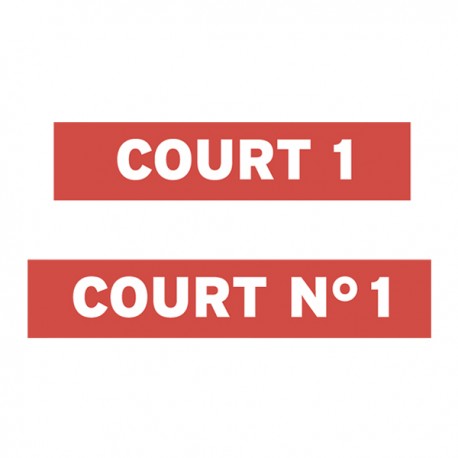
- Courts: court gates, court-number signs, fence graphics and scoreboards carry the identity onto the playing area.
- Beyond the venue: changing areas, apparel, the website, the booking interface and social graphics extend it further.
The stadium look is within reach of a smaller club. Repeating one consistent visual treatment on wall graphics, banners and court surrounds creates a stadium-style atmosphere at tennis or padel scale, without copying stadium dimensions.
Learn from tennis and padel club examples
An Edinburgh tennis and squash club shows how branding can run through a whole sports facility. Its 2024 rebrand combined an evolved logo, orange and forest-green colors and italic typography across signs, entrance graphics, social media, merchandise and communications. Members followed: more than 80 bought branded kit, putting more than 200 items into circulation.
By contrast, another tennis club started on court. It replaced its outdoor windbreaks with branded versions, then carried the same identity indoors through curtains, backdrop curtains and a court divider.
Padel venues in the UK show the same logic with a different emphasis. One built its identity around stadium atmosphere; another used a padel-court reference in its logo, backed by a colour palette and brand guidelines.
Branding the court environment
The court is where members spend most of their time, so it carries the densest branding. Its surfaces are not all available, however: the sport and the competition level decide what may be placed where.
Choose courtside branding spaces
Around a court, branding space includes court-number signs, gates, fence graphics, mesh windscreens, backdrops, sponsor boards and scoreboards. Their placement depends on the sport and on the competitions the court hosts.
Sanctioned play narrows the options. The LTA Competition Regulations 2026, effective from 1 January 2026, prohibit advertising or marketing material on the court, net, strap, band, net posts and singles sticks at LTA-sanctioned competitions, except where the Rules of Tennis permit it. Fence-mounted assets therefore remain the practical surface.
Personalise the club scoreboard
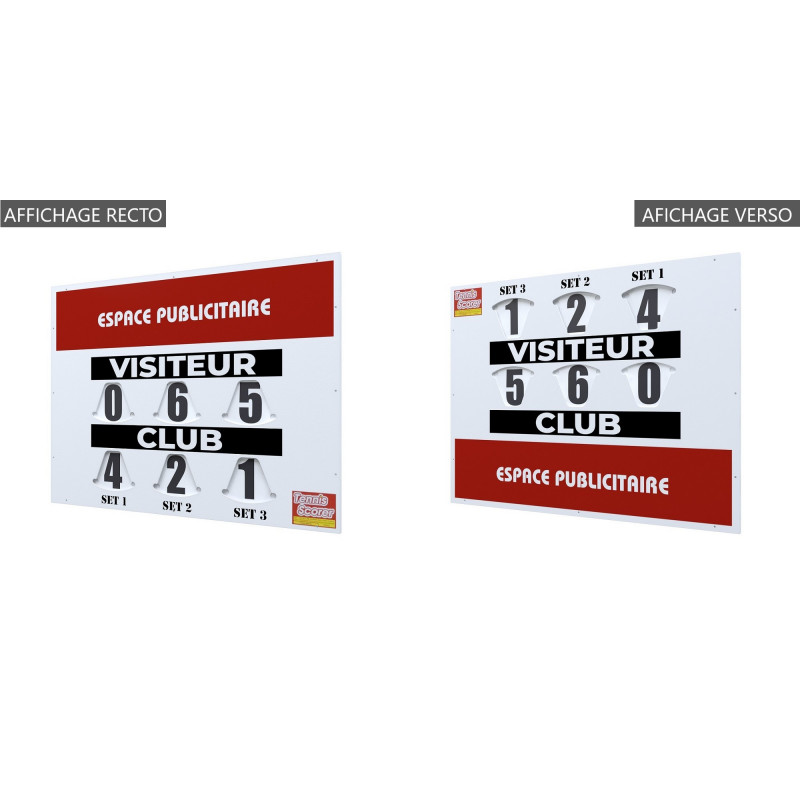
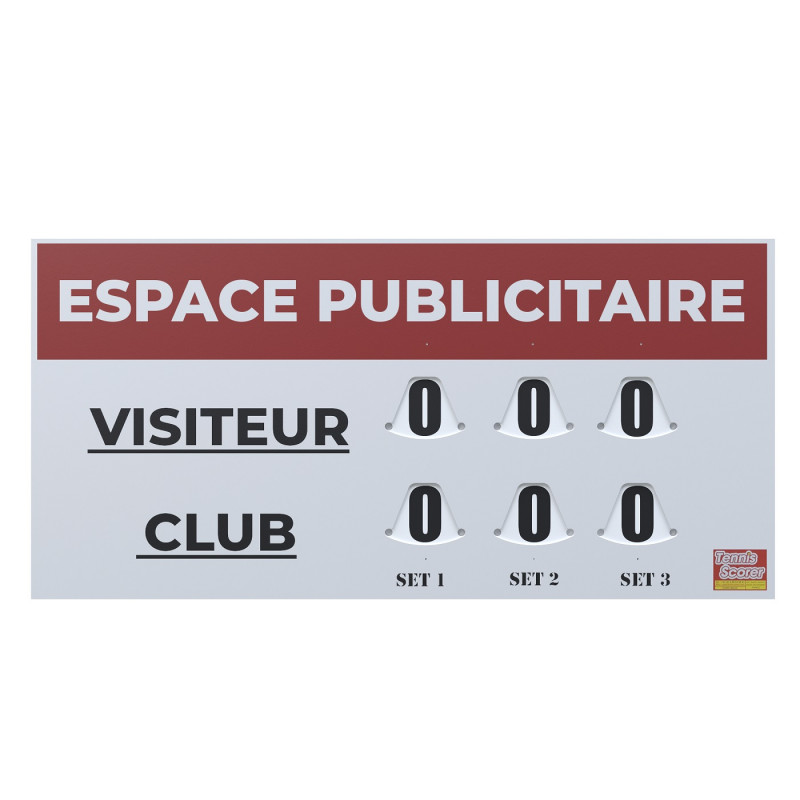
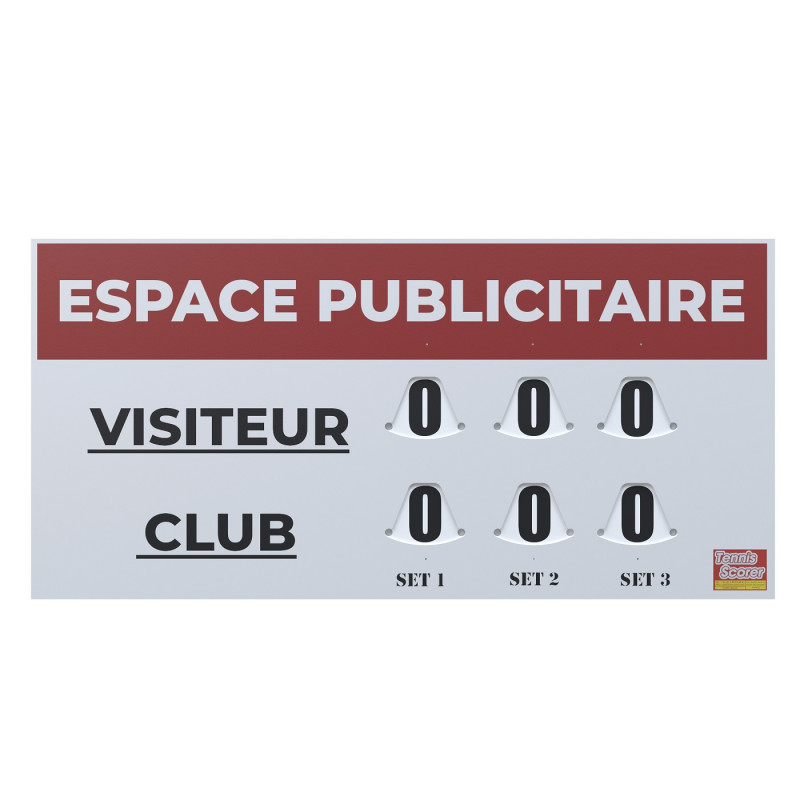
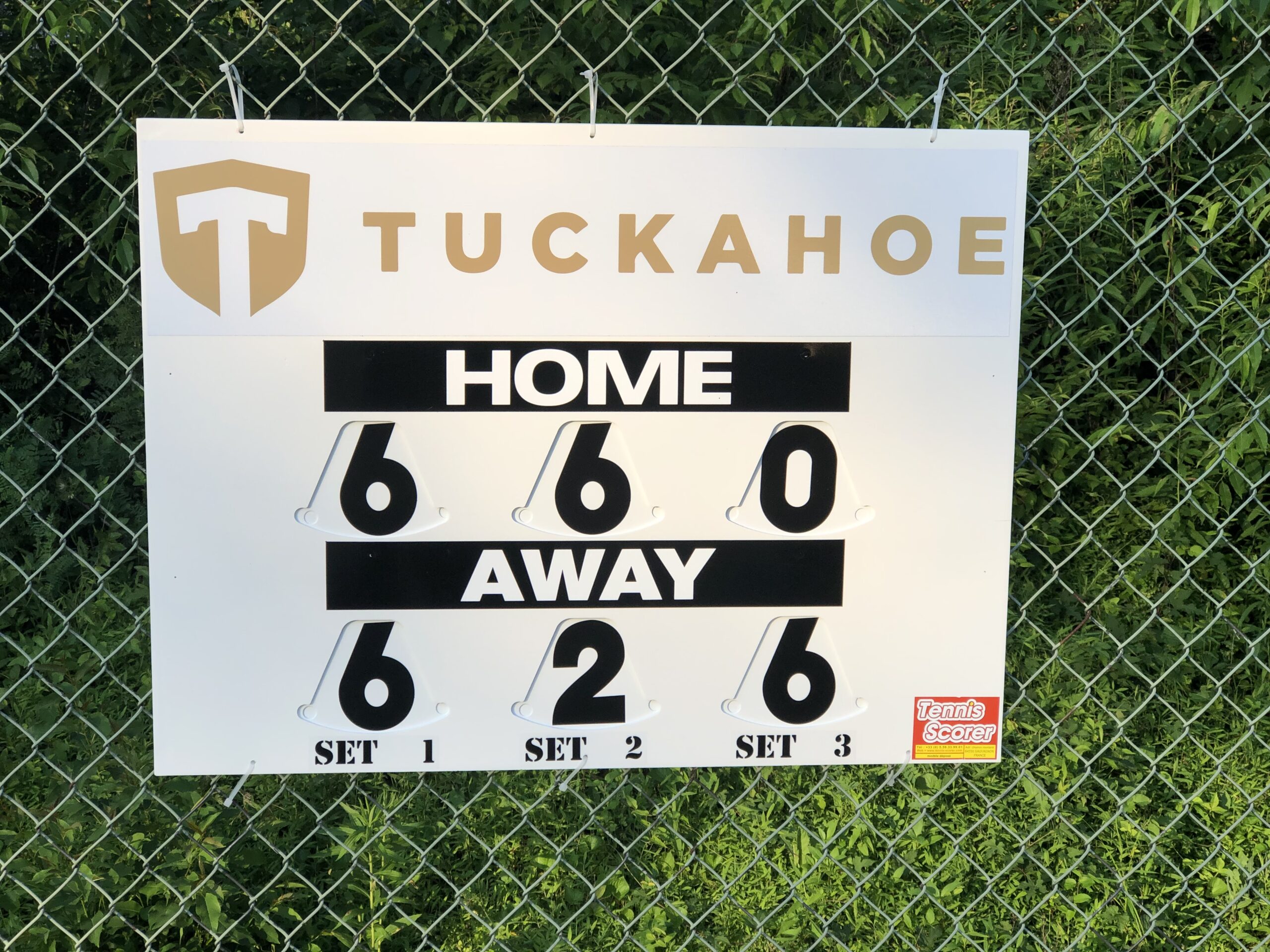
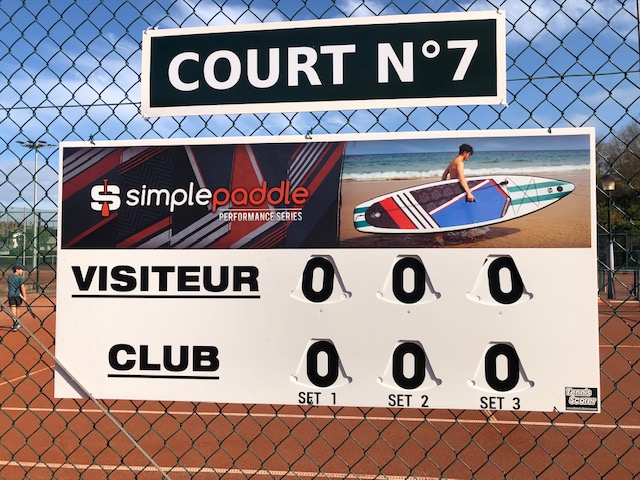
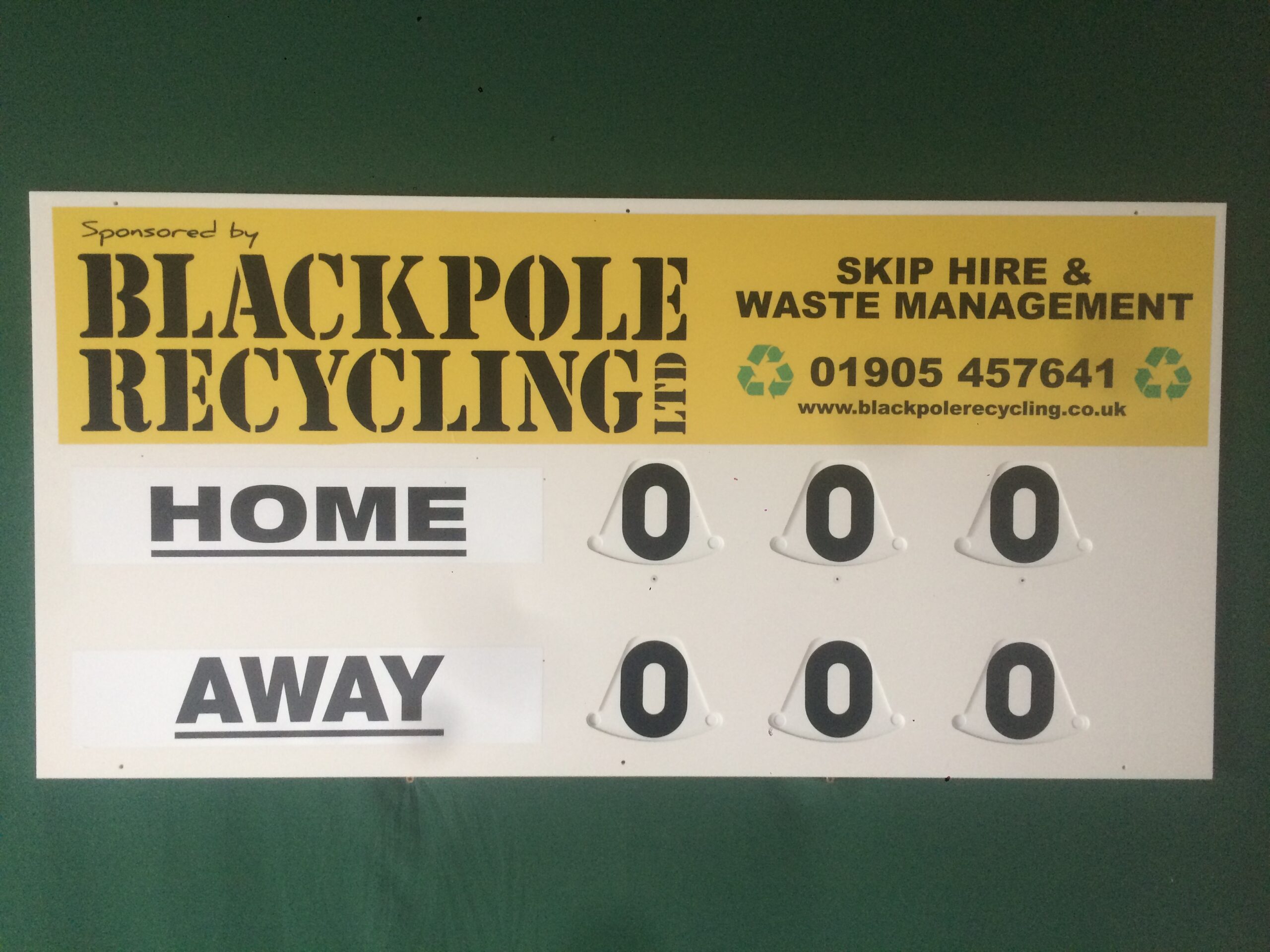
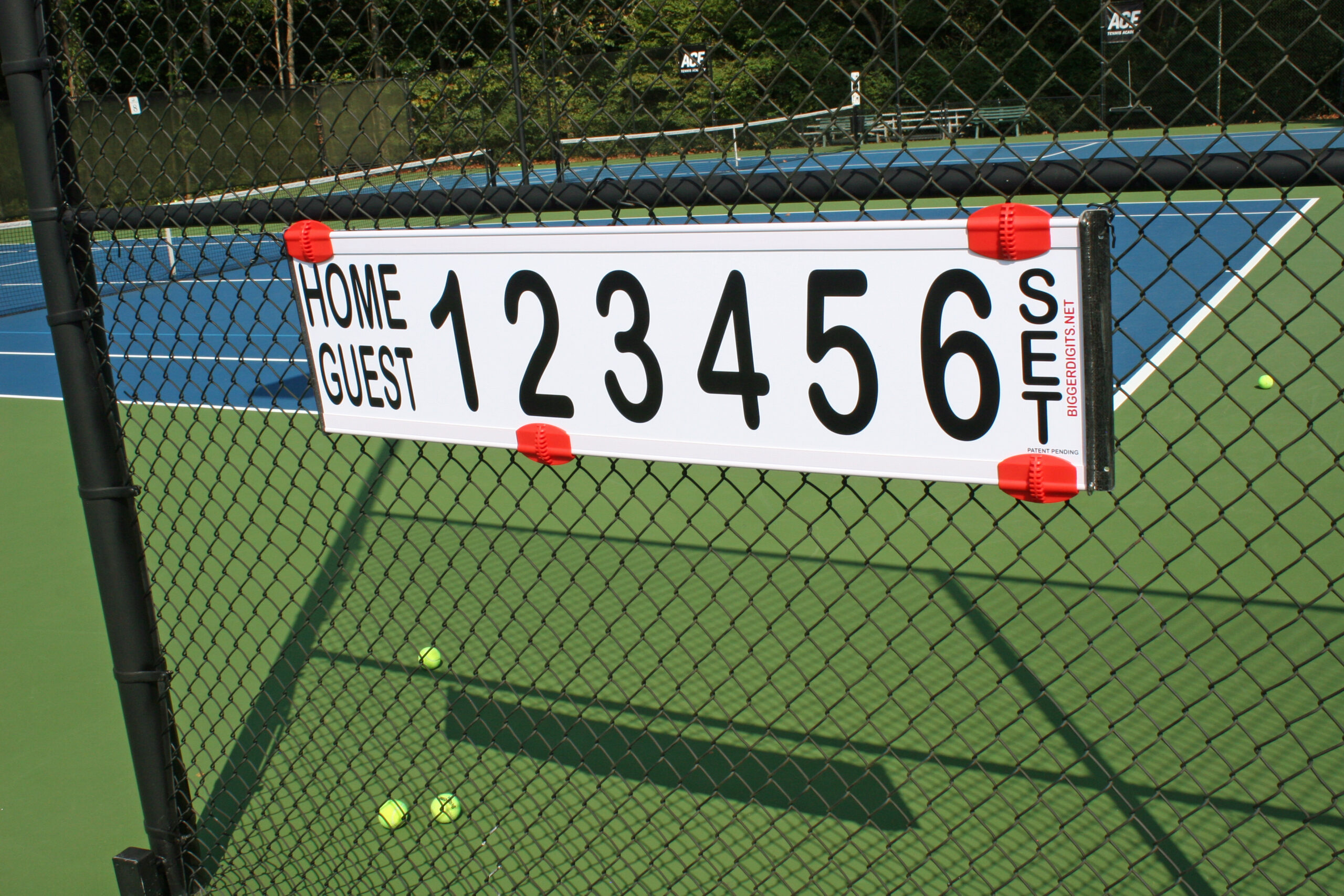
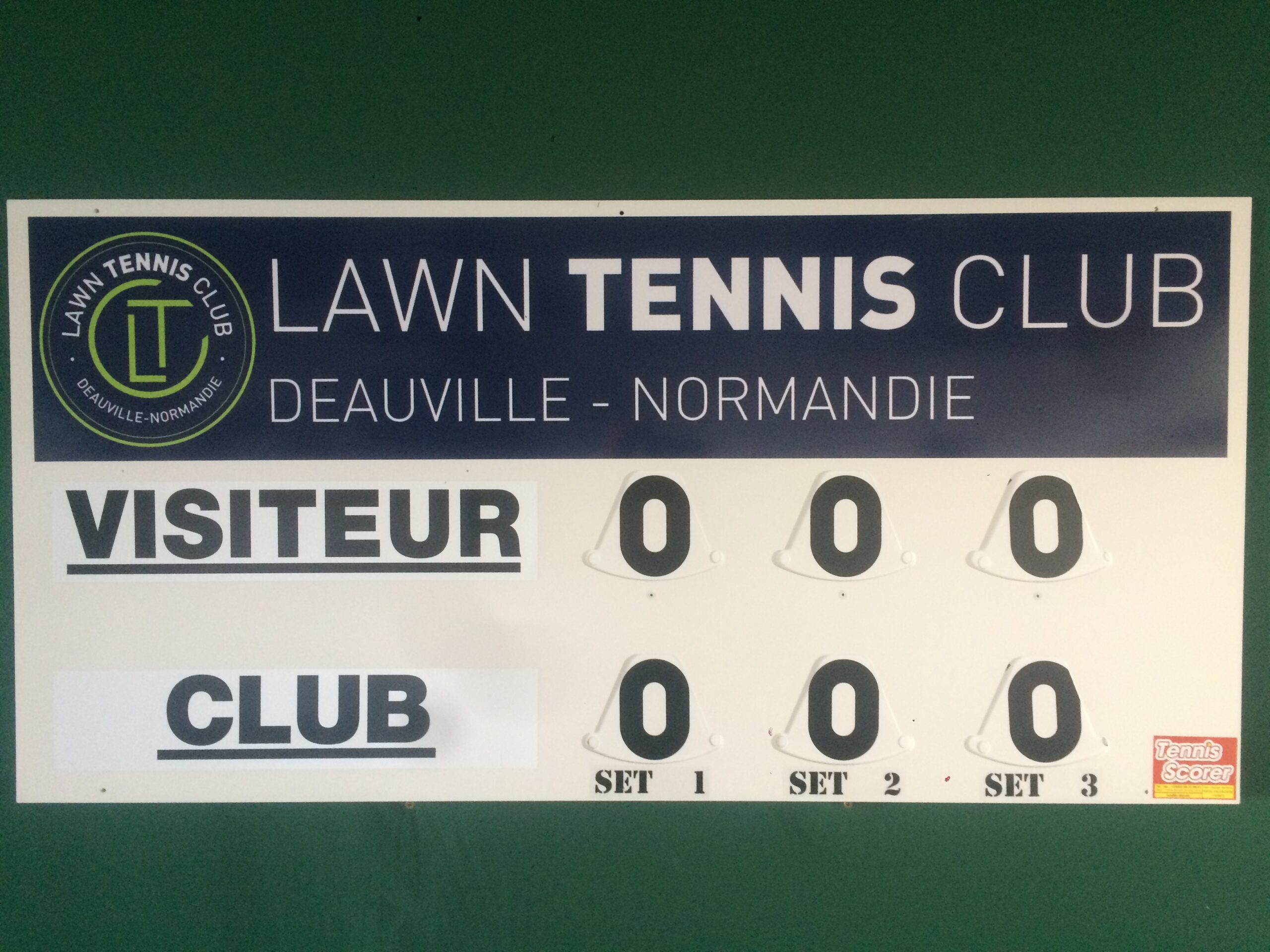
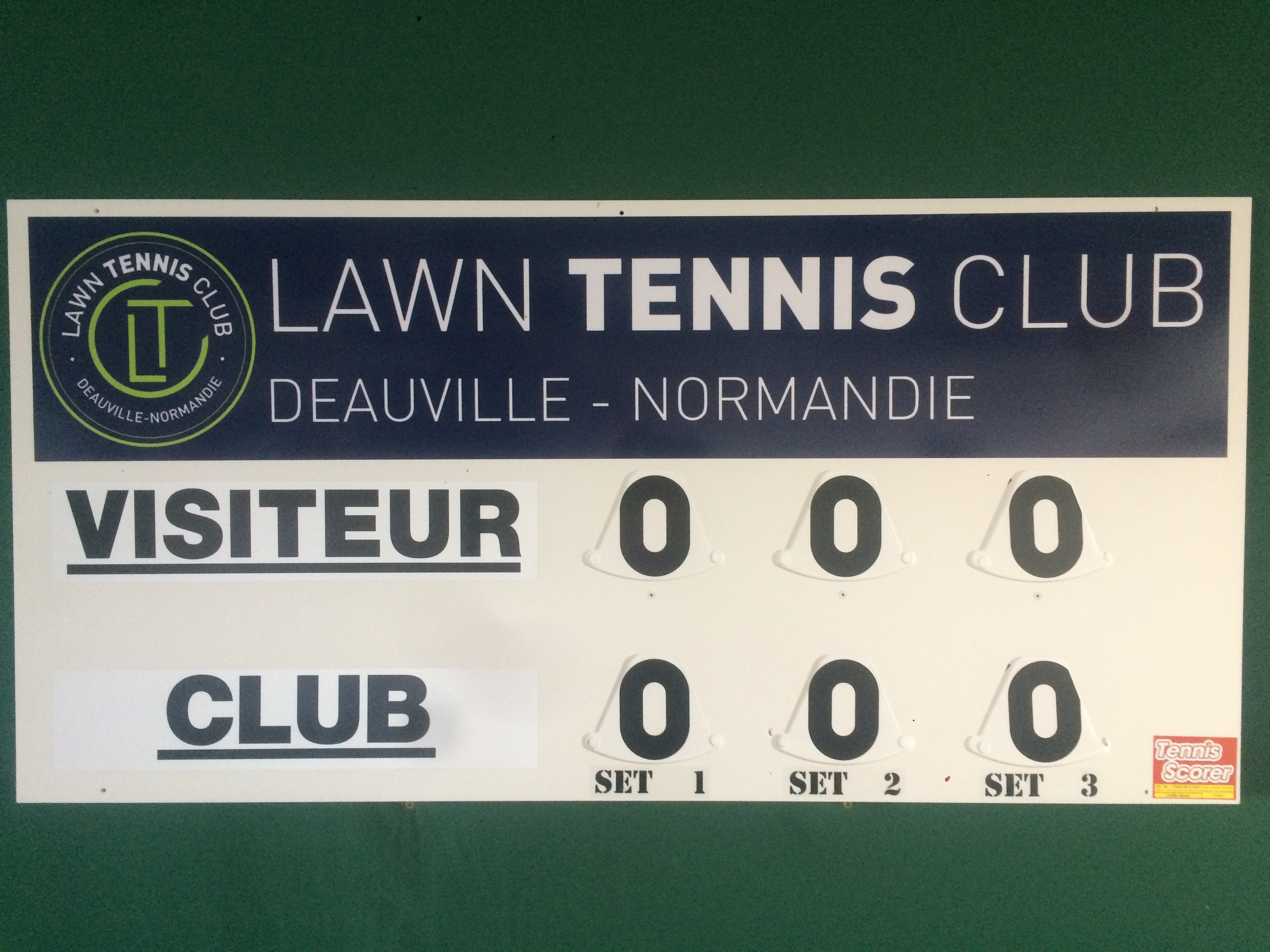
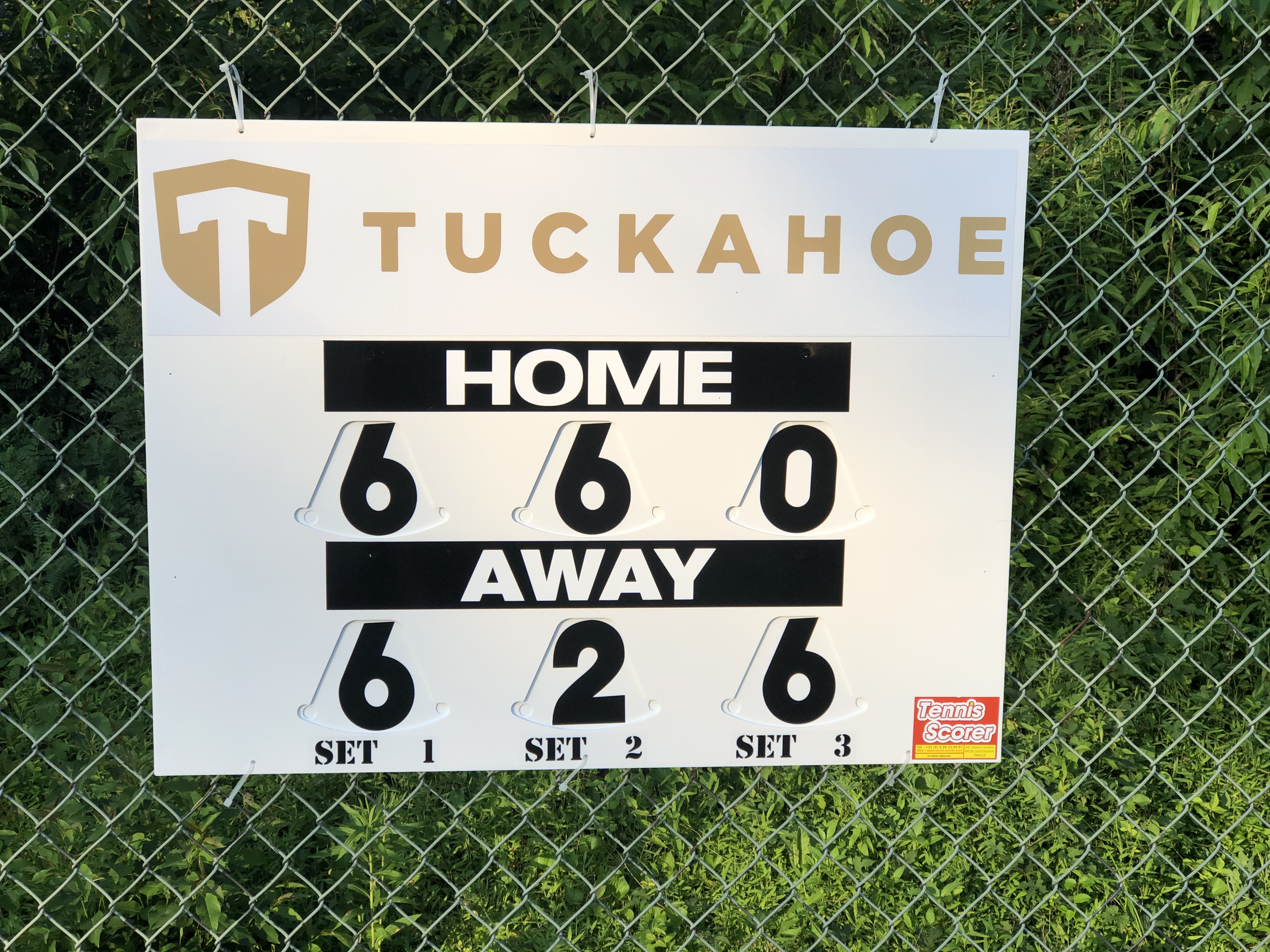
The scoreboard sits on that fence, in every player’s line of sight. Tennis Scorer offers additional adhesives for the advertising area, so a club can display its logo, a sponsor logo, a court number or both club and sponsor logos. The Compact tennis or padel scoreboard includes a 78 × 17 cm advertising sticker.
The Large Model tennis scoreboard comes with a personalisation adhesive for a club name, sponsor or court number. Both models use white PVC, fasten to court mesh and can stay outdoors all year. Their digits, 12 cm high and 2.5 cm wide, are stated to be legible from more than 50 m away.
| Specification | Compact Model | Large Model |
| Sports | Tennis or padel | Tennis |
| Dimensions | 80 × 60 × 1 cm | 120 × 60 × 1 cm |
| Weight | 3 kg | 4 kg |
| Number range | 0–7 (tennis) or 0–9 (padel), three sets | 0–7, three sets |
| Personalisation | 78 × 17 cm advertising sticker | Adhesive for club name, sponsor or court number |
Keep sponsorship distinct from club identity
Sponsors change; the club does not. A sponsor hierarchy reserves fixed positions for the club identity, principal partners and local sponsors, so a new partner never erases the home branding. Permanent graphics suit the stable identity, replaceable panels suit changing sponsors and digital displays can rotate content. The ASA says sponsorship advertising can fall within the CAP Code. The Gambling Commission treats British sports-club sponsorship as advertising, and the LTA 2026 regulations restrict betting, gaming, tobacco and pornography commercial rights at sanctioned competitions.
Rules for branded club signage
Branded signage still has to guide, inform and protect visitors. Comprehensive signage in sports facilities answers to wayfinding guidance, accessibility law, safety rules and, outdoors, advertisement control.
Make wayfinding work as a system
Sport England’s wayfinding guidance, revised in August 2024, treats agreed terminology, branding, decision points and room naming or numbering as early decisions. A working system then combines several kinds of information along the visitor route:
- Directional signs: placed where visitors choose a route, from arrival and parking onwards.
- Identification signs: mark reception, each court, changing rooms and spectator areas.
- Confirmation signs: reassure visitors along the way between decision points.
- Shared codes: consistent names, numbers, zone colours and recognisable pictograms tie the sequence together.
Colour-coded zones are where brand and wayfinding meet. On court, that means a court number printed on the scoreboard should match the gate sign and the booking screen.
Protect accessibility and safety information
Sport England’s guidance gives 2.3 m minimum headroom for suspended or projecting signs. It shows tactile wall signs at 1,400–1,700 mm and toilet-door signs at approximately 1,500 mm centreline. It also recommends at least 70 light reflectance value points of contrast between text and background; these remain guidance figures, not universal specifications. The Equality Act 2010 reasonable-adjustment duty can require advance action, under a Code of Practice in force since 5 August 2026, with BS 8300-1:2018 and BS 8300-2:2018 as reference points.
Brand graphics should leave safety messages intact. HSE requires signs for significant residual risks and their upkeep, while GOV.UK advises pictographic escape signs for small and medium assembly venues. LTA venue standards add safeguarding and welfare-officer notices, which need their own clear place.
Check advertisement consent and official fees
Outside the building, advertisement control applies. In England, the 2007 regulations distinguish deemed from express consent, so an external club sign does not automatically need an application. Owner permission, highway safety and safe maintenance of supporting structures still apply.
Where an application is needed, English fees from 1 April 2026 are £174 for specified on-premises business advertisements and certain advance signs. Other advertisements requiring consent cost £610. Choosing a logo or internal colour scheme carries no government fee.
In Wales, consent is generally needed above 0.3 m² or for illuminated signs of any size; from 1 December 2025, fees are £248 for business premises and £197 for advance or locality advertisements. Other Welsh advertisements cost £667. Scotland’s 2026 fee is £371 per site, multiple advertisements included, while Northern Ireland’s April 2025 guidance gives £231 per site, with no statutory non-profit club exemption.
Planning and maintaining a signage rebrand
A rebrand applied to an existing club starts with what is already on the walls and fences. From that inventory, the club approves artwork, phases the installation and keeps the result in good order.
Audit existing assets
The audit catalogues every branded surface. In a tennis or padel club, that list typically covers:
- Arrival: entrance signs, reception graphics and glazing.
- Courts: windbreaks, scoreboards and sponsor boards.
- Interior and temporary: noticeboards, changing areas, screens and temporary banners.
Each asset then gets its own record: dimensions, substrate, fixing, condition and ownership. Recording these before approving artwork prevents designs that do not fit the panel or the fixing.
A sign schedule sorts the inventory into identity, directional, operational, marketing and safety signs. As a result, the club can decide category by category what changes and what remains.
Approve artwork before production
Before finalising artwork, check competition restrictions, permissions, accessibility, safety, fixing, electrical requirements and manufacturer constraints. A full-size mock-up of an entrance sign, wayfinding sign, courtside graphic or scoreboard then exposes scale, contrast and sightline problems before manufacture.
Materials matter as much as artwork. Outdoor signs face sunlight, rain, temperature changes and wind, while graphics in humid areas need substrates suited to that moisture.
Roll out and maintain the identity
Once production starts, existing wayfinding and safety information stays in place until replacements are up. The Edinburgh club mentioned above phased its work: outdoor signs went up in March–April 2024, and the entrance vinyl followed in October 2024. An installed-brand audit then checks real-world colour, glare, legibility, sightlines, accessibility, emergency information, sponsor hierarchy, fixings and scoreboard content.
A maintenance register keeps the identity built to last through the seasons. It tracks each asset’s material, installation date, sponsor, condition, next inspection and replacement trigger: fading, tears, damaged fixings, outdated directions or expired sponsor graphics.
Frequently Asked Questions
How much does branding a sports facility cost?
There is no government fee for choosing a club logo or internal colour scheme; official charges arise only where an application or registration is required or chosen. Tennis Scorer recommends seeking sponsor funding for a scoreboard, and a sponsoring partner could finance a Compact Model in exchange for its advertising space.
Can club or sponsor branding be used on shared multi-sport courts?
Yes, within each sport’s rules. On shared basketball courts, Basketball England says basketball lines should take priority where possible, branding must not cover line markings and temporary branding needs the same slip resistance as the playing surface. Restrictions also differ by competition level, so a recreational court and a sanctioned-event court need not offer the same space.
Should temporary A-boards be used for club signage?
Sport England warns that temporary A-boards can obstruct access or create trip hazards. When event use changes, permanent wayfinding can instead be combined with interchangeable signs, stickers, modular systems or digital displays.