
Table of Contents
Custom tennis court signs help players find their court, give sponsors a visible place and carry the club’s identity onto the fence. Court-number plates, fence banners, net signs and logo scoreboards differ in material, fixing, readability and GBP cost. Competition rules, VAT and consent fees can also apply before a club commits to an order.
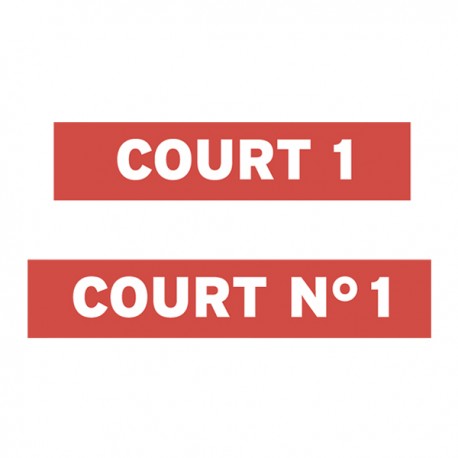
Which court-number plates suit your courts?
A court-number plate has one job: to tell players which court they are on. The right plate depends on where it hangs, how long it must last and what it is fixed to. Material comes first, because exposure decides how long the print lasts.
Choose a material for the exposure
On an open fence, sun is the main threat to a printed number. UV-stabilised PVC helps protect the digits against fading. Heavy-duty PVC goes further: it withstands a tennis ball striking it and can stay outside all year. Rigid foam PVC, a lighter board, is the right choice when the display is short-term or sheltered.
Fluted polypropylene, by contrast, generally suits temporary signs only. For a longer-term bespoke plate in an exposed spot, compare coated aluminium and aluminium-composite panels with plastic. Whatever the panel, the outdoor rating of the print also matters.
| Material | Typical use | Point to check |
| UV-stabilised PVC | Outdoor court numbers | Protection against fading |
| Heavy-duty PVC | Year-round, exposed to ball impacts | Thickness offered |
| Rigid foam PVC | Short-term or sheltered displays | Exposure at the fence |
| Fluted polypropylene | Temporary signs | Expected lifespan |
| Coated aluminium or aluminium composite | Long-term bespoke plates in exposed positions | Outdoor rating of the print |
Size and position the court number
Once the material is settled, the number itself matters most. Each plate identifies a court for players, so its number must match the one in the club’s booking system. A4 is one available format: 210 × 297 mm. It is not a required size, and dimensions should follow the viewing position and the space available.
From that point, a short survey avoids reordering. Note each court number, the view from every access route, the available space, the fence type and its condition, and any owner requirements, before asking for a single quote.
Check the mounting points
The survey also shows how each plate will be held. A common method uses four corner holes and cable ties threaded through the fence.
A solid wall, however, calls for different fixings from mesh or chain-link fencing, so the specification must state which one applies. Gates need a separate check: a mounted plate should leave the gate free to open fully.
As a result, mounting is the final check: use the existing fixing points, trim tie ends so none are left sharp, and keep each tennis court sign clear of the playing area.
Which fence banner fabric suits your courts?
A fence banner can carry a club or sponsor message and double as a windbreak. That second role has a cost: every banner adds wind load to the fence it hangs on. The fabric, the fence and the fixings therefore need to be chosen together.
Compare solid PVC with breathable mesh
Solid PVC gives a printable, rain-resistant face. On an exposed fence, however, it catches more wind than mesh. Printed PVC mesh or HDPE mesh, a woven polyethylene, lets some air through and can reduce the load.
The difference comes down to two separate criteria. Mesh can make close-up printing look softer than solid PVC, while solid PVC raises the strain on the posts. A club should weigh appearance and wind exposure independently rather than treating one as the answer to both.
Assess the fence before fitting
Even breathable fabric does not remove the need to check the structure. The LTA advises considering windbreaks when a fence is first selected. Tubular posts with top and bottom rails suit their installation better.
On an existing court, LTA guidance recommends checking fence strength before fitting a large windbreak. It advises against using one on mesh fencing held by angle-section posts. An LTA court-surfaces presentation adds that roll-weld mesh fencing carrying windbreaks benefits from bracing.
Specify dimensions, edges and upkeep
Once the fence is cleared, the format can be specified. One tennis-windbreak format uses 220 g/m² green fabric with black UV printing. Its standard sizes are 12 × 2 m and 18 × 2 m. A single printed piece stops at 20 × 2 m, and longer displays are split into sections.
Edges then carry the load: reinforced hems and eyelets spread it around the banner. Metal eyelets at 50 cm intervals are one documented arrangement, not a fixed rule. After bad weather, inspect for torn eyelets, loose ties, flapping and corrosion, and take the banner down during severe storms to avoid damage.
Where can logo signs appear during play?
Banners on the fence are only one place for a sponsor. The net and the court surface can also carry a logo, but competition rules limit where and how. These limits apply mainly when a tennis court hosts sanctioned play.
Follow the rules for net advertising
The ITF’s 2026 Rules of Tennis set the framework in Appendix V. Three points govern any net sign:
- Position: advertising is permitted only within 0.914 m of the centre of a net post.
- Play: the sign must not interfere with players’ vision or playing conditions.
- Colour: the top band and centre strap must stay entirely white.
In England, LTA Competition Regulations effective 1 January 2026 apply to LTA-sanctioned competitions. They retain the same advertising exception as the Rules of Tennis, so a club running a sanctioned event follows those limits.
Choose a compatible net-sign format
Within those limits, two formats are documented. A customised net can include a name or logo label; one documented option uses UV-stabilised polyethylene netting. Small sponsor panels clipped to the net are the alternative, with coated polyester as one documented example.
Material alone, though, says nothing about compliance. Before printing, confirm the installed size and position with the event organiser or referee.
Keep surrounding advertising out of sightlines
The same principle reaches beyond the net. Under Appendix V of the ITF’s 2026 Rules of Tennis, advertising behind or beside a court must not disturb players’ vision or playing conditions. White, yellow and other light colours are restricted where they cause that interference.
The court surface follows a stricter split: qualifying advertising is permitted outside the lines, never inside them.
How can a club logo stay readable?
Whether on a banner, a plate or a scoreboard, a logo only works if it prints cleanly at the size chosen. On scoreboards, the logo must also leave the score itself easy to read.
Prepare artwork for each sign
A club can print its logo on a fence banner or windbreak once it holds permission to use the artwork and the printing process supports it. The file pack then includes:
- Vector logo: an authorised PDF, EPS or AI file, scalable without blur.
- Club colours: the exact references the printer should match.
- Fonts converted to curves: the text no longer depends on the printer owning the font.
- Finishing margin: a large banner may need 5 cm left unprinted around its edges.
Margins vary, so confirm the printer’s own specification. Then approve a proof at scale on the intended support, checking spelling, colours and every court number before production starts.
Reserve space on the scoreboard
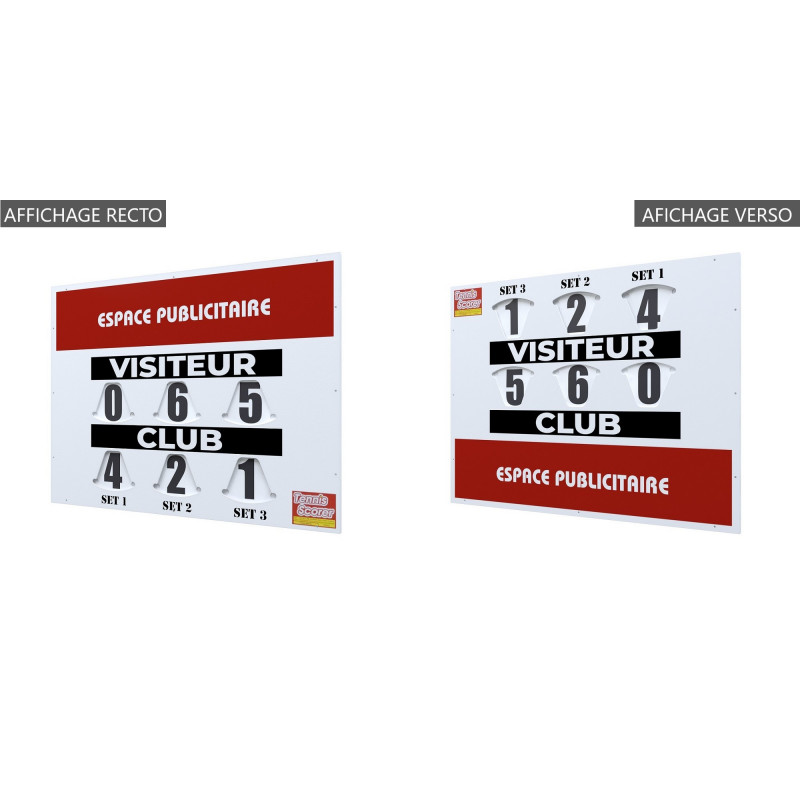
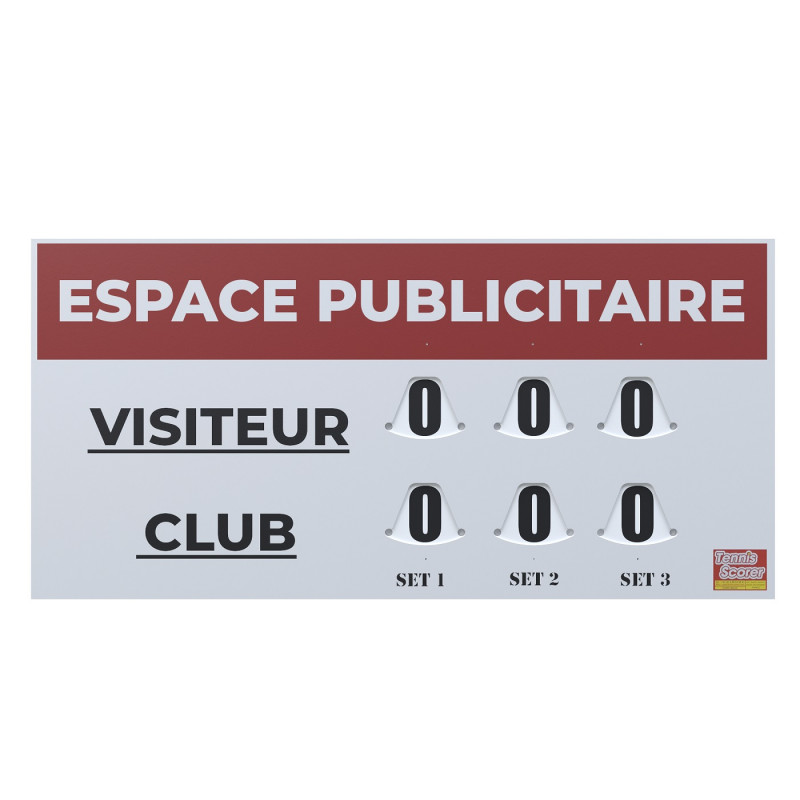
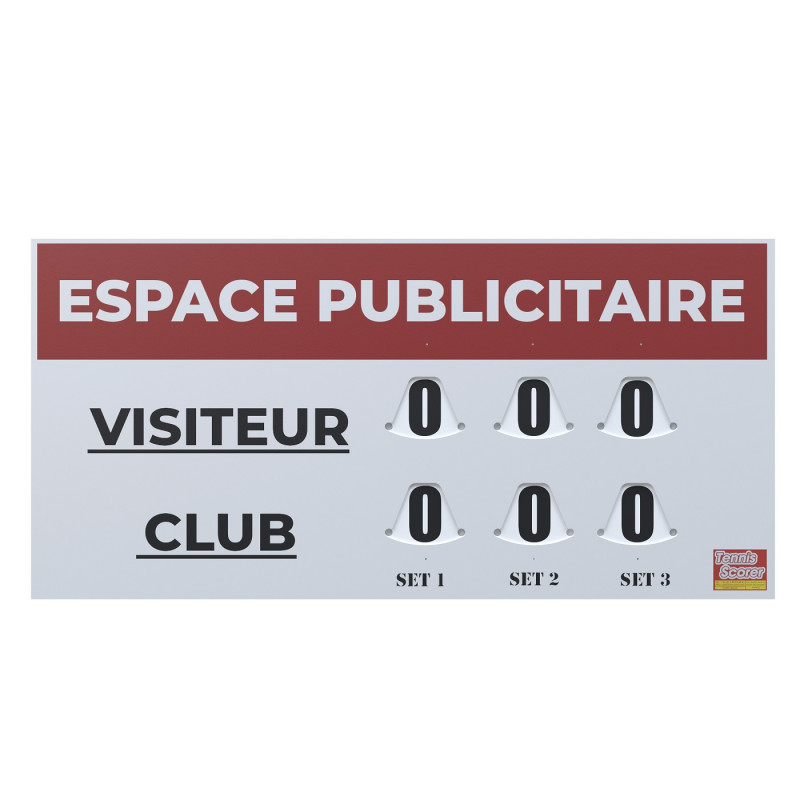
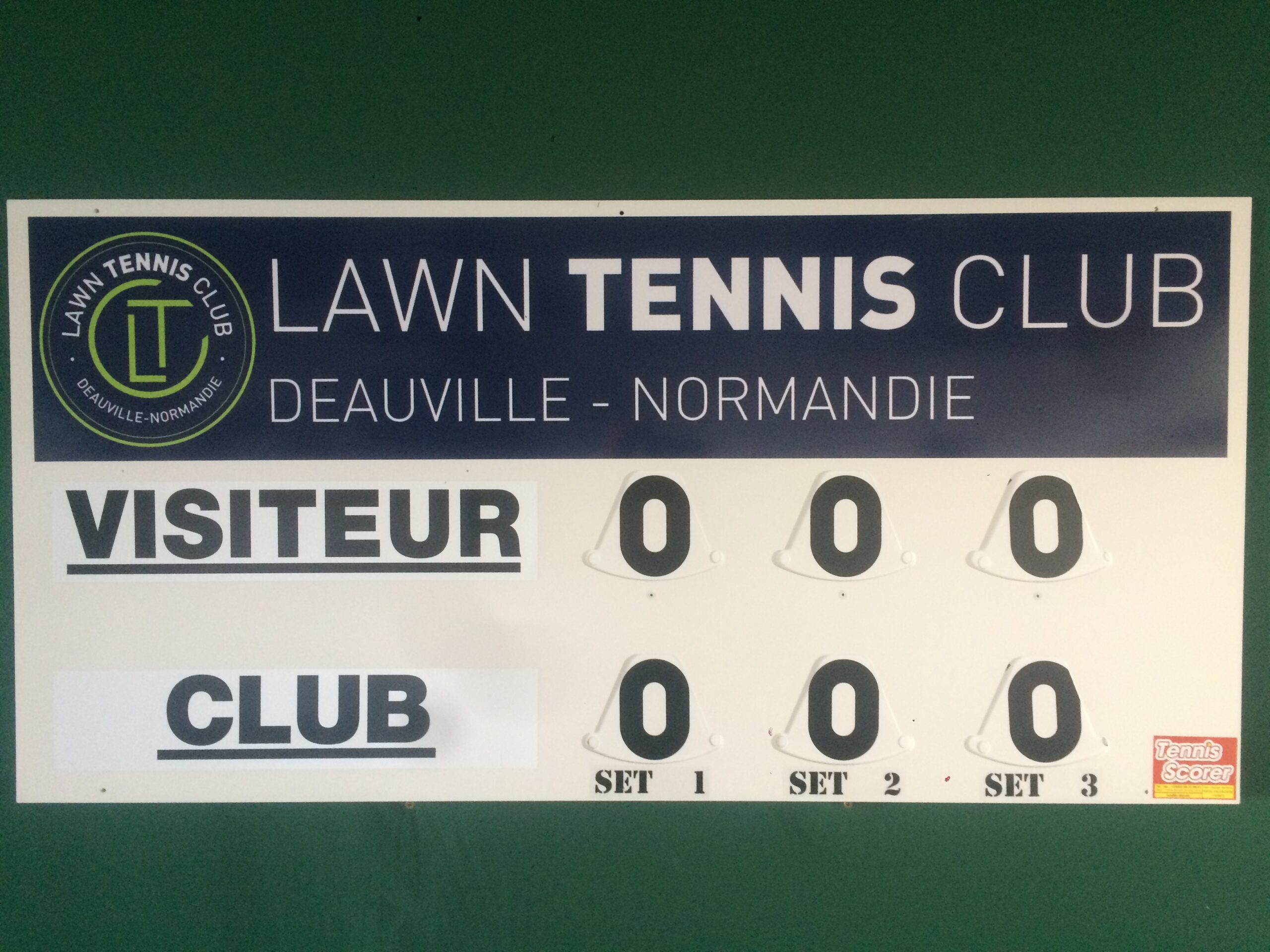
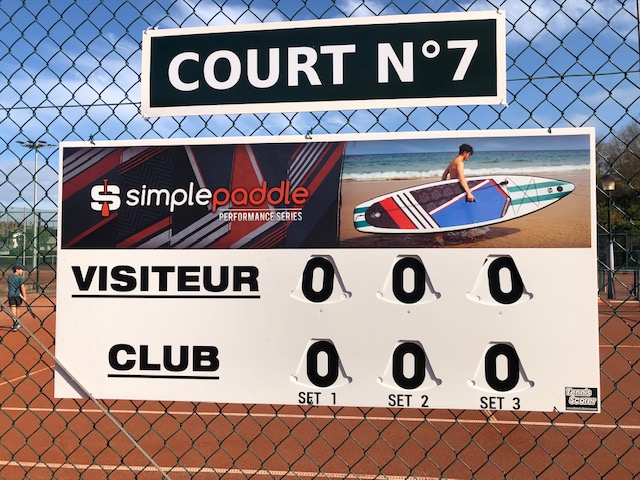
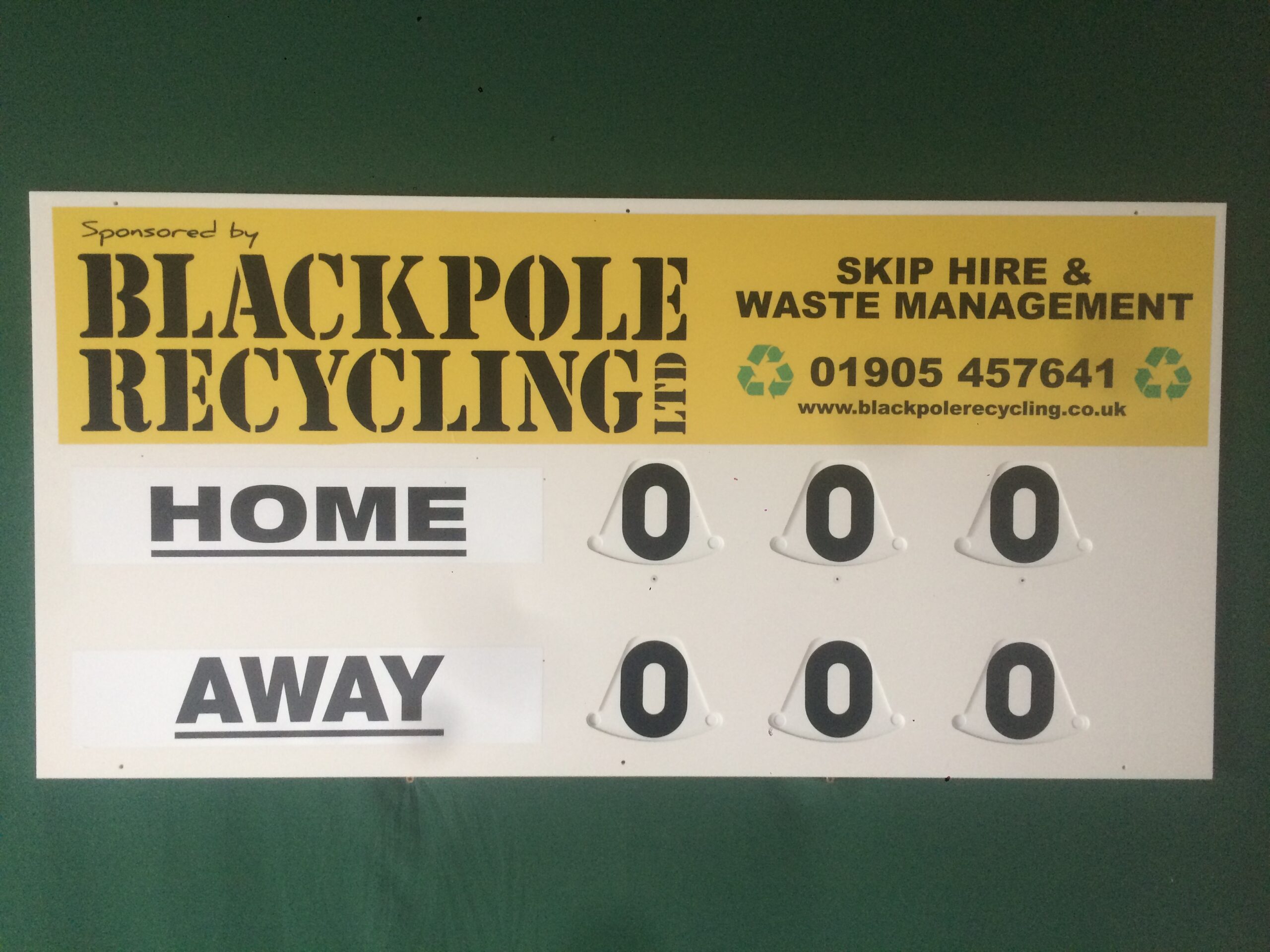
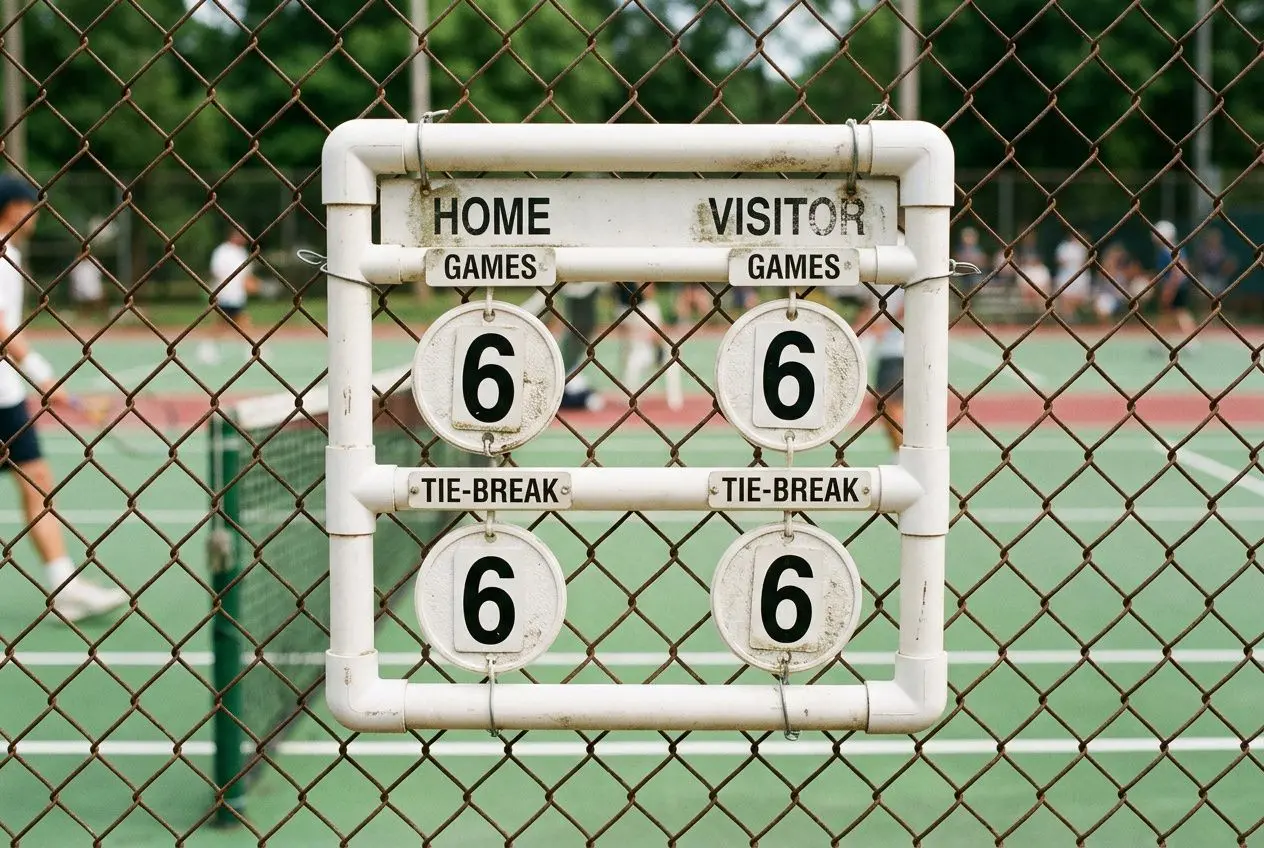
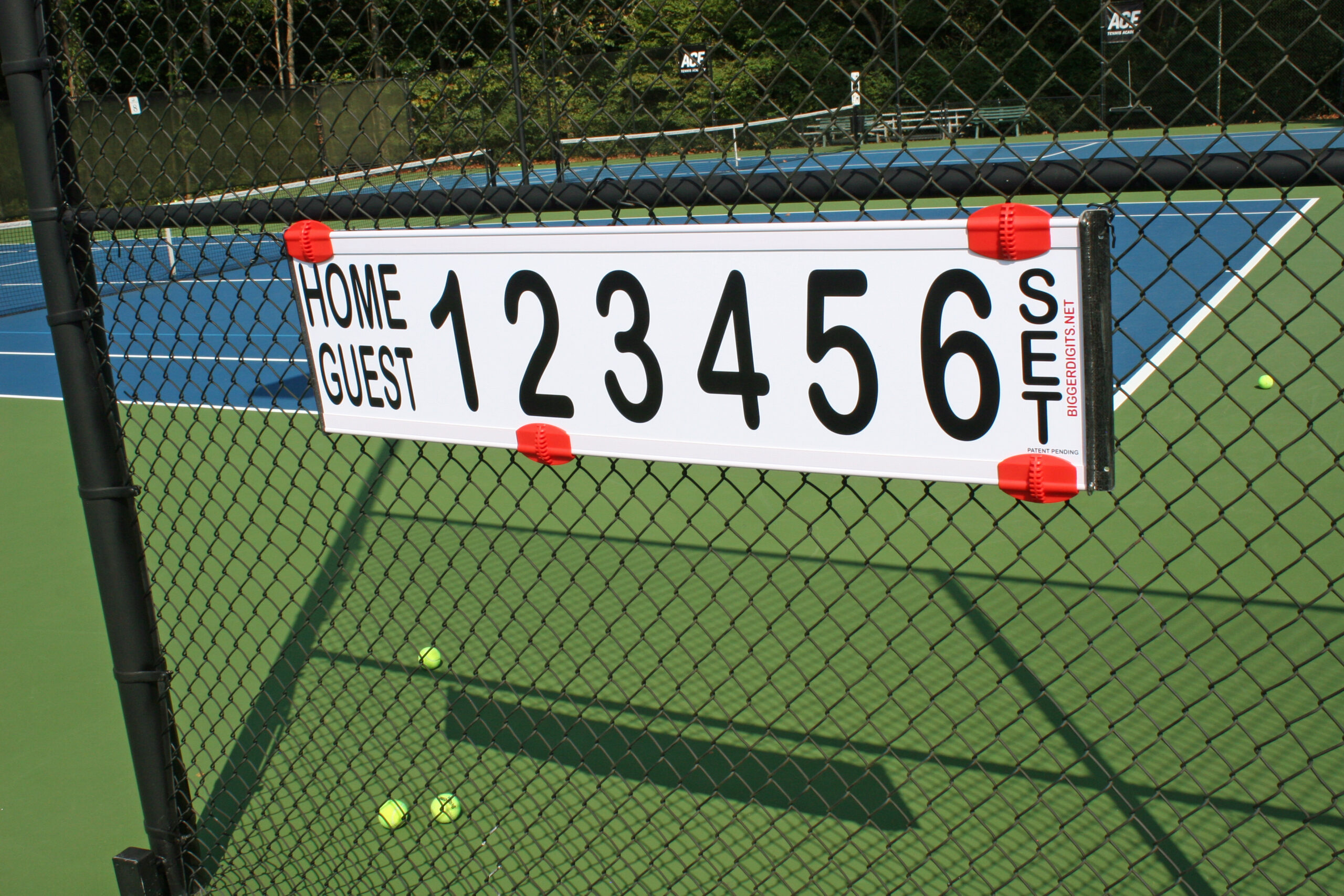
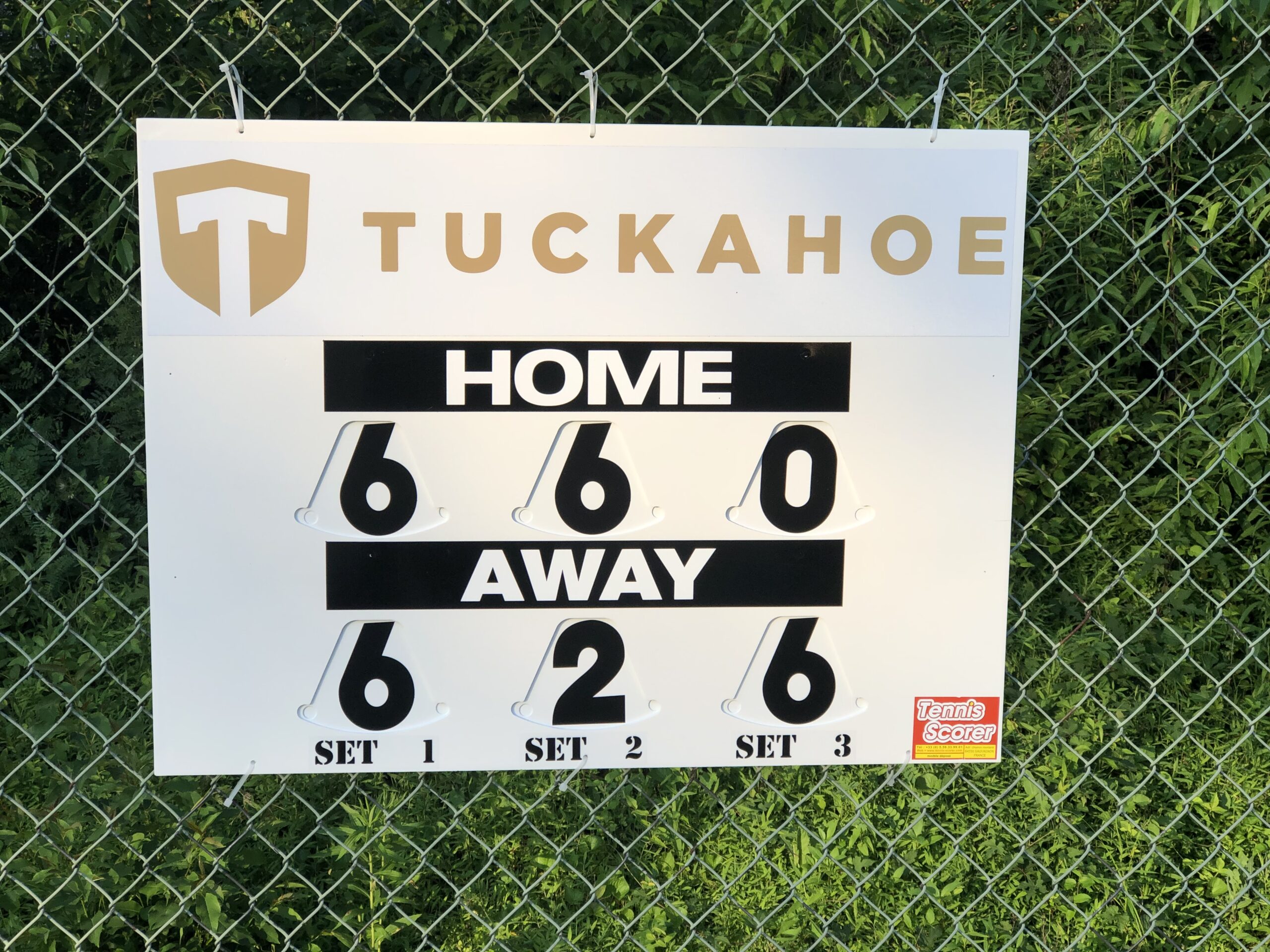
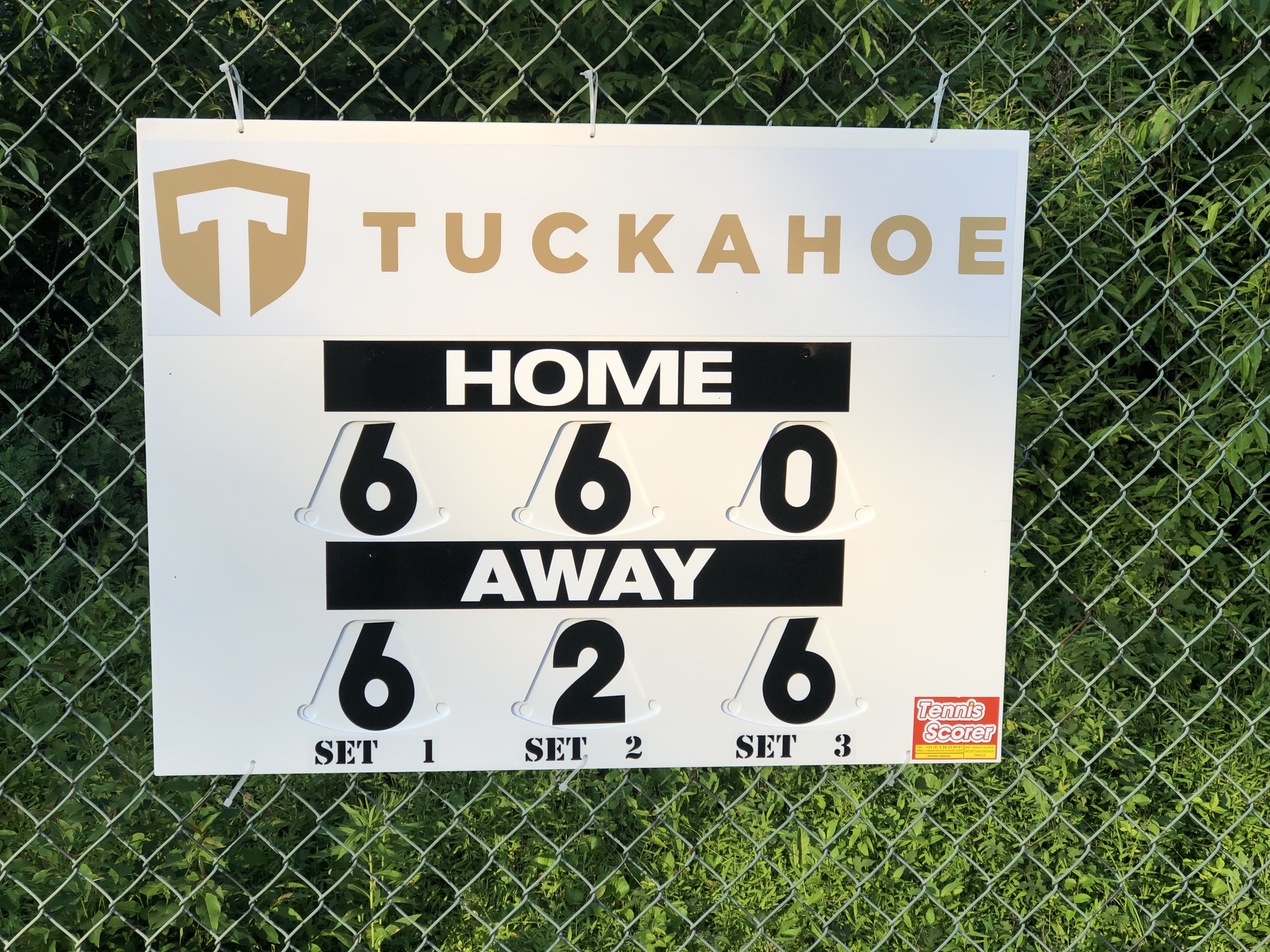
A scoreboard combines both tasks: it must survive outdoors and show branding without hiding the score. One manual design pairs a UV-resistant uPVC body with replaceable branded panels. A removable sponsor panel lets a club change branding without reprinting the board, and a distinct logo area keeps scores and player names legible.
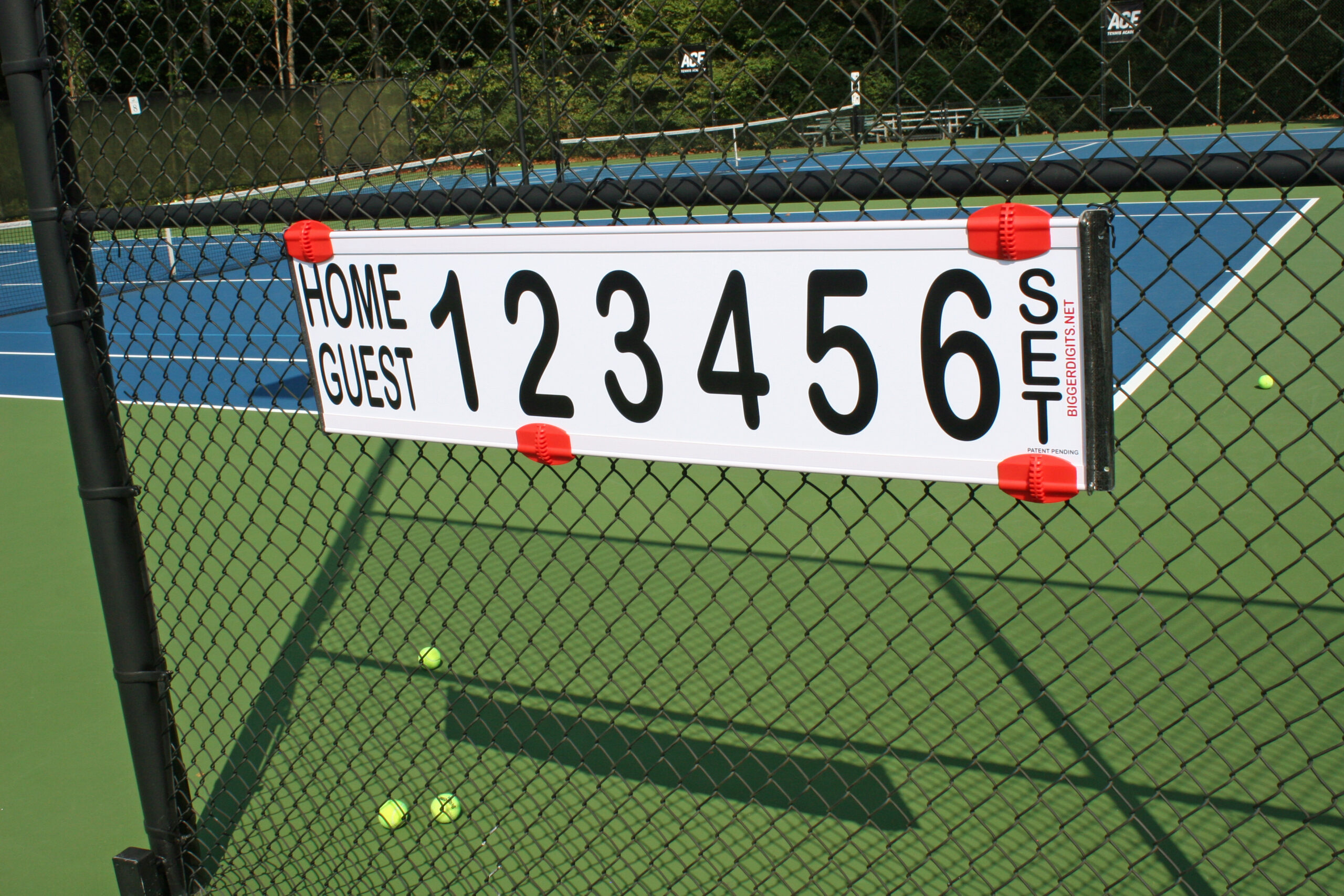
Where players and spectators sit on opposite sides, a double-sided scoreboard is the right choice when both need the score. Check how it attaches to the fence and whether the score controls stay within reach.
Personalise a Tennis Scorer board
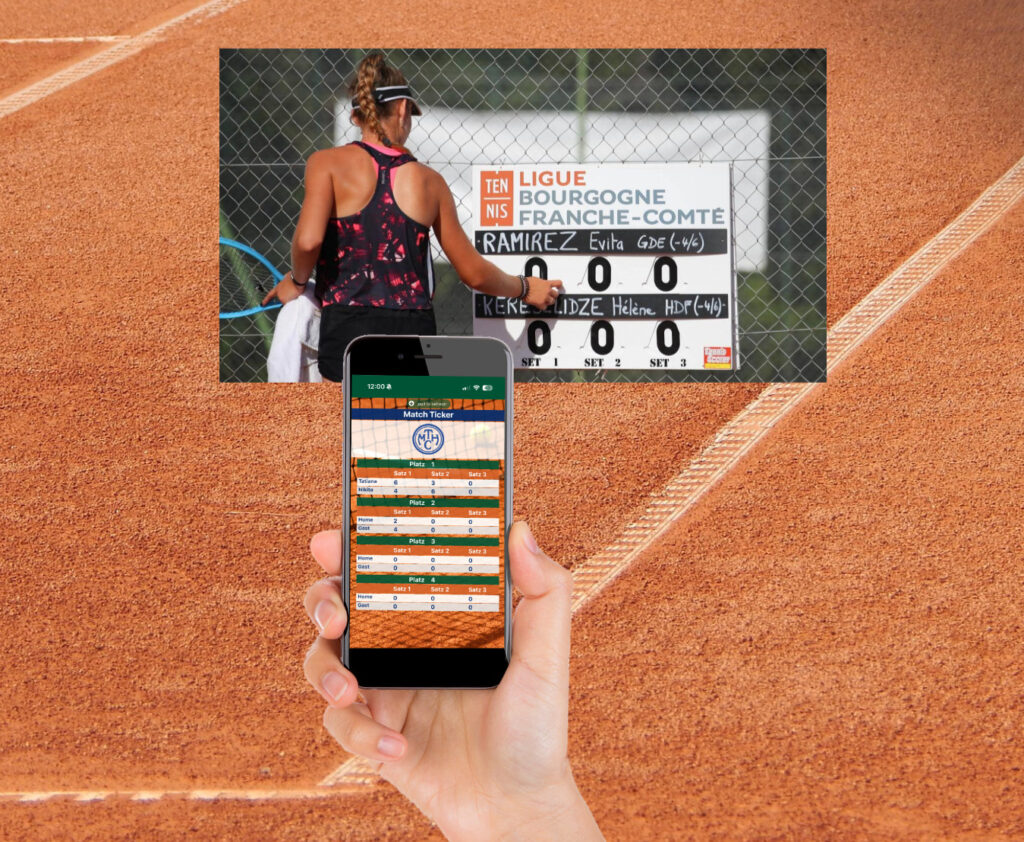
Tennis Scorer offers an adhesive for the scoreboard’s advertising space showing the court number, the club logo, a sponsor logo or a combination. Its French-made, rot-proof white PVC boards stay out year-round, and players update the score at each change of ends. The Cliptec scoreboard model includes a free 78 × 17 cm sticker, while the larger Compact scoreboard adds player-name plates; check its branding stays readable across the court.
What will custom signs cost in GBP?
No single price covers every sign. A court plate, a net panel, a banner and a scoreboard are made differently, so each needs its own GBP quote. Taxes, imports, consent and fitting then add to the total.
Request comparable finished-price quotes
Comparisons only hold when every supplier prices the same brief. Price moves with finished dimensions, quantity, plastic or metal, solid or mesh fabric, print coverage, colour, one- or two-sided printing and protective finishes. Three questions make quotes comparable:
- Pricing unit: per sign, per square metre or per pack.
- Content: exact court numbering, the approved logo and proofs.
- Extras: delivery, fitting and VAT.
Once these answers are on paper, a cheap court sign priced per pack can be set against a dearer one priced per unit, and the real gap becomes visible.
Account for VAT and imports
VAT is the first line to verify. According to HMRC rules, the standard UK rate for most goods and services is 20%, in force since 4 January 2011. Check whether each seller charges it and whether the quoted figure includes it.
Recovery is a separate question. Whether a club can reclaim VAT depends on its VAT status and on how the purchase is used, so a budget should not count on it.
Imported signs bring another threshold. HMRC states that customs duty is not charged on non-excise parcels sent to Great Britain valued at £135 or less. Above £135, the commodity code, material, origin and trade arrangements set the duty; the quote should name who acts as importer and how import VAT is handled.
Allow for consent, fitting and timing
In England, a sponsor display may need no consent, have deemed consent or require express consent, depending on its category. In every case, the site owner’s permission is still needed.
Where express consent applies, the fee scale in force from 1 April 2026 sets £174 for specified on-site activity or advance-sign categories. Other advertisements cost £610. Ask the local planning authority to classify the proposal rather than assuming a sponsor banner falls into the £174 category.
Fitting adds its own items: artwork preparation, holes, edges, hems, eyelets, fixings, fence checks and access equipment. In practice, request proofing, production, transport and installation times separately. No general mandatory periodic inspection fee applies specifically to these signs, although a project-specific fence assessment may be charged.
Frequently Asked Questions
Can I add my club logo to a court-number plate?
Yes. Court-number plates can be custom printed to requirements, provided the number stays dominant and the logo secondary. Review the proof from the access path, and check both sides when the plate is read from opposite directions.
Which materials make tennis court signs weatherproof?
UV-stabilised PVC helps prevent printed numbers from fading, and heavy-duty PVC withstands ball impacts and stays outside all year. Rigid foam PVC suits shorter-term or sheltered displays. Durability also depends on the print, UV exposure, wind, fixings and maintenance.
How should a tennis banner be cleaned and stored after the season?
Wipe it with a soft cloth and gentle cleaning products. Once clean, store it in a dry, protected place until the next season.