
Table of Contents
Ideas for sports facility signage work best when every sign has one job: guiding visitors, presenting the club or keeping people safe. This guide covers each of those jobs for tennis and padel venues, from arrival routes to branded scoreboards, stadium-style displays and event signs. It closes with the rules, costs and installation checks a club needs before commissioning signs.
Plan wayfinding around the visitor journey
Good navigation starts with the route a visitor takes, not with the signs themselves. From the car park to the court gate, each point where someone has to choose a direction needs an answer. Signs added later tend to fill gaps rather than follow a logic.
Make arrival and check-in clear
Before any wayfinding signage is specified, a site plan can mark arrival points, route decisions, court entrances, facilities and exits. Sport England advises treating wayfinding as part of facility design and operation, not as something added afterwards. From that plan, the arrival sequence becomes easier to define.
That sequence covers several separate messages, each placed where the visitor needs it:
- Venue identification: the club name, visible from the approach road.
- Vehicle and pedestrian entrances: marked separately so drivers and walkers do not cross paths.
- Parking: signed from the vehicle entrance onwards.
- Alternative accessible entrance: identified wherever the main entrance has steps or barriers.
Where the club is hard to find, directional signage belongs before the turn, not at it. Once visitors arrive, an entrance sign can combine the club name, check-in instructions and a site map. Changing announcements go on a separate board. As a result, the stable information stays quick to find.
Guide visitors to the right court
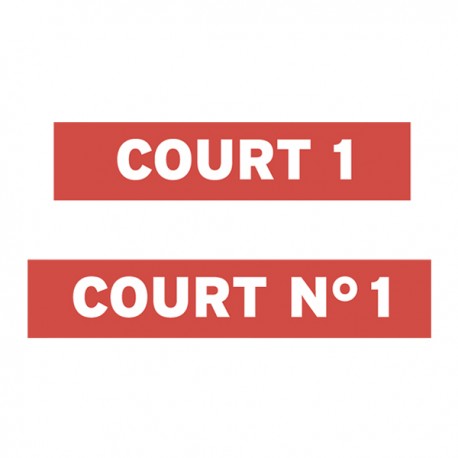
Past reception, wayfinding signs belong at junctions and changes in level, with a repeat sign where a longer route becomes unclear. They can point to tennis and padel courts, reception, changing rooms, restrooms, first aid and refreshments. In a building with several floors, a sign beside each staircase or lift lists what is on each level. One rule matters above the rest: the same court number or name should appear on the booking confirmation, entrance map, directional signs and court gate. A court-number confirmation sign near the gate completes the sequence.
Keep every route accessible and readable
Accessible-route information should run continuously from arrival to reception, courts and facilities, with alternatives marked where needed. The Equality Act 2010 sets reasonable-adjustment duties for service providers and associations. A sign cannot make an unusable route accessible: the route itself has to work first. Readability comes next: high-contrast lettering, plain English, familiar pictograms and arrows placed beside their destinations.
Colour-coded court routes need numbers, text or symbols too, so colour is never the only cue. Toilet and emergency-exit identification should stay on fixed signs, not rely only on screens or QR codes. In practice, route tests with disabled visitors should check the journey itself as well as the wording.
Choose and brand court scoreboards
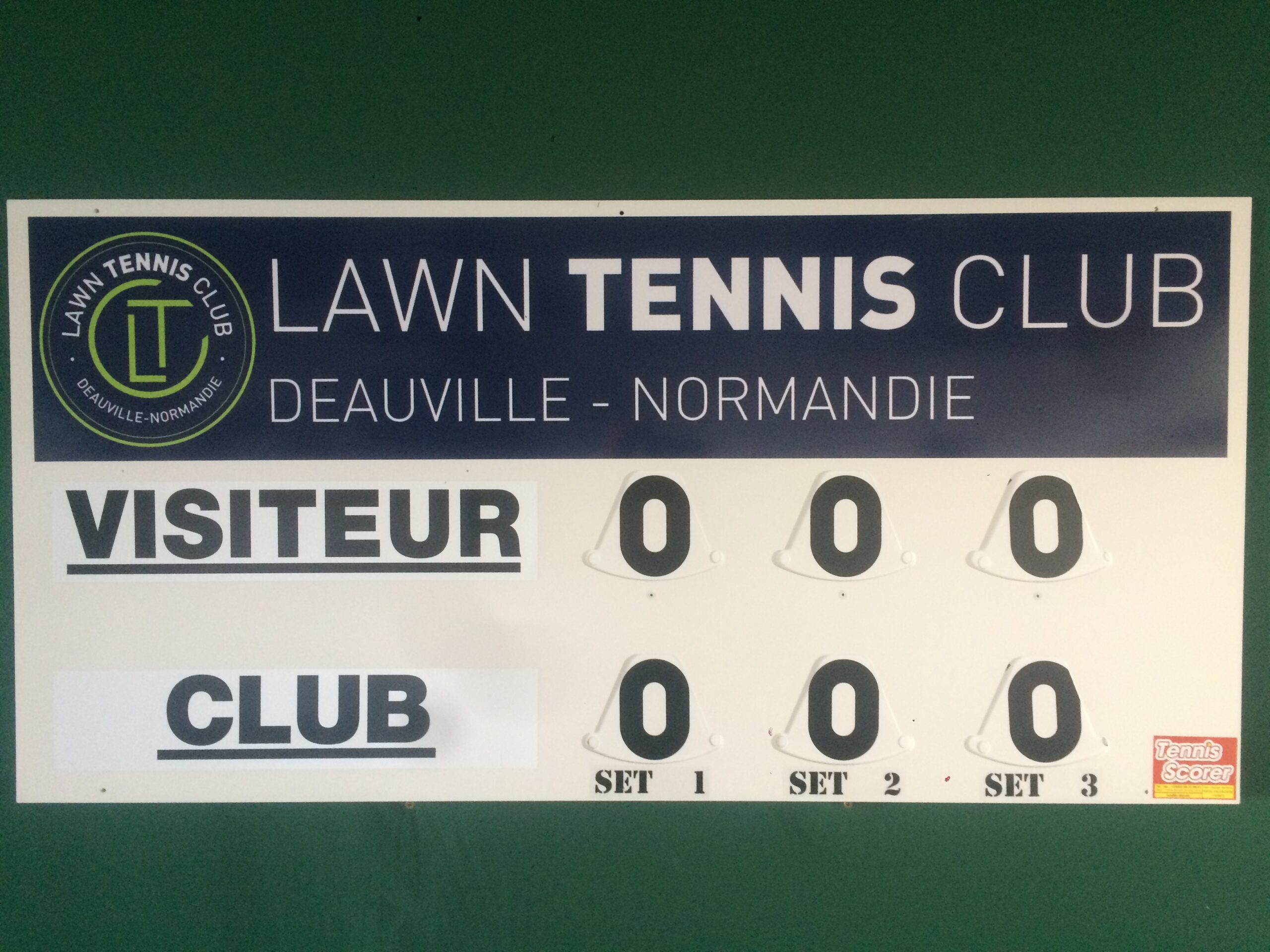
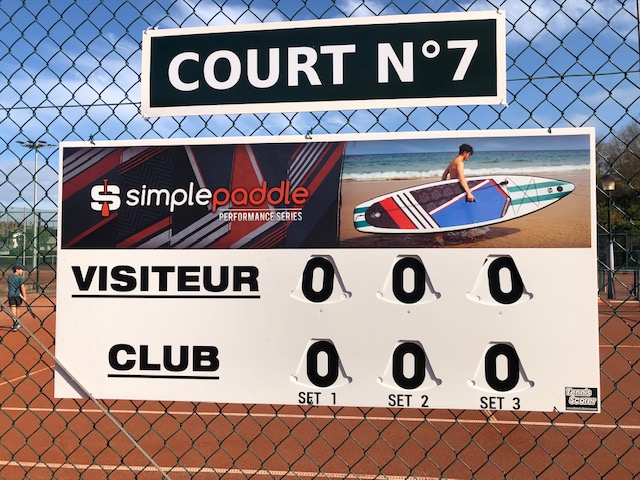
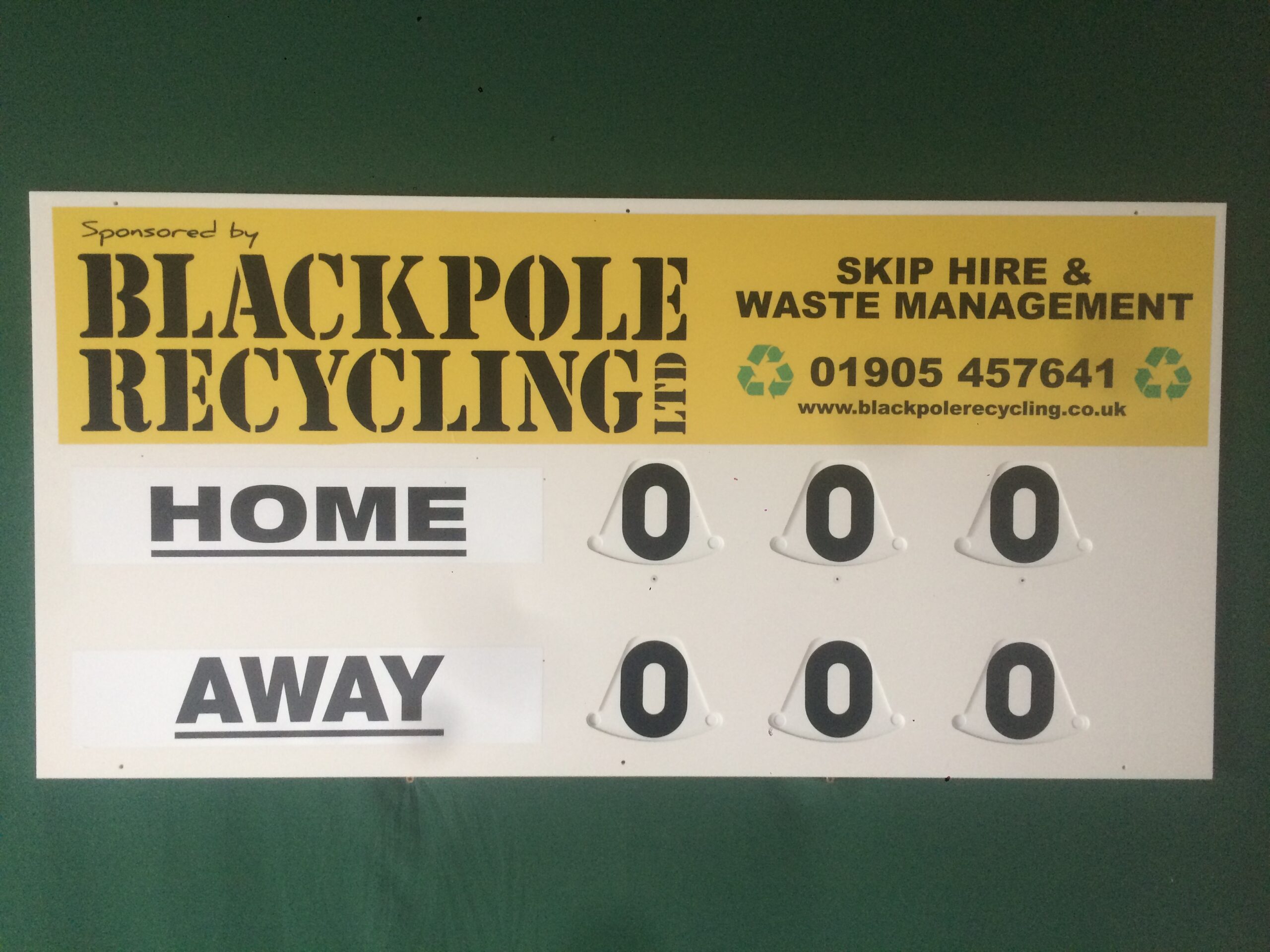
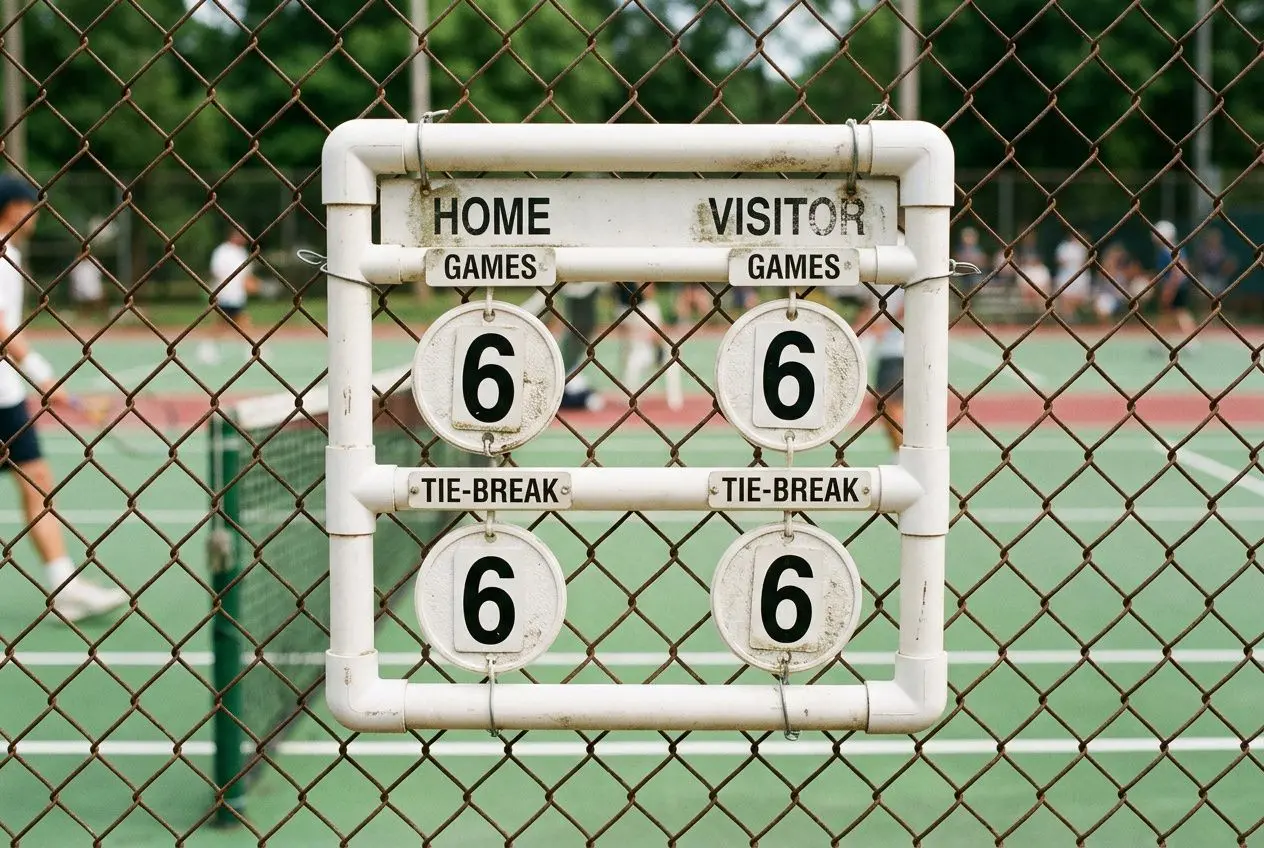
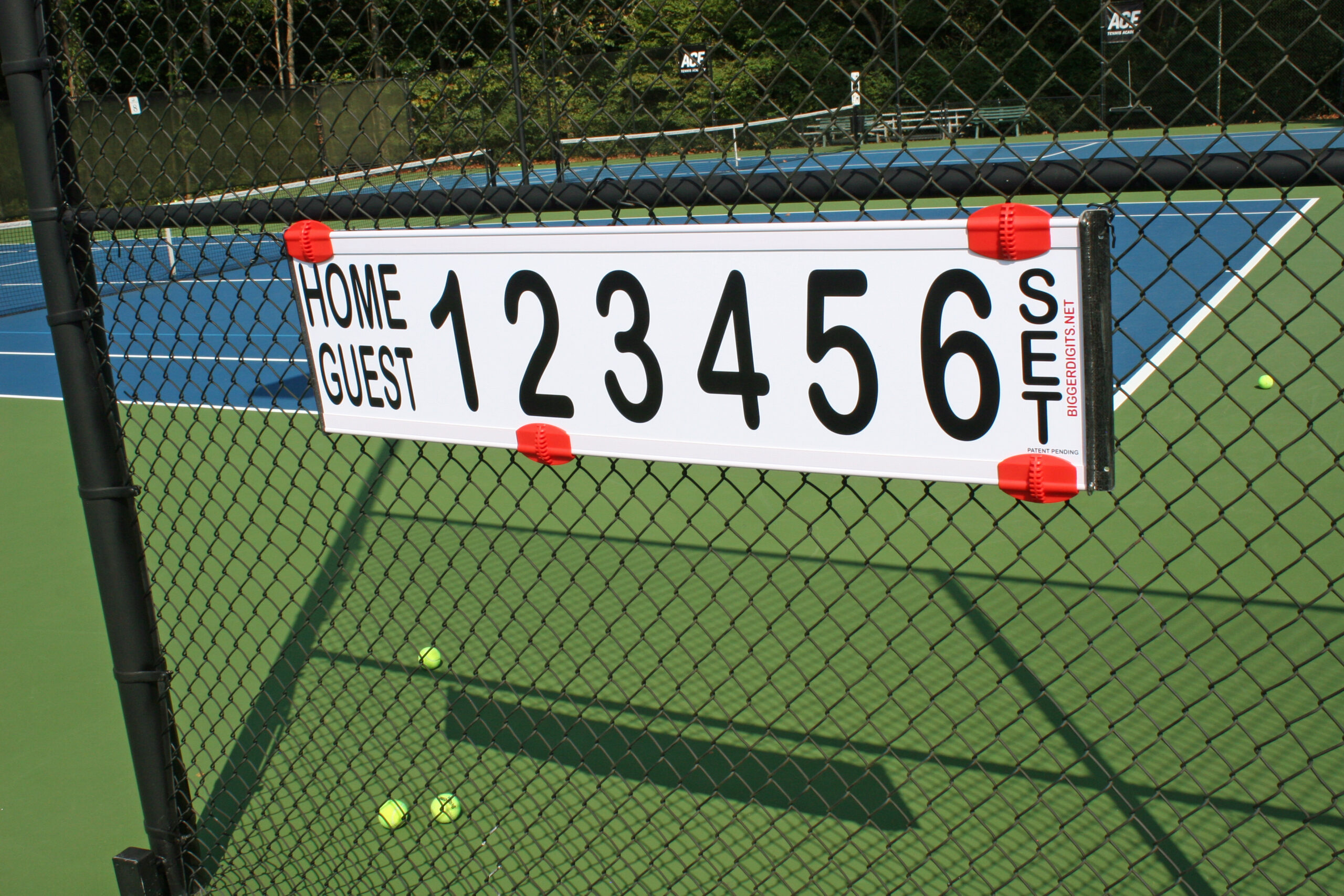
On court, the scoreboard is the sign players look at most. It shows the score and identifies the court, and it can also carry the club’s branding. The right model depends on the sport, the court layout and how much sponsor space the club wants.
Match a manual board to the court
Tennis Scorer makes three manual formats, each from weather-resistant white PVC that can stay outdoors all year. Their differences come from the sport and the number of sets displayed.
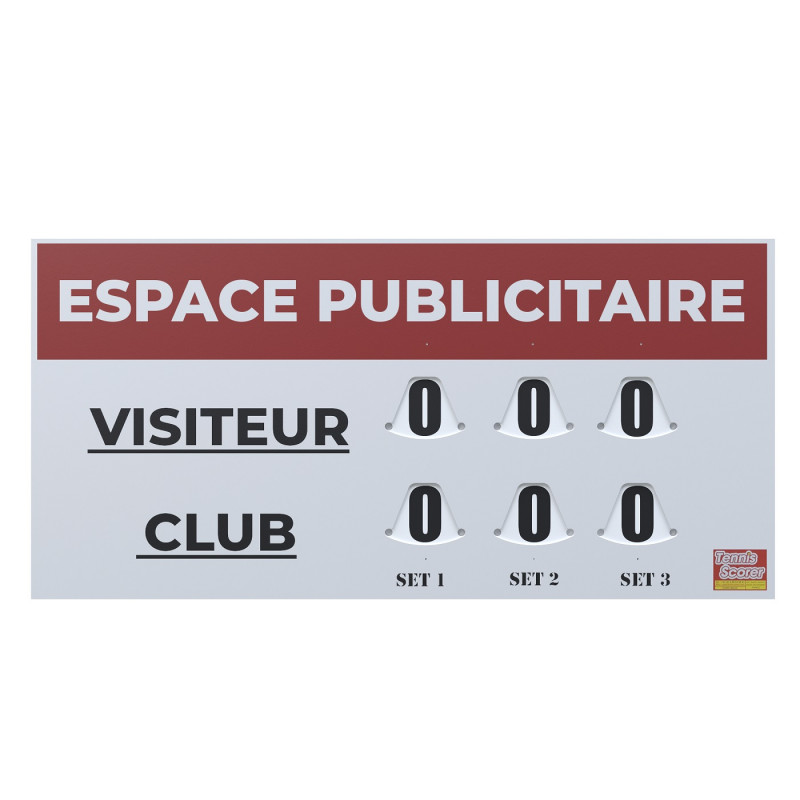
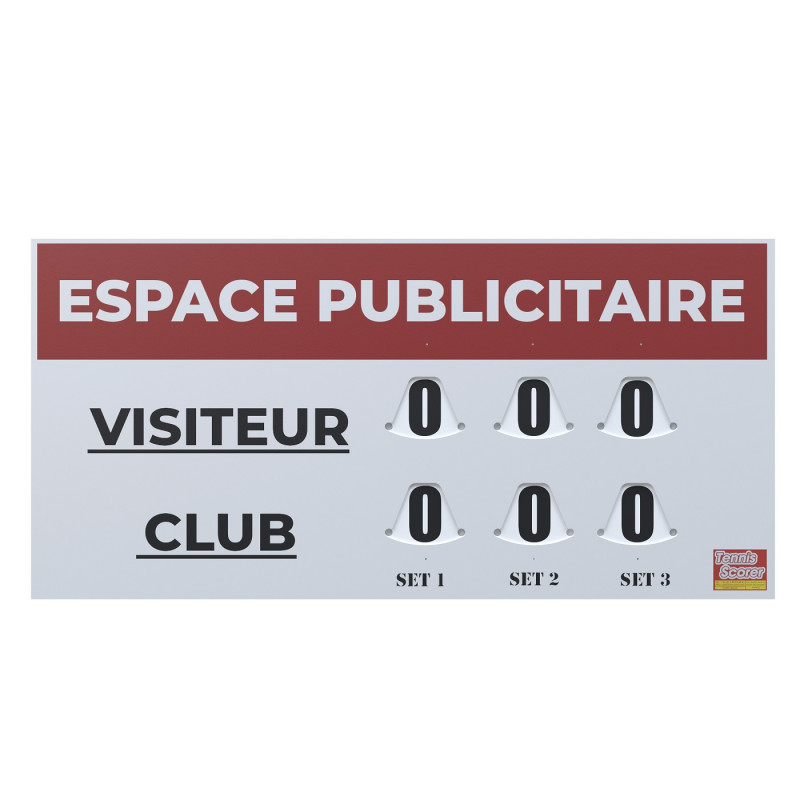
- Large tennis board: 120 × 60 × 1 cm and 4 kg, with rotating discs showing 0 to 7 across three sets, a plate for player names and rankings, and a personalised sticker for a club or sponsor logo.
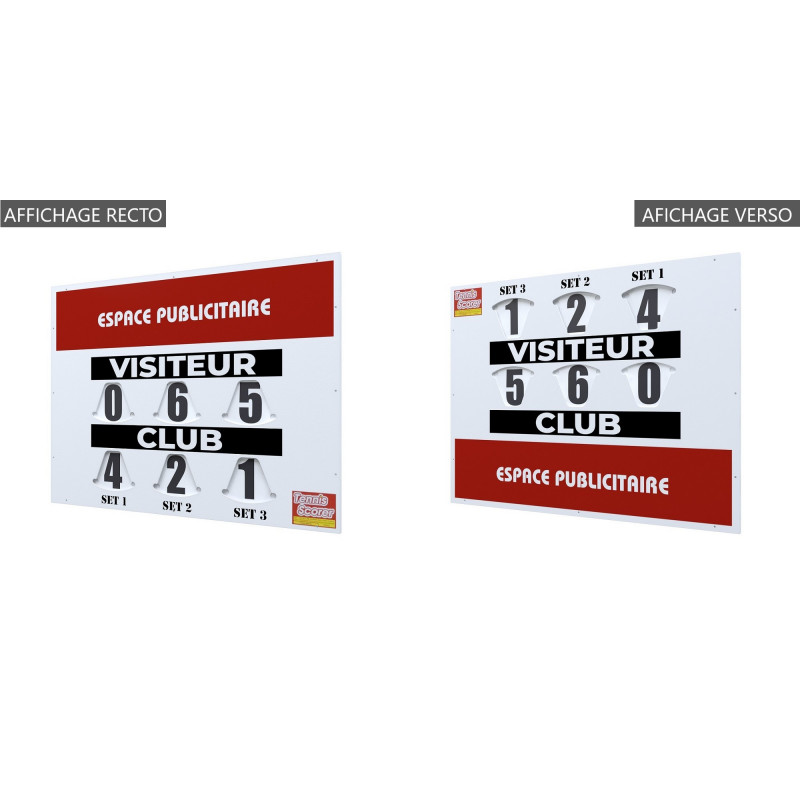
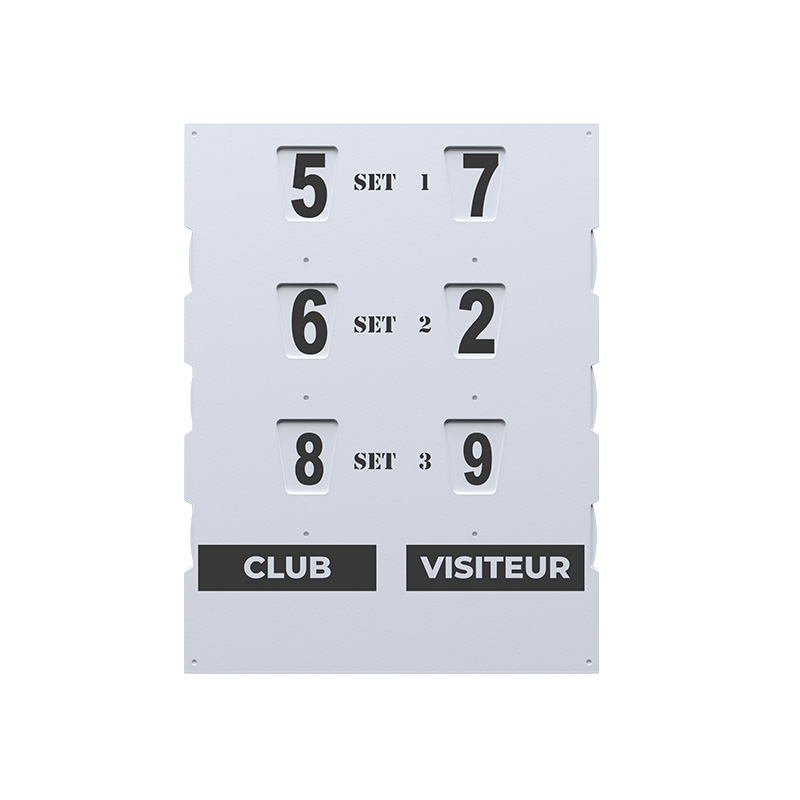
- Double-sided padel board: 60 × 80 × 1 cm and 3 kg, showing the score on both faces, from 0 to 7 for two sets and 0 to 9 for a third, with two slate plates for names and rankings.
- Compact double-sided board: 80 × 60 × 1 cm and 3 kg, with a tennis version showing 0 to 7 over three sets and a padel version showing 0 to 9.
- Player plates: the compact board has two plates for manually displaying names and rankings.
For a single tennis court seen from one side, the large tennis scoreboard with rotating discs gives the widest display. Padel courts are watched from both sides, which is what the double-sided padel scoreboard is built for. Clubs running both sports can standardise on the compact double-sided tennis or padel board.
| Model | Dimensions | Weight | Score range | Cable ties supplied |
| Large tennis | 120 × 60 × 1 cm | 4 kg | 0–7, three sets | 6 |
| Double-sided padel | 60 × 80 × 1 cm | 3 kg | 0–7 two sets, 0–9 third set | 4 |
| Compact (tennis / padel) | 80 × 60 × 1 cm | 3 kg | 0–7 / 0–9, three sets | — |
Check visibility, controls and fixing
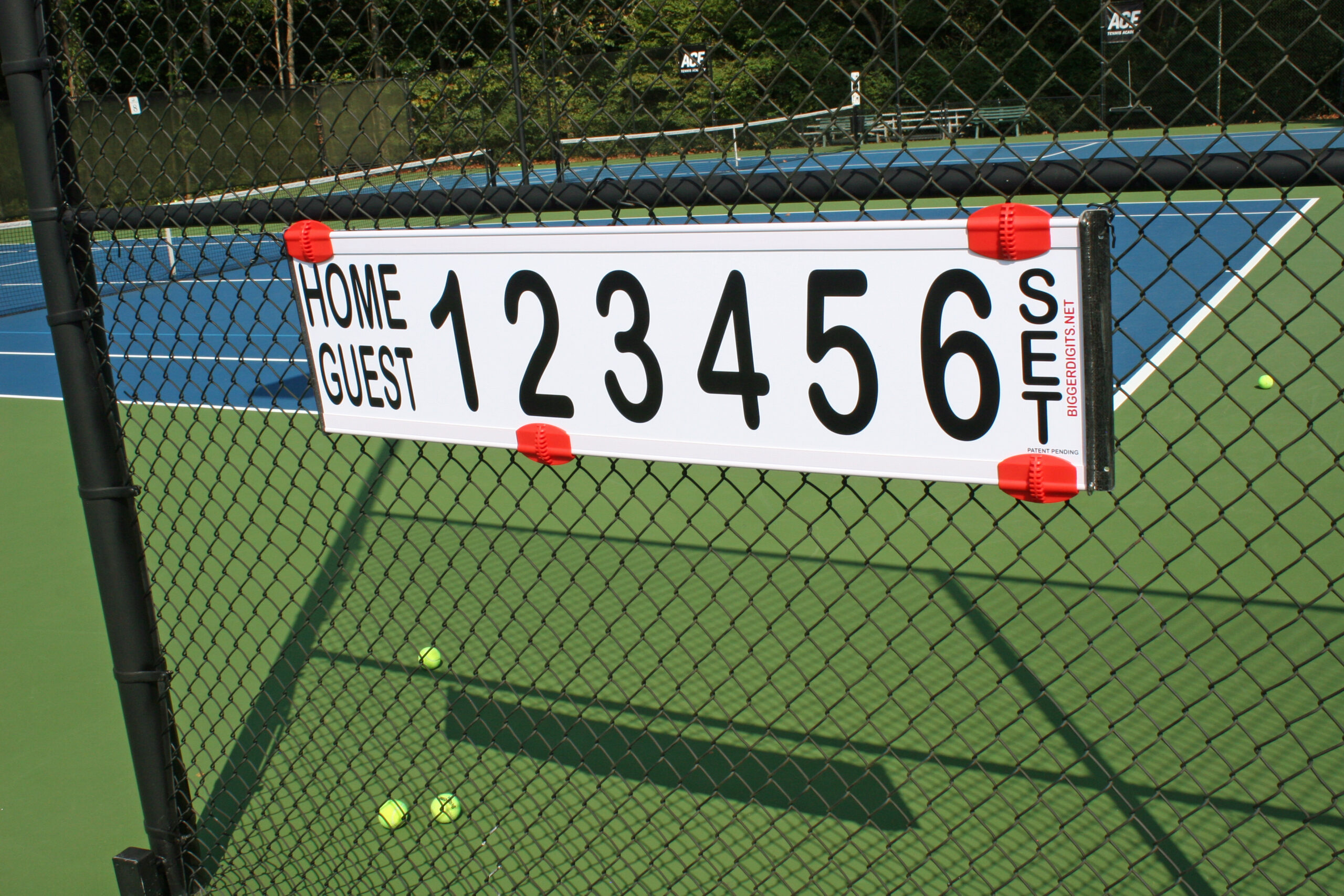
All three boards use figures 12 cm high and 2.5 cm wide, with a stated readability of more than 50 m. That figure is a starting point. Clubs should still check the score from where players and spectators actually stand, in daylight, low sun and evening light. Fixing then needs the same care, using the cable ties listed in the table.
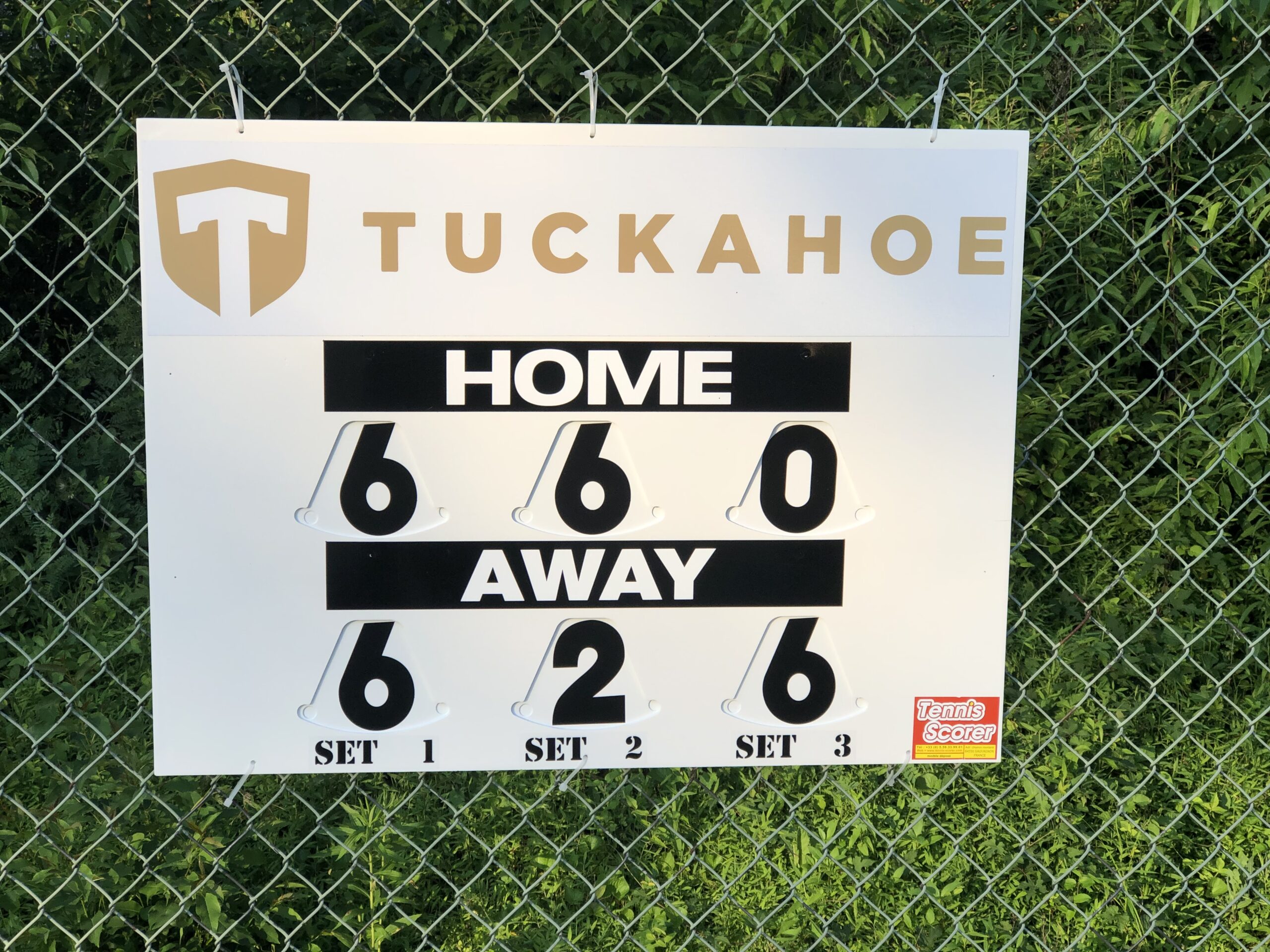
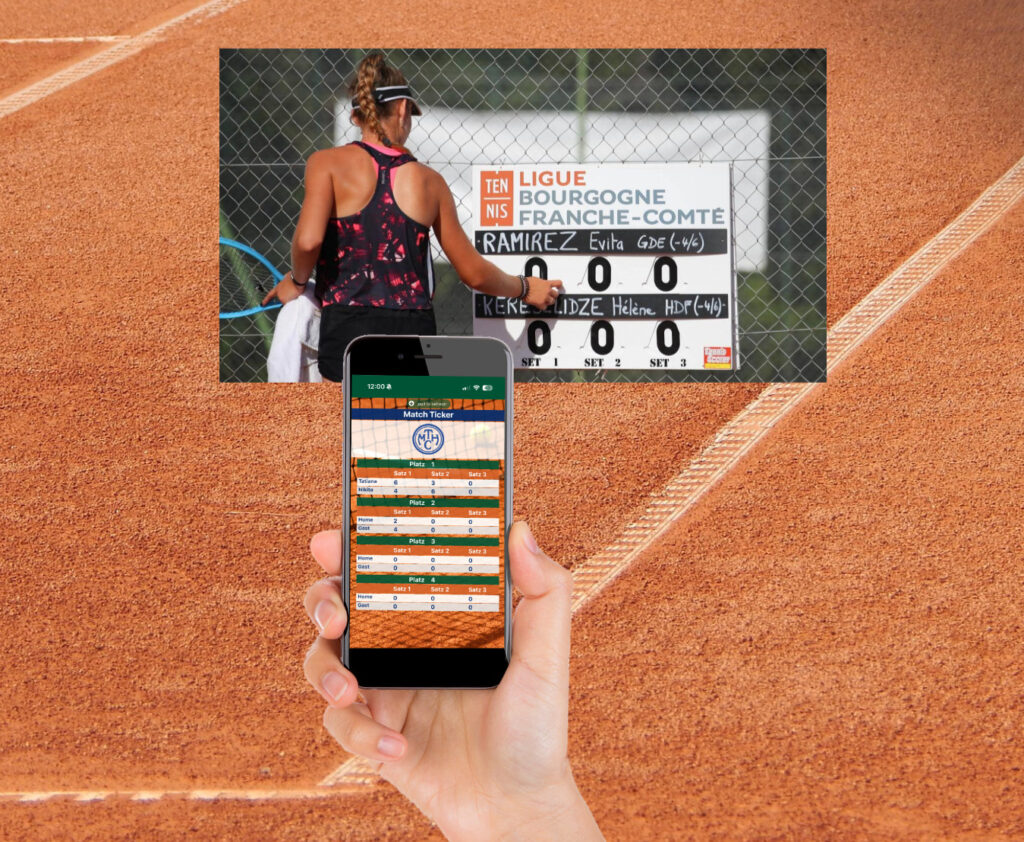
A fence-mounted board must stay secure without catching clothing, blocking a gate or loosening into the playing area. Manual discs let players update the score when they change ends. Tennis Scorer also offers a connected board that works the same way, with every court’s score shown in an app. Its control, reconnection and offline behaviour should be checked separately from the manual operation.
Give sponsors space without losing the score
Branding sits beside the score, never over it. The double-sided padel board has a 59 × 11 cm advertising space. It also comes with two stickers that can show a sponsor, the club identity or a court number.
The compact board carries a larger area: a 78 × 17 cm sticker for a club name and logo, a sponsor or a court number. Where a club wants more brand visibility, a separate fixed sponsor panel is another option. Tennis Scorer suggests finding a sponsoring partner to fund the boards themselves, which turns sponsorship into equipment for the club.
Sponsor space is only one line of the specification. A full brief also covers score format, viewing angle, fixing, controls and maintenance access. Electronic displays add power, connectivity and software, and potentially higher whole-life costs.
Borrow stadium ideas for the club experience
Stadium signage serves crowds of thousands, yet many of its ideas work at club scale. What changes is the size, not the principle: identity, timely information and promotion that gives visitors something useful.
Build identity beyond the court
Exterior signs and entrance graphics show a club’s identity before visitors reach the courts. From there, the venue name, colours and logo can recur on welcome signs and court identifiers, so the club feels consistent from gate to court.
Indoors, that identity can extend to the walls. Wall graphics or murals can show club history, player photos or team identity, and double as a backdrop for photographs. In social spaces, vinyl graphics are described as durable and easy to clean.
Other ideas scale down in the same way. Exterior signs, however striking, must never hide essential directions.
Put changing information where people pause
Digital displays are useful where visitors stop, choose a route or watch matches, not simply where they are most visible. A clubhouse lounge suits live match information, upcoming events and club news. From that position, an LED or video display can also show sponsor recognition between results.
Placement needs testing on site: sunlight glare by day and distraction after dark both depend on the exact position. Nearby, a café or concession sign should list food and drink options, and a merchandise area needs its own clear identifier. Neither should compete with court directions or safety information.
Make promotion useful to visitors
Sponsor graphics can go on suitable windscreens, fences, scoreboard surrounds or entrance areas. Routes and safety signs stay readable around them.
Promotion works better when it gives visitors something to do. An interactive event installation or a branded photo point combines sponsor visibility with an activity, extending the fan experience beyond watching a match.
Streamed events raise one more check. Sponsor placement should be viewed from spectator seats and from the planned camera positions. Sports stadium signage that looks prominent on site can fall outside the camera frame.
Prepare signage for tournaments and events
A tournament changes how the club is used for a day or a weekend. Event signage has to cover that temporary layout without replacing the permanent wayfinding visitors rely on the rest of the year.
Separate event routes from everyday routes
Event signs can direct visitors to tournament check-in, spectator seating, accessible viewing, toilets, refreshments and restricted areas. When the event changes the normal layout, signs also need to separate public bookings, reserved competition courts, warm-up courts and closed areas. A reusable event pack makes this easier:
- Reusable entrance board: updated for each event instead of reprinted.
- Removable court-status panels: switched between competition, warm-up and public use.
- Separate route signs: one set for players, another for spectators.
Once the event ends, the panels come off and the permanent signs take over again without any change.
Choose portable signs for changing messages
A-frame signs carry schedules, ticket information or directions at temporary decision points, as long as they do not block circulation or accessible routes. Banners and flags can mark an event area or carry sponsor branding. Fence-mesh banners may reduce wind loading compared with solid material, depending on the product and fixing.
At ground level, floor decals can add directional cues or event branding. These decals must not create a slip or access problem, and must never be mistaken for official safety signage.
Keep event information current
Weather changes and cancellations need one designated update point, so visitors know where to look. Before play, organisers should check temporary routes, court numbers, accessible facilities, emergency information and live scoreboard operation.
After the event, one named person removes the temporary signs. Otherwise old directions conflict with normal bookings and routes.
Check rules, costs and outdoor installation
Commissioning signs involves more than design. Safety law, advertisement consent and outdoor fixing all affect what a club can put up and where.
Keep safety signs distinct
Under the Health and Safety (Safety Signs and Signals) Regulations 1996, workplace safety signs are required where significant risks remain after other controls. Regulatory signage supports hazard control and does not replace it. The references below shape what those signs contain and how they look:
- Risk assessment and fire arrangements: decide the signs for emergency exits, first aid, fire equipment, hazards or restricted access.
- Sport England guidance: safety signs should not be recoloured in club branding.
- BS EN ISO 7010:2020+A8:2024: provides the registered safety symbols.
- BS 8300-2:2018 and Approved Document M, Volume 2: the first is a technical reference for accessible design; the second applies to relevant building work in England.
From that point, branding stays on wayfinding and promotional signs, and safety signs keep their standard form.
Check consent and application fees
In England, some outdoor advertisements have deemed consent while others need express consent. Size, illumination, position and the sign’s category decide which applies. Advertisement consent is also separate from planning permission for a new support, structure or lighting, and a sign on a listed building may need listed-building consent too.
Fees depend on the category. From 1 April 2026, the application fee in England is £174 for qualifying business-premises or advance directional advertisements. Other advertisement applications cost £610. These are category-specific fees, not a charge for every club sign.
Specify, install and maintain the signs
Custom sign fabrication should follow a site survey: viewing positions, lighting, wind exposure, gate movements and attachment points. Aluminium panels, plastics and vinyl suit different locations, each with the right finish and fixings. Before installation, confirm structural capacity, buried services and maintenance access. A padel enclosure supplier should approve in writing any fixing to its glass, mesh or posts.
Mistakes to watch for include wrong court numbers, loose banner ties and blocked routes. After installation, check legibility and fixings, inspect exposed signs after severe weather, and replace any information that has become misleading.
Frequently Asked Questions
What signs does a sports facility need?
It depends on the site. A small club with two clearly visible courts may need only a map, consistent court numbers and a few signs at decision points. Safety, wayfinding and promotion stay separate systems. A court entrance sign can show the court number, the sport, booking instructions and any court-specific warning.
How often should a club check its signs and scoreboards?
No fixed legal interval applies to every sign and scoreboard. A suggested routine is a daily look for missing safety signs, obstructions and failed displays, plus weekly checks of court identifiers, fixings, graphics and manual boards. A monthly recorded inspection covers corrosion, water ingress, cables and supports, with exposed signs also checked after severe weather.
How can a club test whether its new signage works?
Ask first-time visitors to find a named court without staff help, and record wrong turns, questions and time taken, before and after the changes. For scoreboards, check whether users can read the score from set playing and spectator positions in daylight and evening light, and note any repeated mistakes.