
Table of Contents
A good tennis court scoreboard design starts with what the match needs to show, then works out how players and spectators will read it from the court.
What should a tennis scoreboard show?
A scoreboard records the state of a match, but it rarely needs to show everything. Before choosing a board, decide which parts of the tennis score are displayed and which are called out on court: names, games, sets and possibly points.
Arrange names, games and sets
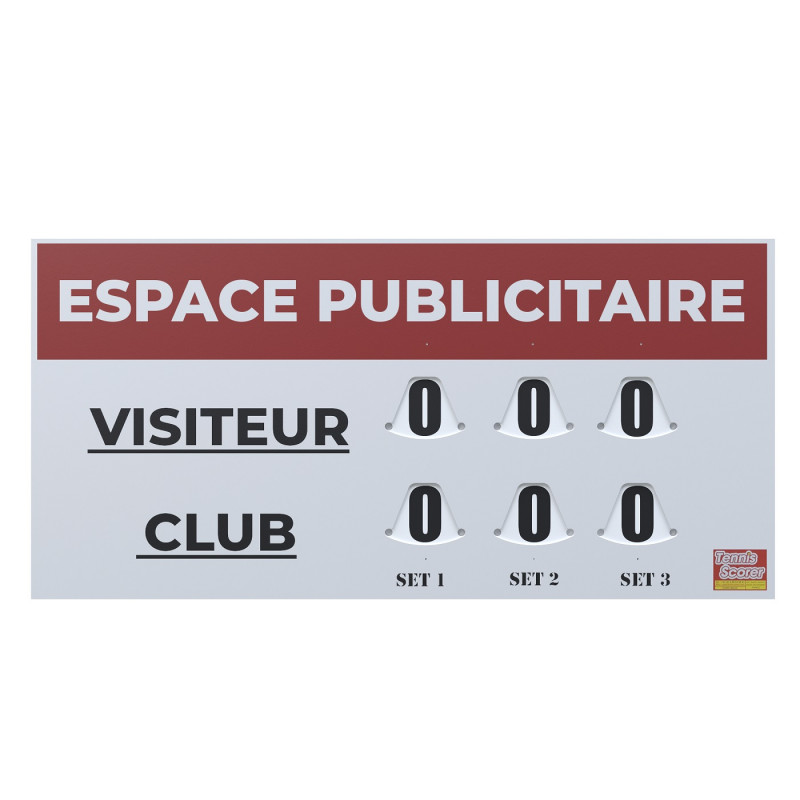
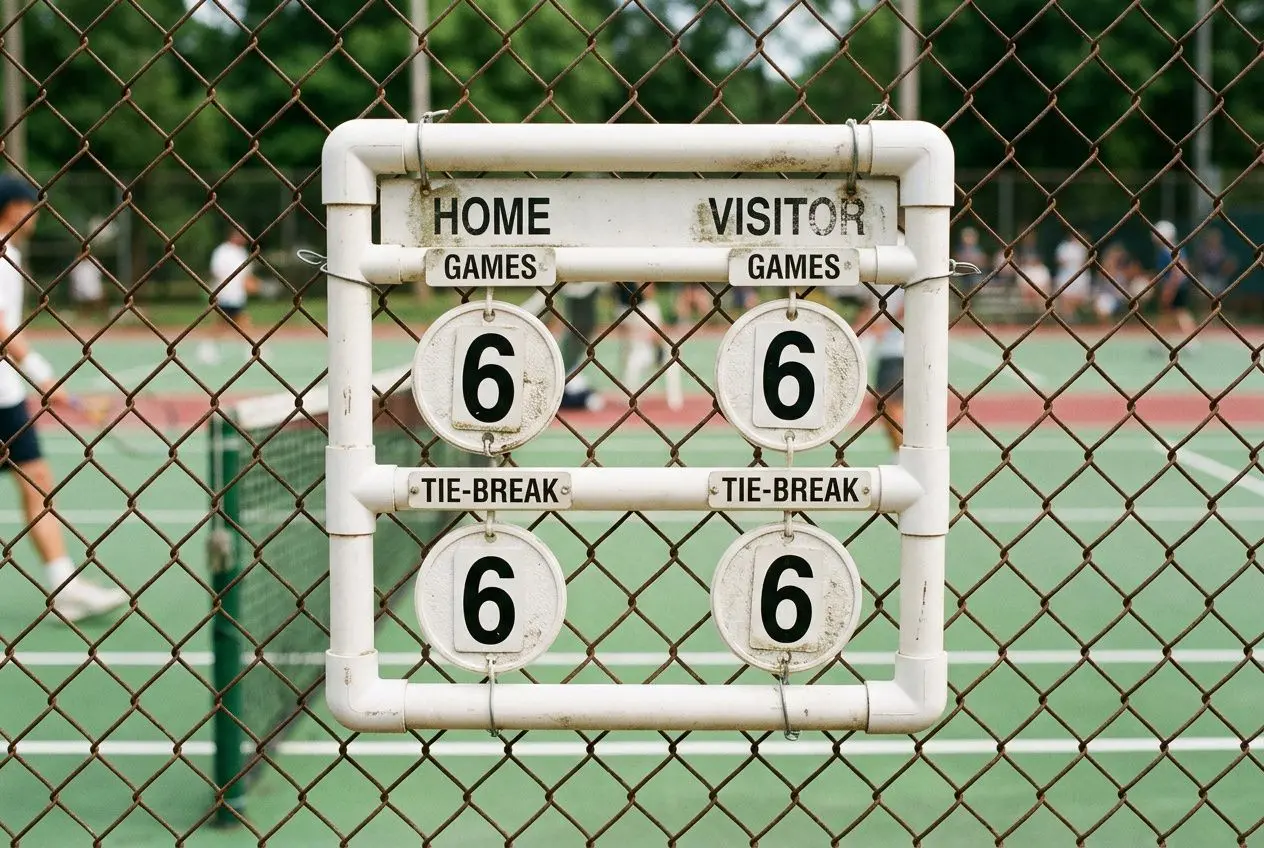
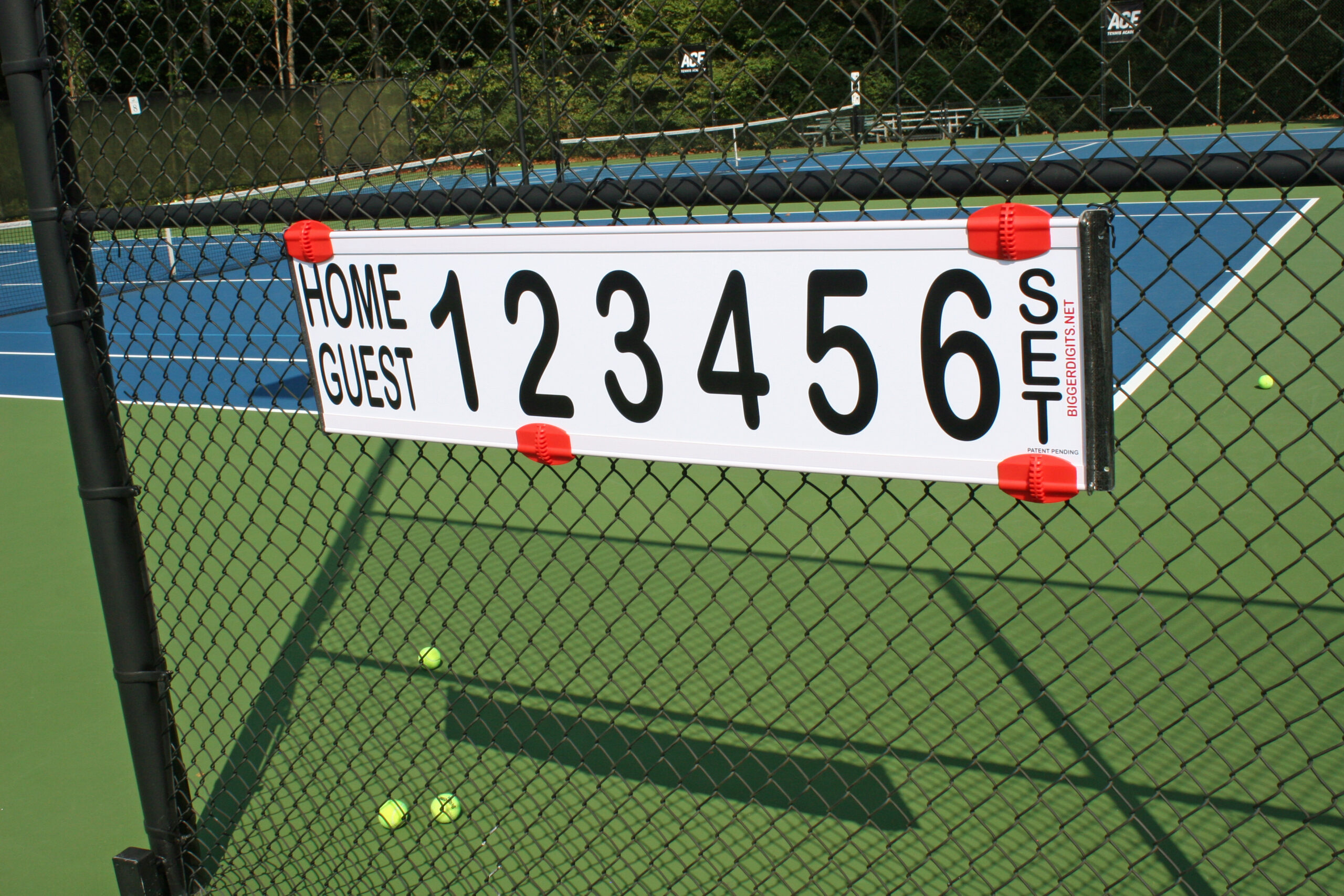
The usual layout gives each player or doubles pair a row of their own. Labelled columns then separate games in the current set from completed set scores. The layout reads from left to right in the order of the match:
- Name rows on the left: two clearly identified rows, one per player or doubles pair.
- Set columns in the centre: placed in chronological order, three for best-of-three matches and five for best-of-five matches.
- Point display on the right: optional, for the score in the current game.
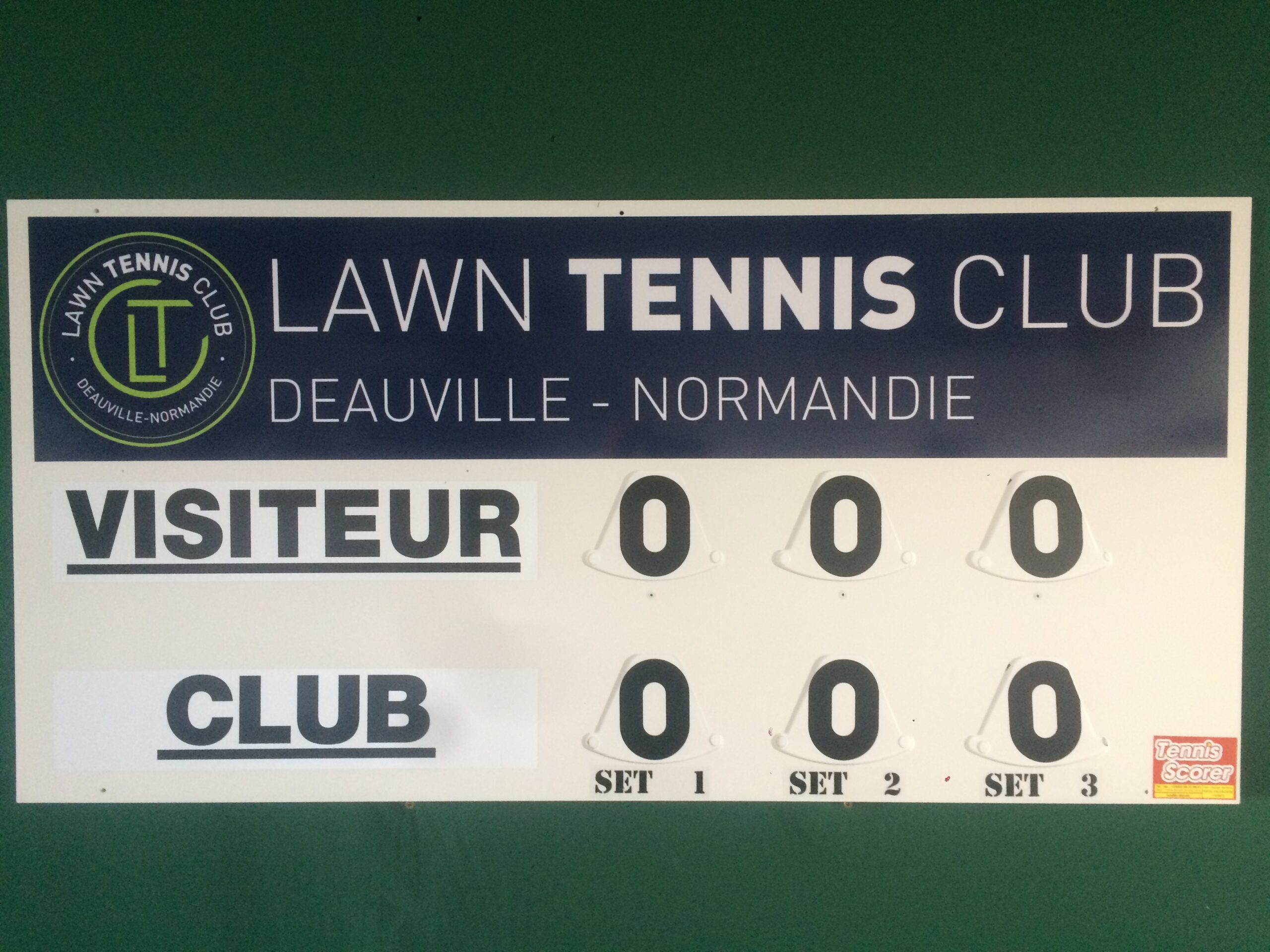
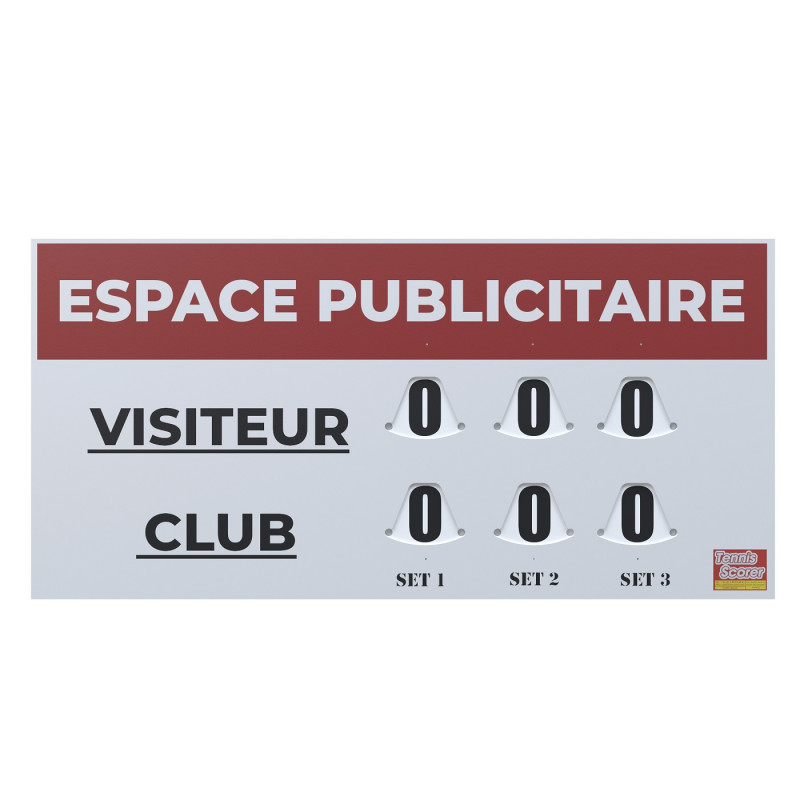
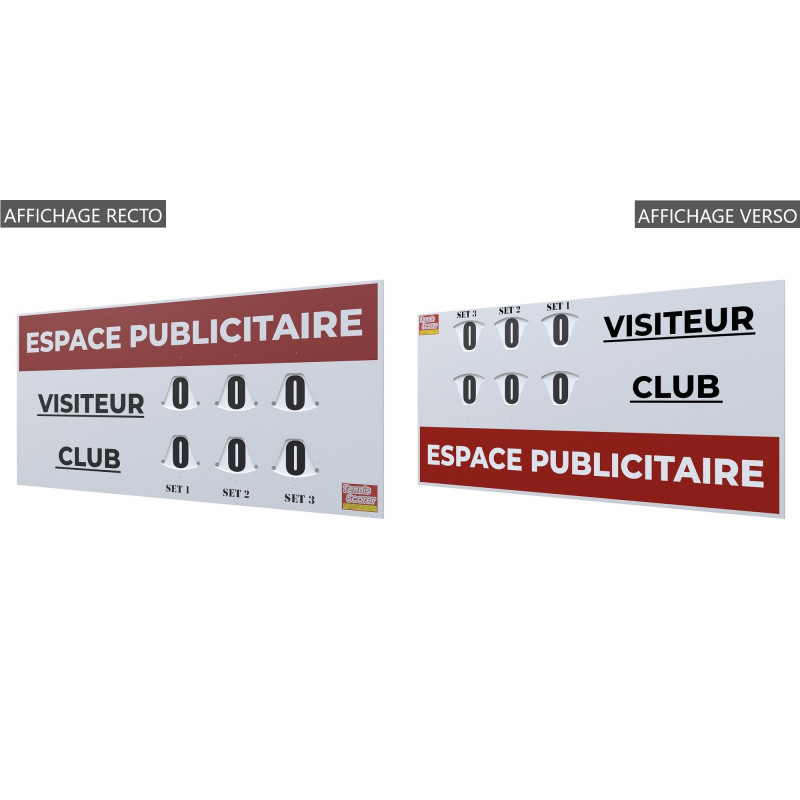
The right-hand display matters more than it seems. Tennis Scorer’s manual boards show games across three sets with digits from 0 to 7. A board that shows games and sets does not necessarily show points in the current game.
Account for points and match formats
Under the ITF Rules of Tennis 2026, points in an ordinary game run love, 15, 30, 40. After deuce, standard advantage scoring requires two consecutive points to win the game. A standard tie-break starts at 6–6, counts points as plain numbers and is won at seven with a two-point margin. On a 7–6 set, the losing player’s tie-break points can appear in brackets.
Alternative formats change what the board must hold. The same ITF rules approve no-ad games, short sets and a match tie-break to ten points with a two-point margin. Confirm the event format first. Only then can a club tell whether it needs separate point or tie-break indicators.
Identify players and the live score
Name fields help spectators tell apart matches on adjacent courts. In doubles, each field must be wide enough for both partners. Tennis Scorer’s large boards come with a plate for writing in names and rankings by hand.
Each value then changes at its own pace. The point display changes after every rally, the game count when a game is won, and completed sets stay visible. A movable dot or triangle can mark the server, and separate indicators stop server status or match tie-break points being read as games. Where a manual board cannot show the points required, they are called out or recorded another way.
How large and legible should the display be?
Legibility depends on where people actually stand, not on how the board looks up close. A display that seems clear beside the fence can fail from the far baseline or a spectator bench, so a site test comes before any purchase.
Test the actual viewing positions
Check the proposed board from both baselines and from the main spectator positions. At each spot, record a few measurements:
- Distance and digit height: how far the viewer stands and how tall the numbers are.
- Angle, contrast and glare: whether the digits remain readable from the side and in reflections.
- Obstruction: whether players, the net or the fencing hide part of the board.
Light conditions change those results. Repeat the test in bright sun, in dull or low light, under the court lighting that will actually be used, and with the board wet. In practice, a full-size paper mock-up at the planned mounting height shows the layout before a club commits. Across multiple tennis courts, it also shows whether consistent names, score order and colours stay easy to read.
Make labels and digits accessible
Accessibility follows the same logic as legibility. The LTA Disabled Access Guidelines recommend text that contrasts visually with its background and sans-serif type. They also advise against writing whole sentences in capitals.
Some figures come from outside sport. Home Office guidance sets a minimum text-contrast ratio of 4.5:1 for the digital content it covers. That ratio is a useful reference, not a legal requirement for physical scoreboards.
The legal framework is broader. The Equality Act 2010 covers discrimination and reasonable adjustments in service provision. A club’s exact duties depend on its circumstances.
Compare board dimensions with court space
The LTA gives a regulation court length of 23.77 m. It recommends an overall area of 36.57 m × 18.29 m for a single court, including run-backs and side runs. These figures define the court and the distance to cover, not the scoreboard dimensions.
Against that distance, two formats can be tested. Tennis Scorer’s large single-sided board at 120 × 60 cm and its double-sided version are full-size, fence-mounted boards worth checking from the far baseline. Where fence space is tight, the compact board measures 80 × 60 cm, with digits 12 cm high and 2.5 cm wide. It is 1 cm thick and weighs 3 kg.
Which scoreboard options suit a club’s courts?
Once layout and size are settled, the choice comes down to format: fixed or portable, manual or connected, bought or built. Each option shows a different amount of information and asks a different amount of handling from the club.
Compare manual boards and mounting positions
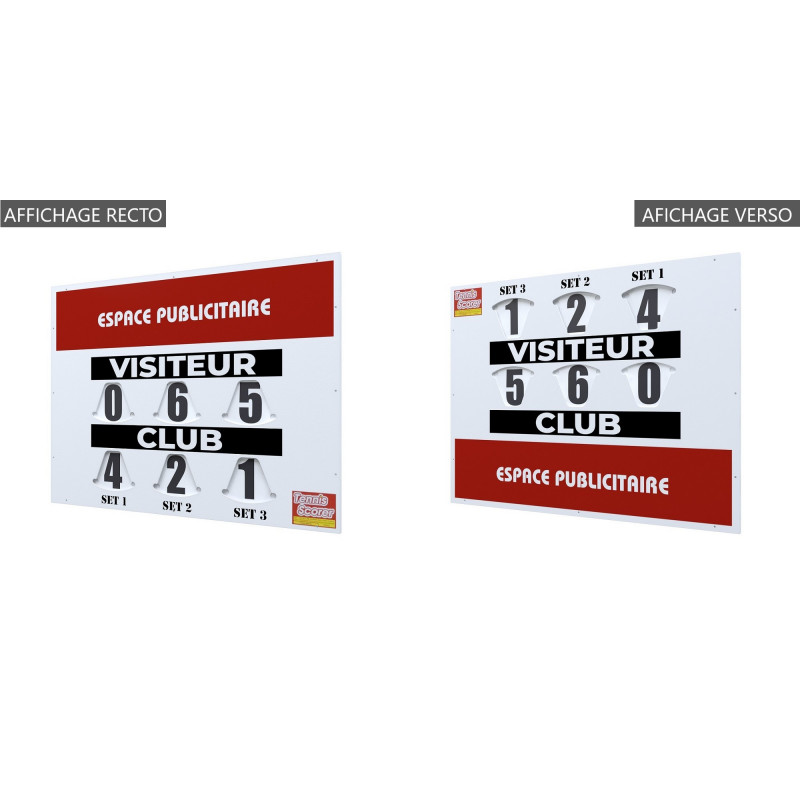
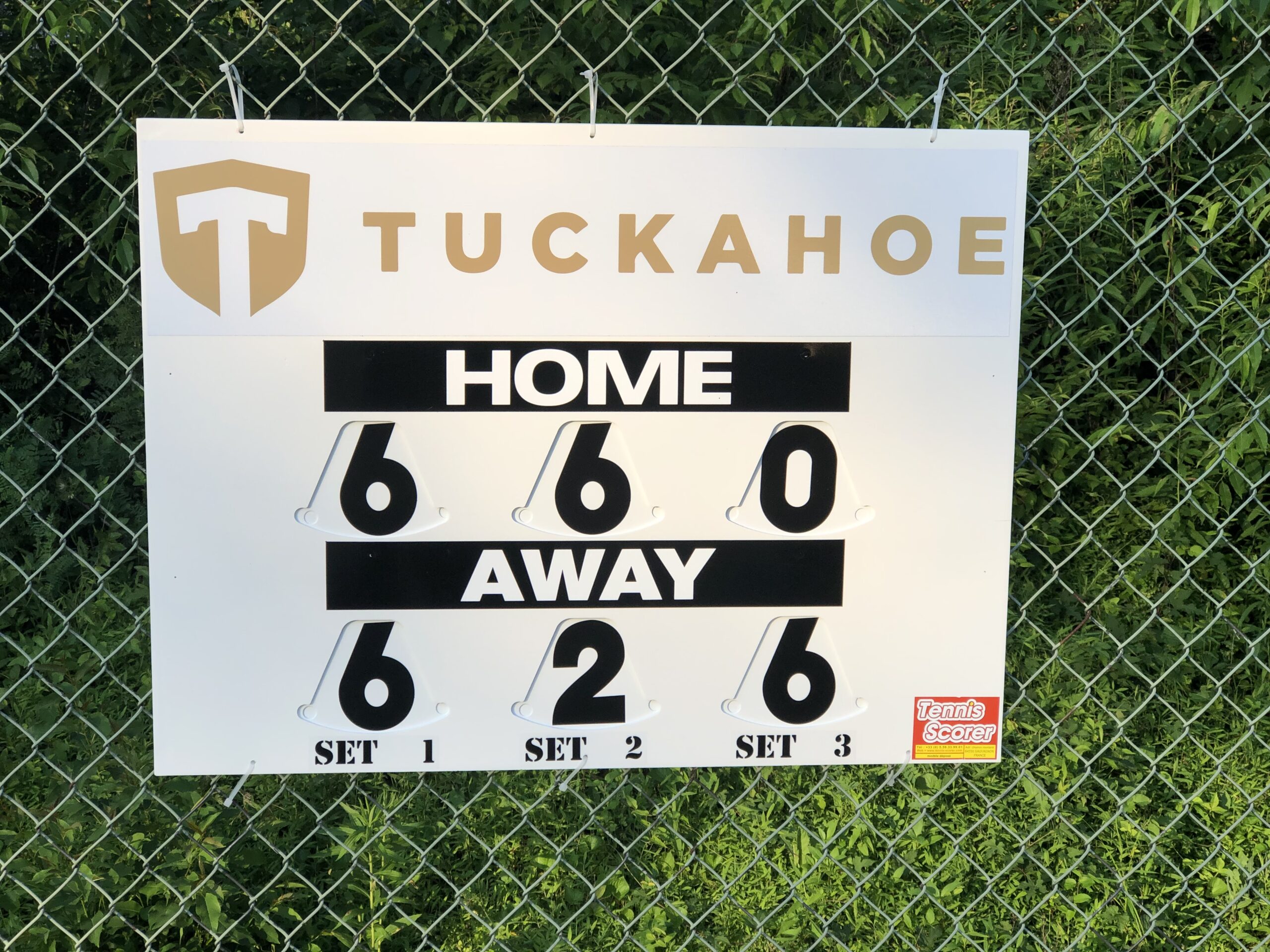
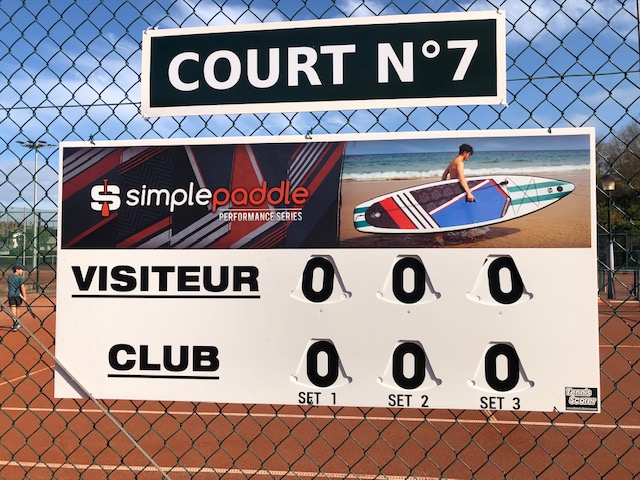
Tennis Scorer’s large single-sided board tracks games across sets with rotating number discs. It fixes to mesh fencing and has space for player names. Built on the same principle, the double-sided large scoreboard serves viewers on both sides of a fence, provided both faces always show the same score.
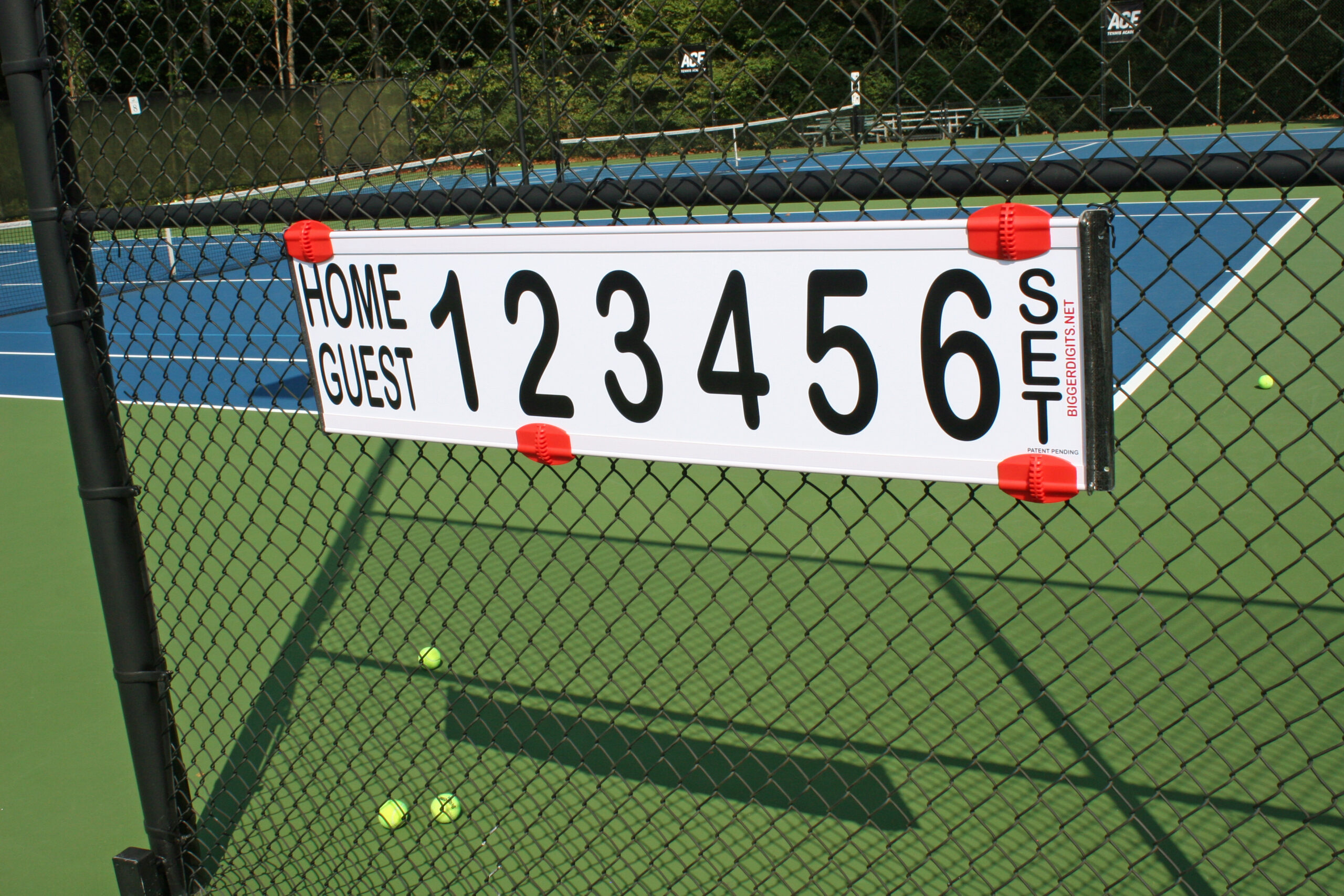
Other tennis court scoreboard options suit different venues. A portable tennis scoreboard with flip cards moves between courts but has to be stored, carried and placed securely. Post-mounted boards need a compatible clamp and clearance from the net fittings. A ball-based score tube records sets won, not the full live score.
| Format | What it shows | Points to check |
| Large single-sided board | Games across sets, player names | Mesh fencing fixing |
| Large double-sided board | Same score on both faces | Both faces match |
| Portable flip-card board | Games and sets | Storage, carrying, stable placement |
| Post-mounted board | Games and sets | Compatible clamp, clearance from net fittings |
| Ball-based score tube | Sets won only | No complete live score |
Can you make a scoreboard?
A simple flip-card board can be built from a rigid panel and weather-resistant number cards. A straightforward mechanism for changing the score completes it.
Simpler still, a ball tube or slotted channel tracks sets won without electronics. By contrast, it cannot show points in the current game.
A home-made electronic display goes much further. It needs a controller, buttons, programming, a power supply, an enclosure and weather protection. Whatever the build, test it for legibility, wind resistance, secure fixing and easy score corrections before it goes into regular outdoor use.
Weigh electronics and whole-life costs
A fixed electronic board can show spectators more information. In return, its controls, power, weatherproof enclosure, wiring and servicing all have to be specified. Check the formats it supports, the undo controls, what happens after a power cut and whether a manual fallback exists.
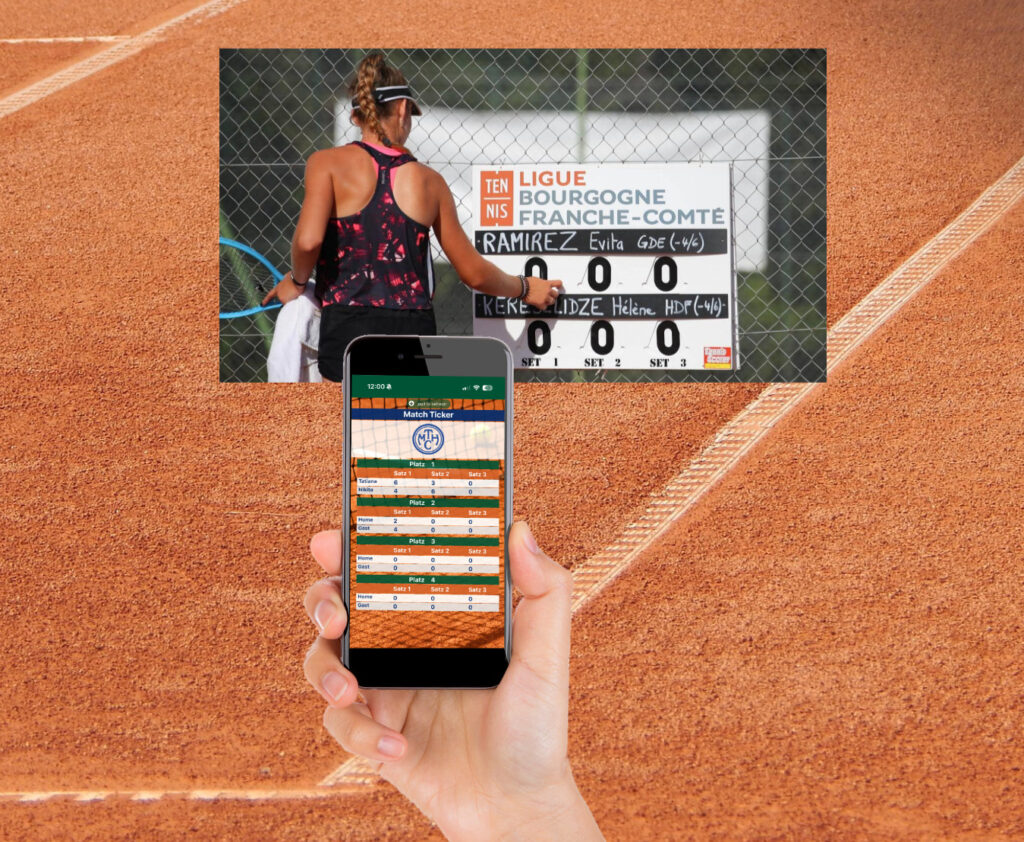
Connected scoring does not have to remove the physical action. Tennis Scorer’s connected board keeps a manually operated courtside display and also shows scores from every court in an app.
Cost then depends on size, materials, print finish, mounting hardware, artwork, electrical work and maintenance. Compare storage, volunteer handling, spare parts, sticker changes and software support where relevant. A warranty of 3, 5 or 8 years covers defined terms; it does not prove how long a board lasts outdoors.
What makes a board weatherproof outdoors?
For outdoor tennis, a board faces rain, frost, sun and wind for years. Weather resistance depends on every part of the assembly and on how it is fixed and inspected, not on the panel material alone.
Assess the whole assembly
Tennis Scorer makes its manual boards in France from rot-proof white PVC, designed to stay on court all year in every kind of weather. Even so, each component deserves its own check:
- PVC panel: the body that carries the layout.
- Printed face and adhesive: the digits, labels and any applied graphics.
- Moving parts: discs or cards changed during play.
- Exposed edges and fixings: the points where water, wind and wear act first.
Fence boards can also use UV-stabilised plastic, corrosion-resistant eyelets and metal hooks. Neither those components nor a “weatherproof” label guarantees an unlimited service life in rain, frost, sunlight or strong wind.
Fix the board safely
Start with a site survey before choosing a mounting point. Check the fence mesh, rails or post condition, the fixing space, gates, run-backs, sightlines and wind exposure.
From that point, follow the manufacturer’s fixing instructions and get the venue owner’s permission before any drilling or clamping. Once installed, the board must not swing, lift off, rotate unexpectedly or leave sharp edges sticking out.
Other mountings carry their own risks. A post-mounted board must not weaken the post or interfere with net tensioning. A freestanding board must not obstruct play or become a trip hazard, and HSE venue-design guidance stresses ground conditions, anchoring and wind effects.
Commission and maintain outdoor boards
Commission the board with real names and awkward scores, checking row orientation, set changes, deuce, long tie-breaks and corrections. Then inspect it routinely and after severe weather for stiff discs or cards, faded digits, corrosion, loose hooks or ties, cracks, sharp edges and damaged stickers. Some rotating-disc boards accept replacement discs. Keep the instructions, and take any damaged or unstable board out of use.
How should club and sponsor graphics fit?
Branding helps a club identify its courts and can help fund equipment. Its design must still leave the score readable and the board easy to maintain.
Reserve a separate branding area
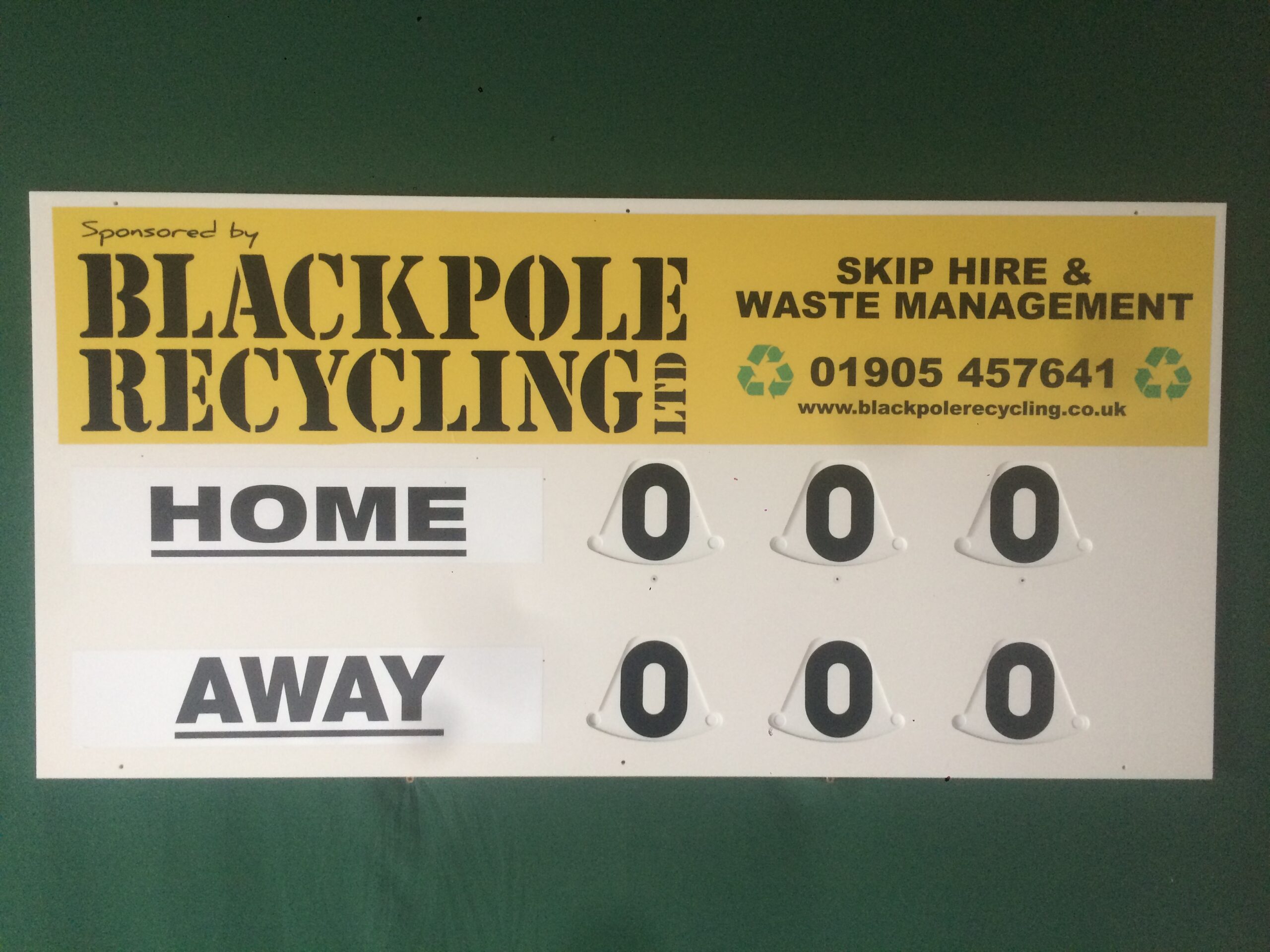
A dedicated sticker or header area lets the artwork change without replacing the board, as long as the surface accepts removal and reapplication. Keep branding away from the parts that score and seal the board:
- Score digits and labels: they must remain fully visible.
- Moving discs: graphics must not hinder rotation.
- Ventilation and seals: covering them can trap moisture.
- Access screws: they must stay reachable for maintenance.
Tennis Scorer supplies a free custom advertising sticker with its large and compact boards. On the compact tennis or padel scoreboard, the sticker area measures 78 × 17 cm and can show a club name, logo or court number.
Specify and check outdoor stickers
Before applying adhesive graphics, check that they suit the board’s surface and finish. Then prepare the surface as the supplier directs.
As a reference, one outdoor-sticker product combines solvent-based adhesive with a UV-resistant laminate and is rated for up to five years outdoors, depending on preparation, installation and exposure. That figure does not set the lifespan of a scoreboard sticker. After installation, check for lifting edges, fading and water ingress during routine inspections.
Check permission and competition rules
A sponsor’s logo belongs to the sponsor. According to the UK Intellectual Property Office, a trade-mark licence grants permission to use another party’s mark, so obtain the sponsor’s approval before using its artwork.
Competition rules add another layer. Appendix IV of the ITF Rules of Tennis 2026 covers advertising at the back and sides of a court and restricts material that interferes with vision or play. For an LTA-sanctioned tournament, regulation 14 of the LTA Competition Regulations 2026, in force from 1 January 2026, sets conditions for local sponsorship and advertising on court equipment. In England, a sponsor logo is not automatically exempt from advertisement consent.
Frequently Asked Questions
Where should a club apply if a sponsor logo on a scoreboard needs advertisement consent?
In England, government guidance separates signs needing no consent, deemed consent and express consent, and a small scoreboard logo is not automatically exempt. Where express consent is required, the application goes to the local planning authority. Scotland, Wales and Northern Ireland each have their own regimes.
How long does it take players to update a manual scoreboard during a match?
Players update Tennis Scorer boards themselves at each change of ends, which takes about two seconds every two games. The same routine also helps children learn how games and sets are counted during a match.
Does every court at a club need the same type of scoreboard?
No. A practice court used mainly by players may need less display area than a court hosting finals and spectators. Junior coaching, club play, league matches and tournaments can each call for a different mix of clear digits, player identification and scoring detail.