
Table of Contents
Choosing a portable scoreboard for tennis can feel overwhelming. UK courts use manual, electronic and fold-out models, each with different requirements for visibility, mounting, weather resistance and scoring. This guide compares the main formats so buyers can select the right tennis scoreboard at an appropriate GBP price point.
Choosing a portable tennis scoreboard
Every tennis court scoreboard needs to display player names, set scores, the current game score and a serving indicator. The difference comes down to how each design presents those details across different court sizes, weather conditions and match settings on British club and private courts.
Manual options for every match
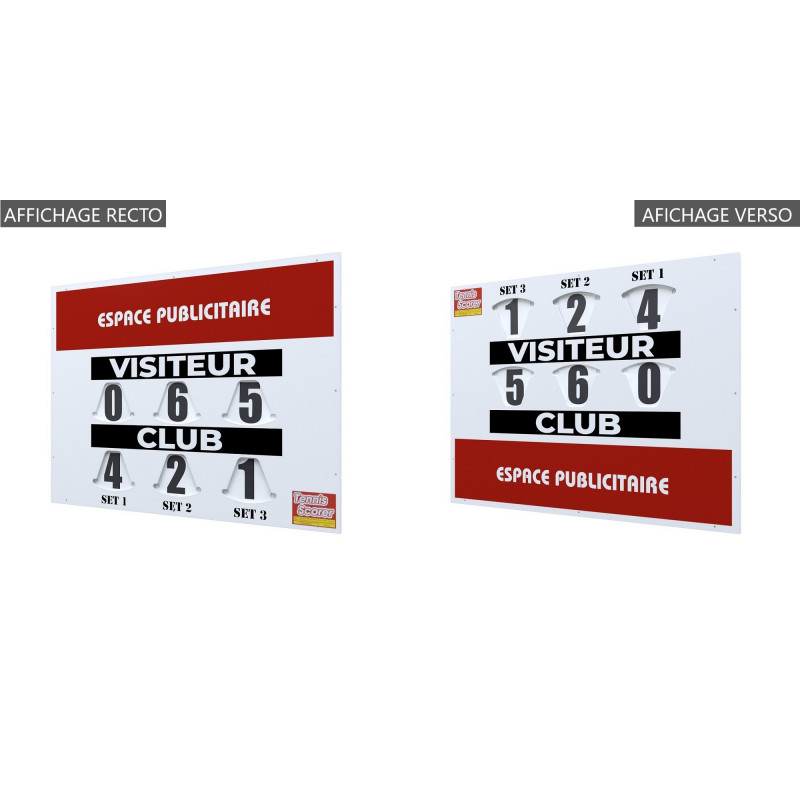
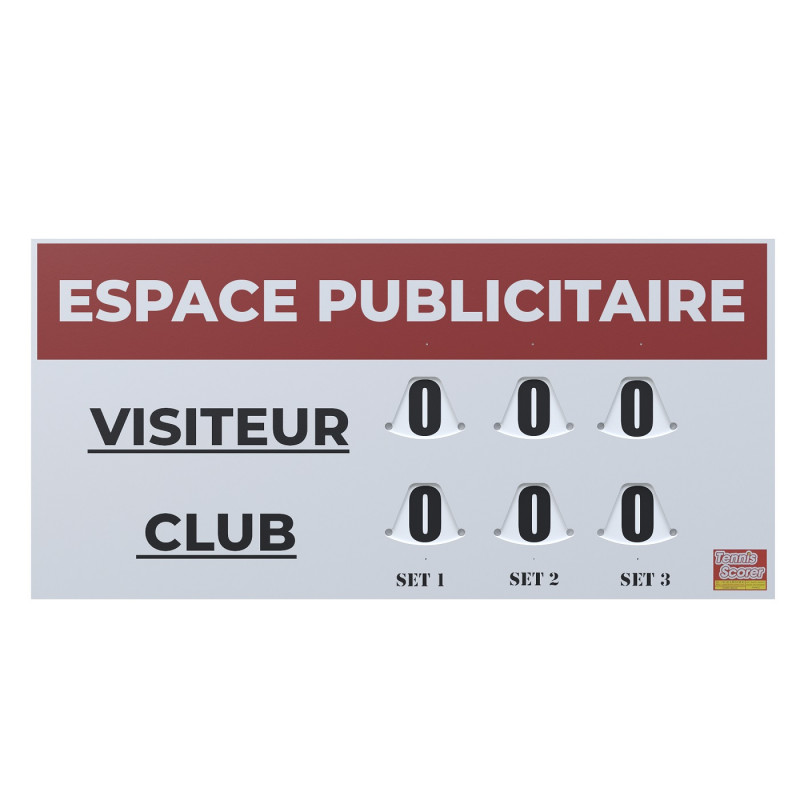
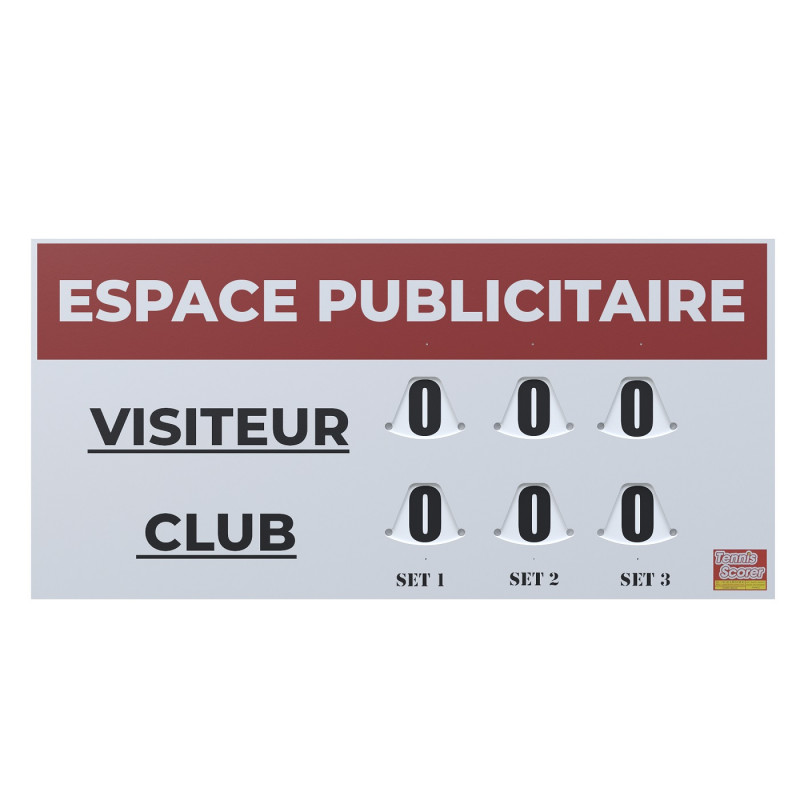
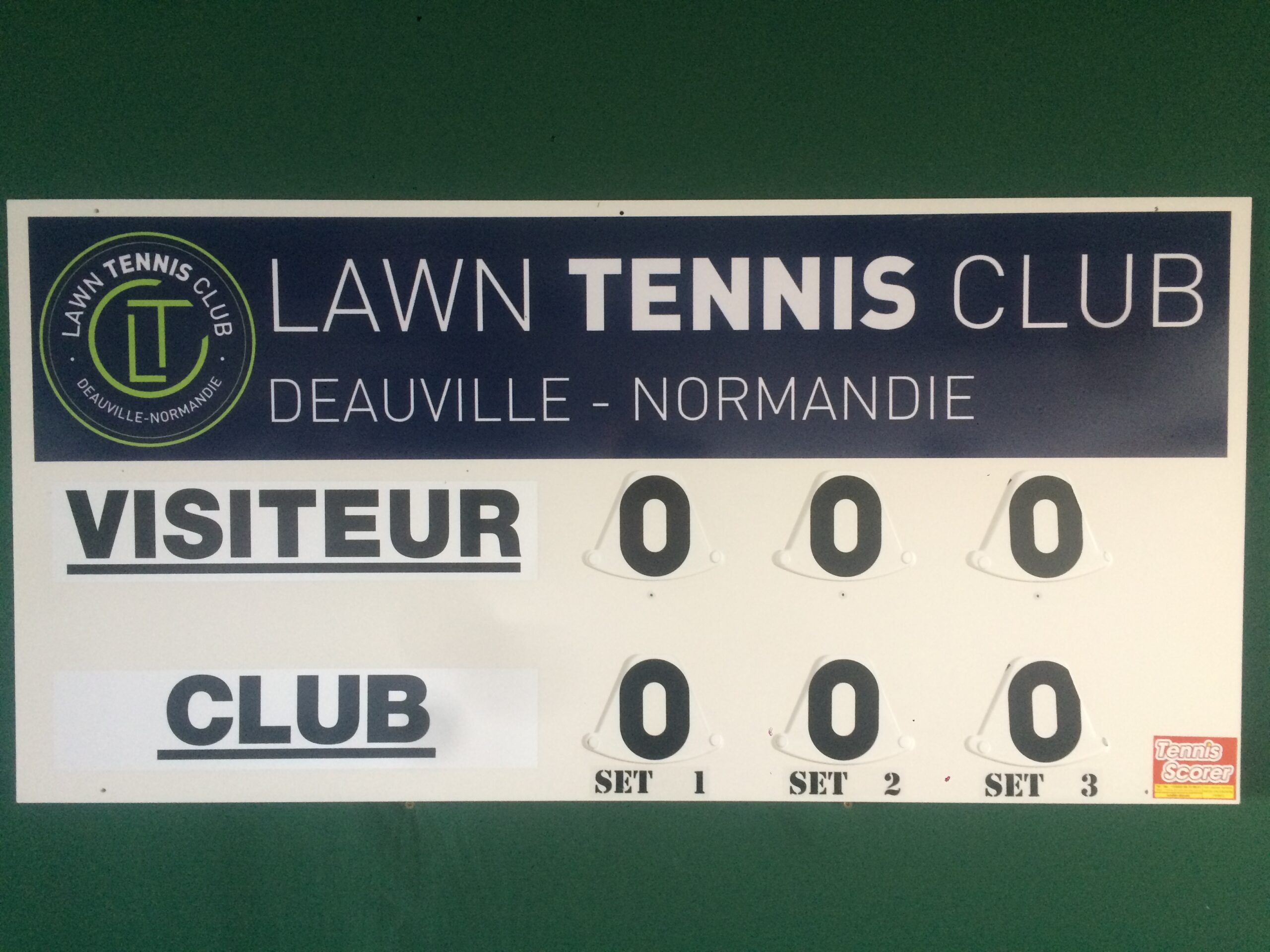
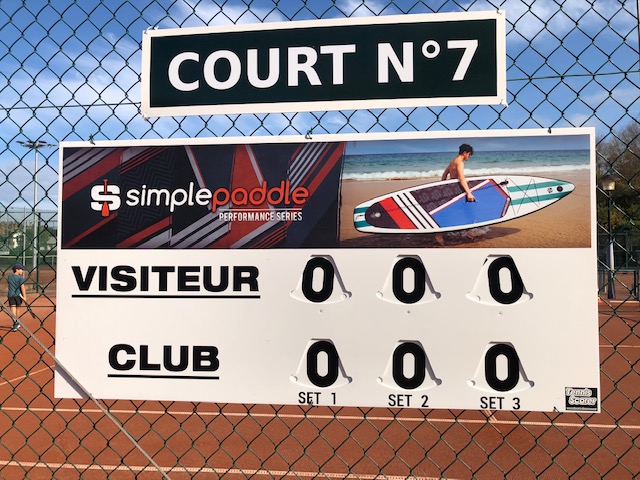
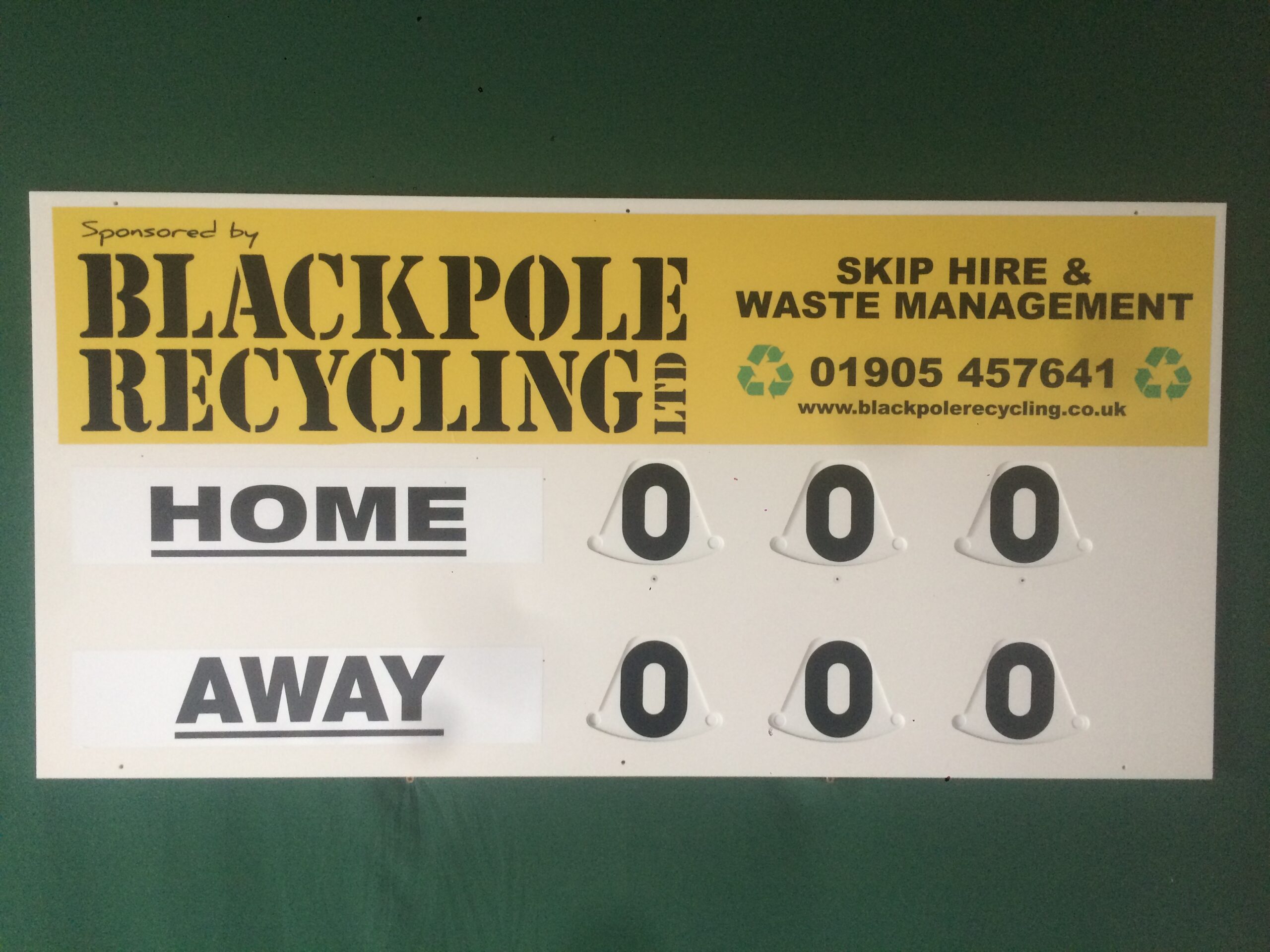
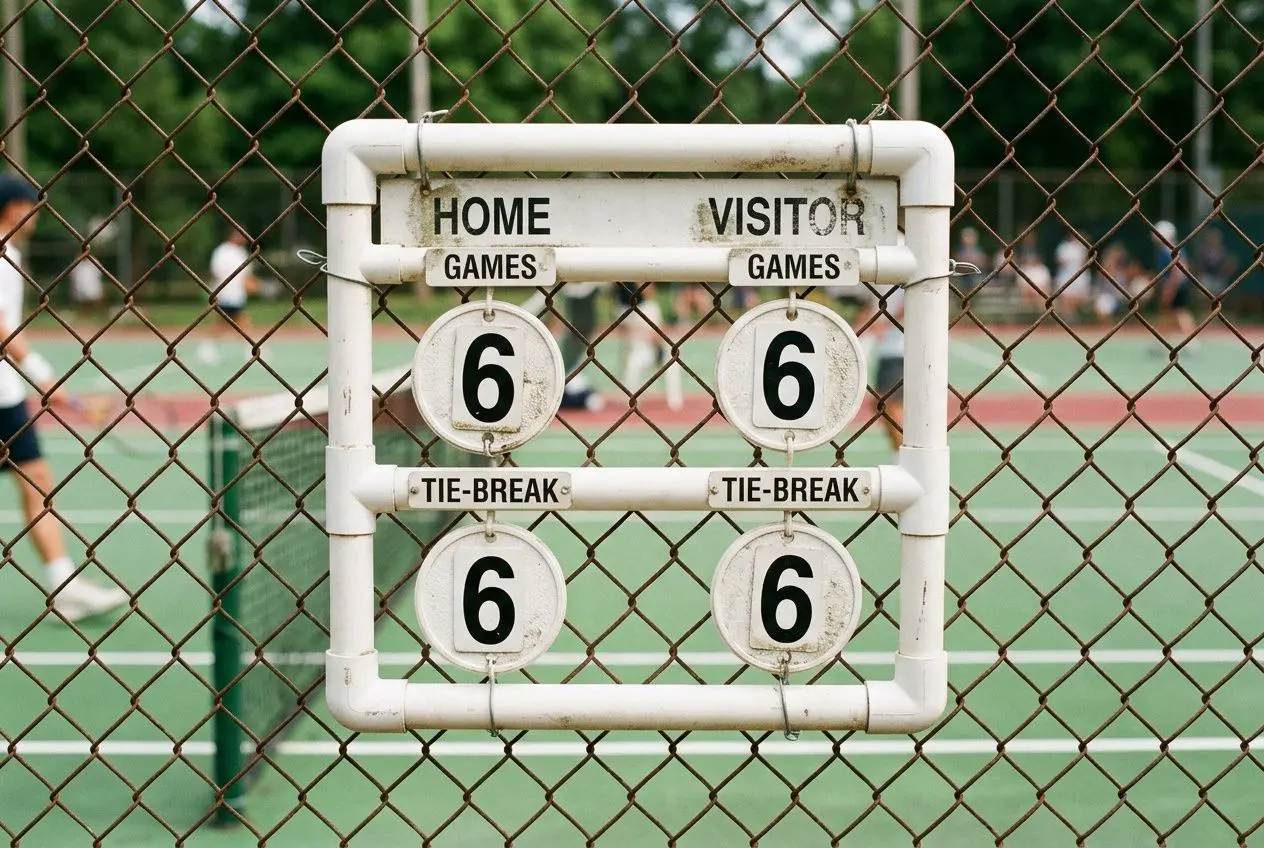
Manual rotating-disc boards remain common at club level across Britain. Made from UV-resistant PVC or fitted with sealed rotating dials, they work as weather resistant court equipment: rot-proof materials, counter-glued watertight edges and brass eyelets withstand British freeze-thaw cycles without seasonal removal. They also have no running costs because they need neither mains power nor batteries.
- Rotating-disc scoring: Dials display 0–7 games per set and cumulative set totals up to 99, supporting three-set and five-set matches without modification.
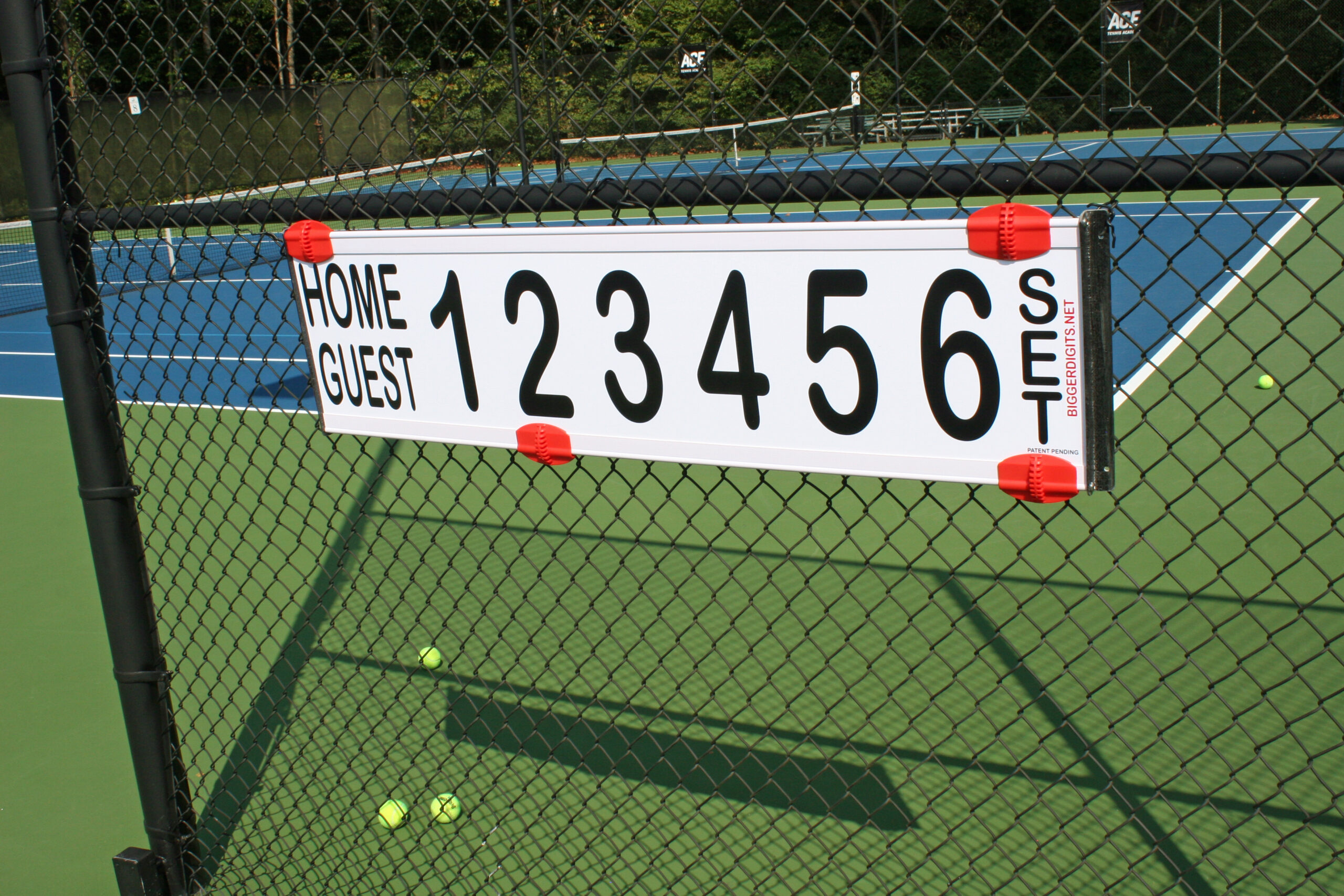
- High-visibility numbers: Full-panel PVC boards use 10 cm numerals on a white background, remaining legible beyond 50 metres from net or baseline positions.
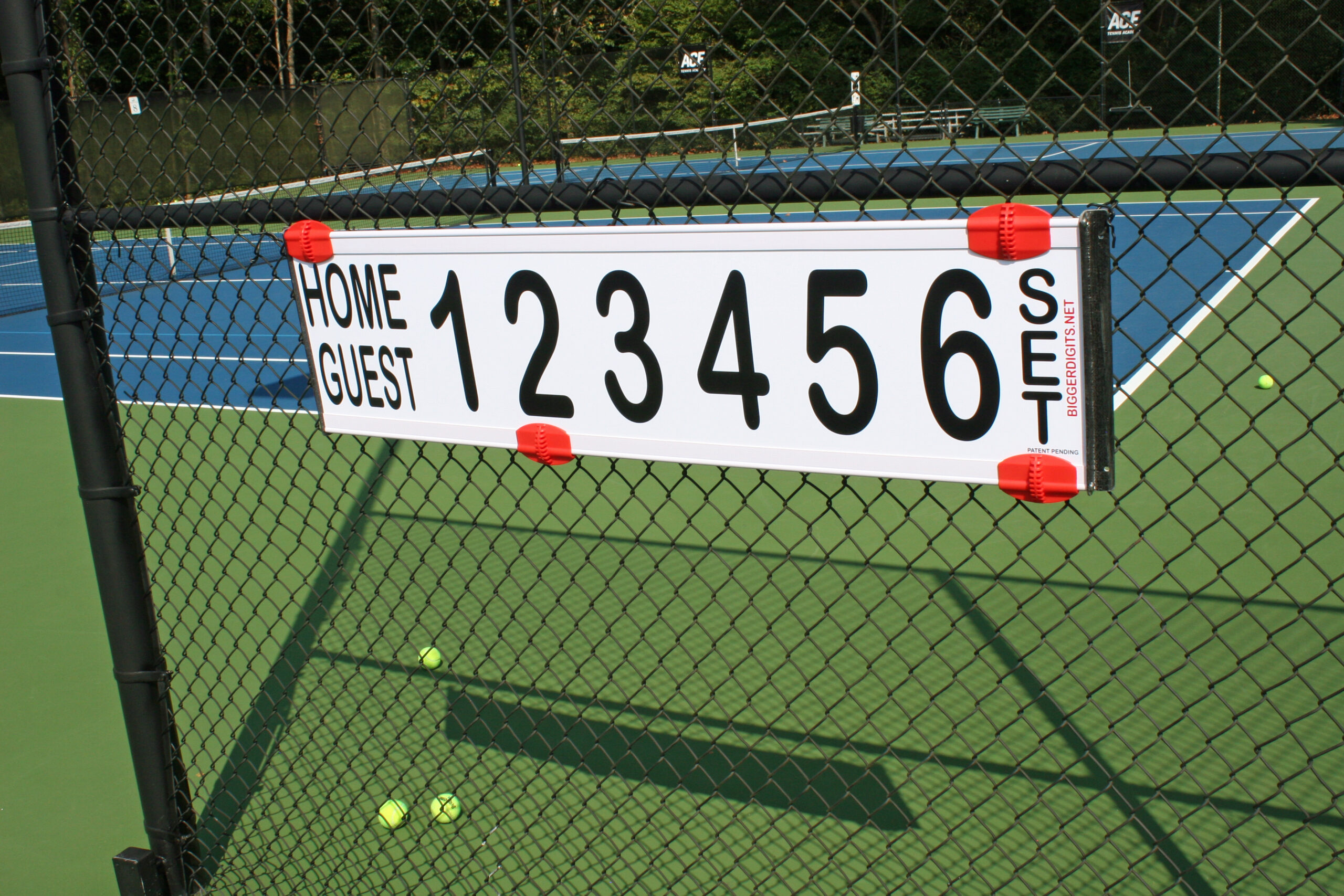
- Fold-out design: A freestanding fold-out design opens in seconds on any flat surface. In use, it measures 65 cm wide × 45 cm high × 23 cm deep, with a heavy-duty carry bag included for transport between venues.
Some manual boards use high-visibility plastic flip cards instead of rotating discs. Their game numbers reach 8 inches (20 cm) in height and their set numbers 5 inches (13 cm), with bold black figures on optic white for quick reading across multiple courts. Both flip-card and rotating-disc designs can include a standard serving indicator.
Electronic and battery-powered models
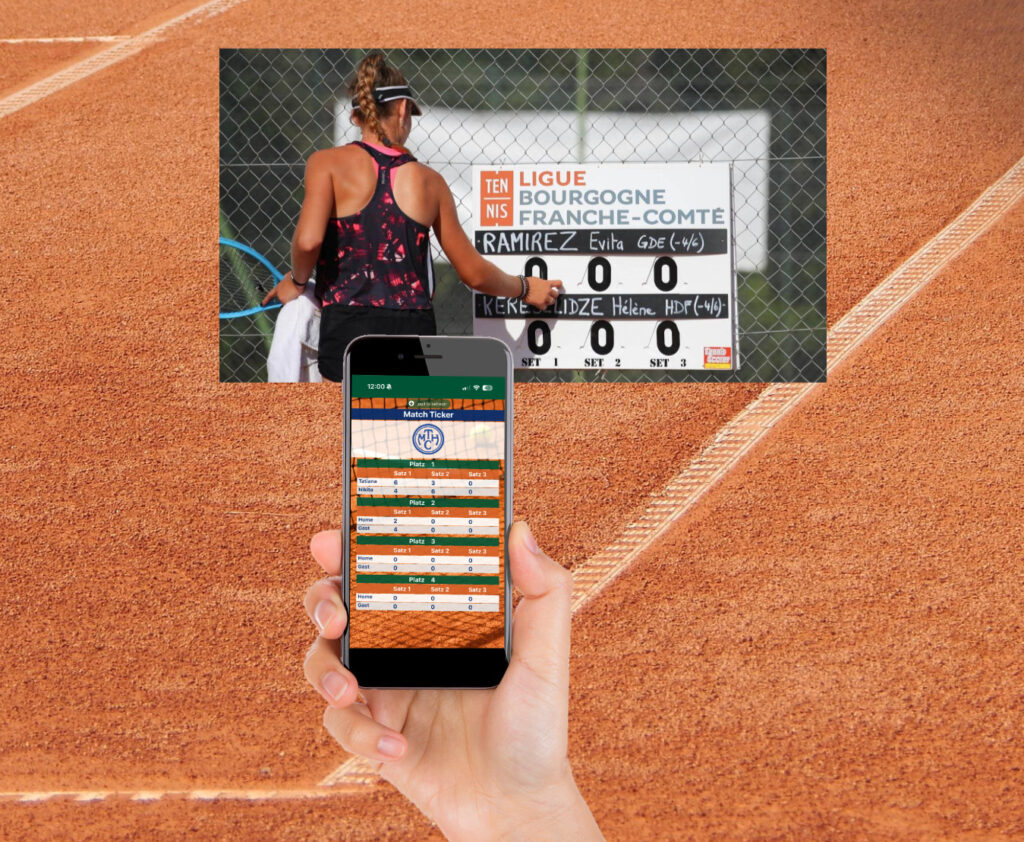
An electronic tennis scoreboard suits fast-paced tournament play, where manual updates during a rally can lead to missed changes. An electronic scoreboard at the top of its range displays two-digit game or tie-break scores for each player and three-digit set scores. Each digit reaches 9 cm in height and remains readable from over 30 metres, which covers most club spectator areas.
Mains-only units run on 240 V, while dual mains/battery versions include a 12 V battery and charger for courts without a nearby power supply. Typical battery duration is 6–8 hours; an external rechargeable 12 V/6–7 Ah battery extends operation to 10–12 hours. A wireless remote console can update the score from up to 125 metres, reducing recording errors during quick exchanges at the net.
Vermont tennis scoreboard sizes compared
Vermont portable and Vermont tennis ranges show how format choice changes with the court setting. Format choice shifts with the court setting. Full-panel PVC boards measuring 60 × 60 cm provide a non-electronic alternative with 10 cm numerals.
The mains-only model weighs 6 kg including its case; the battery model weighs 10 kg including the case, battery and charger, which remains manageable for one person. Consult a complete tennis scoreboard selection guide for a detailed comparison of format and venue requirements.
| Format | Dimensions | Digit height | Max legibility | Power | Best for |
| Compact rotating-disc | 35 × 50 cm | — | Short distance | None | Private courts |
| Medium rotating-disc | 46 × 65 cm | 8 cm (premium) | Both baselines | None | Club standard |
| Large rotating-disc | 56 × 80 cm | — | Spectator areas | None | Tournaments |
| Full-panel PVC | 60 × 60 cm | 10 cm | 50 m+ | None | Clubs, non-electronic |
| Electronic (mains) | 55 × 35 × 9.5 cm | 9 cm | 30 m+ | 240 V / 12 V DC | Tournaments, events |
| Fold-out manual | 65 × 45 × 23 cm | Variable | Club perimeter | None | Multi-venue use |
Weatherproof mounting and lifetime value
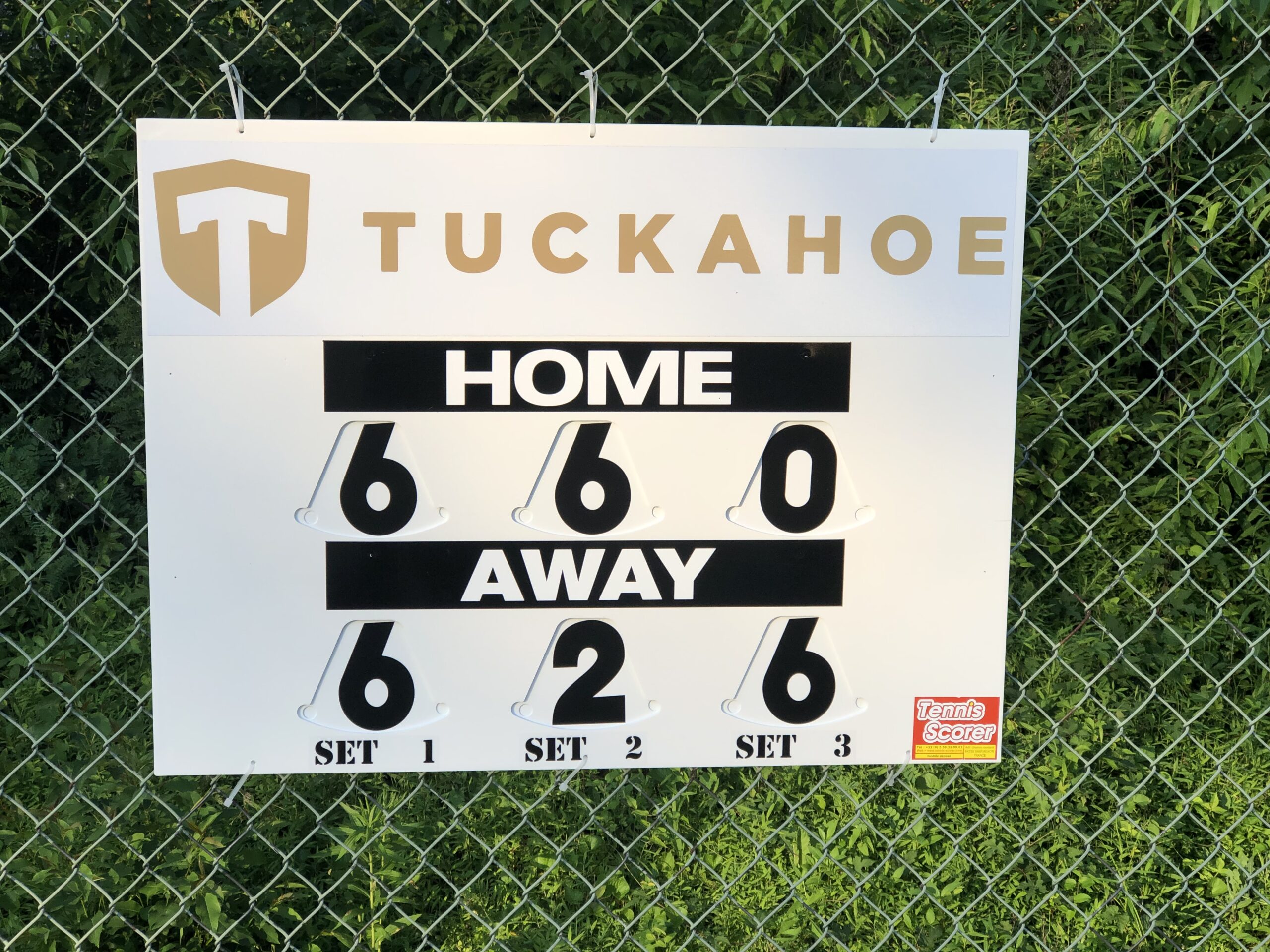
Once the board format is chosen, mounting becomes equally important. Full-panel PVC boards use a no-drill cable-tie system: four heavy-duty serflex ties secure the board to standard mesh or wire fencing without specialist tools. Corrosion-resistant fixing points, brass eyelets and anti-rust hooks maintain a secure installation through years of outdoor exposure, while UV-stabilised, rot-proof construction avoids seasonal removal.
A double-sided board remains visible from both sides of the fence perimeter, which helps when spectators move around during matches. Tennis Scorer has equipped nearly 3,000 clubs across Europe since 2002, and replacement digits are available separately. That durability supports high-quality tennis scoring results from the first season to the last: a ball strike, frost cycle or heavy downpour should require only a replacement numeral or disc, fitted in minutes, rather than a new board.
An outdoor tennis scoreboard built to these standards is a practical one-time investment. A Vermont portable model needs suitable dimensions, resilient materials and straightforward scoring more than unnecessary features. For clubs seeking weather-resistant, durable and portable equipment, Tennis Scorer provides a dependable tennis court scoreboard solution.
Frequently asked questions
What is the difference between a manual and an electronic portable tennis scoreboard?
A manual rotating-disc or flip-card tennis scoreboard needs no mains power, battery or software. Players turn the dials or flip the cards during changeovers, so running costs remain at zero and operation continues during power cuts. By contrast, an electronic tennis scoreboard uses illuminated digits, typically 9 cm tall and readable beyond 30 metres. A wireless remote can update the score from up to 125 metres away, helping to reduce scoring errors during fast play. Manual equipment is the right choice when budget and simplicity matter; electronic equipment suits tournament organisers who need wireless updating and illuminated displays. Both formats are portable, lightweight and available with a carry case for transport between venues.
How long does the battery last on a battery-powered tennis scoreboard?
Dual mains-and-battery electronic models include a 12 V battery and charger. Under standard conditions, the battery provides 6–8 hours of active use. Connecting an external rechargeable 12 V/6–7 Ah battery extends operation to 10–12 hours, enough for a full day of club tournament play without a mains supply. The mains-only model weighs 6 kg, including its carry case, while the battery model reaches 10 kg with the battery and charger. That difference matters when equipment moves frequently between courts. Once installed at a fixed venue with a mains connection, however, the extra weight has little effect on daily operation.
Which scoreboard size suits a club court versus a private court?
For a private or compact court, where viewing distances are short, the 35 × 50 cm rotating-disc board keeps the score clear from the net side without dominating the fence line. The 46 × 65 cm medium format is the standard club choice: it can be read from both baselines and suits most UK club fixtures. Large club tournaments and spectator events benefit from the 56 × 80 cm board or a full-panel PVC model with 10 cm numerals legible from beyond 50 metres. A double-sided board adds value at any size, keeping results visible from both sides of the court perimeter without additional installation. This portable tennis scoreboard format is particularly practical where spectators move around the venue.